A home is rarely defined by the objects it contains. More often, it is the relationships between them, accumulated over time, that give a place its particular identity. For French interior designer Pierre Brouder, founder of the architecture and interior design studio Lestaudin, the distinction is fundamental. His approach to decoration is less concerned with the pursuit of a recognisable aesthetic than with the creation of an environment that feels both deeply personal and independent of fashion.
In London, this philosophy has found expression in the transformation of an apartment belonging to a client who, despite owning the property for almost fifteen years, had never quite considered it home. A frequent traveller and an established collector of contemporary art, he possessed the ingredients of an exceptional interior, but not necessarily the sense of permanence that turns a residence into a place of belonging.“I wanted to give him something more permanent than another beautiful interior: a sense of belonging, the feeling of coming home,” Brouder explains.
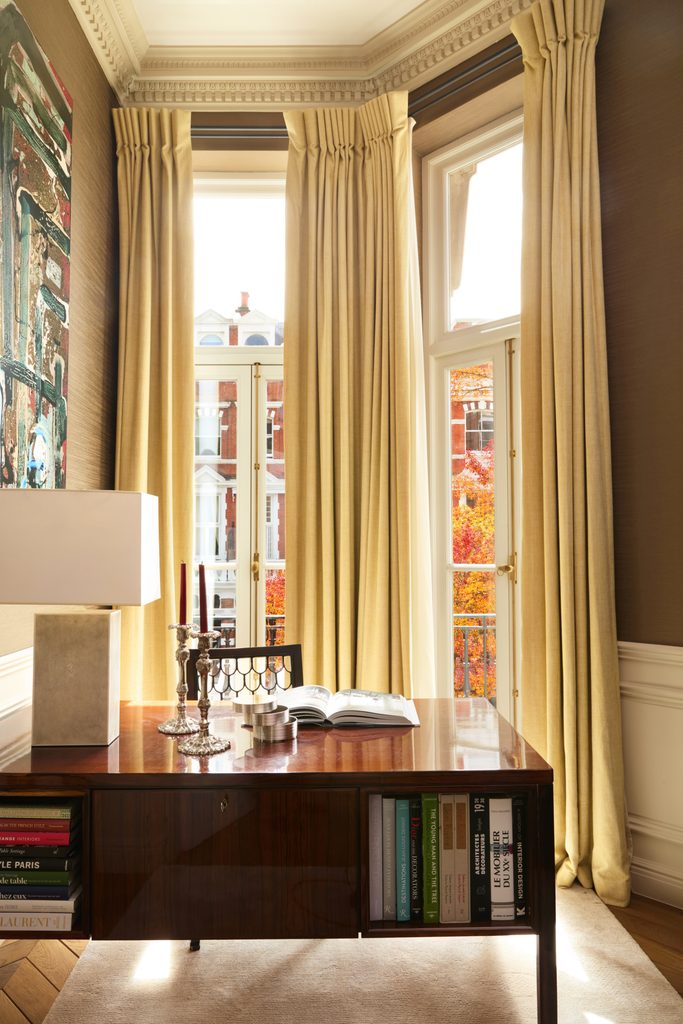
A Brazilian desk from the 1960s is paired with Christian Liaigre’s Maritime chair and a shagreen lamp by Holly Hunt. A painting by Ryan Sullivan introduces a contemporary dimension, while bronze toned walls, Dedar curtains and a BIC rug lend warmth to the space.
The resulting project, conceived through his studio Lestaudin, brings together historical architecture, European antiques, twentieth century furniture and contemporary art. Yet its significance lies less in the provenance of individual objects than in the unexpected affinities established between them.
“I consider time the greatest curator of all ; it is fundamental to the way I approach any project. Fashions fade, mistakes disappear, while what is genuinely exceptional endures.” It is a perspective that challenges the contemporary tendency to categorise interiors according to periods, movements or stylistic affiliations. For Brouder, chronology is a relatively superficial distinction. An object earns its place through proportion, material, character and its capacity to establish a meaningful relationship with its surroundings.
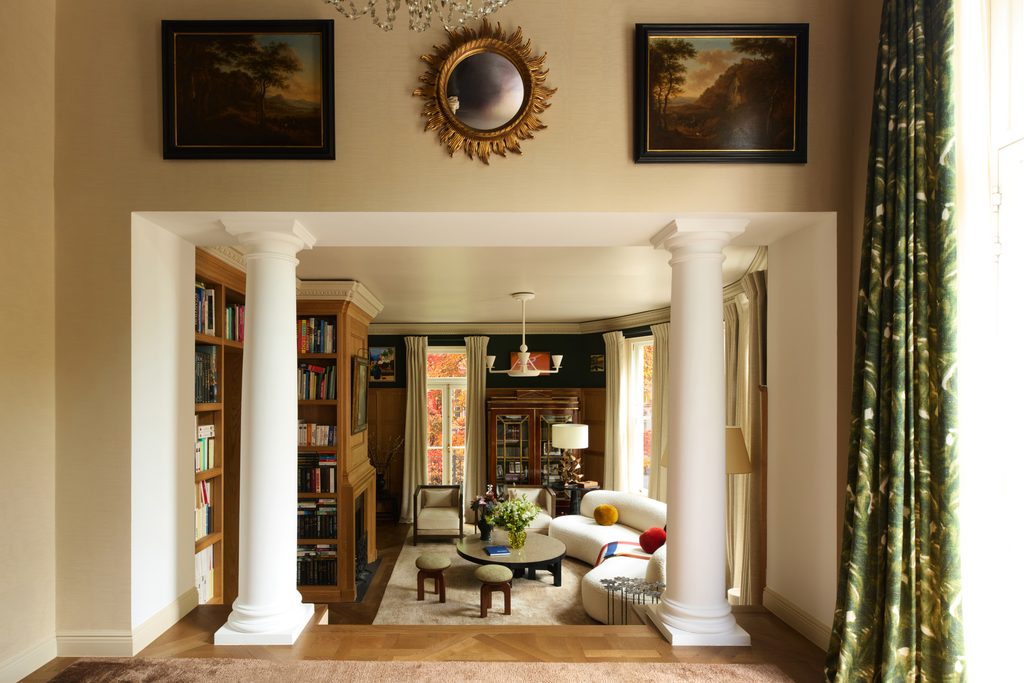
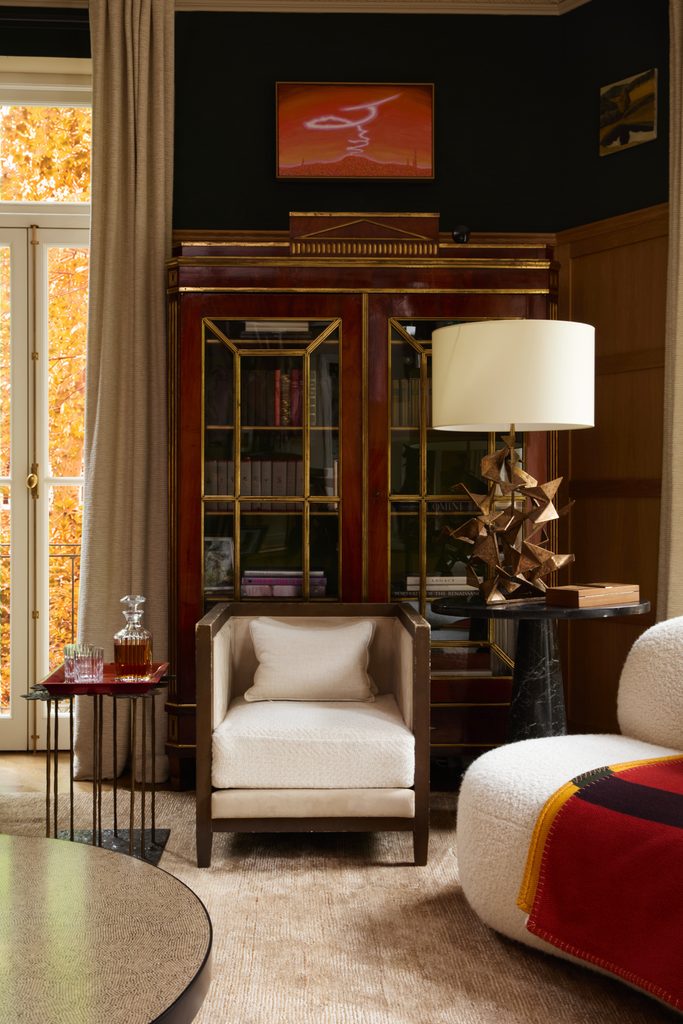
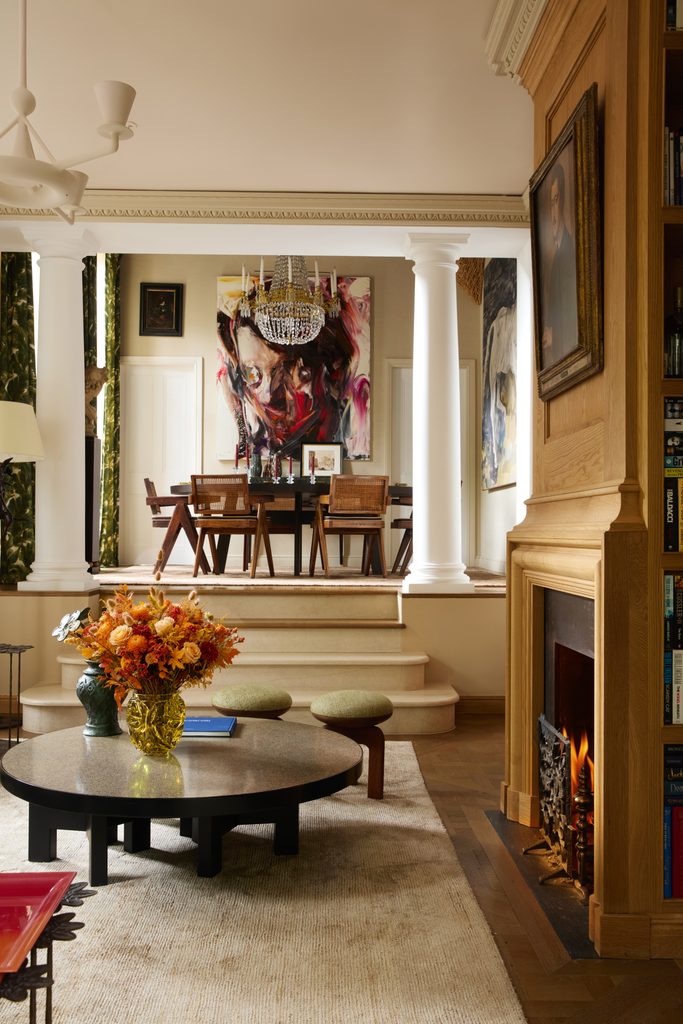
“A seventeenth-century portrait may have more in common with a Jean-Michel Frank table than with another seventeenth-century object,” he observes. “Proportion, restraint, material and strength of character can create connections across centuries.” This freedom from chronology gives the apartment its distinctive character. In the principal living room, the generous curves of a Pierre Augustin Rose sofa introduce a contemporary softness alongside the disciplined forms of Jean-Michel Frank armchairs. An Angelo Mangiarotti marble table, a remarkable peppercorn mosaic coffee table by Ado Chale and the playful sculptural language of Hubert Le Gall contribute contrasting registers.
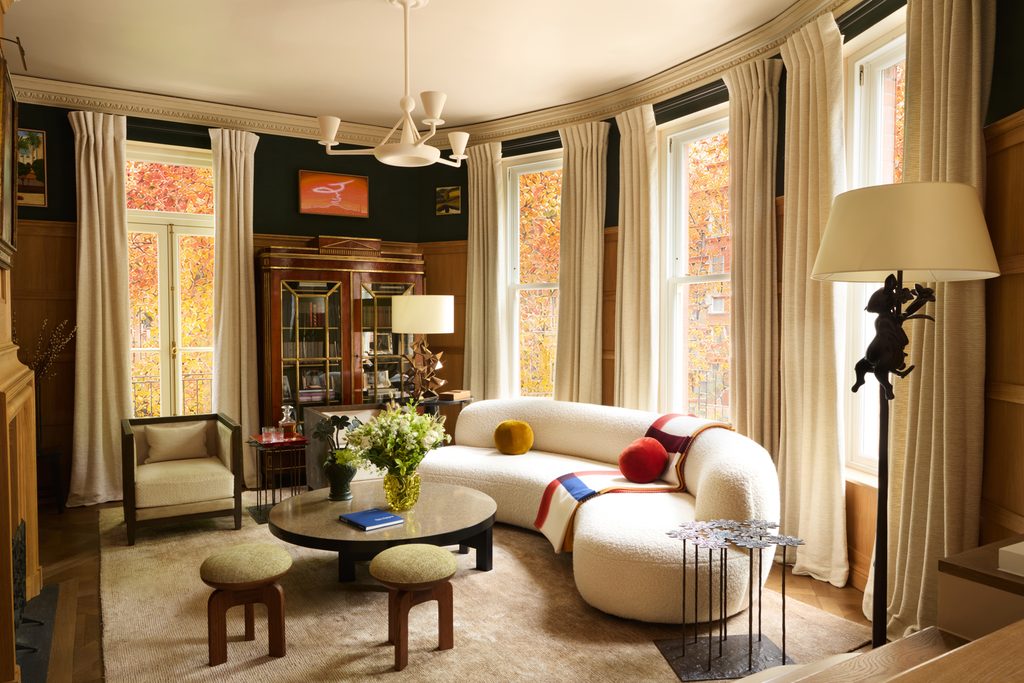
A Pierre Augustin Rose sofa meets Jean Michel Frank armchairs, an Ado Chale coffee table and sculptural pieces by Angelo Mangiarotti and Hubert Le Gall. Artworks by William Monk, Lucas Rubly and Ivan Arlaud complete the composition, alongside a nineteenth century Russian cabinet.
Their coexistence is neither accidental nor an exercise in eclecticism. Rather, Brouder approaches the composition of a room with something resembling musical discipline. “Like in music, I think balance comes from establishing a hierarchy. Some objects need to hold the room, others can punctuate it, and others should almost disappear until you notice them.”
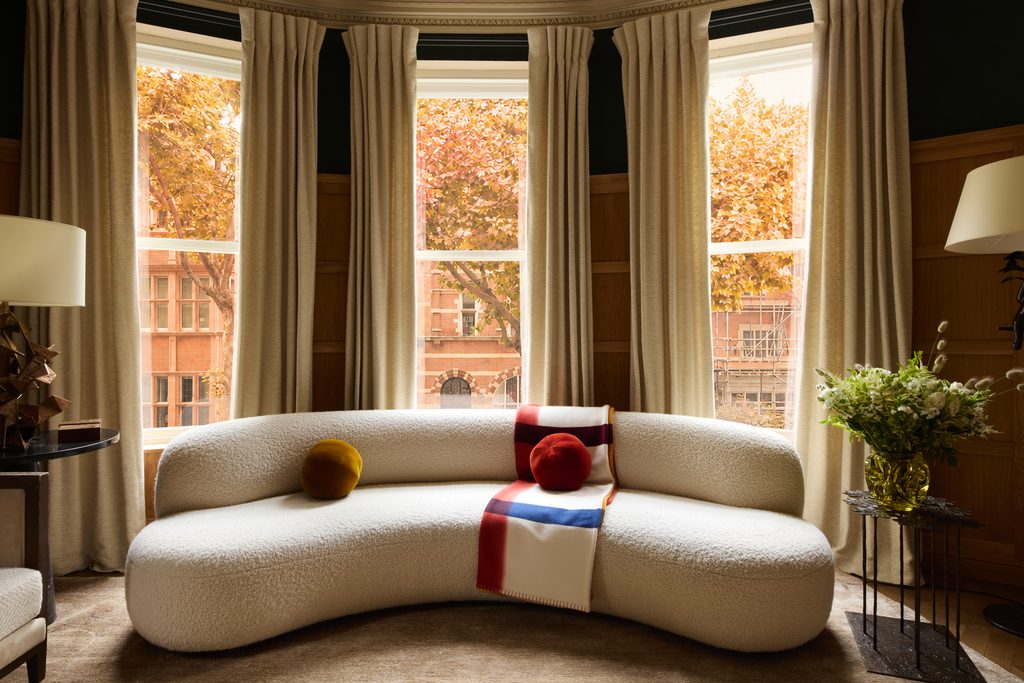
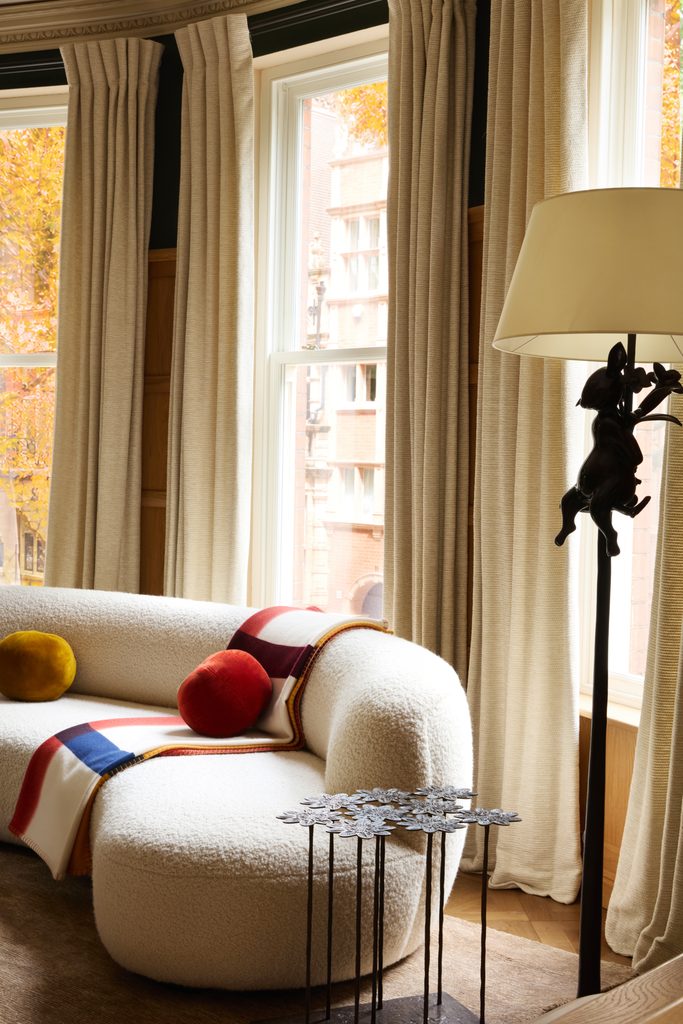
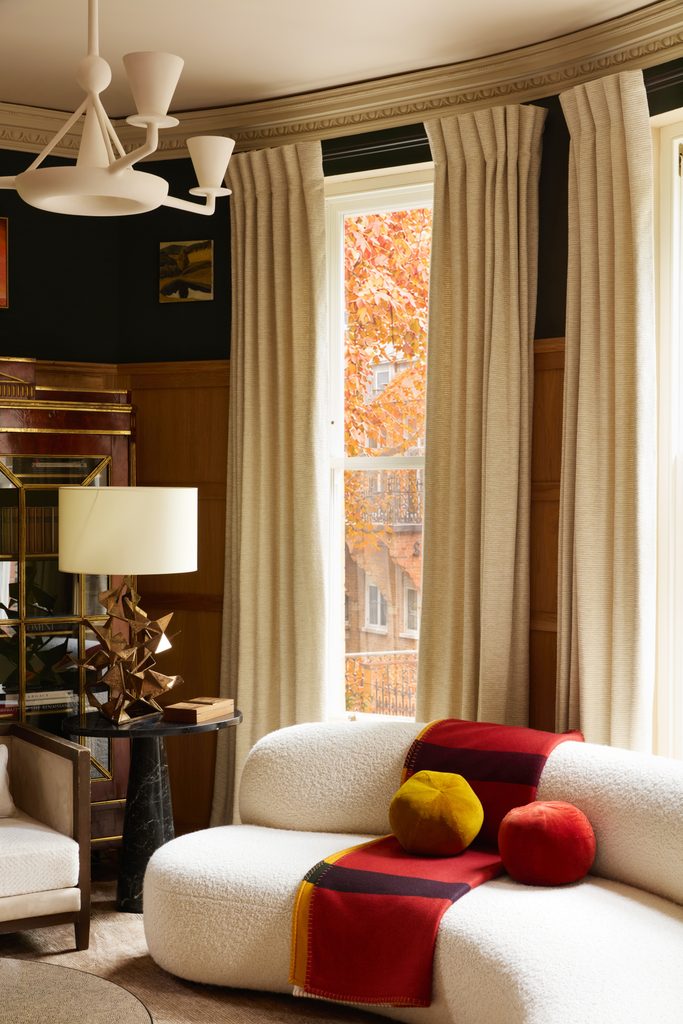
The spaces between objects become as significant as the objects themselves. A room is complete not when it has acquired enough remarkable pieces, but when each element contributes to an equilibrium that no longer demands explanation.
Architecture provides the foundation for this approach. Working through Lestaudin, Brouder reconsidered an existing floor plan that had failed to make the most of the apartment’s considerable spatial qualities. Previously, the entrance led almost directly into the kitchen, while rooms with generous proportions, high ceilings and views over the gardens remained underused.
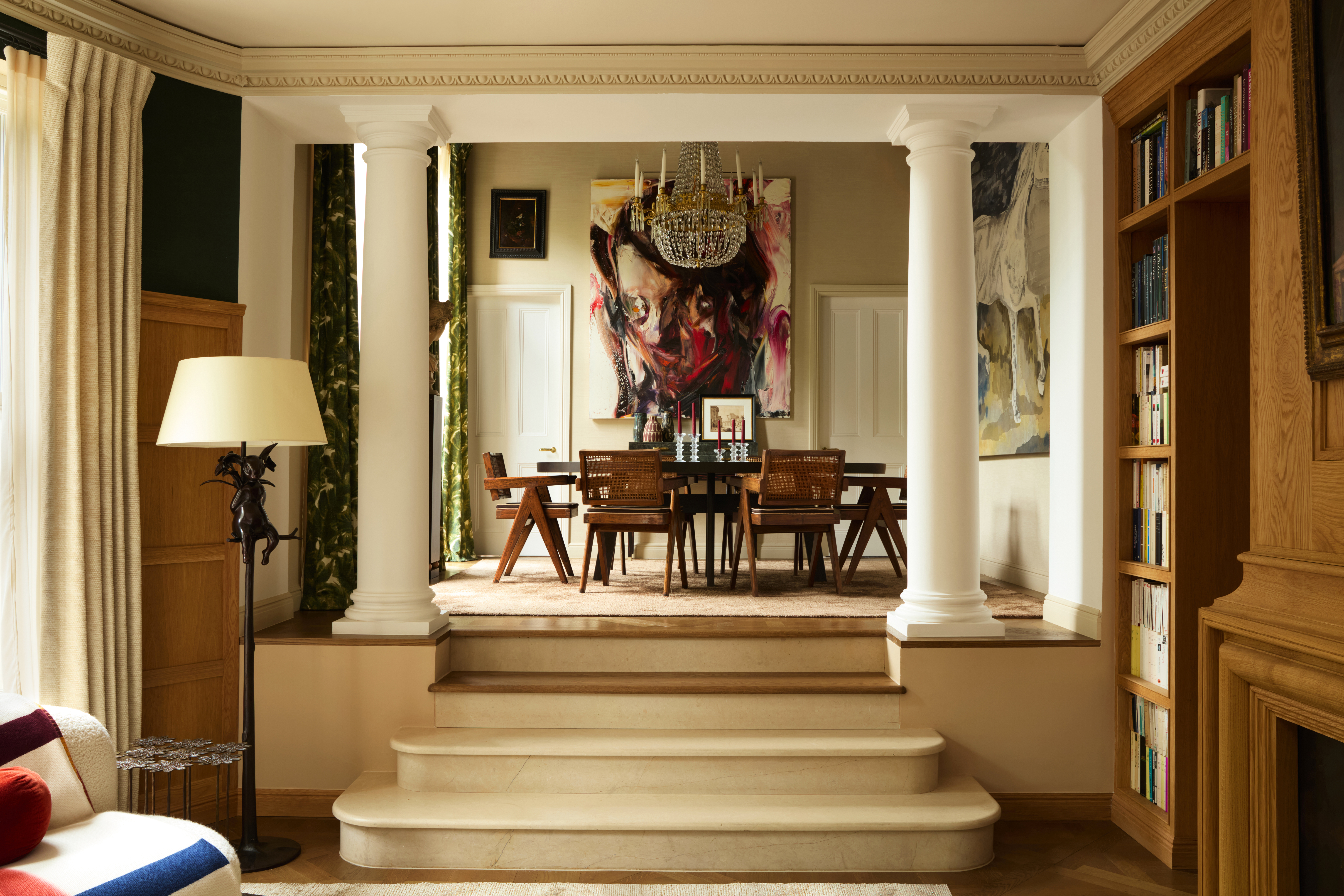
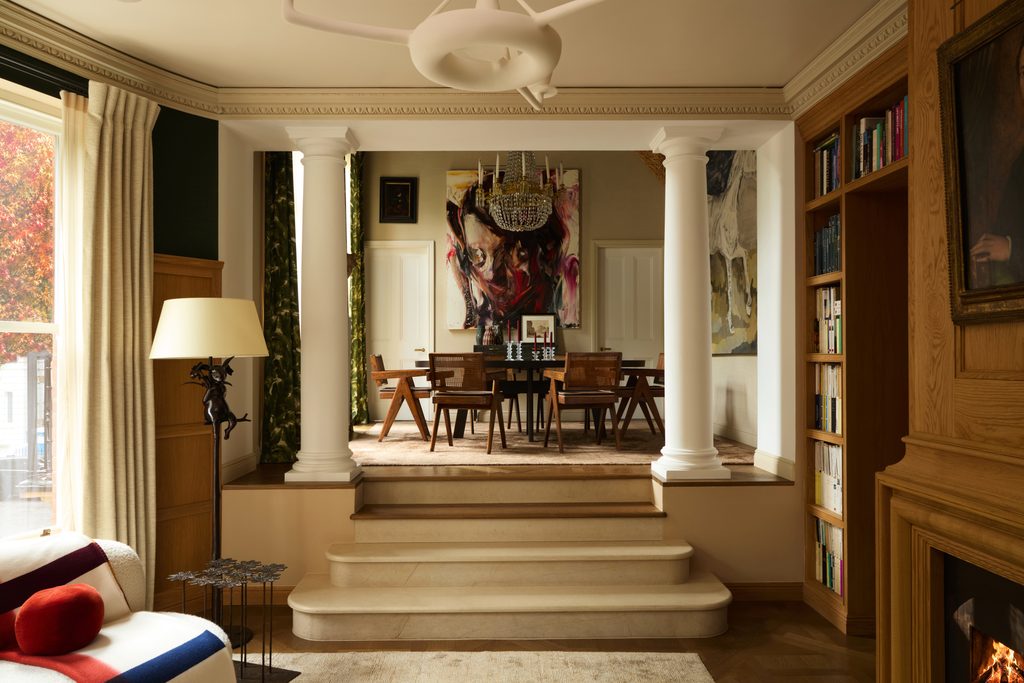
The intervention sought to restore a sense of architectural progression. Changes in level, long perspectives and carefully framed openings now establish a sequence of spaces, moving between intimacy and openness. The dining room, elevated above the principal living area and framed by original columns, becomes a particularly expressive example of this spatial choreography. “I wanted to give these qualities a certain ceremony. Not grandeur for its own sake, but the pleasure of progression: entering through one space and discovering another beyond it.”
Throughout the apartment, the architectural language is sustained by an unusually considered treatment of materials. Oak parquet and bespoke panelling establish continuity, while walnut cabinetry and polished Macassar ebony introduce greater depth. In the kitchen and bathroom, Breccia di Stazzema marble provides a more expressive counterpoint, its dramatic veining contrasting with the controlled geometry of the surrounding joinery.
For Brouder, materiality is not simply visual. It is experienced through the body, often before it is consciously understood. “I am very sensitive to the sensual quality of materials: polished wood under the hand, the weight of a curtain, the coolness of marble, the particular softness of a textile. These things register physically before one necessarily notices them intellectually.”
This sensitivity extends to colour, which is used less as an autonomous decorative gesture than as a means of connecting different elements. Warm timber, pale upholstery and subdued walls establish a relatively quiet foundation, allowing paintings, textiles and historical objects to introduce more complex tonal relationships.
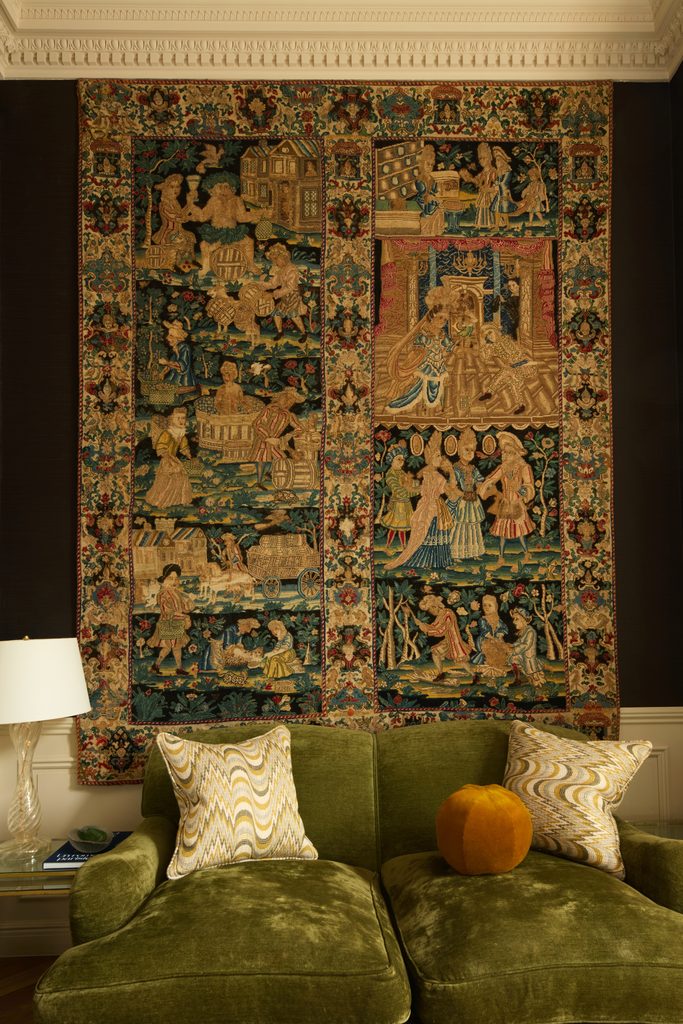
In the secondary living room, a monumental Dutch tapestry dating from the sixteenth century occupies a wall of deep ebony colour. Its intricate narrative and richly coloured surface are echoed by the green upholstery beneath it, establishing a subtle relationship between historical textile and contemporary domestic comfort.
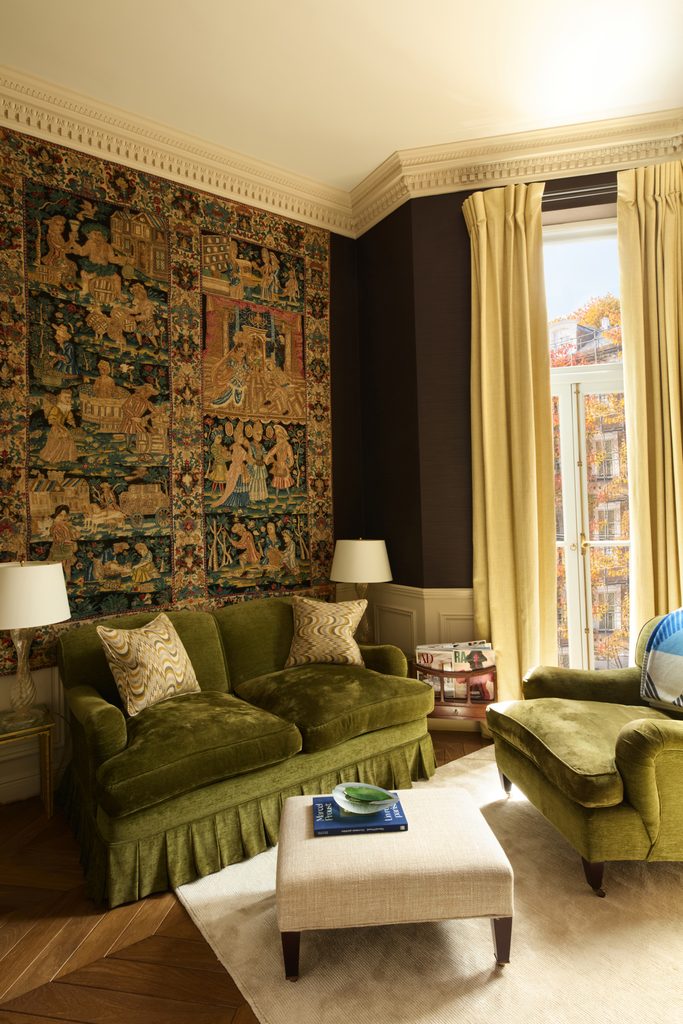
A sixteenth century Dutch tapestry takes centre stage against deep ebony walls, complemented by George Smith seating upholstered in Dedar fabrics. Venini lamps, a BIC rug and warm yellow curtains introduce contrasting textures and colour, creating a more intimate atmosphere.
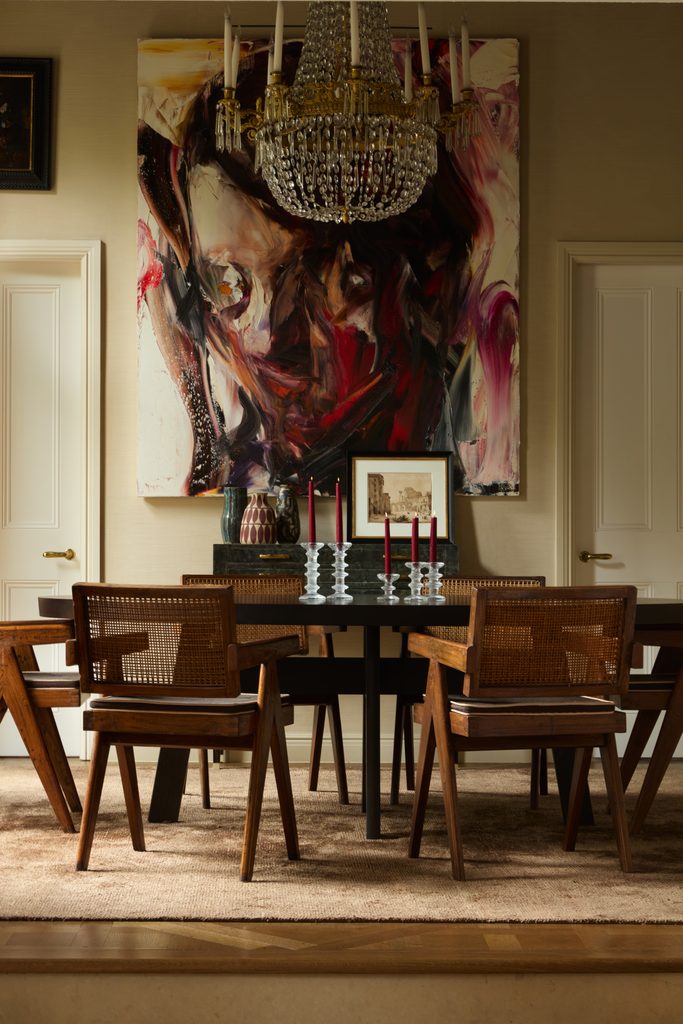
Elsewhere, the restraint of the principal living room allows the art collection to assert a different kind of presence. Works by William Monk, Ivan Arlaud and Lucas Rubly coexist with nineteenth century furniture and modern design, while the dining room brings together a contemporary painting by Yukimasa Ida, works by Johann Falch and Matthew Lutz Kinoy, and a crystal chandelier dating from around 1830. The juxtaposition is characteristic of Brouder’s belief that historical distance can generate unexpected visual and intellectual connections.
Yet art, despite its importance to the project, is never intended to dictate the architecture around it. “Collecting should retain an element of instinct, even impulse. A work should be able to enter a house because its owner is irresistibly drawn to it, not because the decoration has prepared a convenient place for it.” There is a broader understanding of domestic life embedded in this observation. An interior conceived entirely around an existing collection risks becoming fixed at a particular moment, unable to accommodate the changing interests of its inhabitants. Brouder instead considers adaptability an essential measure of a genuinely personal home. “That is one of the tests of a truly bespoke interior for me: it should be able to welcome a work of art bought five or ten years later and make it feel entirely at home.”
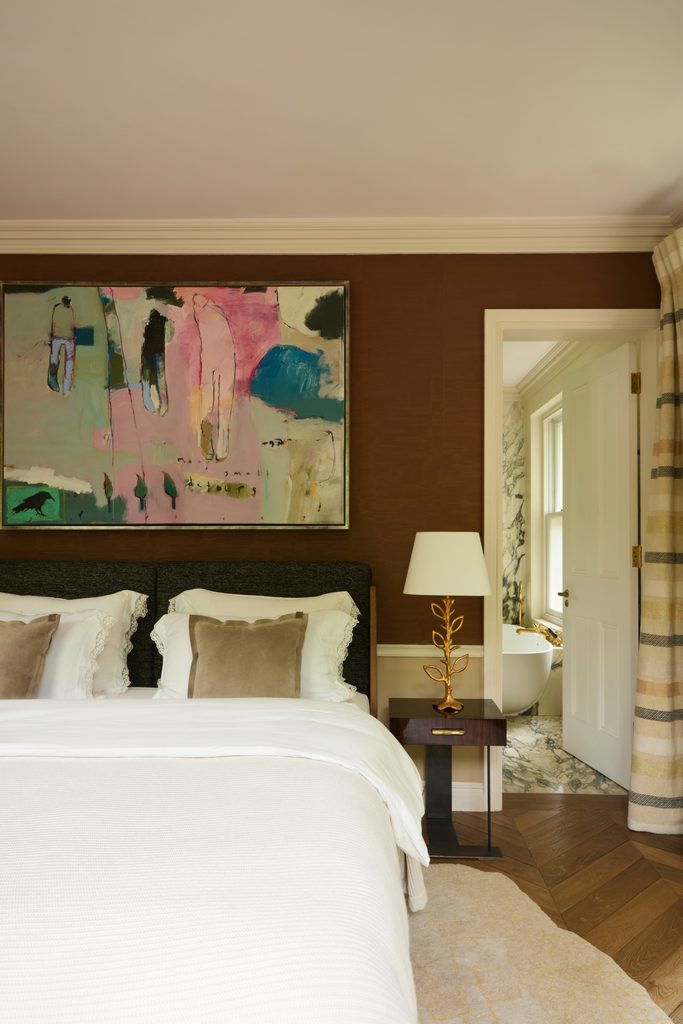
The apartment’s quieter rooms reveal another dimension of this philosophy. In the library, bespoke oak bookcases and a fireplace designed by Lestaudin provide a setting for a sixteenth century portrait by Salviati. In the bedroom, Christian Liaigre furniture, a Jean-Michel Frank armchair and warm textiles create a more intimate atmosphere, removed from the expressive contrasts of the principal reception spaces.
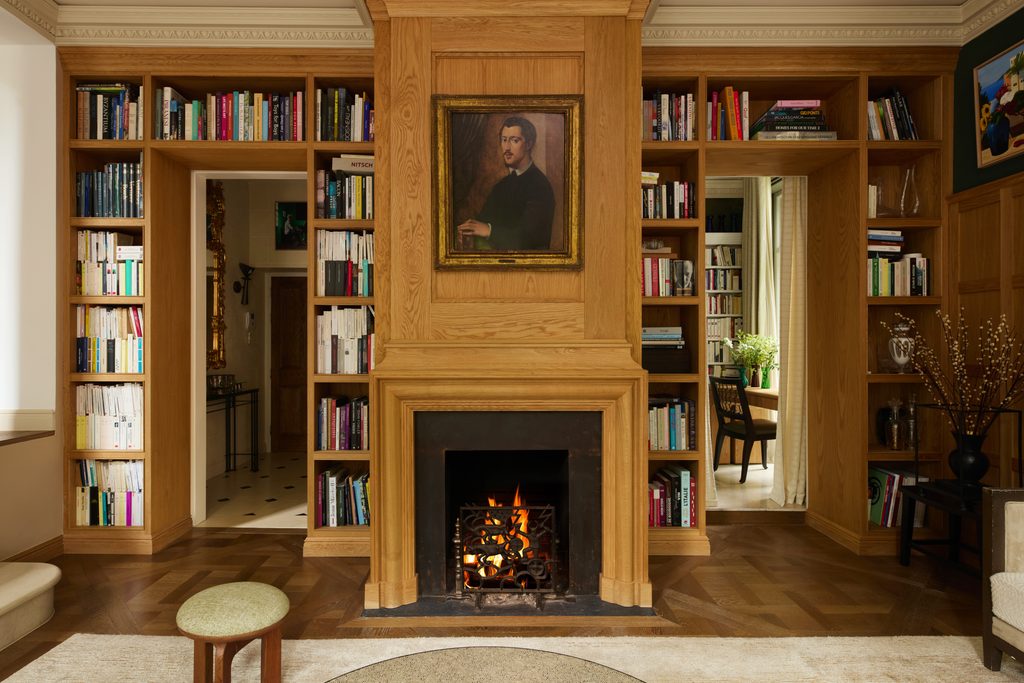
Bespoke oak bookcases, panelling and a fireplace designed by Lestaudin frame a sixteenth century portrait by Salviati. An Olle Hermansson fire screen, a Christian de Portzamparc console and a desk by Pendhapa in collaboration with Lestaudin introduce a dialogue between historical and contemporary design.
Such variation is deliberate. Brouder speaks of a house as an experience unfolding through movement, where one room acquires meaning partly through its relationship to another. “A house needs changes of tempo. There should be rooms in which colour, art and objects are allowed to become almost operatic, and others where very little happens at all.”
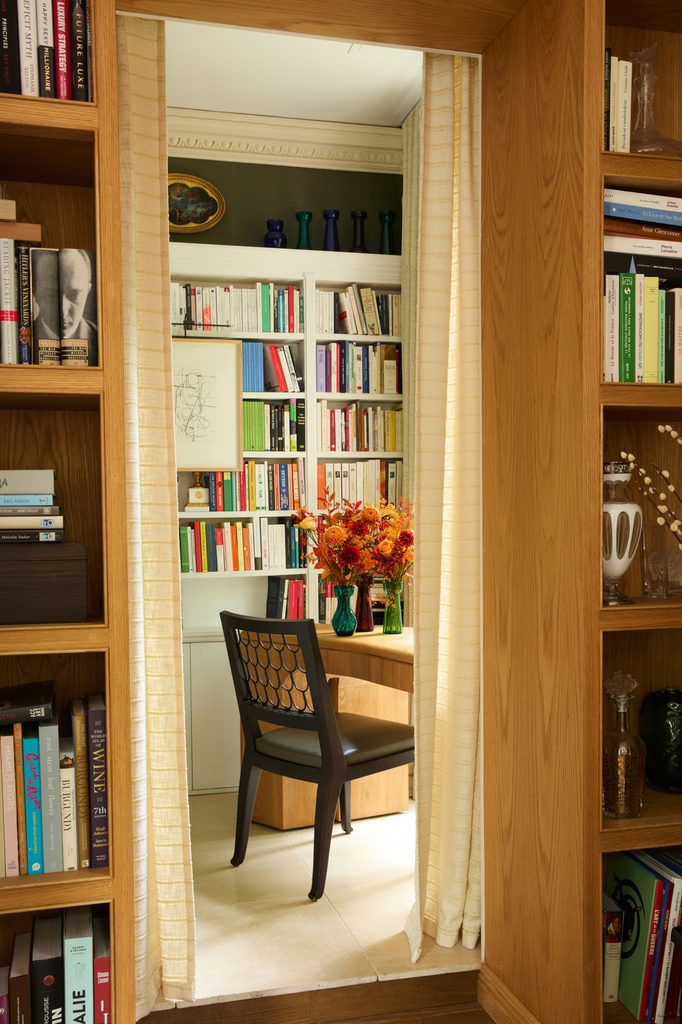
Bespoke oak bookcases by Lestaudin frame a desk designed in collaboration with Pendhapa and a Maritime chair by Christian Liaigre. A Christopher Wool print and a Renaissance painting depicting Paradise Lost introduce a dialogue across centuries, set against deep forest green walls.
This understanding of rhythm distinguishes an interior conceived as a coherent whole from a succession of individually decorated rooms. Repetition provides continuity, but variation gives the architecture its emotional and sensory range.
It also explains Brouder’s resistance to interiors that reveal their entire character at first glance. The richness he pursues is cumulative, discovered through repeated encounters rather than immediate spectacle. “Richness should reveal itself slowly. I would much rather someone discover after several visits that a room is exceptional than understand its value in thirty seconds.”
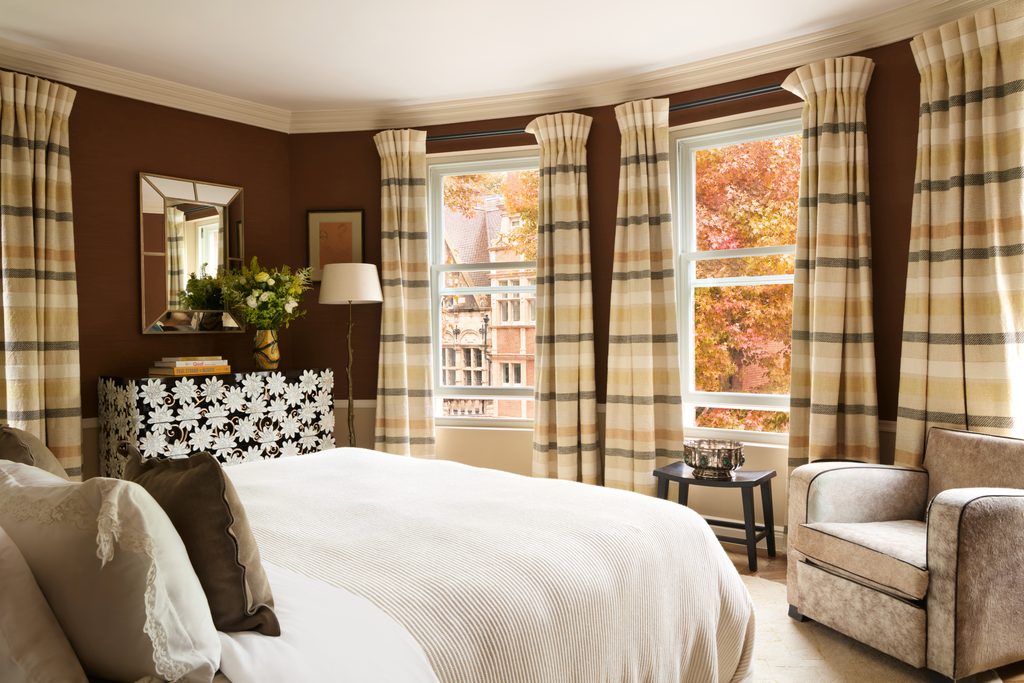
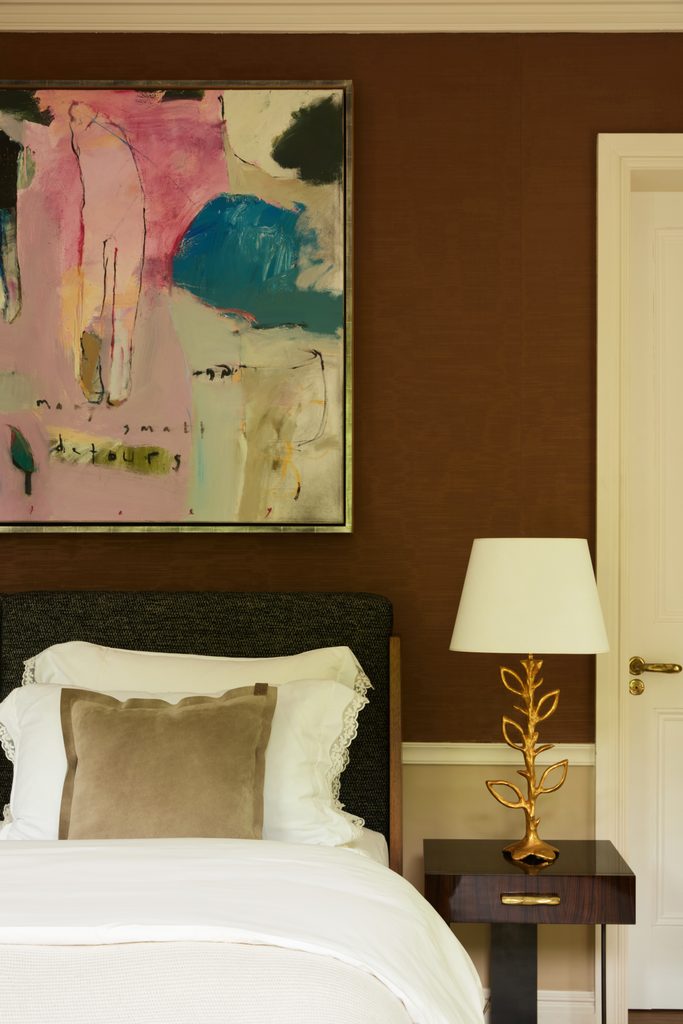
A Christian Liaigre bed with a polished Macassar ebony headboard is complemented by a Jean Michel Frank armchair, a Hubert Le Gall console and a Pierre Yovanovitch rug. Warm burnt orange walls provide a backdrop for a drawing by Yannis Tsarouchis.
Ultimately, the London apartment raises a question that extends beyond decoration: what makes a collection of exceptional objects become a personal world? Brouder’s answer lies in the relationship between the designer and the person for whom the interior is conceived. His role is to interpret existing tastes and habits while introducing unfamiliar references, creating an environment that expands the owner’s sensibilities without compromising his identity.
He compares the process to a partnership in ballet, where one dancer’s role is to give the other confidence, balance and presence rather than compete for attention. It is an unusually modest ambition for a discipline so frequently associated with individual authorship. Yet perhaps the most sophisticated interiors are precisely those in which the designer’s intervention becomes difficult to separate from the life taking place within them.
“In the end, I don’t want a visitor to think, ‘Pierre Brouder decorated this apartment.’ I would much rather they leave with the impression that the person who lives there could not possibly have lived anywhere else.”
After fifteen years, the client finally calls the London apartment home. For Brouder, this is the project’s most meaningful achievement, and a reminder that the enduring value of an interior resides not in what it displays, but in the sense of belonging it makes possible.