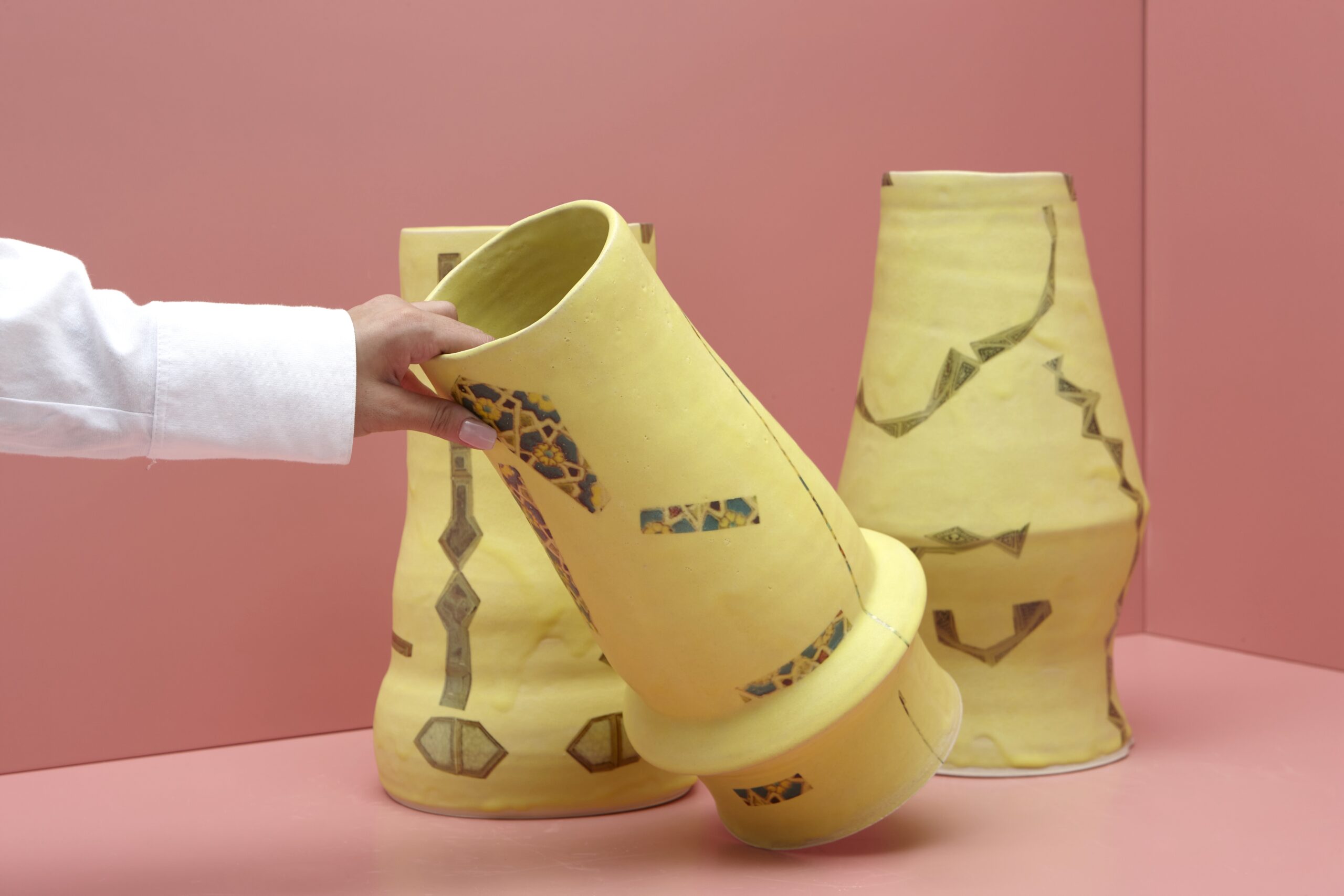
Architecture rarely remains confined to buildings. It migrates. Through photographs, sketches, memories and objects, architectural languages often travel further than the structures that first gave them form. Traces, the inaugural collection presented through Nada Debs’ newly launched WA Collective, begins from precisely this movement: the translation of architecture into something intimate enough to hold in one’s hands.
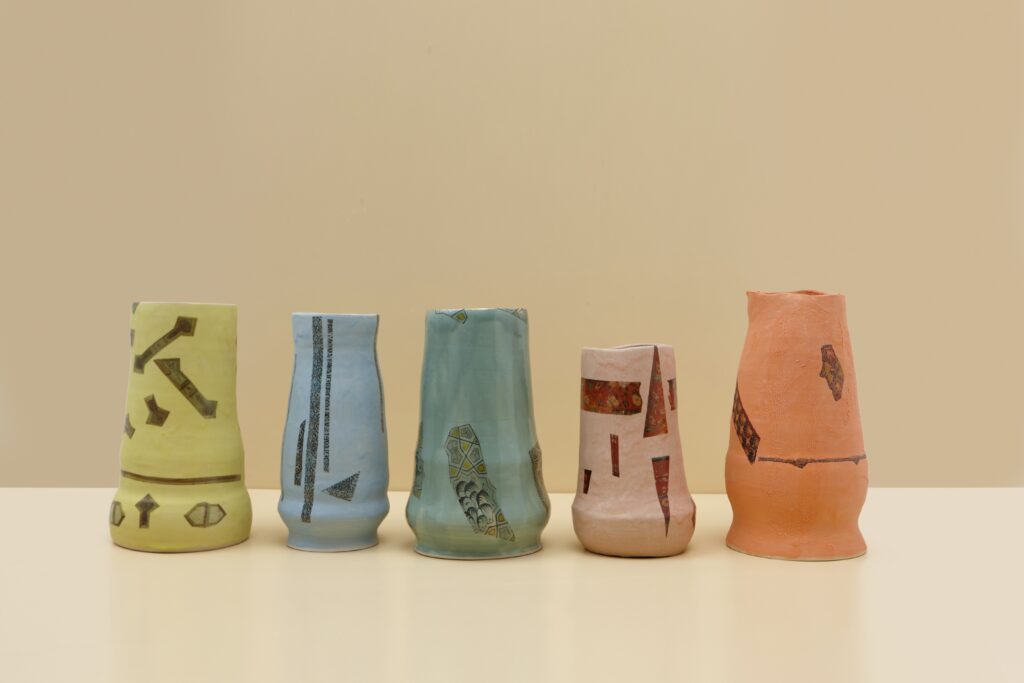
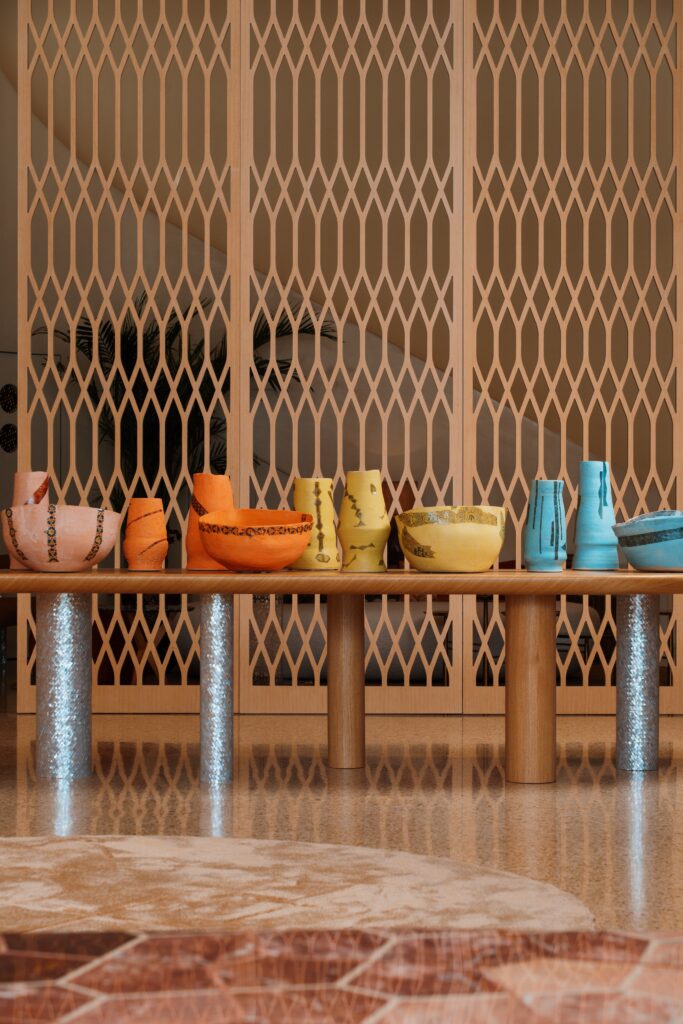
Created by Beirut-based ceramist Lina Shamma in dialogue with designer Nada Debs, the collection consists of a series of matte vessels whose surfaces carry fragments of visual memories gathered during travels through Uzbekistan. Photographs of Islamic architecture, mosaic compositions and arabesque tilework become decals applied to bowls and vases, removed from their original architectural context and reassembled across ceramic forms.
The result is not a literal reproduction of ornament. The geometric motifs, traditionally associated with order, symmetry and repetition, are deliberately interrupted. Scattered across irregular surfaces and positioned off-grid, they create compositions that feel simultaneously precise and spontaneous, echoing the tension between Debs’ structured geometric vocabulary and Shamma’s instinctive approach to clay.
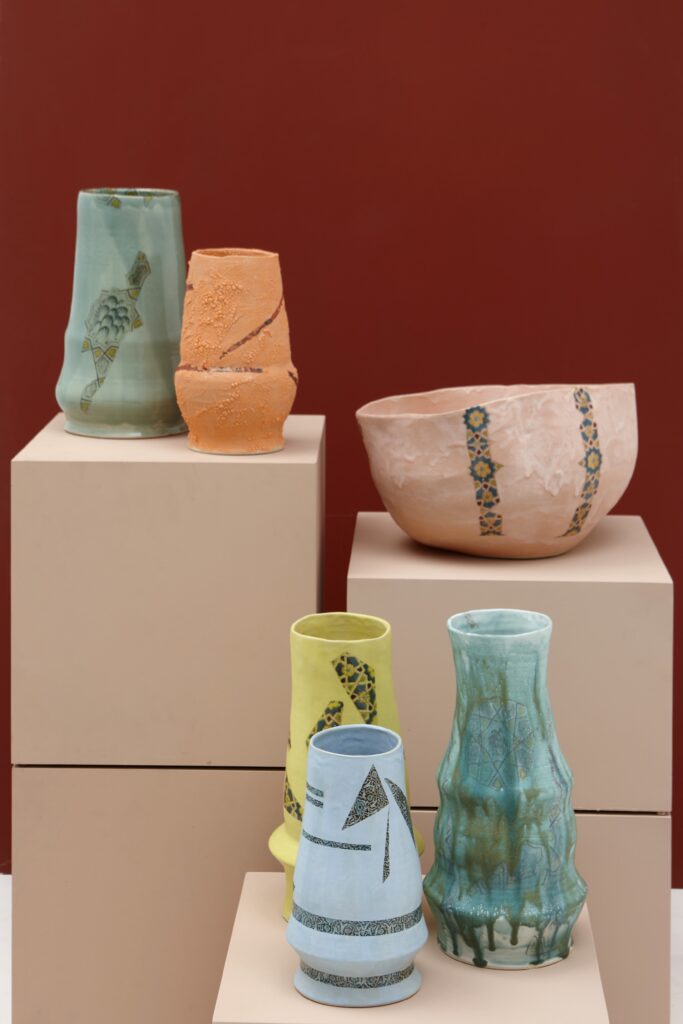

In many ways, the collection reflects a broader shift in contemporary design. Ornament, once dismissed as decorative excess, has re-emerged as a subject of renewed interest. Yet here it is not treated as embellishment. Detached from the architectural surfaces for which it was originally conceived, it becomes a carrier of memory, culture and place. The fragments retain traces of their origins while acquiring new meanings through material transformation.
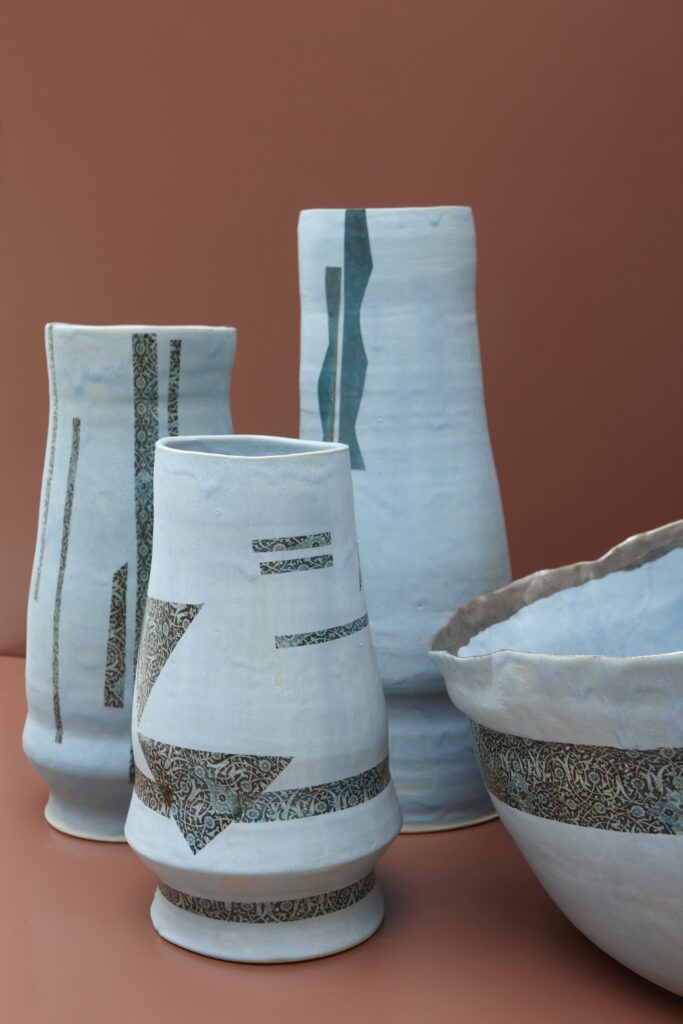
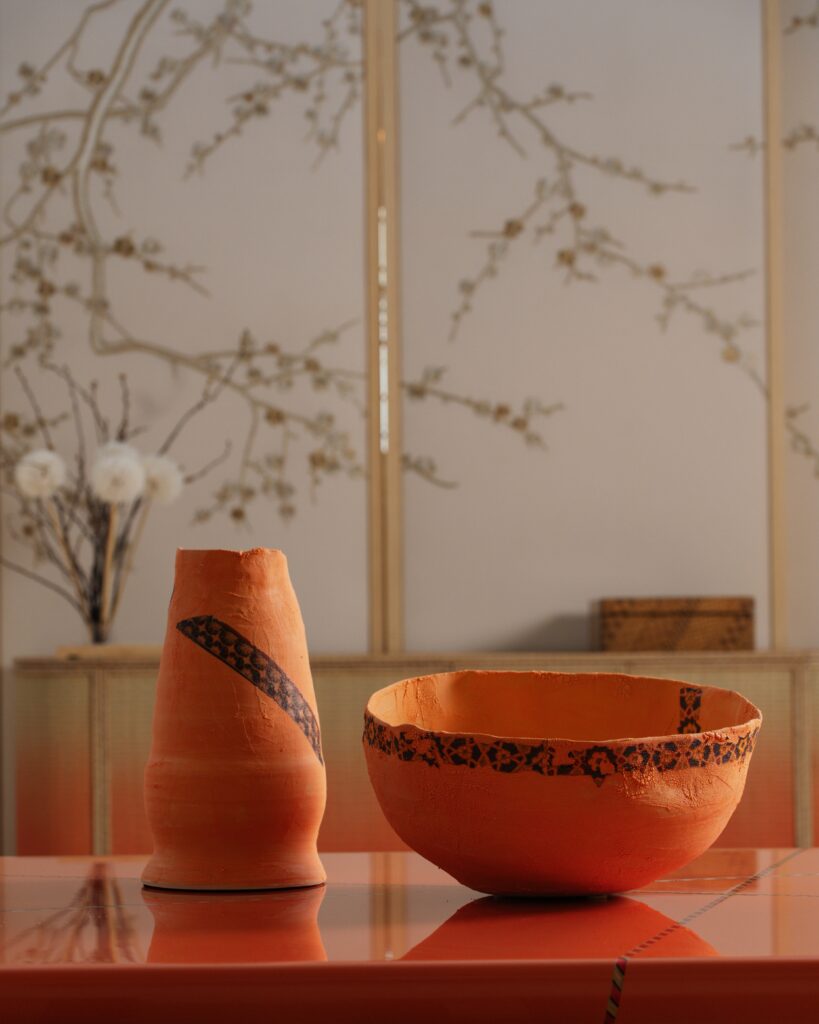
Equally important is the role of the hand. Every vessel is either hand-built or wheel-thrown, resulting in subtle variations of form and surface. The precision of geometry is softened by the unpredictability of making. Edges shift, proportions fluctuate and compositions refuse complete symmetry. What emerges is a dialogue between control and improvisation, between the inherited language of architecture and the immediacy of craft.

It is perhaps telling that Nada Debs chose such a project to inaugurate WA Collective. Rather than launching the platform with a signature collection of her own, the designer has positioned herself as a facilitator of dialogue, creating a framework through which individual makers can explore shared questions around material, identity and process.
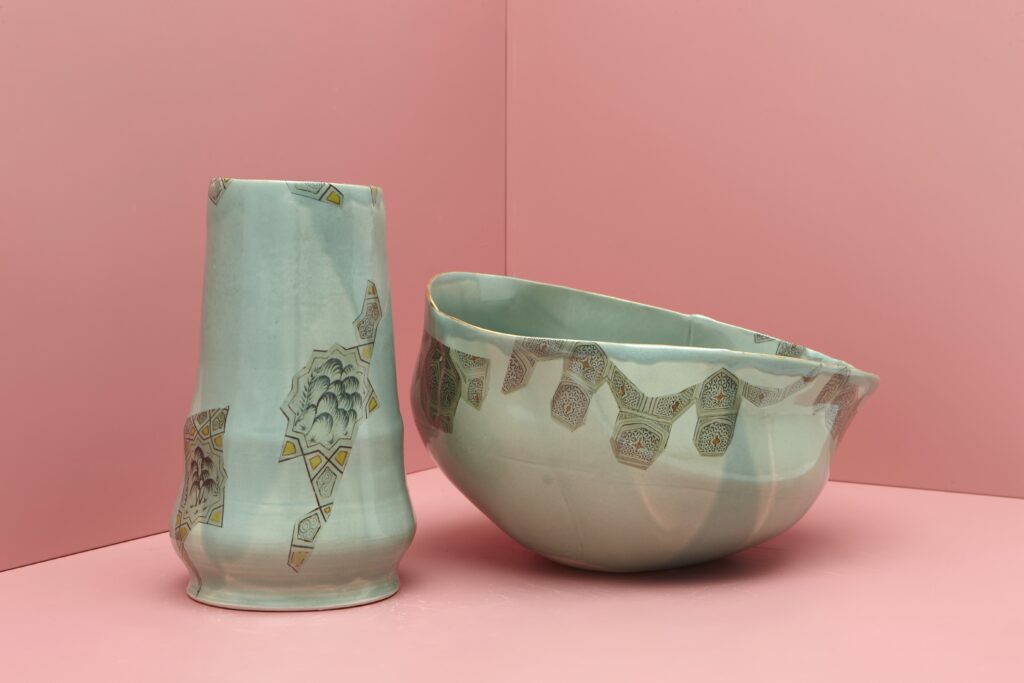
Meaning “and” in Arabic and “harmony” in Japanese, WA Collective is conceived as a platform dedicated to contemporary craftsmanship and cultural exchange. Bringing together artisans and designers from different backgrounds, it seeks to create conversations around the evolving role of the handmade in contemporary life.
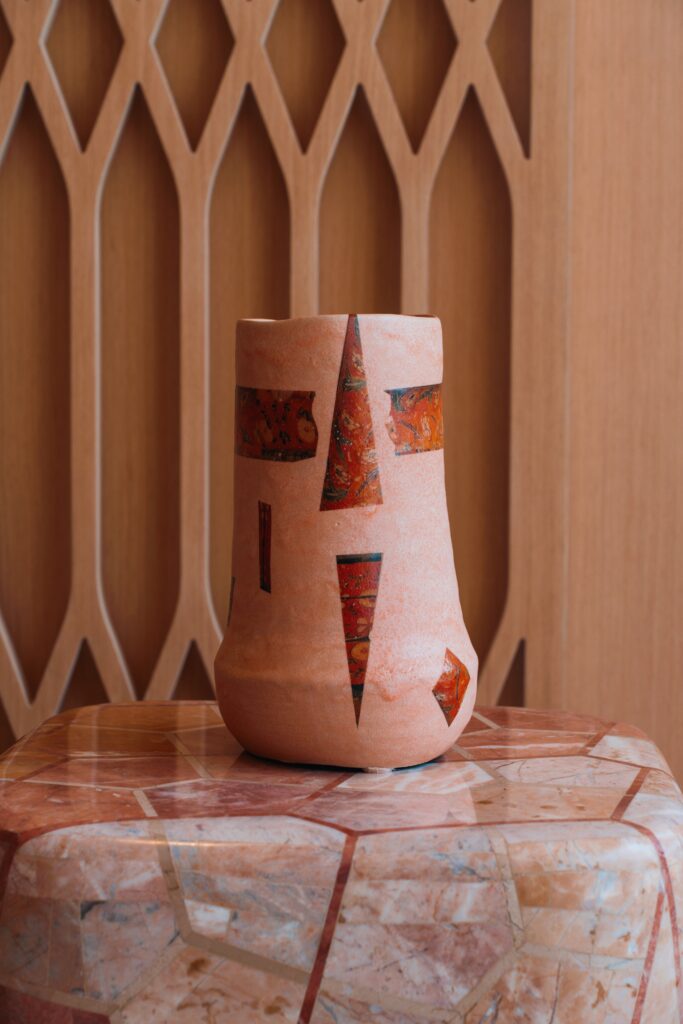
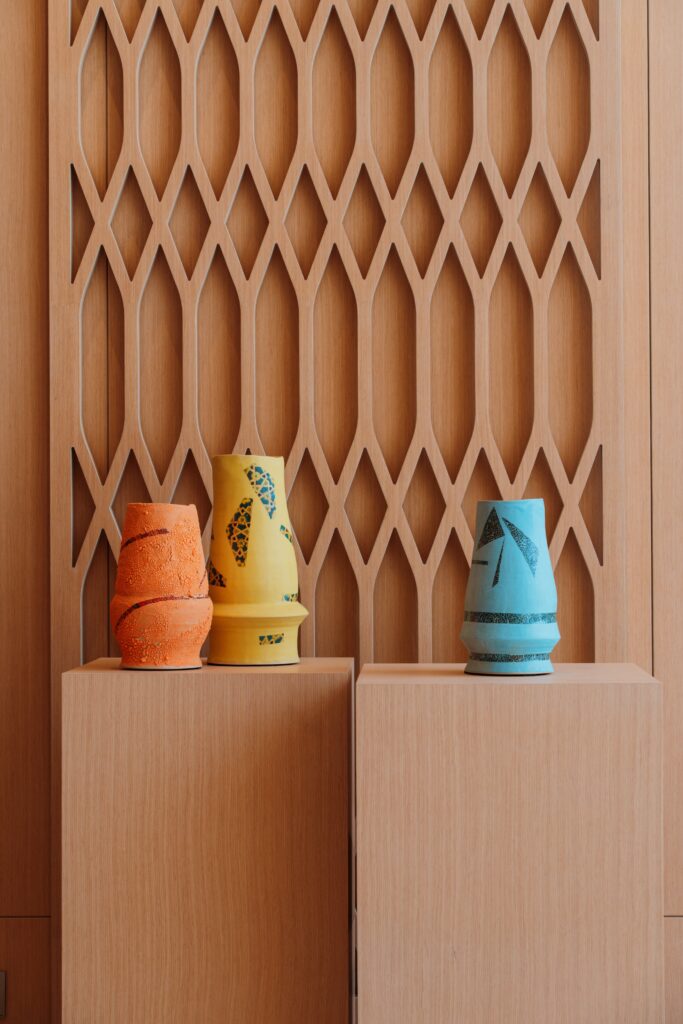
“The WA Collective was born from years of travel and encounters with artisans and designers whose practices carry stories of place, culture and identity,” says Debs. “Through this platform, I hope to create meaningful exchanges that celebrate craftsmanship not as something static, but as something living and continually evolving.”
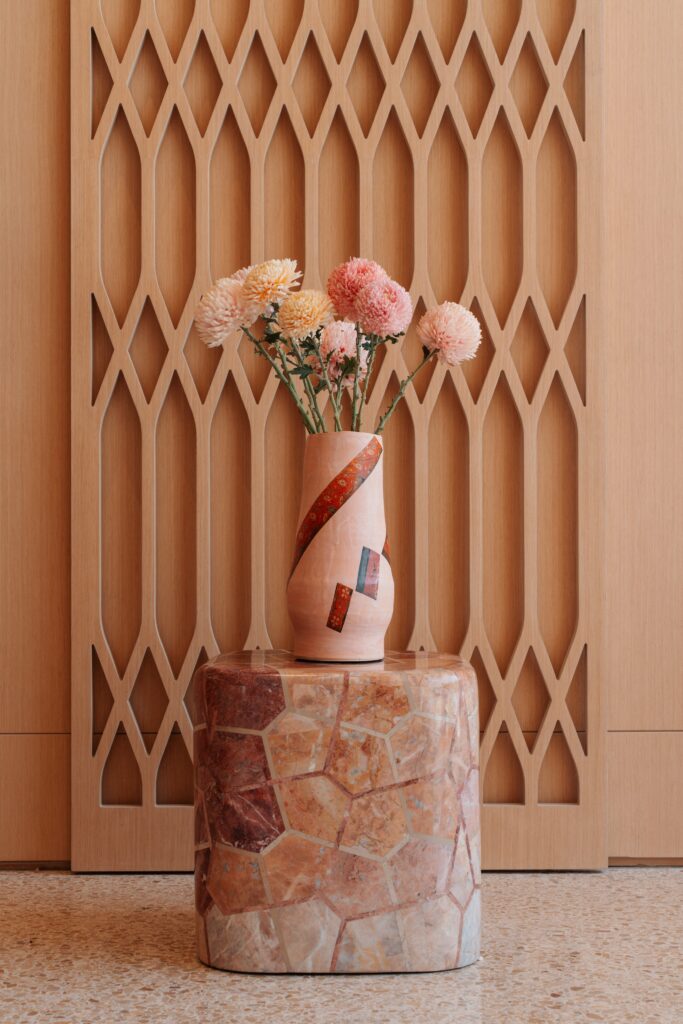

As the collective begins its programme, Traces establishes an interesting precedent. The collection is less concerned with preserving architectural history than with allowing it to move, adapt and take on new forms. In doing so, it suggests that architecture’s influence does not end at the scale of the building. Sometimes, it continues its journey through the objects that carry its memory forward.