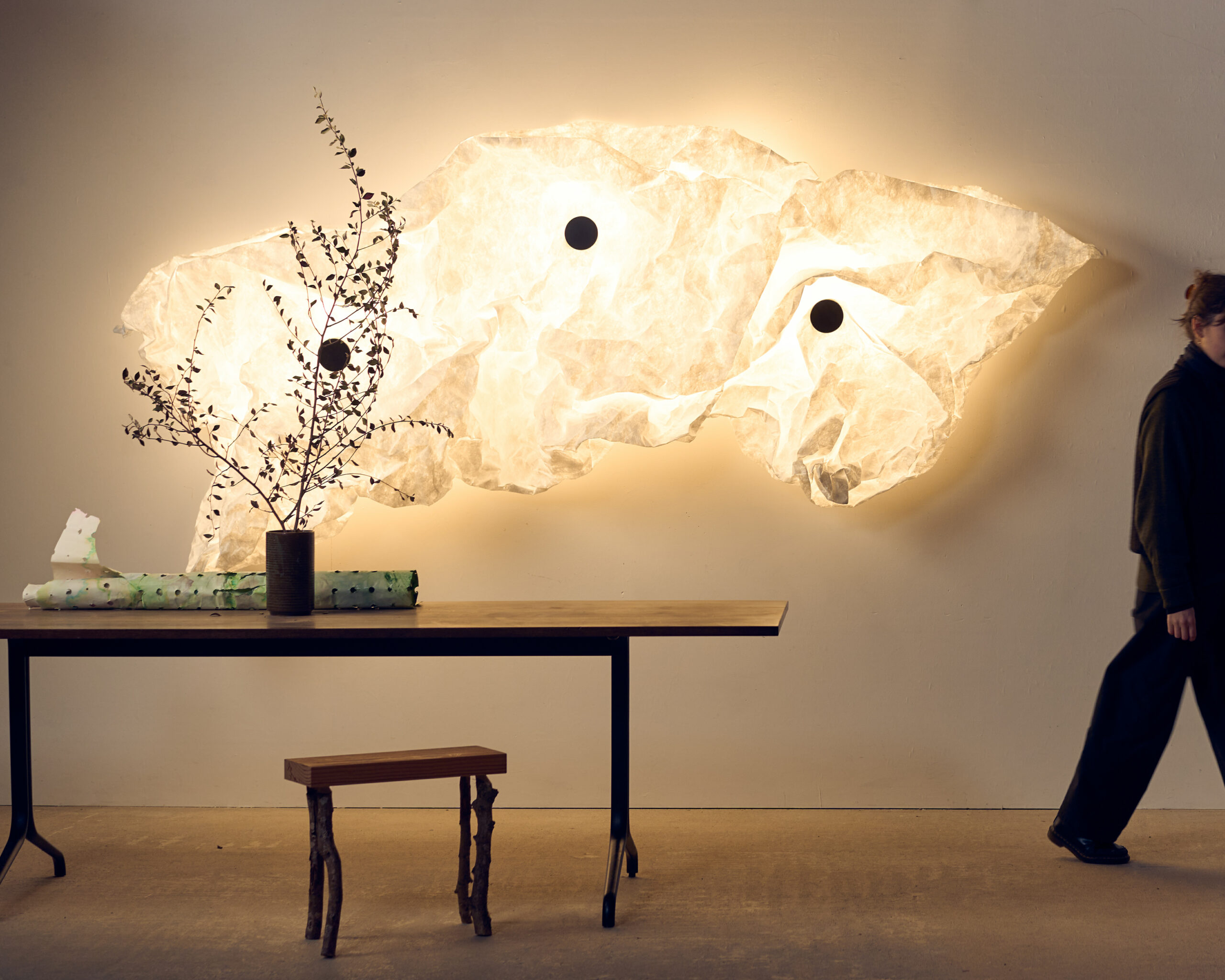
During Salone del Mobile Milano 2026, Marie Claire Maison sat down with designer Erwan Bouroullec to discuss his latest creation for Flos: Maap, a lamp that shifts light from a fixed point into a spatial, atmospheric presence. He tells us about a way of working that unfolds over time, where light becomes something that surrounds the body rather than defines it, and where a degree of unpredictability is not avoided, but sought.
Your collaboration with Flos spans many years. What made this the right moment to develop Maap?
Flos is quite a long story. I first worked with my brother, Ronan Bouroullec, and even after we divided the studio, Flos has always remained one of the major companies I work with. Some ideas need time. There are limitations, but they can also be productive limitations. To reach a different level, you need to grow a concept over time. Maap is partly a result of earlier work. Some things simply need time to mature.
Lighting is often treated as technical. With Maap, it becomes spatial and atmospheric. How do you see its role today?
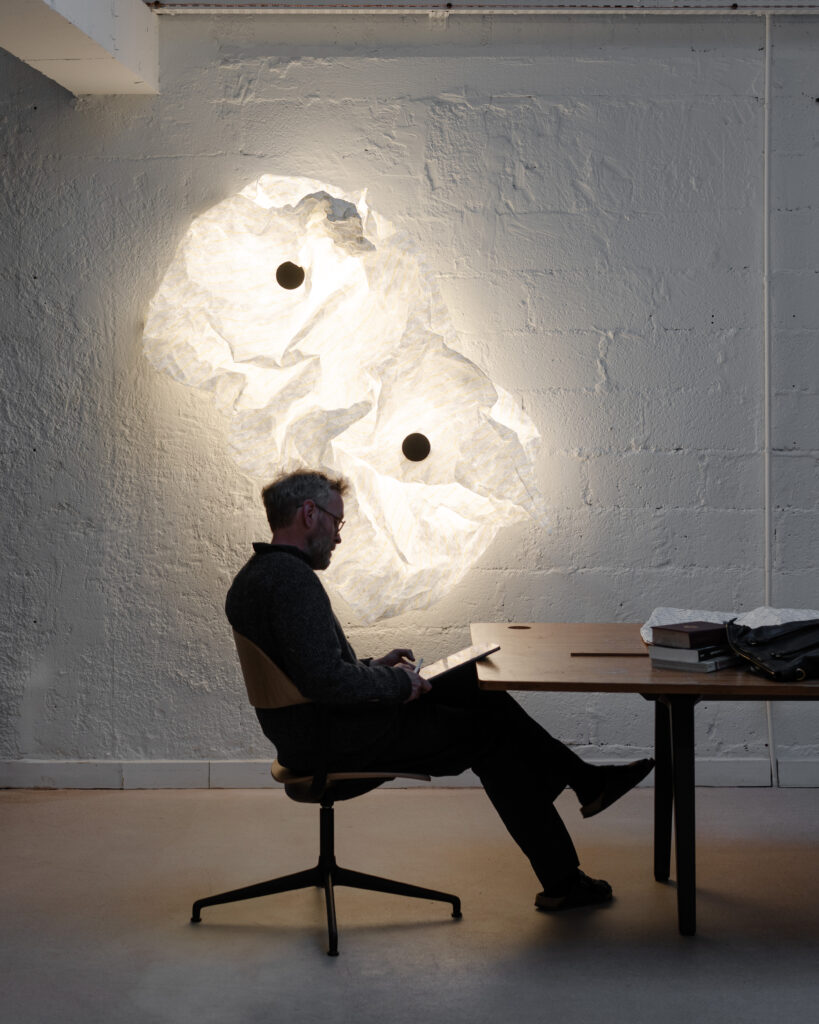
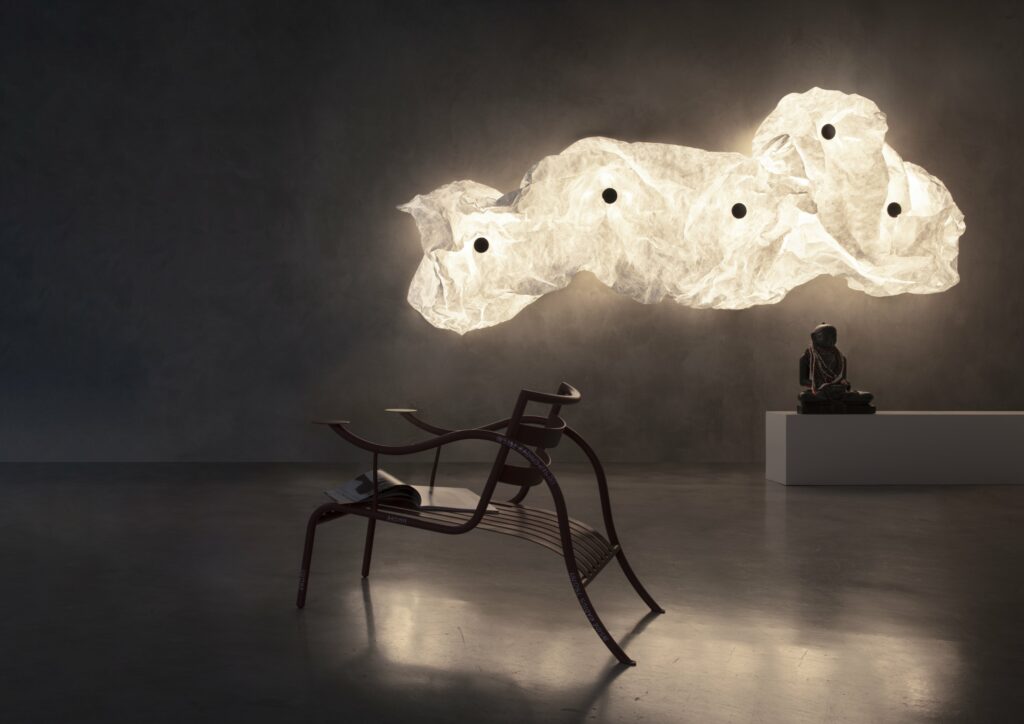
Light is fundamental. It is what surrounds you, what makes things emerge. I always ask what it will do to the space and to the body. Most lighting comes from a single point, but the sun does not behave like that. With Maap, the idea was to create a large surface so that light comes from everywhere, creating an atmosphere. It surrounds you, without strong shadows. Light also carries a certain magic. We can rationalize many things, but light always remains something that touches your skin, that changes with the environment. With Maap, I tried to grow this quality.
The lamp feels almost immaterial. Can you tell me about its construction?
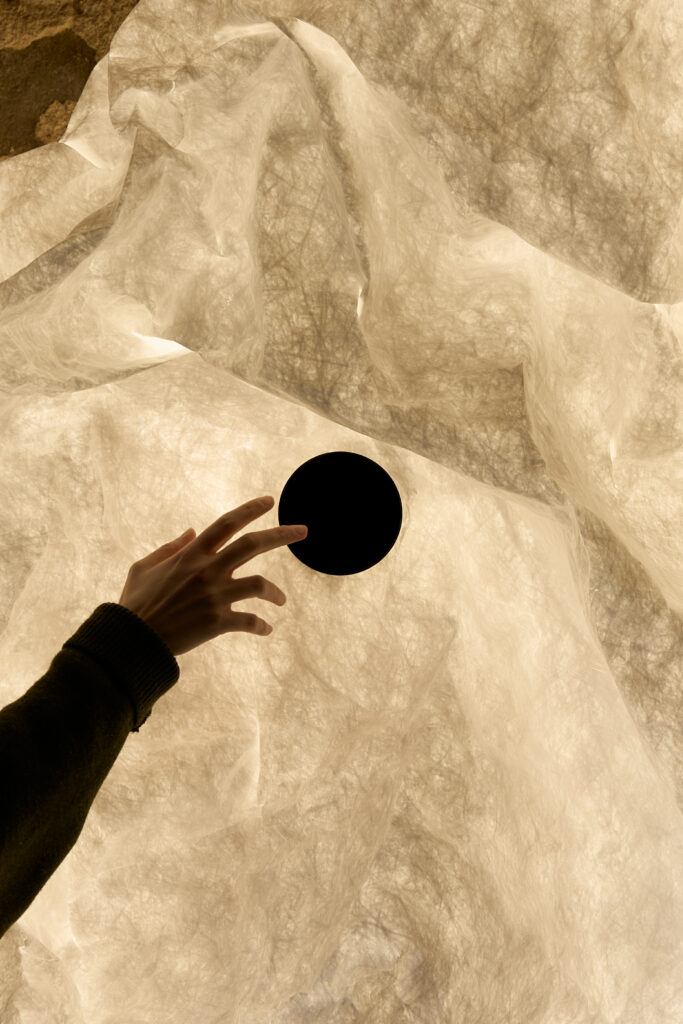
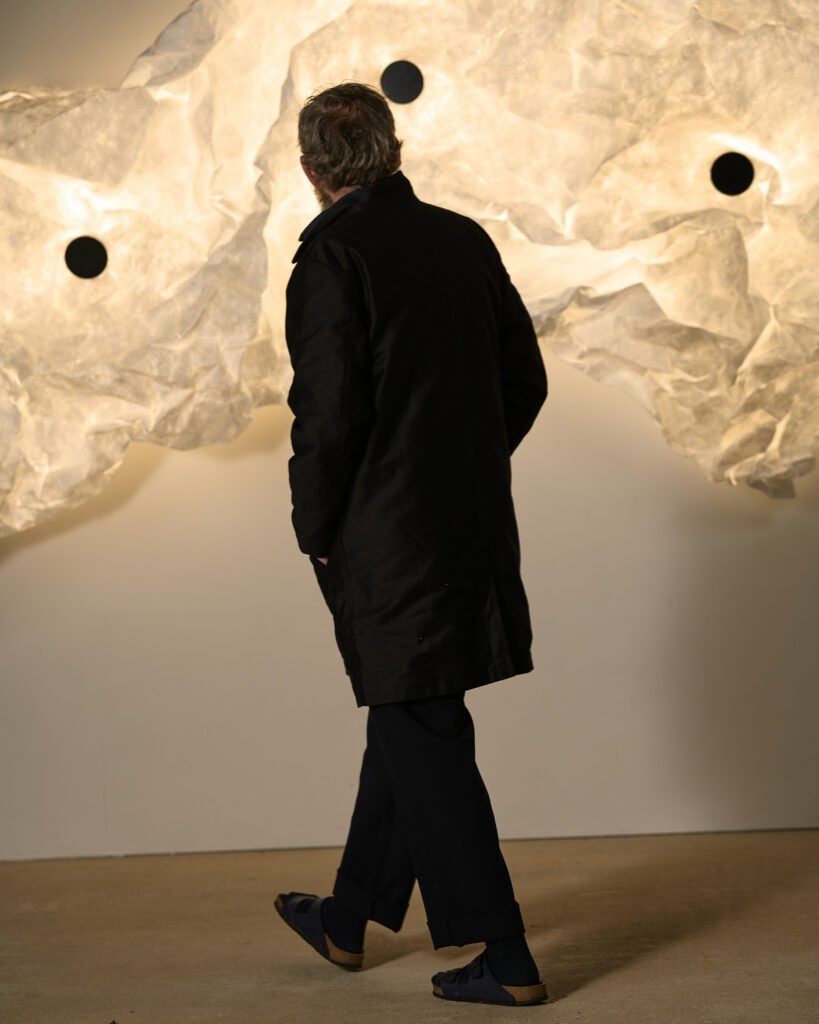
Maap is based on an idea of minimum. The envelope is made of Tyvek®️, a material that looks like paper but is tear resistant and extremely light. Even though the piece is large, it is almost nothing in weight. The structure holds the source, but the shade itself is only a few hundred grams. It is incredibly lightweight.
How did you arrive at this material?
The beginning was around paper. During the COVID period, I was in the countryside with my family. My daughters wanted to make something for their mother’s birthday, so I used a piece of wood and a simple paper bag as a shade. That gesture stayed. The project evolved beyond that moment, but the idea of paper remained, and we moved to Tyvek®️ to ensure durability without losing that lightness.
You mentioned that Maap embodies several ideas. What are they?
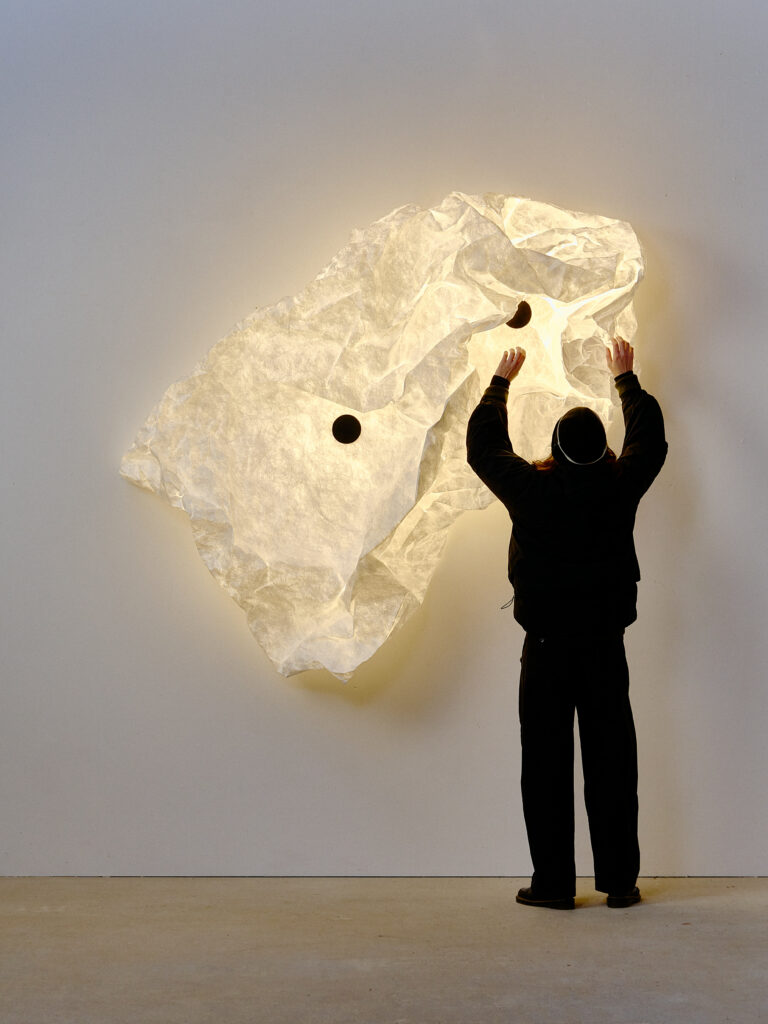
There is something particular in the way you look at it. Your eyes keep searching because the structure is chaotic. You recognize something, but you cannot fully define it. It can resemble a mountain or a physical phenomenon. I am very fascinated by nature. Nature is full of geometry, but not a simple one. It is a complex geometry that you cannot immediately reduce. Maap grows from that. You cannot fully control it. You have to accept a degree of chaos, but it still produces a balanced result.
There is also a participatory aspect in how the piece is installed. How do you approach authorship here?
I learned a lot from contemporary art, where the conceptual decision is fundamental. Sometimes the artist defines the process rather than the final form. With Maap, I define the elements, but not the final result. When you install it, you need to look at the space and engage with it. It is similar to cooking. You cannot cook without involvement. Here, the user participates in shaping the outcome.
Your connection to the countryside seems central to your thinking. Does it inform Maap?
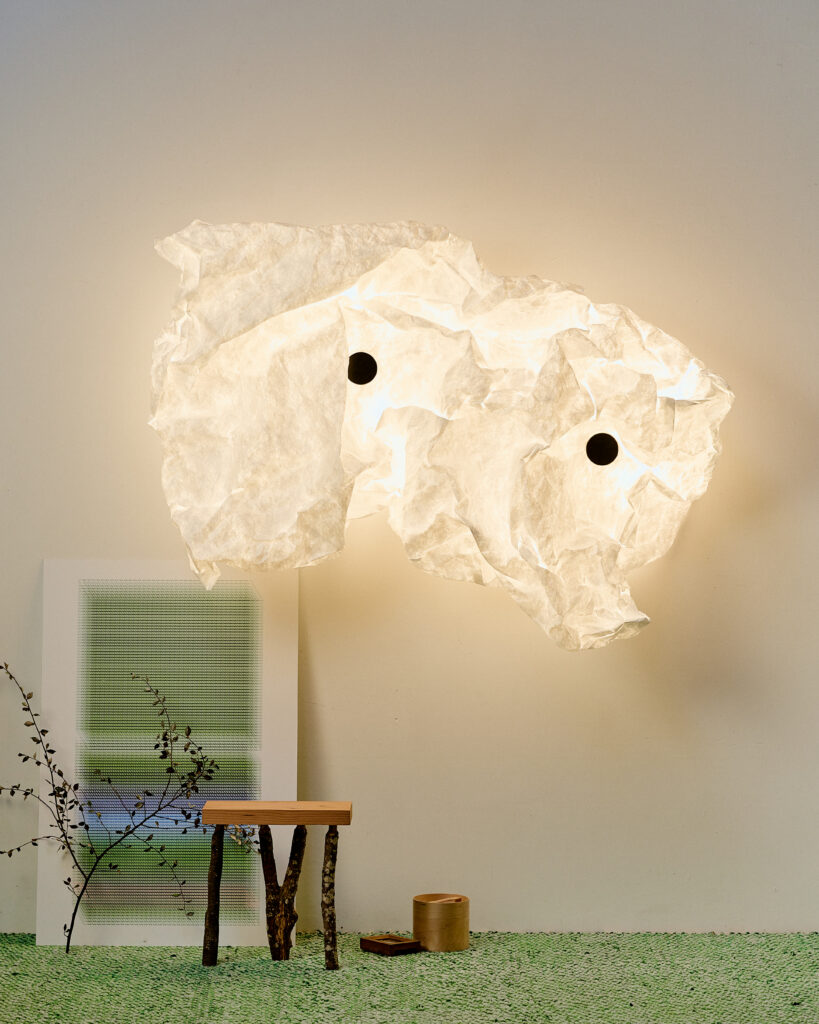
I was born in the countryside, so for me it has always been a space of freedom. You interact directly with materials, with weather, with changing conditions. Your body receives constant information through sight, touch, smell. In contrast, cities can be very standardized. You are protected from variation. With Maap, I try to reintroduce a certain complexity, something less controlled, something that brings back a sense of wonder and variability.
There is a sense that Maap resists strict definition. Is that intentional?
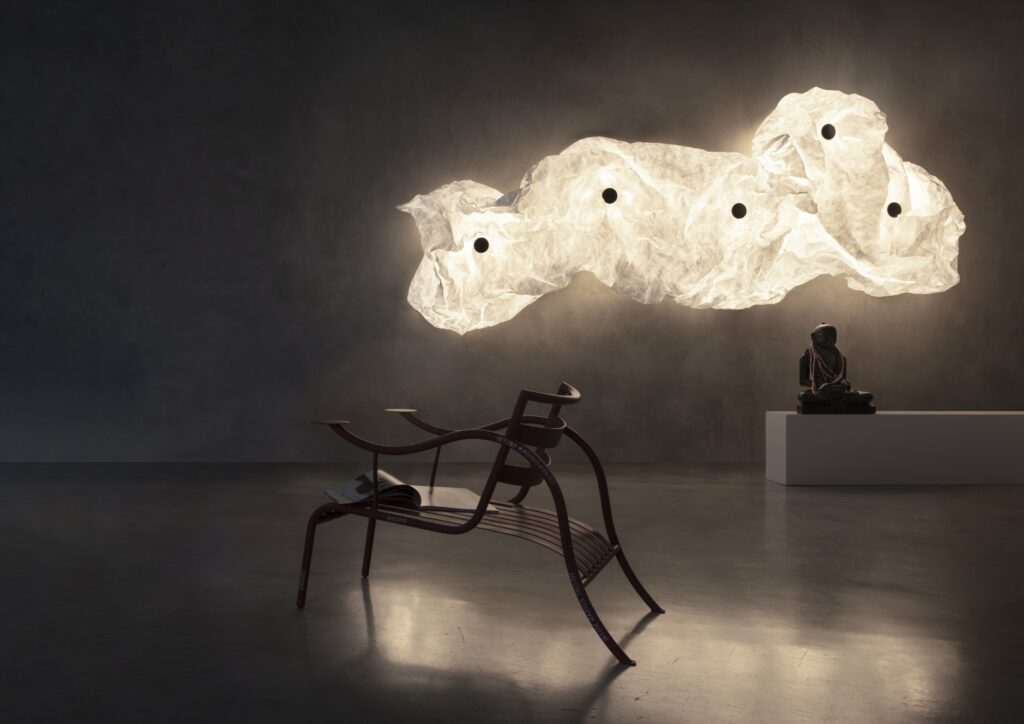
Yes. Design must remain rational and functional, but it can also include wonder, humor, or irregularity. At Flos, figures like Achille Castiglioni showed that design can question things. With Maap, a child might look at it and wonder why it is like this. That moment of questioning is important. It opens space for imagination. The object becomes more than a product, it becomes something you engage with.
So the ambiguity is part of its strength?
It leaves room for imagination. When it enters a space, it changes the nature of that space. It is more interesting to imagine what a room can become than to simply fulfill expectations. Raising a question is often the best way to generate answers.