Long before we understand architecture, we experience it. A bedroom corner becomes a castle, a chair transforms into a companion, and a favourite object acquires the status of personal mythology. The spaces of childhood are often our first encounters with beauty, comfort and imagination, yet for decades they have remained largely absent from serious design discourse.
Presented during Milan Design Week 2026, the new chapter of Dragons of Walton Street suggests that may be beginning to change. Long associated with hand-painted fantasy and artisanal craftsmanship, the British brand is undergoing a transformation that positions childhood not as a decorative niche, but as a legitimate field of contemporary design thinking.
Central to this evolution is architect and designer Carlo Colombo, whose appointment as creative director introduces a more architectural language to the brand. For the Italian designer, the appeal of designing for children lies precisely in its complexity. “Childhood is the most authentic territory of imagination,” he explains, “because it is free from many of the rules and conventions that shape adult thinking.”
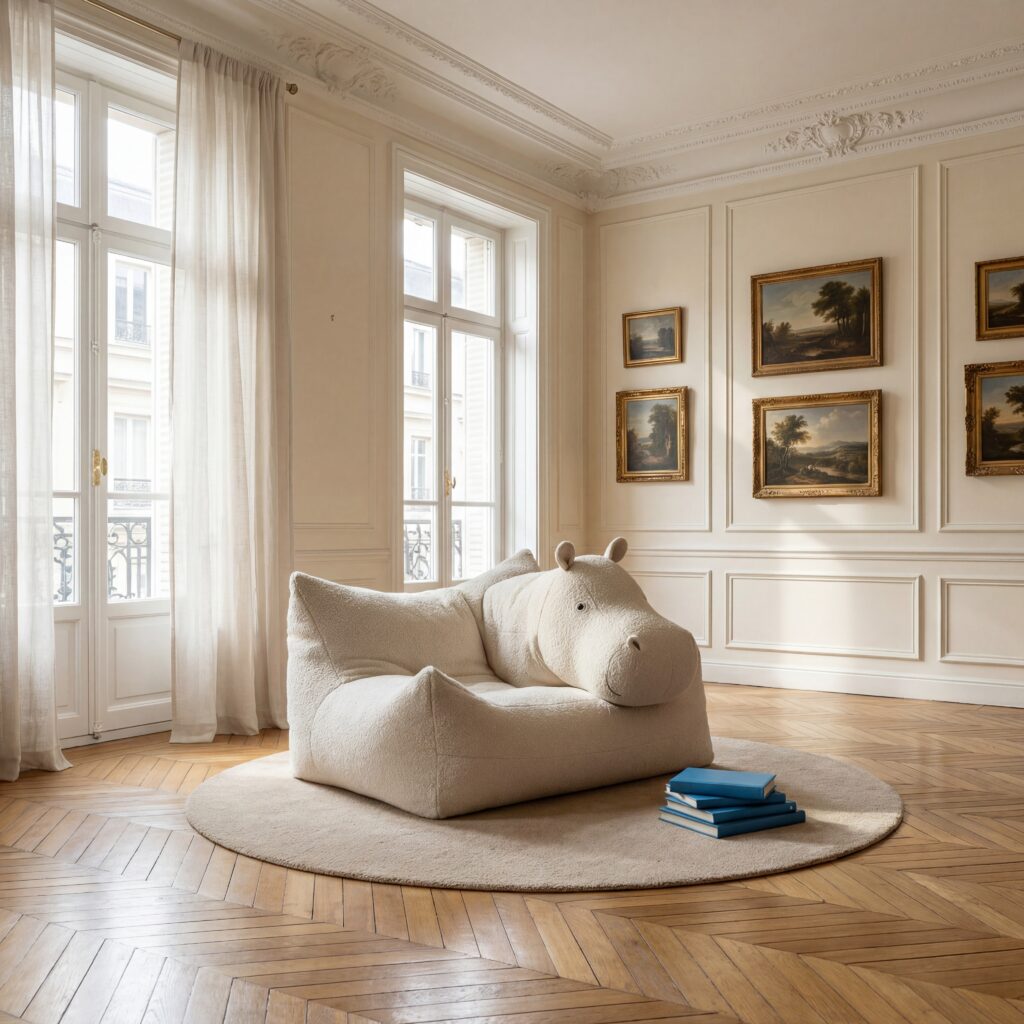
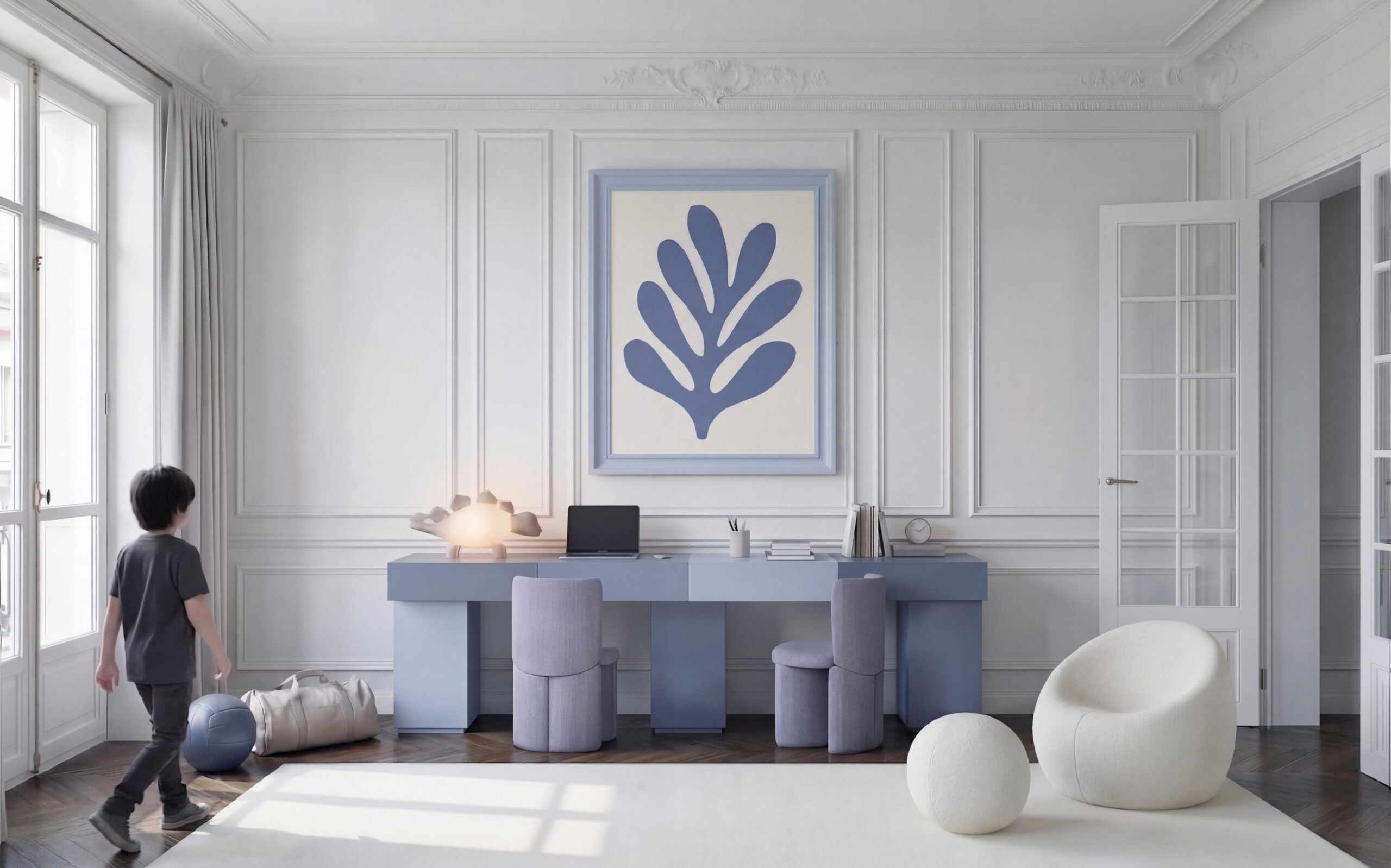
Rather than approaching children’s furniture as miniature versions of adult interiors, Colombo began with a more fundamental question: how does a child first encounter space? “A child’s bedroom is never just a functional room,” he says. “It is the first personal universe, the first space where a child begins to recognise himself, to project imagination, to build memories and emotional connections with the objects around him.”
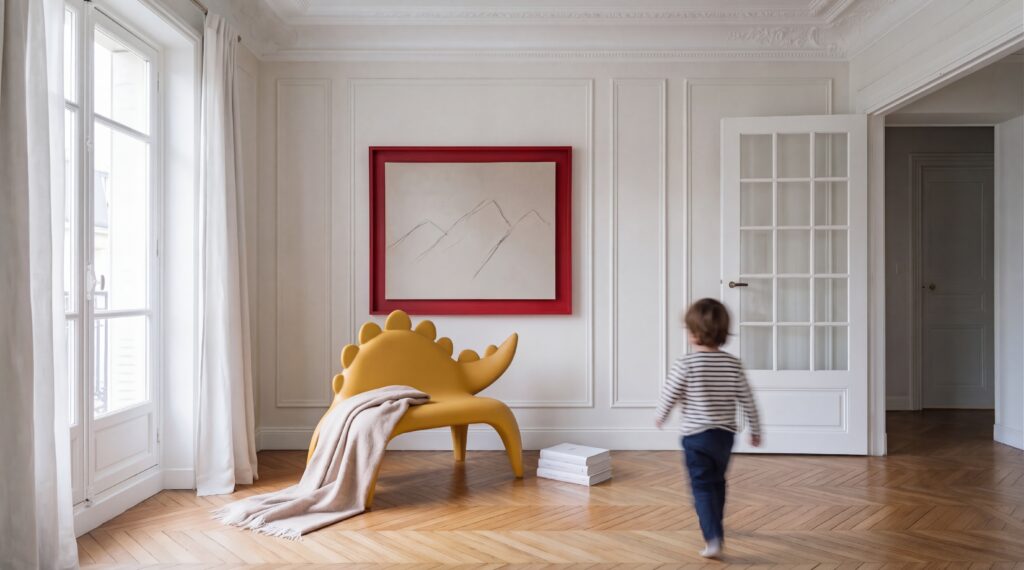
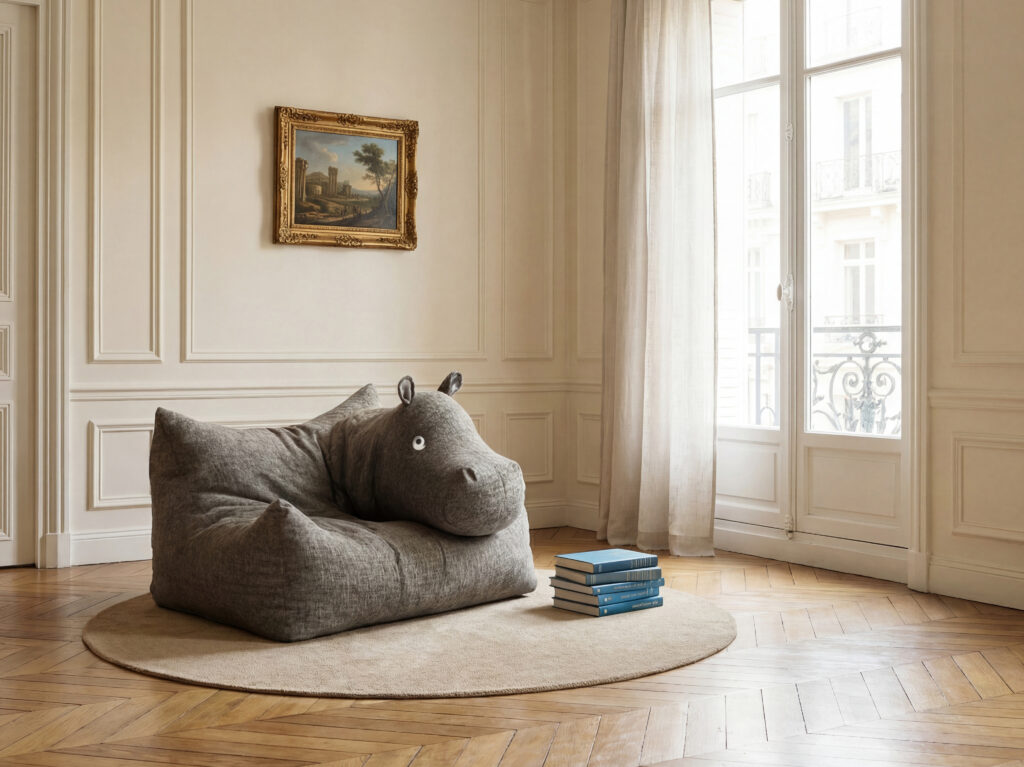
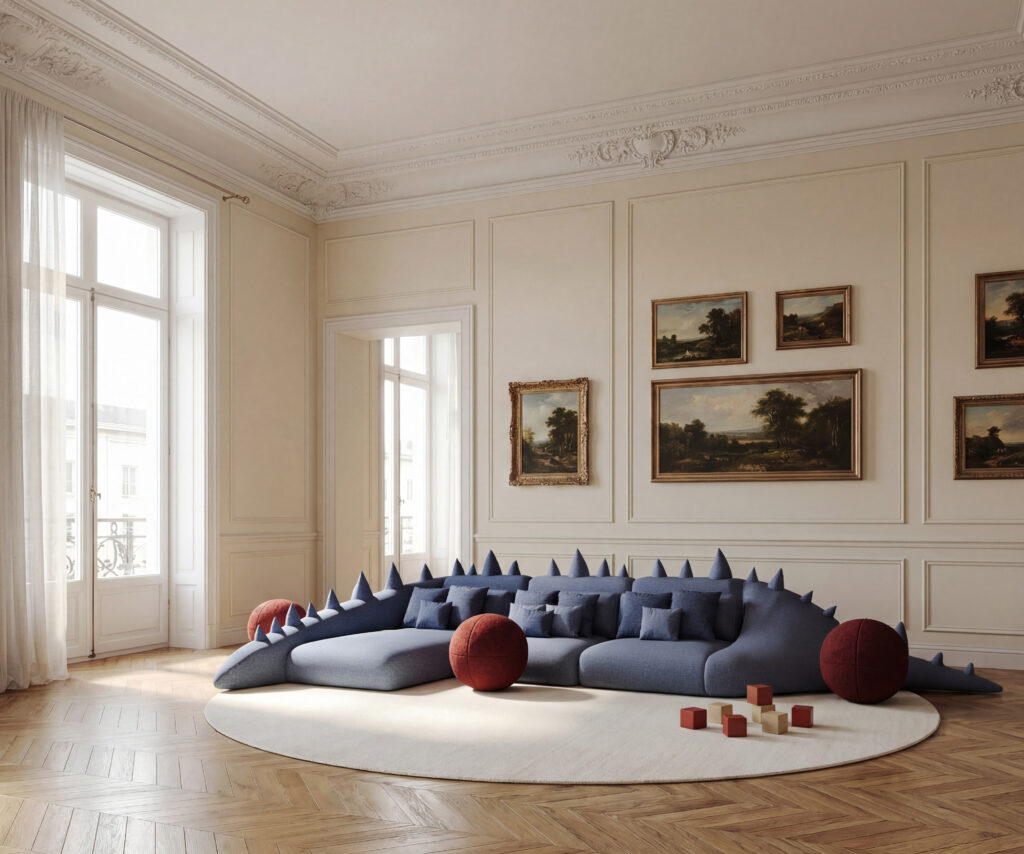
That idea resonates throughout the collection, where familiar Dragons of Walton Street characters have been translated into sculptural, three-dimensional forms. The Hippo Armchair, Dragon Sofa and Little One Chair move away from decorative fantasy towards a more sophisticated exploration of volume, comfort and proportion. “The first rule was not to imitate a character, but to understand its essence,” Colombo explains. “The object has to be familiar to a child, yet refined enough to belong naturally within a contemporary home.”
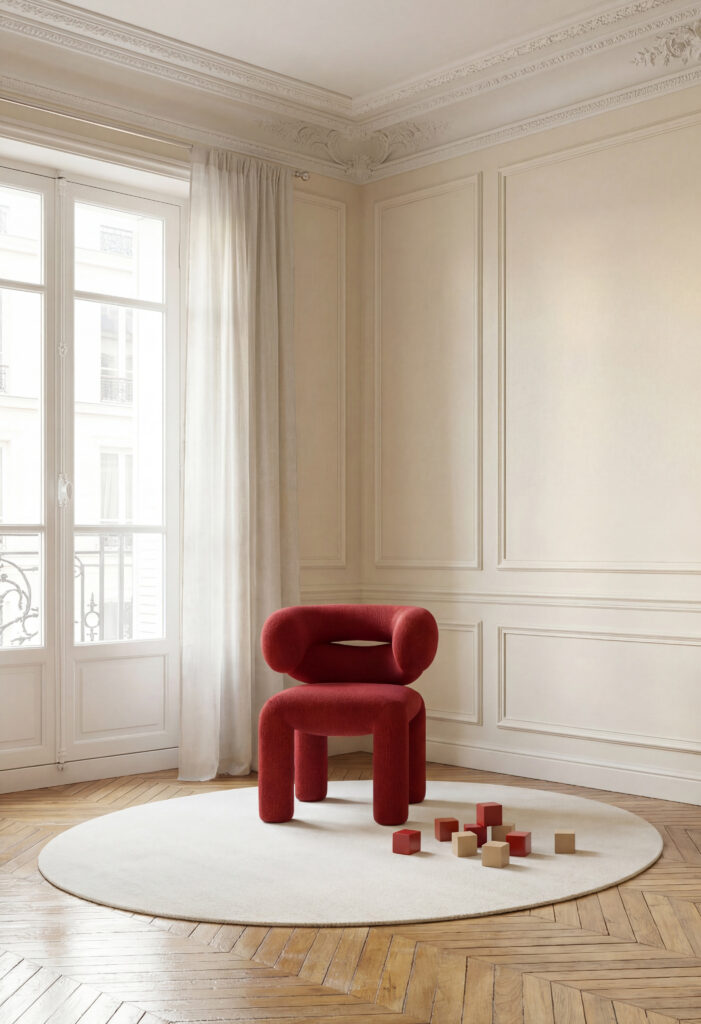
The shift reflects a broader evolution within luxury itself. Increasingly, value is measured not simply through ownership but through emotion, storytelling and experience. For Jeremy Preuss, Partner and Brand Director, childhood represents an overlooked territory within this conversation. “Childhood is one of the last untapped truly emotional spaces within design,” he says. “Families are looking for environments that shape imagination, identity, memory and emotional connection.”
Historically, children’s environments have often been treated as temporary spaces, functional necessities destined to be outgrown. Yet, as Preuss points out, these are the spaces where many of our earliest emotional associations are formed. “We believe childhood environments deserve the same intellectual and emotional attention as any other area of architecture or interior design,” he says. “A thoughtfully designed space can nurture curiosity, calmness, creativity and emotional security in profound ways.”
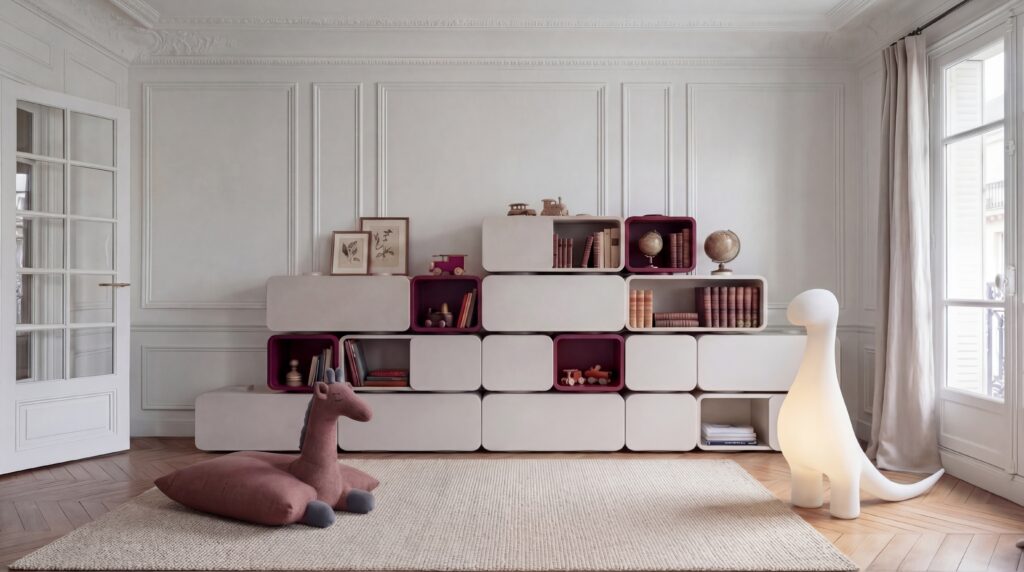
This ambition extends well beyond furniture. Dragons of Walton Street increasingly speaks the language of a luxury maison rather than a product brand, envisioning a future that includes immersive environments, hospitality concepts, experiential destinations and family-focused spaces. “We see Dragons of Walton Street as a universe rather than a product category,” says Preuss. “Furniture is simply the beginning.”
Such thinking feels particularly relevant at a moment when design brands are expanding into broader lifestyle ecosystems. If luxury hotels have become destinations for wellness, culture and community, why shouldn’t childhood be approached with similar ambition? The brand’s vision suggests that children’s environments can be places of emotional sophistication, where craftsmanship, storytelling and design intersect.
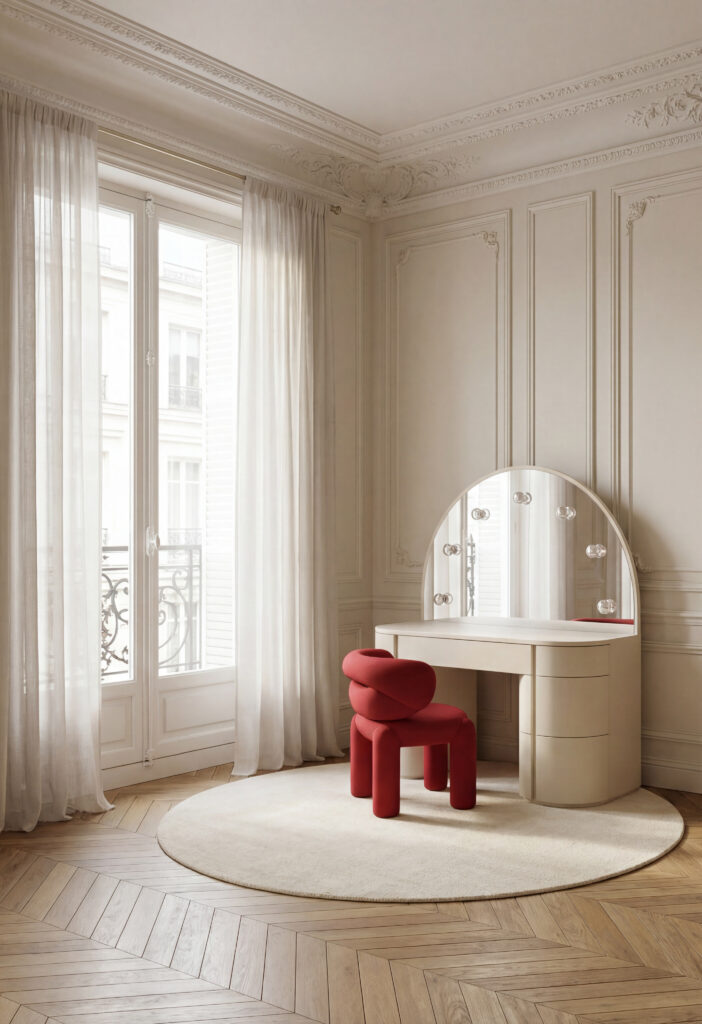
It is also a philosophy grounded in materiality. Throughout the collection, rounded volumes, tactile surfaces and carefully considered textiles encourage physical interaction and emotional comfort. Colombo describes material as something inherently emotional. Children, after all, understand objects through touch long before they understand them intellectually.
The conversation takes on additional relevance in the Gulf, where family-oriented luxury, experiential hospitality and large-scale placemaking projects continue to reshape the region’s design landscape. Dragons of Walton Street clearly sees the Middle East as central to its future. “The GCC market, and particularly the city of Dubai, sits at the heart of our international expansion strategy,” says Preuss, confirming the opening of the brand’s first Dubai showroom later this year.
For Simona Struzzi, Group CEO of Dragons of Walton Street, the choice feels inevitable. “Dubai felt like a natural home for the next chapter of Dragons of Walton Street,” she says. “The UAE’s extraordinary blend of cultures and nationalities creates a uniquely inspiring environment, one that allows us to understand how families around the world live, dream and experience childhood, all within one vibrant destination.”
Ultimately, the significance of this new chapter may extend far beyond a collection launch. For too long, children’s interiors have occupied a curious blind spot within design culture, treated as temporary, decorative or secondary to the spaces inhabited by adults. Yet if design is fundamentally about shaping how we live, feel and remember, few environments are more influential than the rooms in which childhood unfolds.
The real question raised by Dragons of Walton Street is therefore larger than furniture. It is whether childhood itself can become a serious subject of architecture, craftsmanship and contemporary design. As luxury continues to move towards emotion, experience and meaning, it may prove to be one of its most powerful frontiers.