The contemporary café has become one of the most codified interior typologies of the past decade. Exposed machinery, visible roasting equipment, polished concrete floors and an abundance of technical details have formed a visual language that is now instantly recognisable. Cherry House, which recently opened in Dubai’s Al Safa district, belongs to the same universe yet attempts something more ambitious: it shifts the focus from coffee itself to the systems, movements and rituals that make coffee possible. Opened in Al Safa by Emirati entrepreneur Mohamed Matar Al-Kus El-Falasi, founder of Saddle and Feels, and designed by Verhaal, Cherry House extends a growing interest in hospitality concepts that place experience and storytelling alongside the product itself.
Named after the coffee cherry, the fruit that surrounds and protects the bean before roasting, the project is conceptually rooted in ideas of origin and transformation. This narrative is embedded directly into the architecture. Rather than concealing production behind service doors and back-of-house operations, the entire space is organised around visibility. Roasting, brewing and baking unfold in plain sight, allowing visitors to engage with processes typically hidden from view.
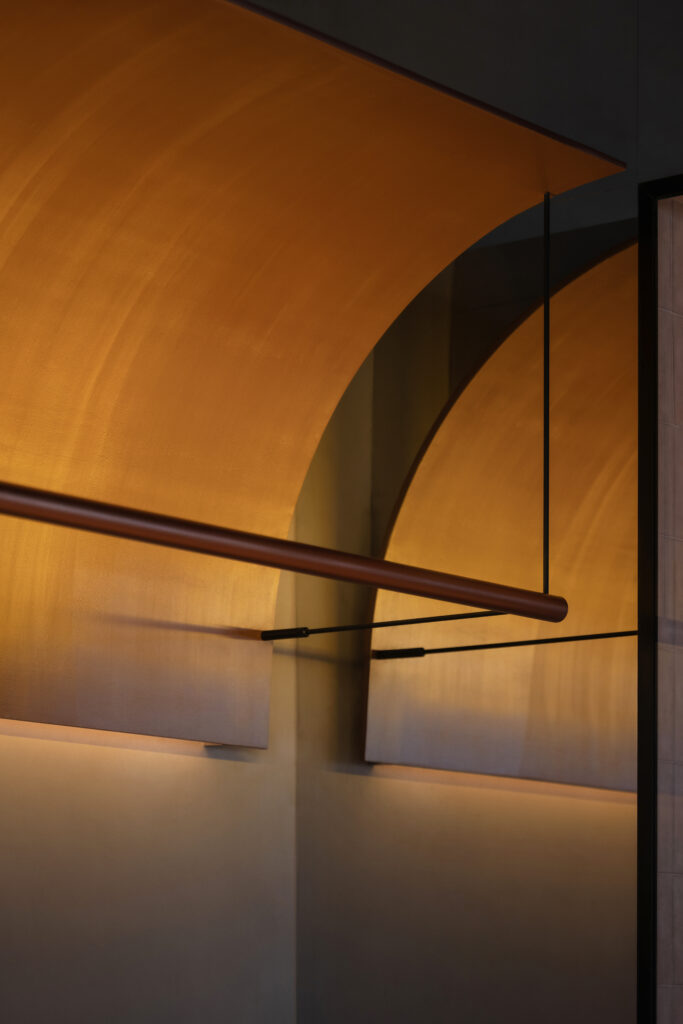
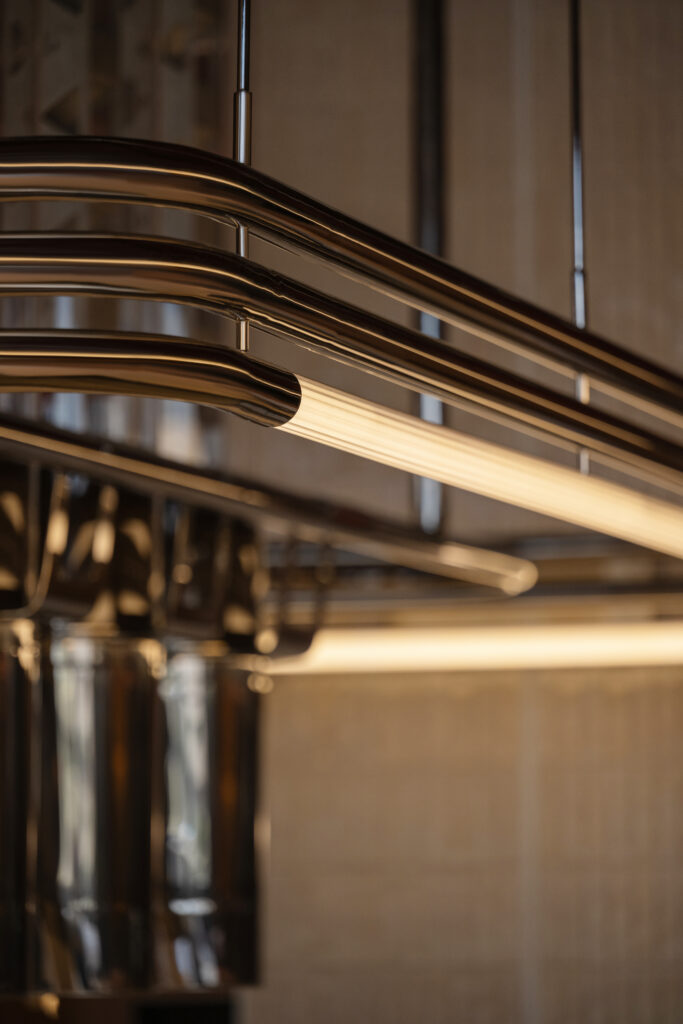
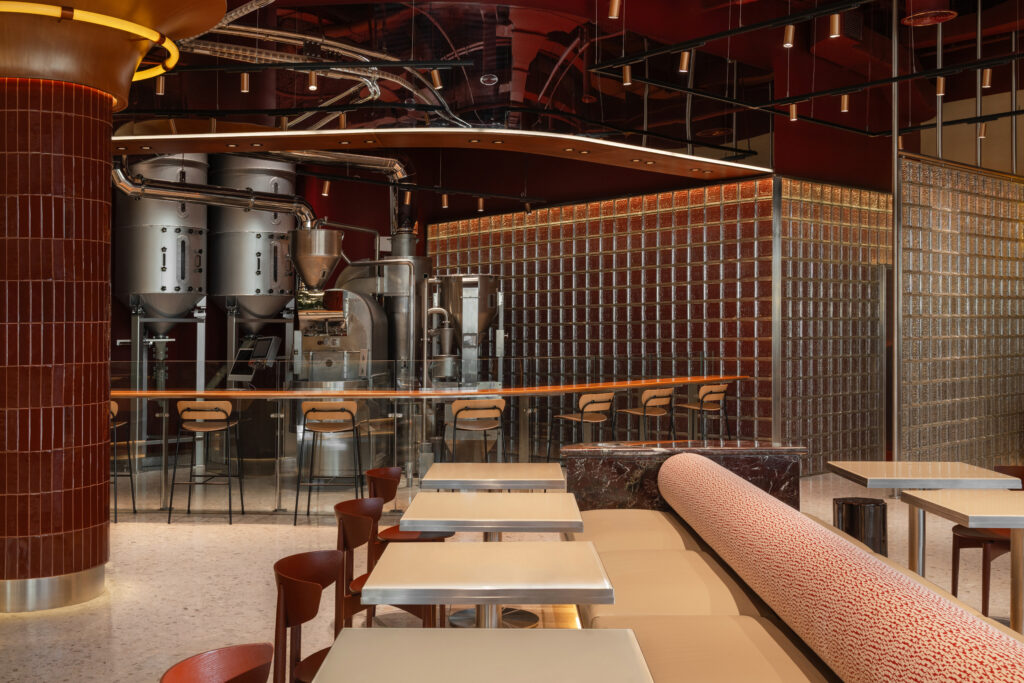
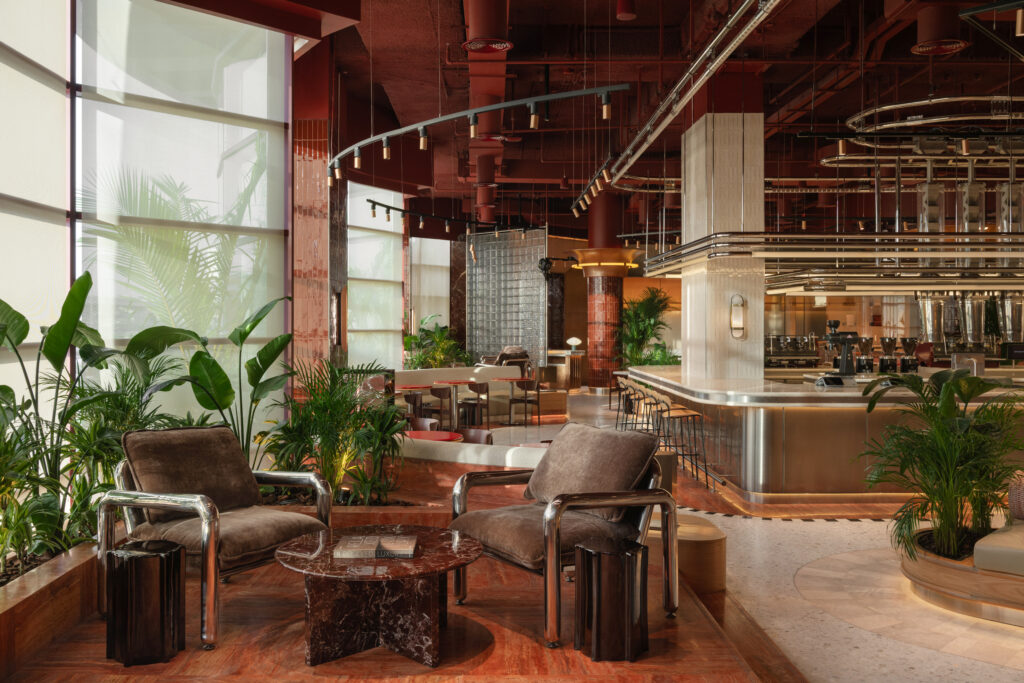
The most striking expression of this idea is the network of transparent pipes suspended overhead. More than a visual gimmick, the system functions as an architectural device, connecting the in-house roastery to the café floor and establishing movement as a permanent feature of the interior. Freshly roasted beans travel across the space, creating a constantly evolving installation that turns logistics into spectacle. The project’s overhead bean transport system is reportedly the first of its kind in the region.
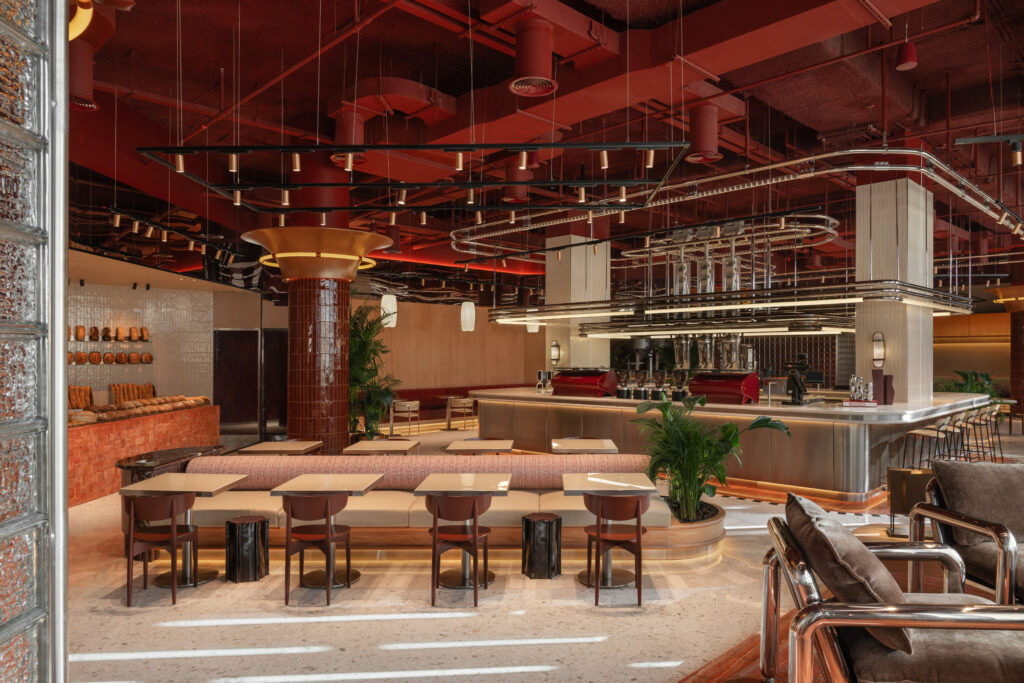
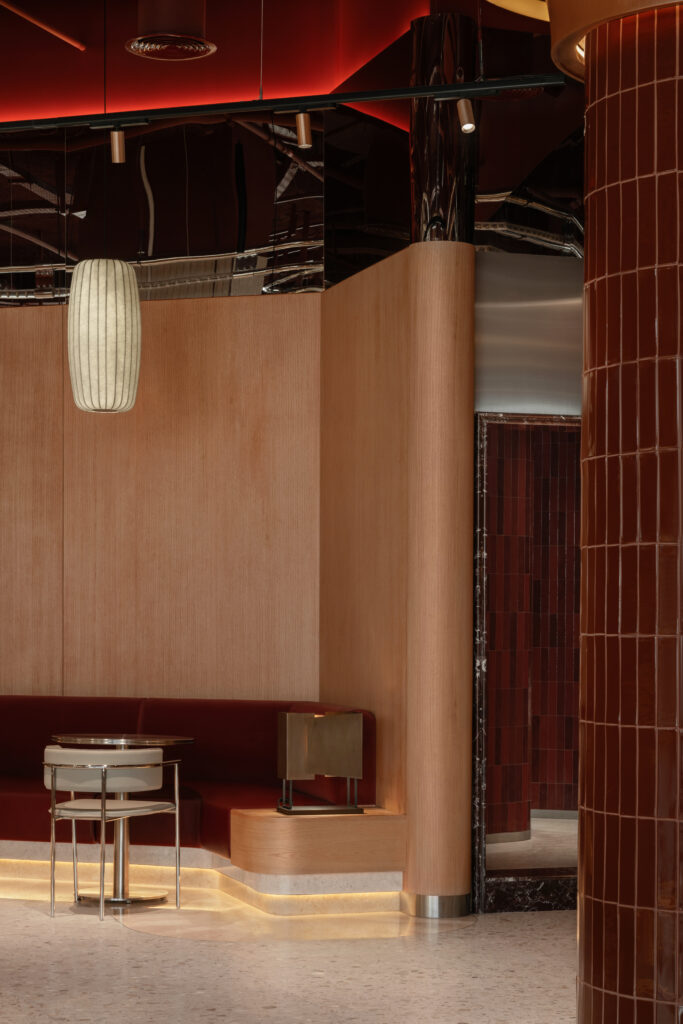
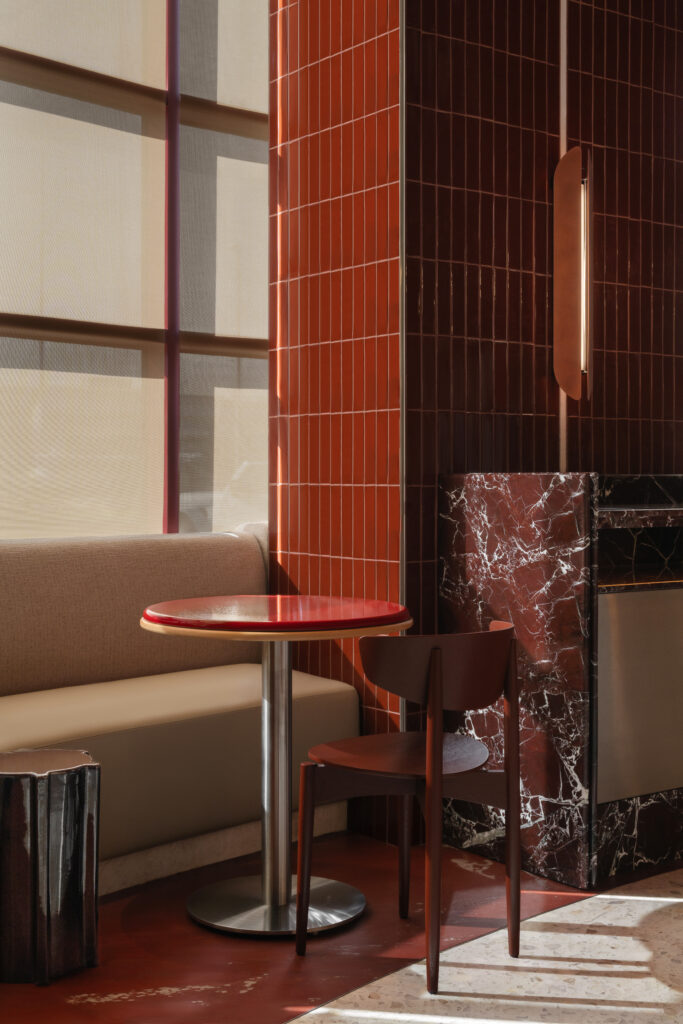
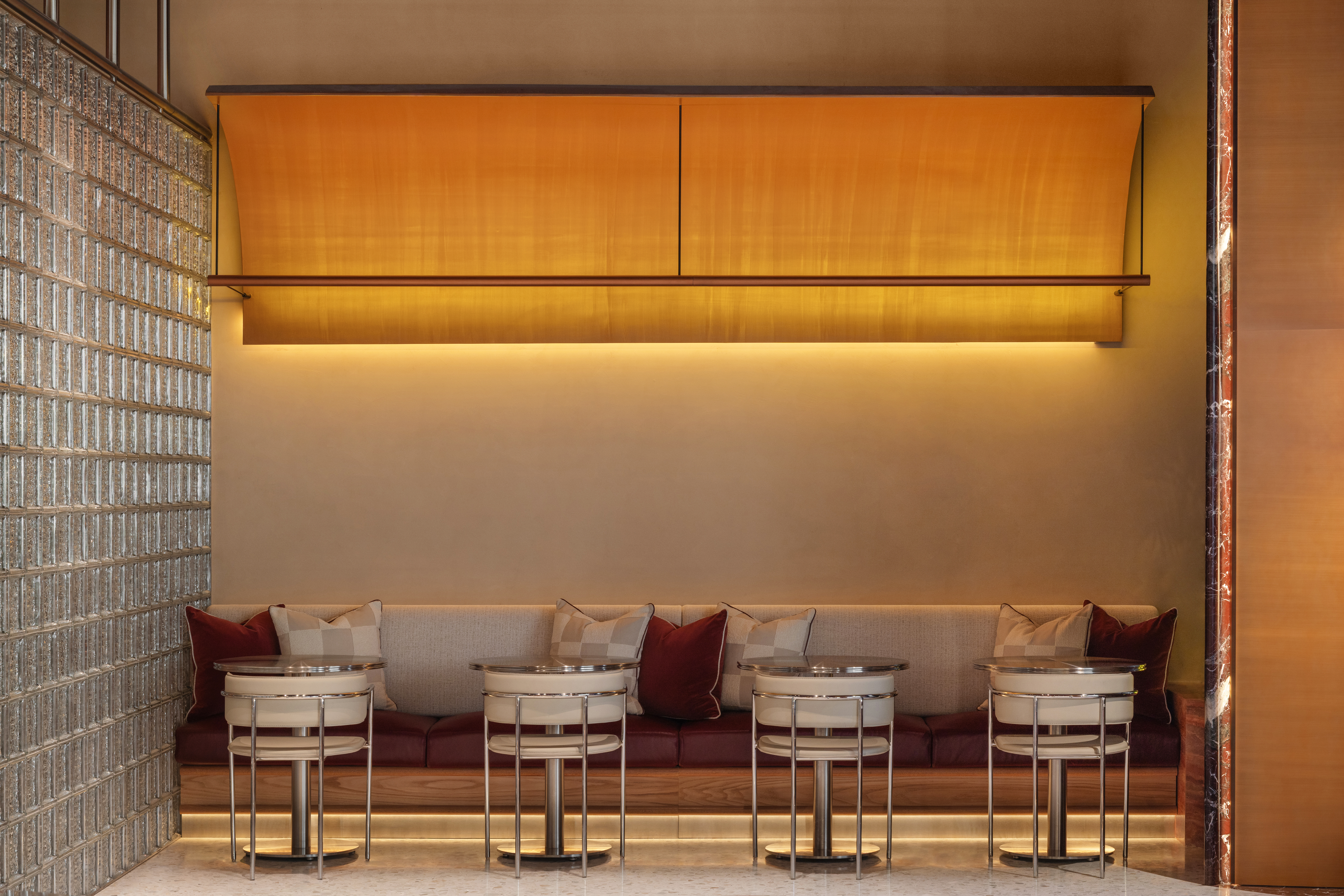
The material palette reinforces the narrative without becoming overly literal. Deep cherry hues reference the fruit from which the project takes its name, while metallic accents subtly recall the machinery of roasting. Throughout the space, tactile finishes and carefully edited details establish a dialogue between the bakery and the roastery, connecting grain and coffee through a shared language of craft.
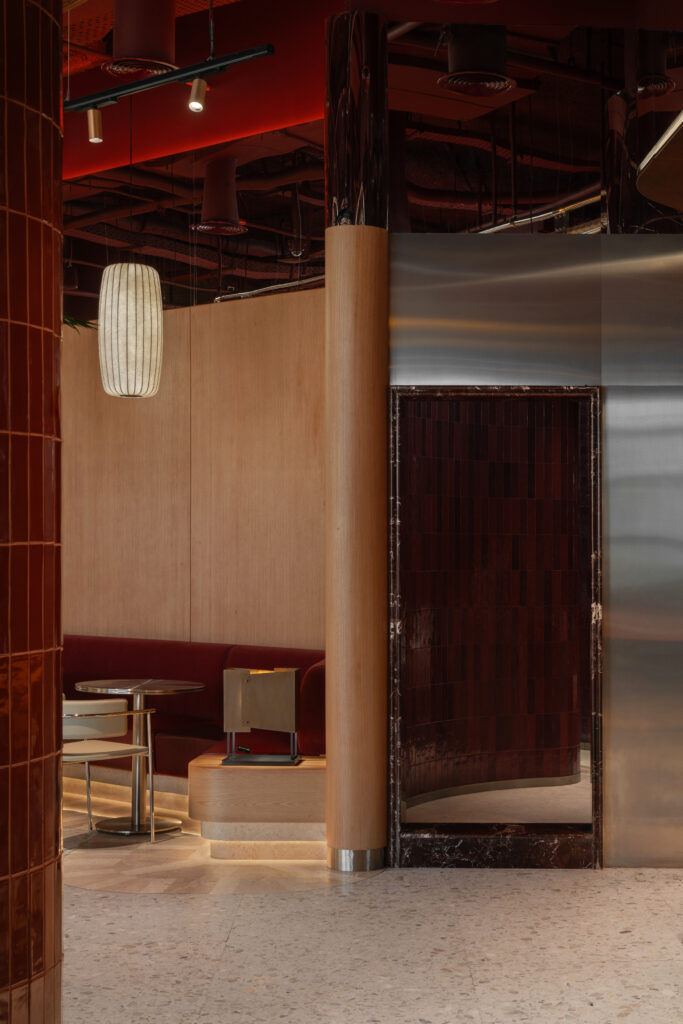
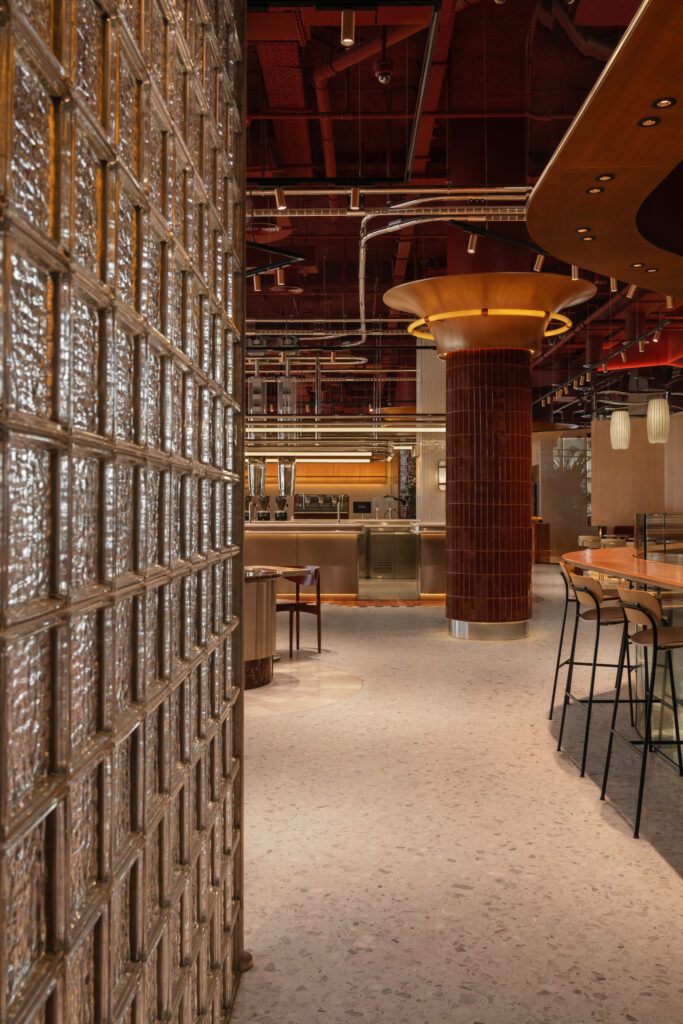
What ultimately distinguishes Cherry House is its refusal to embrace the rugged industrial aesthetic often associated with specialty coffee culture. The interiors are unexpectedly restrained. Light surfaces, soft textures and warm materials create a sense of calm that allows the choreography of production to remain the protagonist. The machinery is visible, but it never dominates.
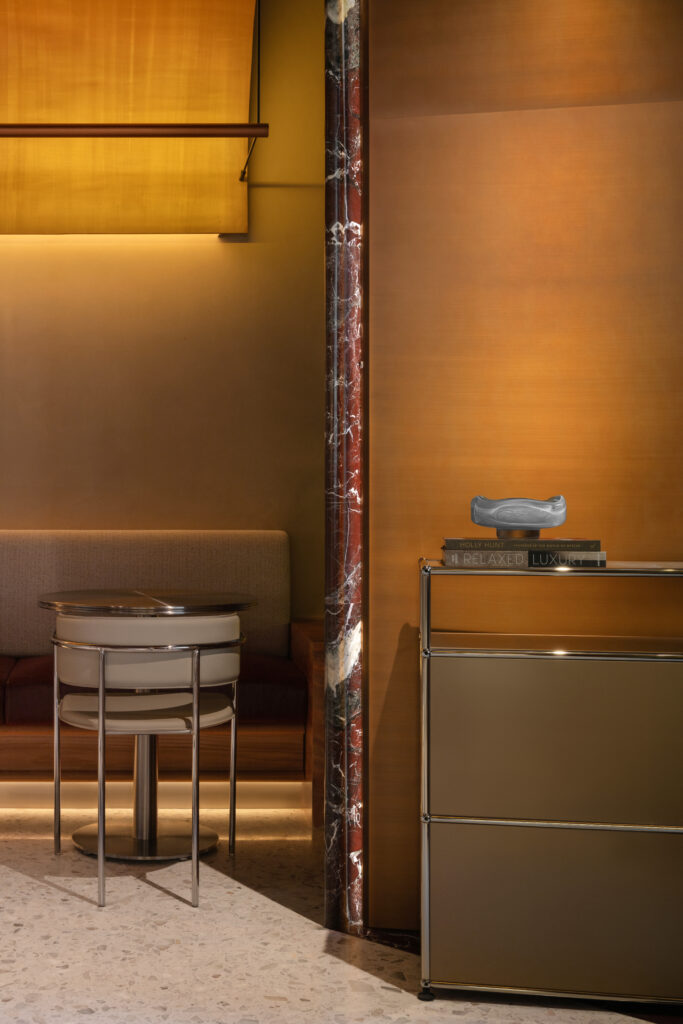
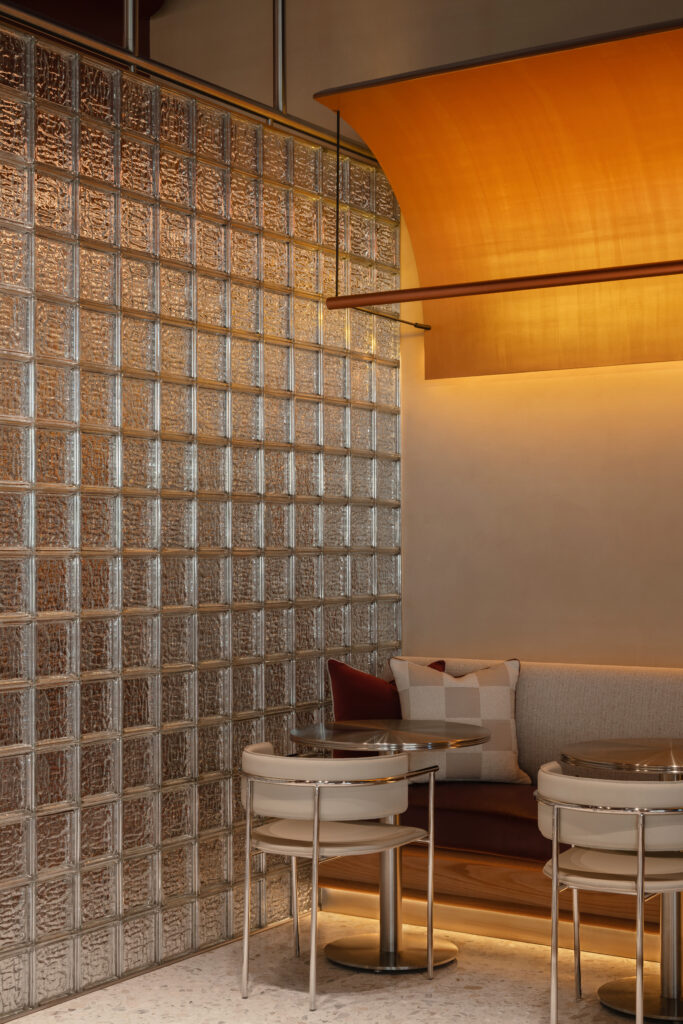
In this sense, Cherry House feels more like a contemporary workshop. Its most successful design gesture is not the overhead movement of beans, but the decision to treat making itself as architecture. In an age when provenance has become a cultural obsession, the project reminds us that process can be every bit as compelling as the final product.