Words by Allegra Salvadori
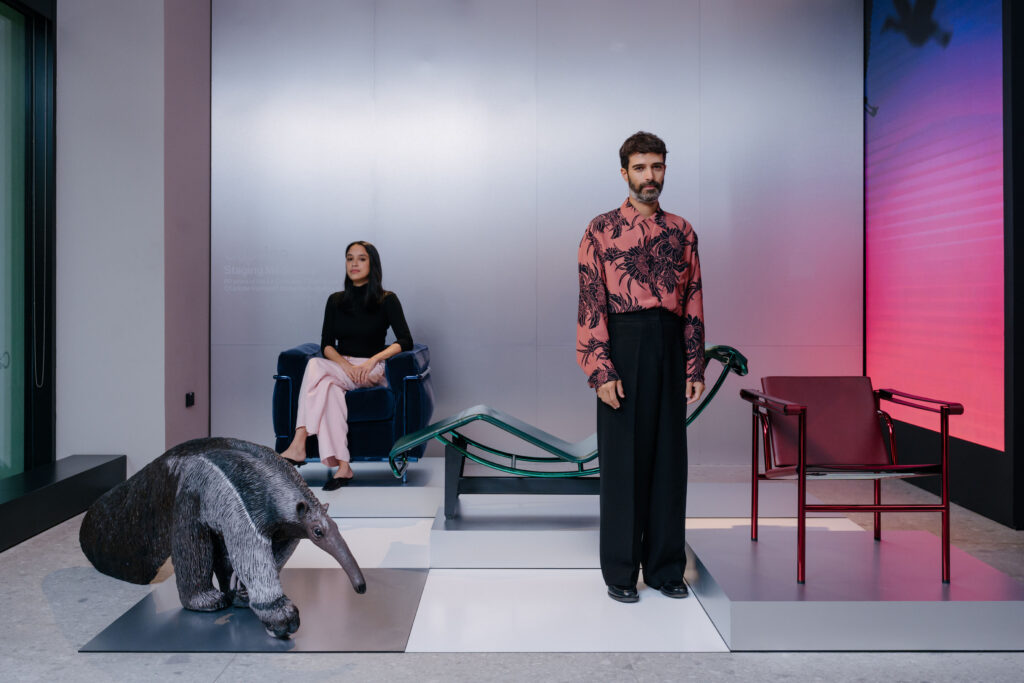
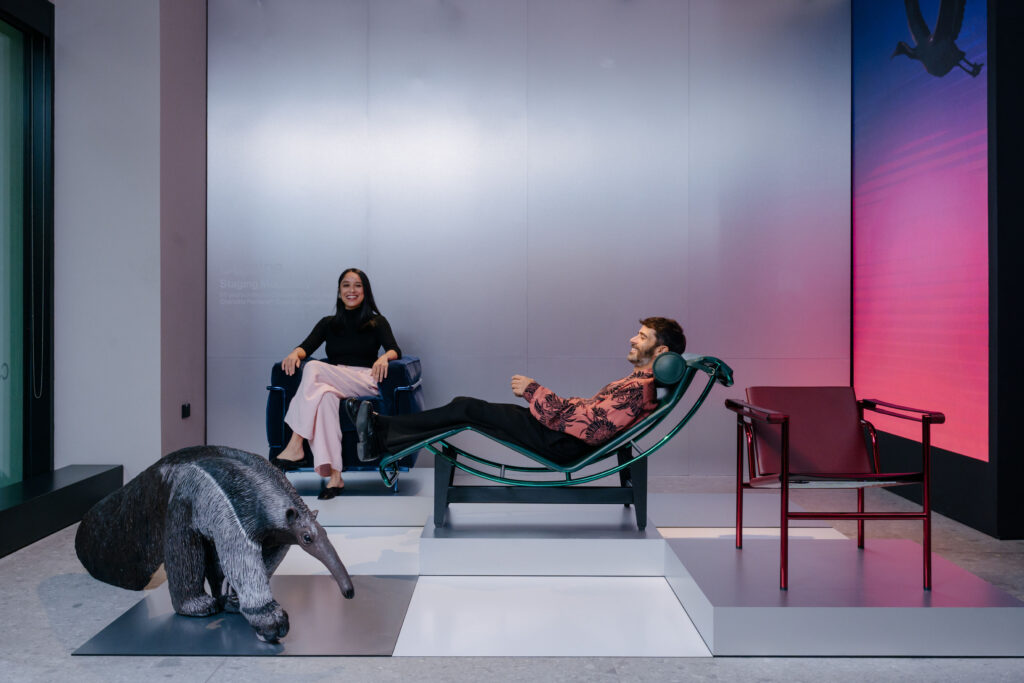
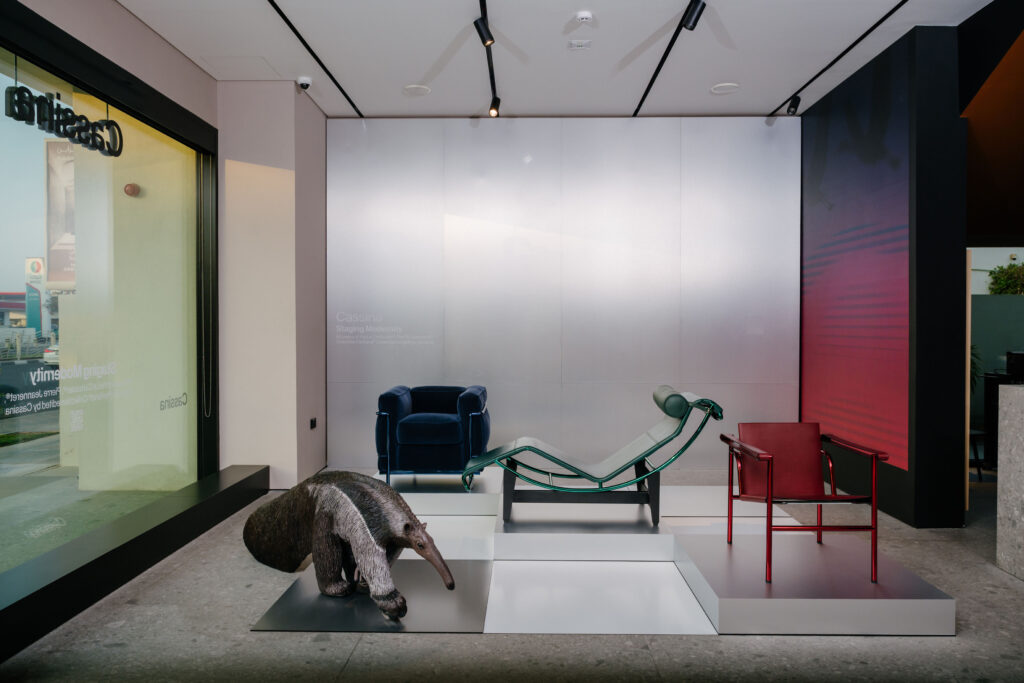
When Cassina brought Staging Modernity to Dubai, transforming its Jumeirah store into a living reflection on 20th-century icons, Marie Claire Maison Arabia attended the event presented by Cassina and Vivium — a conversation between Andrea Trimarchi, co-founder of Formafantasma, and Natasha Carella, Director of Dubai Design Week.
Amid glossy red, blue and green re-editions of Le Corbusier, Pierre Jeanneret and Charlotte Perriand’s legendary furniture, we spoke with Andrea Trimarchi of Formafantasma, the studio behind this conceptual celebration of sixty years of Cassina’s exclusive production of the collection.
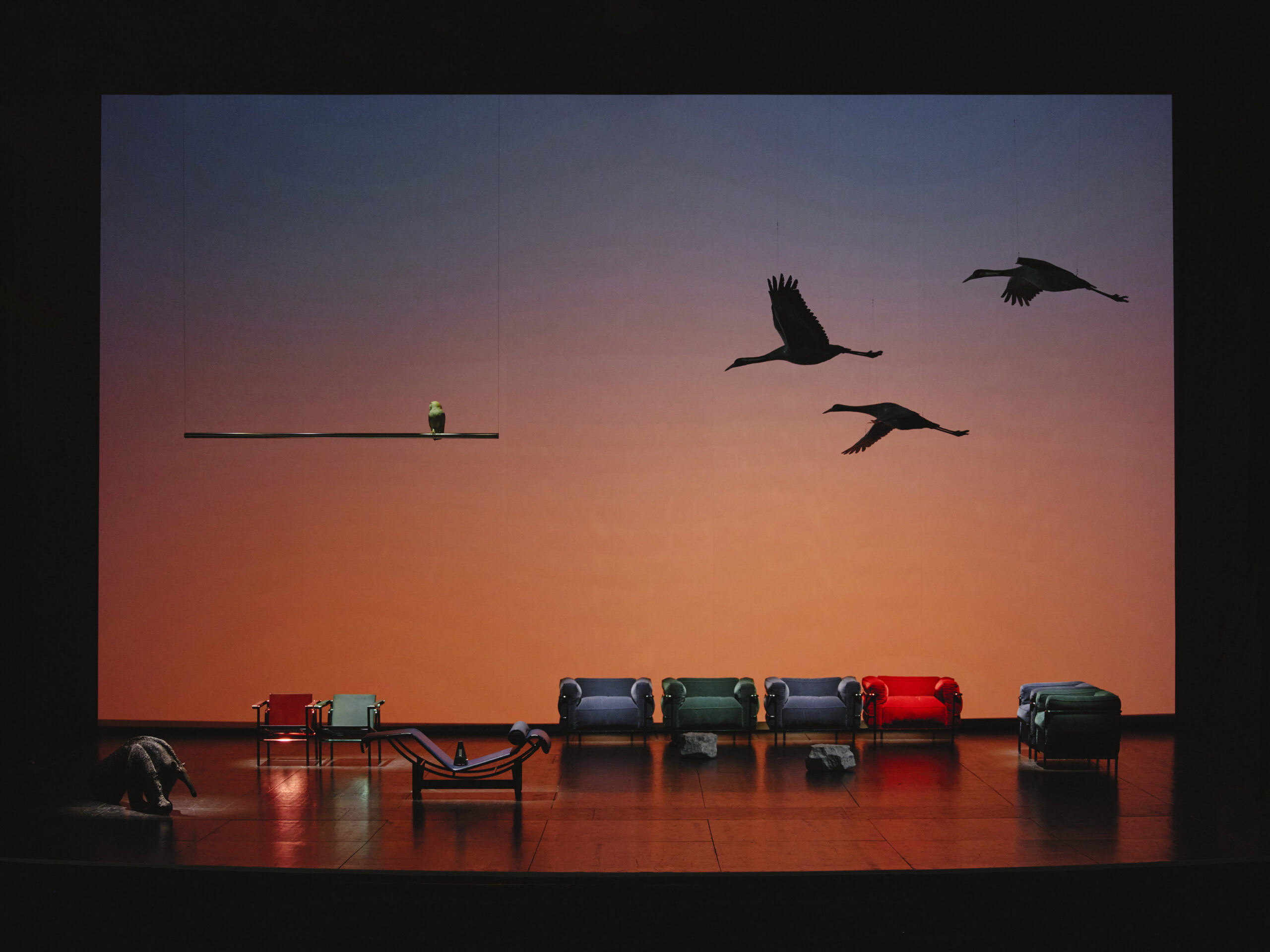
What could have been a commemorative display instead became a dialogue. First unveiled at Milan Design Week 2025, Staging Modernity is not a retrospective but a question—a re-examination of what “modern” means today.
“Before we can speak of balance,” Trimarchi begins, “we must first understand why these pieces exist at all.” He returns to 1929 and the Salon d’Automne in Paris, where Le Corbusier, Jeanneret and Perriand presented L’Équipement intérieur d’une habitation, the installation that crystallised the modern spirit. “That exhibition,” he says, “was when modernity really began in the twentieth century. The use of bent tubular metal changed everything—it moved interiors away from the hand-made and towards the efficient, hygienic, functional.”
Formafantasma’s commission from Cassina was not to re-stage that moment, but to unravel it. “We are not in 1929 anymore,” Trimarchi continues, “but the world still feels strangely similar—metal, glass, polished surfaces are still everywhere. Only now our realities are more fractured. There are wars, ecological tensions, frictions modernism never imagined.”
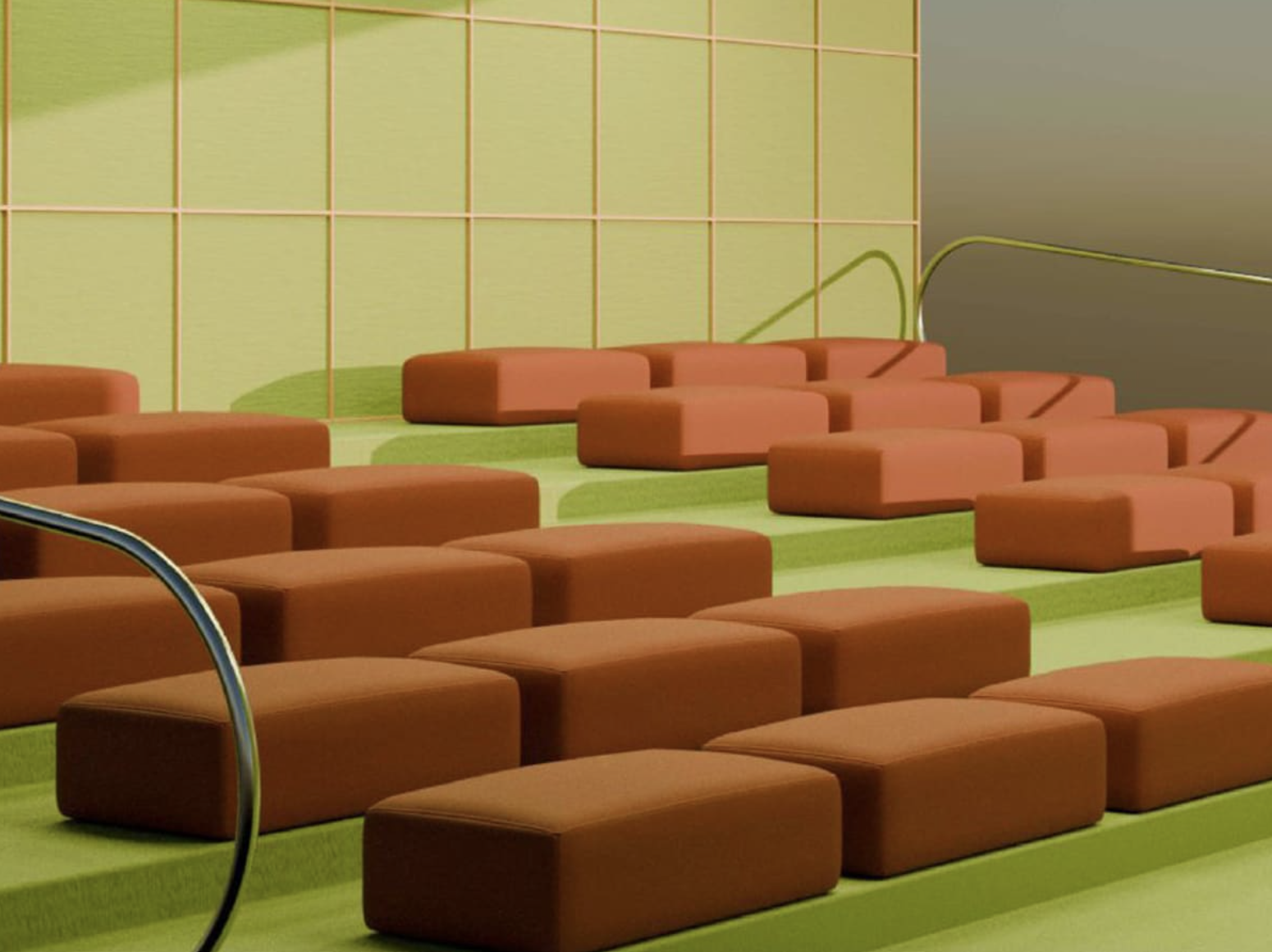
At Milan Design Week, the studio literally broke the modernist box: the glass walls of Le Corbusier’s pavilion shattered, the ceiling collapsed to become the floor, and fragments of the original plan floated above the audience. Visitors entered not as spectators but as participants, stepping onto the stage itself. “They were no longer attending the architecture,” he says. “They were part of it.”
To animate the space, Formafantasma invited philosopher Emanuele Coccia, architect Andrés Jaque and artist Feifei Zhou to write texts performed by actors under the direction of Fabio Cherstich. Each author examined modernity from a different angle: the materiality of metal and chrome, the fate of animals displaced by human progress, and the moment we fenced off gardens—separating ourselves from nature. “Feifei spoke of animals living in the remains of modernity,” Trimarchi recalls. “They eat our trash, live beneath our houses. We wanted to let those voices back in.”
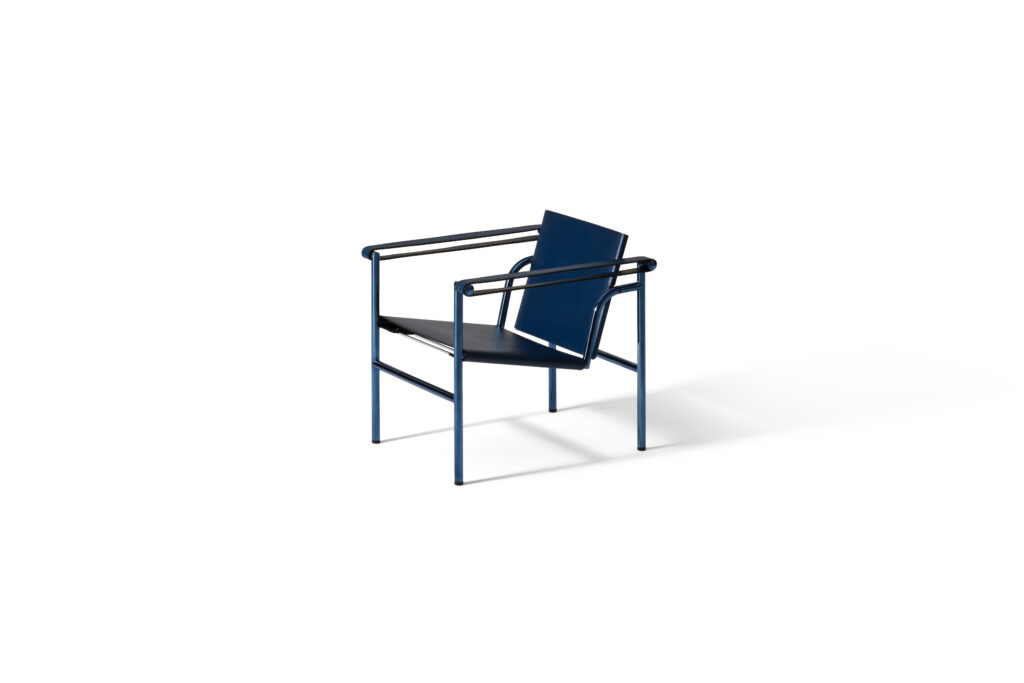
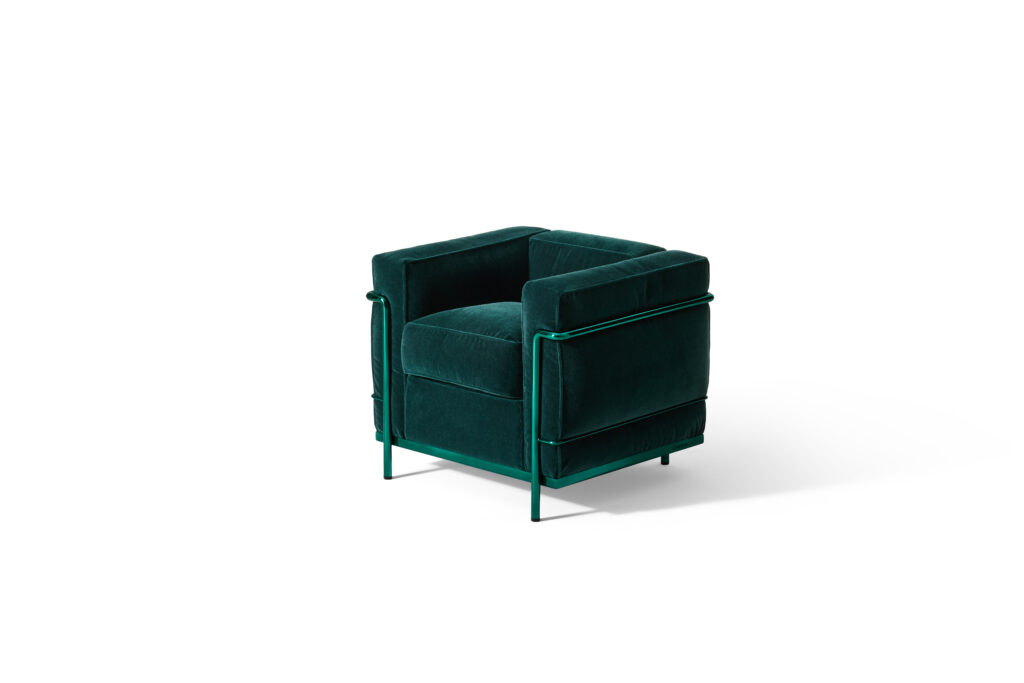
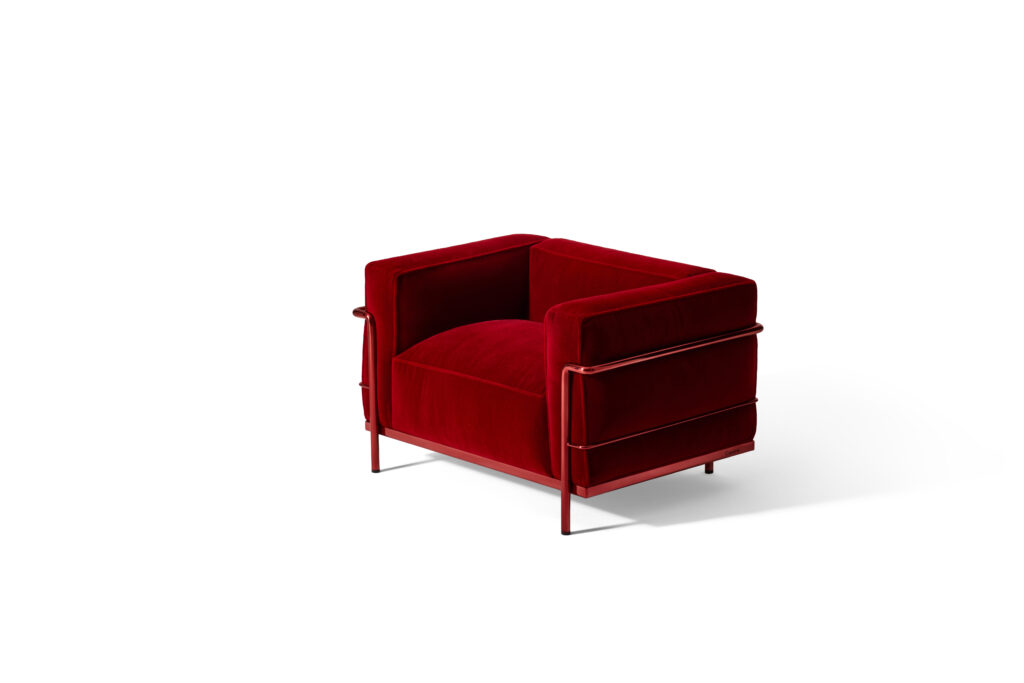
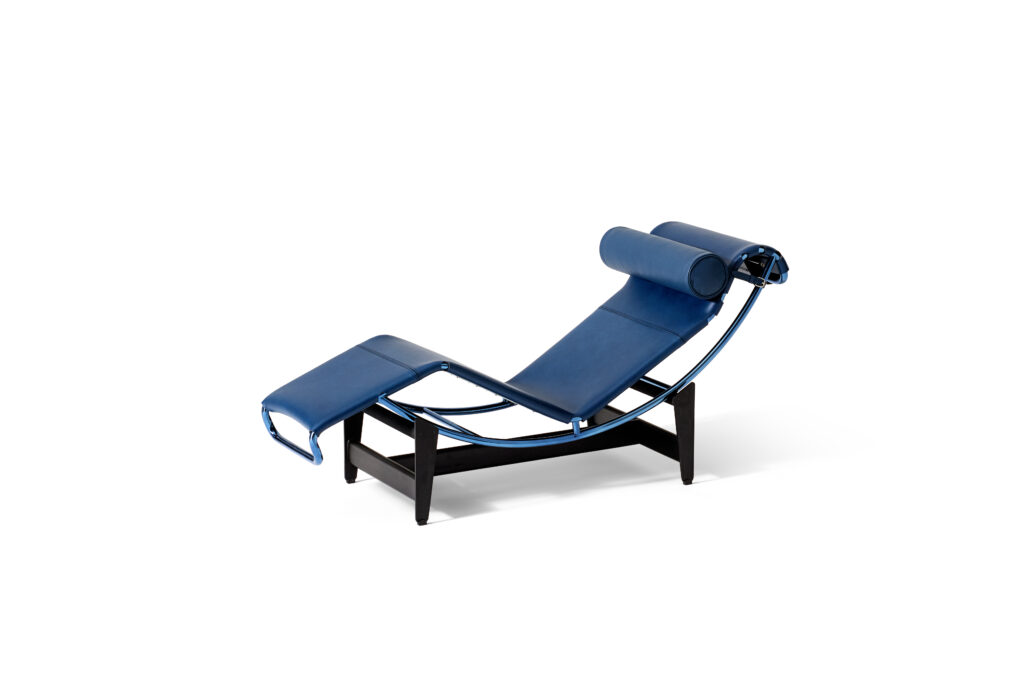
In the Dubai edition, this reflection acquires a new presence. A symbolic anteater appears within the store’s scenography, a surreal ambassador for the coexistence of rationality and nature. Around it, the four anniversary pieces—the Fauteuil Dossier Basculant, Fauteuil Grand Confort (Petit and Grand Modèle), and the Chaise Longue à Réglage Continu—gleam in bold hues of red, blue and green, upholstered in mohair velvet and self-supporting saddle leather. Produced with circular materials, these limited-edition versions (available until 2026) fuse fidelity and renewal, heritage and conscience.
“Modernity once tried to escape imperfection,” Trimarchi reflects. “Today, we must embrace it. We have to understand complexity—where materials come from, who makes them, and what happens when objects reach their end of life. For decades we behaved as if resources were infinite. Now we know they are not.”
For him, this awareness restores design’s ethical core. “After wars, design rebuilt societies. Then it became a styling tool—a way to sell. I think it’s time to return to that social engagement.”
Even the decision to stage the project in a theatre was philosophical. “When we found the Teatro Lirico Giorgio Gaber in Milan, we knew we couldn’t ignore the space,” Trimarchi says. “If you enter a theatre, you must perform. We collaborated with Fabio Cherstich to create something people could experience, not just see.”
Performance, he believes, reintroduces the body—the human measure that modernism once abstracted. “In a museum you read a label, but is that enough? The body can reveal hidden layers within these objects; it makes the experience synesthetic, alive.”
Trimarchi also credits Cassina’s courage. “They could have thrown a party,” he smiles, “but instead they created something that makes people think. That choice says everything about how a company can use its power.”
His words carry a quiet challenge to the industry at large. “Too many brands chase novelty for its own sake. If you want to make an image, make Staging Modernity. Don’t use objects just to create buzz—create meaning.”
Sixty years after Cassina began producing the Le Corbusier, Jeanneret and Perriand designs—while the authors were still alive—the collection continues to evolve. Its forms remain timeless, but its meaning must be restaged by each generation that inherits it. The Dubai conversation, moderated by Natasha Carella and hosted by Cassina and Vivium, extended the dialogue that began in Milan — shifting it into a regional context where questions of heritage, innovation, and modern identity resonate anew.
As our conversation in Dubai draws to a close, Trimarchi sums it up in one line that lingers long after the anteater’s silhouette fades from view: “Modernity isn’t something you inherit. It’s something you stage—again and again—each time you decide to see the world differently.”