Each April, Milan performs a choreographed expansion. What was once a trade fair has become a diffuse condition, a city inhabiting its own projection. The Fuorisalone, with its installations, dinners, and hybrid formats, offers immediacy, accessibility, and narrative seduction. It is where design meets fashion, where brands construct atmospheres rather than products, where visibility circulates faster than meaning and where design finds one of its most compelling contemporary expressions.
And yet, beneath this surface lies a more rigid structure. The Salone del Mobile is not simply the historical core of this week; it is its economic engine. It operates as a business platform with measurable outputs: contracts, distribution networks, manufacturing pipelines. It sustains an entire industrial ecosystem, from prototyping to logistics, from artisans to global retailers. With over 1,900 exhibitors across 169,000 square meters and more than 316,000 attendees, 68 percent of them from abroad, it operates at a scale few cultural events can claim. Without it, the week would lose not its glamour, but its infrastructure.
This is not a nostalgic defense. It is a question of function. Recognizing this does not diminish the Fuorisalone’s cultural force, but places it within the system that sustains it.The Salone is replicable because it is systemic; it can travel, scale, and embed itself in other markets precisely because it is anchored in industry. The Fuorisalone, by contrast, is site-specific. It belongs to Milan’s urban fabric, to its courtyards and palazzi, to a cultural density that cannot be exported. It exists because the Salone concentrates attention, capital, and people in one place.
The growing conflation of the two under the umbrella of “Milan Design Week” is not neutral. It signals a shift from production to representation, from object to image. Yet even this image economy is sustained by the Salone’s reach, with over 11,900 international media mentions across 122 countries.
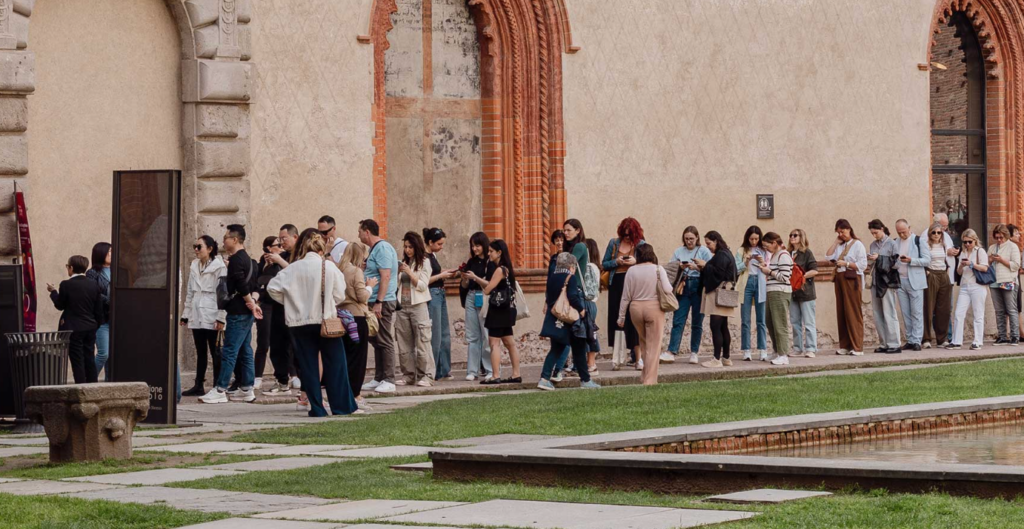
The paradox is evident: the Fuorisalone thrives on the idea of openness, yet its most visible moments often unfold within a curated circuit. In celebrating hybridity, design enters into a closer dialogue with fashion and art, expanding its modes of expression and visibility.
This cross-disciplinary exchange is not only inevitable but valuable. Yet it calls for a renewed focus on what the Salone del Mobile fundamentally represents, and on the conditions that make these activations possible.
In other words: this does not diminish its value. On the contrary, the dialogue between disciplines has expanded the language of design in ways the fair alone could not achieve. But it does require clarity. The Salone del Mobile is not the Milan Design Week. It is the condition that makes it possible.
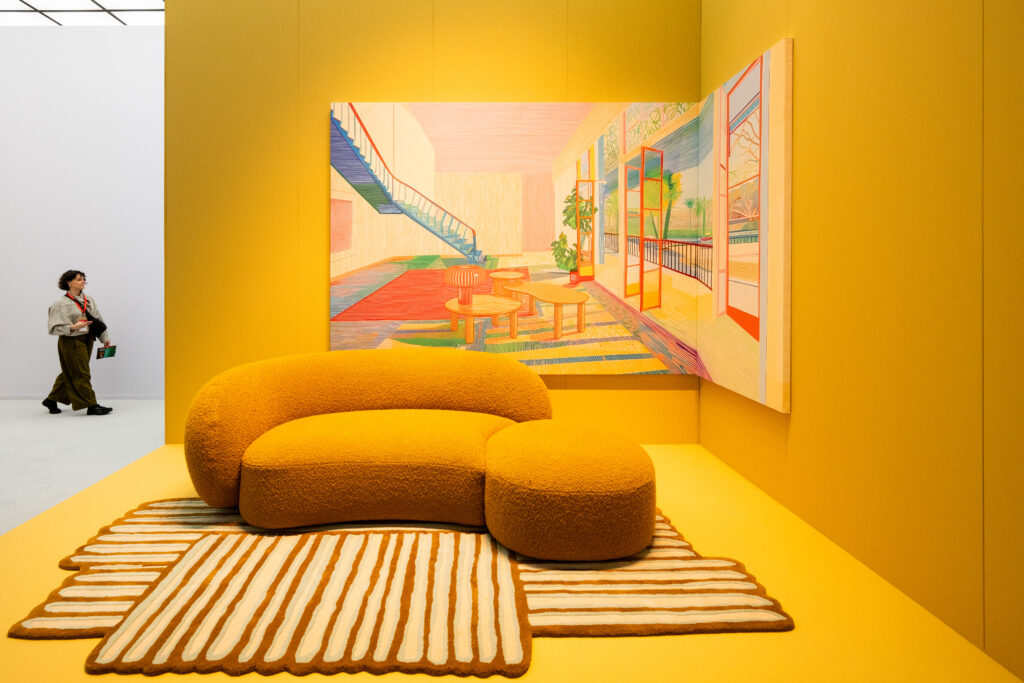
This raises a more immediate question for designers today. Where does visibility translate into recognition, and under what conditions does it become a sustainable practice? Platforms such as Alcova or Isola Design District have expanded the possibilities of exposure, experimentation, and independent production. Yet the Salone remains one of the few contexts where design operates at an industrial scale, connecting visibility to distribution, manufacturing, and long-term continuity.
Perhaps the question is not whether one will overtake the other. Cultural waves rarely reverse. The real question is whether the structure that sustains the industry can remain visible within an increasingly image-driven system.