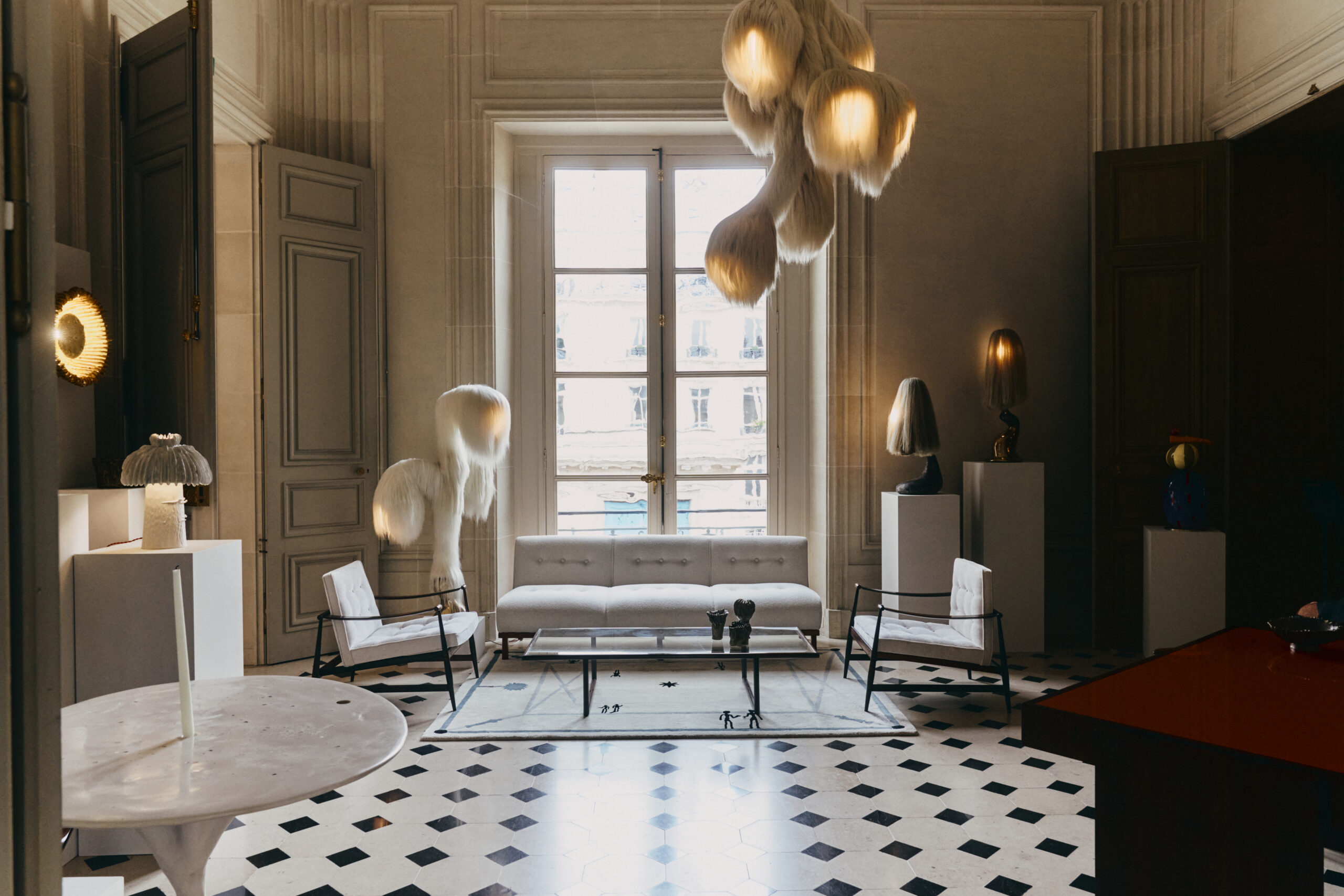
At Design Miami.Paris, the distinction between furniture and sculpture has become increasingly difficult to define, and perhaps increasingly irrelevant. For its fourth edition, held from 20 to 25 October 2026, the international collectible design fair returned to the Hôtel de Maisons, the historic Parisian residence that once belonged to Karl Lagerfeld, bringing together galleries whose presentations moved between historical masterpieces and contemporary experimentation.
Within its eighteenth-century interiors, objects from different periods and disciplines entered into unexpected conversations. Modernist furniture stood alongside experimental lighting, traditional craftsmanship found new expressions, and materials became vehicles for artistic exploration.
What interested us most was not necessarily novelty, but the ways in which designers reconsidered familiar forms and materials. The most compelling presentations revealed an understanding of design that extends beyond function, where an object can embody cultural memory, technical knowledge or a distinctly personal artistic language.
From the expressive possibilities of iron to the enduring intelligence of Charlotte Perriand’s furniture, these are eight presentations that captured the attention of Marie Claire Maison Arabia.
The A/P Room: The Unexpected Sensuality of Light
Among the most intriguing presentations was that of Dubai-based gallery The A/P Room, which introduced Originform, a collection of sculptural lighting by Los Angeles-based designer Rogan Gregory.
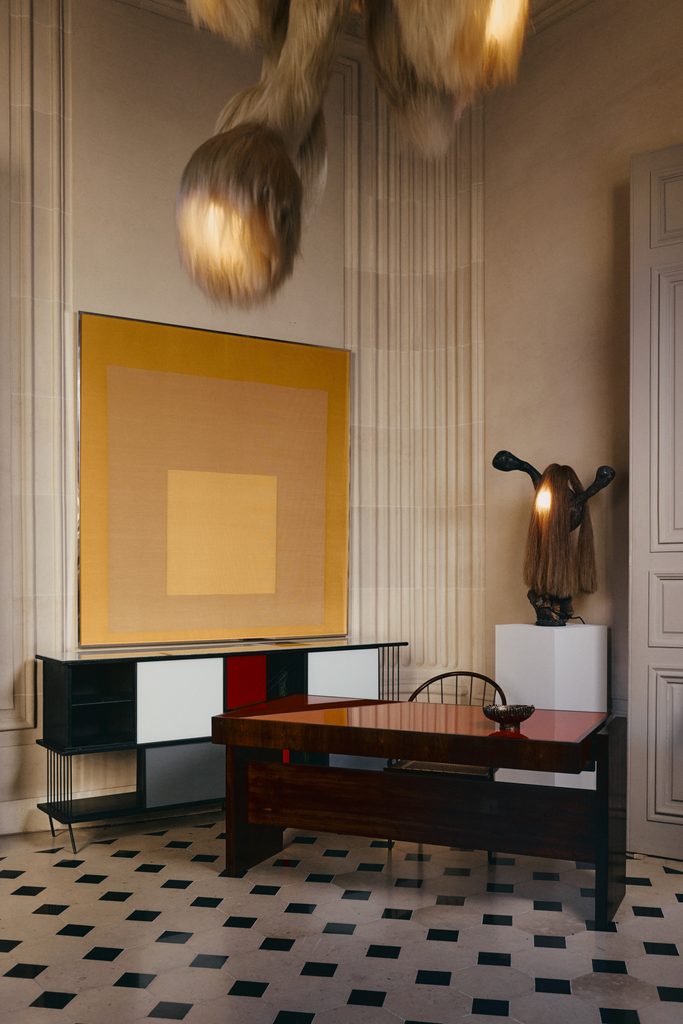
Working with unconventional combinations of materials, from goat fur and gypsum to bronze and horsehair, Gregory’s biomorphic chandeliers and sculptural lights occupy an ambiguous territory between functional lighting and organic sculpture. Their silhouettes suggest unfamiliar living organisms, while light filtering through natural fibres lends the objects an unexpected softness.
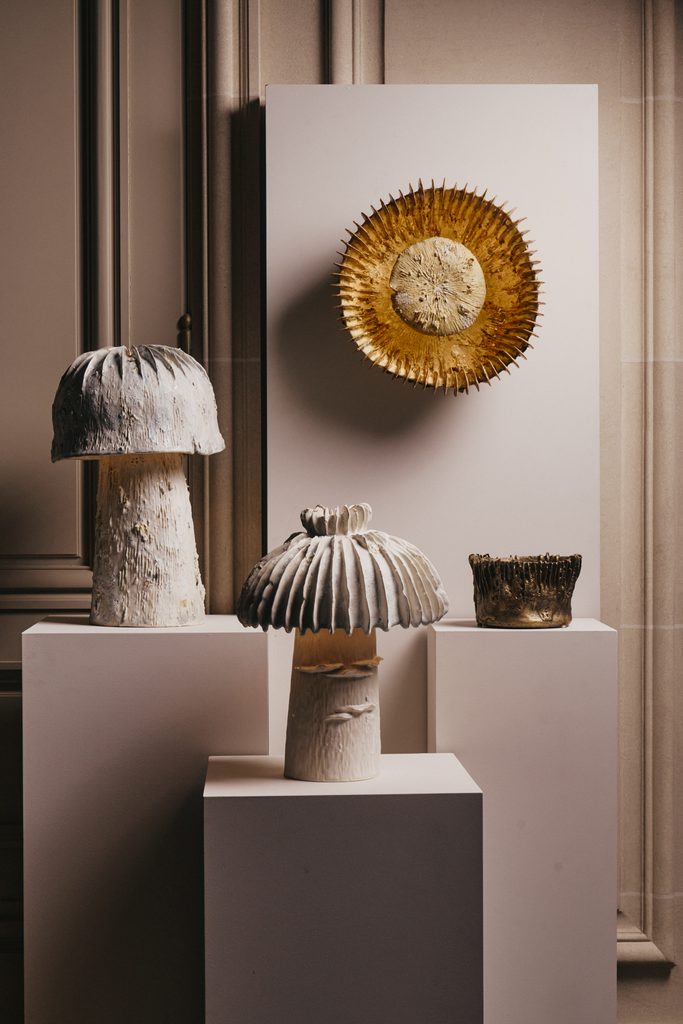
The gallery positioned these contemporary works in dialogue with Brazilian modernist design, bringing together different approaches to materiality and form.
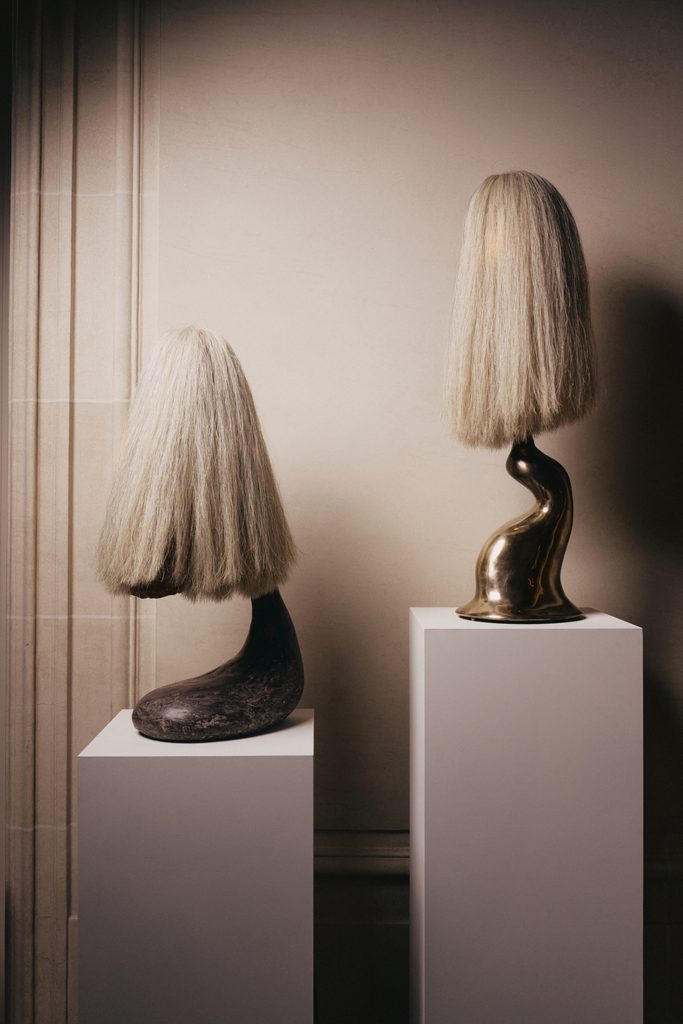
For us, the fascination lies in this tension between the familiar and the strange. Gregory transforms an everyday object into something almost animate, questioning our expectations of what lighting should look and feel like.
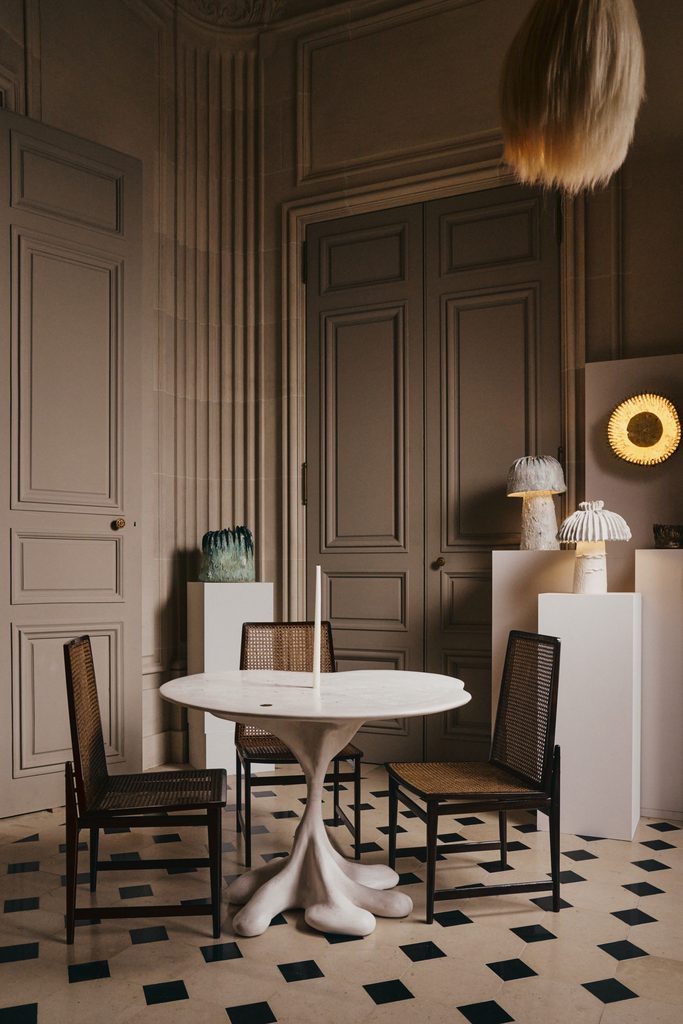
The A/P Room’s participation also reflects the growing international presence of galleries operating from the Middle East, contributing new perspectives to the global collectible design conversation.
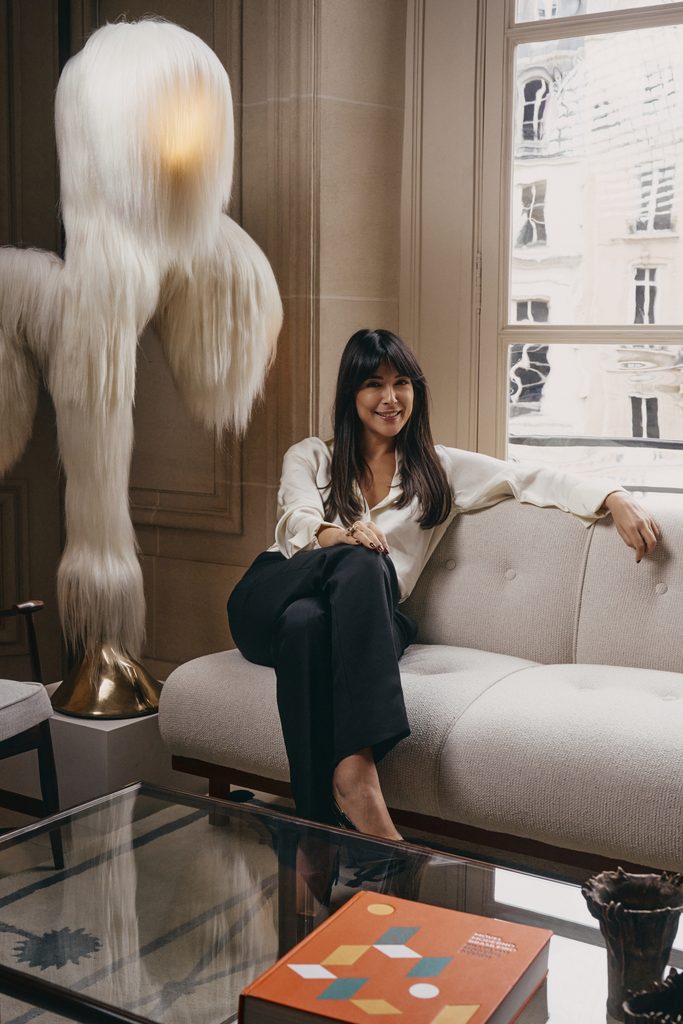
Nilufar: Collecting Across Cultures and Generations
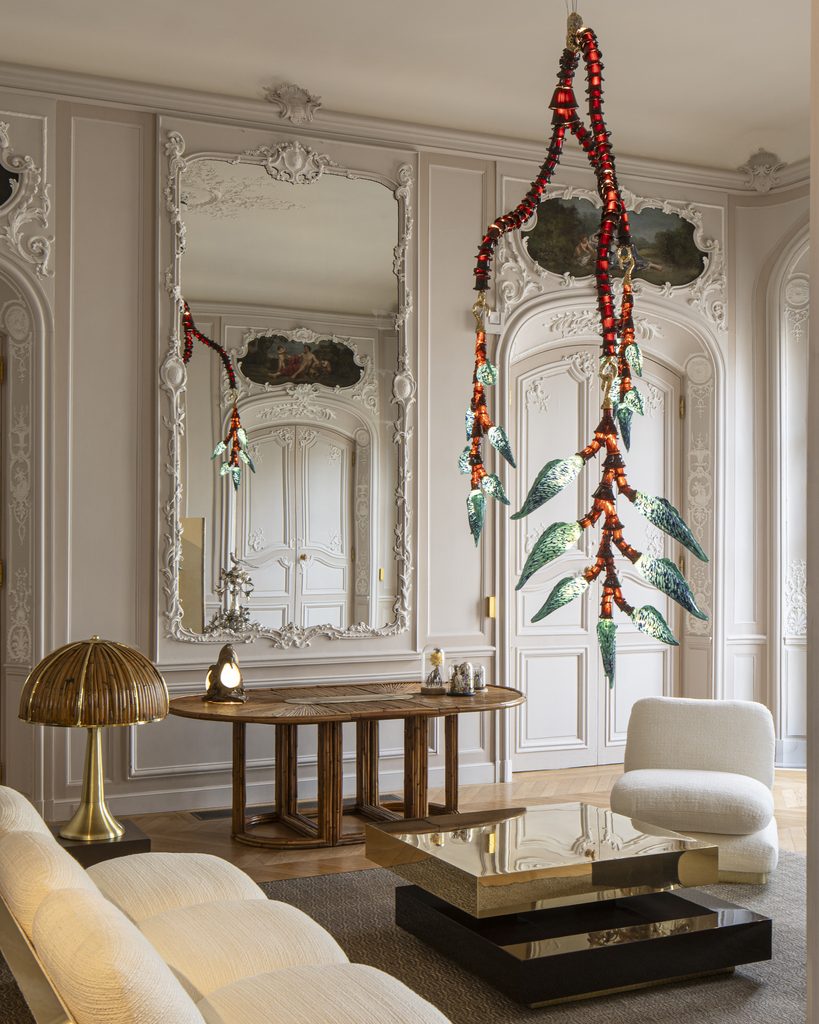
At Nilufar, the relationship between historical design and contemporary creation took centre stage. The Milan-based gallery brought together works by Carlo Bugatti and Gabriella Crespi with contemporary pieces by designers including Vikram Goyal, Christian Pellizzari and StudioDanielK, alongside textiles by Hechizoo.
Among the highlights was Pellizzari’s Heliconia ceiling lamp, an elaborate composition in bronze and coloured Murano glass, whose sinuous forms evoke the ornamental qualities of the natural world.The presentation explored how decorative traditions travel across cultures and generations, with references to jewellery, glassmaking and historical craftsmanship reinterpreted through contemporary design.
Nilufar’s particular strength lies in its ability to create relationships between objects that might otherwise appear unrelated. A historical piece becomes newly relevant beside an experimental contemporary work, while craftsmanship emerges as a common language across different periods. It is an approach to collecting that values dialogue over chronology, and individuality over stylistic uniformity.
Galerie Yves Gastou: The Poetry of Iron
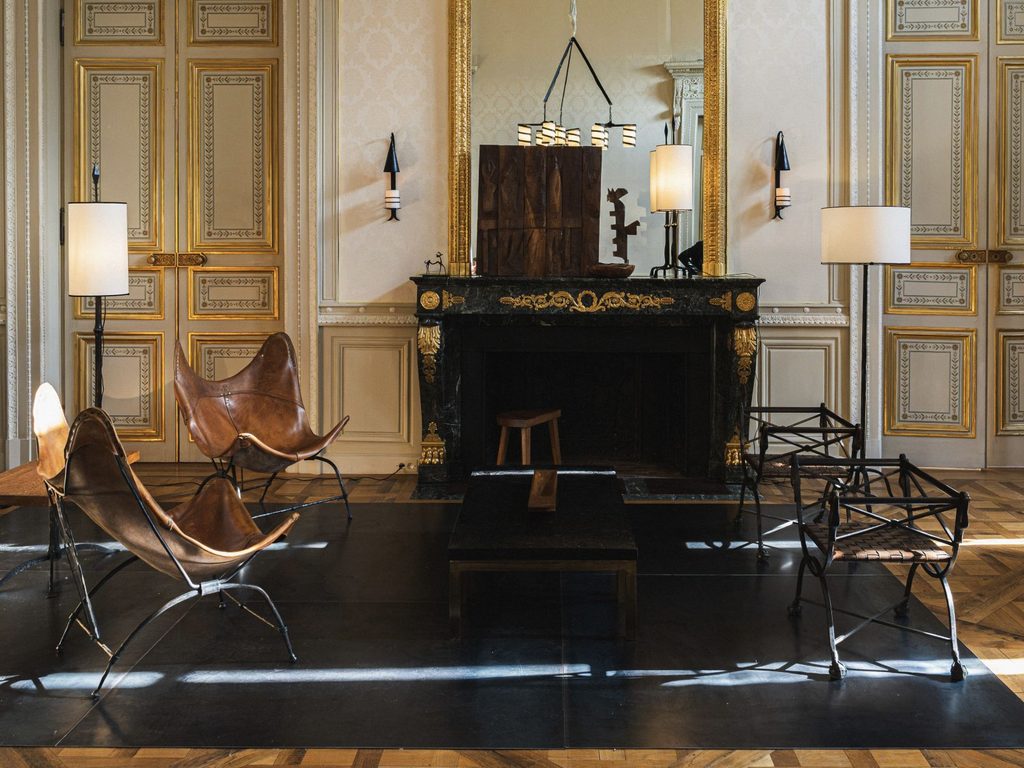
Presented in collaboration with Galerie Desprez-Breheret, Galerie Yves Gastou’s The Age of Iron offered a compelling exploration of Jean Touret‘s work in wrought iron. Although Touret is widely associated with carved wooden furniture, particularly his distinctive honeycomb surfaces, the exhibition shifted attention towards his experiments with metal.
Working with the blacksmiths of Marolles and craftsmen from the Loir-et-Cher region, Touret developed an expressive vocabulary in which iron became a means of drawing in space. Lines replaced solid volumes, allowing furniture and decorative objects to acquire an almost calligraphic quality. The presentation also included works by Agnès Debizet, Irene Cattaneo, Ado Chale and François and Sido Thévenin, among others.
What makes this exploration particularly interesting is its treatment of craftsmanship as an artistic discipline rather than simply a method of production. In Touret’s work, the resistance of iron becomes inseparable from the precision of the gesture. The result is a vision of design in which restraint, material honesty and expressive freedom coexist.
Salon 94 Design: Nature Beyond Representation
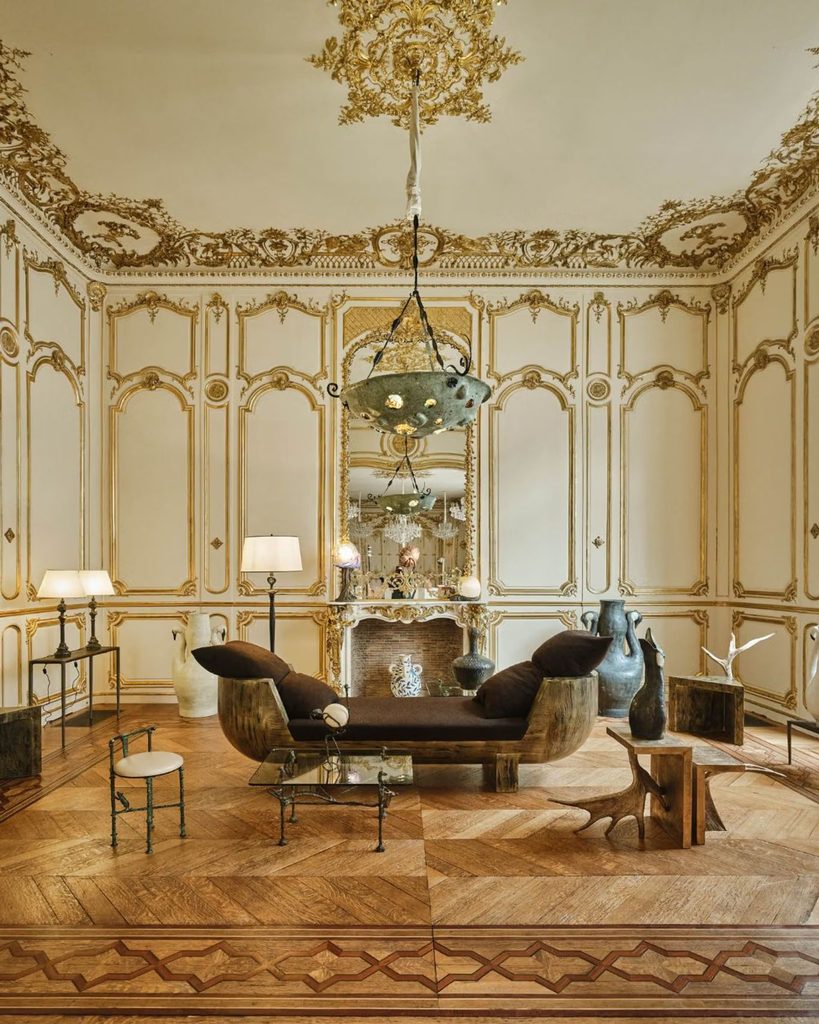
Awarded Best Gallery Presentation at Design Miami.Paris 2026, New York’s Salon 94 Design explored the natural world through an extraordinary dialogue between modern and contemporary creators. Works by Alberto and Diego Giacometti appeared alongside pieces by Rick Owens, Peter Schlesinger, Urs Fischer and F. Taylor Colantonio, bringing together different interpretations of organic forms, animal imagery and sculptural furniture.
Particularly striking was the juxtaposition of the Giacomettis’ expressive sculptural language with the uncompromising forms of Rick Owens’s furniture, including his Stag Stool. Despite their differences in period and aesthetic, these works share an interest in the expressive possibilities of form and the relationship between nature and the human imagination.
Rather than approaching nature as a decorative source, the presentation considered its deeper influence on artistic expression, from animal symbolism to the physical presence of sculptural objects. It was a reminder that the boundaries between art and design are often most productive when they are deliberately challenged.
Galerie Scène Ouverte: The Material as a Creative Language
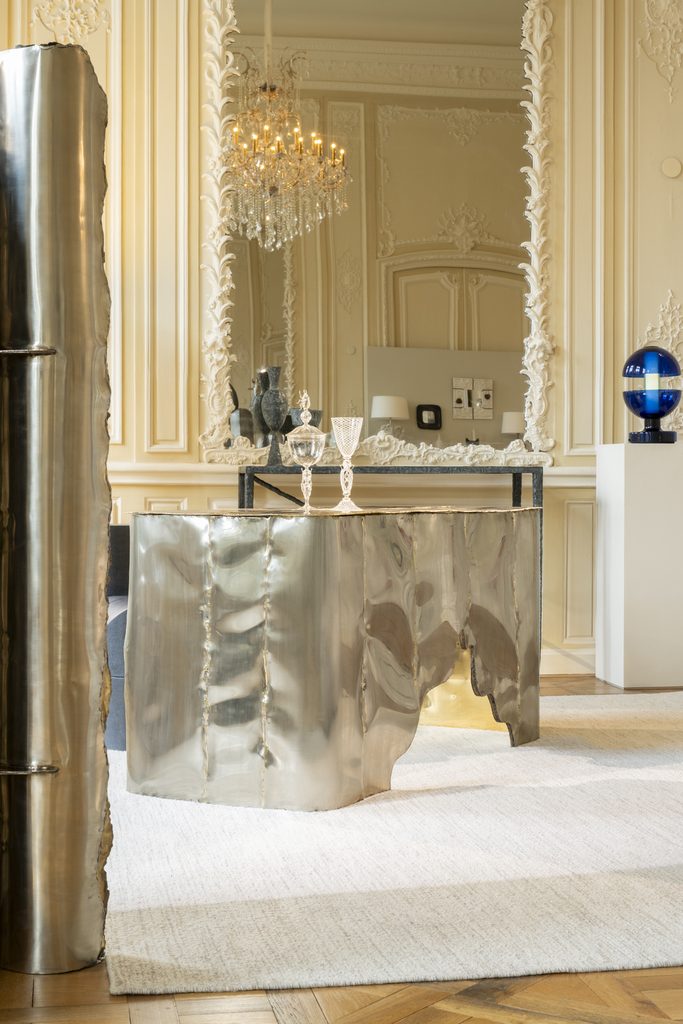
With Around a Desk: A Contemporary Vision of Decorative Arts, Galerie Scène Ouverte reconsidered the traditional office through contemporary craftsmanship and sculptural furniture.
Central to the presentation were a desk and bookcase by Studio Lugo, created in maillechort, also known as nickel silver. Their surfaces unfold in layered compositions that reveal the material’s expressive potential, transforming familiar furniture typologies into sculptural forms. The gallery also presented a sofa by Studio KRJST developed around a tapestry, and a Murano glass lamp by Adélie Ducasse, marking the ceramicist’s exploration of a different material.
What unites these works is an interest in making as an essential part of artistic expression. Rather than concealing the techniques behind an object, the designers allow material, construction and craftsmanship to determine its visual identity.
Laffanour | Galerie Downtown: Charlotte Perriand’s Architectural Vision
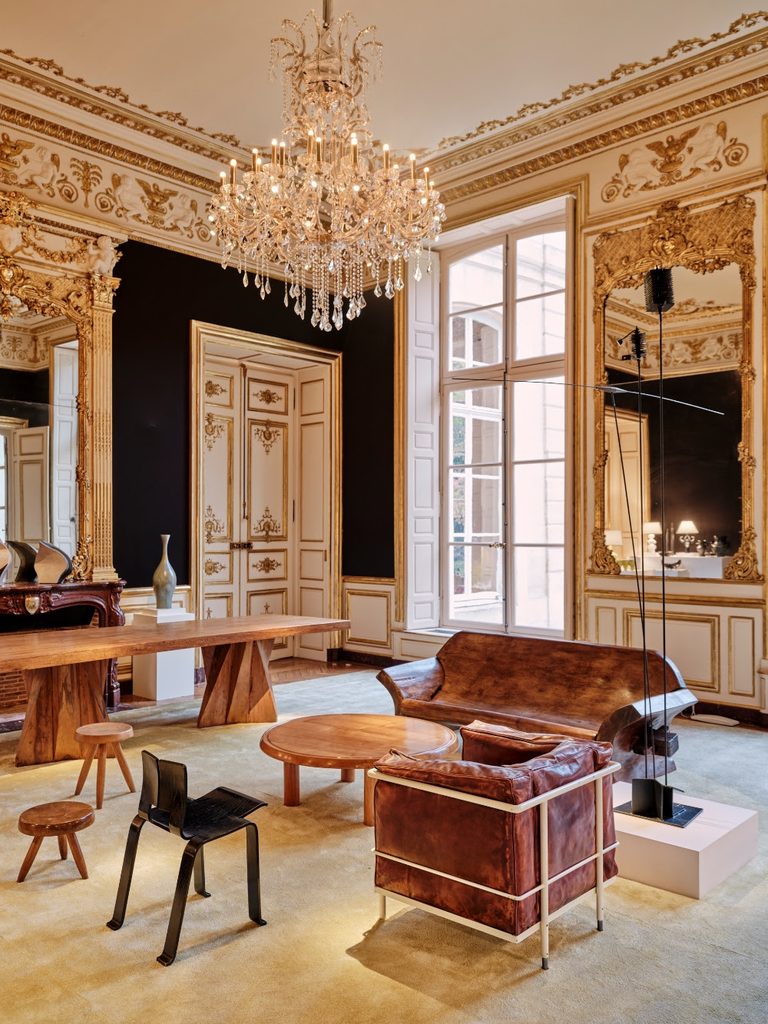
At Laffanour | Galerie Downtown, one of the most significant presentations centred on a remarkable 1959 bookcase by Charlotte Perriand.
Conceived as a bespoke commission and developed within Steph Simon’s design studio, the double-sided structure measures more than three metres in length and combines wood with black-lacquered metal. Its five levels and detachable metal supports represent an important stage in Perriand‘s exploration of modular storage and spatial organisation, anticipating systems that would later become central to her furniture practice.
Yet what makes this piece exceptional is not simply its historical importance. Perriand understood furniture as an extension of architecture, capable of defining relationships between people, objects and the spaces they inhabit. Her bookcase is both a functional structure and a spatial intervention, combining technical precision with a remarkably contemporary visual language.
Nearly seven decades after its creation, it remains a compelling expression of modernist thinking, demonstrating how intelligent design can transcend the period in which it was conceived.
Hostler Burrows: The Sculptural Language of Wood
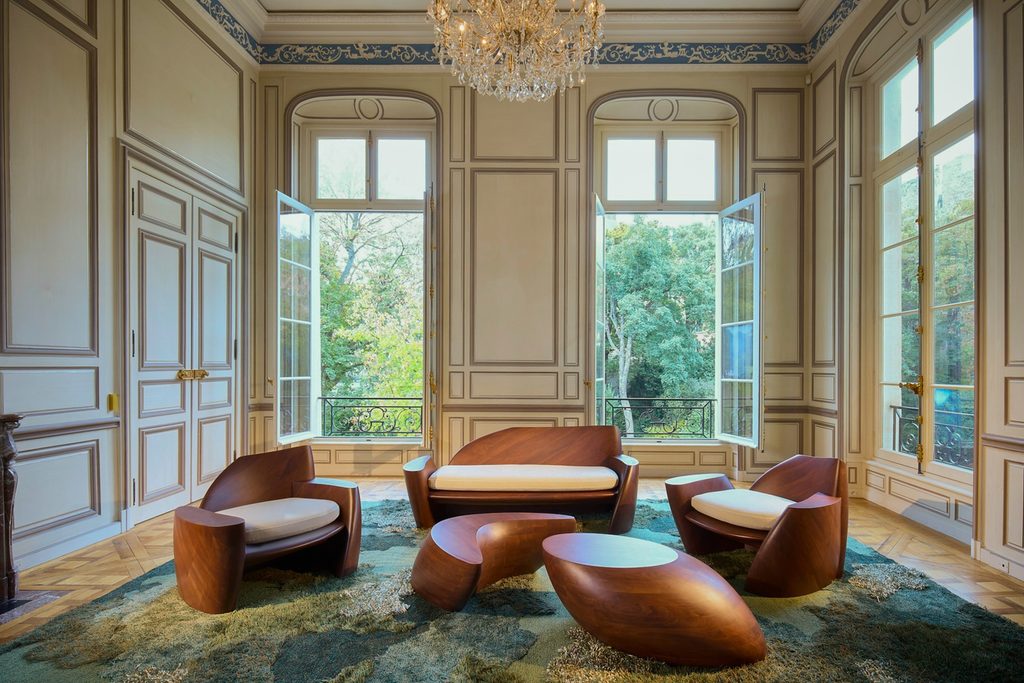
At Hostler Burrows, the expressive potential of natural materials emerged through the work of Gal Gaon and Louise Hederström.
Gaon’s Guyku collection explored furniture as sculpture through forms carved from solid walnut and teak. The presentation included meditation armchairs, a sofa and coffee tables, whose organic silhouettes emphasised the physical presence of wood. Alongside these works, the gallery presented September, a monumental carpet by Swedish designer Louise Hederström, created in collaboration with the historic textile manufacturer Kasthall.
With its autumnal palette and varied pile heights, the carpet introduced another dimension of material exploration, demonstrating how textile design can move beyond surface decoration towards a more spatial and tactile expression. Together, the works offered contrasting approaches to materiality: the density and permanence of carved timber against the softness and layered complexity of textiles.
What interested us was the way both practices place material at the centre of the creative process, allowing its physical characteristics to inform the final object.
Galerie Kreo: A Conversation Between Past and Present
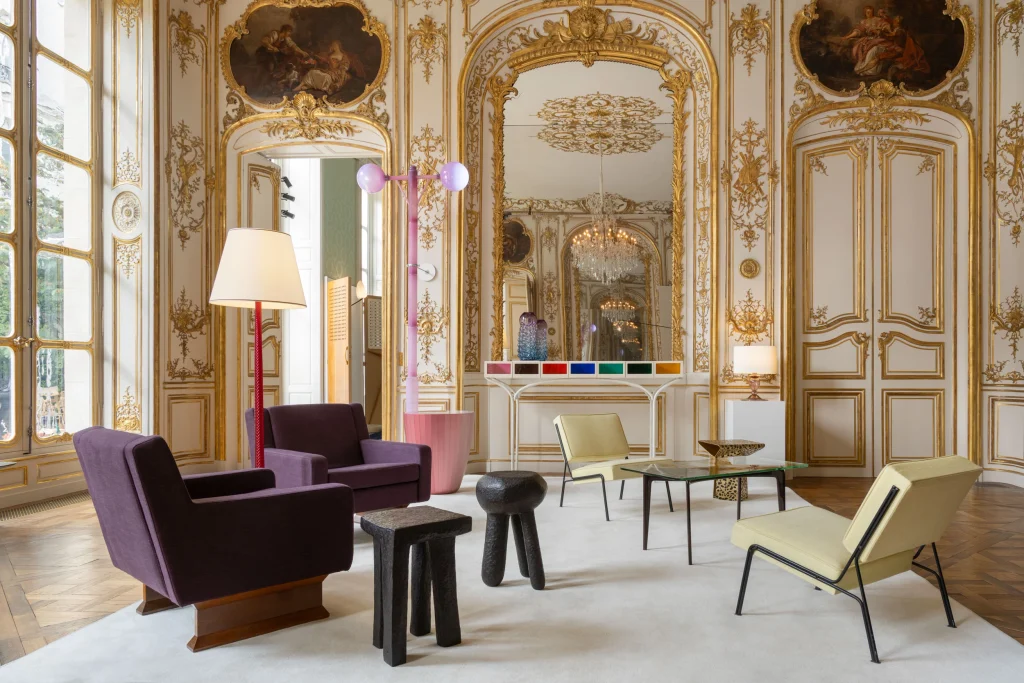
Galerie Kreo approached Design Miami.Paris through a dialogue between contemporary experimentation and significant works of twentieth-century design.
Its presentation included contemporary creations by Edward Barber and Jay Osgerby, Guillaume Bardet, Jean-Baptiste Fastrez, JAM and Tejo Remy, alongside historical pieces by Franco Albini, Gio Ponti, Carlo Scarpa, Vittorio Zecchin, and Elizabeth Garouste and Mattia Bonetti.
The selection brought together different generations and creative disciplines, highlighting the connections between historical innovation and contemporary design research. Kreo’s curatorial approach is particularly interesting for its refusal to treat design history as a closed narrative. Instead, historical works become part of an ongoing conversation, revealing how contemporary experimentation can be informed by the discoveries of previous generations. It is a perspective that positions collectible design not simply as the preservation of exceptional objects, but as a continuous exploration of ideas, materials and techniques.
Beyond the Object
Taken together, these eight presentations offer a revealing perspective on the direction of collectible design.
While their aesthetic languages differ considerably, they share an interest in the relationship between material, craftsmanship and artistic expression. Some revisit historical techniques; others experiment with unexpected forms or reconsider the function of familiar objects.
What emerges is a vision of design in which the distinction between the practical and the poetic becomes less important than the ideas an object can communicate.