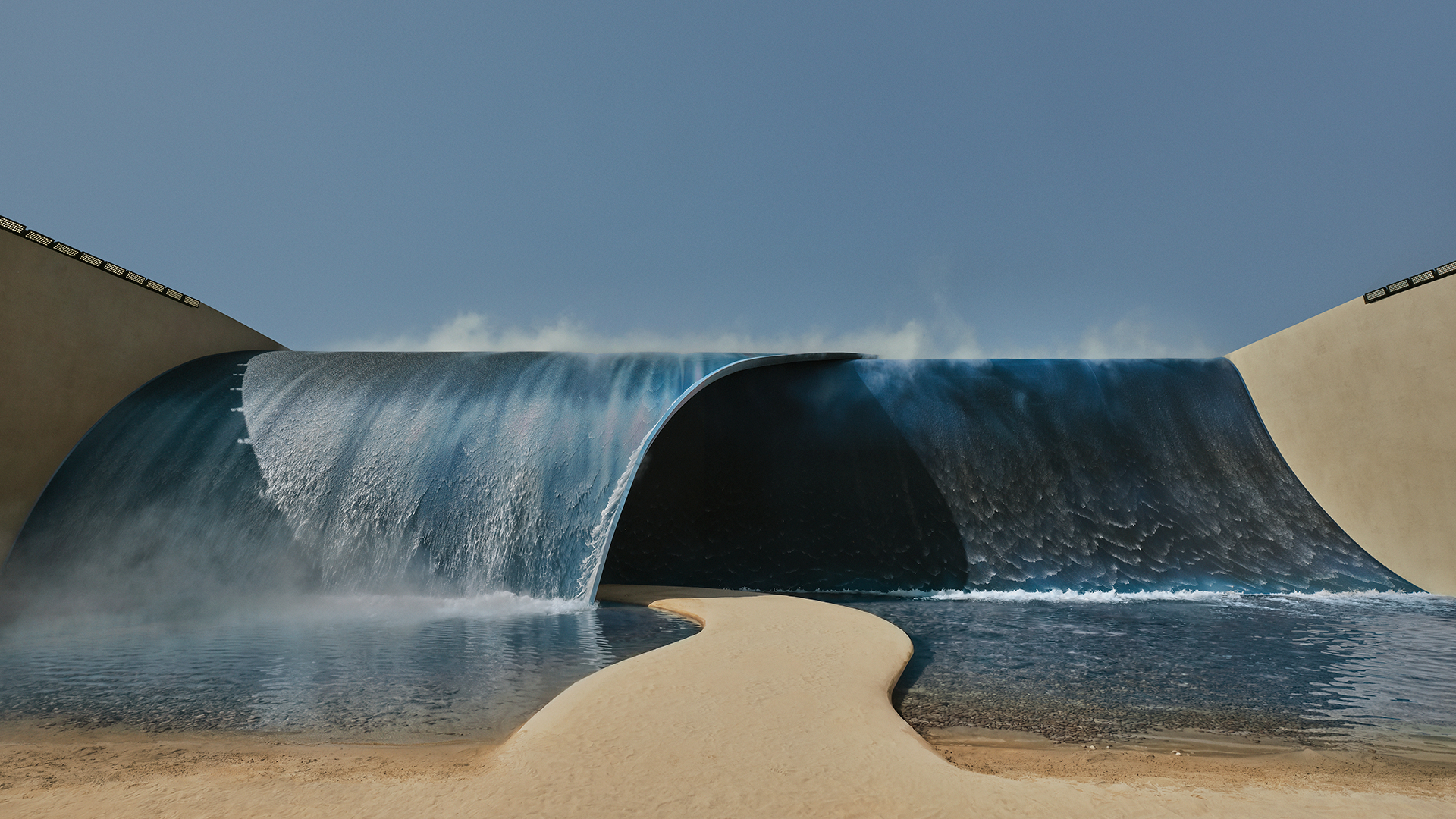
Design doesn’t stay where you put it. Walk it out of the studio and it turns up wherever a discipline needs a mood built on purpose: a dinner table, a vernissage, the fifteen minutes before an auction starts. SET DESIGN follows it onto the catwalk: Bureau Betak’s flowers overtaking the Grand Palais for Chanel, Pharrell Williams’ tidal wave plumbed into the Parisian sewers for Louis Vuitton, Formafantasma’s raw architecture for Sportmax and banal room for Marni, 6’s Murano glass sea-foam for Bottega Veneta. The clothes still walk. The room is what you remember.
CHANEL HAUTE COUTURE FALL-WINTER 2026 — PARIS
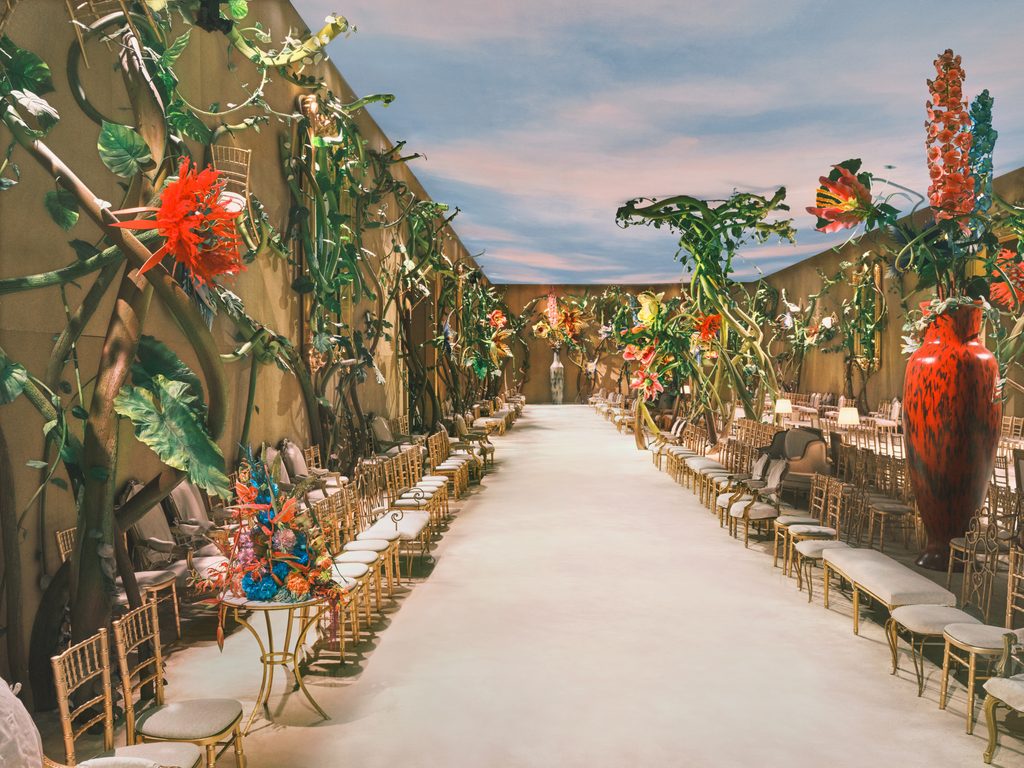
For Matthieu Blazy’s second couture show, Bureau Betak turned the Grand Palais into “Gaby and the Beanstalk,” a fairy tale built at architectural scale. Vines as thick as tree trunks climbed the walls and ceiling, sprouting flowers the size of umbrellas, peonies, thistles and anemones: part botany, part Alice in Wonderland. Gilded chiavari chairs and mirrors sat caught mid-ascent in the tangle, as if the garden had grown through the furniture. Underfoot, a white runway cut a path between sand-toned walls painted with a dusk sky, while oversized ceramic vases anchored the room. The botanical motifs resurfaced in the collection’s embroidery: room and clothes told the same story at two scales.
LOUIS VUITTON MEN’S SPRING-SUMMER 2027 — PARIS
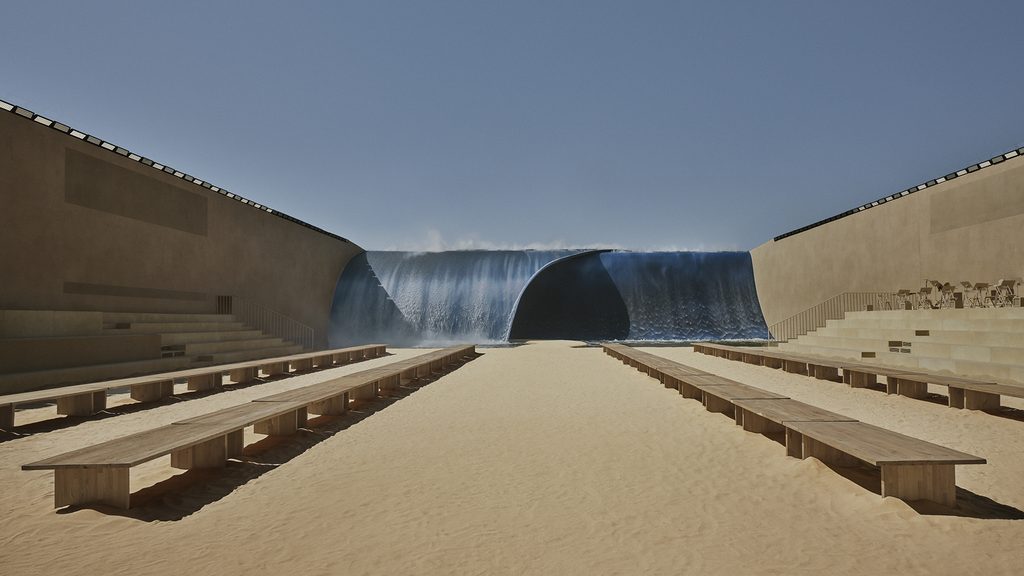
For his Spring-Summer 2027 menswear show, Pharrell Williams turned the grounds of the Cité Internationale Universitaire de Paris into a working stretch of coastline. At its centre stood a monumental wave: a cresting structure 37 metres wide and 8 metres high, engineered to break and recede in a closed hydraulic loop, using real water from Eau de Paris and returned to the municipal sewer system. The runway was laid in sand, later donated to the university’s volleyball courts, with a boardwalk cutting through it, while guests sat on timber benches recycled from the house’s previous show. A silver camper van, reworked into a surf-ready object, marked the entrance. Staged on the hottest day recorded in Paris, the wave’s mist drifted over the crowd.
FORMAFANTASMA — SPORTMAX AND MARNI, MILAN
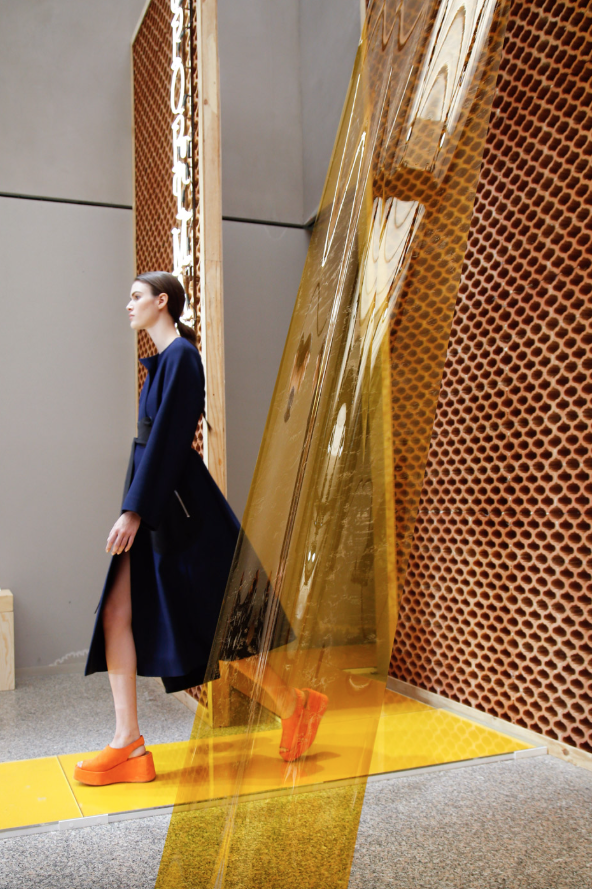
A decade apart, Formafantasma has treated the catwalk as a material essay rather than a backdrop. For Sportmax’s show, Andrea Trimarchi and Simone Farresin built “deconstructed architecture”: terracotta cylinders anchoring sheets of translucent PVC in yellow, black and nude, looped from ceiling to floor along a runway kept low, so no hierarchy separated models from the benches around them. A lattice of terracotta tiles, lit in neon, marked the entrance, clay meeting synthetic film, built to “limit the amount of resources we use.”
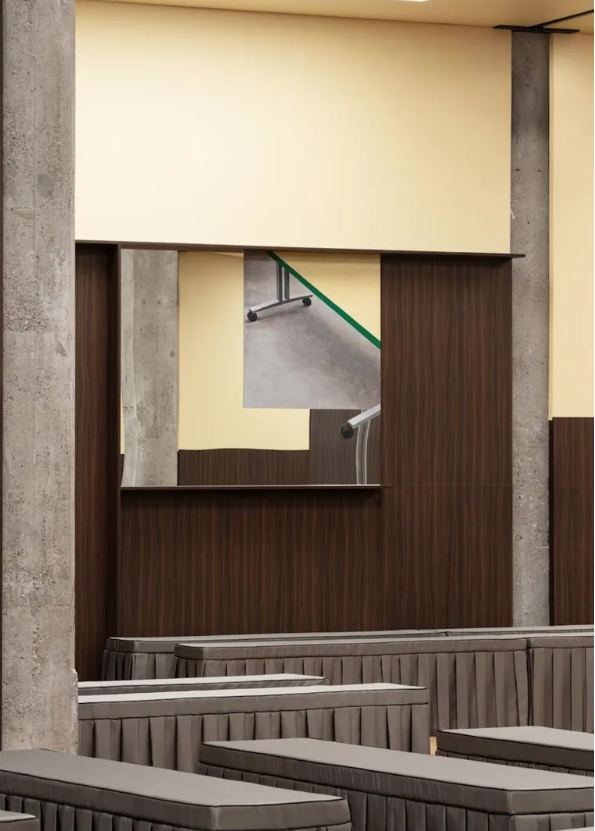
Ten years on, for Marni’s Autumn-Winter 2026 show, Meryll Rogge’s debut, the studio went the opposite direction: intentionally banal. Floor-to-ceiling dark wood panels and mirrors were hand-painted with the debris of an ordinary day, an office chair leg, a lighter, a bar of soap, while grey pleated benches sat on a carpet enlarged into a giant doormat. “We were trying to bring fashion closer to the environments clothing actually exists in,” says Trimarchi.
BOTTEGA VENETA SUMMER 2026 — 6AM, MILAN
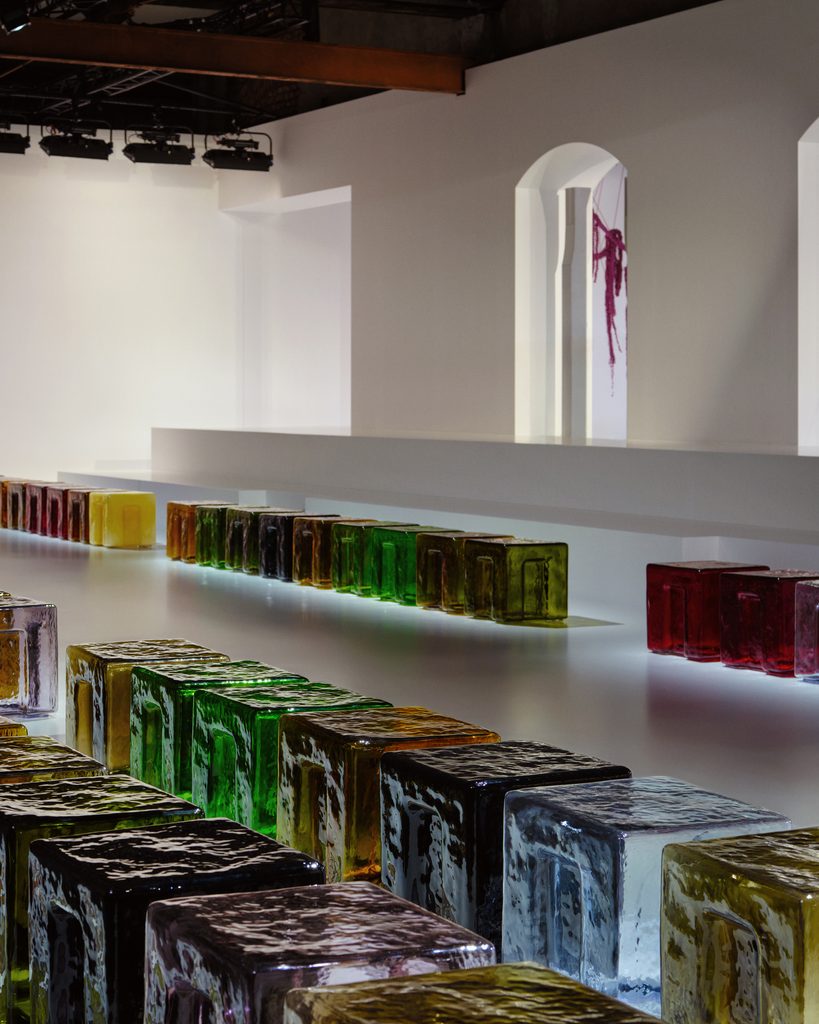
When Louise Trotter’s Bottega Veneta commissioned 6:AM, the Milan studio of Edoardo Pandolfo and Francesco Palù, trained between glass furnaces and architecture, the brief was blunt: seating, in glass, on a fashion-week timeline. The result was a field of stools cast as 43-centimetre blocks of Murano glass, poured into CNC-engraved cast-iron moulds, colour running through amber, jade and blue. Producing them meant retooling a furnace mid-run and choreographing glassblowers, foundries, Bottega’s team and Bureau Betak around one error-proof schedule. “We can work very fast when it’s needed,” the studio says. “It’s a bit like producing a show — you always need a plan B.” Unlike the eighteen-minutes they were built for, the stools were designed to outlive the runway. As Pandolfo and Palù put it: “The set has to support the story, not tell a different one.”