In Dubai’s ever expanding residential landscape, the challenge of family living is often not one of scale, but of intention: how to transform a standard villa into a home that feels emotionally attuned to the rhythms of everyday life. Located within the Harmony community of Tilal Al Ghaf, Maison Terra by D’Ora Tokai Designs approaches this question with measured clarity, reimagining a four bedroom villa as an environment shaped around connection, calm, and continuity.
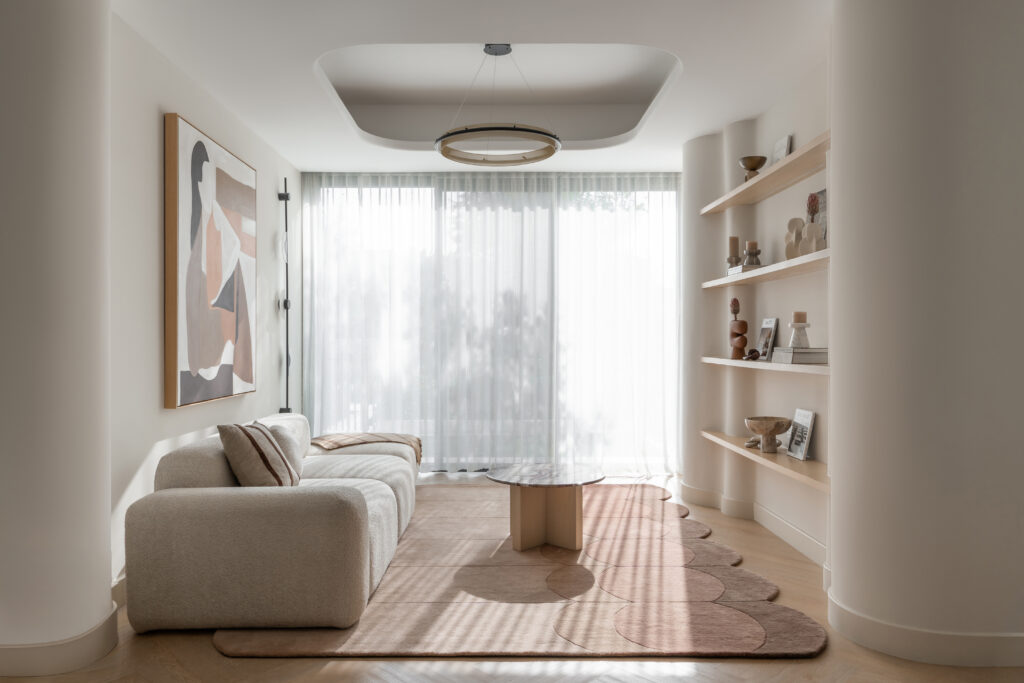
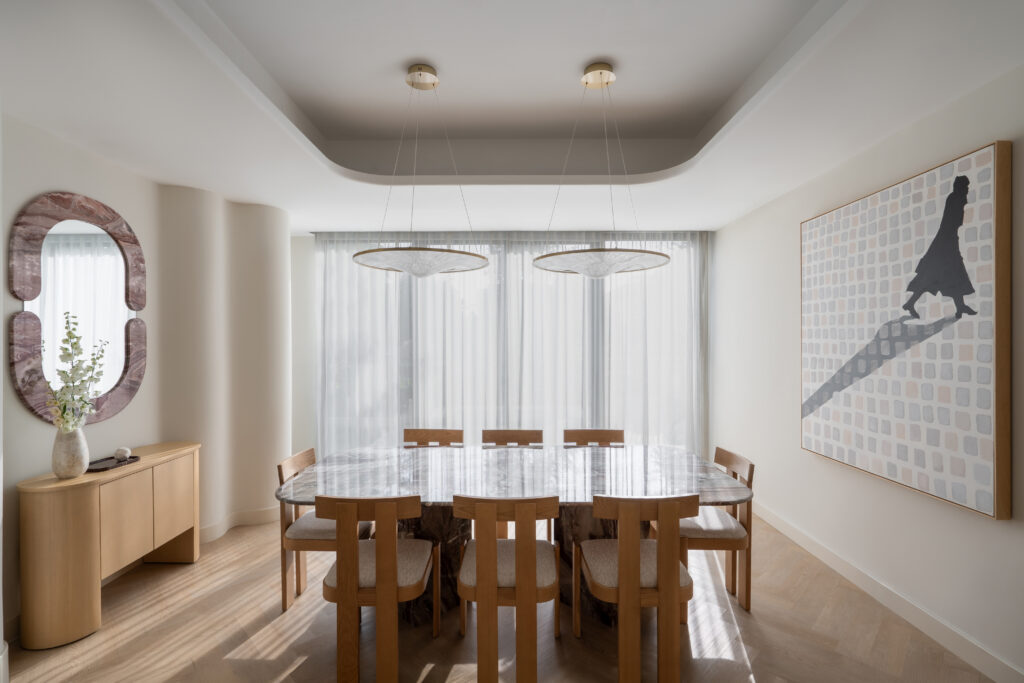
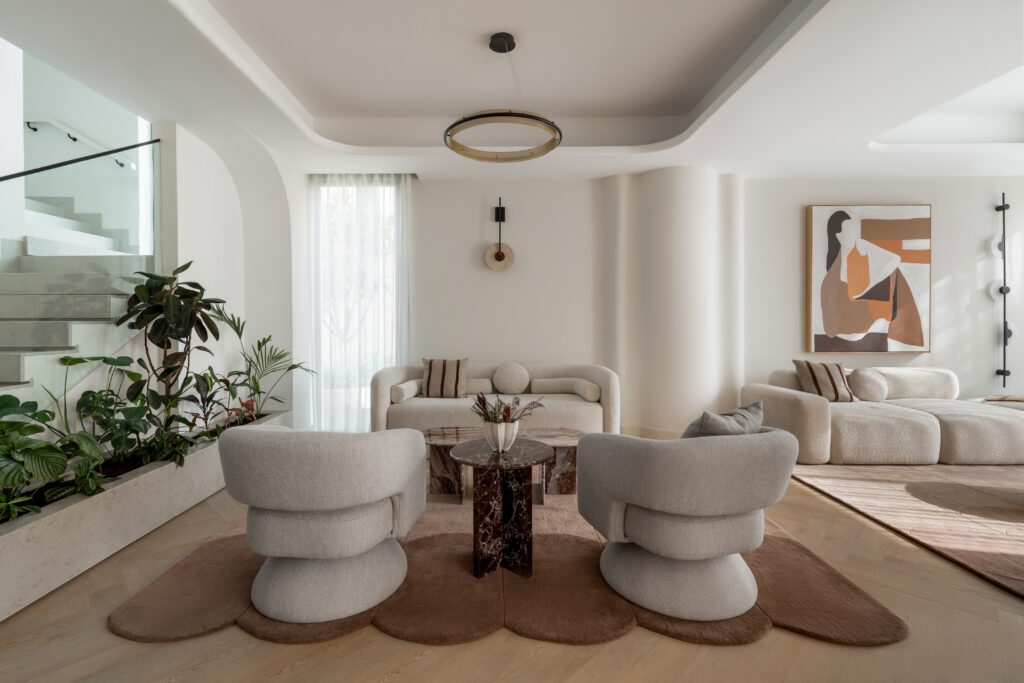
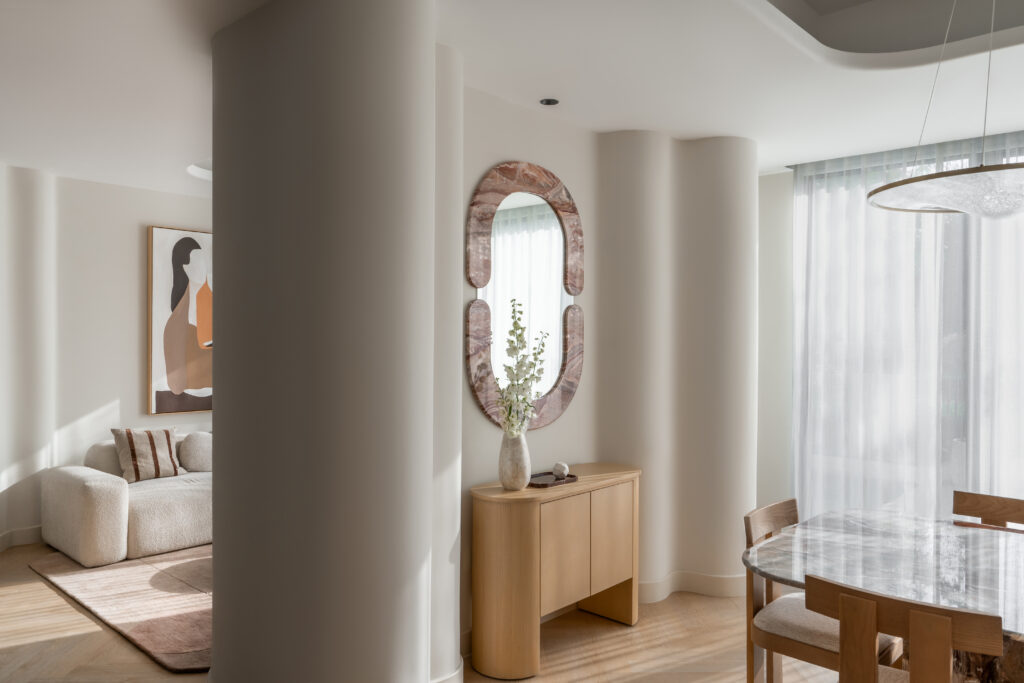
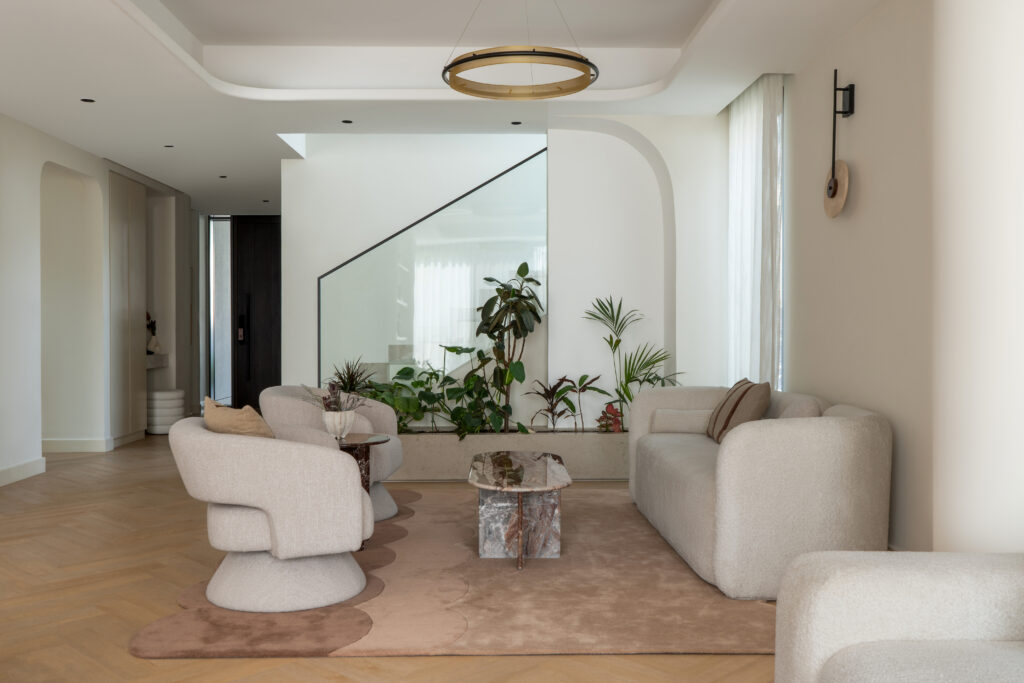
Designed for a family seeking warmth, the project balances architectural restraint with emotional texture. Two considered extensions enlarge the living spaces while introducing dedicated home offices, reflecting the increasingly porous boundaries between domestic and professional life. Rather than functioning as appendices, these interventions are absorbed into the architectural logic of the home, reinforcing a sense of cohesion.
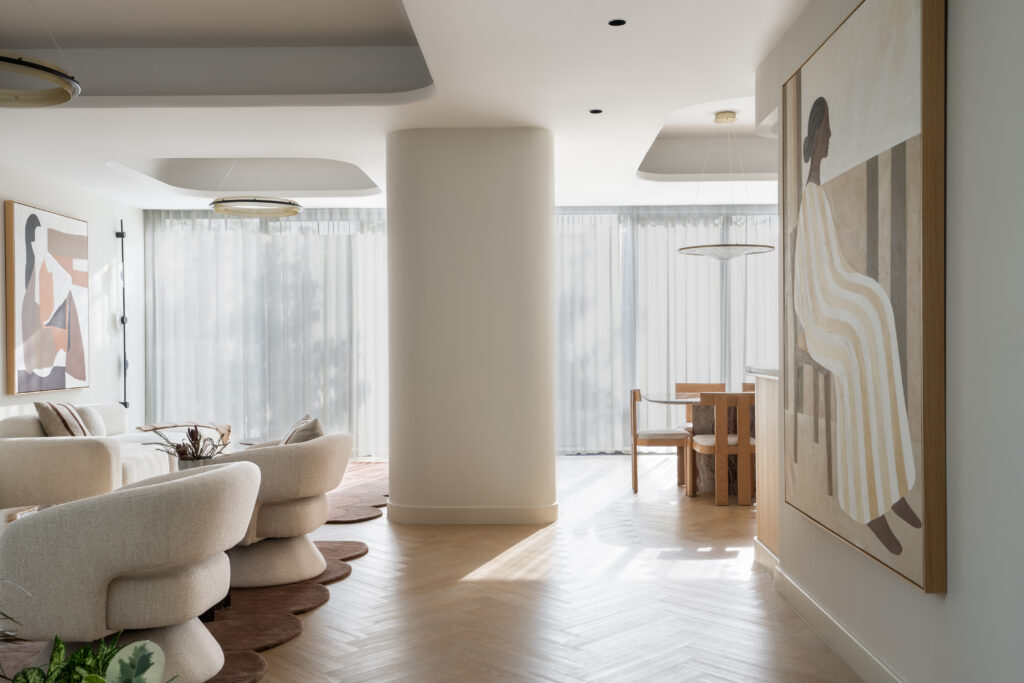
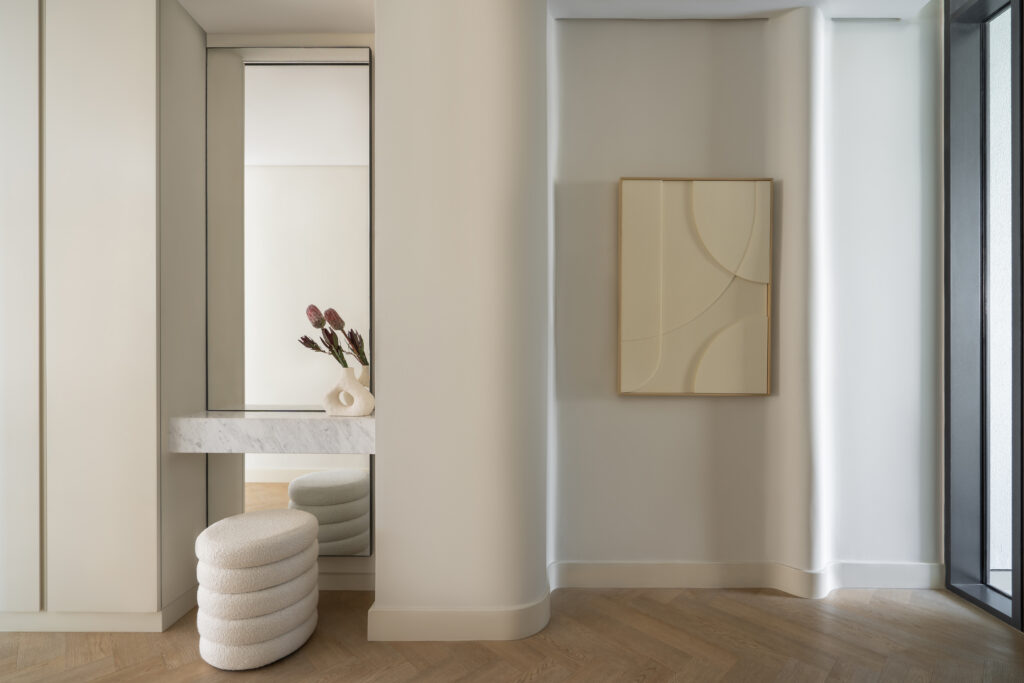
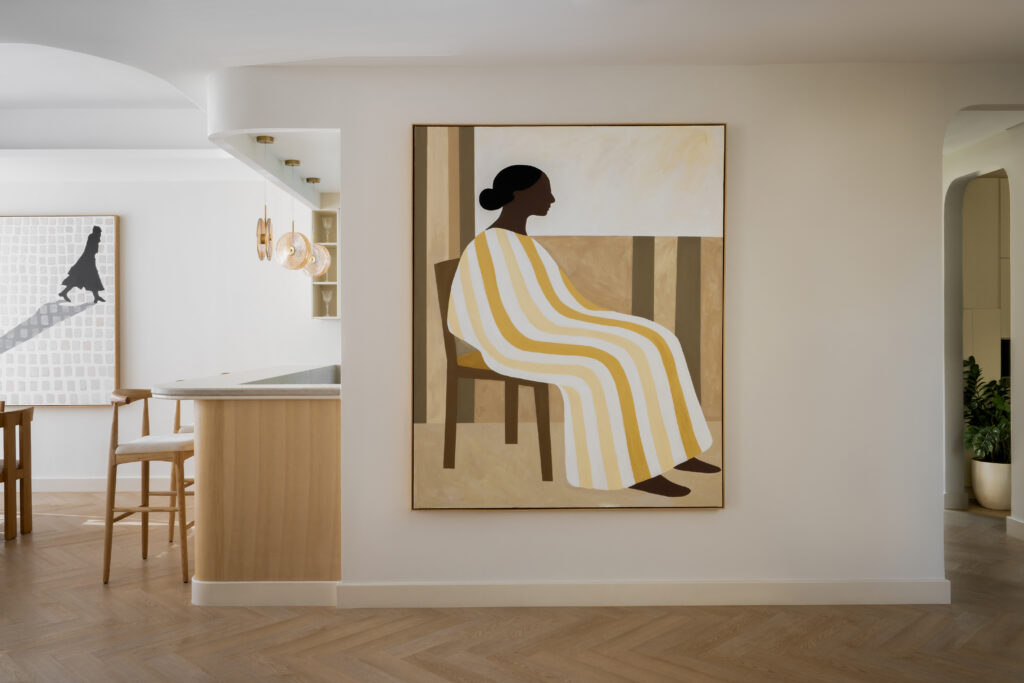
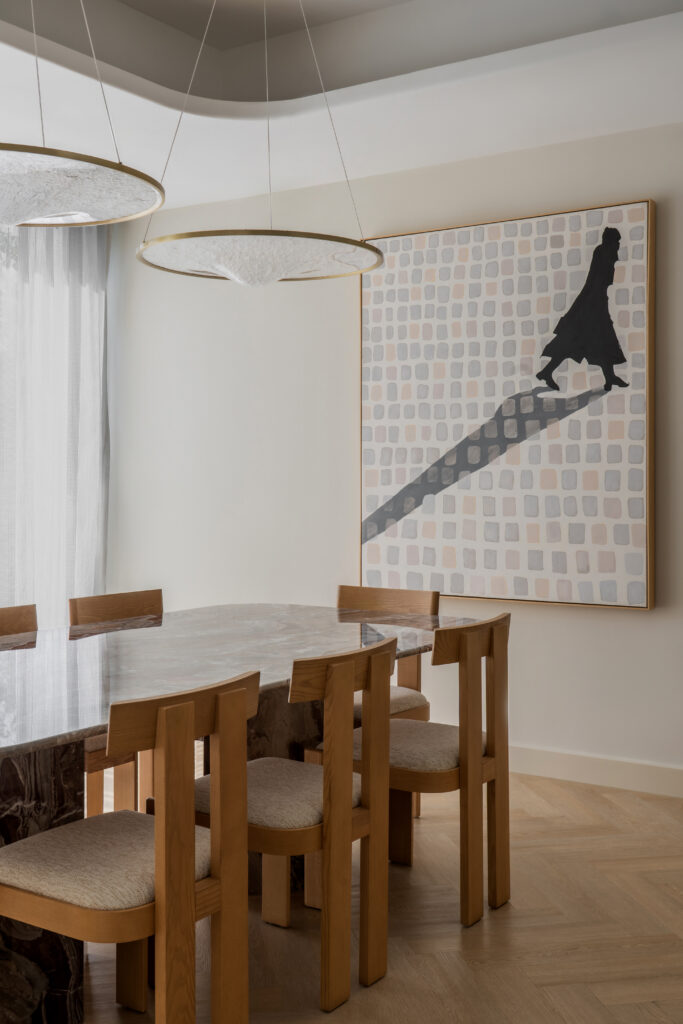
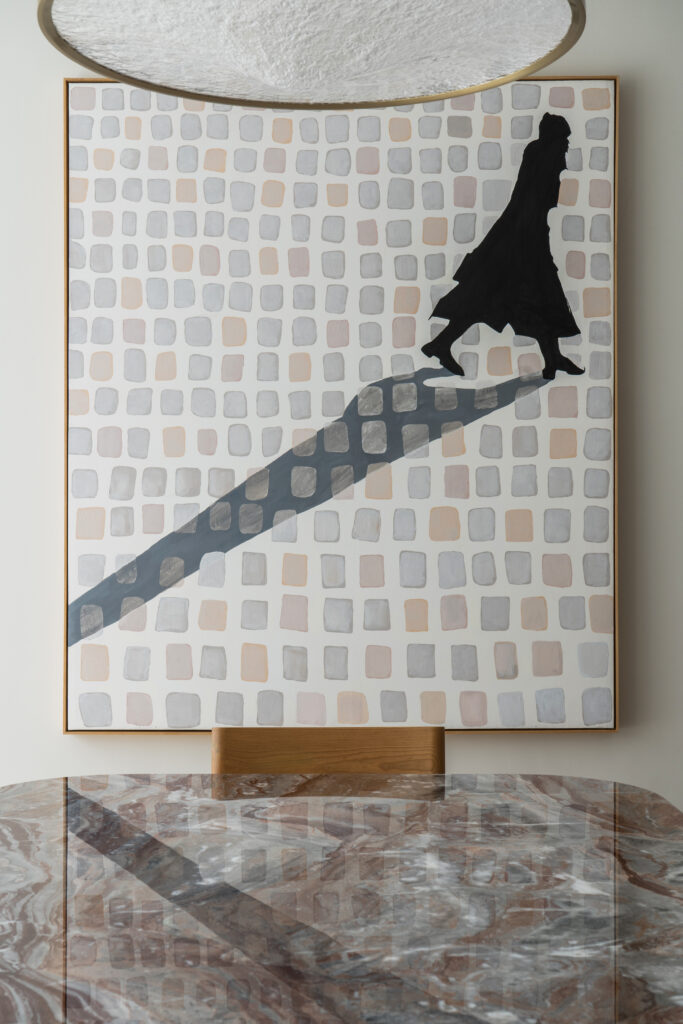
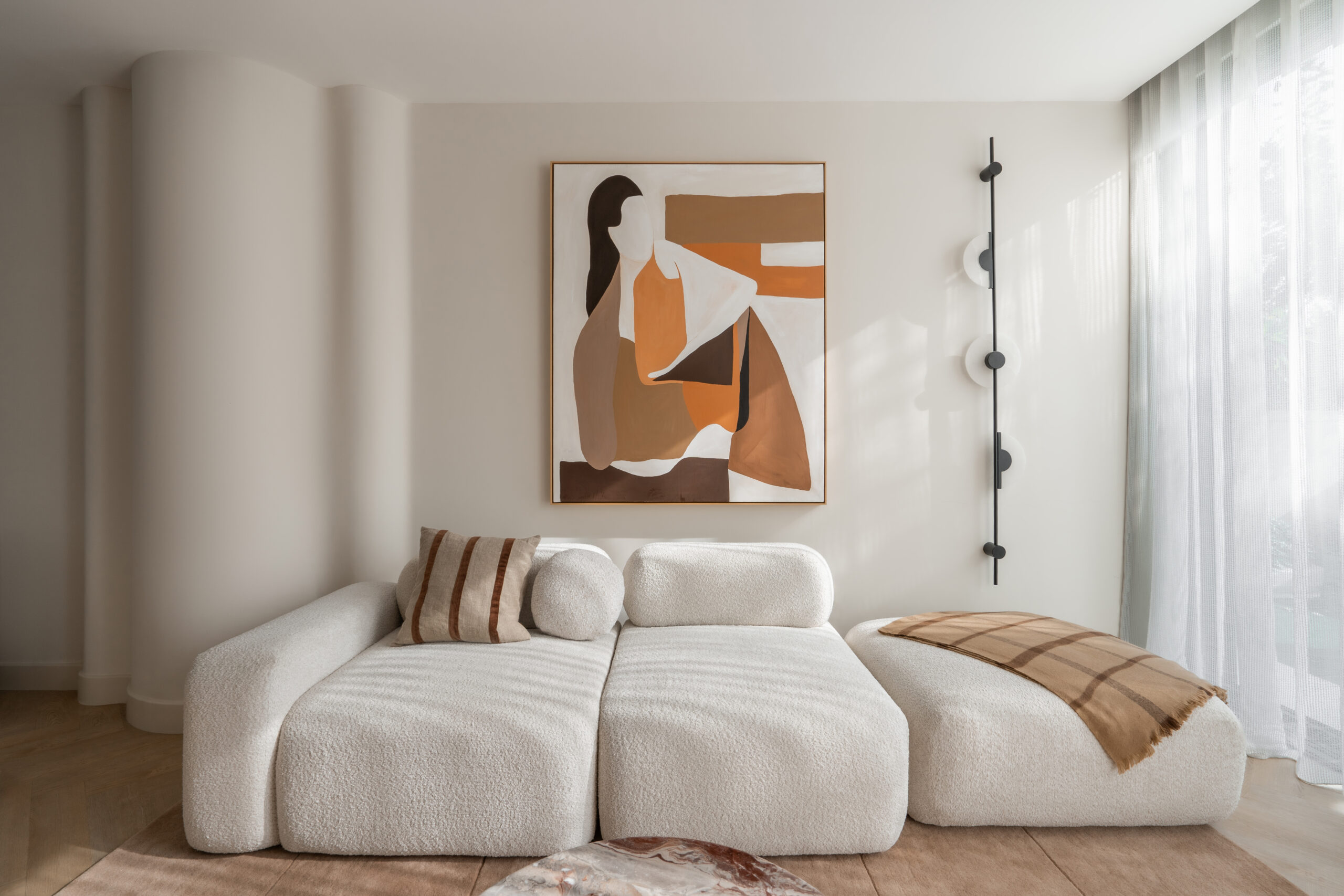
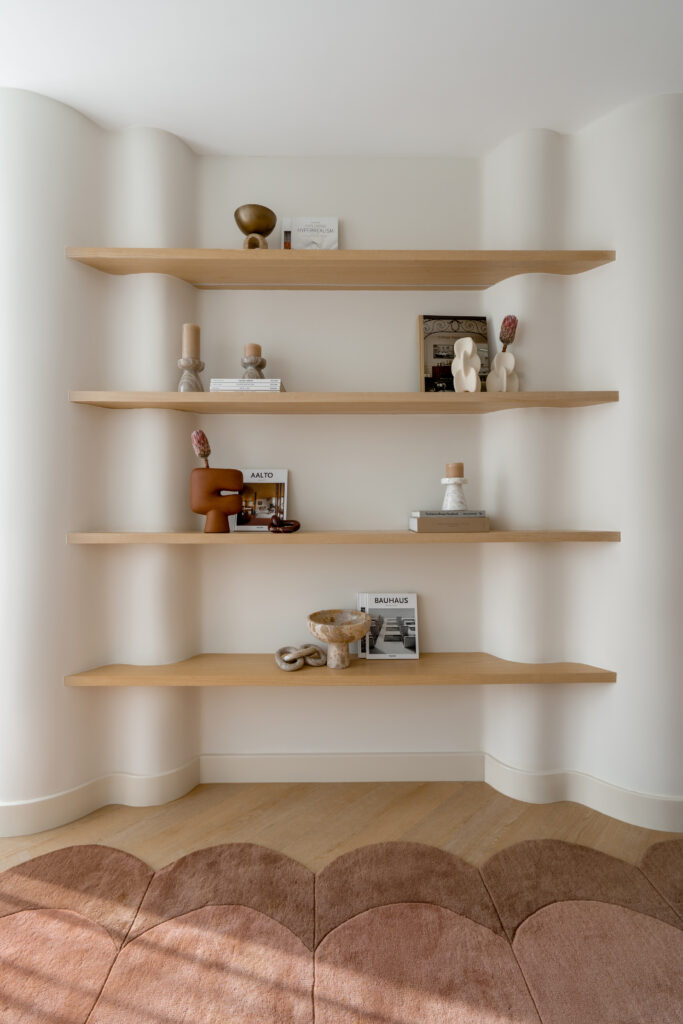
At the centre of Maison Terra lies an unexpected protagonist: a fixed structural column that could not be removed. Instead of concealing the constraint, designer D’Ora Tokai transformed it into a sculptural, curved feature that mediates between the living and dining spaces. The gesture establishes a recurring vocabulary throughout the interiors, where softened forms introduce movement and fluidity without disrupting architectural precision.
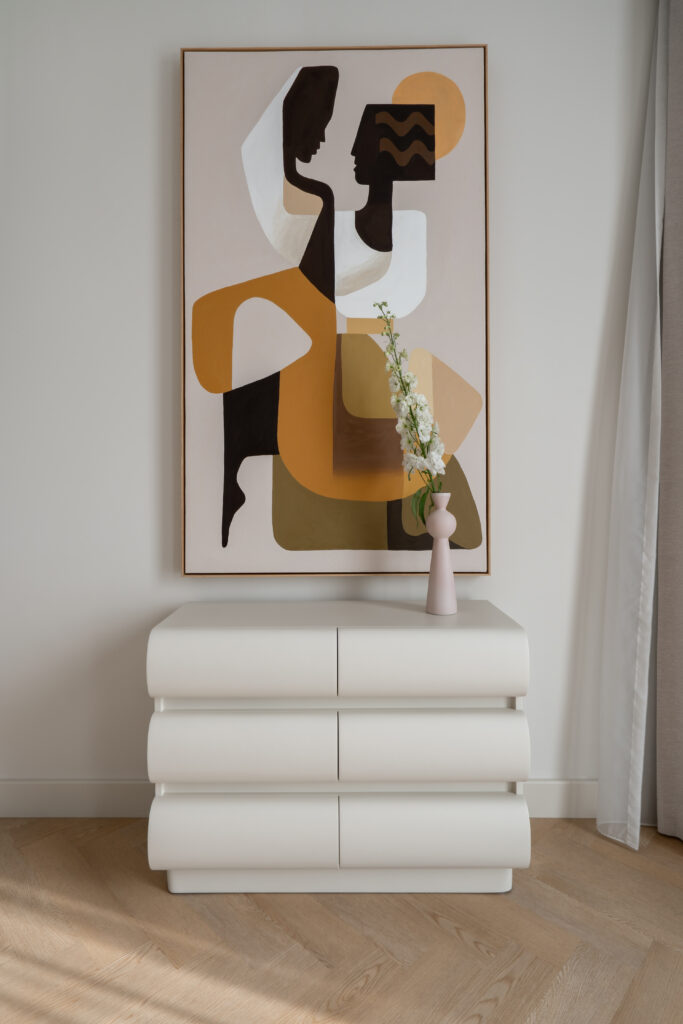
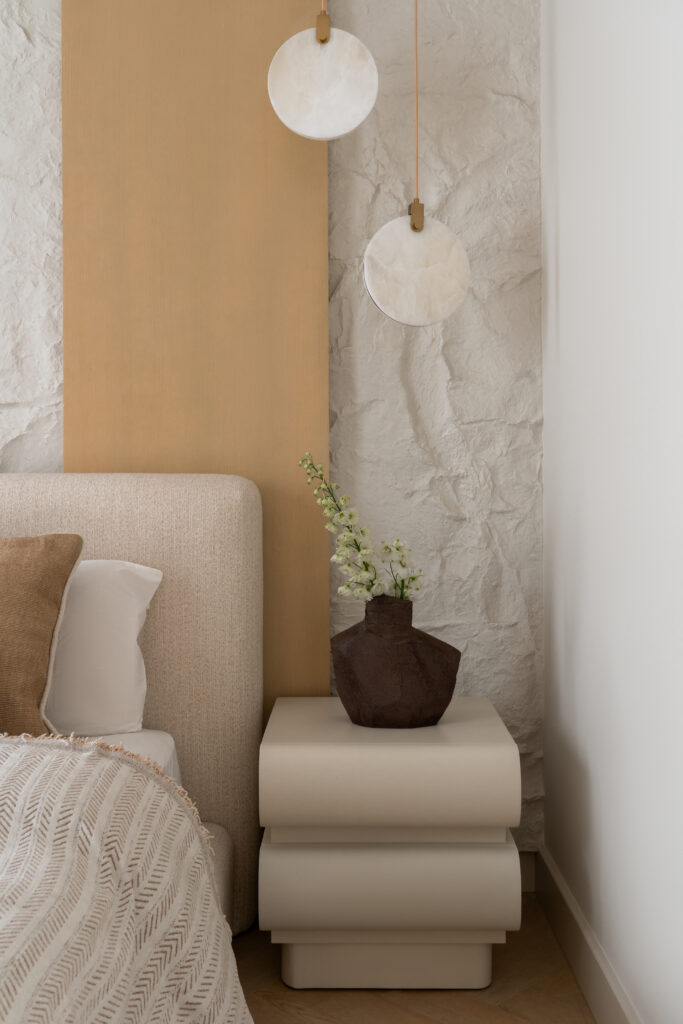
“Maison Terra was shaped around a very clear direction from the start,” explains D’Ora Tokai. “The family wanted a home that felt calm and contemporary, while still carrying the warmth and colour that reflects their Indian heritage.”
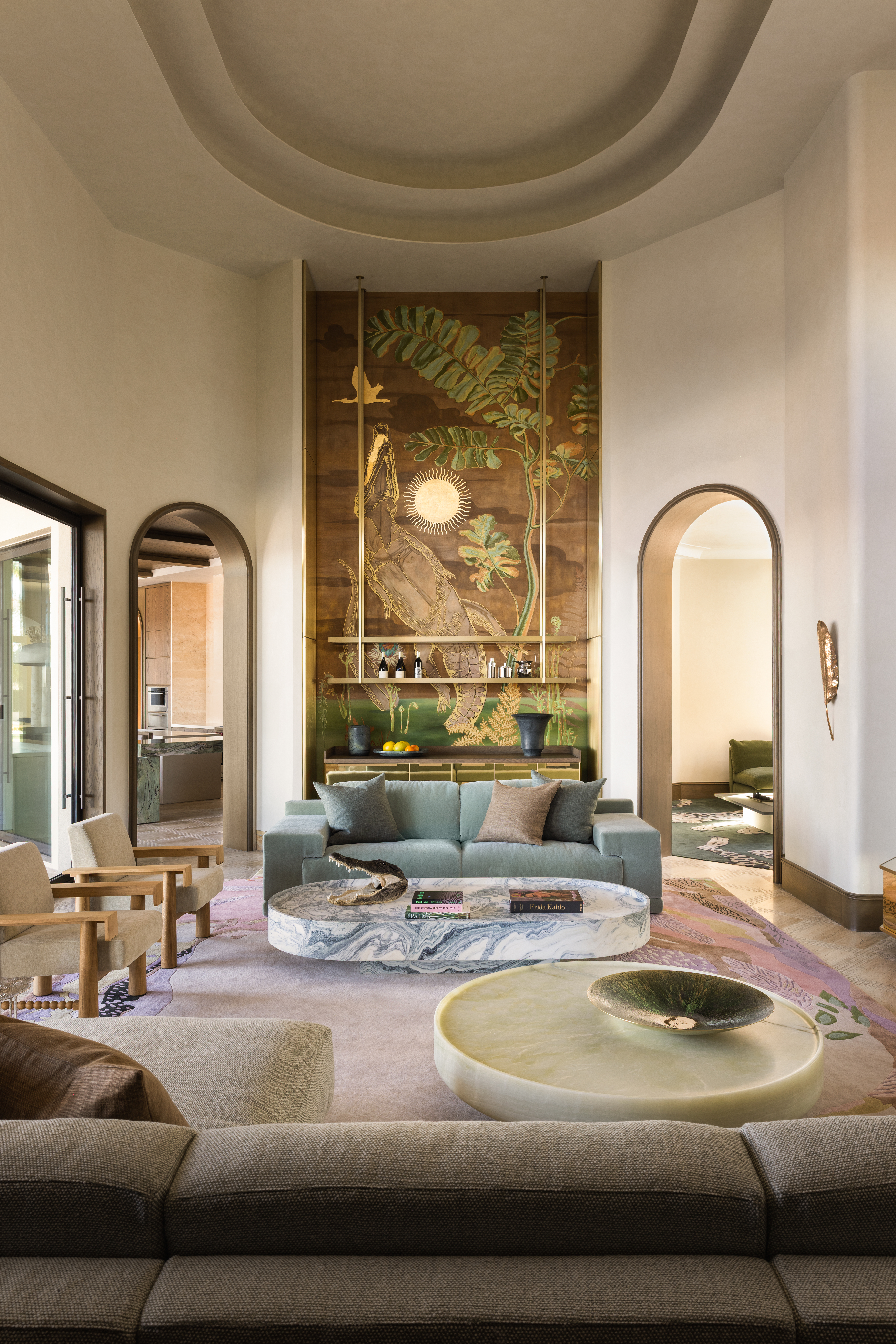
That warmth unfolds through a layered material palette of plaster, timber, and stone, softened by restrained tones of blush, terracotta, plum, mustard, and muted yellows. Bespoke interventions, from the dining table and marble framed mirror to integrated joinery, reinforce a quiet continuity between rooms.
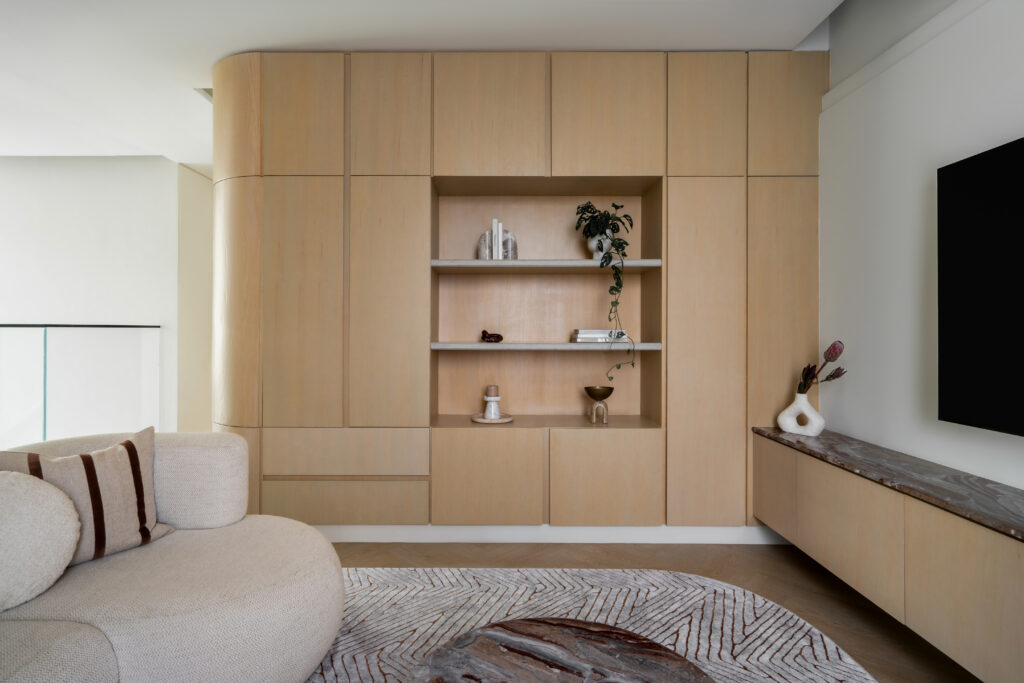
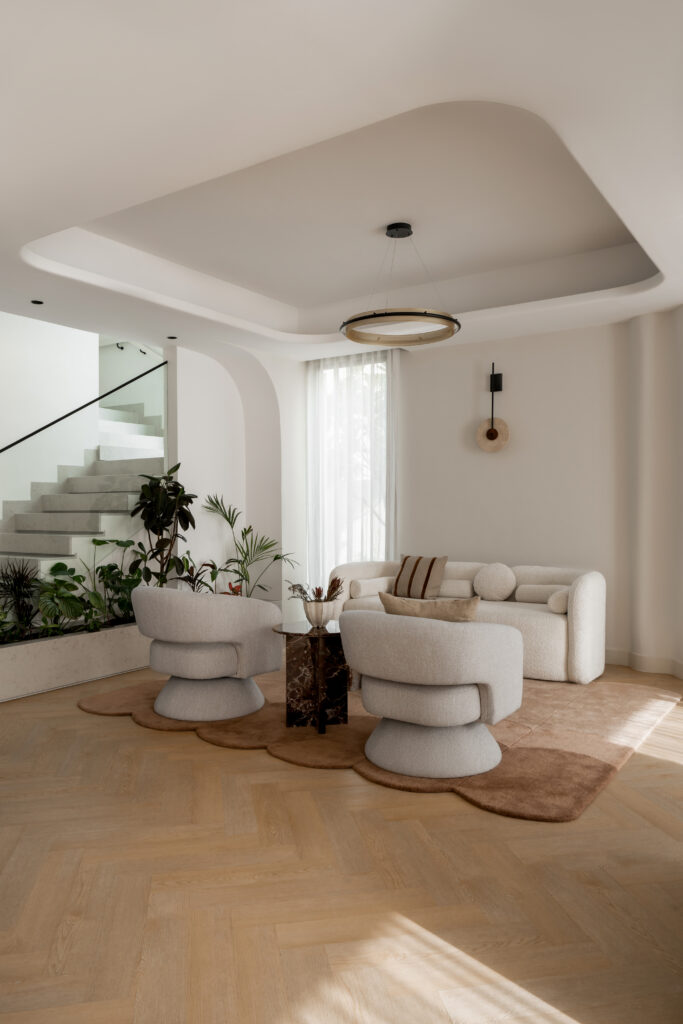
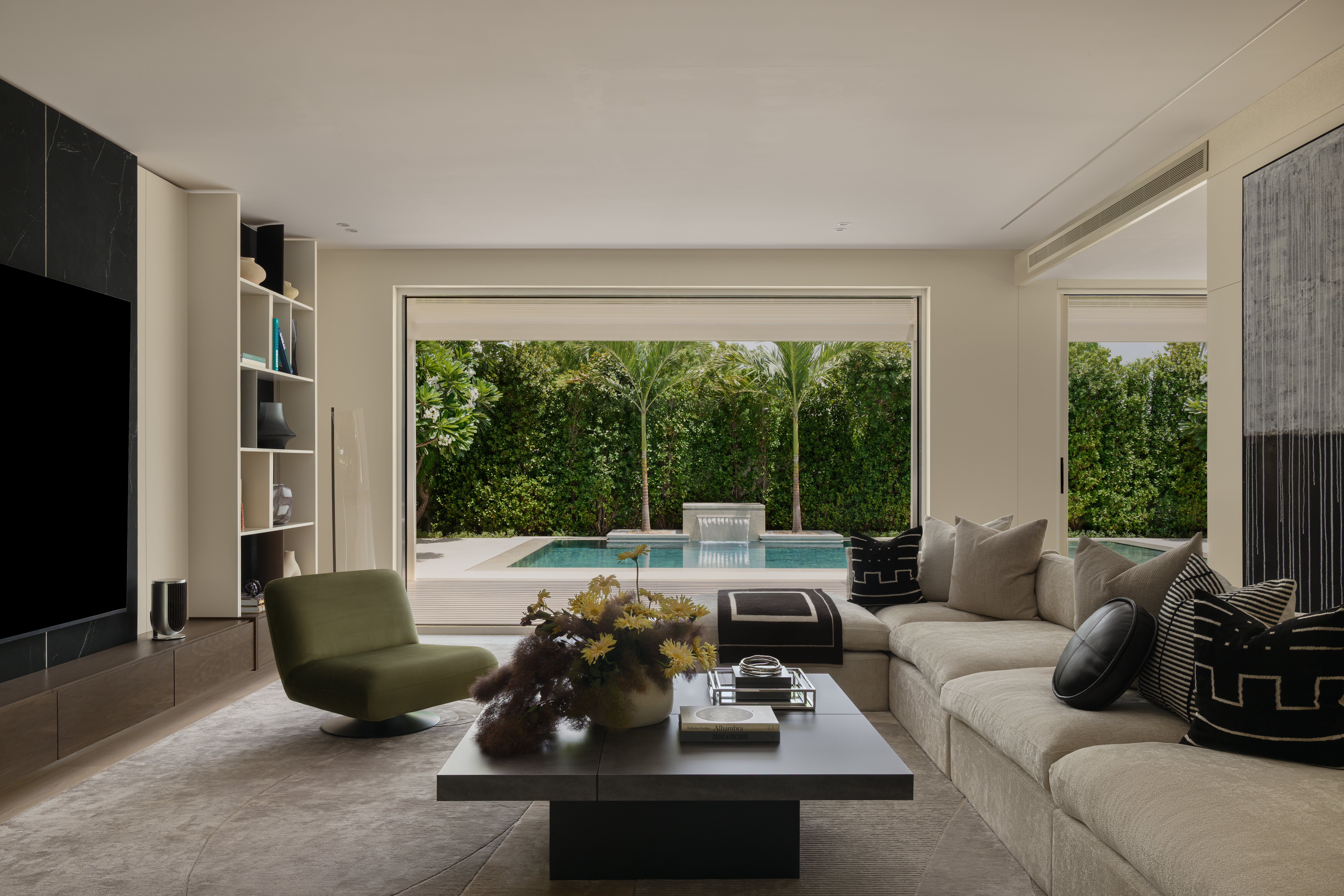
Perhaps most telling is what the home resists. The primary living areas were intentionally designed without screens, privileging conversation, reading, and gathering, while entertainment is contained within a separate family room. “Curves were introduced to soften the structure and create flow between spaces,” says Tokai, adding that principles of Vastu also informed the planning. The result is a house that privileges alignment in every sense: spatial, emotional, and familial.