Hospitality is often discussed as culture, ritual, or etiquette. More rarely is it understood as atmosphere: something spatial, emotional, and deeply material, capable of changing the way a place feels when another person enters it. Yet this is precisely the territory explored by Where There Is Uns, the winning installation of the 11th edition of the Van Cleef & Arpels Emergent Designer Prize, presented in partnership with Tashkeel.
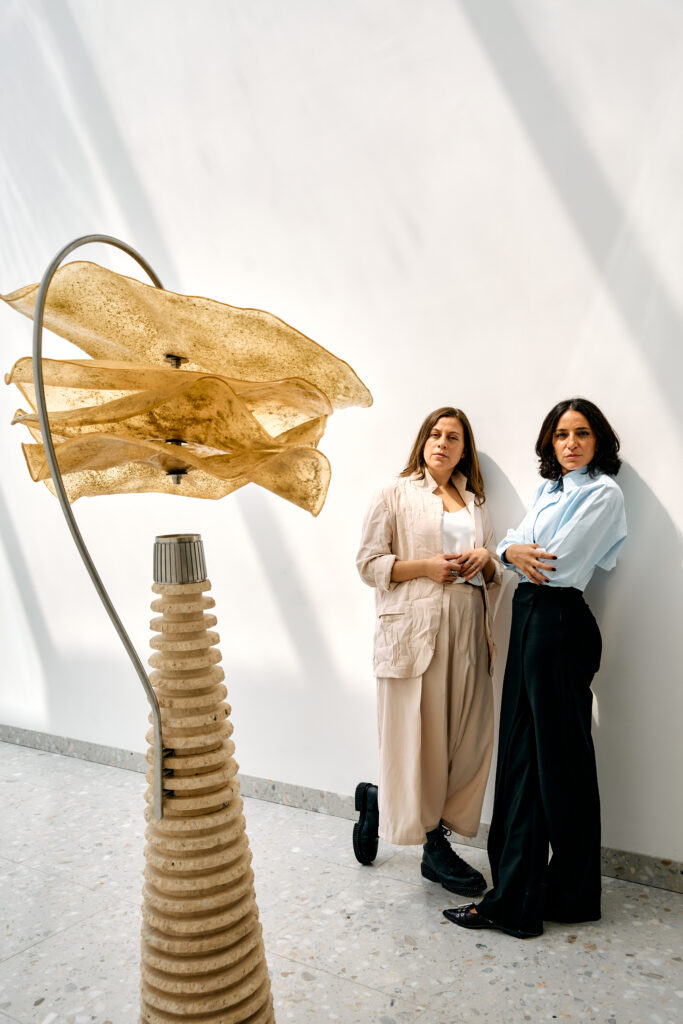
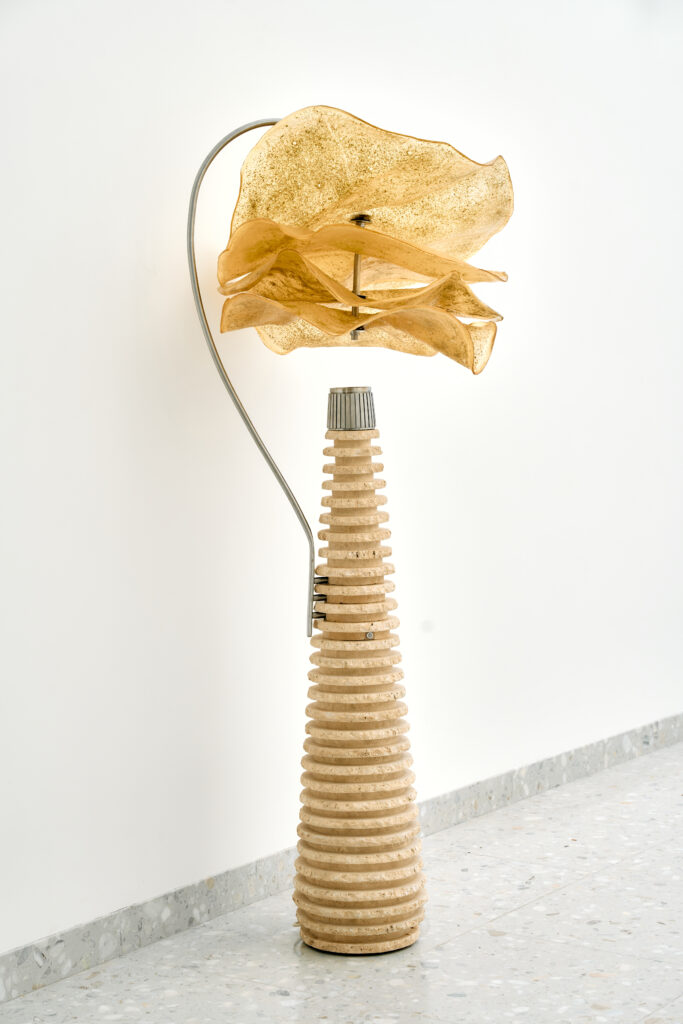
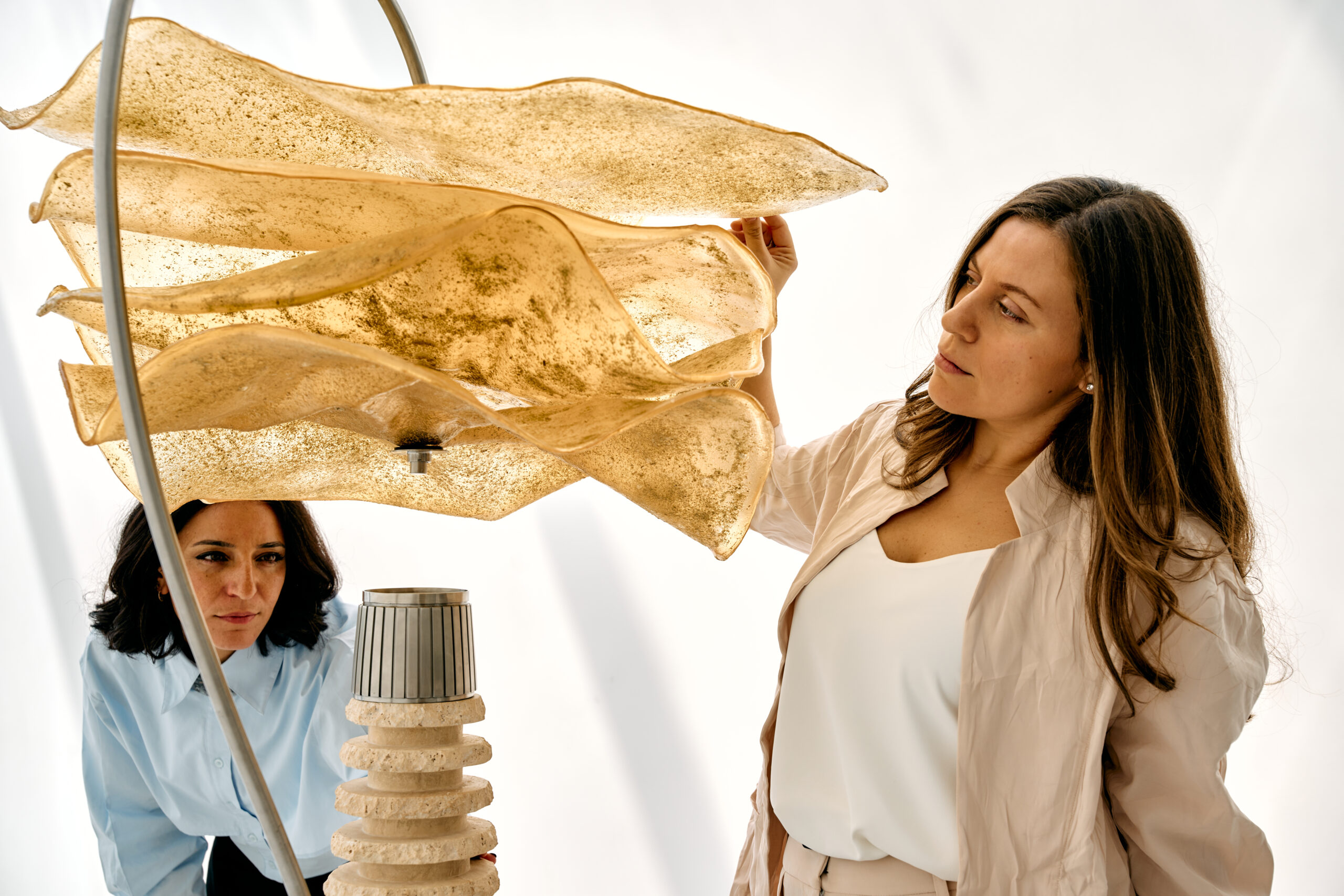
Created by Jordanian designer Joud Malhas and Lebanese interior architect and material designer Rachel Antoun, the light installation began with a deceptively simple proposition: what if hospitality could physically respond? What if welcome were not merely represented through symbols or references, but quietly enacted through interaction, light, material, and sensory presence?
For Antoun, the starting point was emotional rather than aesthetic. “From the beginning, we didn’t want the installation to feel passive,” she explains. “Hospitality is something active and emotional. Someone arrives, and immediately the environment changes, lights turn on, coffee is prepared, space opens up for them. We wanted the piece to embody that feeling rather than simply represent it visually.”
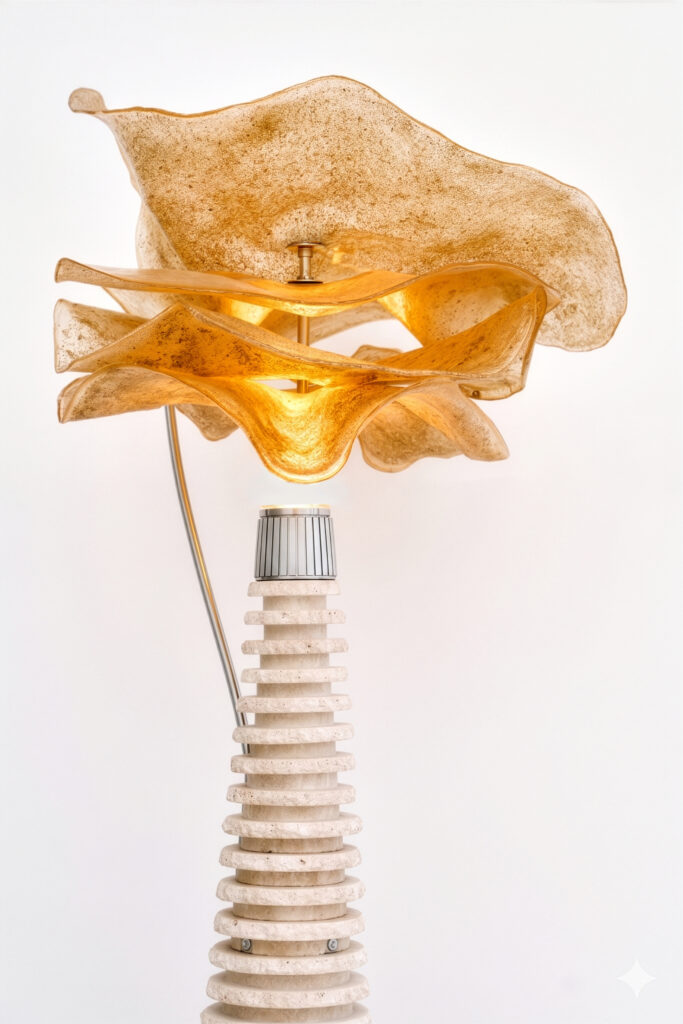
The resulting installation behaves almost as a living gesture. Activated by proximity sensors, the light gradually intensifies as someone approaches, becoming more luminous in response to presence. Rather than functioning as a technological feature for its own sake, responsiveness became a means of translating an emotional condition into spatial experience.
For Malhas, whose practice frequently explores emotional and experiential design, this relational quality felt essential. “I like to design products and spaces that do more than simply look beautiful, they should evoke feeling, presence, and human connection,” she says. Since the work draws inspiration from the generosity and hospitality embedded within Gulf culture, she explains, “it felt important for the interaction to embody those values as well.” As someone moves closer, the installation reacts gently, “in a way that resembles someone opening their arms in welcome or embrace,” transforming what could have been a static object into something “experiential and alive.”
The piece draws loosely from Bedouin traditions of lighting fires to guide travellers through the landscape, yet neither designer was interested in nostalgia or literal quotation. What emerges instead is an abstraction of emotional values: guidance, warmth, recognition, and intimacy.
“We were careful not to approach tradition in a literal or nostalgic way,” says Antoun. “What interested us wasn’t recreating historical imagery, but understanding the emotional values behind those traditions and translating them into something contemporary.”
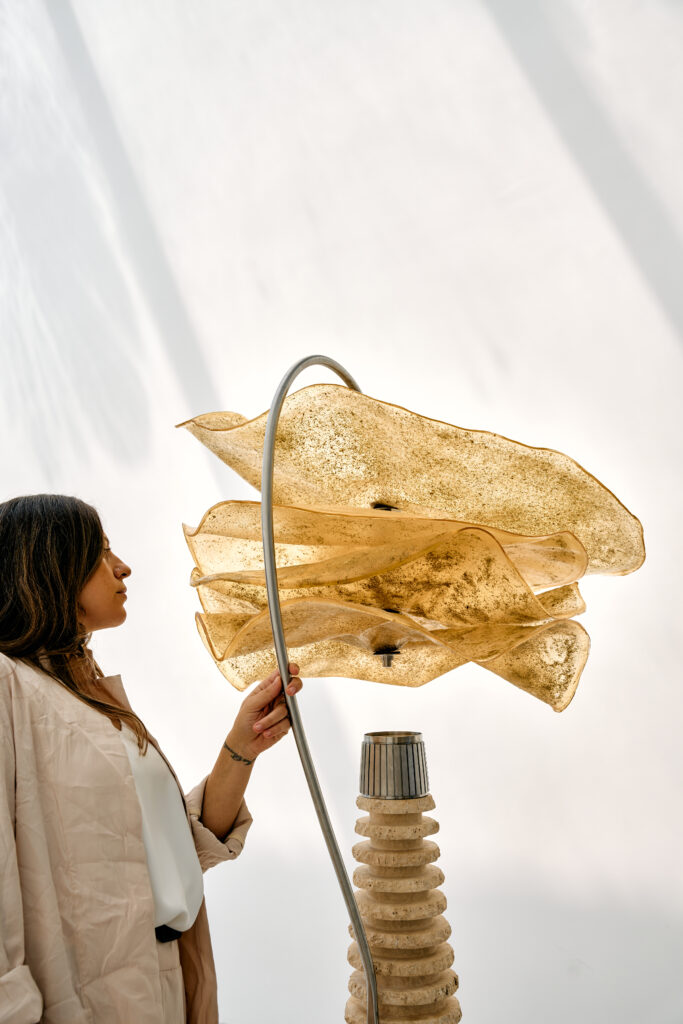
For Malhas, the conceptual language emerged through observation of nature. Her point of departure was “the quiet poetry and balance found in nature, particularly the way a leaf slowly unfurls as it welcomes new life.” The gradual opening of a leaf became important not only formally but emotionally: responsive, unfolding, and changing over time.
“There is something inherently beautiful and intimate about that process,” she explains. “The relationship between the object and the person evolves over time, much like a leaf that appears slightly different each day as it unfolds, blooms, and comes into its full form.”
Importantly, this prevented the project from collapsing into decorative symbolism. Rather than reproducing cultural imagery directly, Malhas describes her approach as conceptual and distilled. “I prefer to distill an idea down to its essence: emotion, movement, atmosphere, and memory instead of representing it directly.” This, she says, is precisely why the installation feels contemporary rather than retrospective: cultural sentiment is filtered through a language that remains “experiential, subtle, and open to interpretation.”
Material itself became central to this translation.
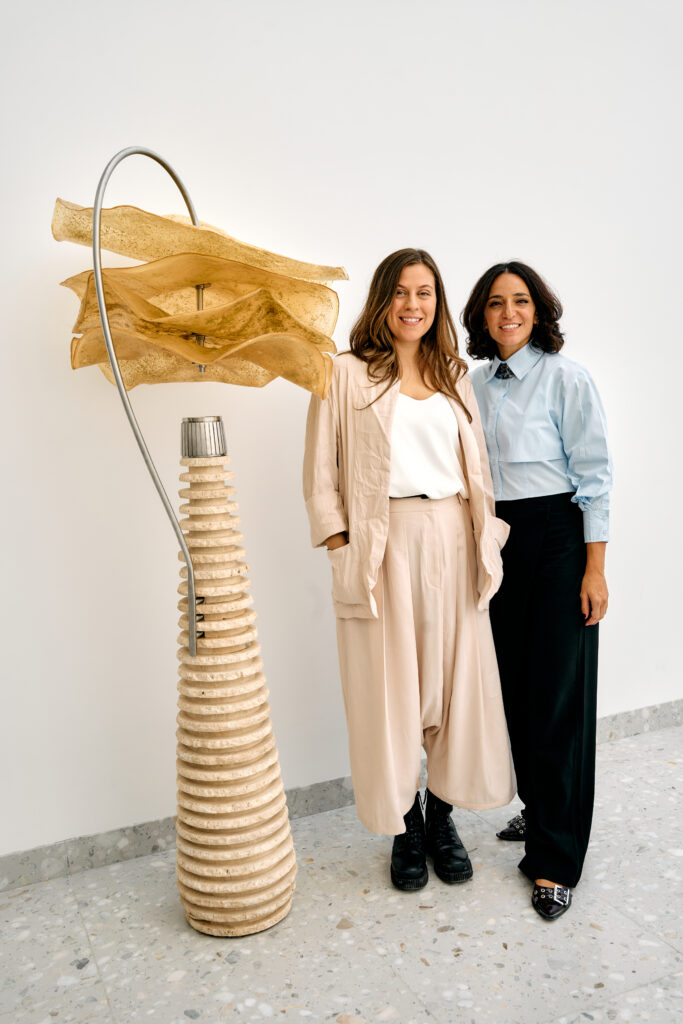
At the centre of Where There Is Uns sits cardamom, transformed from ritual ingredient into narrative material. For Antoun, cardamom immediately carried emotional weight because of its sensory closeness to hospitality. “Before you even see the coffee, you smell the cardamom,” she says. “There’s something very intimate and comforting about that experience.”
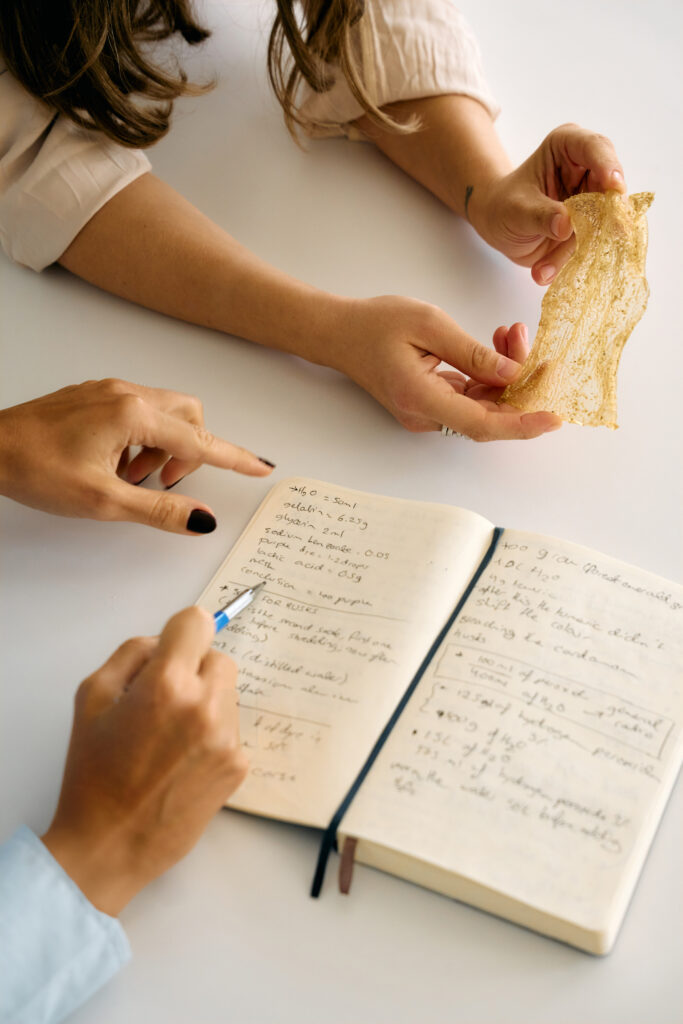
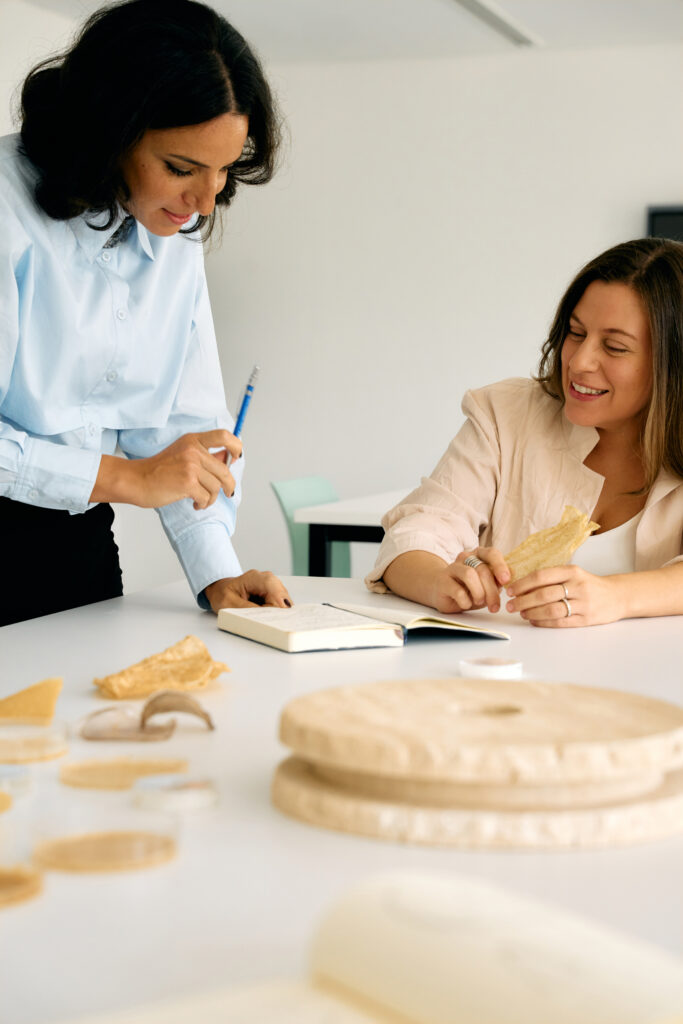
Rather than treating cardamom as decorative reference, the designers transformed discarded husks into translucent bioplastic sheets, embedding ritual into material itself. “When we began exploring waste materials, the cardamom husks felt poetic because they’re usually discarded after serving their purpose, yet they still carry memory and cultural meaning,” Antoun explains. Giving the material “a second life” through bioplastic allowed storytelling to become embedded within matter itself rather than superficially applied.
Malhas approached cardamom through memory and ritual. Although not native to the UAE, she notes, it has become inseparable from Arabic hospitality through coffee, “the very first thing offered to welcome a guest.” She recalls growing up around conversations about coffee, “watching my mother carefully work with the roaster to curate the perfect balance between the richness of the coffee and the spice of the cardamom.”
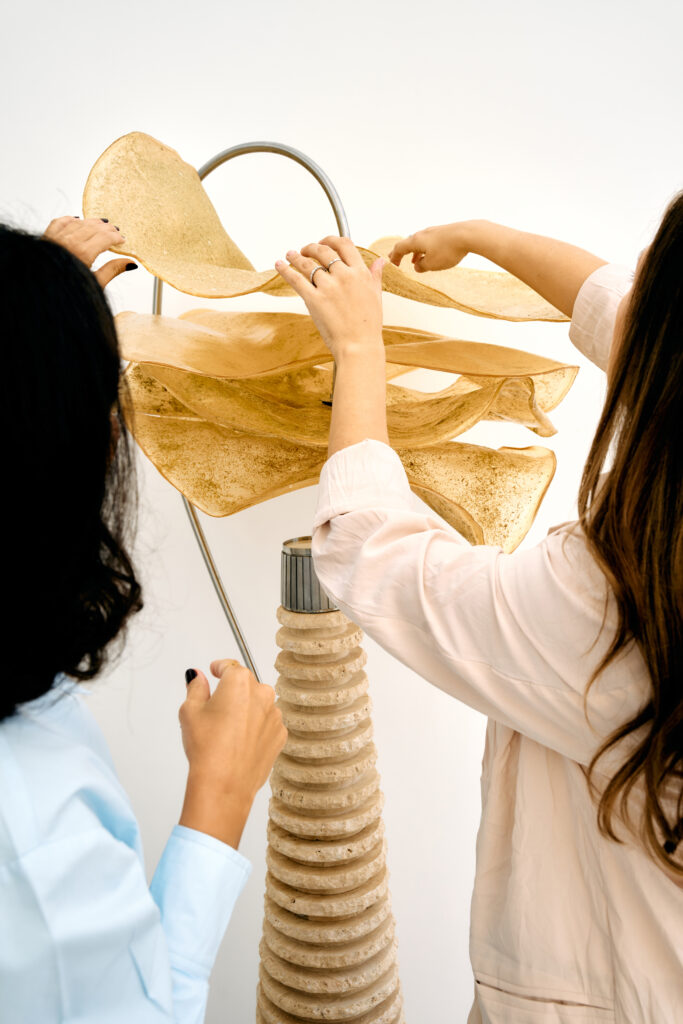
As research deepened, another connection emerged. “We discovered that the cardamom leaf itself unfurls as it comes to life,” she explains, reinforcing the installation’s conceptual relationship to blooming, welcome, and transformation. Suddenly, “the narrative, the form, and the cultural ritual all aligned organically.”
This attention to process extended into the making of the material itself. During development, the bioplastic resisted perfection, warping naturally and producing irregularities that remained intentionally visible. Antoun embraced this unpredictability. “I loved that the material behaved unpredictably during development,” she says. “It warped and shifted naturally, and instead of removing those imperfections completely, we embraced some of them because they made the material feel alive and human.”
That emphasis on process is inseparable from the context of the Prize itself. Through its long-standing partnership with Tashkeel, the Van Cleef & Arpels Emergent Designer Prize has increasingly positioned experimentation alongside craftsmanship, creating a platform for emerging regional voices to explore design through research and material inquiry.
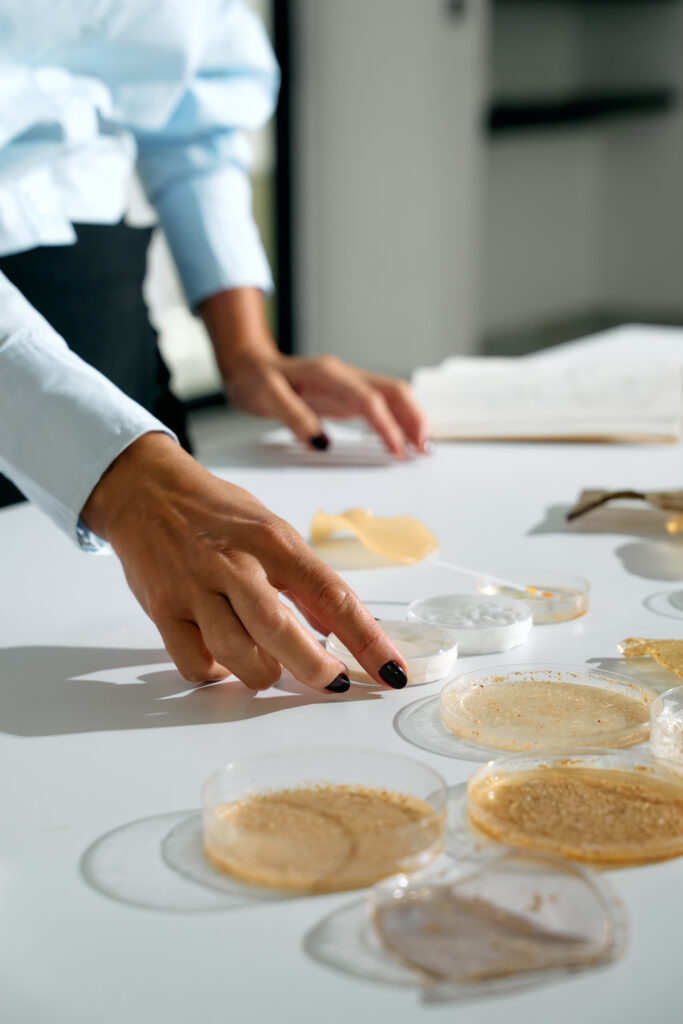
For Antoun, this proved particularly meaningful because the environment privileged experimentation over polish. “What was special about the experience was that it genuinely encouraged experimentation and research rather than only focusing on the final object,” she explains. The process involved “testing, failing, and refining” without pressure toward premature perfection, something deeply aligned with her own interest in making.
Malhas describes the Prize as equally important because it offered space to think across disciplines. She and Antoun had long discussed creating a project capable of exploring “the relationship between form, function, and material experimentation” while allowing movement, narrative, and materiality to coexist. The Prize, she says, offered “an environment that respected traditional processes and material knowledge, yet encouraged us to push boundaries.”
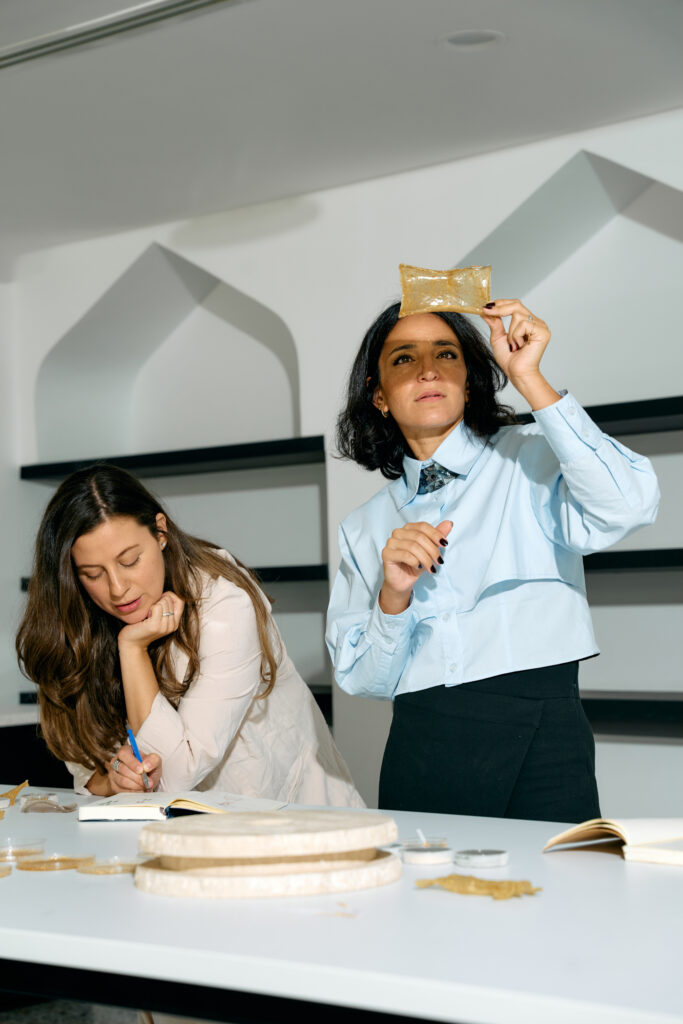
The resulting work resists easy categorisation. Lamp, installation, object, atmosphere: none feel entirely sufficient.
For Antoun, functionality always remained secondary to feeling. “Even though the piece functions as a light, we never approached it from a purely utilitarian perspective,” she says. “The functionality existed mainly to support the atmosphere and interaction we wanted to create.” What mattered most was “the gradual bloom of light, the softness of the glow, and the sense that the piece is responding back.”
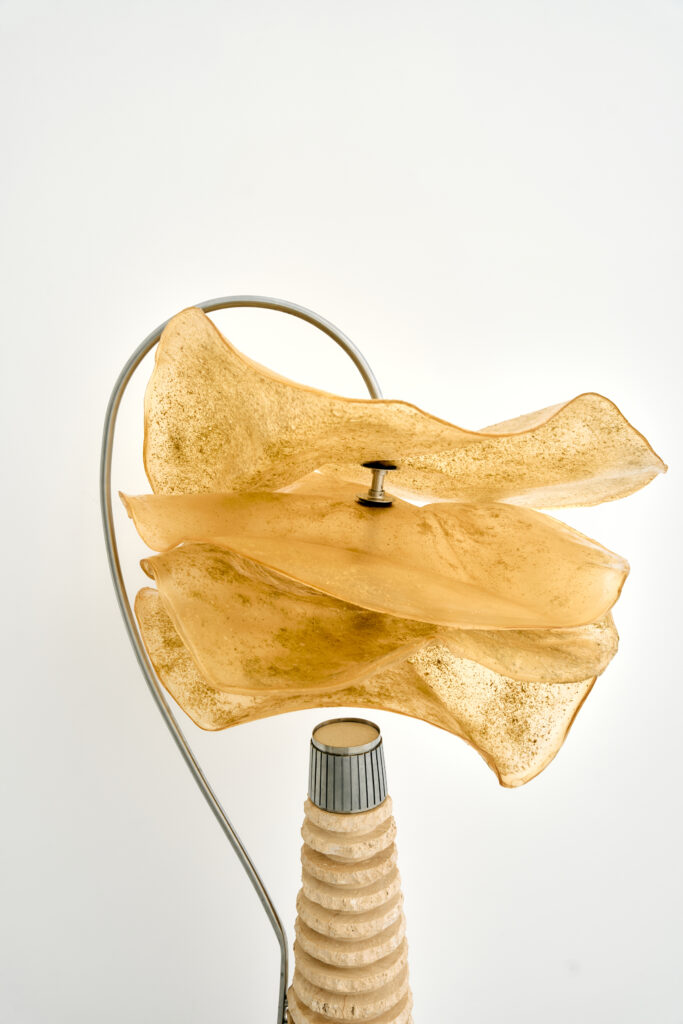
Malhas similarly resists strict definitions. “The piece was never intended to sit strictly within one category,” she explains. Rather than a purely functional object or sculptural statement, the project evolved “in the space between function, object, and emotional experience.” Importantly, functionality remained because the designers wanted the installation to exist naturally within daily life, asking people “not only to observe it, but to emotionally and physically relate to it.”
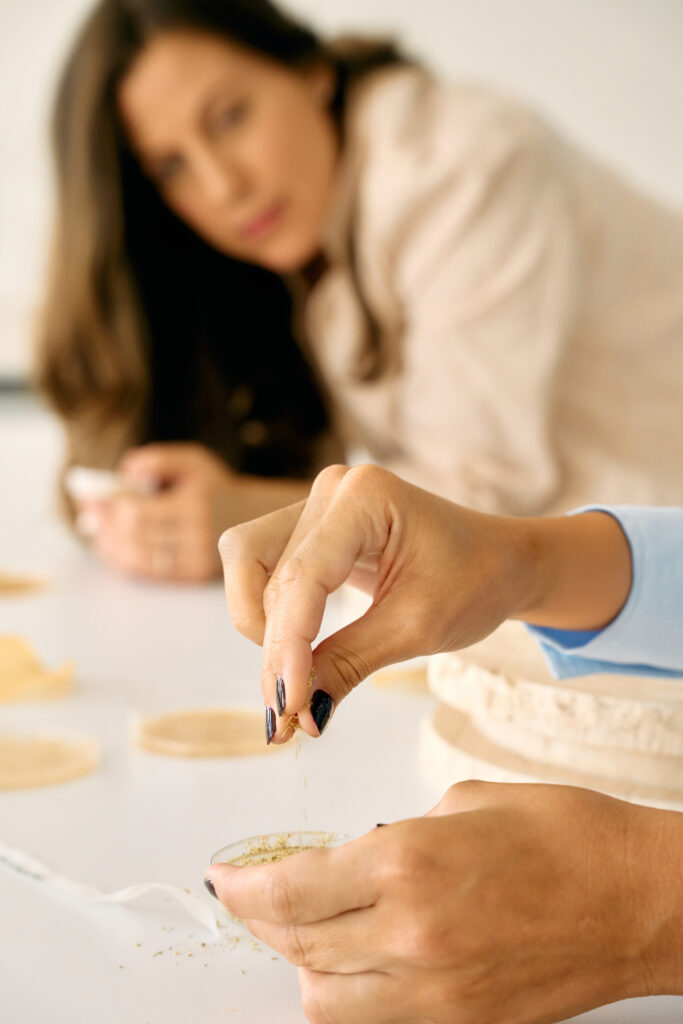
The theme Blooming Poetry offered a final conceptual framework, though both designers approached poetry differently.
For Antoun, poetry emerges quietly through material and gesture. “Poetry in design is when materials, light, and gestures communicate emotion quietly without needing to explain themselves directly.” It revealed itself through translucency, softness, restraint, and interaction: “none of these gestures were loud, but together they created a certain atmosphere.” Even calmness became deliberate. “We intentionally kept the piece calm and minimal because we wanted people to feel something from it rather than simply consume it visually.”
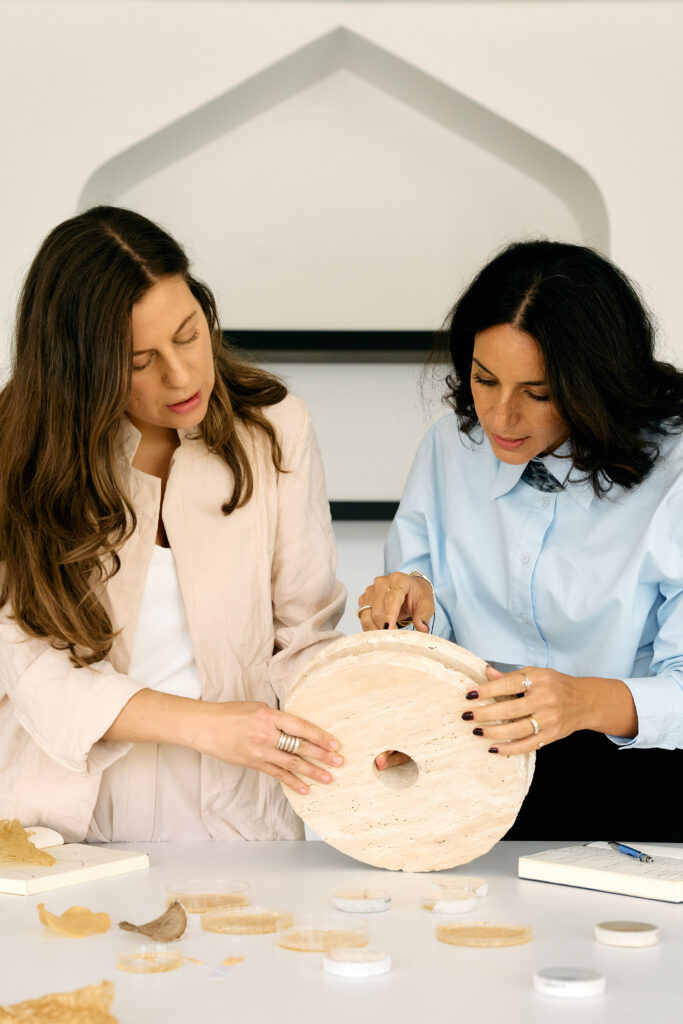
Malhas grounded poetry within the cultural fabric of the UAE itself. Having grown up around its importance, she became interested in the way poetry communicates through rhythm, symbolism, and emotional resonance rather than explanation. “We wanted the project to feel grounded in the power and significance of poetry within the region itself,” she explains. What moved the designers most was the way poetry reveals itself gradually, lingering emotionally over time.
“In spatial and material terms,” she says, “that translated into softness, movement, unfolding, and restraint.” The installation, like poetry, was designed to reveal itself slowly rather than immediately.
That slowness feels especially resonant within contemporary visual culture.
Antoun speaks directly about resisting instantaneous consumption. “We wanted the installation to reward presence rather than quick visual consumption,” she says. A photograph, she notes, cannot fully communicate “the glow, the translucency of the material, or the way the installation reacts when someone approaches it.” Instead, the piece was designed to unfold gradually, rewarding proximity and attention.
Malhas approaches this from lived experience. “I still deeply value human experience over what is seen through a screen,” she says. Atmosphere, tactility, movement, scent, and emotional presence resist digital translation. “I want people to feel something before they fully understand it intellectually.”
Together, these ideas position Where There Is Uns within a larger shift occurring across regional design.
Antoun sees a growing appetite for work that feels “more rooted, human, and emotionally connected,” moving beyond spectacle toward materials, memory, and process. Material experimentation, she argues, allows identity to emerge honestly, carrying traces of ritual, geography, and everyday life without resorting to imitation.
Malhas situates this moment historically. “We are witnessing a kind of cultural renaissance,” she says, describing a regional ecosystem increasingly open to experimentation, narrative, and reinterpretation. What excites her most is watching designers engage with heritage not to preserve it unchanged, but to reactivate it.
What Where There Is Uns ultimately proposes is deceptively modest yet quietly radical: hospitality not as image, but as behaviour. A work that does not simply illuminate space, but changes in response to another person’s arrival.
In other words, welcome, made tangible.