Words by Allegra Salvadori | Photography Courtesy of Clement C Studio
Set above Repulse Bay—where Hong Kong’s mountains fall softly toward the sea—this 3,500-square-foot duplex by Clement C Studio is conceived as a sanctuary of quiet, shaped through curvature, texture and the measured use of light. Photographed courtesy of Clement C Studio and produced by Karine Monié, the residence reflects a nuanced sensibility that has positioned designer Clement Cheng among the region’s most intriguing emerging voices.
An Architecture of Soft Transitions
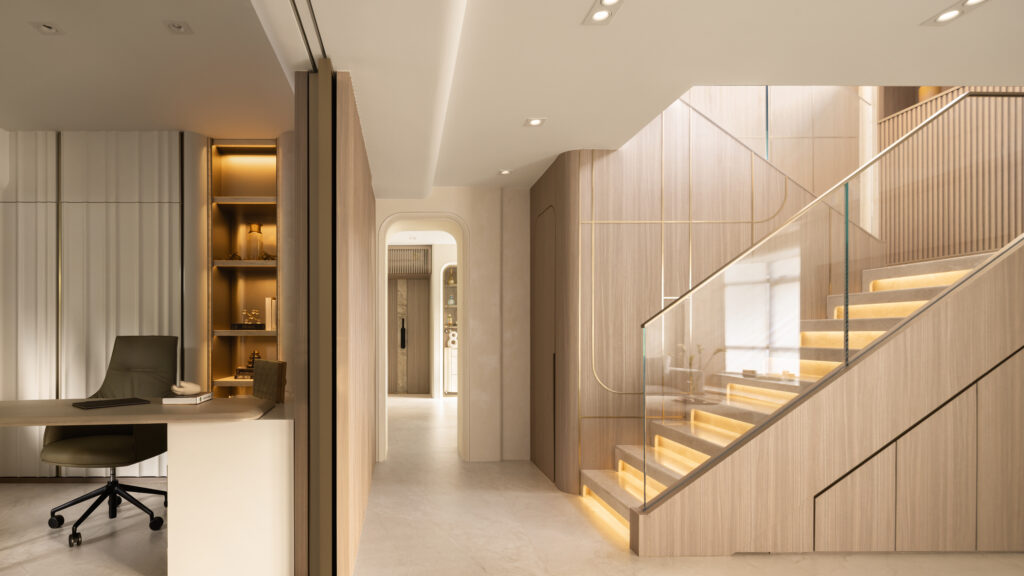
Rather than relying on dramatic gestures, the apartment builds its atmosphere through subtlety—rounded corners, flowing wall panels, gentle thresholds. Cheng speaks of wanting a “softer rhythm” to movement, and the space responds with an almost architectural hush. Staircase landings, corridor bends, and an arched opening between the dining and living areas become moments of pause, each calibrated to guide the eye and slow the pace.
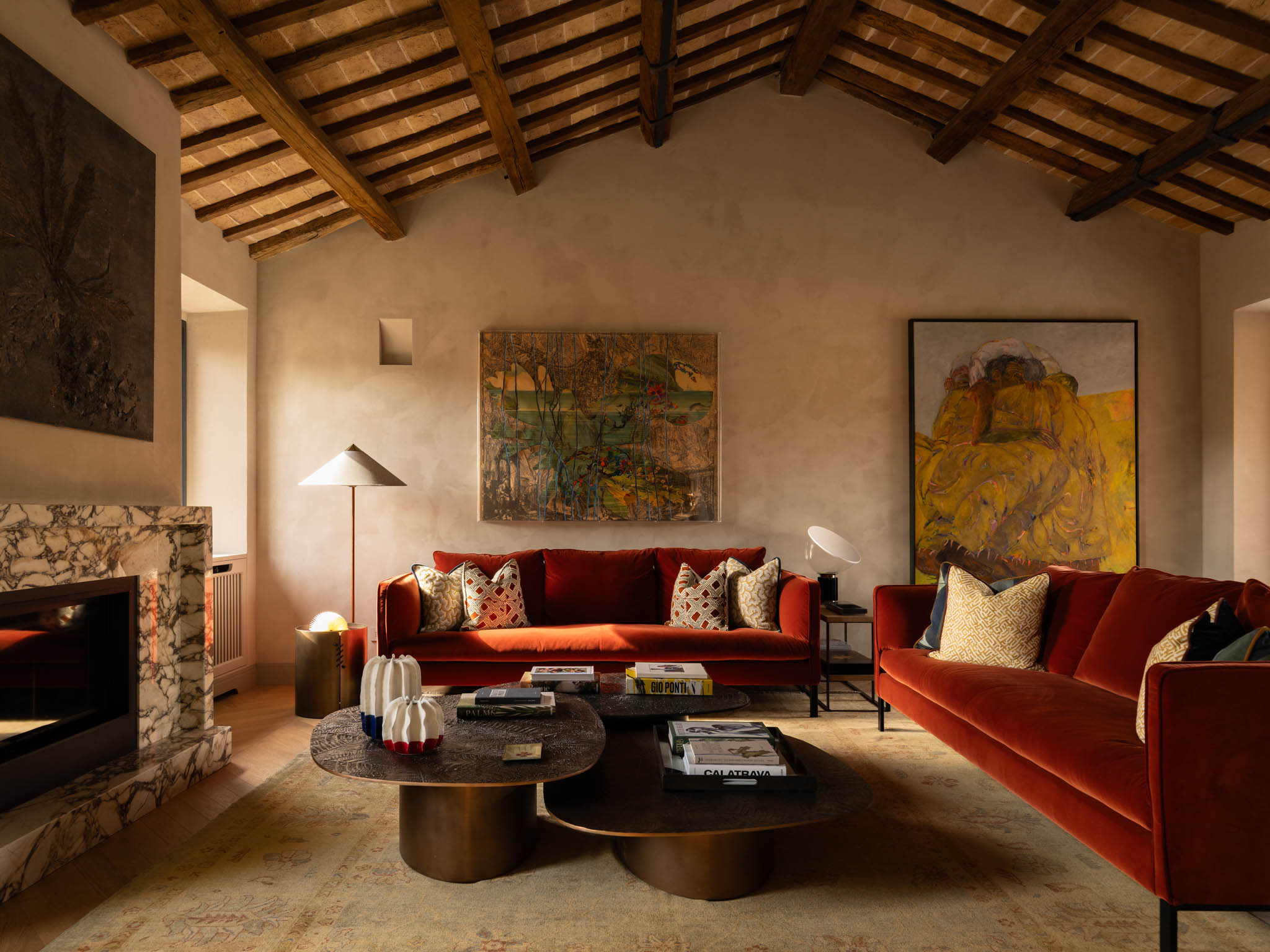
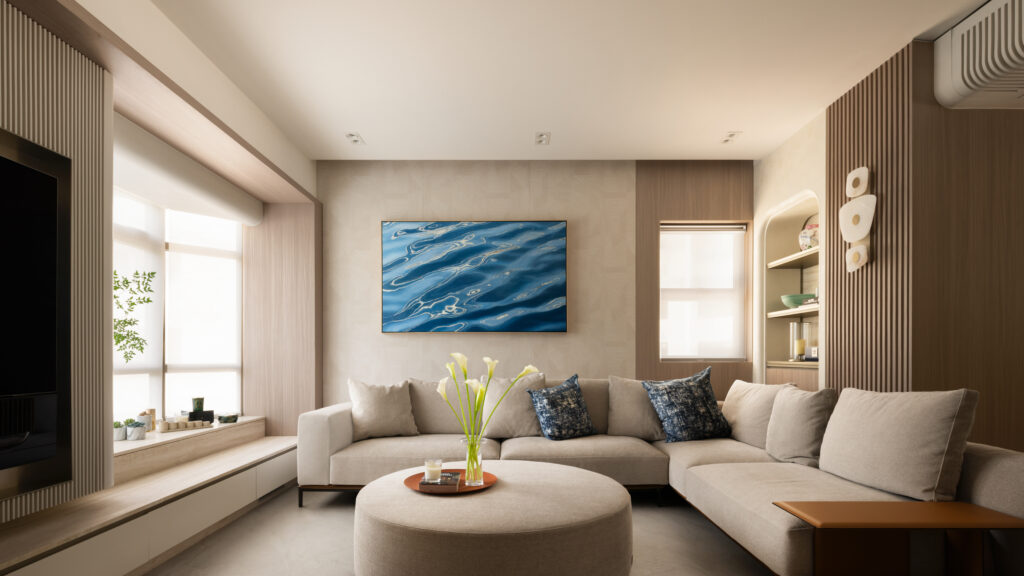
A sculptural staircase anchors the duplex, connecting the social spaces below to the private realm above. Its carved balustrade and softened contours establish a visual rhythm echoed throughout the home. Curated works—including a painting by Elizabeth Geisler in the living room—settle into textured walls whose layered paint shifts subtly with daylight.
A Warm, Contemporary Palette
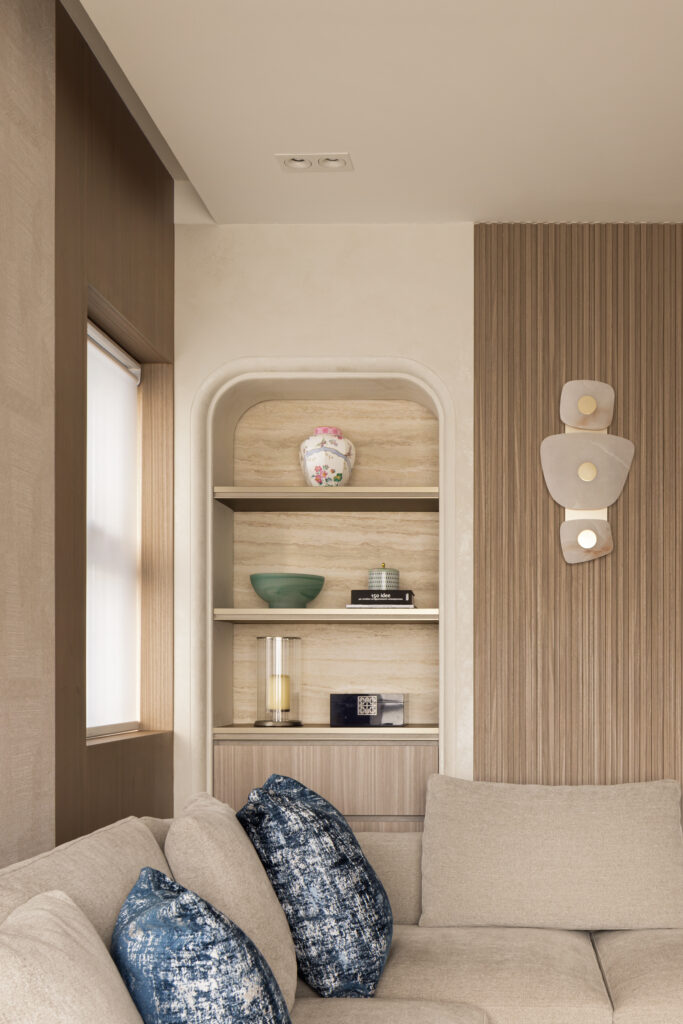
The palette is restrained yet rich in tactility: taupe, grey and bronze composing a warm contemporary backdrop. Texture paint plays a defining role, catching and modulating light across curved surfaces. Bathrooms feature full-body travertine grain molded basins, their organic weight reinforcing the home’s sculptural language.
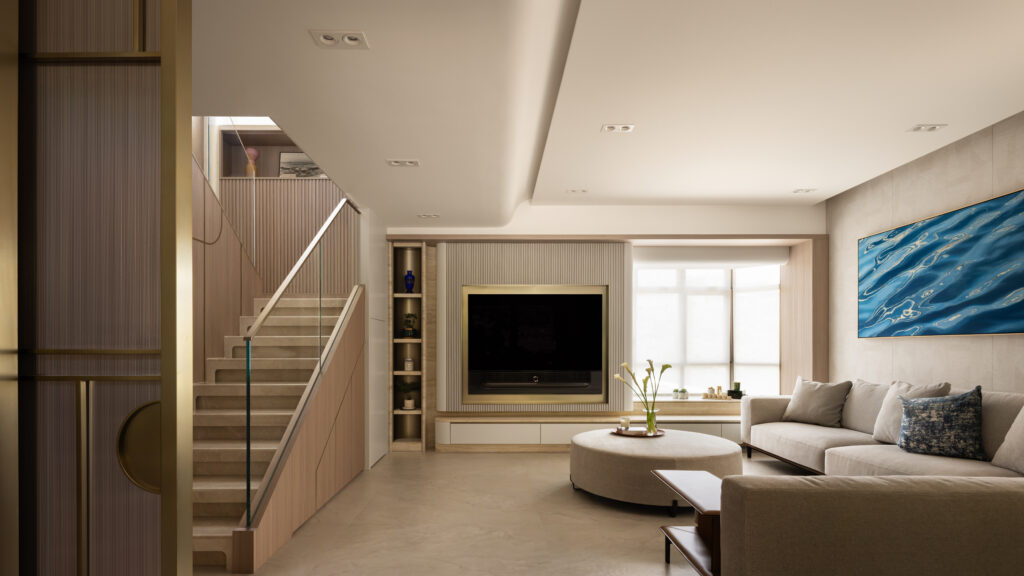
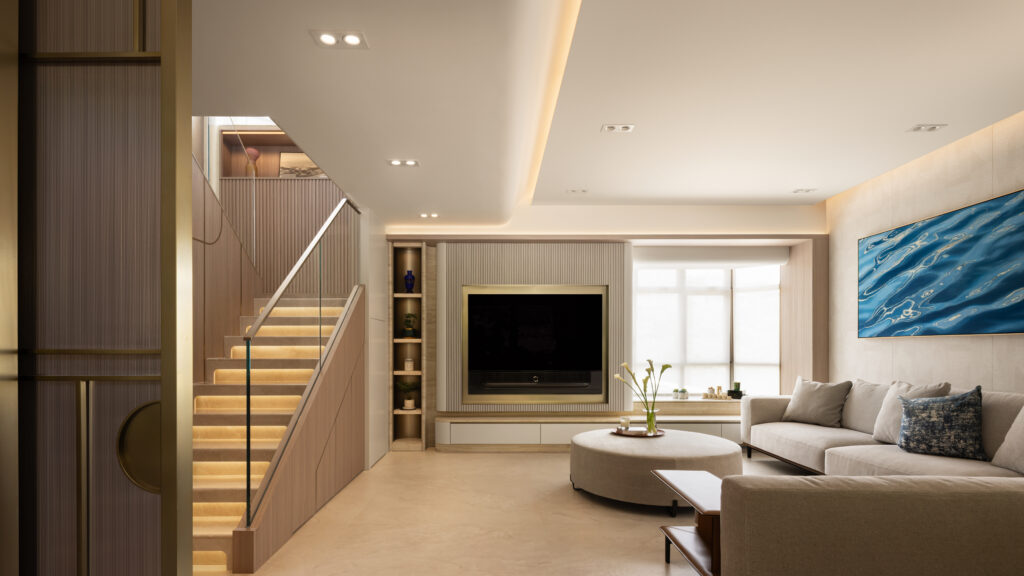
A Japanese-inspired wood-grain film—used expansively on cabinetry and paneling—adds another sensorial layer. Though uncommon in Hong Kong residences, its UV resistance, tonal consistency, and craftsmanship-driven application lend the space both durability and refined precision.
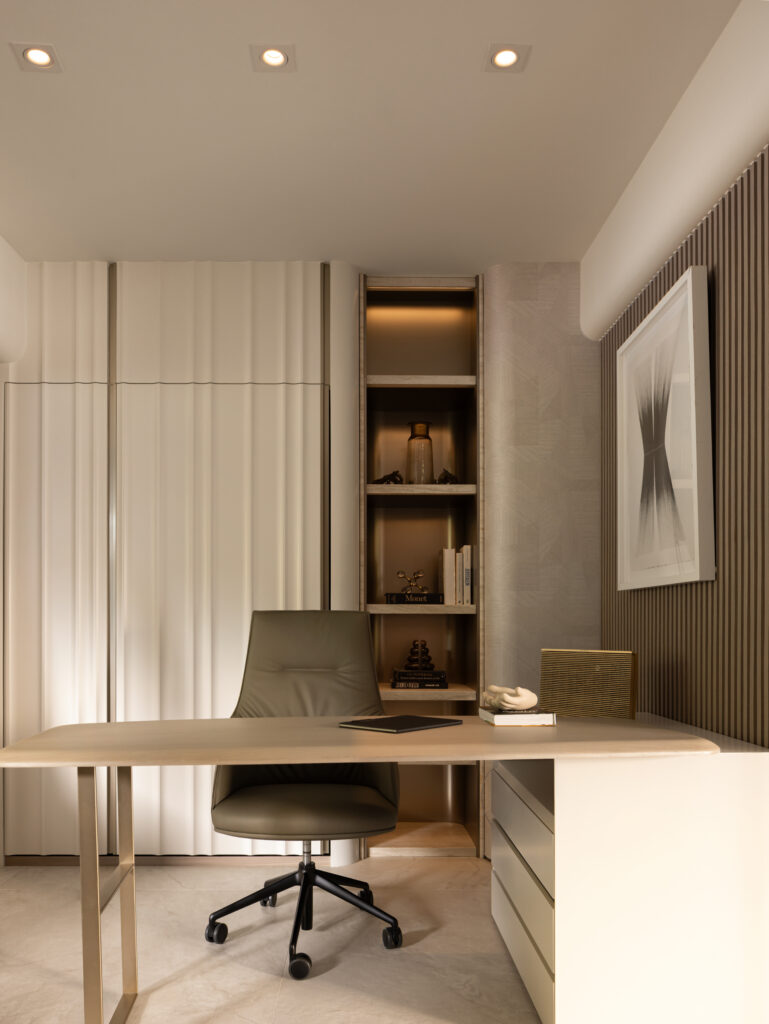
Furniture pieces extend the narrative of quiet luxury: the living room’s Poliform Brefa sofa, Aida swivel armchair, and New York pouf appear almost carved into place, while the adjoining study is grounded by the Poltrona Frau Archibald task chair and a sliding partition that can merge or separate the spaces as needed.
Lighting as Sculptural Intervention
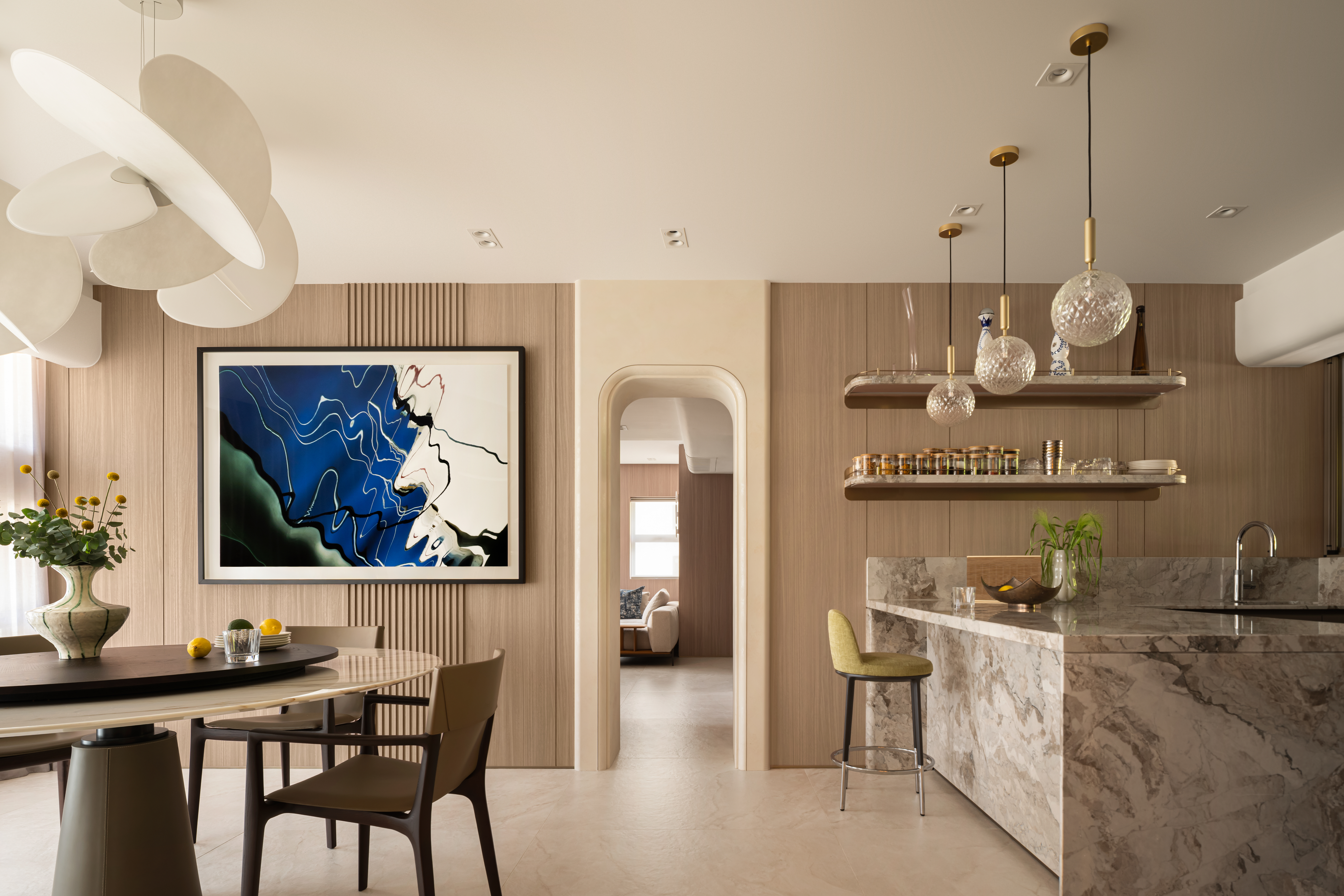
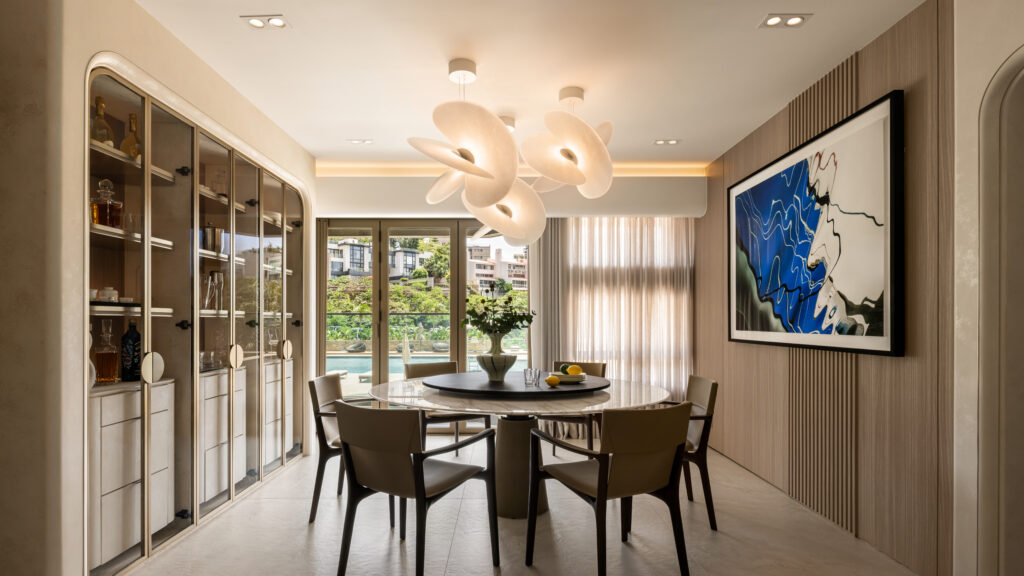
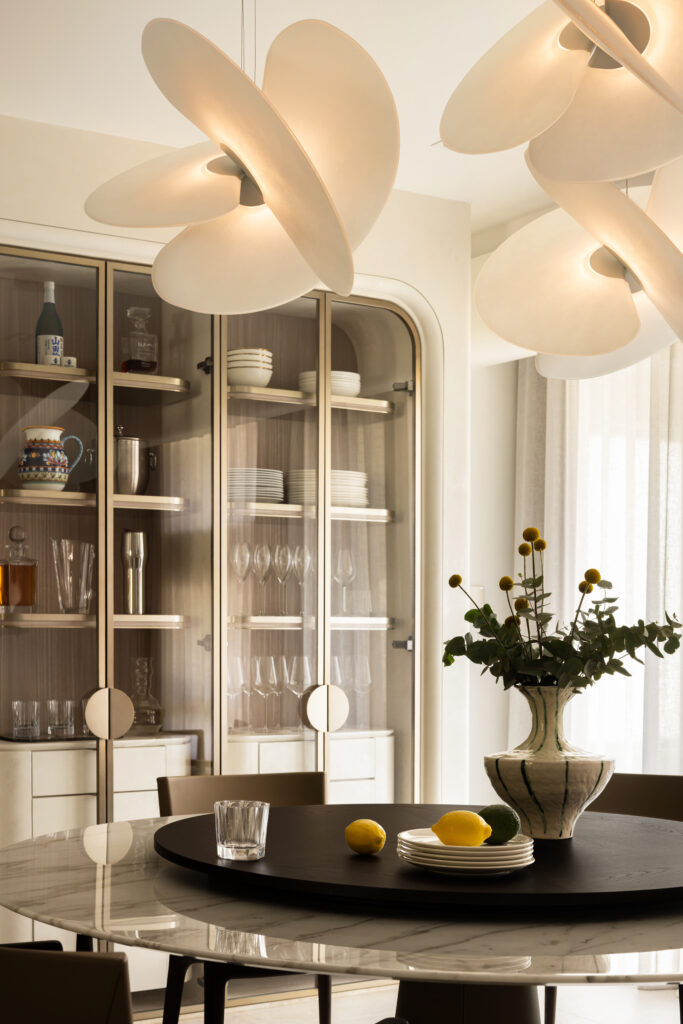
Throughout the duplex, lighting is treated as a spatial punctuation. In the dining area, the Luceplan Levante pendant floats above the Poltrona Frau Mesa Due table and Isadora chairs, introducing a sense of ceremony to everyday rituals. Circulation routes are traced with smaller, artful fixtures that cast quiet shadows onto curved walls, heightening the home’s material depth.
In the bedrooms, Flos IC pendants and DCW Editions Delumina wall lamps offer a warmer, more intimate luminance—light not as highlight, but as an extension of the architecture itself.
A Crafted Focal Point: The Open Bar
One of Cheng’s favored elements is the open bar adjoining the Poliform kitchen. The marble top and shelving—personally sourced and detailed by the designer—integrate so seamlessly with the cabinetry that the bar reads as an architectural continuation, not an addition. Paired with Caratos swivel stools and illuminated by a Nuura Mira 1 pendant, it becomes a quiet focal point within the social spaces.
A Duplex That Breathes
The layout is straightforward yet finely tuned: living, dining and study areas open to the mountain views on the lower floor, with bedrooms situated above in a zone of softened quiet. A balcony and rooftop terrace extend the spatial flow outdoors, reinforcing the home’s dialogue with its surrounding landscape.
A Sanctuary Above the Bay
In a city known for its density and speed, Clement Cheng has shaped an interior that feels remarkably unhurried. Through softened geometry, calibrated textures and a sculptural approach to light, this Repulse Bay duplex becomes not just a residence, but a place where the senses recalibrate—an architecture of stillness suspended above the sea.