Some renovations begin with a desire to change. Others begin with a desire to understand.
Set within a 1950s residential building in Beirut’s Ashrafieh district, this apartment belongs firmly to the latter category. Rather than imposing a new identity onto the space, the project approached the existing architecture as something already rich with character, waiting to be revealed. The challenge was not how to reinvent the apartment, but how to make visible qualities that had become obscured over time.
“What drew us immediately was the apartment’s quiet generosity,” explain the designers Eric & Maria Bouchi, Founder of Studio Bouchi. “The proportions, the height of the ceilings, and the rhythm of the openings carried the elegance of Beirut’s midcentury residential architecture.”
Yet generosity alone does not necessarily create intimacy. Before the renovation, the apartment’s expansive volumes produced an unexpected effect. “The generous volumes and high ceilings created a sense of emptiness and coldness, as though the space had not yet revealed its true identity.” From the outset, the project was conceived as an exercise in calibration rather than transformation. “Our role would not be to transform the apartment radically, but rather to uncover its soul and bring warmth, intimacy, and character back to the surface.”
This attitude extends throughout the renovation. Rather than treating the apartment as a historical artifact, the designers positioned themselves within an ongoing architectural narrative. “Our intention was never to recreate the past or produce a nostalgic interpretation of midcentury interiors, but rather to approach the apartment as a continuation of its architectural timeline” explains Eric & Maria Bouchi.
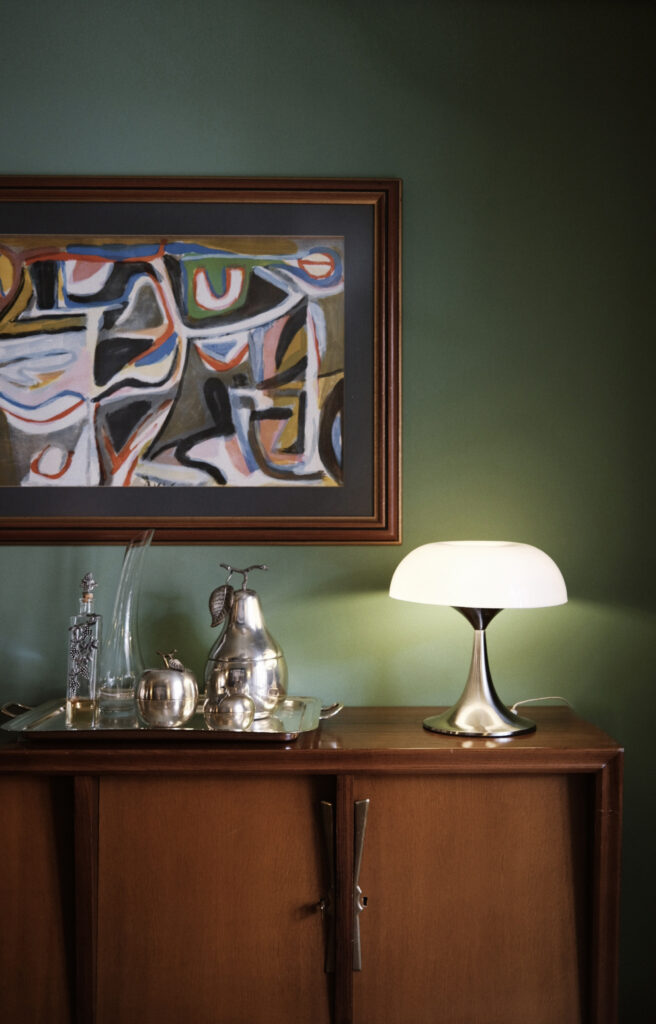
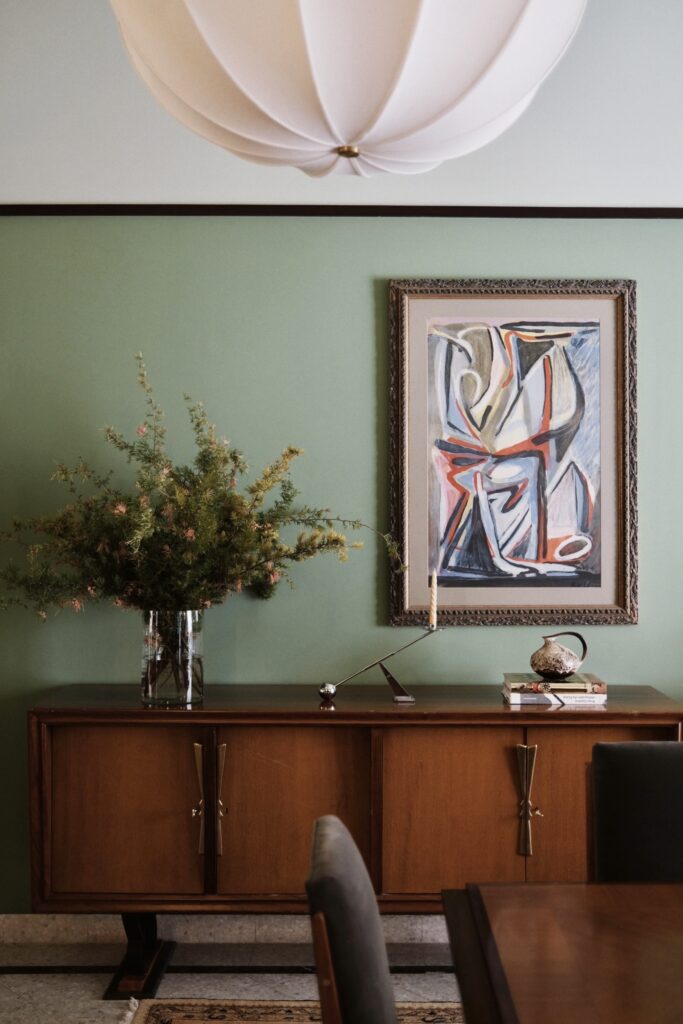
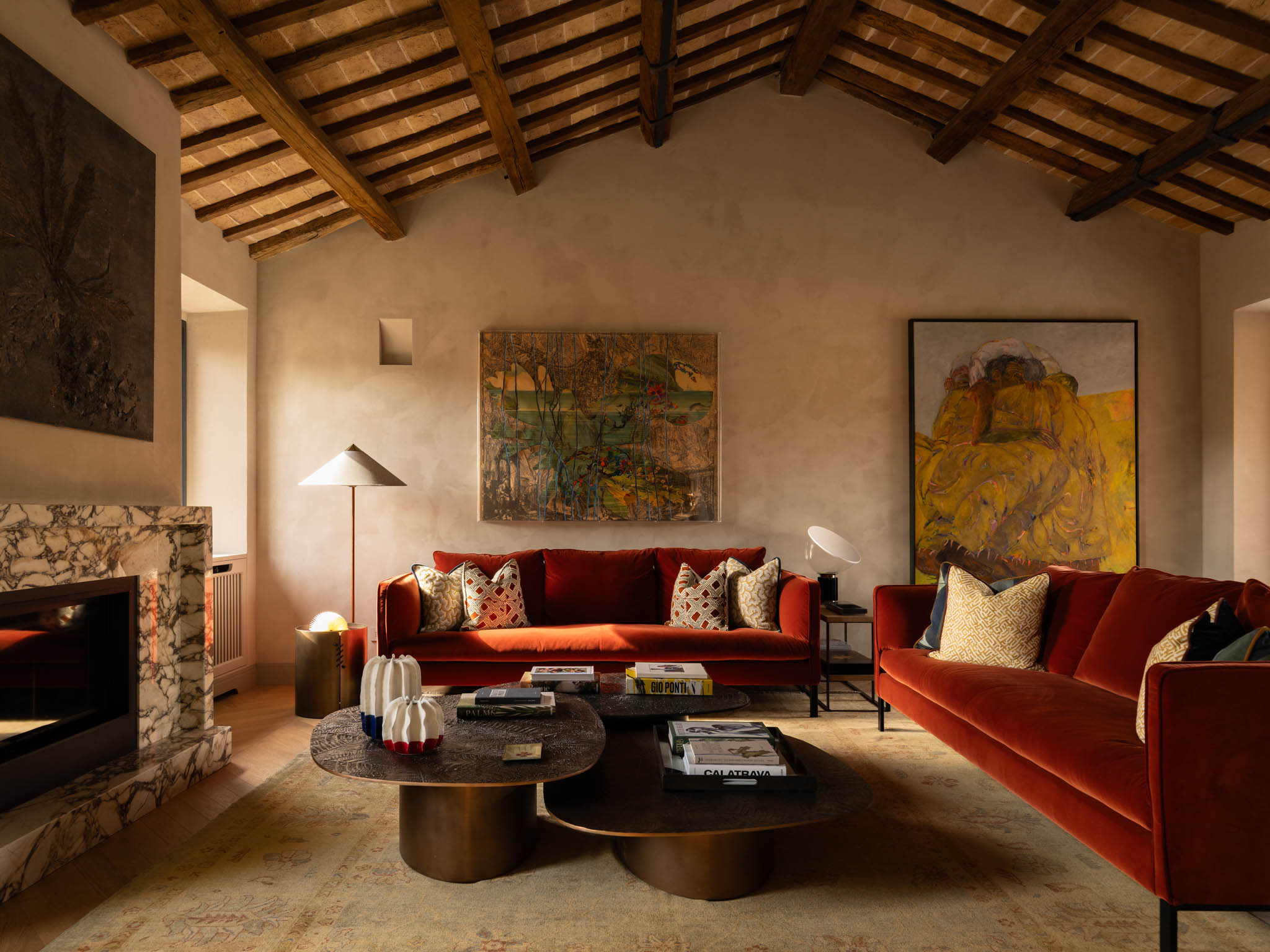
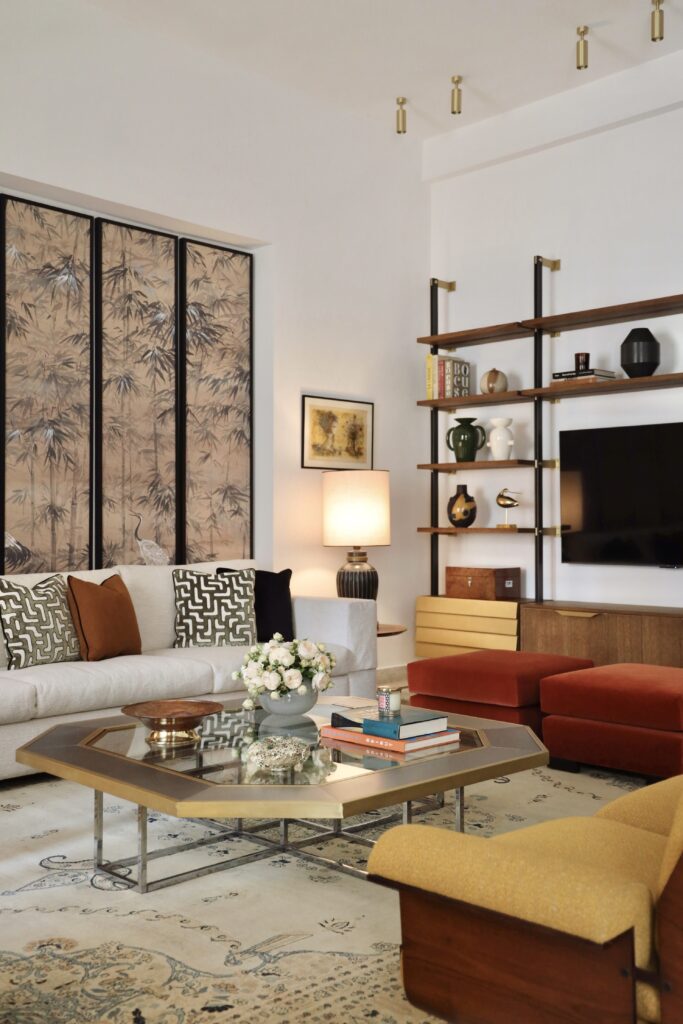
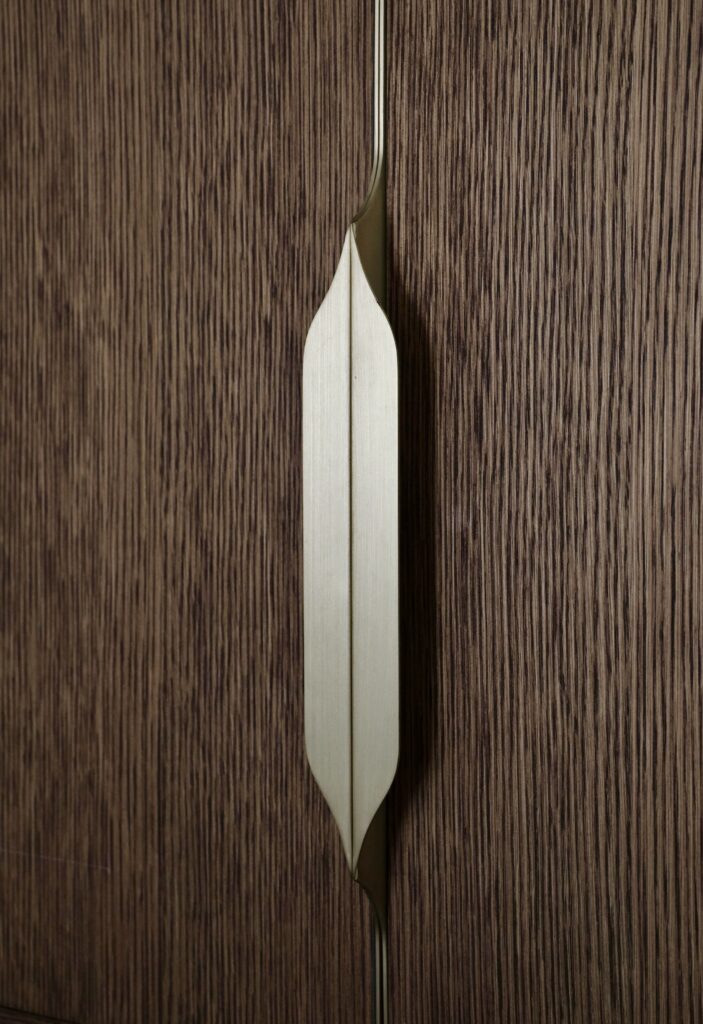
That continuity is expressed through materiality. Marble, wood, lacquer, glass, brass and gunmetal are layered with restraint, creating interiors that feel neither overtly contemporary nor historically reconstructed. Existing and new elements are intentionally difficult to separate. Indeed, the designers describe seamlessness as one of the project’s central ambitions. “We wanted every intervention to feel naturally integrated within the apartment, as though it had always belonged there.”
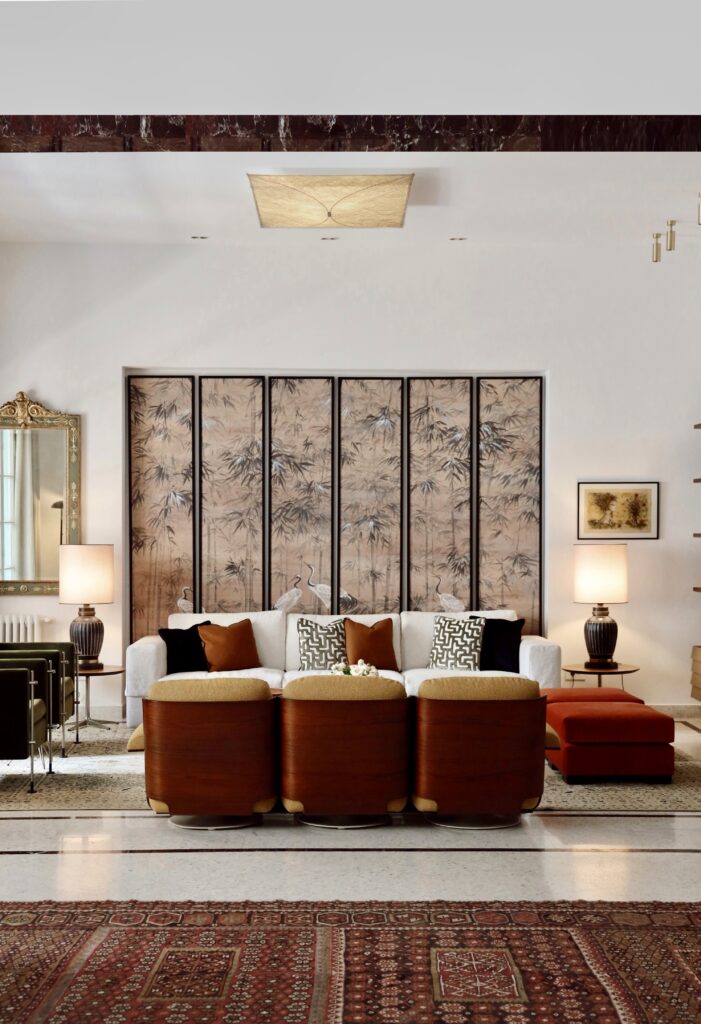
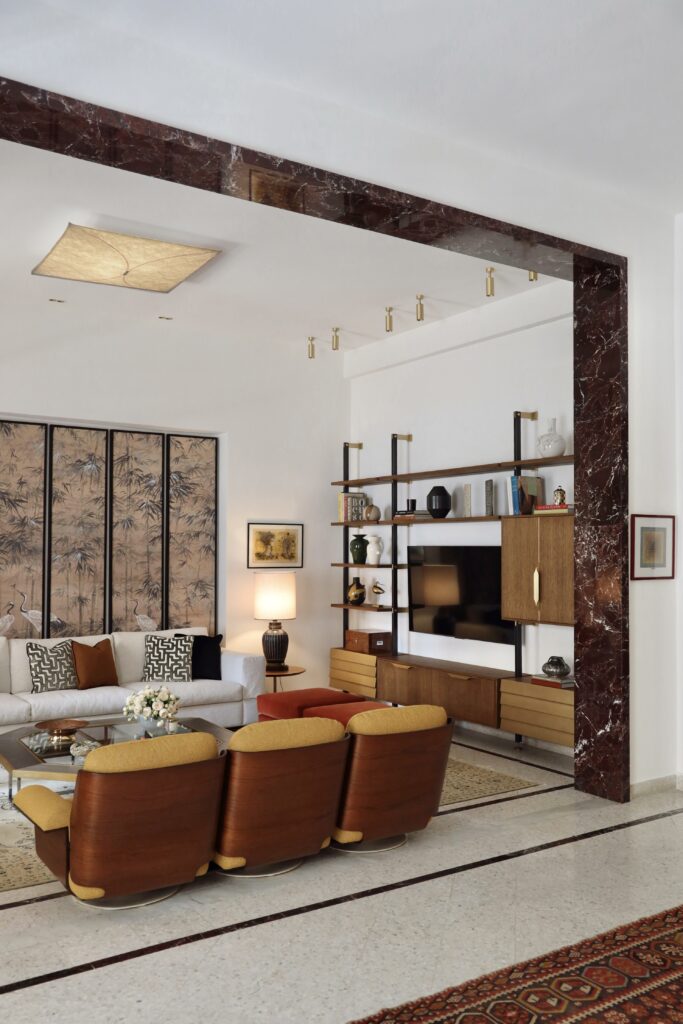
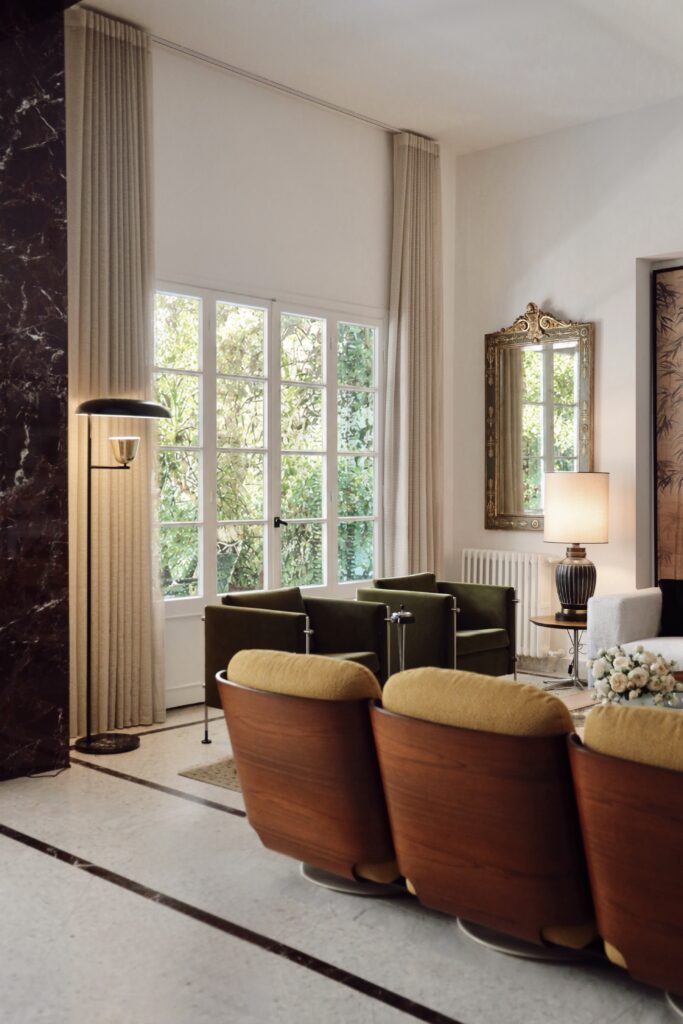
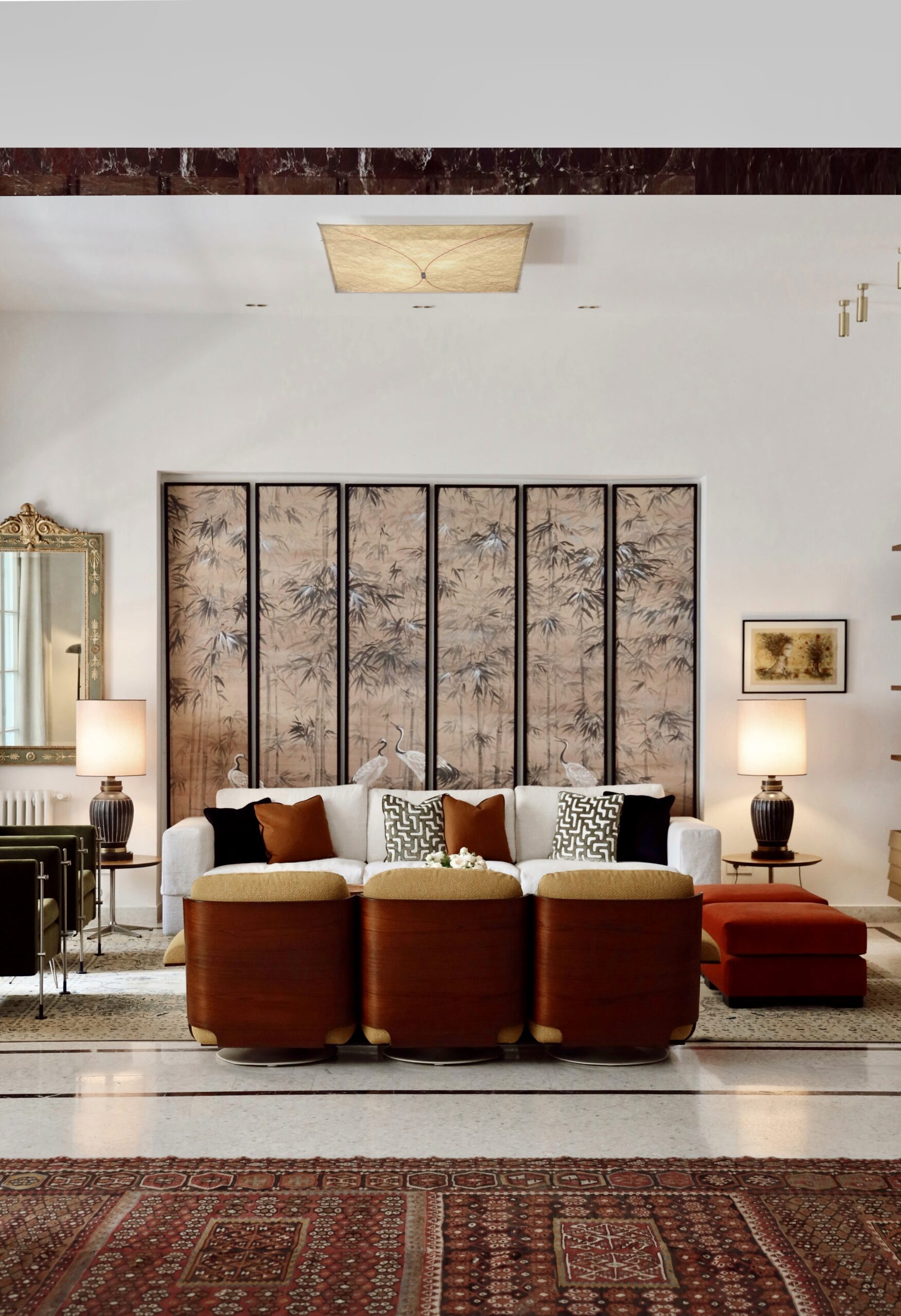
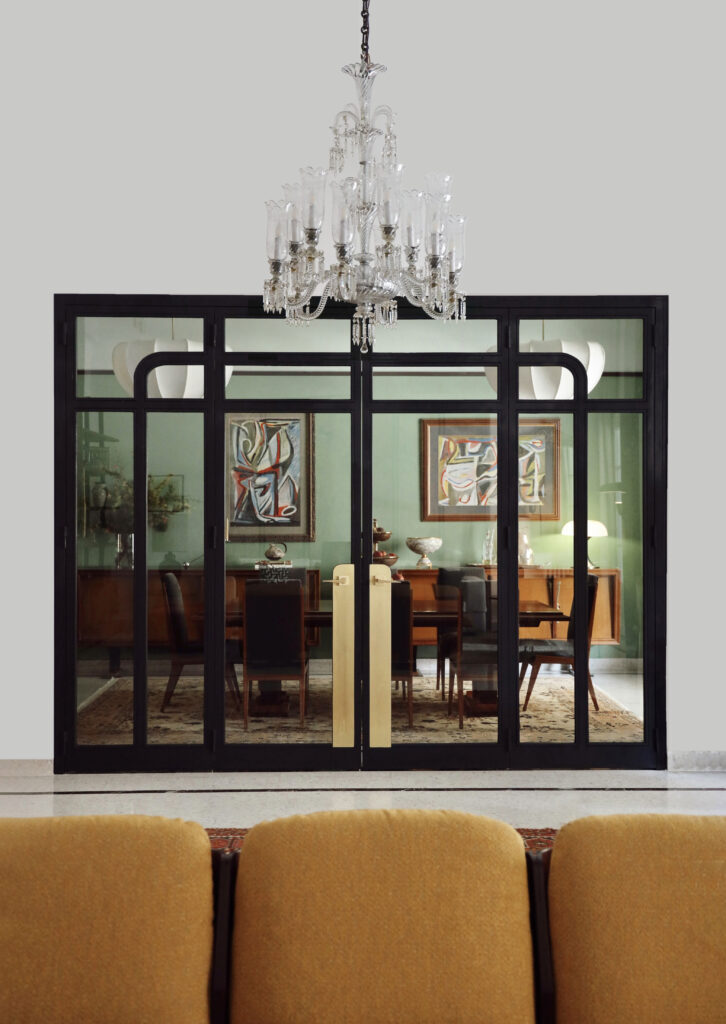
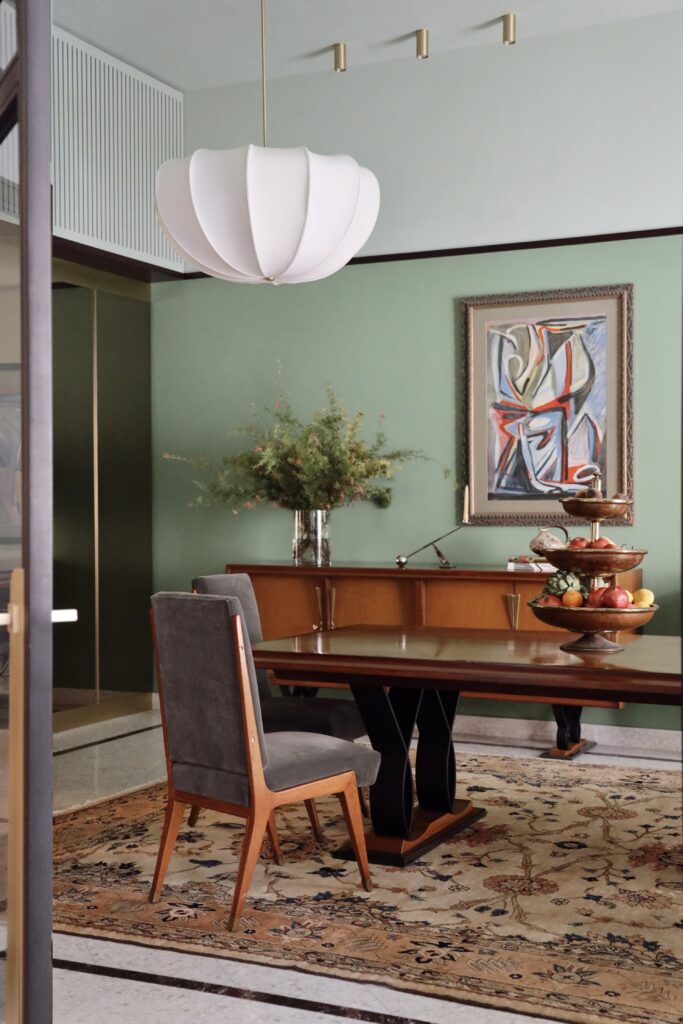
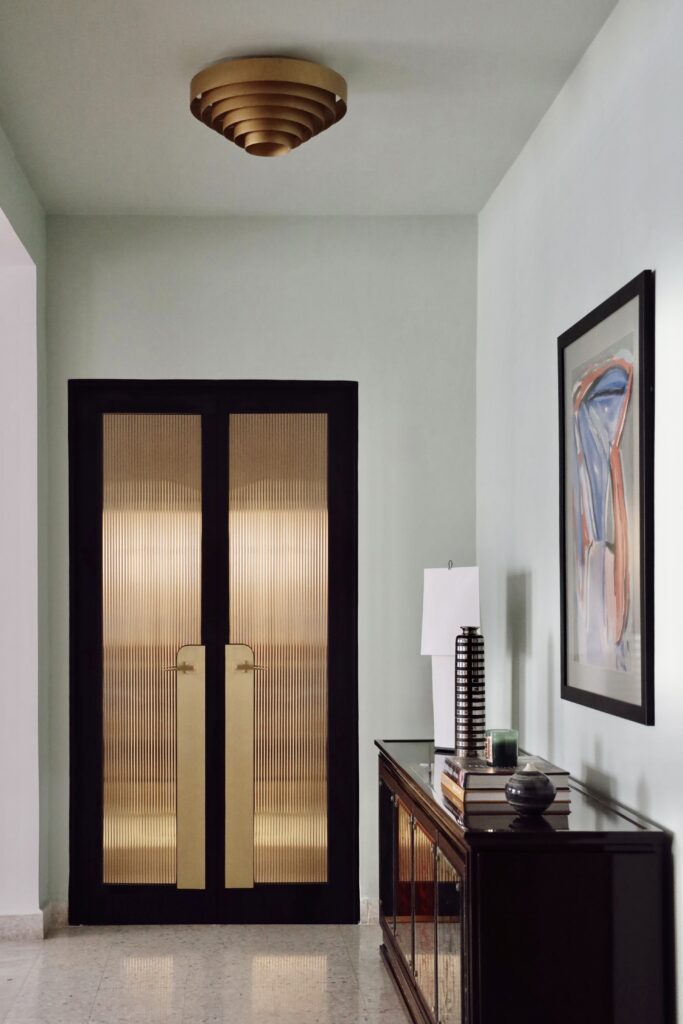
The architectural sequence of the home plays a crucial role in establishing this atmosphere. An entrance with a deliberately lowered ceiling compresses the experience of arrival before opening onto the main living area. Elsewhere, a large Rosso Levanto marble architrave frames the living room, while a custom glass-and-metal door enlarges the connection to the dining room, allowing spaces to remain visually connected while acquiring distinct identities. The result is a carefully orchestrated rhythm of openness and enclosure that allows daily life to unfold naturally between collective and private moments.
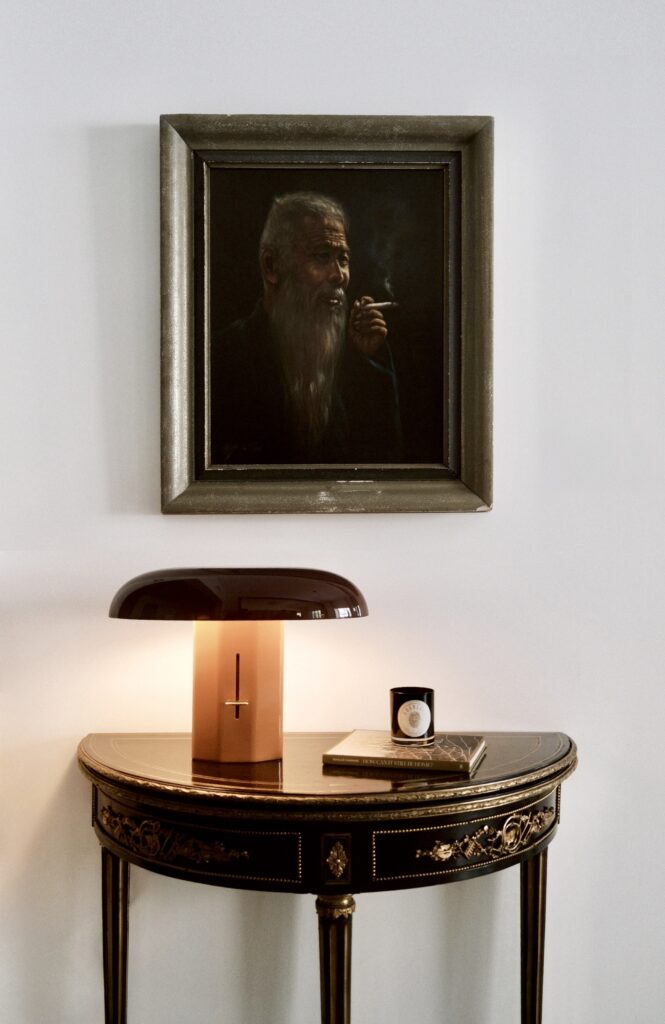
If architecture provides the framework, memory provides the emotional depth. The project incorporated a number of the clients’ existing furnishings and personal objects, not as decorative gestures but as active participants in the story of the home. “Rather than approaching the interiors as a completely new composition, we saw the project as an editing process.” Existing pieces were selected for both their emotional significance and their ability to contribute to the broader spatial narrative.
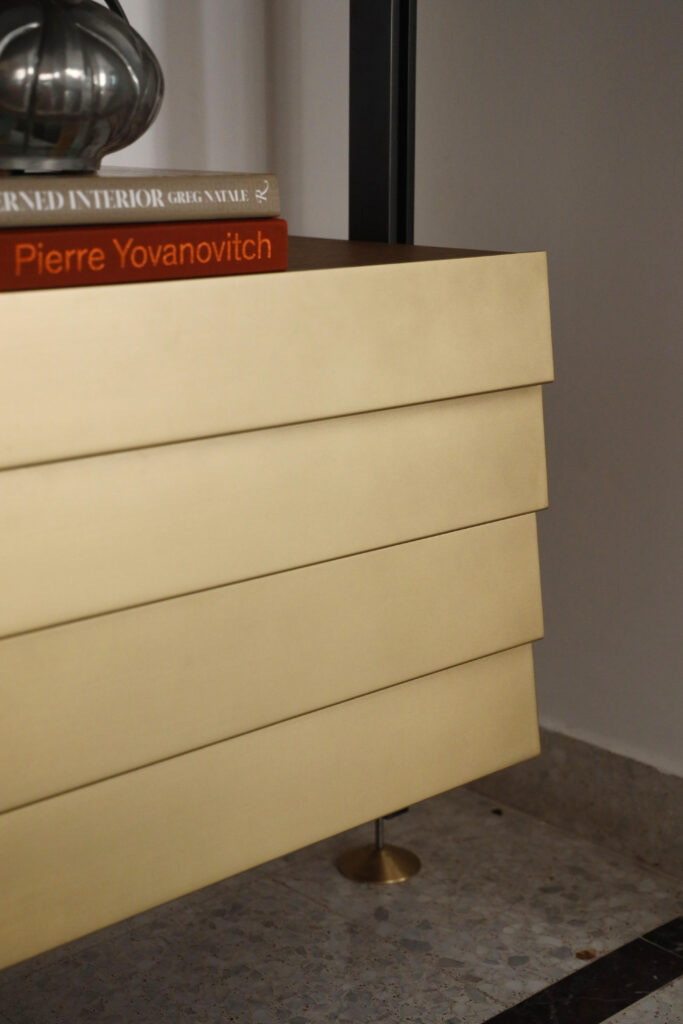
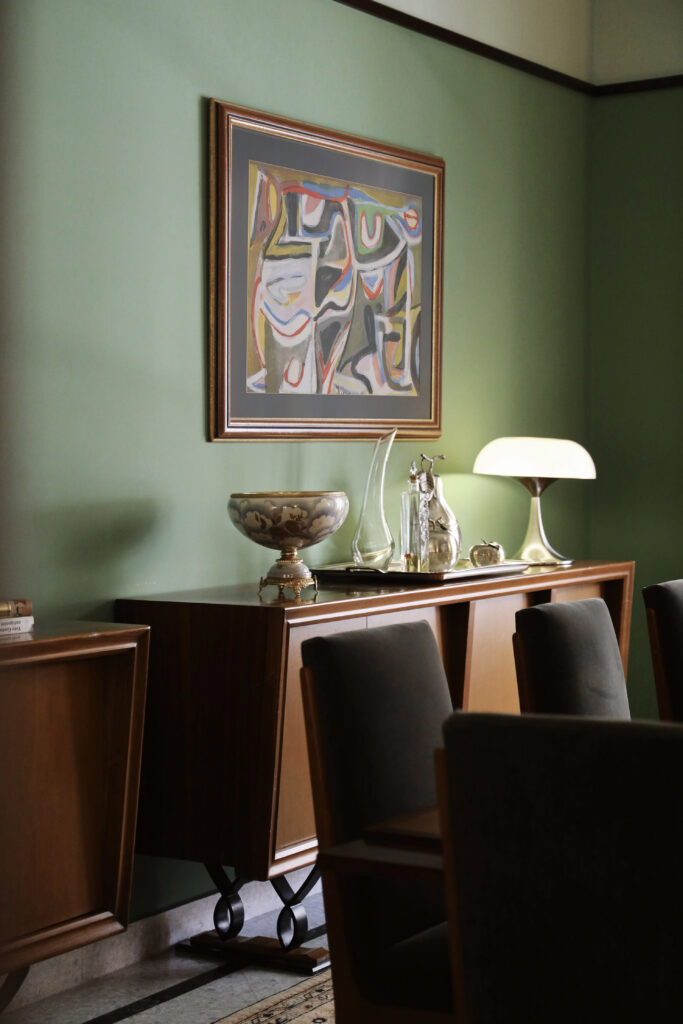
This sensitivity feels particularly resonant in Beirut, a city where preservation and reinvention frequently occupy the same space. The designers acknowledge that the city itself inevitably shaped their approach. “Rather than creating a strong contrast between old and new, we aimed for a more natural dialogue between the apartment’s original architecture, the refurbished existing pieces, and the new elements introduced throughout the renovation.”
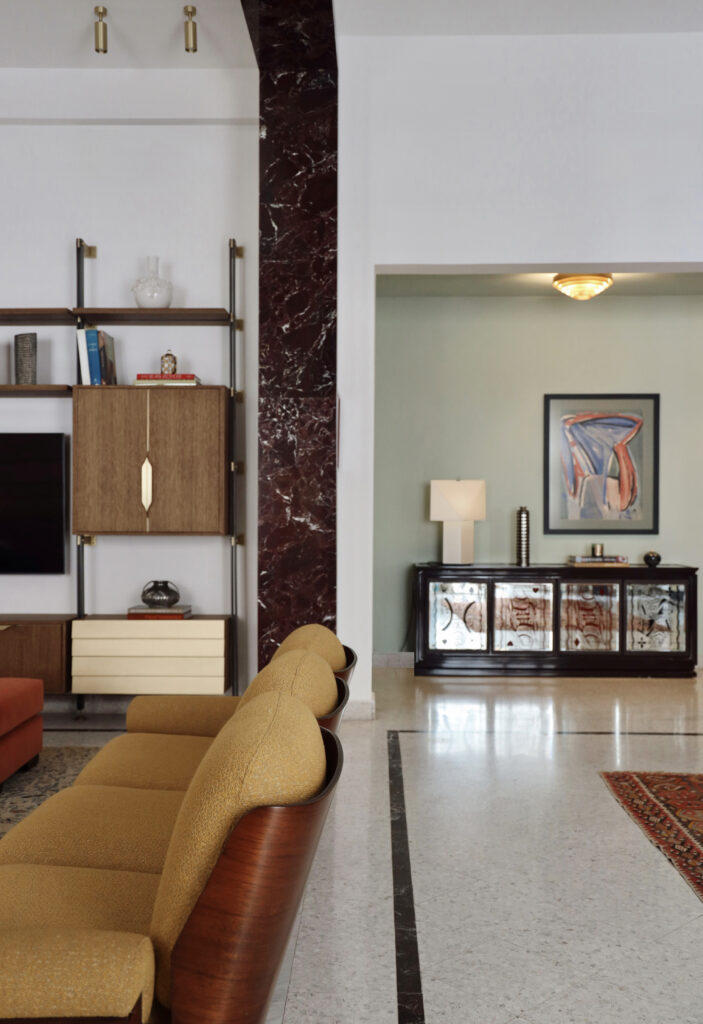
Perhaps no object captures this philosophy more clearly than a 1970s three-seater sofa positioned at the heart of the living room. With its curved wooden back recalling the iconic Eames lounge chair, the piece was carefully restored and reupholstered in mustard-yellow bouclé. It became, in the designers’ words, “almost symbolic of the project.”
For them, the sofa encapsulates the entire renovation: “preserving existing elements, reinterpreting them with sensitivity, and allowing them to coexist naturally within a contemporary setting.”
In many ways, that sentence could describe the apartment itself. Neither frozen in time nor detached from its past, it demonstrates that renovation can be an act of continuity—a process of uncovering, editing and carefully extending an architectural story that was already there.