Villa Marie, in the Tuscan countryside near Vorno, opens its grounds this summer to Vestigia, an exhibition running from 5 July to 26 September and curated by Cosimo Bonciani under the provocative title Don’t Call Me Collectible!. The show takes its cue from Carlo Mollino’s declaration that “everything is permitted, provided it is fantastic,” using the phrase not as an invitation to excess but as a challenge to rigid categorisation. Rather than treating design objects as market commodities defined by scarcity and price, Vestigia repositions them as the tangible outcome of research, matter, and craft.
The exhibition resists the increasingly blurred taxonomy of “collectible design,” a term critic Glenn Adamson has described as more marketing device than meaningful category. In its place, Vestigia proposes “research design”: objects understood as repositories of questions rather than trophies of production. Each participating designer brings a distinct material language and personal frame of reference, allowing separate practices to intersect and collide across the grounds of Villa Marie.
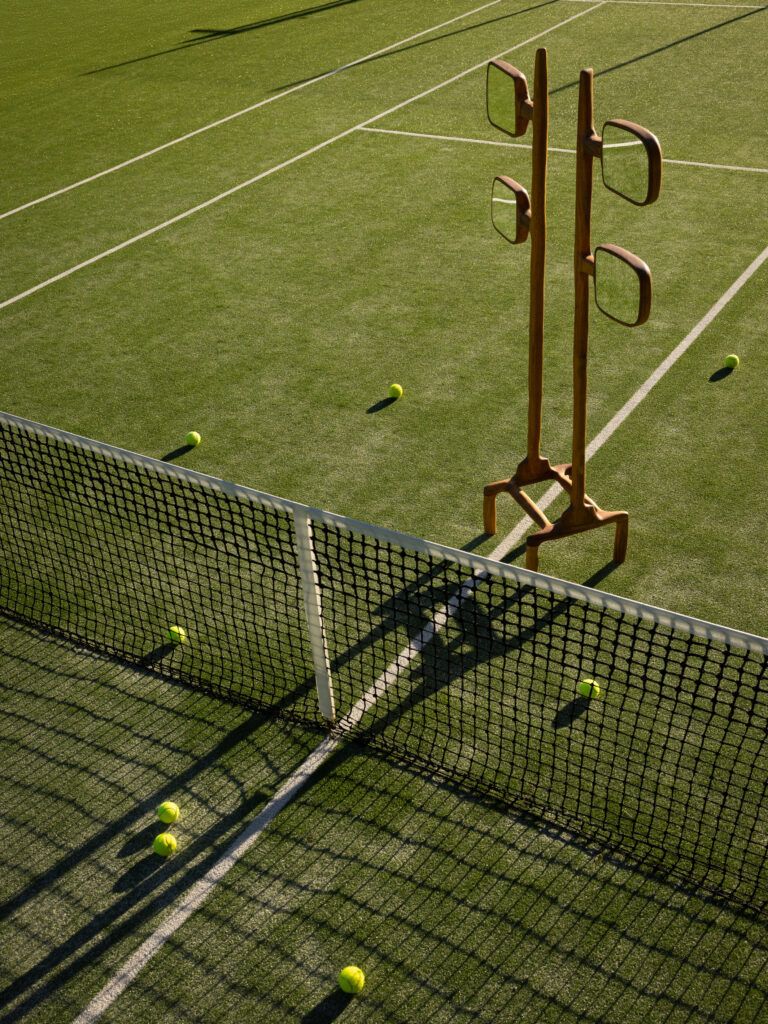
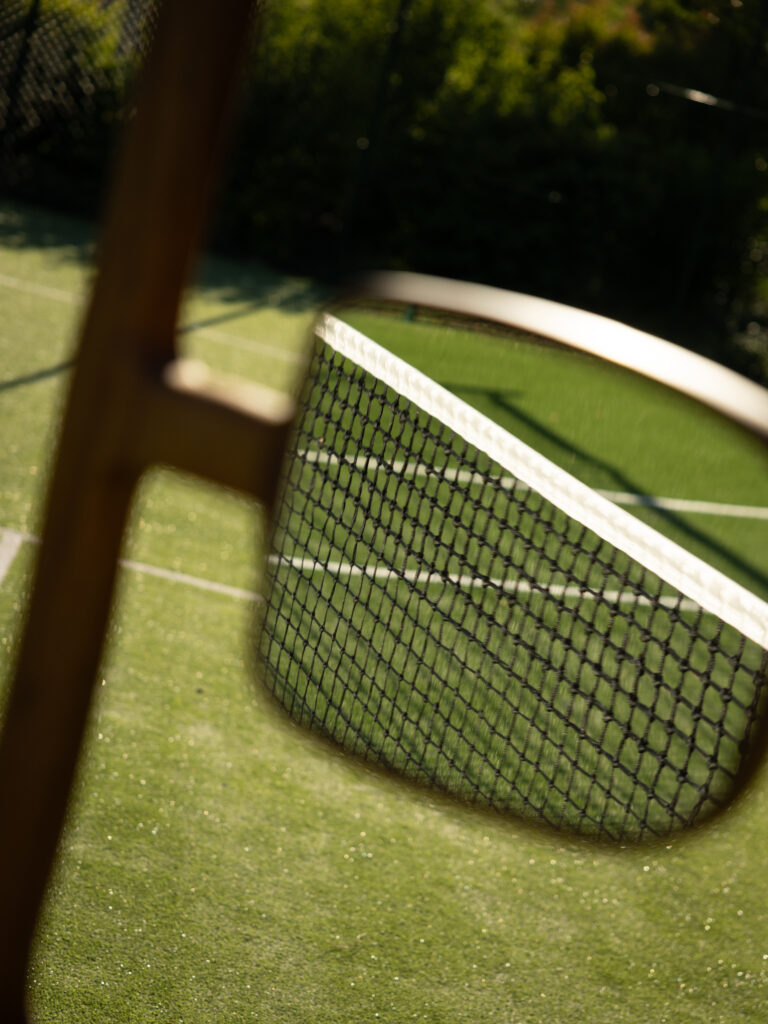
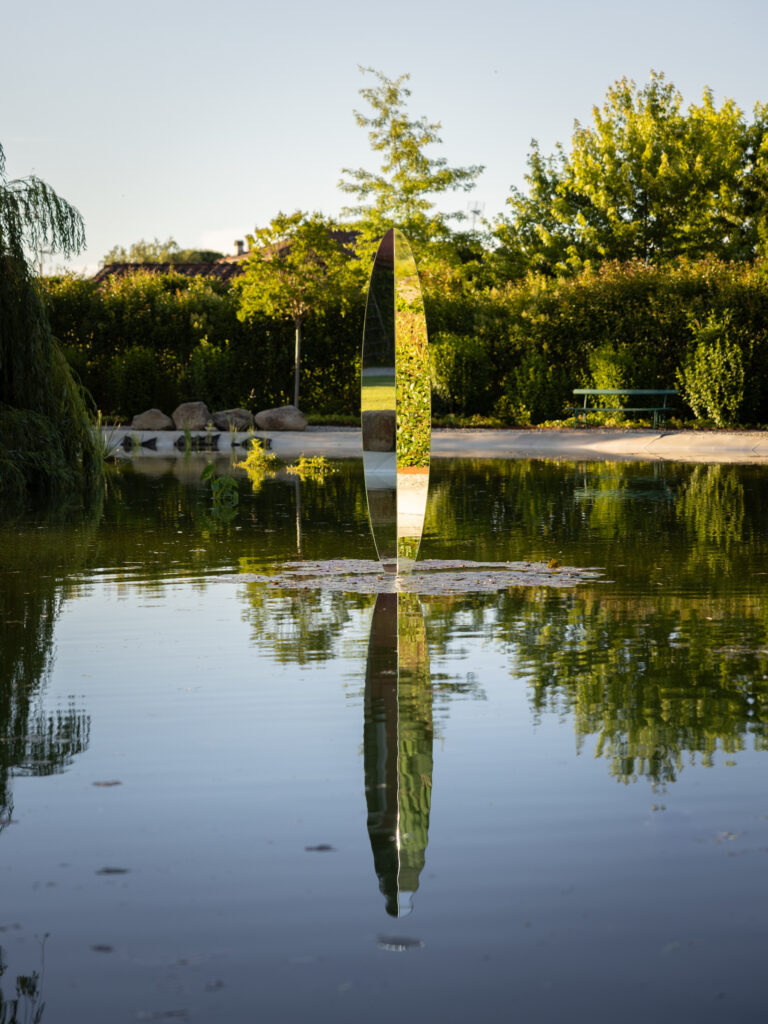
Tuscany itself becomes an active participant rather than a picturesque backdrop. Drawing on Doreen Massey’s idea of place as a meeting point of trajectories, and Saskia Sassen’s thesis that global forces intersect with the local rather than erasing it, the exhibition treats territory as what the curators call “a cultural apparatus.” The pieces on display, scattered through gardens, courtyards, and architectural fragments, are set into direct conversation with shifting light, stone, and foliage. Nothing sits behind glass. Every object is asked to hold its own against the physical world it inhabits.
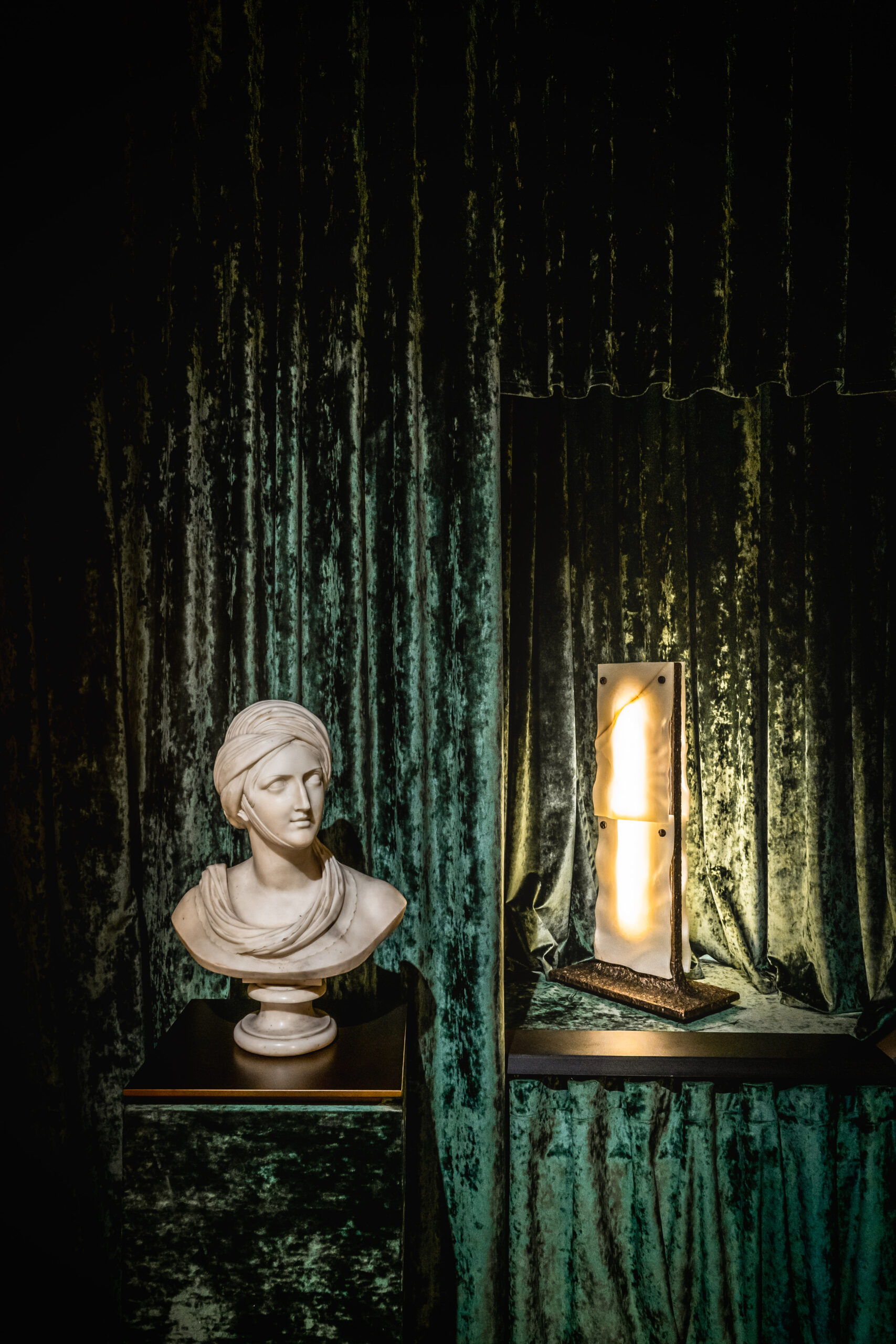
Among the works featured is Medusa, a collection by Etereo designed for Alimonti, which channels this ethos through a close dialogue between natural stone and bronzed aluminium.
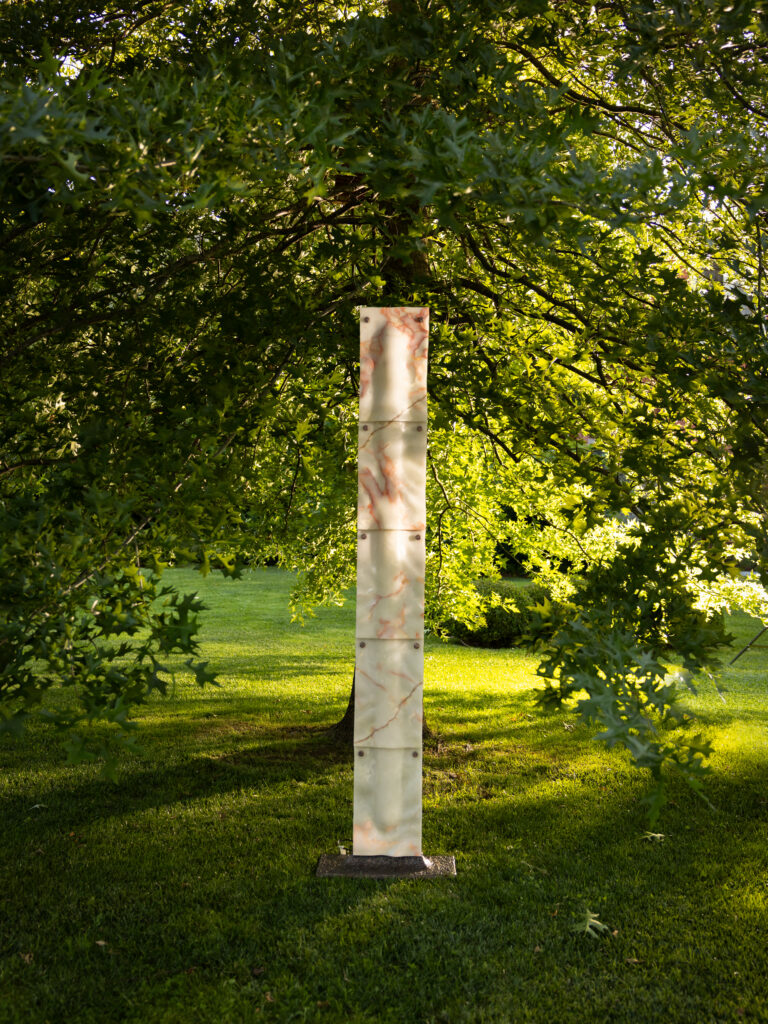
Marie Claire Maison interviewed Etereo on Medusa, the collaboration with Alimonti, and what draws two such different materials into conversation.
Medusa is described as a dialogue between natural stone and metal. Where did that conversation start for you — did the stone dictate the metal’s form, or was it the other way around?
The dialogue developed simultaneously rather than sequentially. From the very beginning, we weren’t interested in treating metal as a supporting detail or stone as the only protagonist. Instead, we explored how two materials with very different physical qualities could define and strengthen one another. Stone expresses weight, permanence and natural complexity, while bronzed aluminium introduces precision, continuity and structure. The collection exists in the tension between these two languages, where neither material dominates, but each reveals qualities that would not emerge on its own.
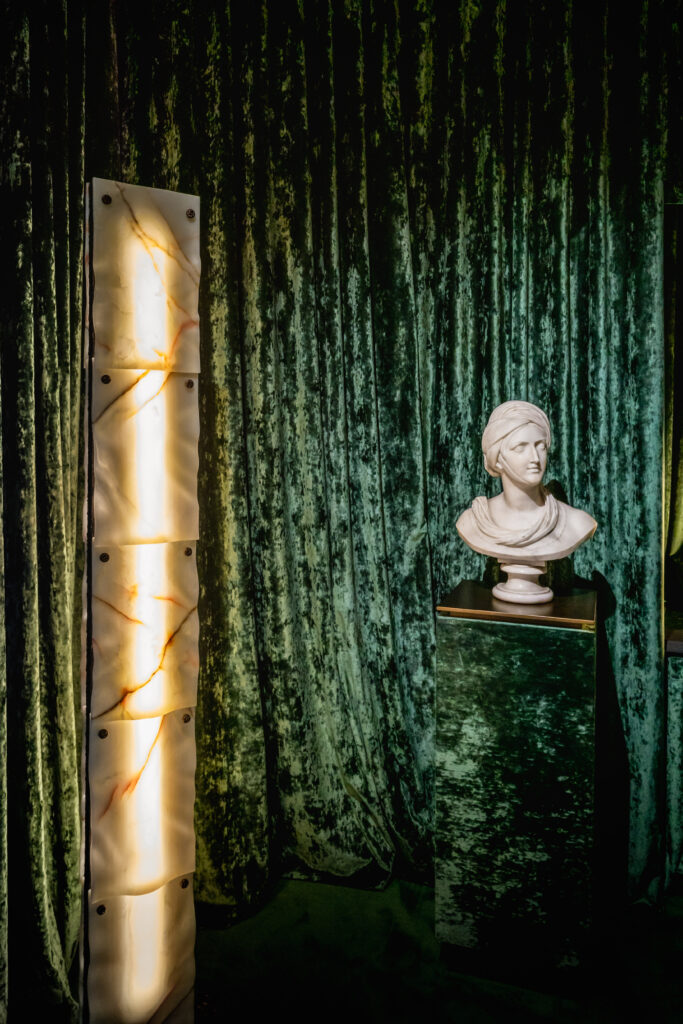
The press release insists on “research design” over “collectible design.” What was the actual research behind Medusa — what were you trying to find out about stone that a purely decorative approach wouldn’t have revealed?
The research focused on perception rather than decoration. We wanted to investigate whether stone, a material traditionally associated with solidity and permanence, could express qualities normally attributed to something soft and fluid. By introducing controlled folds, torsions and subtle variations, we explored how the same material could generate a completely different emotional response without denying its intrinsic nature. For us, research design means questioning the limits of a material and discovering new ways for it to communicate, rather than simply applying a new aesthetic language.
Working with Alimonti, how did the collaboration shape the final forms? Was there a moment where their craftsmanship pushed the design somewhere you hadn’t originally planned?
Working closely with them allowed the project to evolve through an ongoing dialogue between design intent and technical expertise. Their deep understanding of natural stone challenged us to refine proportions, details and construction methods, ensuring that every gesture remained faithful to the material itself. As often happens in projects driven by craftsmanship, the final result emerged through continuous exchange rather than a fixed initial idea, allowing the design to become more precise while preserving its original concept.
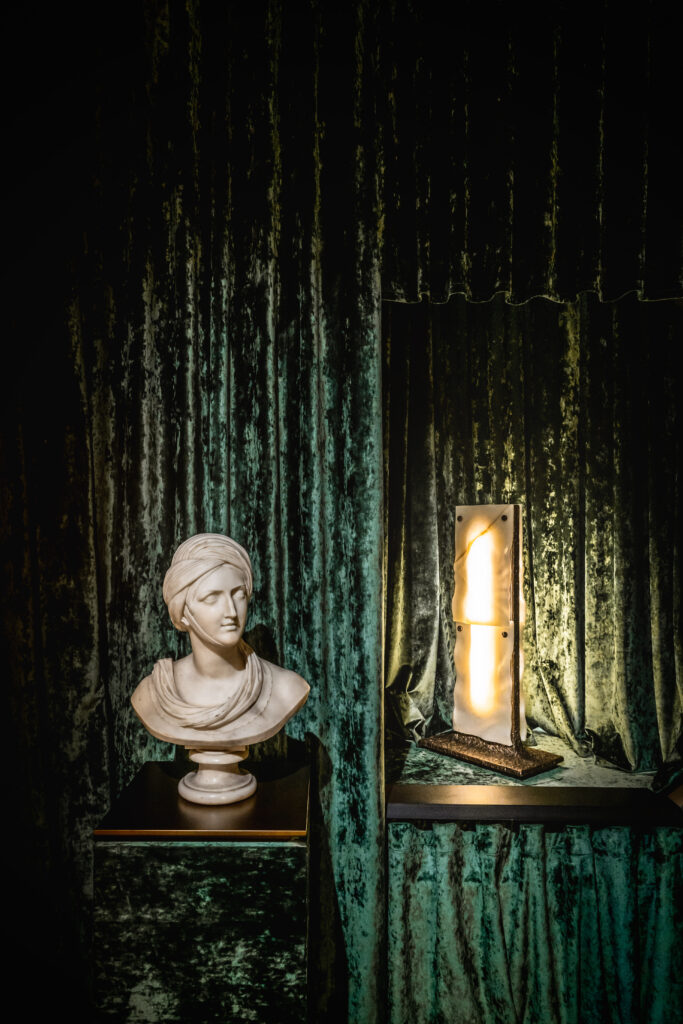
Vestigia frames Tuscany not as a backdrop but as a “cultural apparatus.” Does Medusa carry any trace of that territory in its material choices or process, or is the stone’s story independent of where it’s shown?
While MEDUSA is conceived as a universal reflection on matter and transformation, its dialogue with Vestigia naturally reinforces themes that have always belonged to Italian craftsmanship: respect for materials, making, and the relationship between object and place. Rather than representing a specific territory, the collection expresses a broader cultural approach where design begins by understanding the intrinsic qualities of a material and allowing them to guide the final form. In that sense, the project resonates with the exhibition’s narrative without depending on a geographical interpretation.
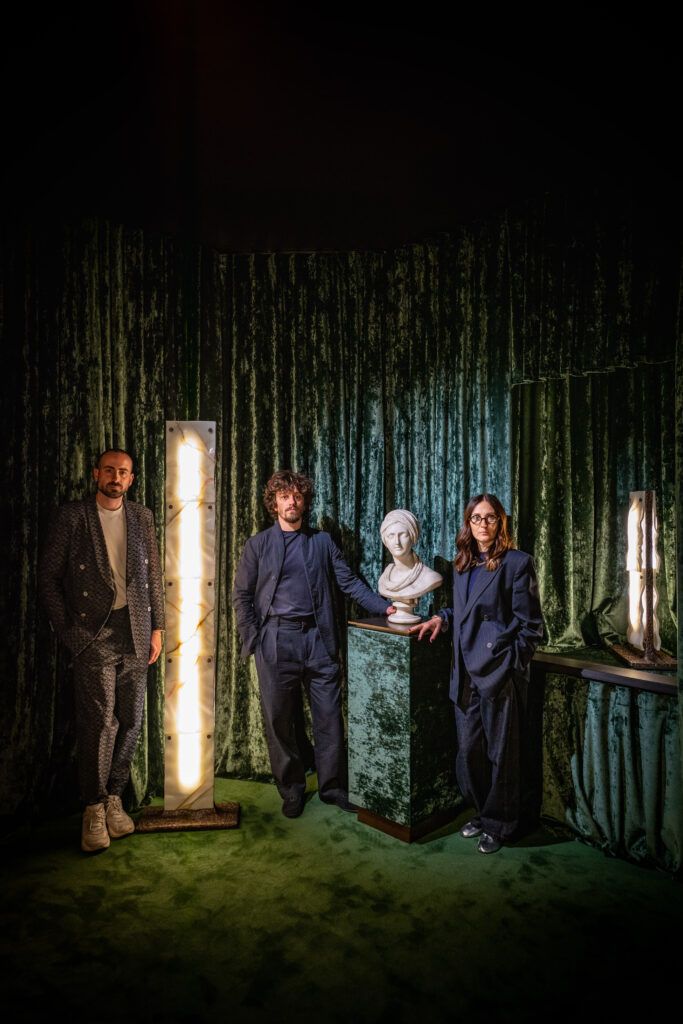
The exhibition argues that an object’s value should come from its relationship to matter, place, and thought rather than exclusivity. How do you want people to encounter Medusa physically — what should they notice with their hands or eyes that a photograph won’t show?
We hope people experience MEDUSA slowly, moving around it rather than looking at it from a single point of view. The subtle transitions between light and shadow, the changing reflections on the bronzed aluminium, and the depth of the stone’s natural veining continuously transform the perception of the object. Up close, the apparent softness of the folded surface contrasts with the physical presence of the stone, creating a tension that cannot be fully captured in an image. Ultimately, the project invites people to reconsider what they believe stone can be — not only a structural material, but a medium capable of expressing movement, lightness and emotion.