Paris held its breath a little longer than usual for Design Week this year. On the evening of 9 September, the Institut du Monde Arabe closed its fourth Design Prize with six names, chosen from twenty-six finalists spread across ten countries, each one arguing for a different idea of what Arab design can be right now.
The Grand Prize, the evening’s marquee award, went to the Moroccan architect Salima Naji for her Tiznit Living Heritage Centre. Built entirely in rammed earth inside the town’s 1810 ramparts, the museum draws vernacular building traditions into a live architectural language rather than a preserved one, using site-built fragments crafted by master artisans to hold the ethnographic collection. Naji founded her practice in Rabat in 2004 and has worked from southern Morocco since 2008, one of very few women building in the rural south, and the award recognises two decades spent quietly reshaping how the region thinks about earth and stone.
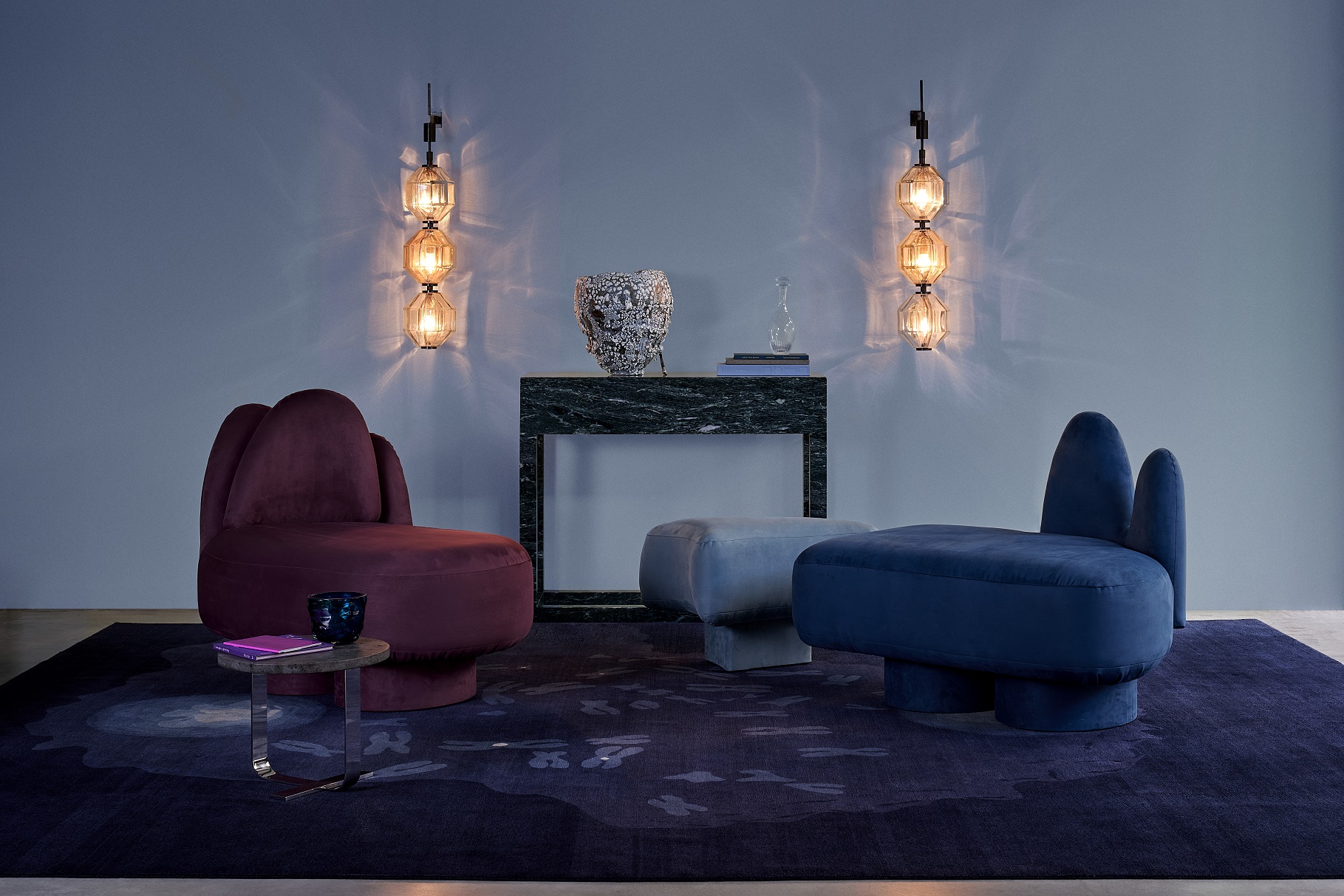
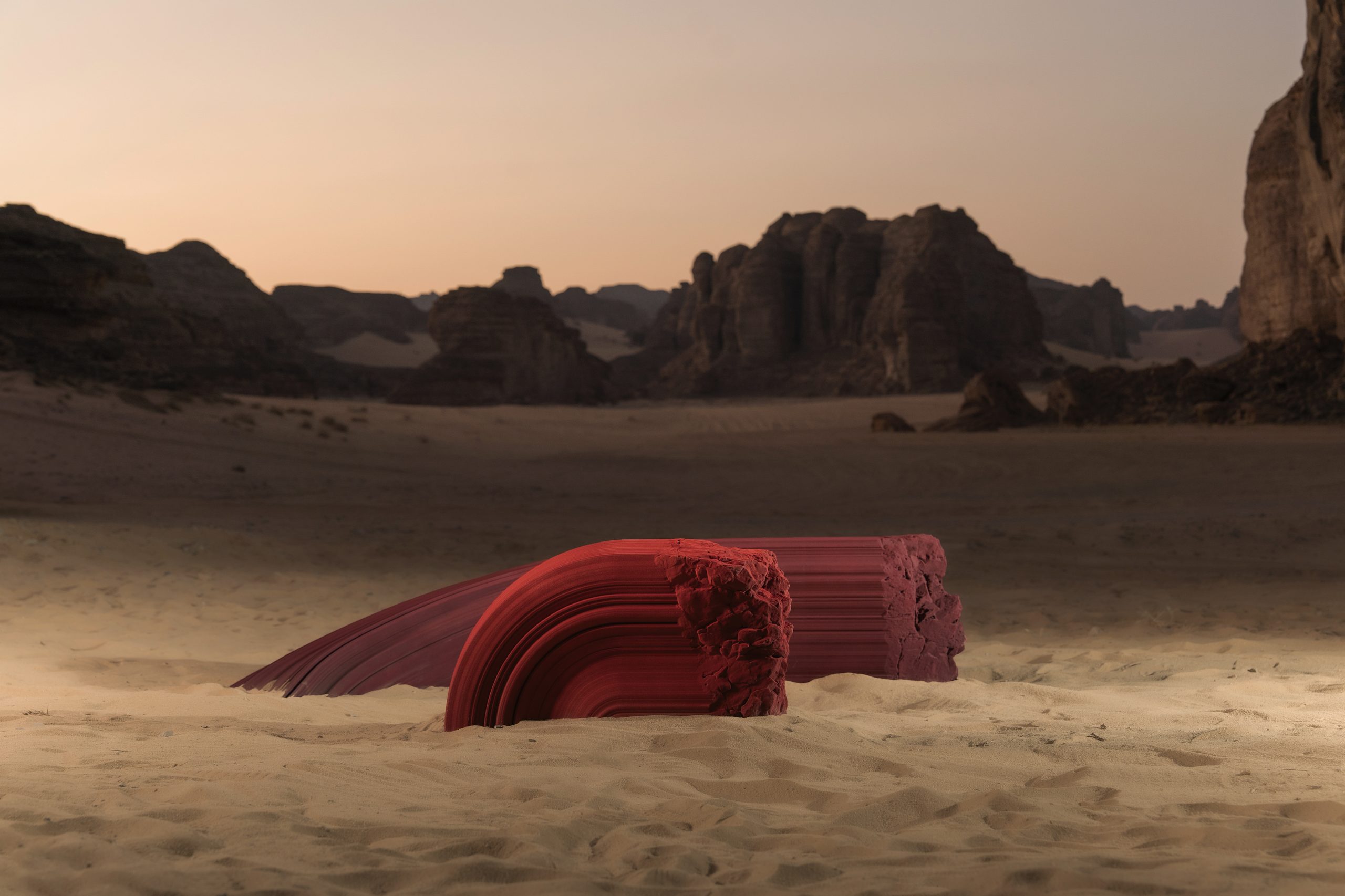
The Emerging Talent Prize belonged to Aseel Alamoudi, a Jeddah-based architect and SCI-Arc graduate, for Playformation. Her two seating pieces, The Curve and The Dot, translate the geological folds of AlUla’s rock formations into soft, ambiguous furniture that sits somewhere between a playground and a resting place.

Contemporary Craftsmanship went to the Tunisian-Saudi design duo Altin, formed by Yasmine and Mehdi, for Our AlUla Trilogy. Three pieces, Wadi, Waha and Yusr, made from palm wood and plant fibre during an AlUla residency, grew out of a family workshop built over years of close collaboration with Tunisian artisans, and stage a quiet dialogue between two very different palm cultures.

The Impact Prize, presented with Arab Bank Switzerland, found its winner in Beirut. Christopher Ghoussoub, just twenty two, is now the last working potter in Beit Chabeb, a Lebanese village that once counted two hundred. His Foukhar Studio makes handmade terracotta, from wine jars to contemporary objects, while running workshops for schools and visitors in an effort to keep the craft from disappearing with his generation.

Two further honours rounded out the evening. The Jury Prize went to Jordanian architect Sahel Alhiyari, whose career spans a Rolex Mentor and Protégé collaboration with Álvaro Siza, teaching posts at Harvard and Venice, and a seat on the Aga Khan Award jury. The Public Prize, decided by online vote, was awarded to Palestinian textile artist Areen Hassan for Weaving the Land Back, an installation made with hand unpicked thread across Palestine, Lebanon and the UAE, created in collaboration with Palestinian refugee women from the Inaash association in south Lebanon.


Taken together, the six winners sketch a prize that is no longer just rewarding good objects. It is tracking where Arab design is putting its energy: heritage rebuilt rather than reproduced, craft treated as something to be kept alive rather than archived, and material research grounded in specific landscapes, from AlUla’s sandstone to Beit Chabeb’s clay. The finalists’ work remains on view at the IMA until 20 September, alongside a parallel AlUla exhibition exploring desert-based design.