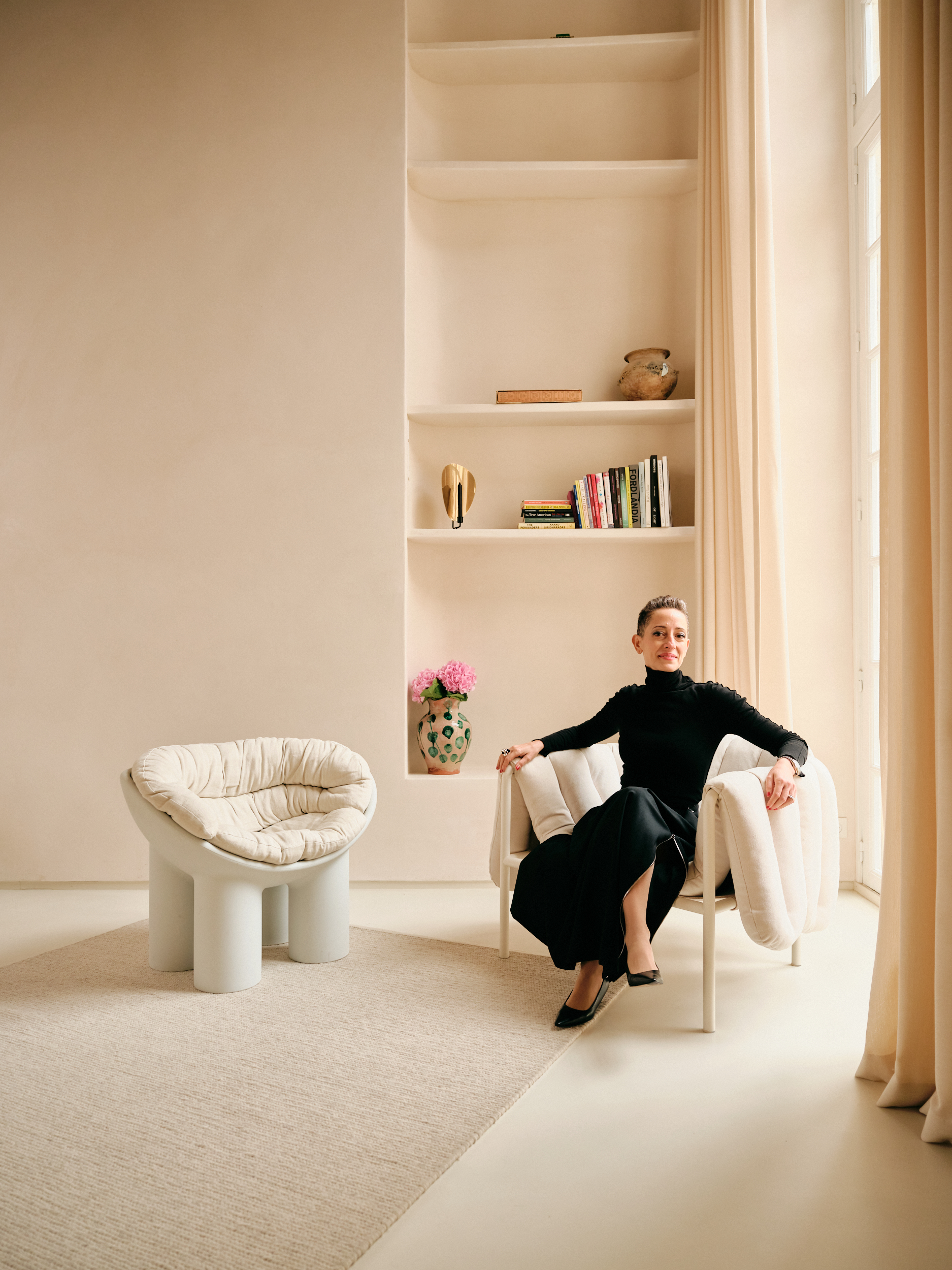
Few architects working today move as fluently between memory and invention as Lina Ghotmeh. Born in Beirut and based in Paris, Ghotmeh has built a practice around the belief that architecture does not begin with a blank page. Places have histories, materials have origins and landscapes retain traces. Her approach, which she calls “Archaeology of the Future”, looks to these layers as a way of imagining what comes next.
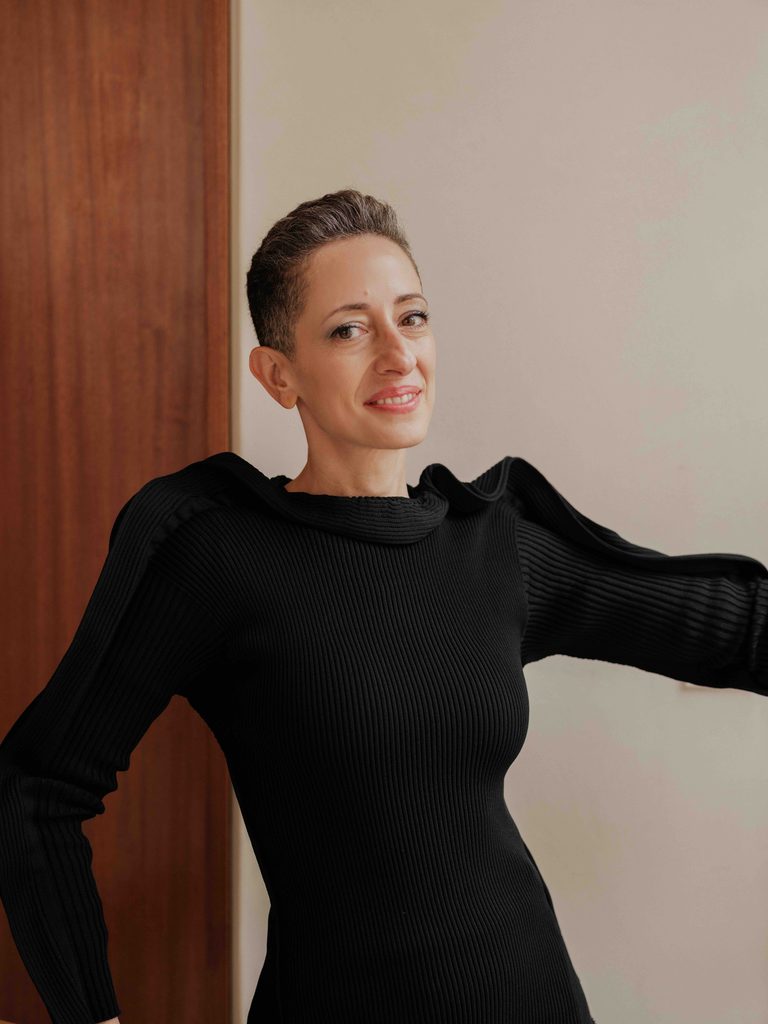
Her international trajectory spans the Estonian National Museum, Stone Garden in Beirut, the low-carbon Hermès workshops in Normandy and the 2023 Serpentine Pavilion in London. More recently, she designed the Bahrain Pavilion at Expo 2025 Osaka and is now leading the transformation of the British Museum’s Western Range, while working on Qatar’s permanent pavilion in the Giardini of the Venice Biennale and the AlUla Contemporary Art Museum in Saudi Arabia.
As the scale and visibility of her work grow, the ideas at its core remain remarkably consistent. Material, memory, craft and place are not simply elements of Ghotmeh’s architecture, but ways of thinking about how we build. For Marie Claire Maison Arabia, she reflects on architecture’s social responsibility, the intelligence of materials and how looking carefully at the past might help us construct a more meaningful future.
Architecture exists somewhere between necessity and imagination, permanence and change. Where, within those tensions, does architecture begin for you?
For me, it begins with listening. Before any line is drawn, I try to be present in the place, physically and mentally: what stones, trees and earth exist there, what resources are nearby, what layers of history and society it holds. So it starts very materially, and then the social meanings come in. The place is the ground, and imagination is what allows us to dream while remaining fully awake, to open up new horizons. Permanence is a question of scale; in reality, everything is in a constant state of transformation and becoming.
Do you see architecture as inherently a social act? Where does the architect’s responsibility end and society’s begin?
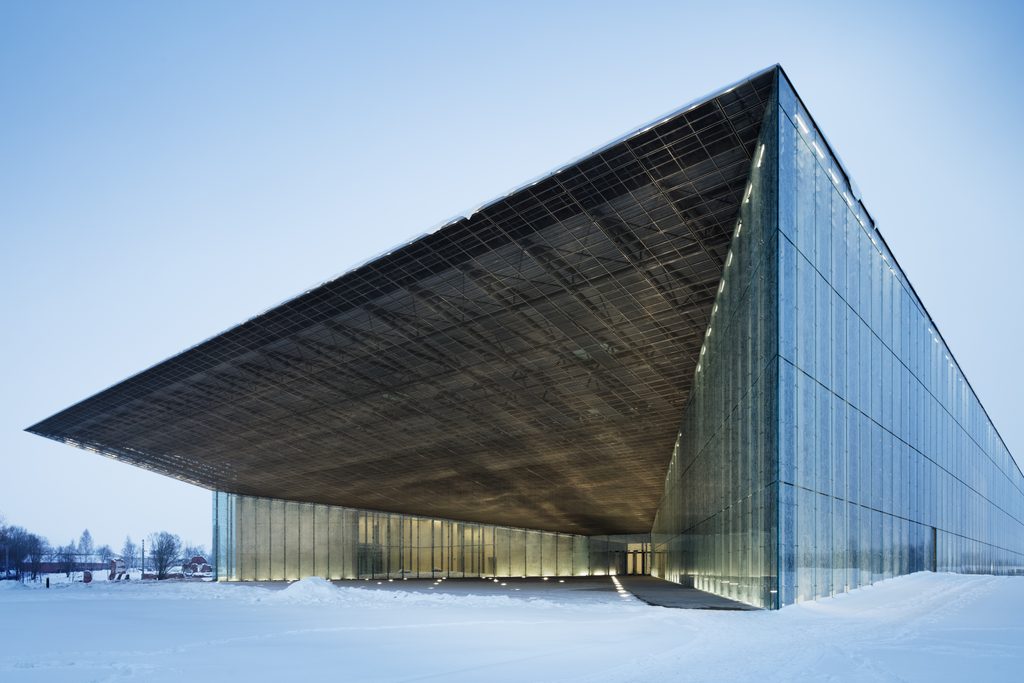
© Lina Ghotmeh — Architecture. Photo © Takuji Shimmura.
Of course, architecture is a social act; it shapes the way we see the world. At its core, it involves society not only in how architecture is lived but also in how it is made. When I lead a project, I work with clients, engineers, craftspeople and communities, among many others. At Stone Garden, the façade was combed by hand by many craftspeople, and the process became an experiment in working together. The architect’s responsibility is to hold the vision throughout.
A building succeeds when it keeps growing beyond us, its makers, and when the people who live in it take it over and transform it. At the Estonian National Museum, the nation has made the building its own. That is where another life can begin, one that gives meaning to what was made.
Your practice has moved from an emerging voice to one of the most closely watched in contemporary architecture. Has that visibility changed your sense of responsibility as an architect?
At the core of my practice is a heightened sense of responsibility; that is sometimes what distinguishes architecture from art. Visibility, of course, brings even greater responsibility: to keep making a positive impact and to defend the quality of our built environment and its capacity to work in synergy with nature. Recognition is a chance to share values and an ethos that can benefit the world, to give hope to the next generation and to give meaning to hard work and perseverance. It is also a reminder to keep striving for the quality and integrity I aim for every day in my practice.
Memory is recurrent in your work, but memory can easily become nostalgia. How do you work with what a place remembers without allowing the past to determine its future?
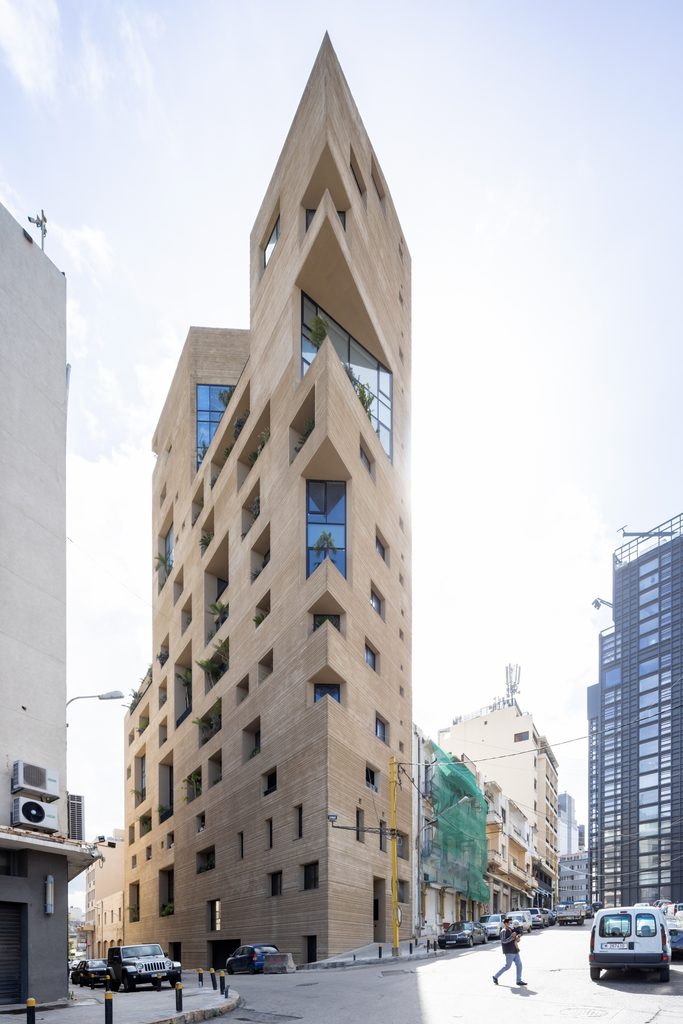
© Lina Ghotmeh — Architecture. Photo © Iwan Baan.
Archaeology of the Future is not about reconstruction or nostalgia. It is about working with what exists and learning from it, while reinventing it for the better. If a city were rebuilt exactly as it once was, it would not answer the questions of the present. We respond to contemporary challenges and anticipate tomorrow, so the forms of the future cannot be identical to those of the past, just as ways of inhabiting will differ. The constant question is how to be true to one’s time and anticipate the needs of the future while acknowledging and learning from the past. At Stone Garden, the openings echo the bullet marks that once scarred the city, yet they become loggias and gardens that frame life. Memory is transformed into matter; it is not frozen.
This issue of Marie Claire Maison Arabia is dedicated to materiality. In your work, material seems to operate almost as a form of knowledge, carrying geography, memory, craft and time. Can material itself generate architecture?
© Lina Ghotmeh — Architecture. Photo © Iwan Baan. © Hermès, 2023.
Yes, very much so. I often think that material has its own intelligence. It tells you what it can do, how it can be assembled, how it will age and what kind of relationship it can establish with its environment.
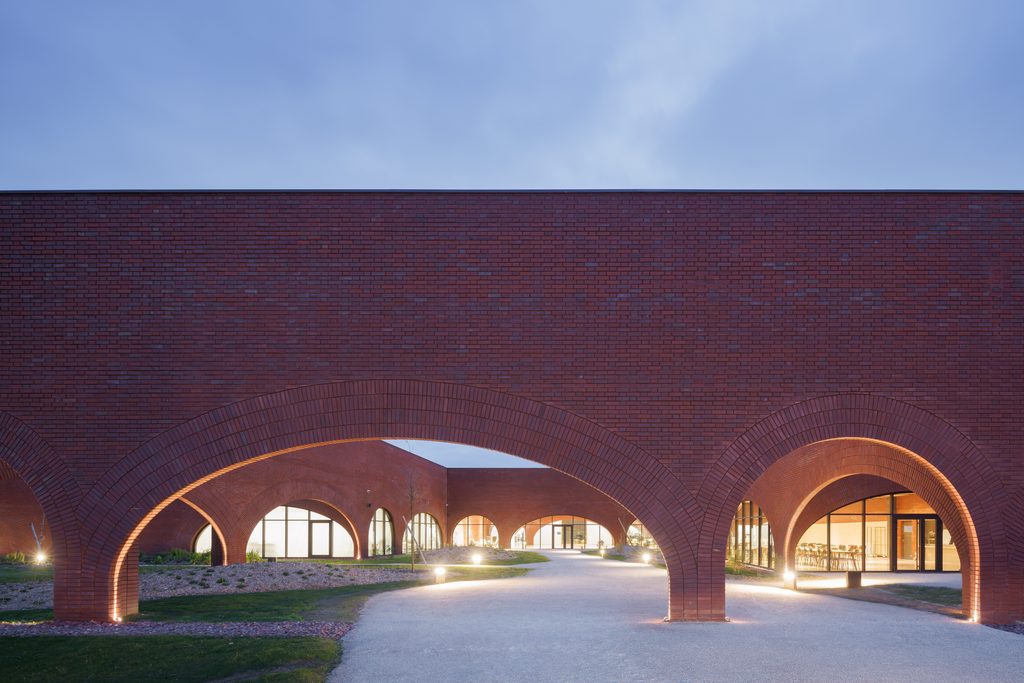
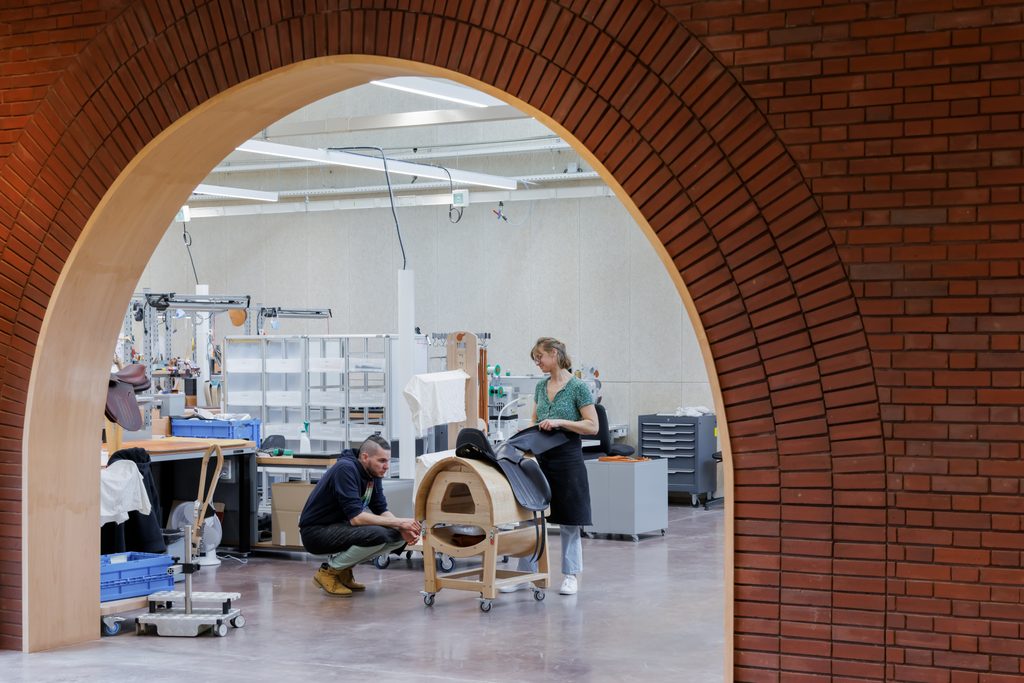
At the Hermès leather workshops in Louviers, we looked at the local earth and Normandy’s brickmaking tradition. Working with local artisans was not simply a way of choosing a material; it became a way of thinking about the architecture of the building itself, and using local materials also lowered its carbon footprint. The arches, the rhythm of the brickwork, the way one moves through the building: these grew out of the construction process and the material itself. The architecture was not imposed on the site. It emerged from the material of the site.
We often discuss materials today through the language of sustainability and performance. Do you think this has made architecture more conscious of matter, or has it reduced material to a set of measurable properties?
© Lina Ghotmeh — Architecture. Photo © Iwan Baan. © Hermès, 2023.
Both risks exist. Performance and carbon calculation are essential. We must assess the environmental impact, look at bio-sourced and plant-based options, and work with scientists and bioengineers. But if matter is reduced to numbers, we lose what it carries: place, time, labour, the craft and knowledge of our hands. For me, sustainability is not a constraint. It is a source of invention, and it comes from both ethics and poetics. Bio-based materials invite new aesthetics, new forms of assembly and a renewed relationship between architecture and nature. Hermès is low-carbon and energy-positive, but you also feel the red and violet of the brick changing with the light through the day. It is about the poetics of materials, and both dimensions intertwine.
“Archaeology of the Future” suggests both invention and discovery. Is architecture, for you, an act of invention or an act of uncovering what is already latent in a place?
It is both, and I would say invention happens through uncovering. In my lectures, I often show the Unfinished Obelisk found in Egypt, half-shaped and still embedded in the rock, in the middle of being sculpted from the ground. Much of my work is about letting that emergence happen: finding the architecture rather than imposing it, so that the form seems as if it had always been there. Each project is a form of excavation, revealing what is latent and transforming it into something new, something surprising, that brings awe and wonder. Transformation is the invention. You dig, you find traces, you connect them, and from that a new story, and a new space, can emerge.
At the British Museum, you are intervening within an institution where architecture, history, objects and contested narratives coexist. How do you introduce a contemporary architectural language into a place so burdened with history without either erasing it or becoming subordinate to it?
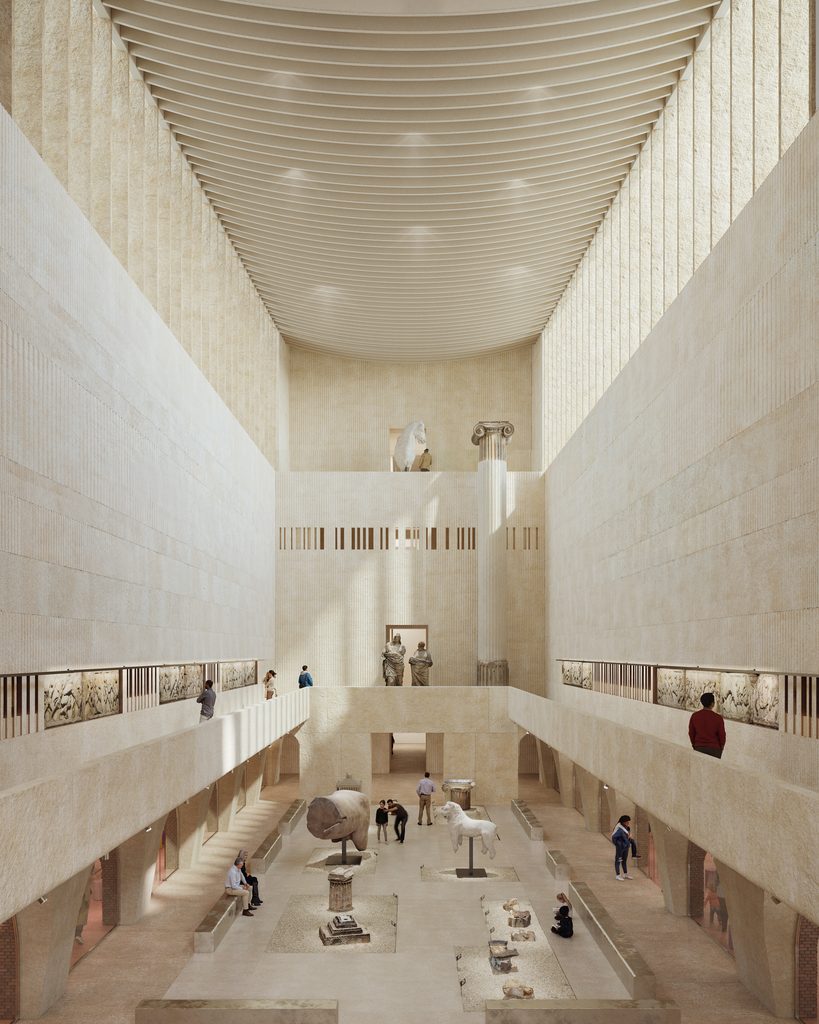
By working with both continuity and contrast. The museum holds layers of time, sometimes contradictory: times of peace, times of conflict, today alongside ancient history. We study the building and the collection deeply before we intervene. We are uncovering its history to shape our own intervention. The aim is neither neutrality nor an overpowering narrative. The relationship between the museum, the object and the visitor is a delicate conversation, and each voice should be present. Architecture mediates and transports. It creates the conditions for these narratives to be sublimated, coexist and resonate, through materiality, light and a contemporary hall of conversation that elevates us towards the sky.
The Qatar Pavilion will become the first new national pavilion in the Giardini in decades. Unlike the temporary architecture of an Expo, this is architecture conceived for permanence. What changes when you are asked to give physical form to a national presence that may remain for generations?
The Qatar Pavilion is a new, long-awaited voice within the Giardini. As a pavilion representing an Arab country, it brings cultural diplomacy to the forefront of the Biennale. Because it will last, it has to be anchored. It is linked to the ground and made of local stone, with the craft and the work of the hand that reflect the region’s know-how. It emerges like a waterfall in stone, echoing Venice rising from water and Qatar emerging from the sea millennia ago. It has to be open as well. I think of it as a connected archipelago of ideas, with a roof terrace that frames a renewed relationship with the landscape. Permanence, for me, means a place that can be activated by many generations of artists and visitors. It does not mean fixity.
For Bahrain at Expo 2025 Osaka, you translated aspects of a nation into architecture. Can architecture genuinely express national identity without reducing culture to symbols?
© Lina Ghotmeh — Architecture Photo © Iwan Baan
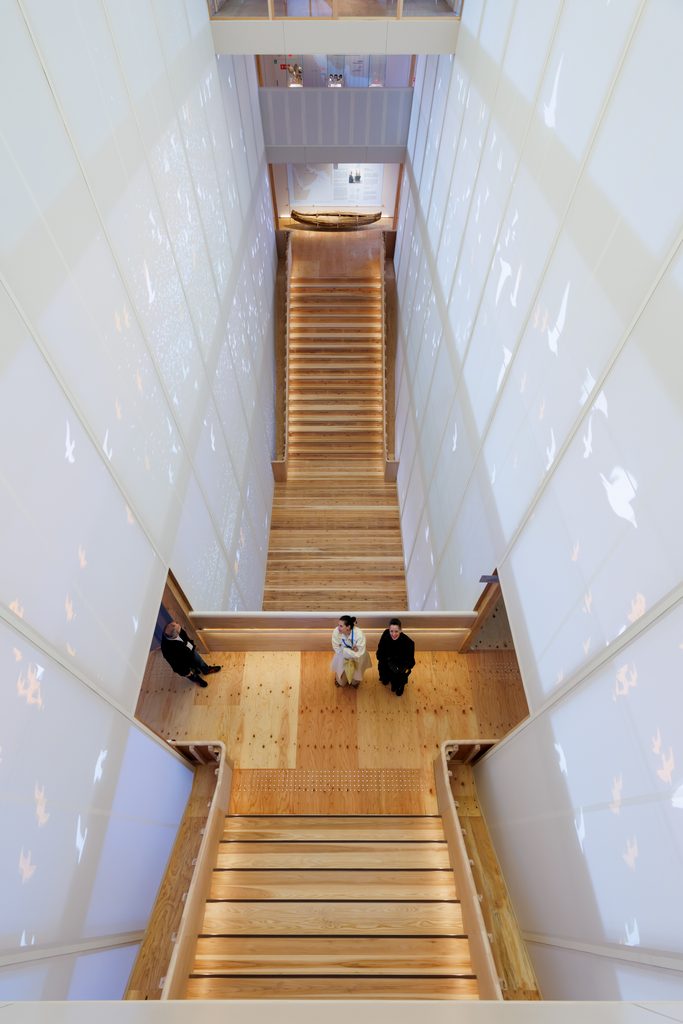
Only if it goes beyond the symbol. Bahrain’s connection to the sea is real, and the dhow is part of its history, but the pavilion is not a literal boat. It is about the construction of a boat, a boat for humanity, able to connect seas. It brings together Bahraini maritime heritage and Japanese timber craft, with locally sourced materials, natural ventilation and passive cooling. Identity is not a style to be repeated. It comes from a commitment to core values (respect for people, materials, craft and ecology) and from a poetic, in-depth experience. What I try to express is what is shared. Even if we are different, we are also connected, and the language of space can create common threads.
How much of Beirut remains in the way you understand cities, memory and architecture?
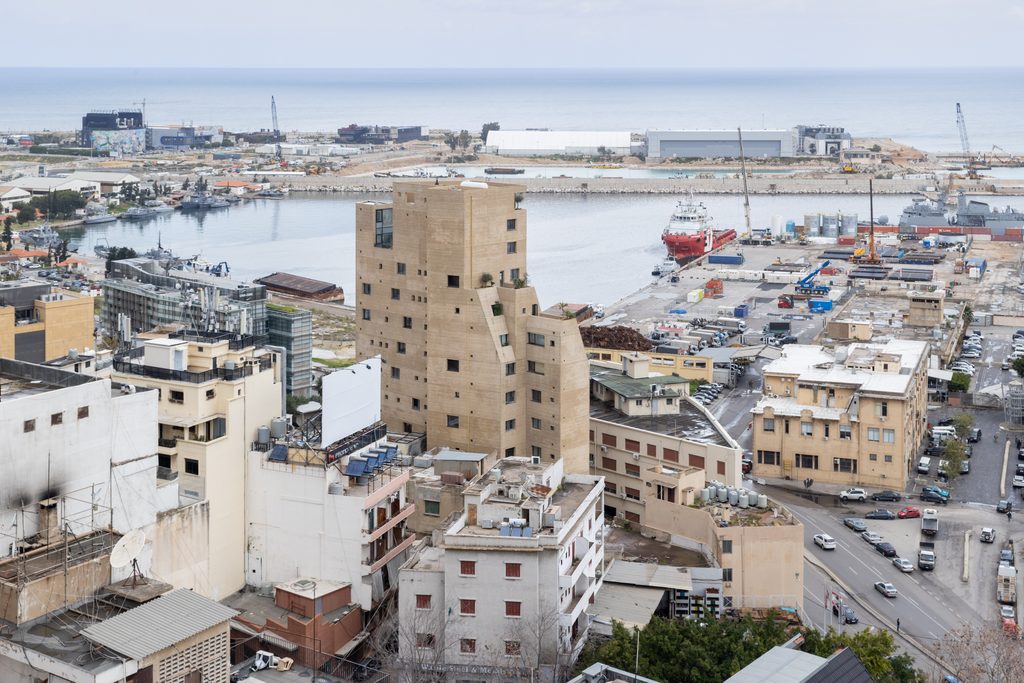
© Lina Ghotmeh — Architecture. Photo © Iwan Baan.
Beirut taught me resilience and the importance of memory. I grew up in a city that has been buried and rebuilt more than seven times, where ruins carry colours and patinas and the light lends them beauty, and where nature keeps emerging between the ruin and the built. Perhaps that is why I sculpt by subtracting mass rather than adding matter. In Beirut, void, destruction and absence are prevalent, and they shift the way you perceive built space. It is also where I first imagined architecture as a way to bring people together and to repair the city. And it gave me the sense of life that comes with uncertainty: the desire to celebrate, to gather, to keep making things.
At a moment when architecture is simultaneously becoming more global and more preoccupied with the idea of the local, what does it actually mean for architecture to belong to a place?
I often think of architecture as a plant: you open the ground, you try to understand it, you plant, you water, you nurture. You are recreating the roots, the part that you don’t always see. Belonging is not a matter of using local motifs. It is about the resources, the climate, the craft, the social layers and the people who build it. It is also about the construction team caring about the project. The emotional attachment developed during construction is what makes architecture worthwhile. A building can speak to the world and still belong, because it starts from the local (stories, matter, gestures) in order to build spaces with global resonance.
Your work increasingly moves between architecture, interiors, objects and material research. Do you see furniture and product design becoming a more significant part of your practice?
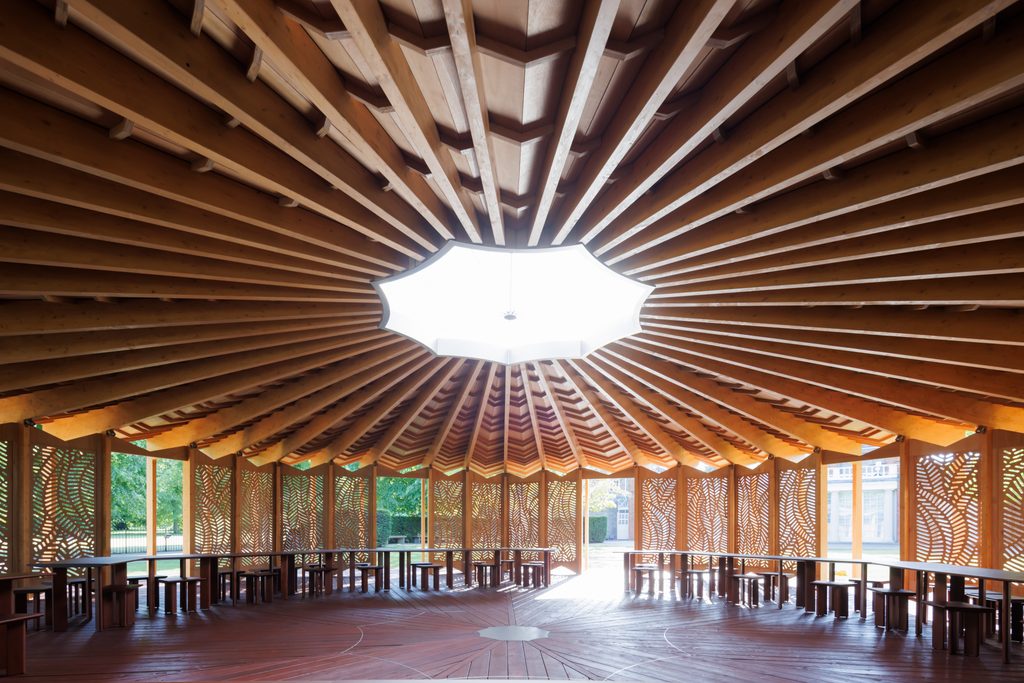
I see it as part of the same continuum. The Serpentine Pavilion began with the idea of the table as a place of commonality, and the tables and stools I designed were produced with The Conran Shop in a reddish wood. They were an extension of the architecture. Furniture is where architecture meets the body most directly: it shapes posture and the way people come together. Like furniture, fashion is not an accessory but something inherent to life, as my friend the philosopher Emanuele Coccia reminds us. I am interested in the dialogue between scales, from a museum to a stool to a material sample, because the same questions apply everywhere: craft, the hand, the senses. I wouldn’t call it a new direction. It is more a deepening of what the practice has always done.
What are you still trying to understand through architecture? How can we live better together, and how do we live in time?
Time interests me deeply. Perhaps it doesn’t exist in itself, but it exists for us because we can narrate what we have lived and hold it in memory. Architecture is one of the most intense ways of experiencing that. I am also trying to understand our relationship to the living world: how to bring nature, other living beings and greater porosity into buildings, since we are part of nature and the world cannot be human-centric. And I am still asking what is “real” in a time of overflowing imagery, and why physical spaces matter so much for being together. Every project begins as a dream, and my biggest dream is to keep dreaming.