A minimalist brief does not necessarily lead to a minimalist interior. At Kite Villa, a second residence near Dubai’s Kite Beach, interior designer Ranim Mortada has transformed an initially restrained vision into a richly layered home, where natural materials, contemporary art and carefully considered colour coexist within an established architectural framework.
Designed for a young international family with two boys and an elderly mother who frequently stays with them, the villa needed to accommodate different generations and rhythms of domestic life. The owners initially gravitated towards cool greys, blues and greens, favouring an understated aesthetic. Yet as the project progressed, Mortada began to question whether such restraint would adequately reflect the family’s personality and the way they intended to inhabit the house.
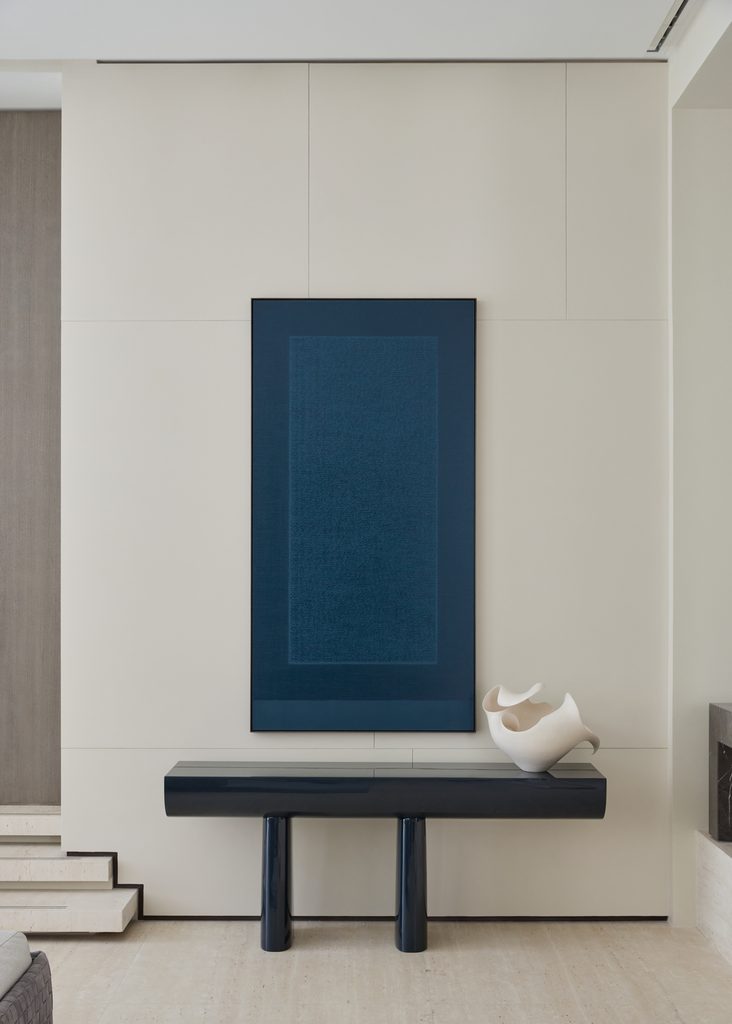
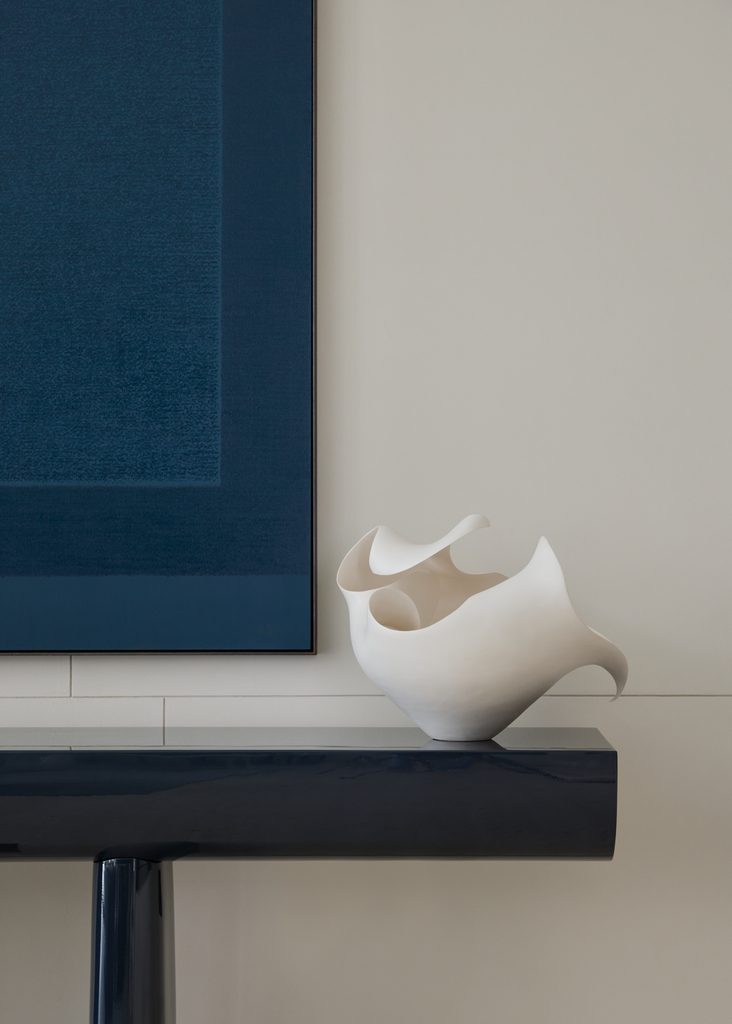
The resulting interiors retain a sense of compositional discipline while introducing warmth, tactile surfaces and occasional moments of visual surprise. Rather than departing entirely from the original brief, the designer expanded its possibilities, allowing the scheme to evolve through an increasingly confident use of materials and colour.
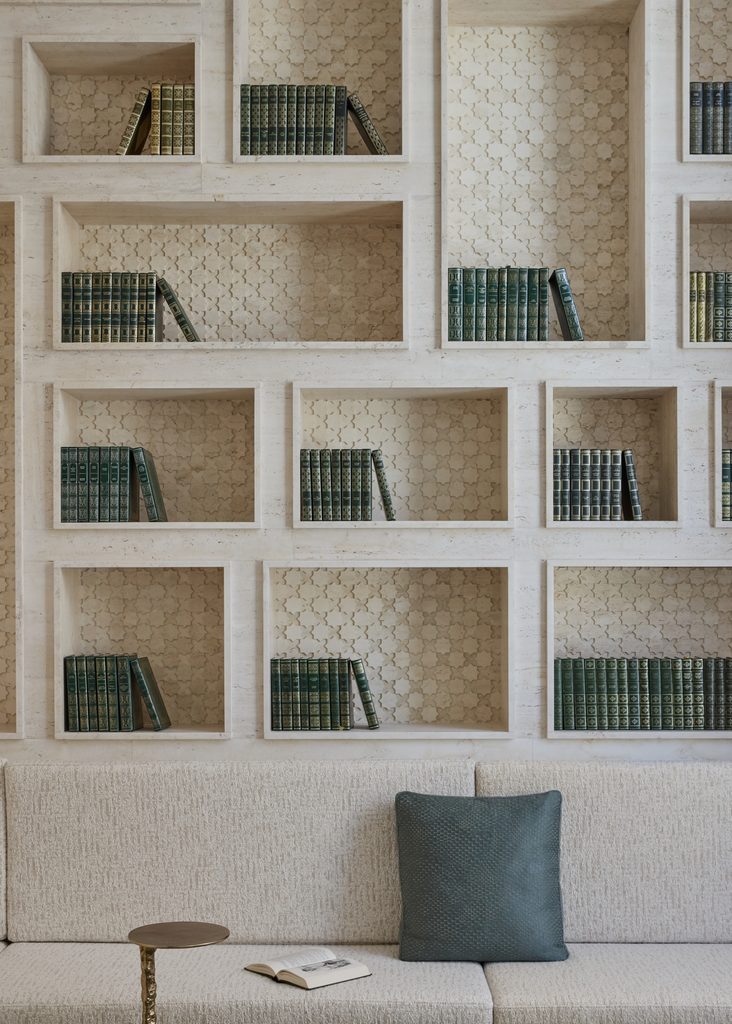
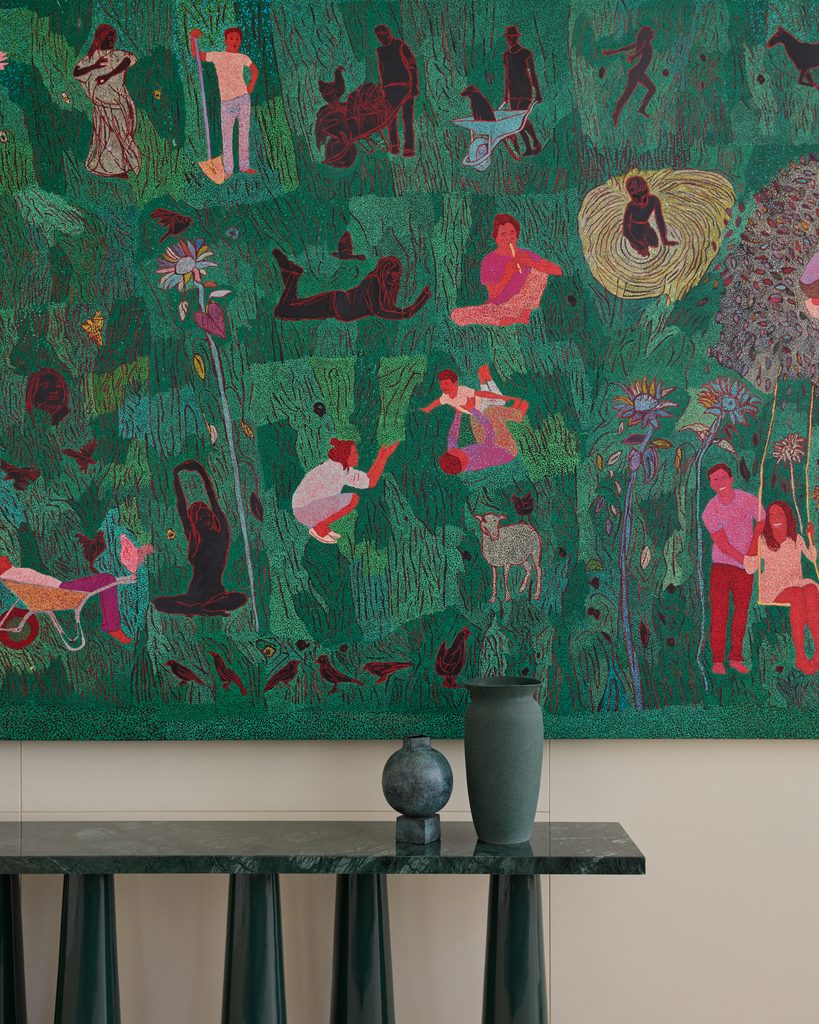
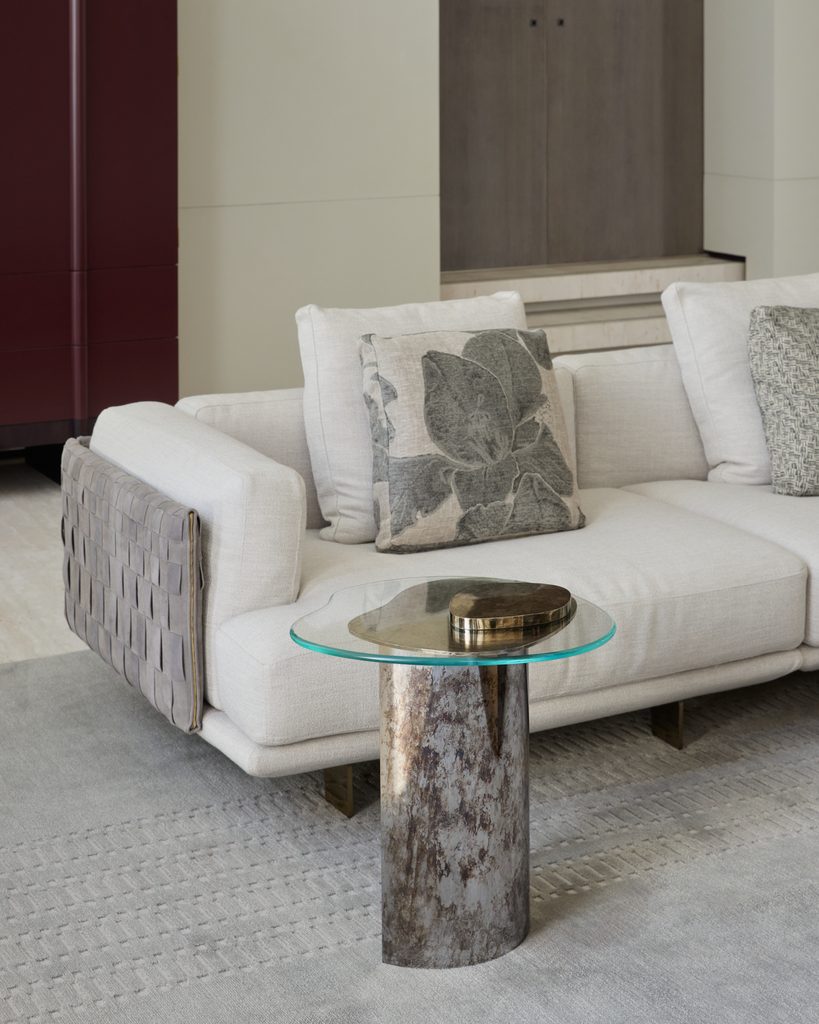
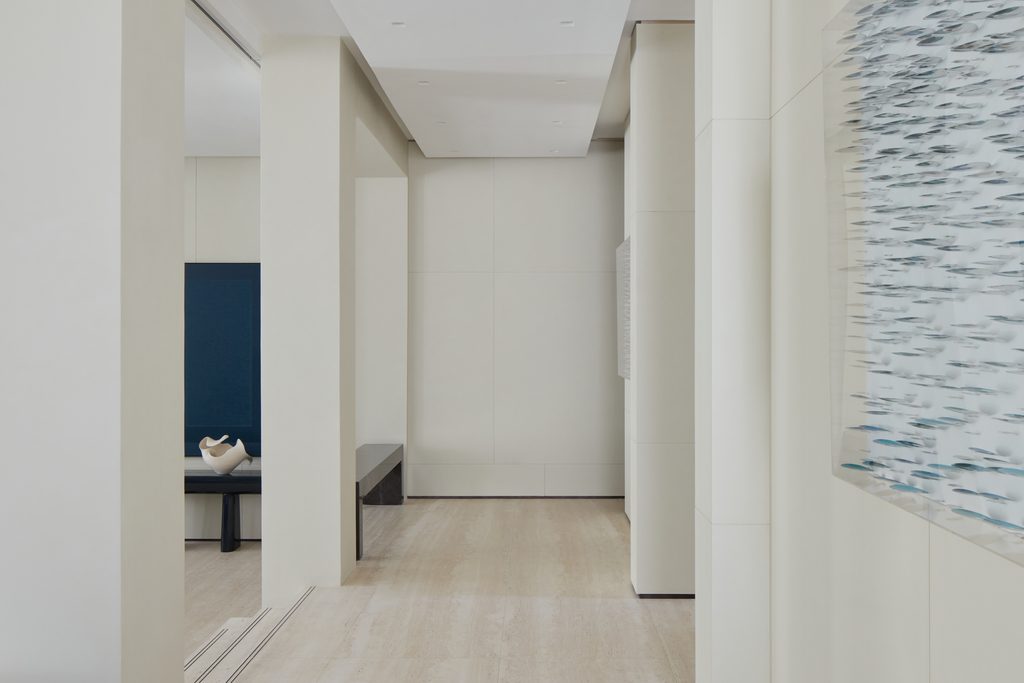
The villa’s existing architecture played a significant role in this process. Travertine was already extensively present throughout the property, and Mortada chose to preserve it, exploring new ways of incorporating the stone into the decorative language. Its distinctive texture and natural variations establish a recurring element across the interiors, complemented by timber, textured limewash walls, ceramics and softer fabrics. The contrast between these materials introduces depth without compromising the architectural coherence of the house.
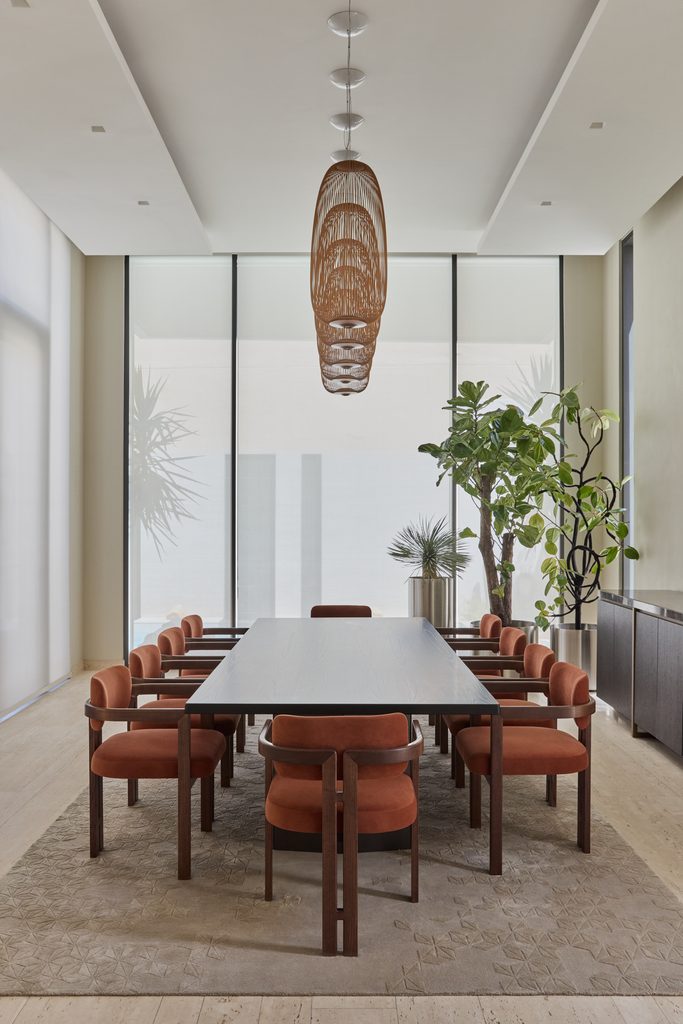
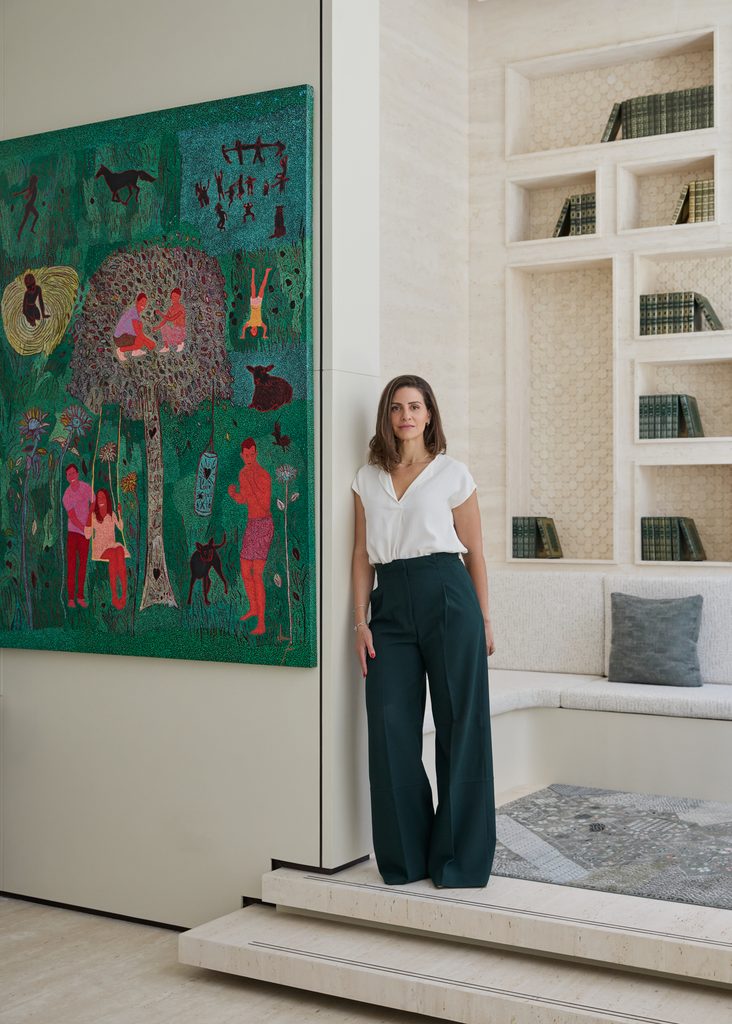
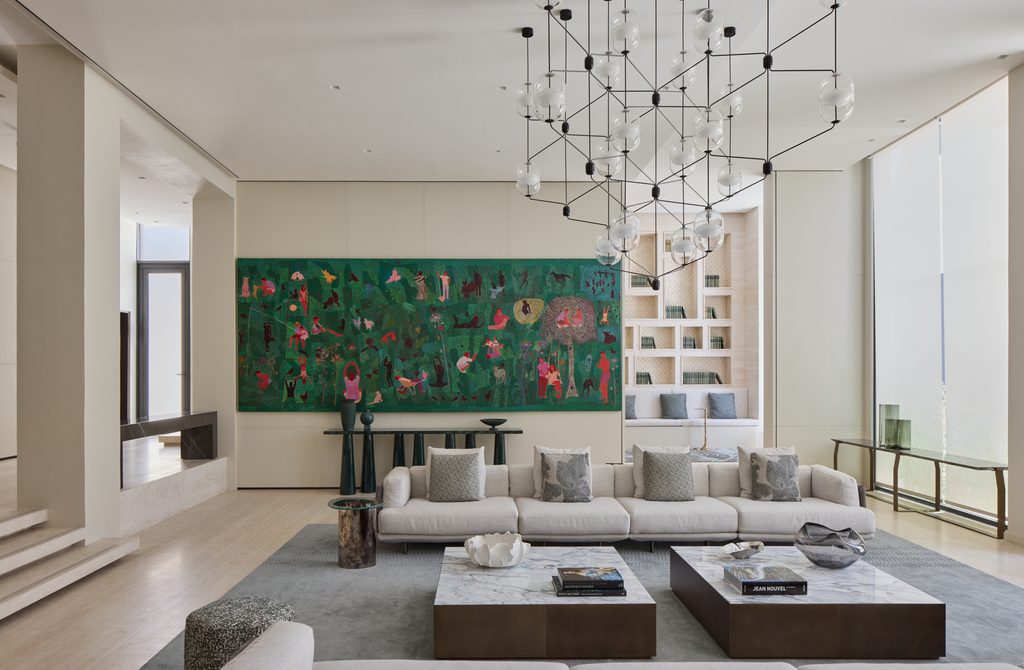
Existing features were similarly reconsidered rather than automatically replaced. A library, for instance, was transformed into a more intimate reading nook, illustrating Mortada’s interest in adapting spaces to contemporary patterns of living while retaining something of their original identity.
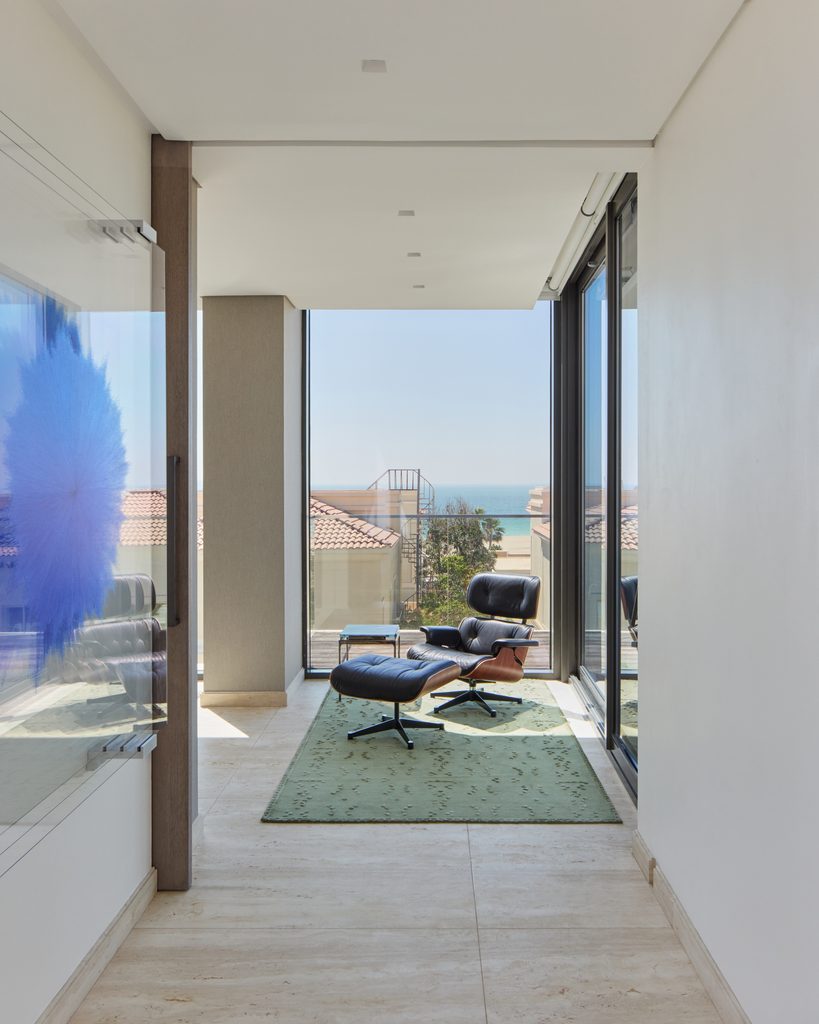
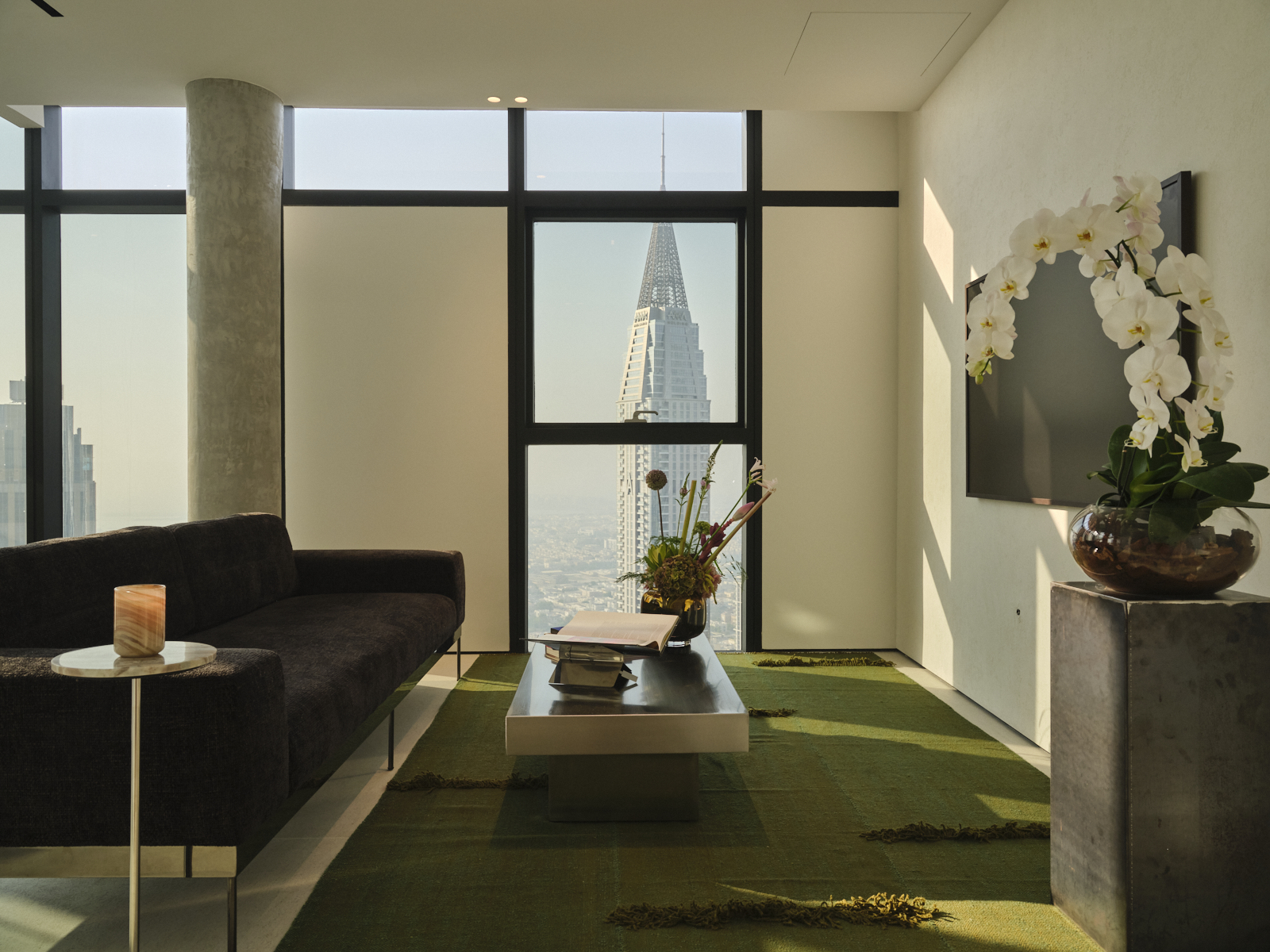
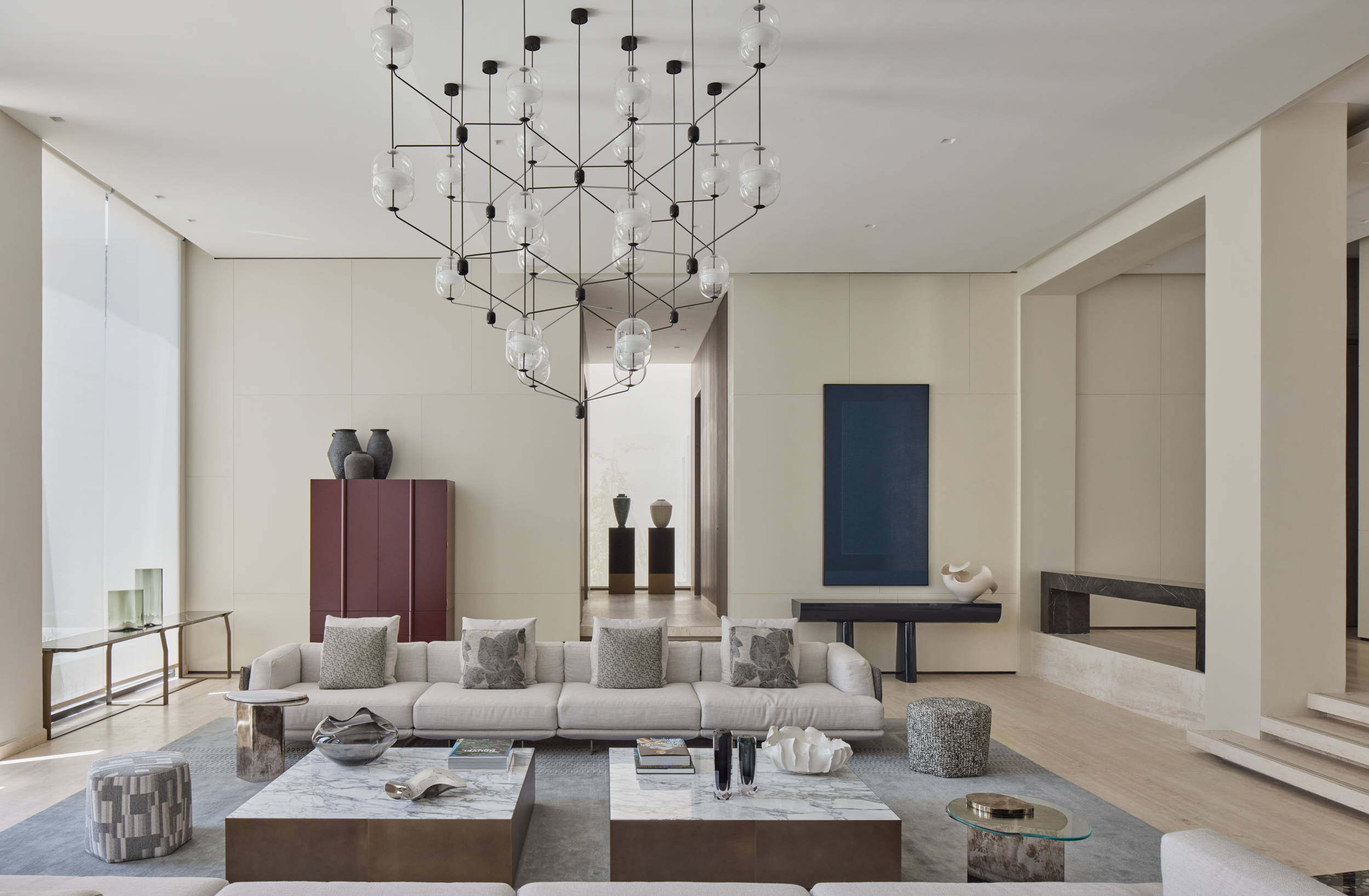
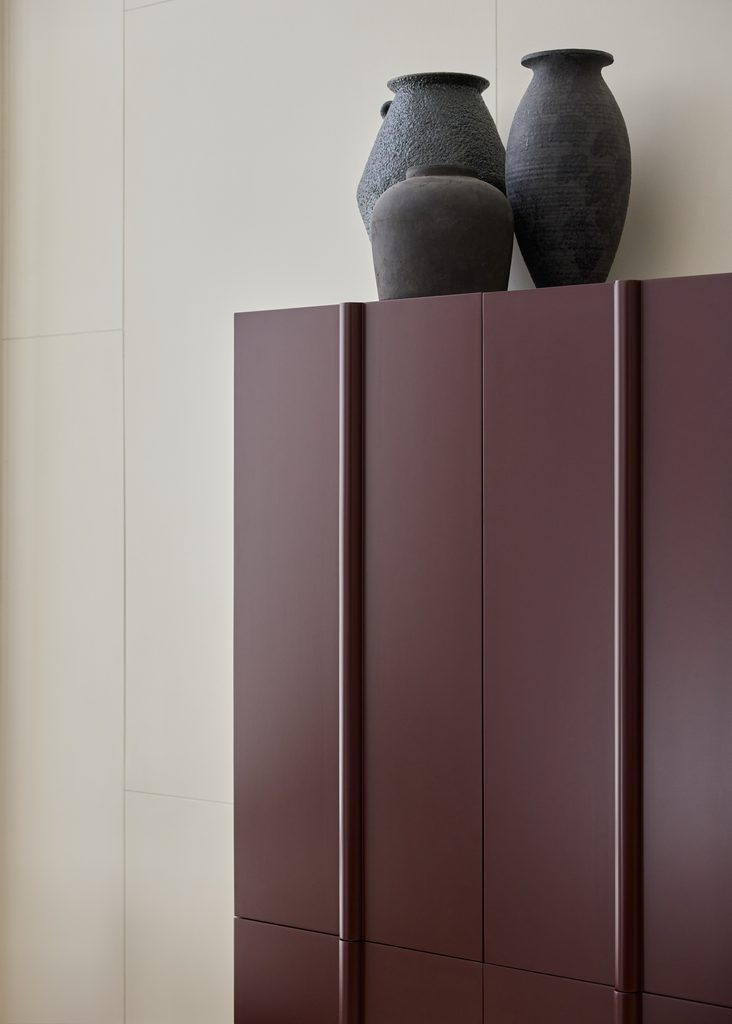
Colour provides some of the project’s most distinctive interventions. An oxblood cabinet, conceived as a deliberate departure from the otherwise subdued palette, introduces an unexpected intensity. Its deep red tone becomes a focal point precisely because the surrounding composition remains relatively quiet. The gesture reflects Mortada’s approach to balancing restraint with expression, allowing individual elements to establish their presence without competing for attention.
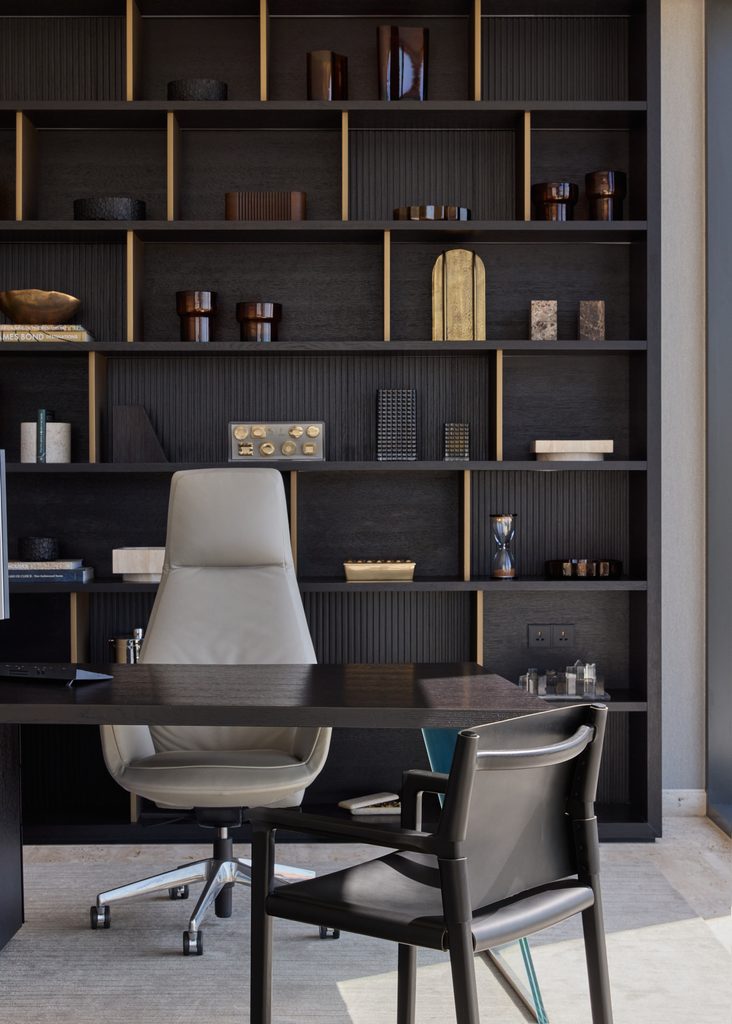
Contemporary art is equally integral to the interiors. Rather than being introduced as a final decorative layer, artworks were considered in relation to the architecture, furniture and surrounding objects. A monumental five-metre piece by Slimane El Kamel establishes a particularly strong visual presence, prompting a more restrained treatment of the space around it. Elsewhere, ceramics and collected objects contribute to an interior that feels assembled through personal choices rather than governed by a rigid decorative formula.
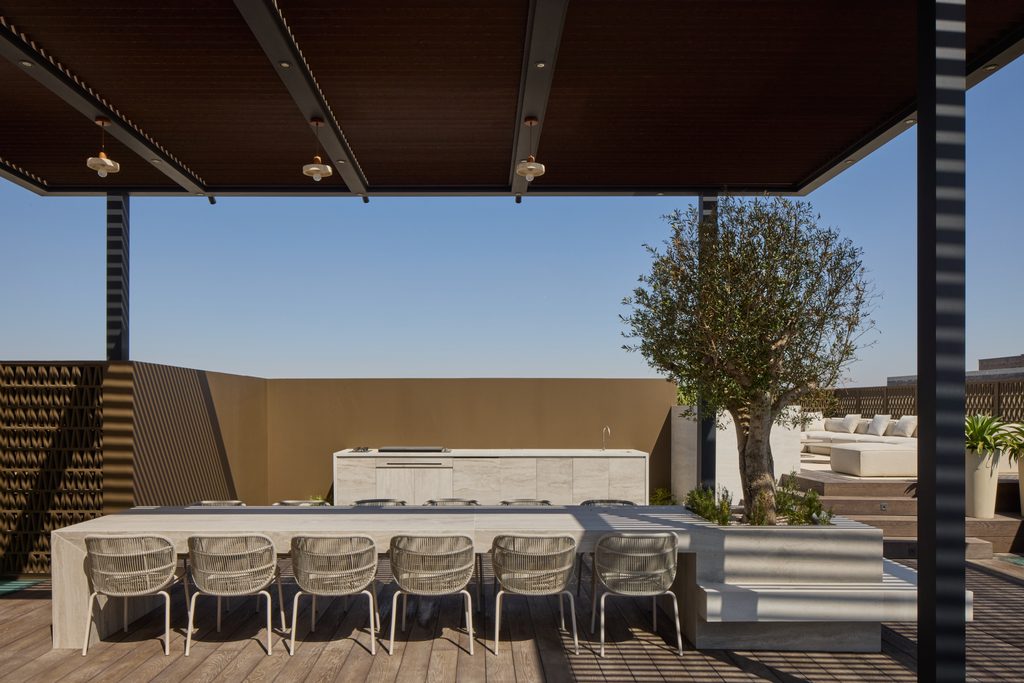
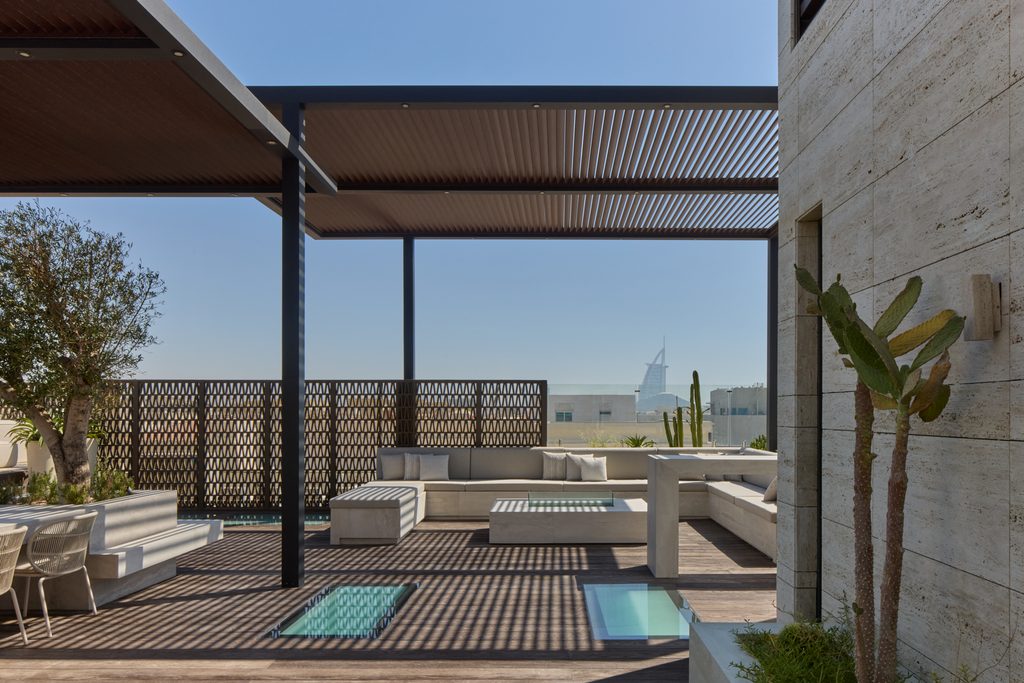
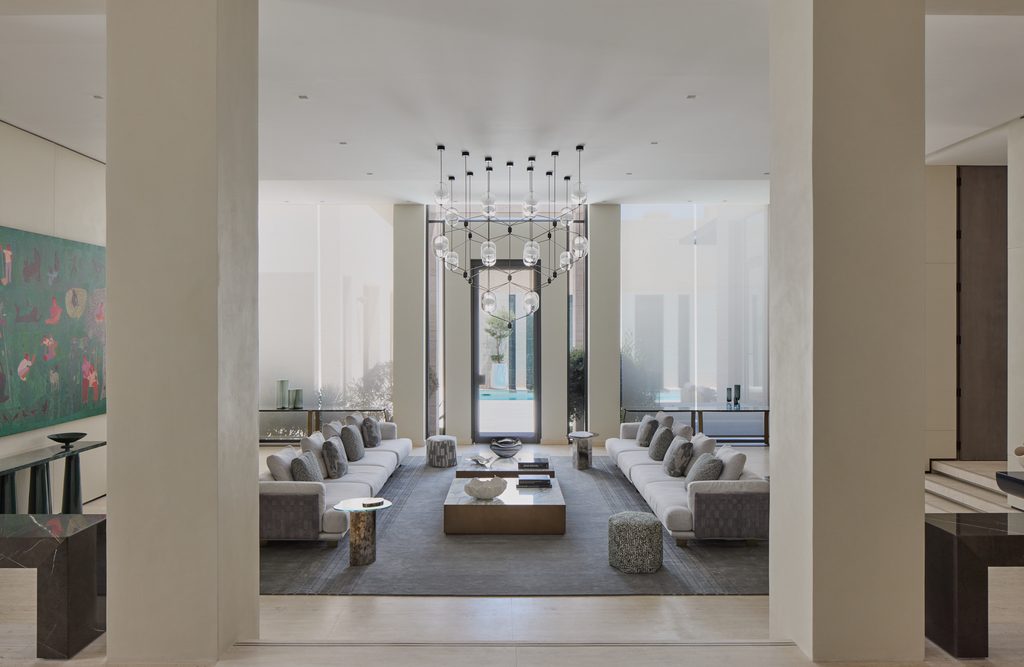
Beyond its material and aesthetic qualities, Kite Villa is fundamentally organised around the family’s social life. The owners frequently entertain, and the interiors needed to accommodate both large gatherings and more informal moments of everyday interaction. Mortada considered how people move between spaces, where conversations naturally develop and how different activities can coexist without isolating those taking part.
This understanding of hospitality extends to the relationship between generations. The children, their parents and the grandmother each have different needs, yet the house is conceived as a shared environment rather than a succession of separate territories. Places for privacy and retreat are balanced with spaces that encourage proximity and interaction.
Ultimately, Kite Villa demonstrates how an interior can evolve beyond its initial aesthetic parameters without losing clarity. By retaining the villa’s architectural foundations and introducing a more expressive combination of materials, art and colour, Mortada has created a residence that responds not simply to how its owners wish their home to look, but to how they actually live.