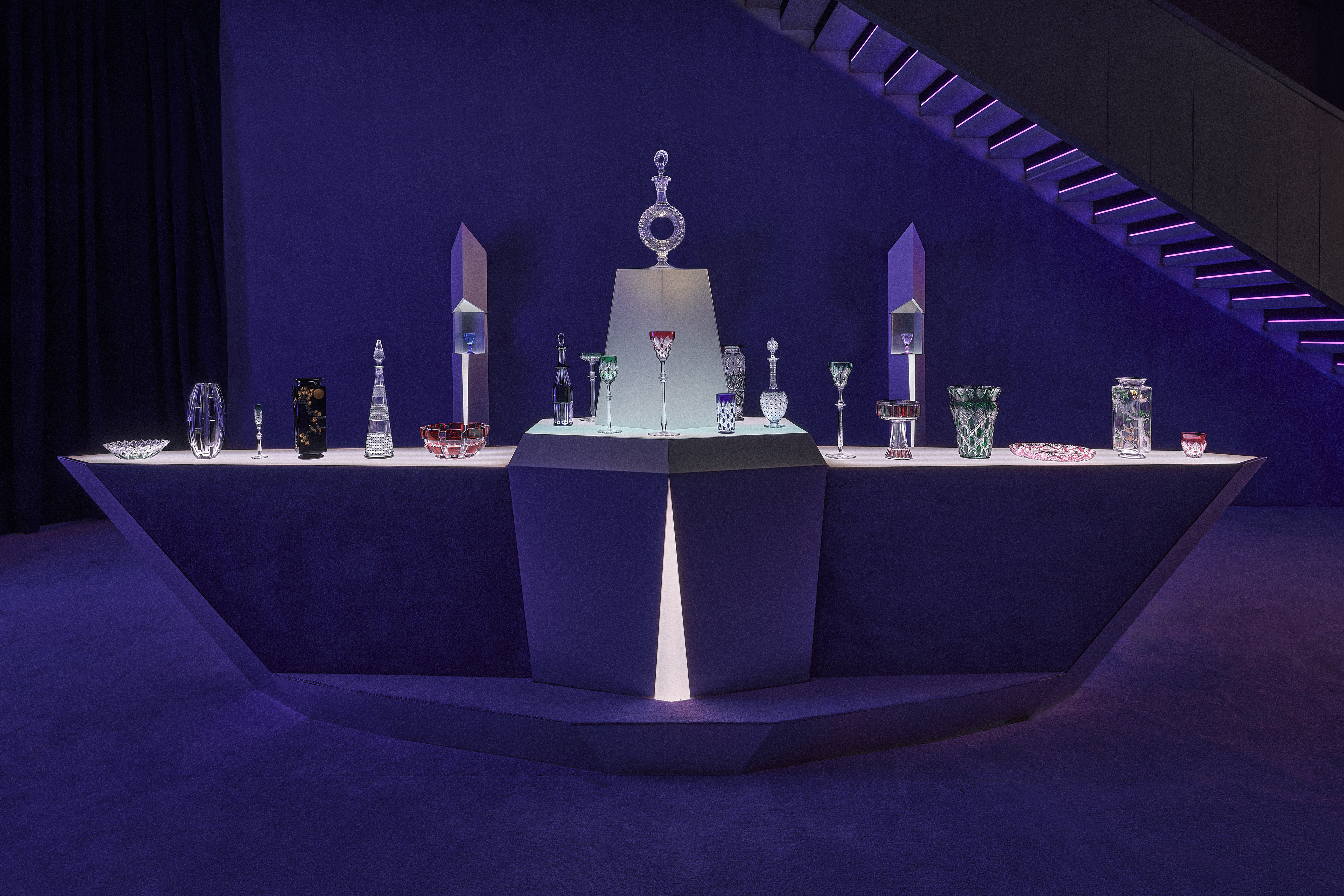
For Milan Design Week, Baccarat presented two collaborations that expanded the language of crystal beyond decorative virtuosity. With Emmanuelle Luciani, the maison unveiled Crystal Crypt, a filmic and scenographic work that enters the manufacture as if it were a futuristic cathedral. With Bethan Laura Wood, Mille Fleurs reinterpreted the iconic Zénith chandelier through colour, modularity and floral abstraction. Rather than staging two parallel projects, Baccarat constructed a dialogue between image and object, between immersion and design, positioning Milan not as a showcase but as a site of experimentation.
Founded on collective craftsmanship, Baccarat has long understood collaboration as part of its identity. Laurence Nicolas, CEO of Baccarat, describes the maison as “a story of collaboration from day one,” rooted in “a collective of humble artisans who are really able to do wonders with the most humble materials, which is sand, lead, water and fire.” In this sense, Baccarat operates less as a brand than as a commissioning body, where creation emerges from the encounter between artistic vision and technical mastery. For her, this spirit explains why Baccarat has worked with figures such as Philippe Starck, Jaime Hayon, Ettore Sottsass and, now, Luciani and Wood. What is at stake is not authorship in the singular, but a form of shared authorship that unfolds through time.
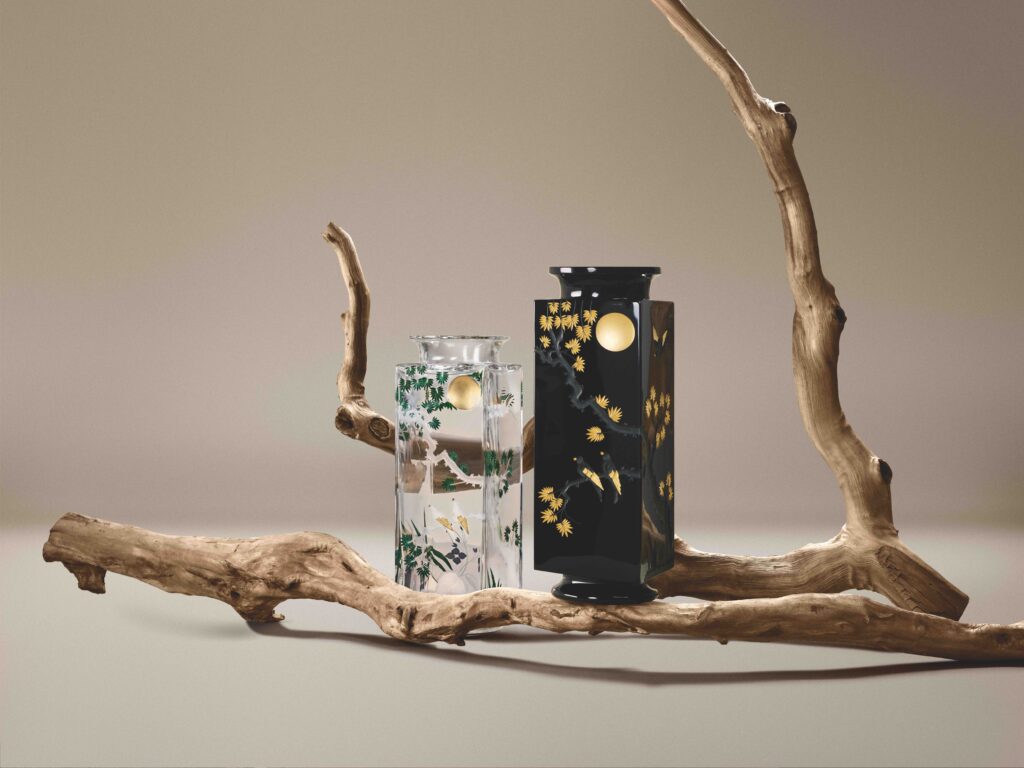
Luciani’s Crystal Crypt is perhaps the most unexpected gesture. Rather than present crystal as a finished luxury object, she returned to the manufacture, filming its furnaces, water, tools and gestures. “Everything was made in the manufacture, in Baccarat. There are no images from outside,” she says. Her ambition was to reveal the modernity of craft, not as nostalgia, but as energy. “I wanted to do something very sci-fi,” she explains. “For me, it was really to be inside the crystal.” The result is a visual language that collapses temporalities, where past, present and future coexist in a continuous flow.
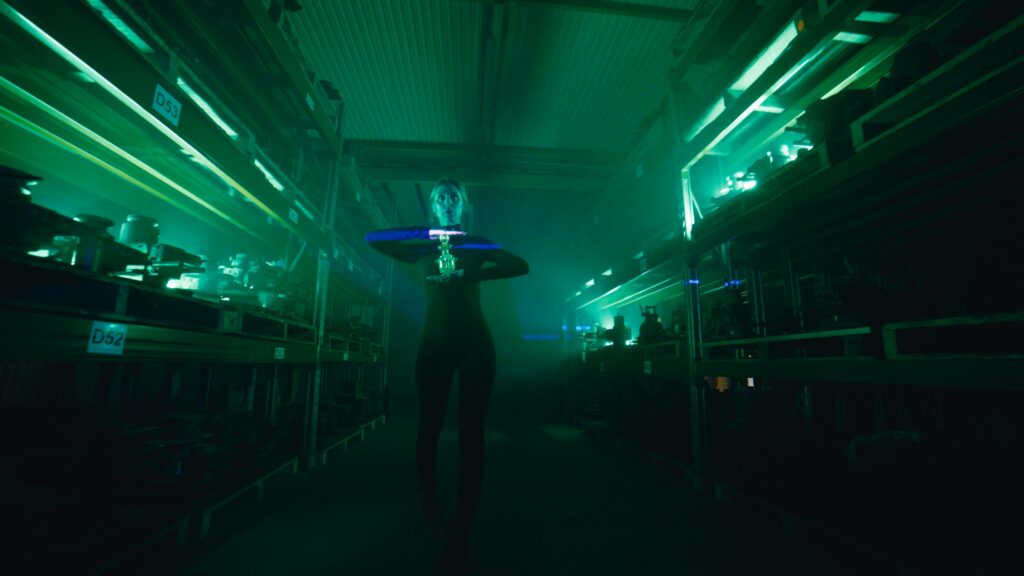
It becomes a charged, almost operatic vision of making. Luciani trained dancers in the manufacture to absorb the gestures of the artisans, transforming labour into movement. “The craftsmen are treasures,” Luciani says. “I wanted to show the gestures and knowledge that risk disappearing.” Her work reframes the object as a receptacle of collective memory, where sculpture, cinema, sound and gesture become one. In doing so, she resists what she calls the ‘dead object,’ shifting perception itself into the core of the work. “Objects are not just objects,” she says. “It’s the way you look at it that is going to change the perspective.” This idea of perception as transformation becomes central to the project. By magnifying scale, sound and movement, Luciani destabilises the viewer’s relationship to crystal, shifting it from static luxury to lived experience. The manufacture itself becomes a stage, a site of choreography where craftsmanship is no longer hidden but performed.
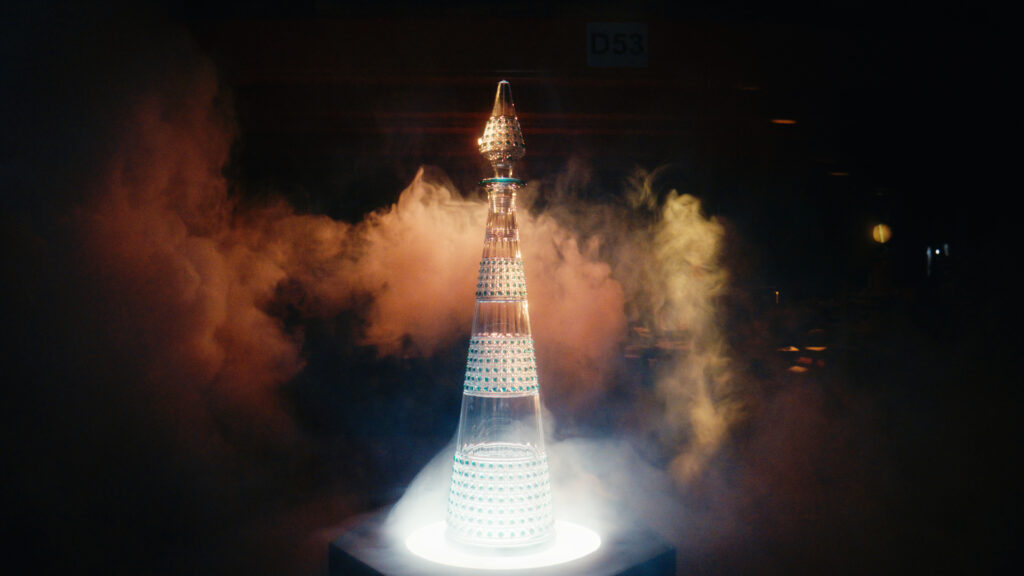
For Nicolas, this audacity is precisely what keeps Baccarat alive. “We need to transmit, we need to protect, and we need to make the future generation able to appreciate what we have created,” she says.“We are a historic maison, and we are proud of that. The real beauty lies in remaining relevant from today into tomorrow. That means embracing our heritage not as something fixed, but as something that must be continuously reinterpreted and transmitted.” She also insists on the maison’s independence and freedom.“Freedom is something very important. And very rare.” This autonomy allows Baccarat to take risks, to trust artists, and to move quickly in ways that larger groups often cannot. In her view, Luciani’s work breaks assumptions about Baccarat as merely classic. “We should never have assumptions,” she adds, pointing to the importance of surprise in maintaining cultural relevance.
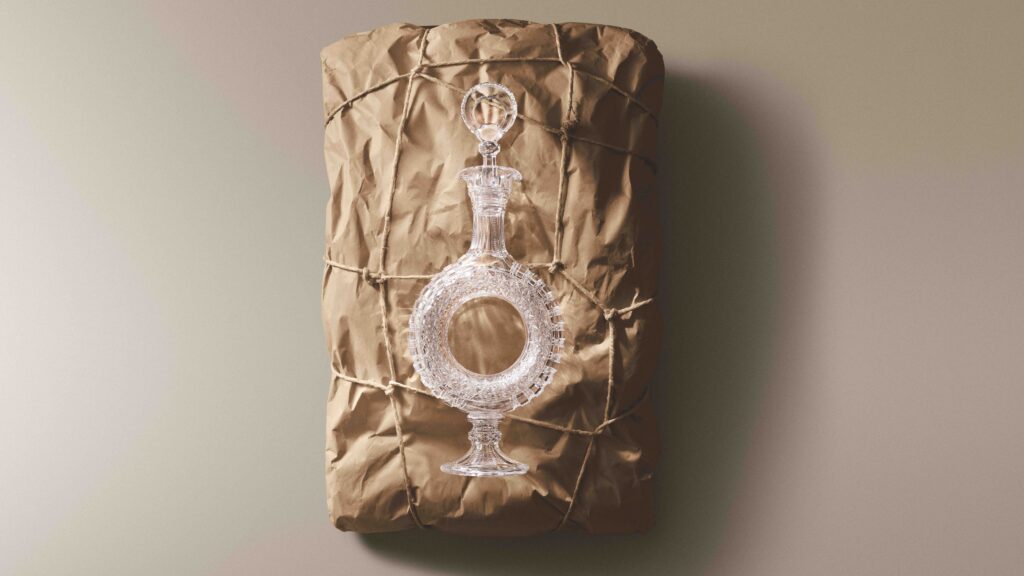
Bethan Laura Wood’s Mille Fleurs approaches the same question through form. Invited to reinterpret the Zénith chandelier and explore florals, she chose to dismantle the idea of a fixed chandelier core. “I was really curious to see what would happen if you released it from having a core,” she says. The result is a modular system of rings, crystal elements and tension cables, where the baroque becomes lighter, more graphic, and more adaptable. Here, the chandelier is no longer a singular object but a system, capable of evolving across spaces and configurations.
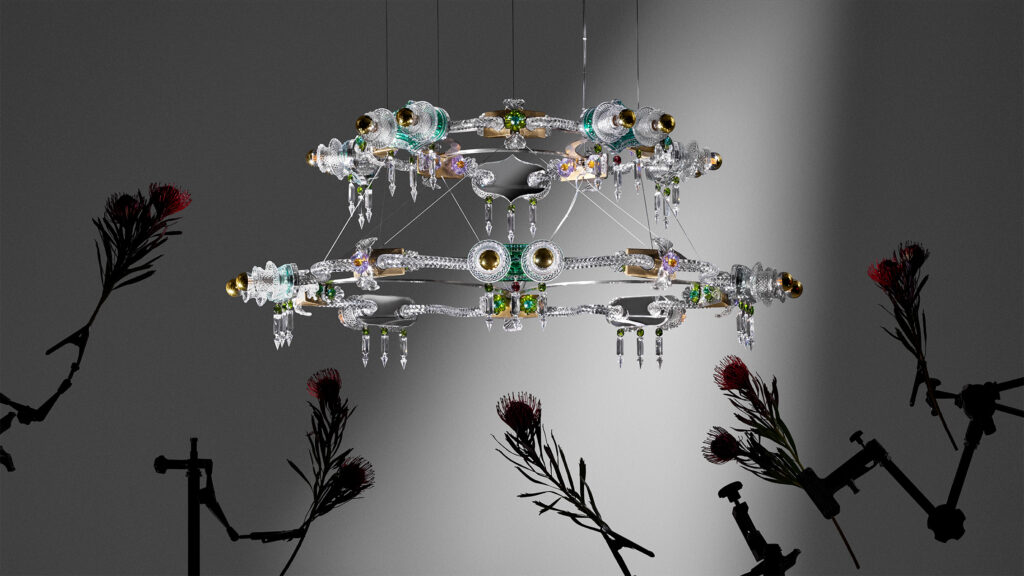
Wood worked with Zénith components, archive flowers and newly developed elements to create a language that remains unmistakably Baccarat while carrying her own chromatic sensibility. “I was really excited to try and see where the language between me and Baccarat was going to meet and merge,” she says. Her approach is both archaeological and forward-looking, drawing from the archive while introducing new elements that expand the vocabulary of the maison. The pieces can become a monumental column, a single ring, a wall sconce or a clustered floral landscape. This flexibility reflects a contemporary understanding of luxury, one that privileges adaptability and personalisation over fixed typologies.
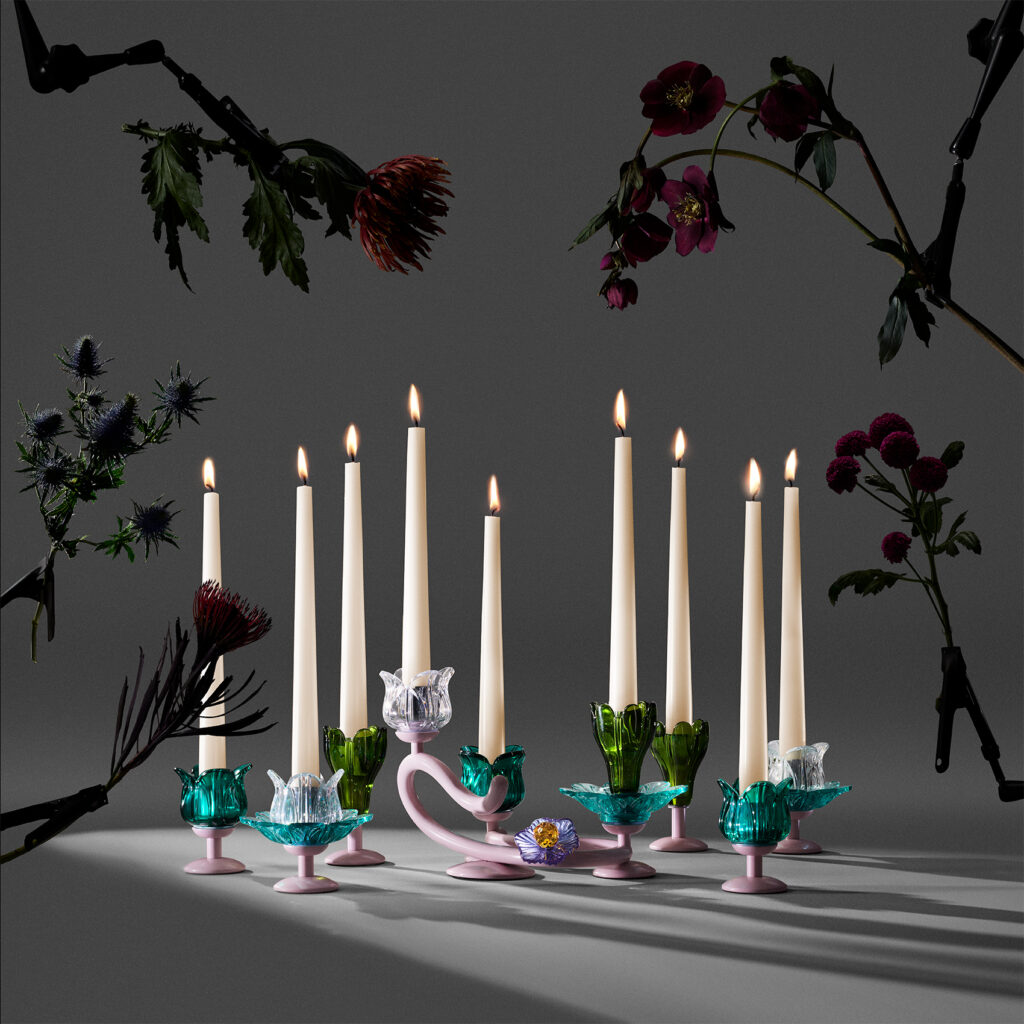
Material itself becomes a paradox in her work. “You see the weight of the crystal, you feel the weight of the crystal, but it has this lightness to it,” she notes. This tension between heaviness and lightness, structure and fluidity, runs throughout the installation, reinforcing the idea that crystal is not inert, but dynamic.
What links both collaborations is not simply heritage, but motion. Baccarat, in Milan, did not ask artists to decorate its archive. It allowed them to disturb it, inhabit it, and send it forward.In doing so, the maison repositions itself not as a guardian of the past, but as an active producer of cultural meaning, where craft is continuously renegotiated through contemporary lenses.
In Milan, crystal was no longer presented as an object to be admired, but as a medium through which to think.