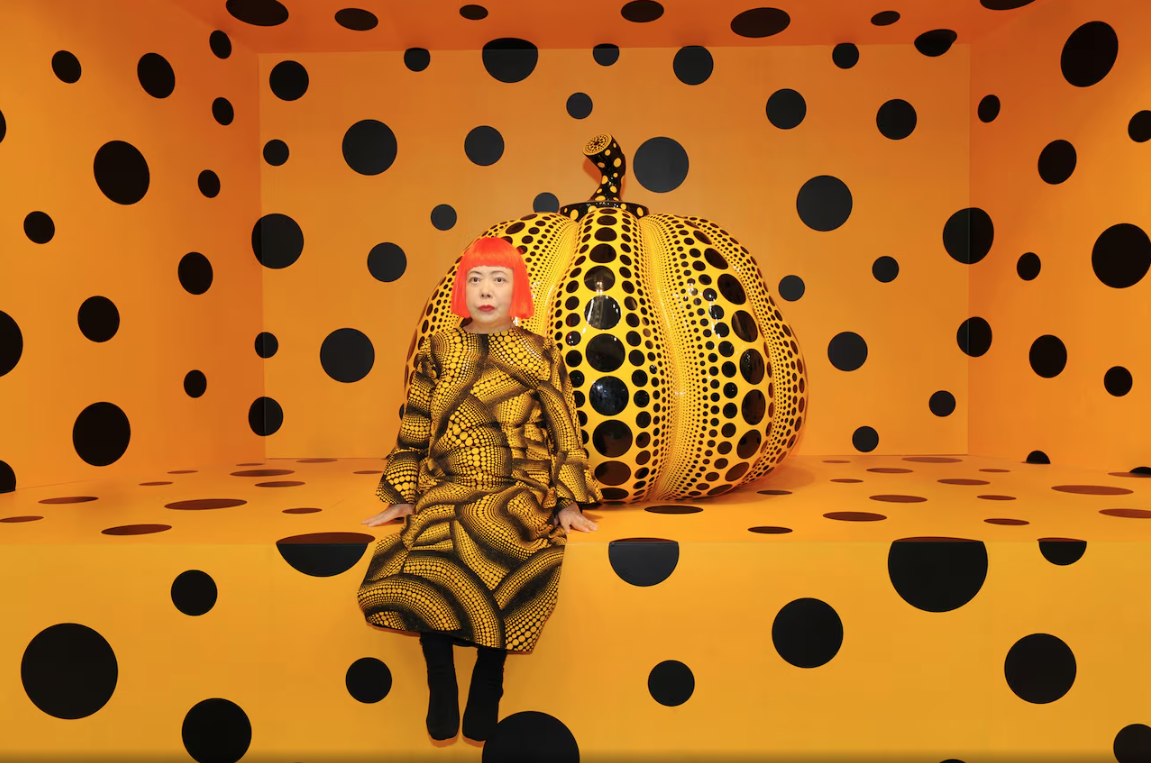
Yayoi Kusama, the Japanese artist whose polka dots, mirrored “Infinity Rooms,” and towering polka-dotted pumpkins made her one of the most recognized and commercially successful artists in the world, has died at 97. She died on August 14 at a hospital in Tokyo, according to a statement from the Yayoi Kusama Museum and her longtime gallery, David Zwirner.
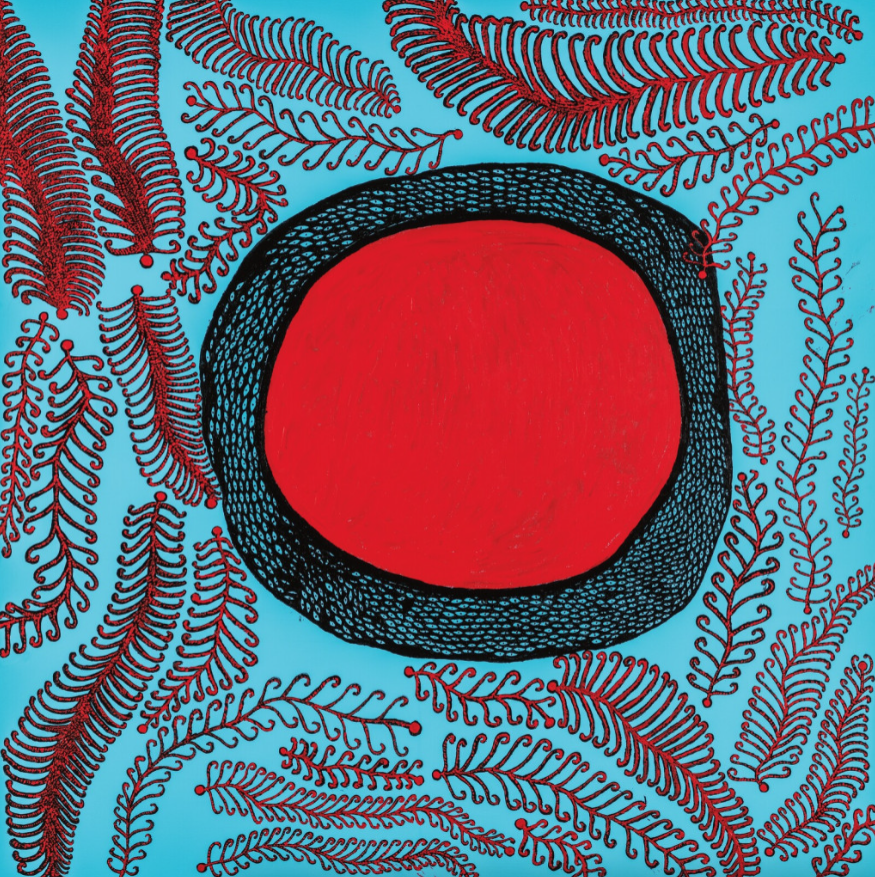
Kusama’s death caps a career that spanned more than seven decades and carried her from a childhood marked by hallucinations and family strife in provincial Japan, through the sexual and political upheavals of 1960s New York, to a late-life renaissance that made her exhibitions among the most-visited in the world and her canvases among the most expensive ever sold by a living woman artist.
An Eye for Dots Since Childhood
Kusama was born on March 22, 1929, in Matsumoto, a city in Japan’s Nagano Prefecture, into a family that ran a seed nursery and plant business. Her childhood was not an easy one. Around age ten, Kusama began experiencing vivid hallucinations: fields of dots, flashes of light, flowers that spoke to her, that she later described as the origin of the visual language that would define her life’s work. She sometimes called the compulsive act of covering surfaces in pattern “self-obliteration,” a way of dissolving herself and her surroundings into a single infinite field.
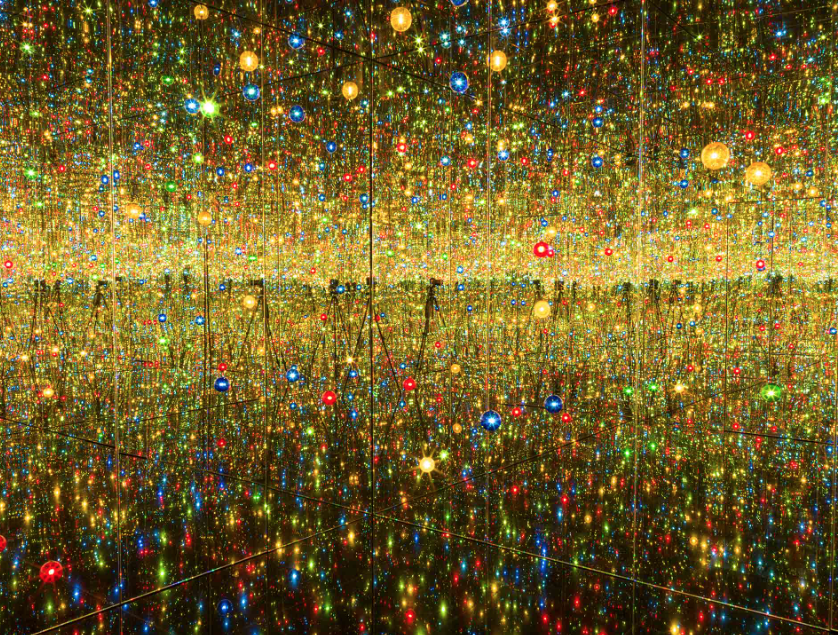
Kusama began exhibiting her work while still a teenager, and by the early 1950s she was showing regularly in Japan; her first solo exhibition took place in 1952. She studied the traditional Japanese painting style known as nihonga at the Kyoto Municipal School of Arts and Crafts starting in 1948, but chafed against its conventions and gravitated instead toward the European and American avant-garde. Frustrated with what she later called a Japanese art world that was “too small, too servile, too feudalistic, and too scornful of women,” she wrote to Georgia O’Keeffe, who encouraged her to pursue her career in the United States. Kusama moved to Seattle in 1957 and settled in New York City the following year.
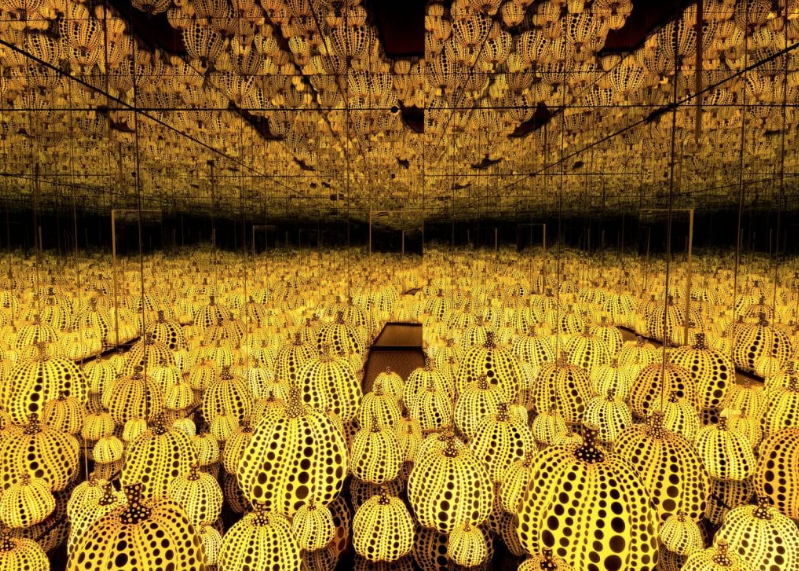
Photo by Cathy Carver.
Provocation and Recognition in New York
New York in the late 1950s and 1960s made Kusama’s name, and cost her a great deal in the process. In October 1959, a show of five large “Infinity Net” canvases at the Brata Gallery drew the attention of the critic Donald Judd, who called the paintings “strong, advanced in concept, and realized.” Through the 1960s she produced works that influenced artists including Claes Oldenburg and Andy Warhol.
Kusama was also known for public performances that caused a stir in New York and across Europe. She staged “happenings” in which nude participants were painted with polka dots in public spaces, actions she framed as protests against the Vietnam War. Art historians have long argued that Kusama’s influence on her better-known male peers went underacknowledged at the time, a product of the sexism and racism she faced as a Japanese woman working in an art world dominated by white men.
Depression, Retreat, and a Second Act
By the early 1970s, worn down by poor health and a lack of financial and institutional support, Kusama returned to Japan, where her work initially received a muted reception. She experienced severe depression and made multiple suicide attempts before voluntarily admitting herself, in 1977, to a psychiatric hospital in Tokyo that offered art therapy. She lived there for the rest of her life, driven each day to a nearby studio to paint. “What kept me from ending my life was drawing and making art,” she said of the period. On another occasion she put it more starkly: “If it were not for art, I would have killed myself long ago.”
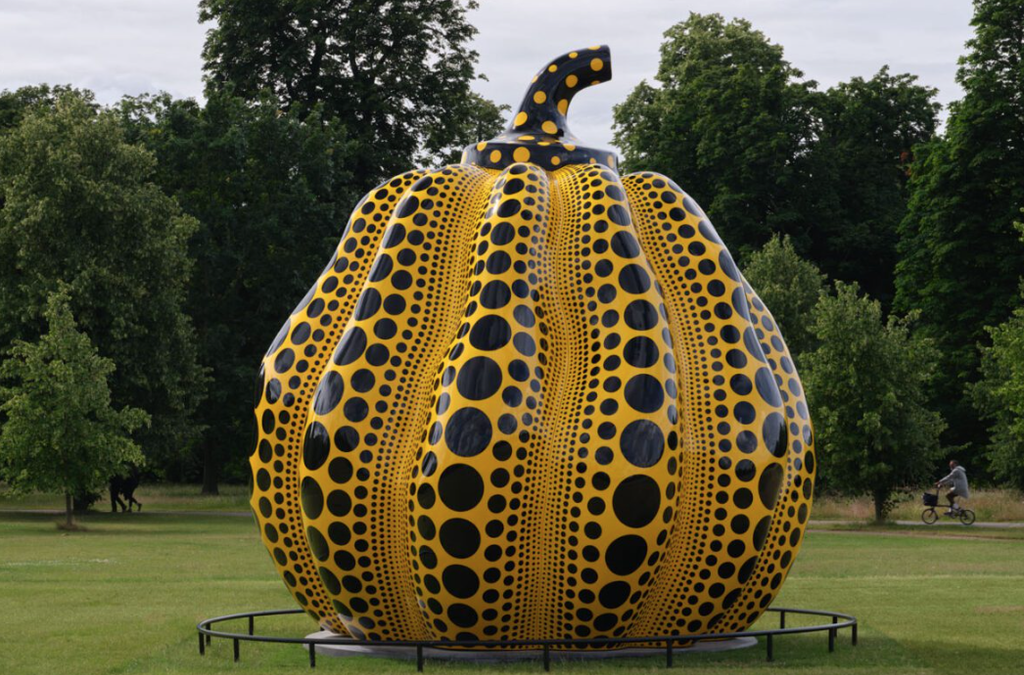
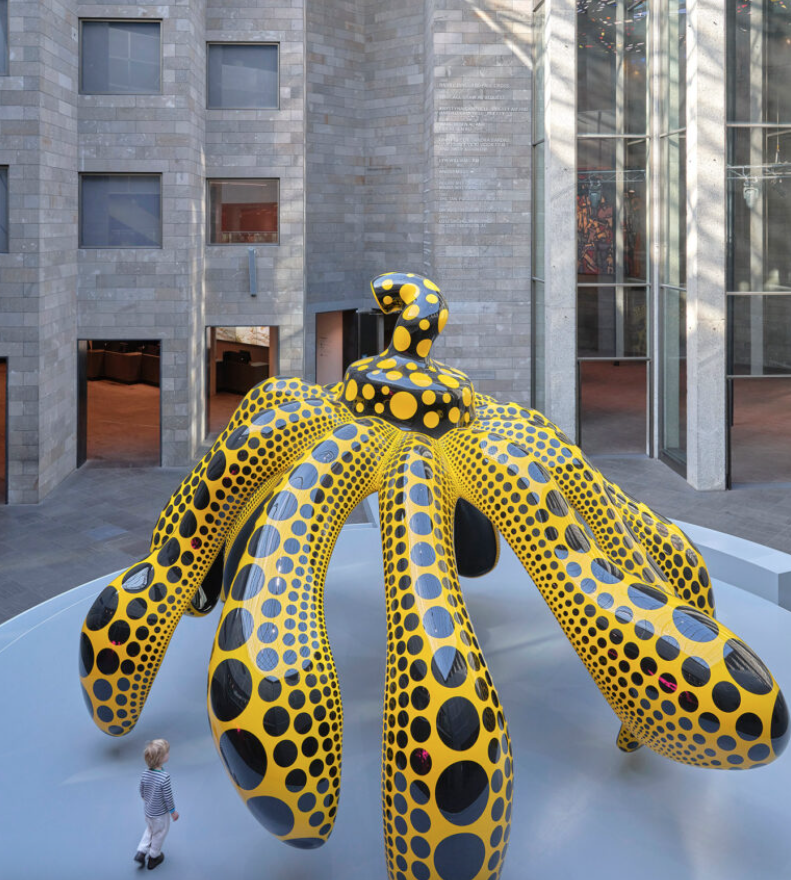
Photo BY George Darrell
Recognition returned gradually, beginning with international exhibitions in the late 1980s and her selection to represent Japan at the 1993 Venice Biennale. A wave of major retrospectives followed over the next three decades, at the Museum of Modern Art in 1998, the Whitney Museum and Tate Modern in 2012, and the Hirshhorn Museum in Washington in 2017, an exhibition that became a genuine social-media phenomenon, generating tens of thousands of Instagram posts from visitors queuing to spend a few private minutes inside her mirrored rooms. The Yayoi Kusama Museum, a five-story building dedicated to her work, opened in Tokyo in 2017. She also brought her polka dots into fashion, collaborating with designer Marc Jacobs on a celebrated Louis Vuitton collection beginning in 2011, a partnership the brand revisited more than once in the years that followed.
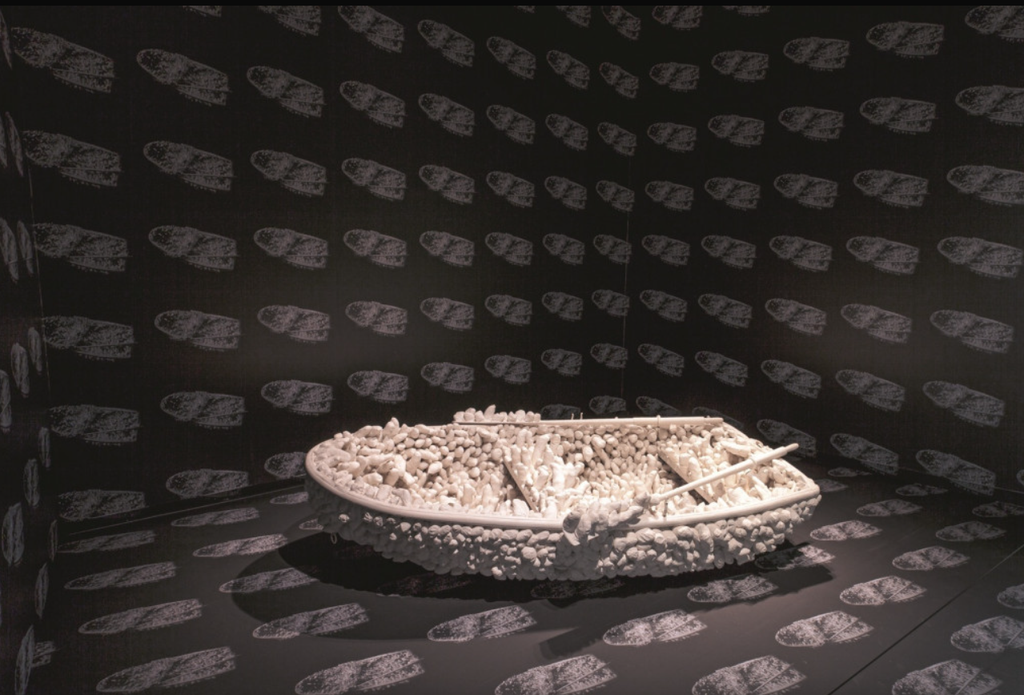
By the 2010s, Kusama had become both a critical and commercial phenomenon. A record-setting tour of Latin American museums helped make her the world’s most-visited living artist in 2014, according to attendance rankings compiled at the time. Her market value climbed alongside her fame: a 1960 “Infinity Nets” canvas sold for $7.1 million in 2014, and a 1959 “Untitled (Nets)” painting fetched $10.5 million in 2022, cementing her status as one of the highest-selling women artists at auction. Japan honored her with the Asahi Prize in 2001 and the Order of Culture, one of the country’s highest civilian honors, and in 2006 she became the first Japanese woman to receive the Praemium Imperiale, a prestigious international arts prize.
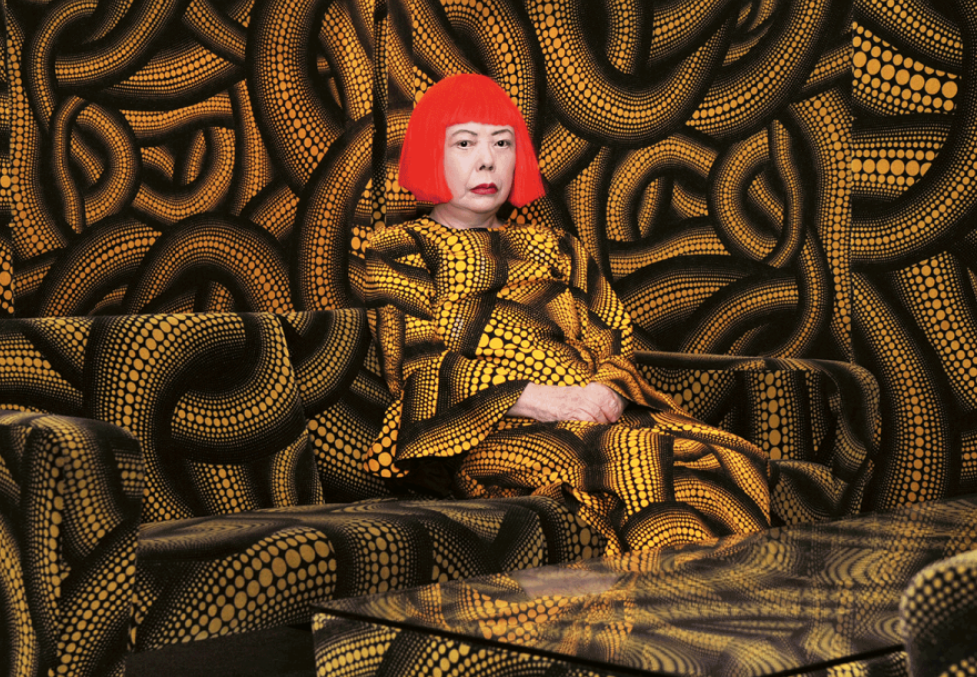
Kusama continued to paint, sculpt, and design new Infinity Rooms into her late nineties, publishing poetry and fiction alongside her visual work, including the 2003 autobiography “Infinity Net”, and remaining, by her own account, dependent on the daily act of making art. She is survived by her museum, her foundation, and an artistic legacy that reshaped how museums the world over think about immersive, participatory art.