A fashion show may last just fifteen minutes, but the space in which it unfolds can take months to conceive. Beyond the collections, some of the most compelling creative work of the Spring/Summer 2027 season came from the architects, artists and scenographers invited to imagine the settings themselves.
From monumental sculptures and experimental textiles to historic libraries and architectural interventions, the season offered a fascinating study in the relationship between space, material and perception. These nine projects reveal the creative thinking behind the runway, and the designers whose work deserves a closer look.
Acne Studios: Faig Ahmed and the Art of Unravelling Tradition
At the Collège des Bernardins in Paris, Acne Studios introduced the extraordinary work of Azerbaijani artist Faig Ahmed, whose practice challenges the conventions of traditional carpet-making.
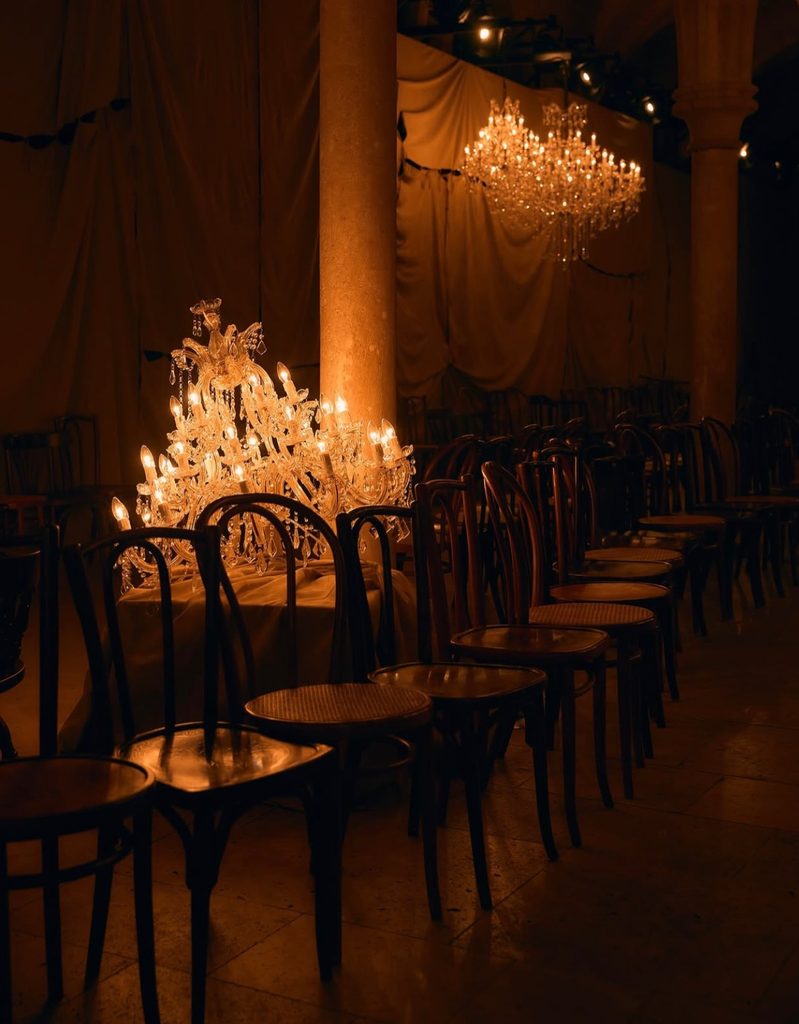
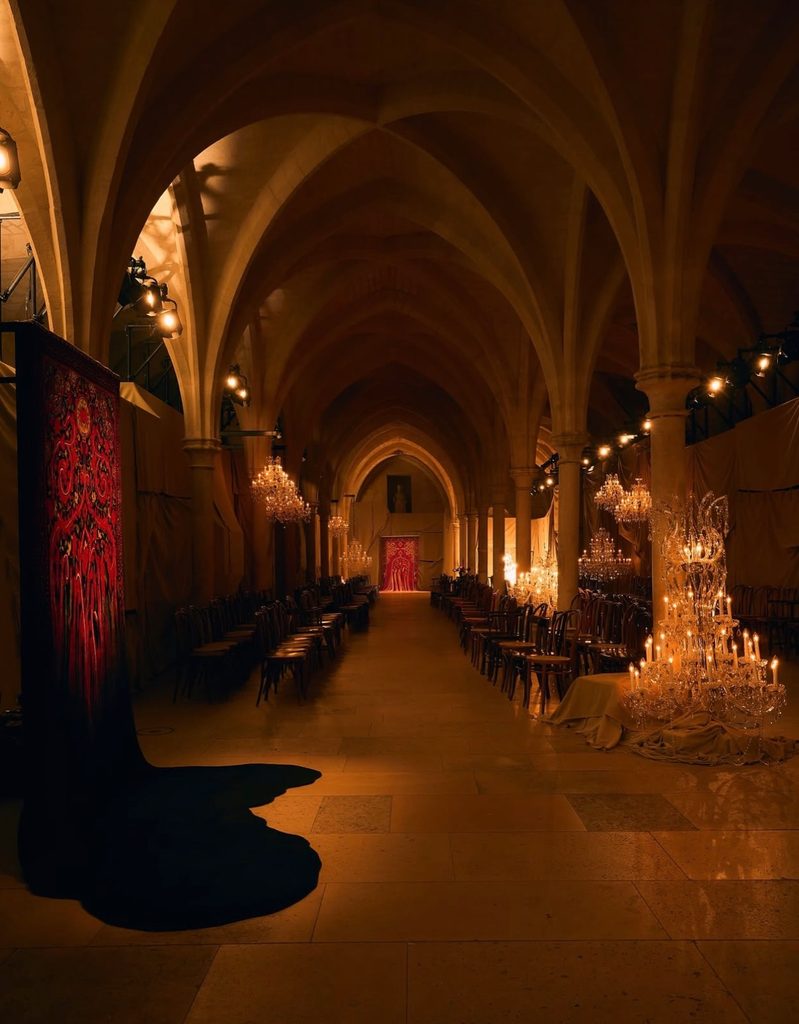
Ahmed is known for transforming the precise geometry of woven carpets into seemingly impossible forms. Patterns stretch, colours appear to melt and familiar decorative motifs acquire an unexpected sculptural dimension.
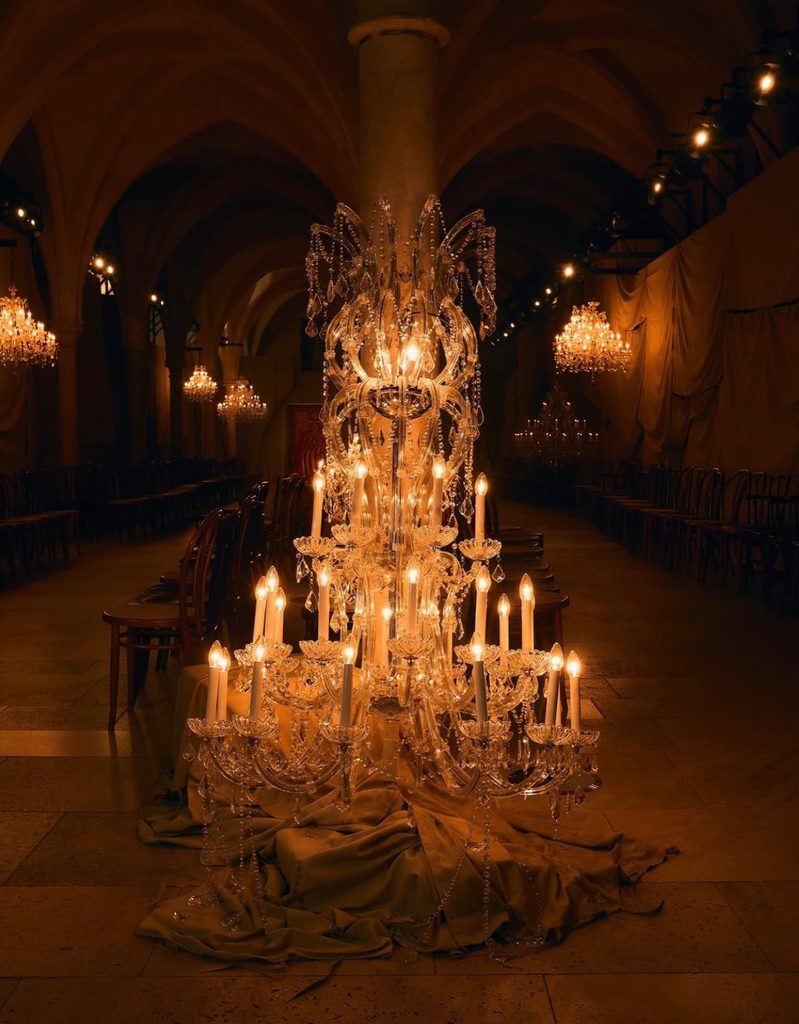
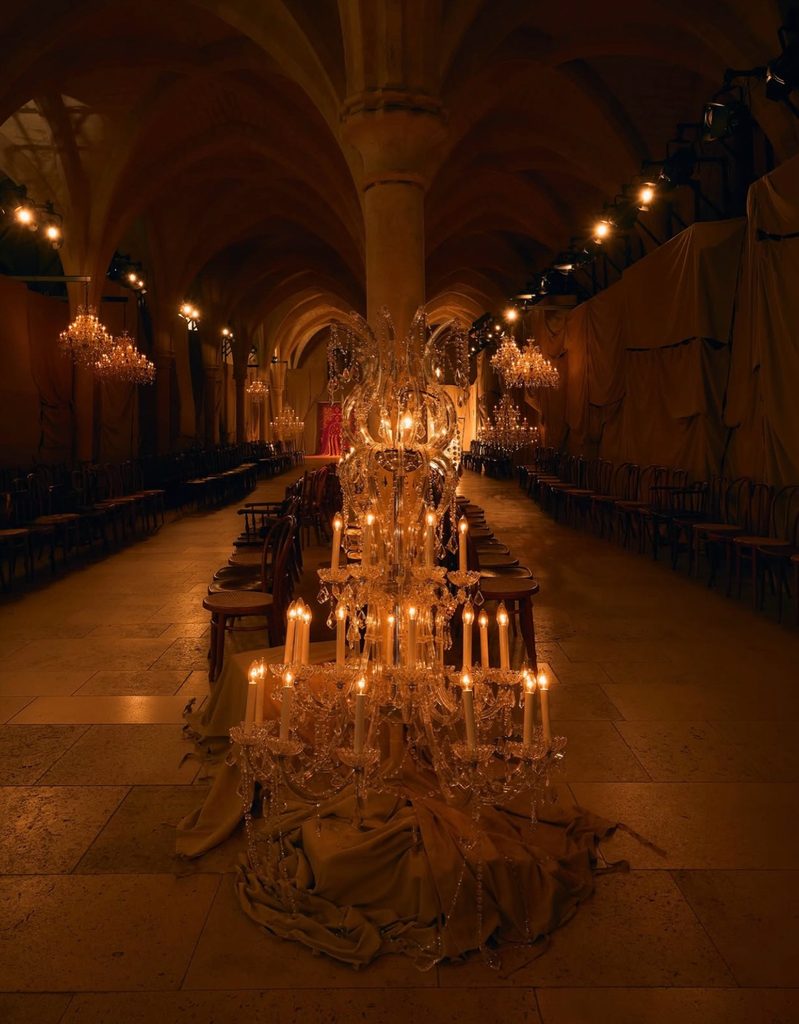
Against the medieval stone architecture of the venue, his distorted carpets established a dialogue between historic craftsmanship and contemporary experimentation. Crystal chandeliers added another layer to the composition, introducing a sense of domestic grandeur into the ecclesiastical setting.
The installation demonstrated how an object traditionally associated with the home can become a work of contemporary art while retaining a visible connection to its cultural origins.
Burberry: The Beauty of an Exposed Interior
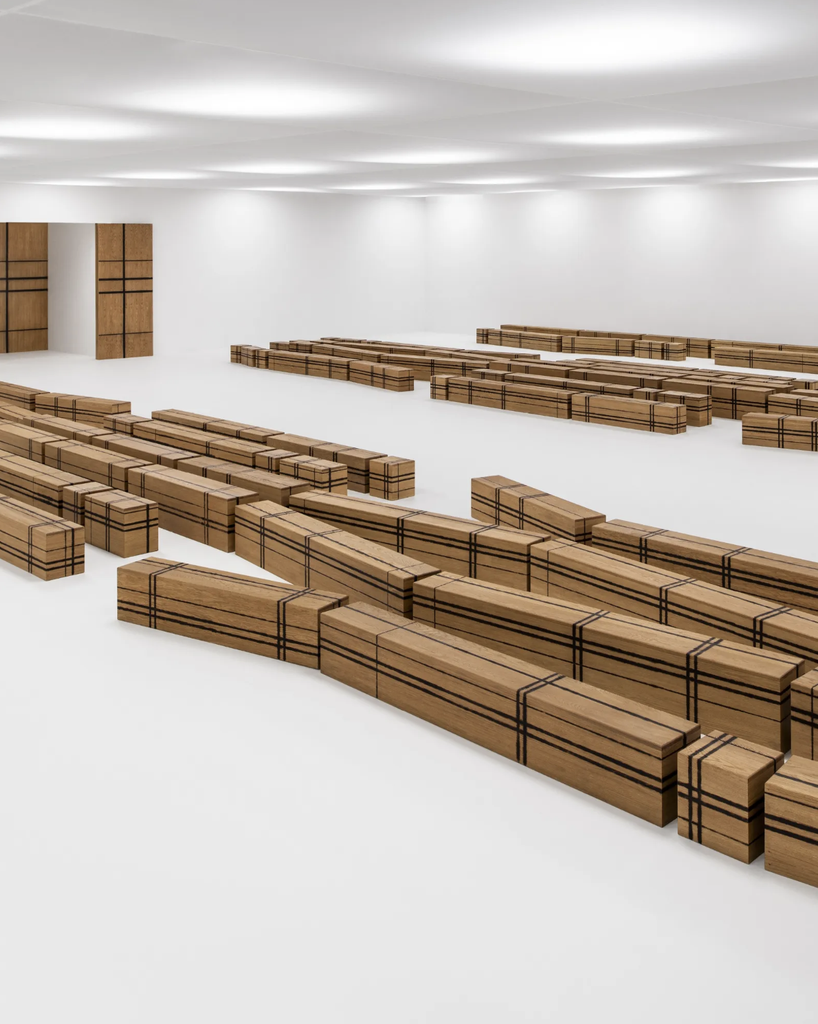
Known for creating some of fashion’s most elaborate runway environments, Bureau Betak took a quieter approach for Burberry’s Spring/Summer 2027 presentation at London’s Chelsea College of Arts.
The predominantly white setting was deliberately exposed, its restrained character interrupted by irregular arrangements of wooden seating. The graphic treatment of the seats referenced Burberry’s signature check, while their informal placement softened the conventional rigidity of runway seating.
Rather than constructing an elaborate architectural backdrop, Bureau Betak relied on proportion, material and the relationship between furniture and space. The wooden elements introduced warmth and tactility, recalling the understated language of contemporary gallery design.
The result was an exercise in restraint, demonstrating how a studio celebrated for large-scale productions can achieve an equally compelling effect through simplicity.
Chanel: Richard Peduzzi’s Birds Take Flight
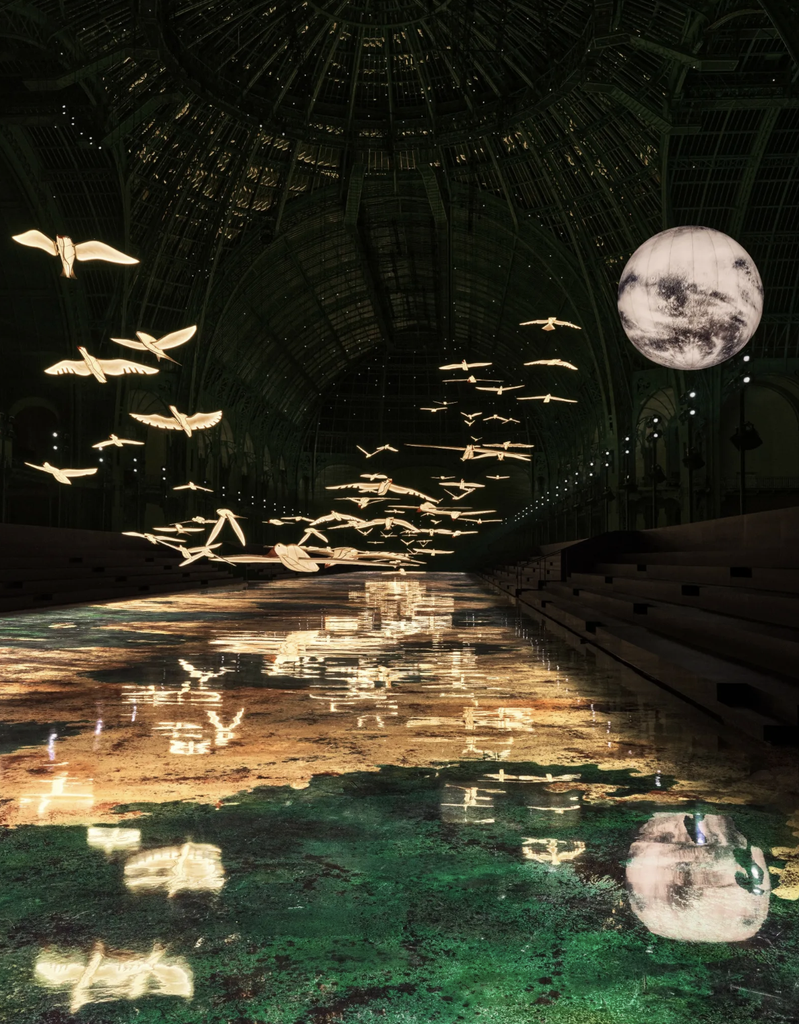
French scenographer Richard Peduzzi, celebrated for his longstanding work in theatre and opera, collaborated with Matthieu Blazy on one of the season’s most ambitious installations.
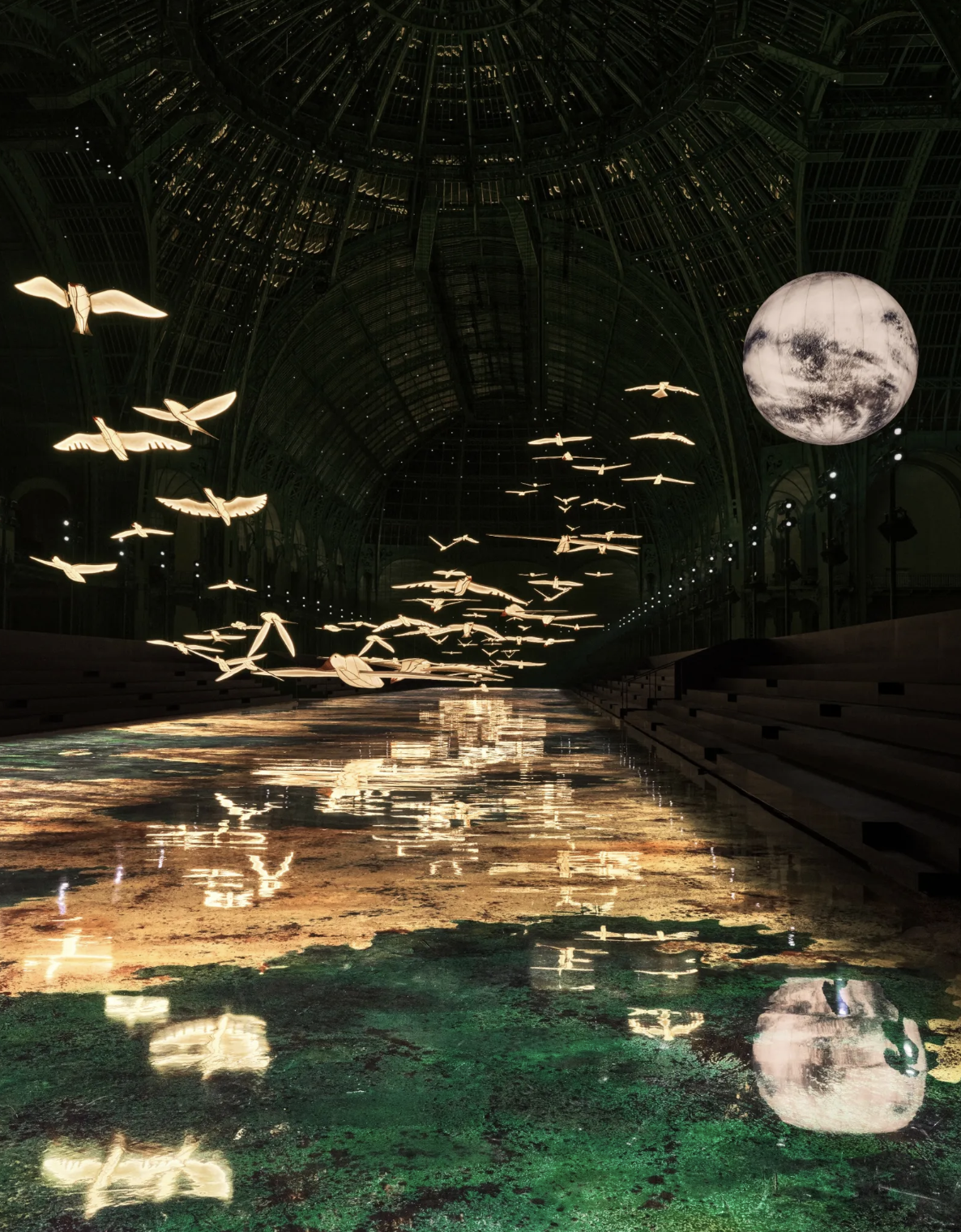
Inside the Grand Palais, 95 monumental birds appeared suspended in flight beneath the building’s immense glass roof. Constructed from wooden frameworks covered with translucent paper, the sculptures drew inspiration from several species, including cranes, geese and gulls.
Illuminated from within, their delicate forms contrasted with the scale and solidity of the surrounding architecture. Below, a reflective resin floor suggested the surface of water, multiplying the birds through reflections.
Peduzzi’s theatrical experience was evident in his treatment of perspective, light and movement. The installation made full use of the Grand Palais’s extraordinary volume, creating an environment that could be appreciated as a sculptural composition independently of the runway.
Givenchy: James Chinlund’s Sculptural Labyrinth
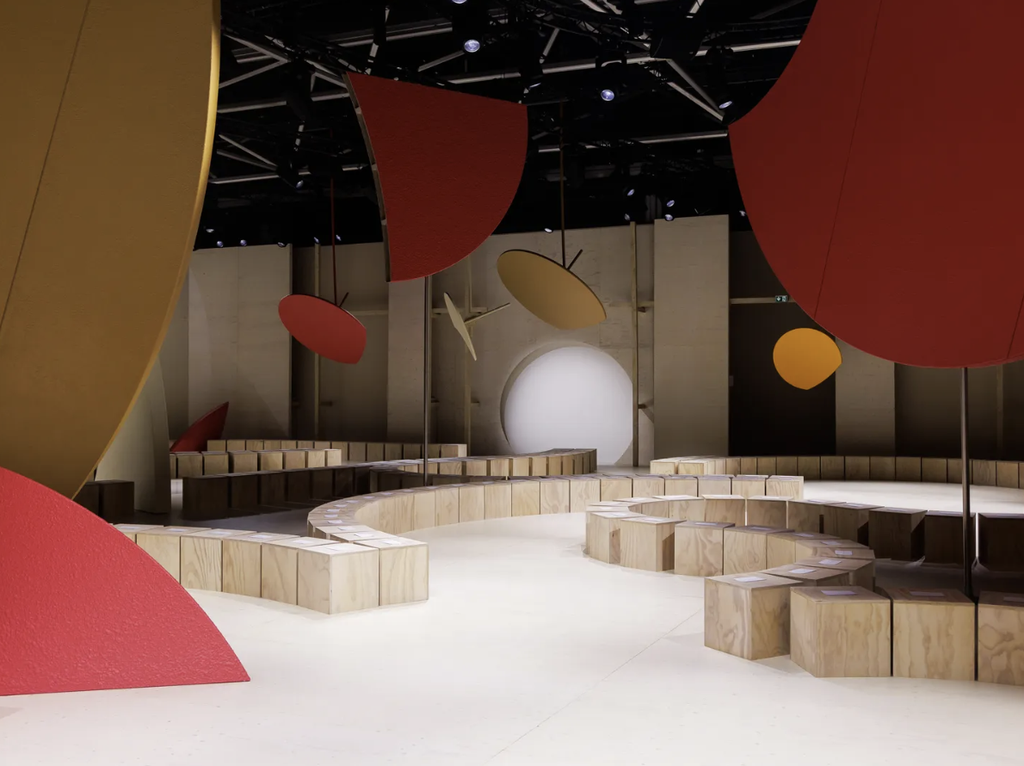
For Givenchy, American production designer James Chinlund explored the expressive potential of wood through a series of abstract sculptural structures.
The installation introduced organic and geometric forms that occupied the space as independent architectural elements. Their arrangement created a visual rhythm between solid volumes and open areas, establishing a setting that recalled the language of contemporary sculpture and exhibition design.
Wood brought a tactile, natural quality to the composition, while the interplay of forms and perspectives encouraged a different reading of the runway.
Known for his work across cinema, sculpture and fashion, Chinlund approaches scenography with a strong understanding of how physical environments influence perception. At Givenchy, this sensibility resulted in a setting in which material and spatial composition became the principal creative elements.
Loewe: Casper Mueller Kneer Reimagines the Runway
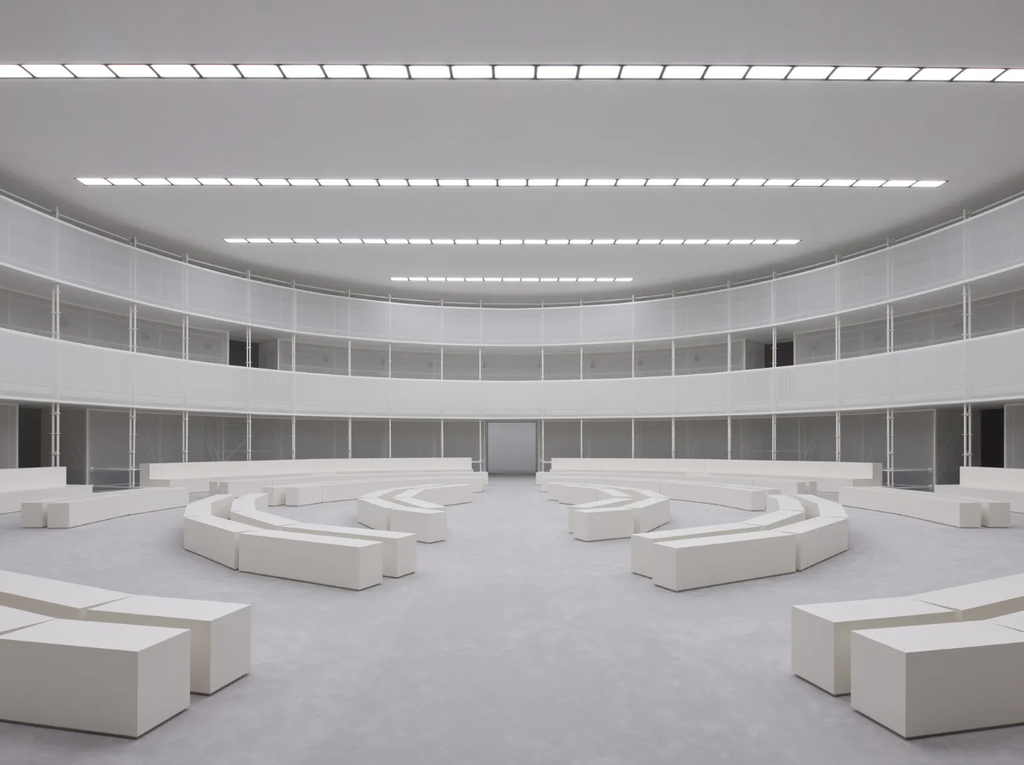
For Loewe, architectural practice Casper Mueller Kneer conceived a temporary environment that explored the relationship between performance, exhibition and spatial experience.
Located at the Château de Vincennes, the setting drew upon the geometry of an arena, combining elements associated with theatre and gallery architecture.
The circular organisation of the runway challenged the conventional linear presentation, creating multiple perspectives and a closer relationship between the audience and the central space.
Rather than relying on decorative spectacle, the installation used architectural planning to determine how the show would be experienced. Its strength lay in the careful consideration of movement, visibility and the relationship between people and their surroundings.
The project offered an example of how temporary architecture can shape an event through spatial organisation alone.
Louis Vuitton: James Chinlund Imagines a City in Suspension
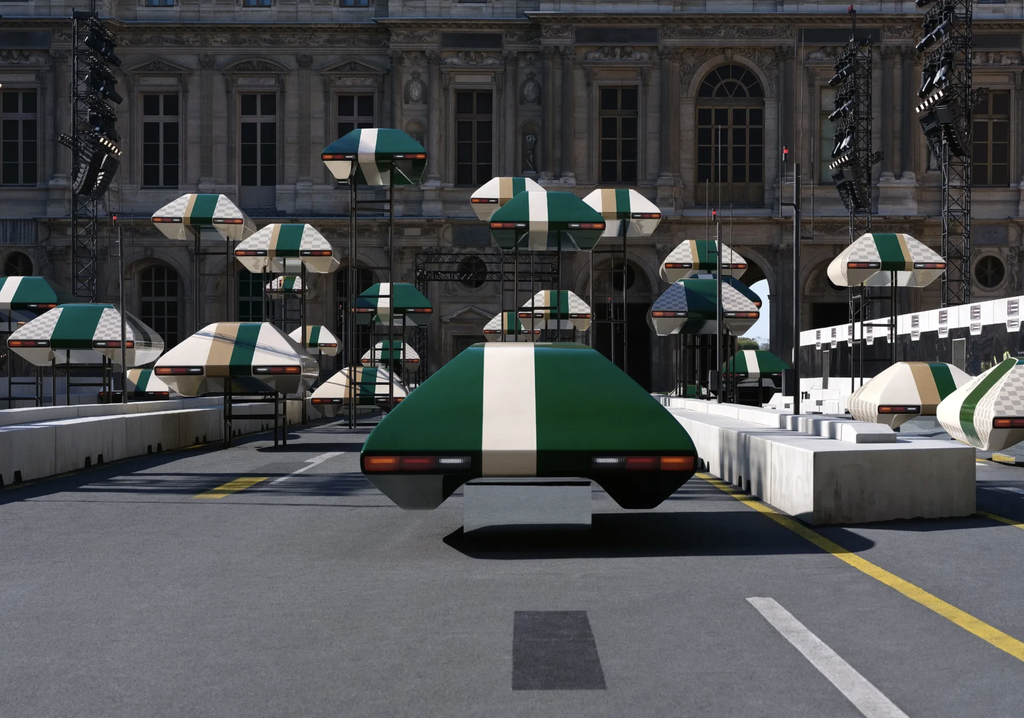
For Louis Vuitton, James Chinlund transformed the Cour Carrée of the Louvre into an extraordinary vision of urban life.
Thirty-four futuristic concept vehicles appeared to float above the runway, suspended at different heights against the courtyard’s historic façades.
Conceived in four variations, the cars combined streamlined forms with details referencing the visual identity of the French house. Their apparent weightlessness introduced an unexpected contrast with the monumental stone architecture surrounding them.
Chinlund, whose film credits include The Batman and the Planet of the Apes franchise, brought a distinctly cinematic sensibility to the installation. The project explored the relationship between movement, technology and the built environment, transforming the familiar image of city traffic into a surreal architectural composition.
The result was both playful and technically ambitious, offering an imaginative vision of a city in which the ordinary rules of gravity no longer seemed to apply.
Prada: OMA/AMO and the Precision of Light
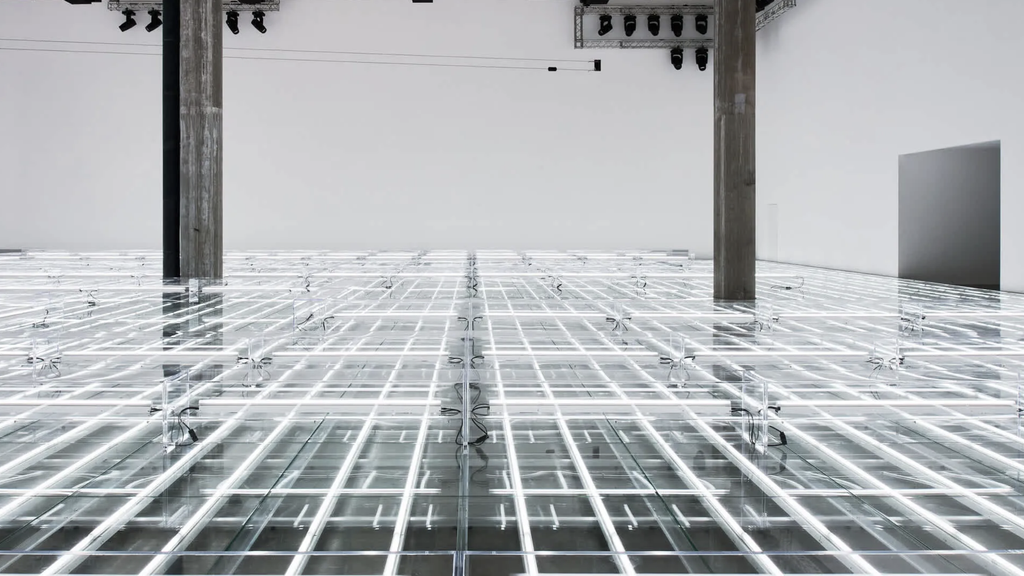
The longstanding collaboration between Prada and OMA/AMO, the architectural practice founded by Rem Koolhaas and its research and design counterpart, has produced some of fashion’s most intellectually considered runway environments.
For Spring/Summer 2027, the Deposito at Fondazione Prada in Milan became the setting for an installation centred on a precisely illuminated Perspex runway.
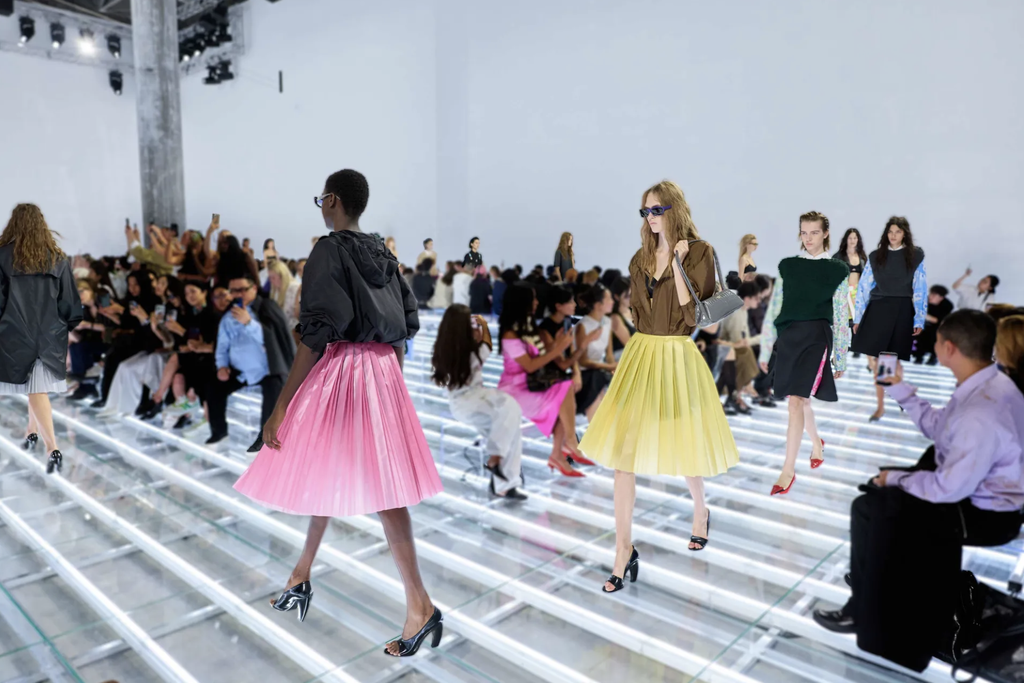
Image Credit: Prada.
The translucent material introduced a luminous plane into the building’s industrial interior, creating a contrast between the existing architecture and the temporary intervention.
Rather than filling the space with objects, the design concentrated attention on light, surface and the physical qualities of a single material.
It was a characteristic example of AMO’s approach to scenography, where an apparently simple architectural gesture can completely alter the experience of a room.
Saint Laurent: When the Chandelier Becomes Architecture
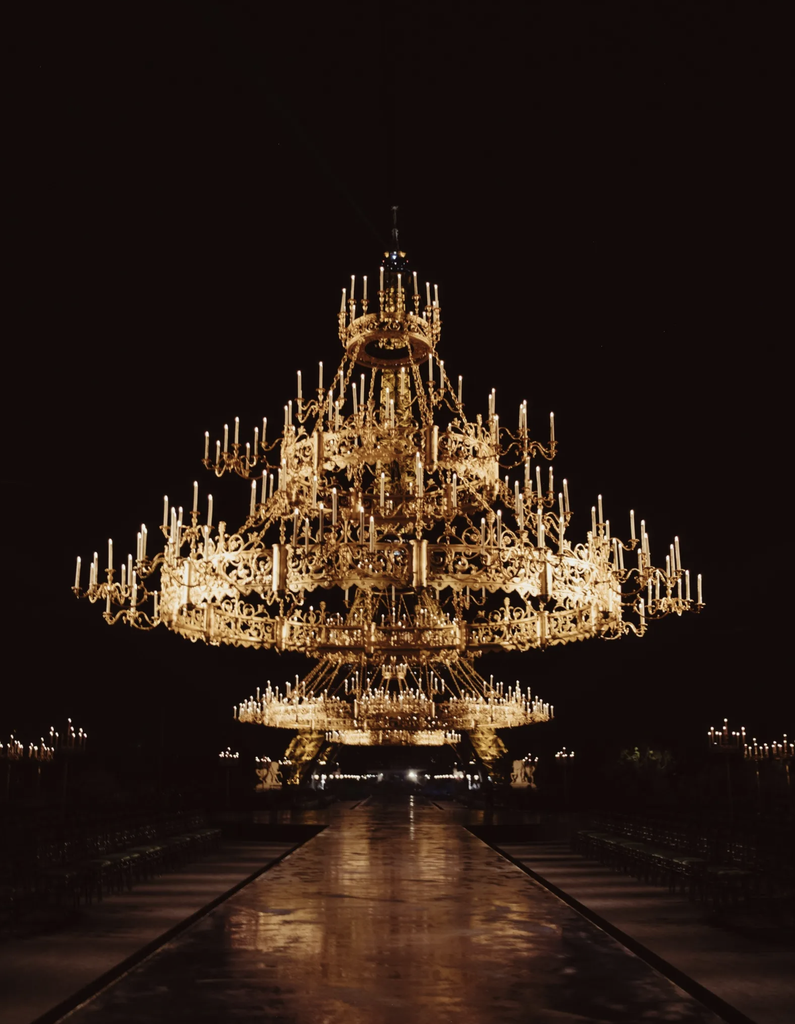
At the Trocadéro in Paris, Saint Laurent transformed one of the most recognisable objects of interior decoration into a monumental outdoor installation, with scenography attributed to Bureau Betak.
Oversized golden chandeliers were suspended above the runway, their elaborate forms silhouetted against the evening sky and the Eiffel Tower beyond. The three monumental chandeliers were created by Mathieu Lustrerie in collaboration with Atelier Devineau, bringing specialist decorative craftsmanship to an installation of extraordinary scale. The setting also incorporated 16 candelabras and more than 700 candles.
Traditionally designed to illuminate grand interiors, the chandeliers were removed from their architectural context and enlarged to a scale more commonly associated with public sculpture.
The project brought together the theatrical expertise of Bureau Betak and the specialist skills of French decorative artisans. An object associated with enclosed, intimate spaces became part of the Parisian skyline.
The installation demonstrated how changing the scale and setting of a familiar design object can fundamentally transform its meaning, turning the traditions of decorative lighting into an exercise in temporary architecture.
Valentino: The Architecture of Knowledge
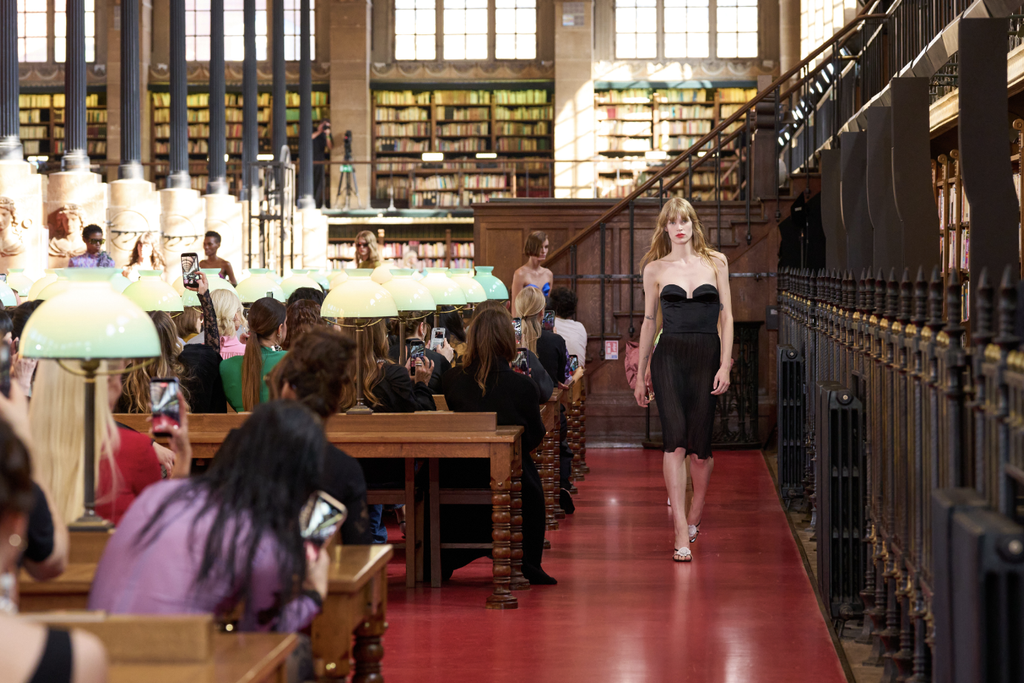
For Valentino, the Bibliothèque Sainte-Geneviève in Paris provided an extraordinary setting in which architecture and intellectual history were already inseparable.
Designed by architect Henri Labrouste and completed in the nineteenth century, the library is celebrated for its innovative use of exposed iron structures, slender columns and elegant vaulted ceilings.
Under Alessandro Michele’s creative direction, the Spring/Summer 2027 presentation drew upon the idea of the Antibiblioteca, considering the library not simply as a repository of existing knowledge but as a place representing everything still to be discovered.
The reading room, with its long tables, historic bookshelves and carefully ordered architecture, became an essential part of the visual experience.
Unlike installations that transform a venue through the addition of temporary structures, Valentino demonstrated the power of choosing a space whose architecture already carries a compelling narrative.
Beyond the Fifteen-Minute Show
What makes these projects interesting is the diversity of their approaches. Richard Peduzzi drew on theatrical scenography, James Chinlund brought the imagination of cinema, Faig Ahmed challenged textile traditions, Bureau Betak explored the possibilities of restraint, while OMA/AMO continued its investigation into architectural intervention.
Other presentations found their strength in existing buildings, the arrangement of furniture or the unexpected scale of familiar objects.
Together, they demonstrate that runway design has become a significant meeting point for creative disciplines. Long after the collections have moved on, these temporary environments remain valuable studies in architecture, material, craftsmanship and the art of creating an experience.