On August 24, 2026, in Jerusalem, the hands that spent sixty years teaching a scattered people how to recognize themselves in a canvas went still. Sliman Mansour was 79. His family shared the news the way he had always shared his art: quietly, without spectacle, describing a life “filled with beauty, memory, and a legacy that will continue to live through all those he touched.” For a man who had spent his career refusing to let anyone else write the story of his people, it felt right that the final words belonged to those who loved him most.
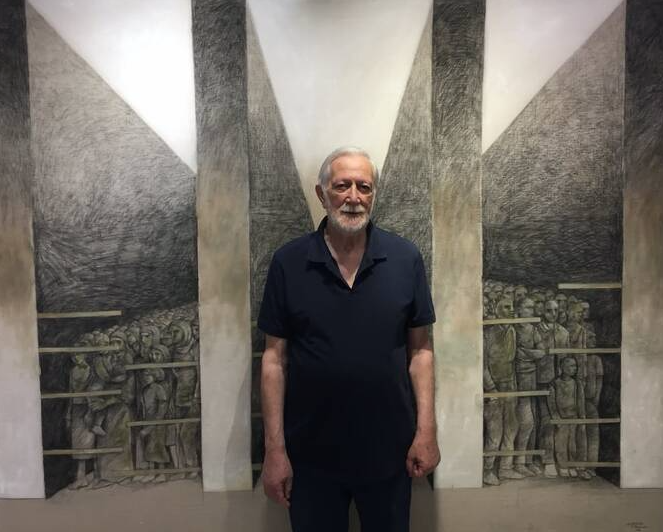
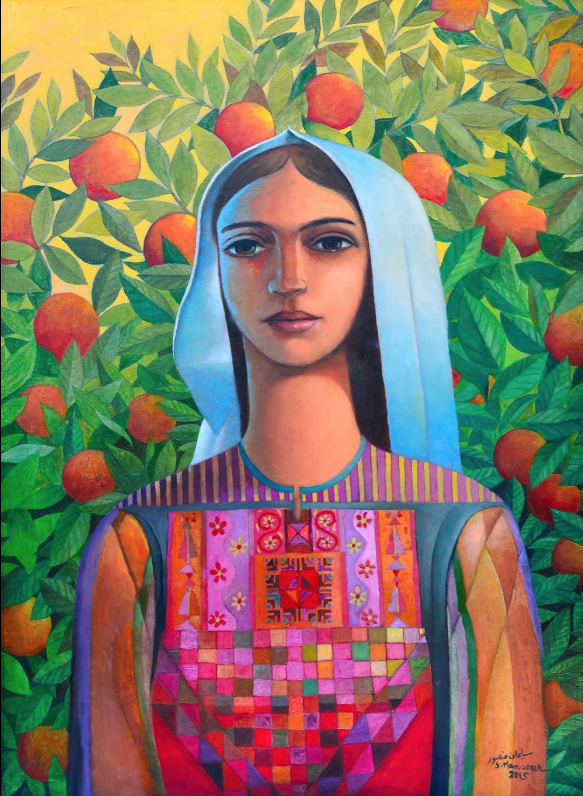
Mansour was born in 1947 in Birzeit, a year before the Nakba would scatter so much of what he would later spend his life trying to hold together on canvas. He trained at the Bezalel Academy in Jerusalem, where he was taught the language of Abstract Expressionism and promptly set it aside. Abstraction could not carry what he needed to say. He wanted faces, hands, the particular slope of a shoulder under a heavy basket, the unmistakable, undeniable texture of Palestinian life. So he painted it, plainly and insistently, until plainness itself became an act of defiance.
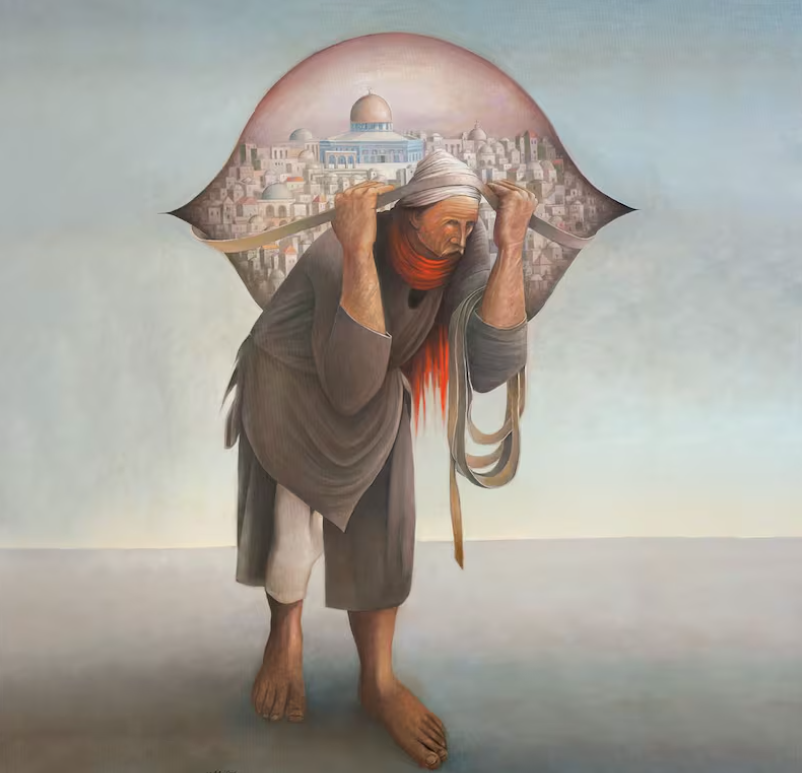
That defiance found its most famous form in “Jamal al-Mahamel,” the Camel of Hardship, an old porter bent nearly double, carrying the entire walled city of Jerusalem on his back like a burden he had agreed to shoulder forever. The image slipped out of galleries and onto the walls of homes, into the pockets of people who had never set foot in a museum, until it stopped being a painting and became something closer to a family photograph shared by an entire nation. It is the kind of image that does not need a placard to be understood.
The authorities understood it too, which was precisely the problem. In 1980, an exhibition Mansour took part in was shut down after three hours. Officers later warned him against political work, and when he asked, half joking, whether he could at least paint a watermelon, the fruit’s red, green, black and white a quiet echo of the Palestinian flag, he was told even that would be confiscated. Mansour told the story often, sometimes with a small laugh, because the watermelon outlived the ban. It became a symbol carried far past his own paintings, proof that a joke told under pressure can outlast the pressure itself.
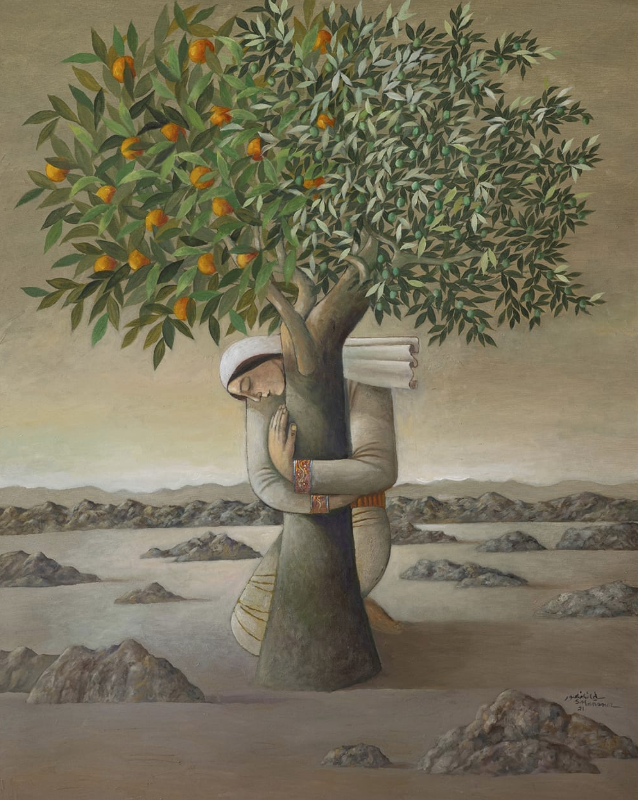
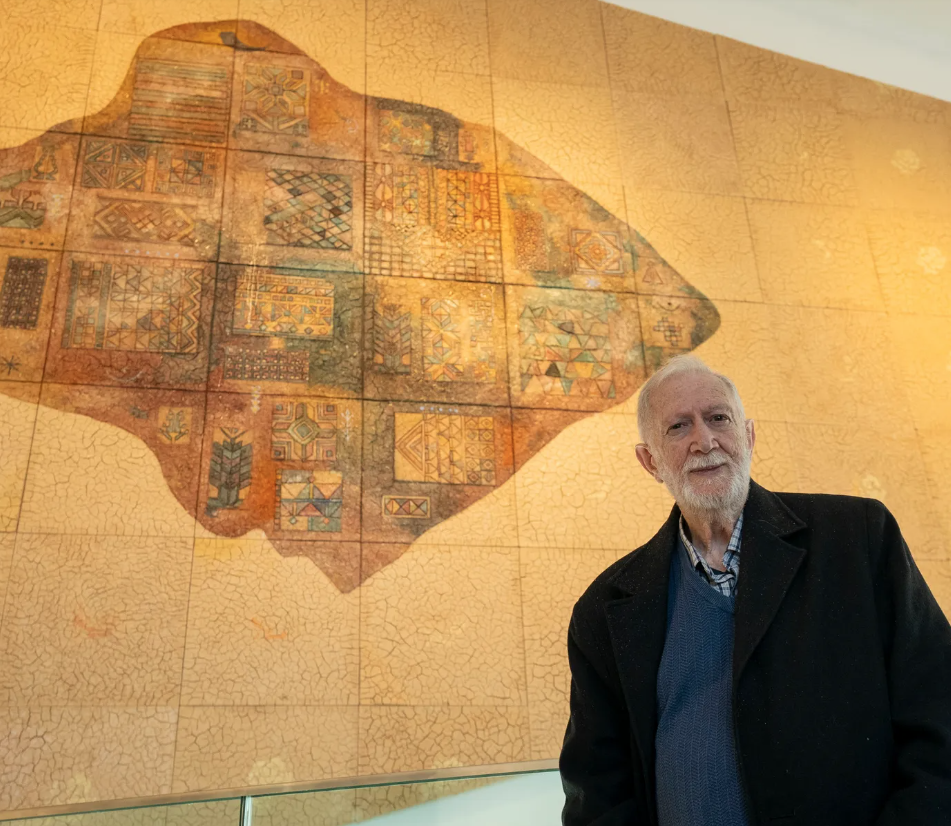
When Israeli authorities restricted access to art supplies during the First Intifada, Mansour did not stop working: he changed his materials. With Vera Tamari, Tayseer Barakat and Nabil Anani, he co-founded the New Vision movement, turning to mud, henna, coffee and straw. “Mud also reflects the human fate,” he once said, “with the cracks, people waiting to disappear, fall down.” He built a decade-long career, in other words, out of the earth itself, refusing to let a shortage become a silence.
He kept building institutions long after he had earned the right to simply paint: the League of Palestinian Artists, the Al-Wasiti Art Centre in East Jerusalem, the International Academy of Art Palestine, fourteen years teaching at Al-Quds University. A stroke in 2021 slowed but did not stop him. “I try to work daily,” he said, “to go to the studio, to do something there.” Even as age caught up with his body, he kept returning to the easel, letting his brushwork grow rawer and more expressionistic in his final years, as if he were still searching for new ways to say what he had spent a lifetime trying to say.
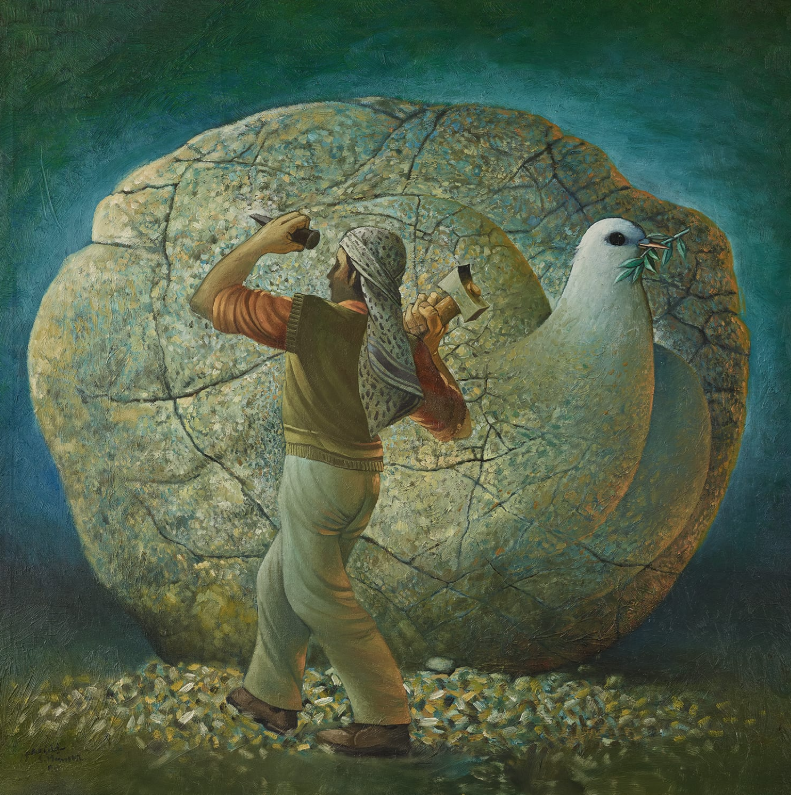
“Our fight now is to tell the world that we are full human beings,” he said in 2023. “We are not less than any other people in the world.” Sliman Mansour spent sixty years making sure the world could not look away from that truth, and left behind a body of work that will keep insisting on it long after him.