Every time a mass retailer gets near the word “collectible,” it triggers the same reflex: a raised eyebrow, a small internal alarm that says this is not how it’s supposed to work. IKEA’s new KONSTRUNDA collection, Swedish for “art tour,” roughly 22 pieces by seven designers and artists, priced mostly under £200, rolling out through stores and online from mid-August into a wider global launch on September 1, 2026, is engineered to trip that alarm. And it’s worth sitting with the discomfort for a second, because it exposes a question we rarely ask directly: what do we actually mean when we say “collectible design”?
Is it the name behind the object, the idea that value is conferred retroactively by a signature, a gallery wall, a waiting list? If so, KONSTRUNDA fails the test by design: it deliberately keeps prices flat and availability wide, refusing the scarcity that usually manufactures desire. Or is collectibility about form itself, the shapes, the way a line resolves, independent of pedigree? Or does it live somewhere less visible than name or shape: in know-how, in years of training that teach a person to see proportion, to know when a curve reads as tension rather than accident, when a color is “loneliness” and when it’s just green? KONSTRUNDA is interesting precisely because it forces all three definitions to compete against each other, piece by piece.
Is IKEA Democratizing Art — Or Just Diluting It?
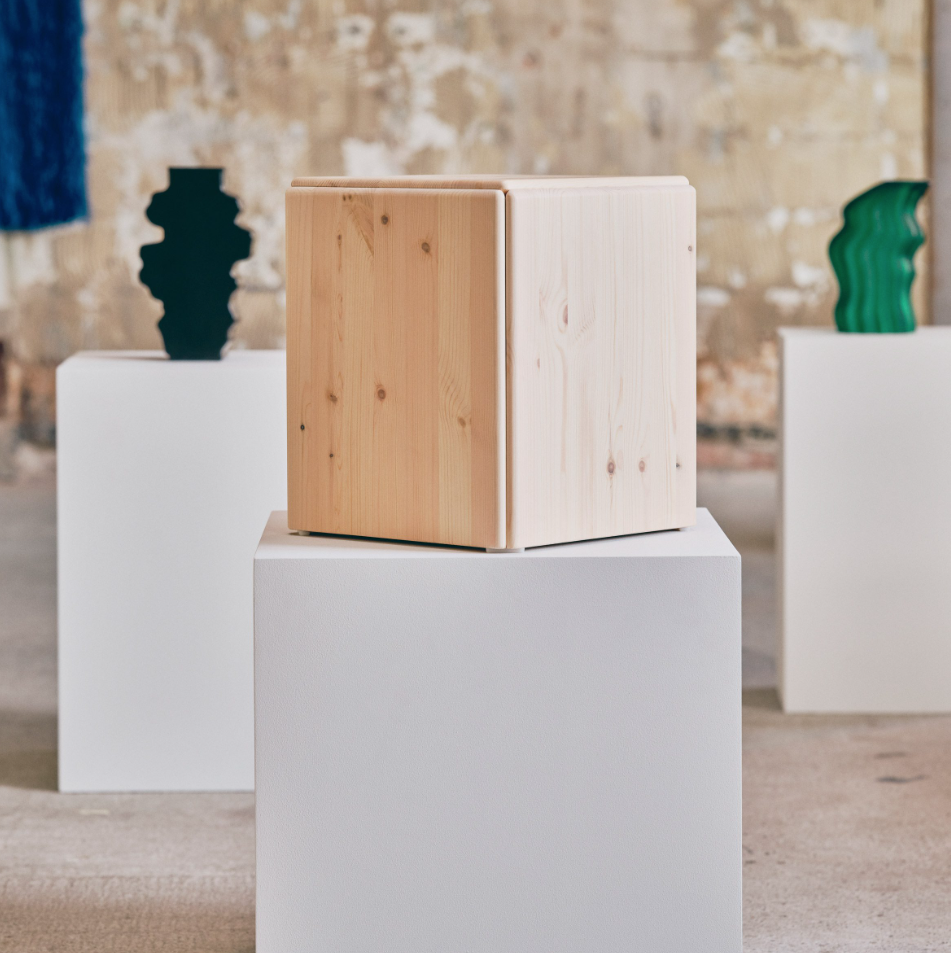
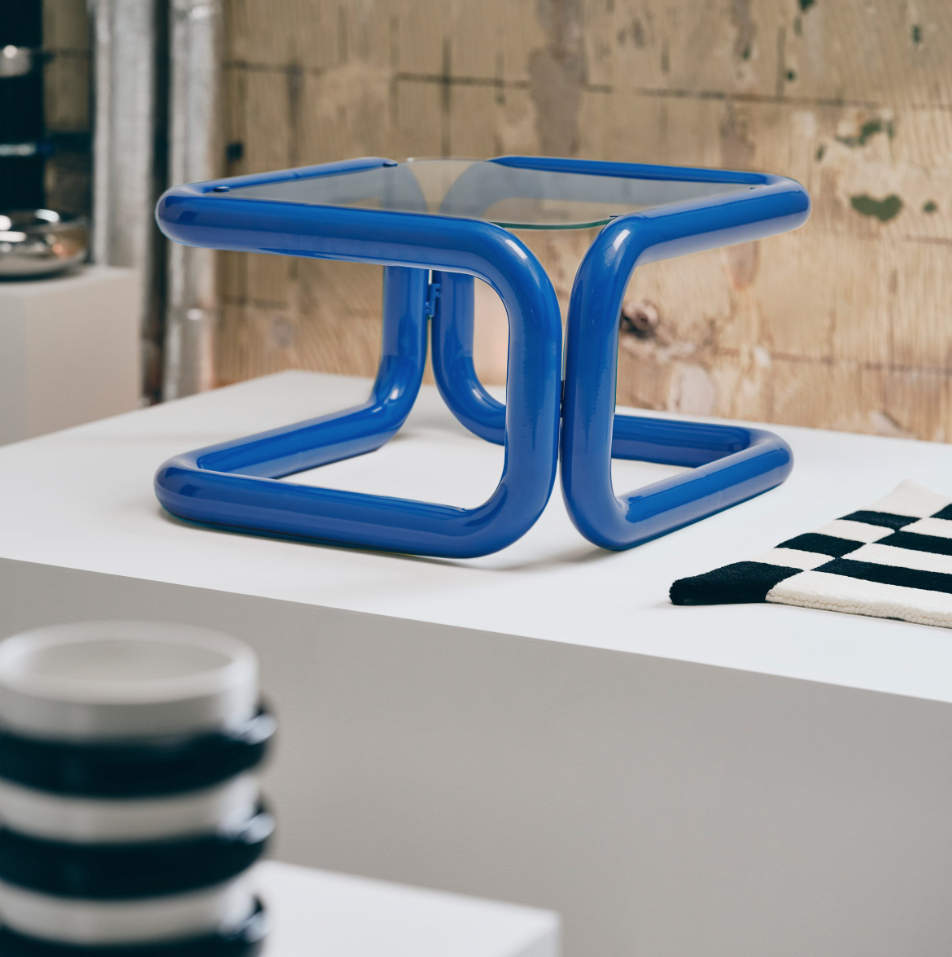
Take Andu Masebo, the London-based designer whose contribution anchors the collection’s more architectural end: a glass-topped side table (around £149) and a set of geometric stools cut from raw pine and painted a flat, confident blue. Masebo has spoken about his own interest in scalability, “Scalability has always been something I’ve been interested in engaging with,” he’s said. “I want to make work that is rich in depth” even when it’s being produced at a scale no independent studio could manage alone. That’s an unusual thing for a designer to say out loud, because it inverts the studio-craft assumption that depth and scale are opposites, that meaning thins out the more copies you make. Masebo’s stools are betting that it doesn’t, that a well-resolved geometric form stays resolved whether there are twelve of it or twelve thousand.
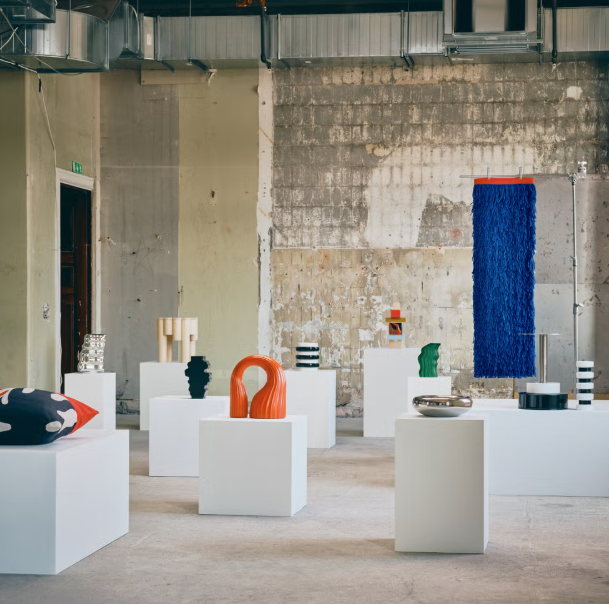
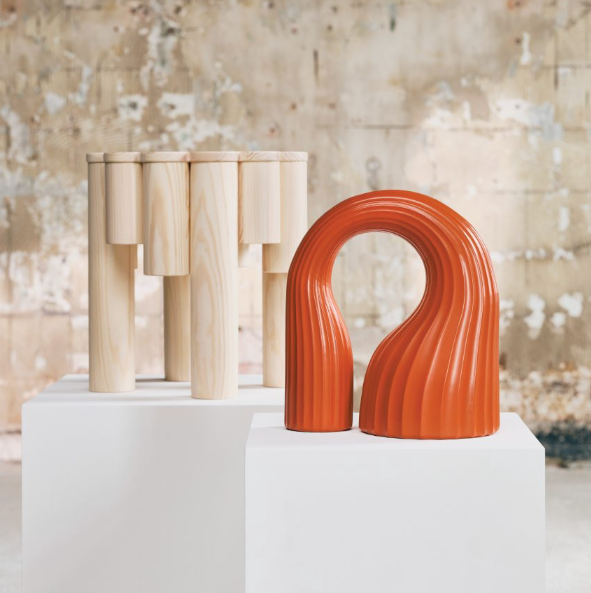
Lisa Hilland‘s own account of her contribution, posted after the launch, gives the clearest window into how personal these objects are meant to feel. Her pieces are a bold orange ceramic sculpture and a stool made from pine, and she’s described the stool as an attempt to let the wood do the talking, “asymmetric and organic, almost as if it had just grown out of the earth in the forest“, drawing on childhood memories of playing in the forests of Jämtland in northern Sweden. The ceramic sculpture, by contrast, has no function at all beyond conversation: “an object that immediately sparks something in the home”, as she put it, “with no function other than to inspire“. Hilland has been direct about where she thinks the weight of the piece actually sits: “When it comes to design, I believe emotional values are just as important as functional ones“. It’s a small statement with a large implication, if a stool’s worth can rest on how organic it feels rather than how well it holds weight, function was never really the metric collectible design was measuring in the first place.
€19 and Called Art: IKEA’s Provocation to the Design World
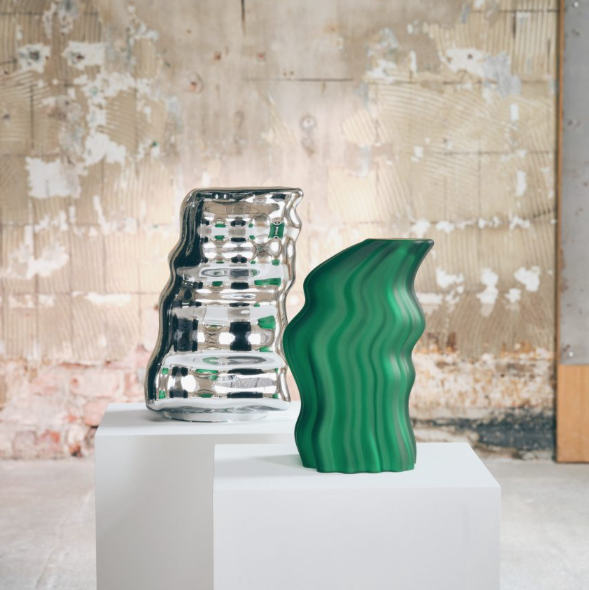
Then there’s Lisa Reiser, the Swedish artist behind some of the collection’s most immediately arresting pieces: a run of mouth-blown glass vessels, including a bright green vase with a gummy, translucent quality that’s been compared to hard candy, alongside quieter silver and black variants. Glassblowing is one of those disciplines where know-how is almost impossible to fake or shortcut — you either have the hand for it or you don’t — and Reiser’s pieces make the strongest case in the collection for the “training and craft” definition of collectibility. No amount of clever art direction substitutes for the actual skill of controlling molten glass into a specific, repeatable silhouette.
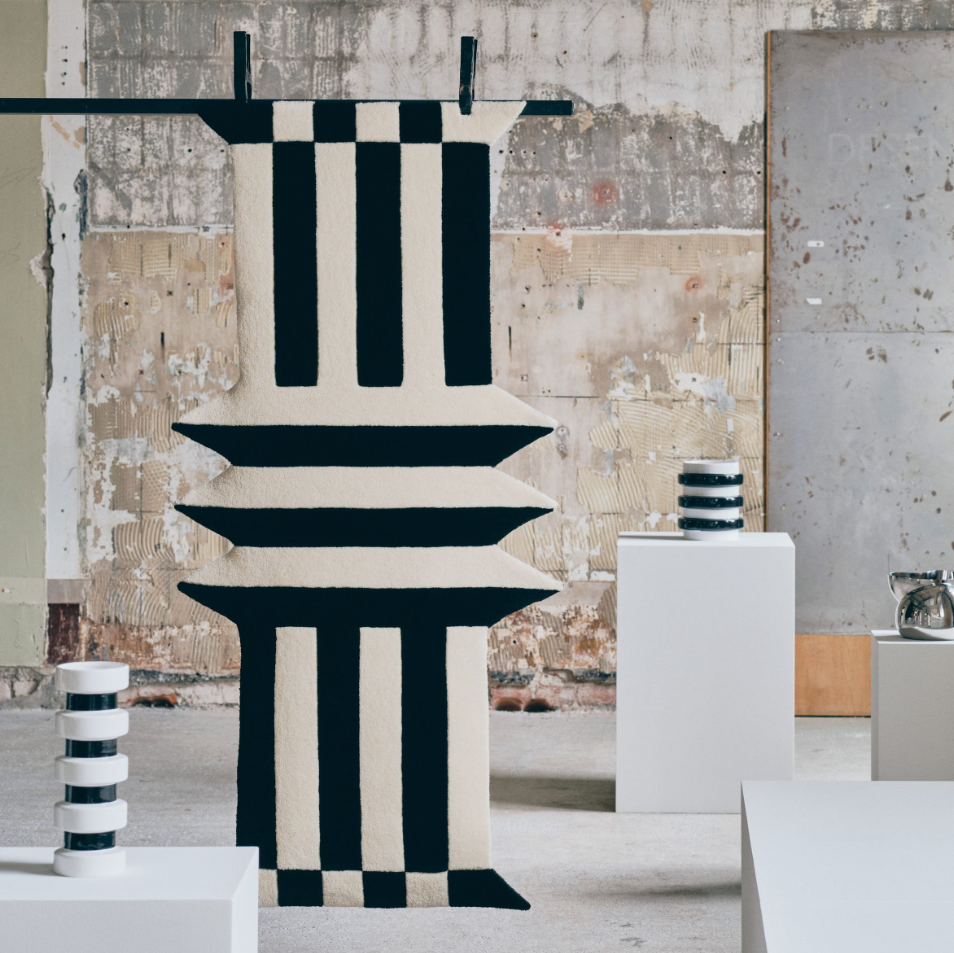
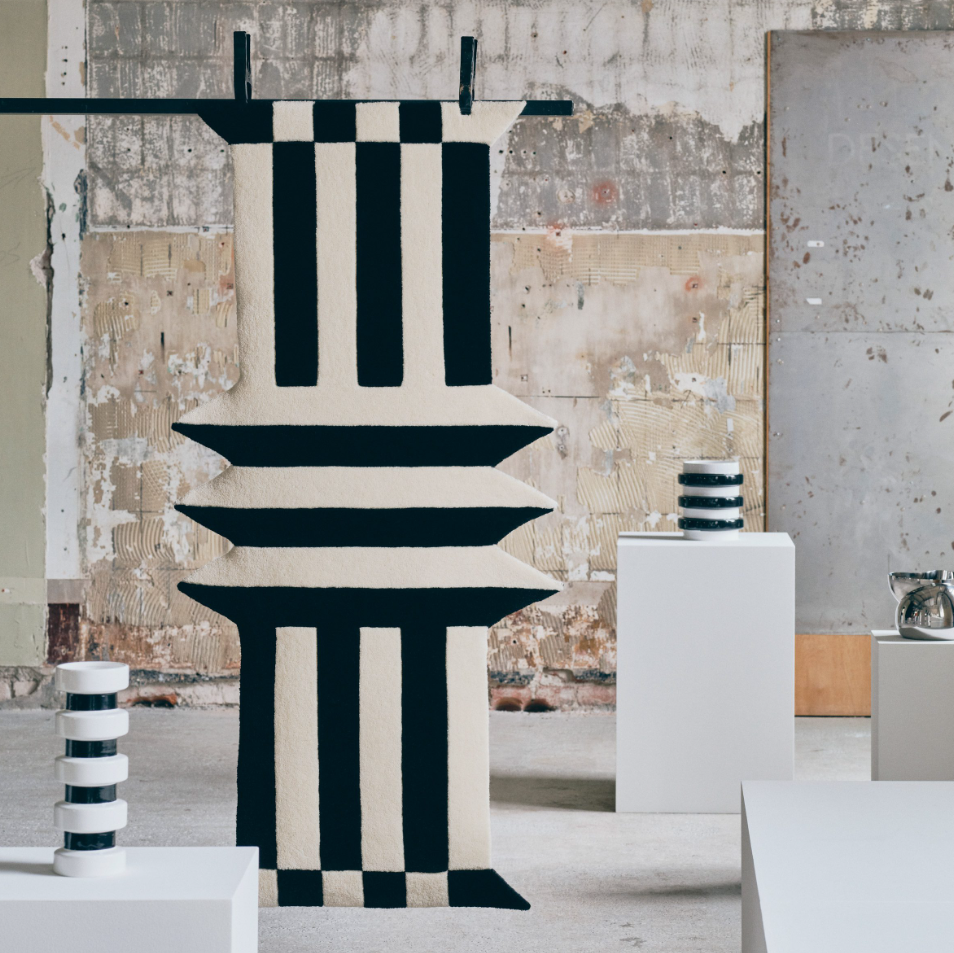
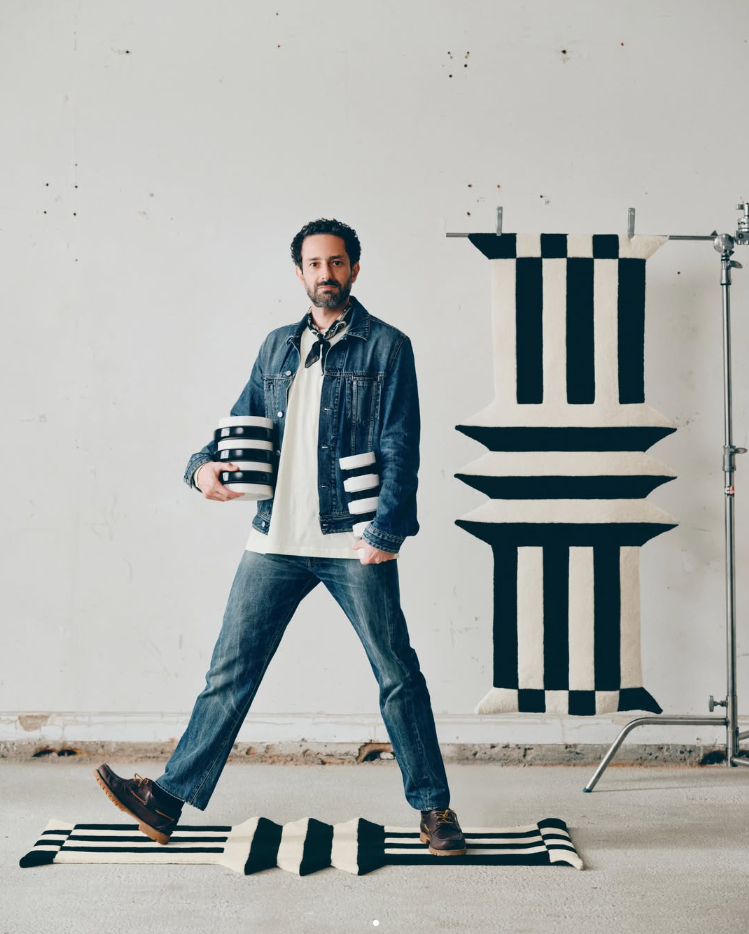
Emanuele Stamuli, an Italian architect, takes the opposite formal approach: crisp, black-and-white geometric vases, some priced as low as £19, plus a graphic statement rug. Where Reiser’s work is about material virtuosity, Stamuli’s is about the precision of a diagram: flat planes and contrast doing the expressive work that curves and color do elsewhere in the collection. It’s a useful reminder that “collectible” doesn’t have to mean maximalist or ornate; sometimes the whole argument is restraint. “The collection gives you the freedom to buy things based on how they make you feel or how they look, without the burden of needing to serve a specific purpose or function” commented Stamuli.
The Stockholm-based duo Ingrid Leander and Igor Holtermann drew directly on their own city for a patterned rug, cushions, and a decorative mirror, translating the texture of an actual streetscape, cobblestones, signage, the accidental geometry of an old European city,into domestic textiles. “When I think about this collection” says Ingrid, “I think about creating objects that have a sense of punk, but also this lighthearted type of vibe that you can bring into your home”.
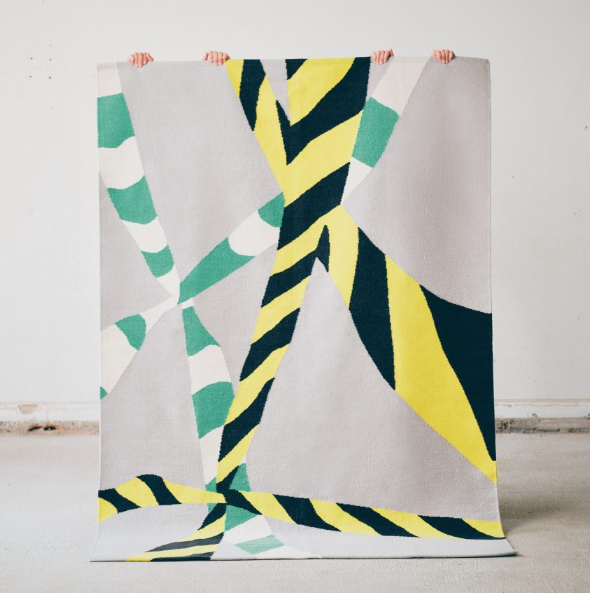
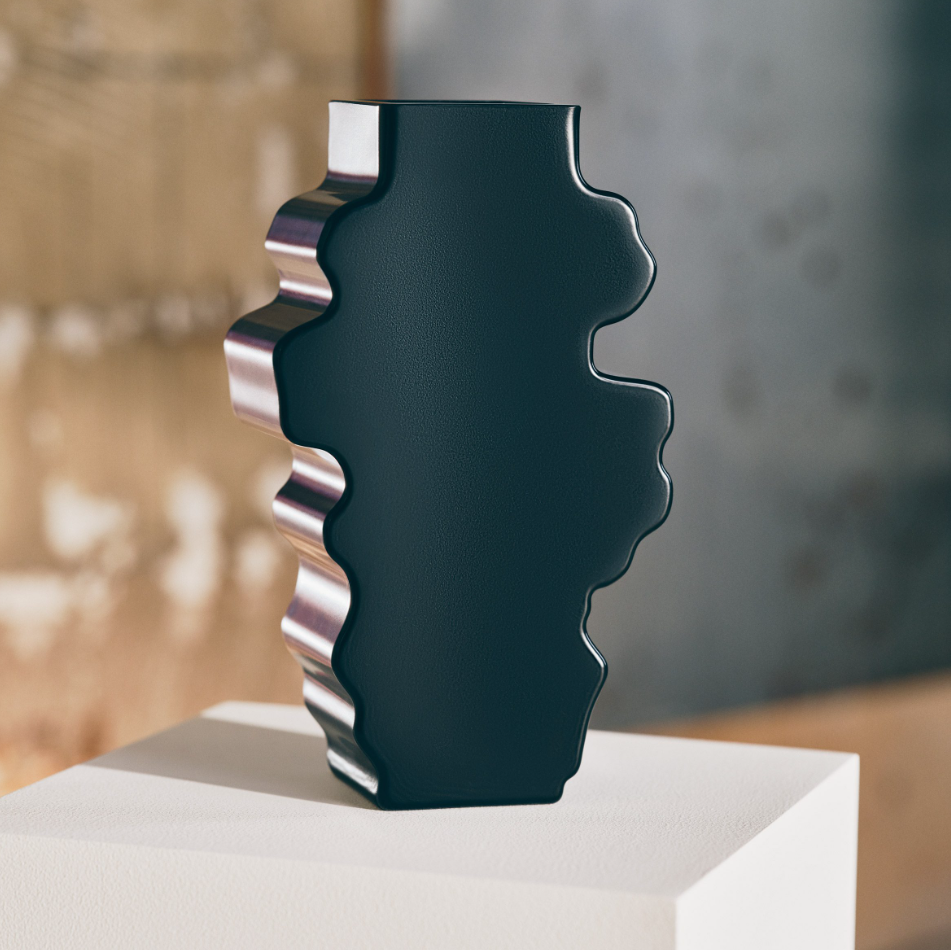
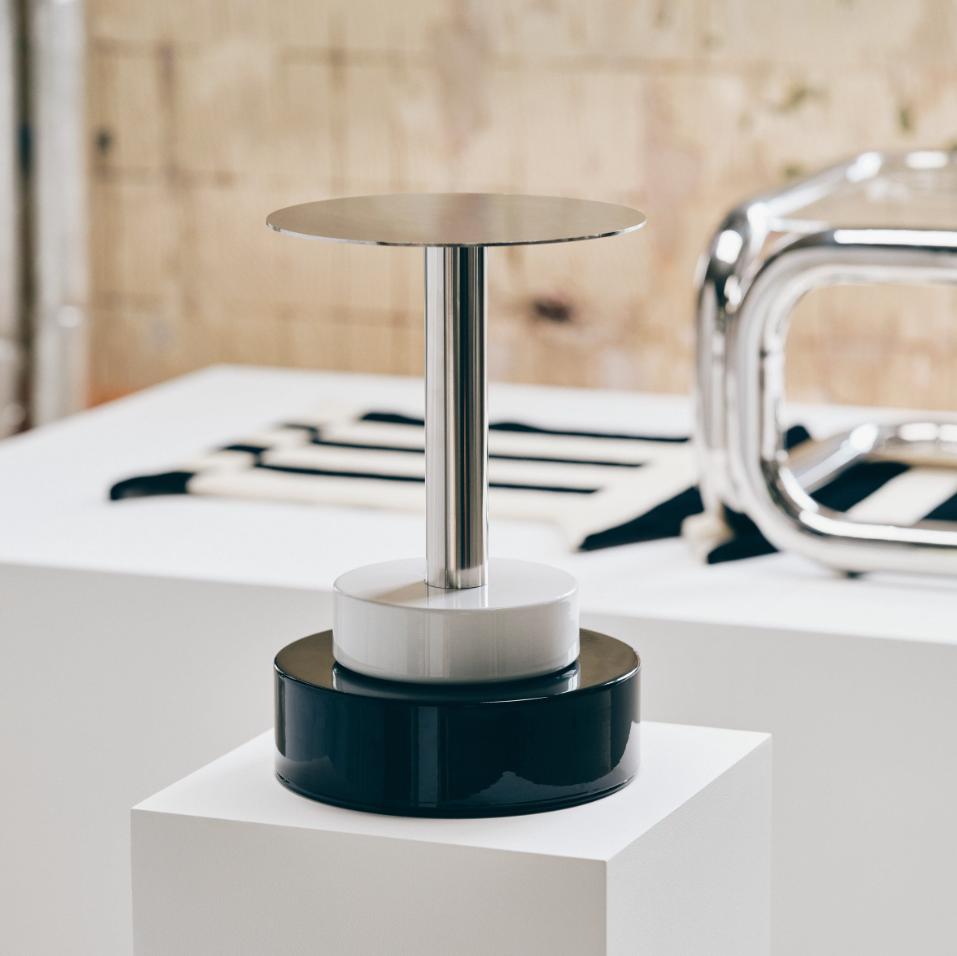
And Akanksha Deo, notably the one name on this list who is an in-house IKEA designer rather than an outside collaborator, produced two of the collection’s more emotionally direct pieces: sculptural vessels exploring loneliness and connection, including a stacked-block figure that reads almost as a character, alongside a stainless-steel bowl and a colourful rug. Deo’s inclusion matters for the argument the collection is making, because it collapses the last wall people usually assume is there: the one between “the artists IKEA hired” and “the designers who already work for IKEA.” If a staff designer’s meditation on loneliness sits comfortably next to an independent glass artist’s gummy-candy vase, then the institutional label on someone’s business card was never actually doing the work of making the object meaningful.
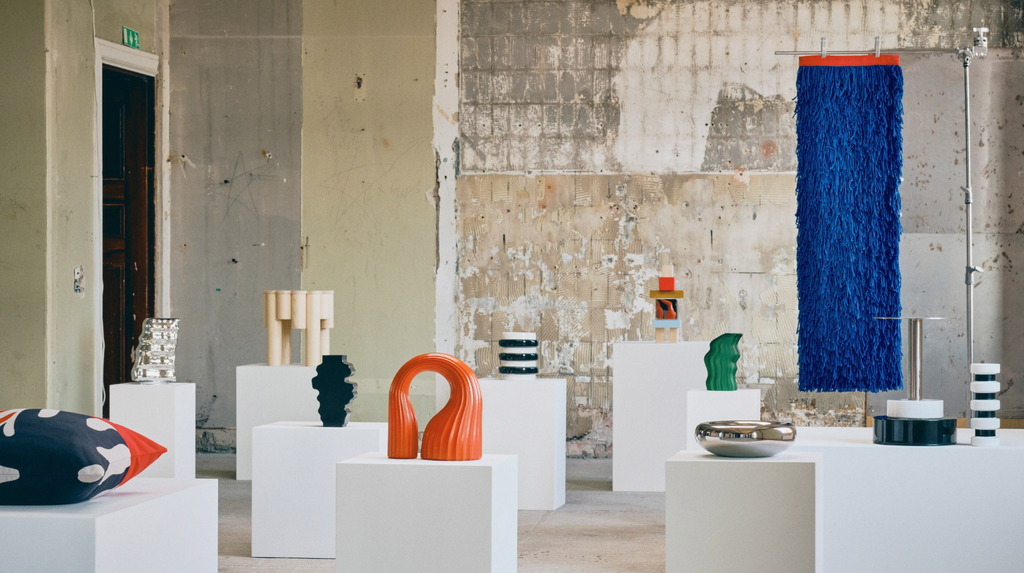
Karin Gustavsson, IKEA’s creative leader, frames the whole project as an argument for exactly this collapse: “By elevating everyday objects into art pieces, we give people the opportunity to live with art,” she’s said, and elsewhere, more bluntly, “Art should be available for all to enjoy, not a luxury reserved for galleries.”
Meghan Willisko, IKEA’s head of home furnishing and retail design, put it in terms of approachability rather than access: “What I love about KONSTRUNDA is its ability to make art more approachable through thoughtfully designed objects.” Both are democratic claims, and also, conveniently, commercial ones, which is exactly where your question lands hardest. Is IKEA doing this because collectible design is having a cultural moment, riding the same wave that’s filled Instagram with studio-pottery vases and artist-edition furniture drops? Almost certainly, yes, at least partly. IKEA is a company that reads trends for a living.
But trend-chasing and genuine democratization aren’t mutually exclusive, and that’s the uncomfortable part. A brand can be opportunistic and still be doing something structurally interesting, in this case, taking a market logic built on scarcity, provenance, and price-as-proxy-for-value, and quietly dismantling it from the inside, using its own retail muscle and a roster that runs from an Italian architect to an in-house product designer without visibly changing register.
So does it throw us off balance, or does it train us out of being snobbish about design? Probably both, and maybe that’s the actual function of a project like this. It doesn’t resolve the definition of collectible design; it just makes the definition impossible to take for granted. If a £19 Stamuli vase can sit next to a mouth-blown Reiser piece and hold its own visually, then whatever “collectible” means, it was never only about the price tag, the signature, or the postcode of the workshop. It was always, at least partly, about whether an object makes you look twice. IKEA is betting that more people than the art world assumes are capable of looking twice, and that bet, trend or not, is the actually radical part.