There was a time when the cabana was as essential to the choreography of summer as the swimming pool itself. Part shelter, part salon, it belonged to a particular geography of pleasure, from the terraces of the Côte d’Azur to the pool decks of Palm Beach, where architecture was expected to accommodate not simply the sun, but the rituals that surrounded it.
Few chronicled that world more seductively than Slim Aarons. His photographs of the 1950s, 60s and 70s turned pools, terraces and striped awnings into stages on which leisure became a form of theatre. The cabana was often there, somewhere between interior and landscape, offering shade without isolation and privacy without removing its occupants from the spectacle around them.
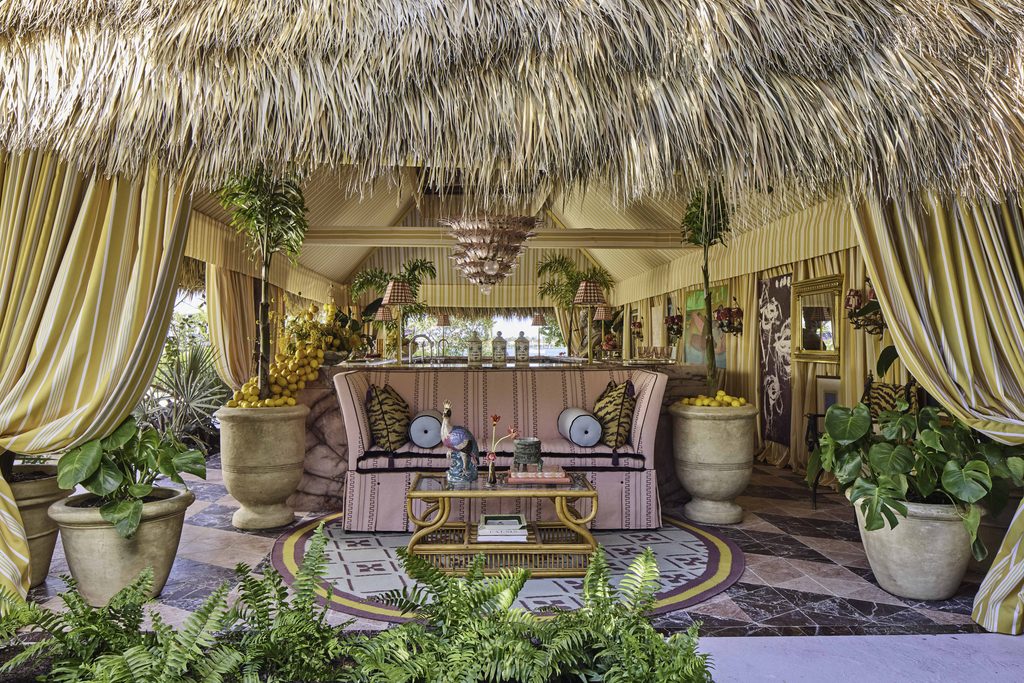
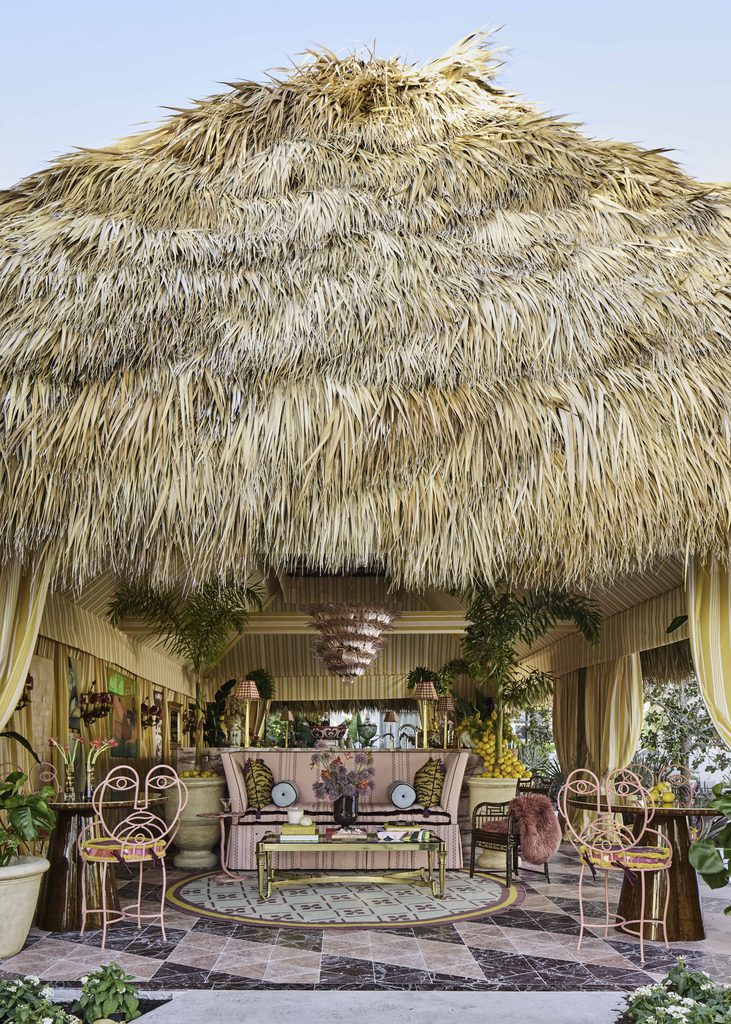
It is within this lineage that Leigh Misso of River Brook conceived the Tiki Tent for the 2026 Kips Bay Decorator Show House Palm Beach. The starting point was an existing thatched tiki hut beside the swimming pool of the waterfront Intracoastal House. Misso chose not to treat it as a picturesque appendage to the garden, but as an interior in its own right, transforming the open structure into a richly decorated room for entertaining.
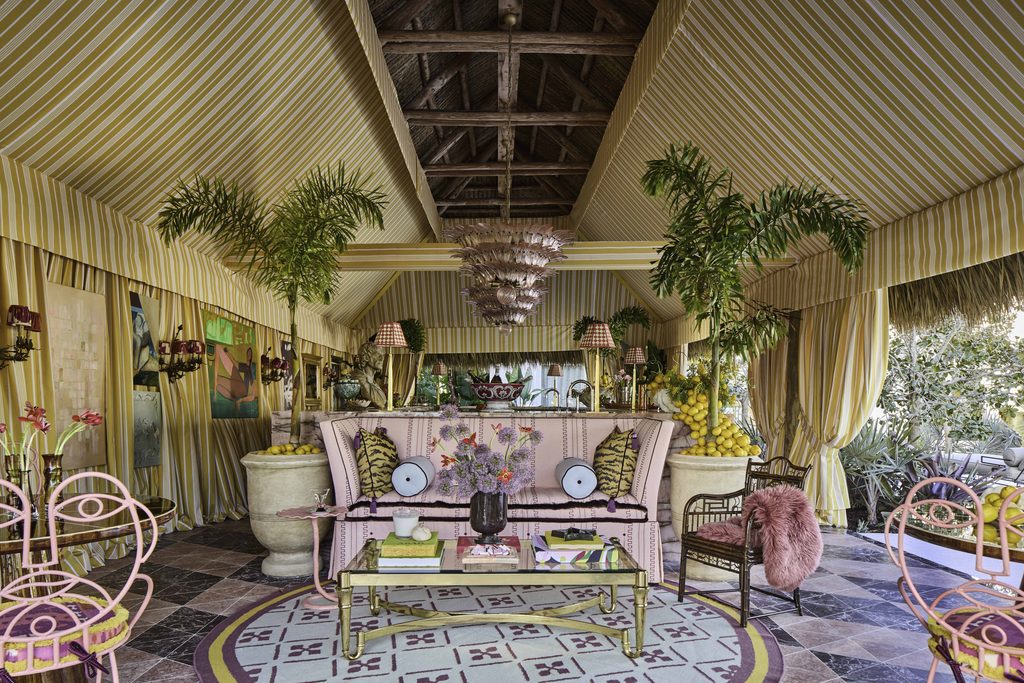
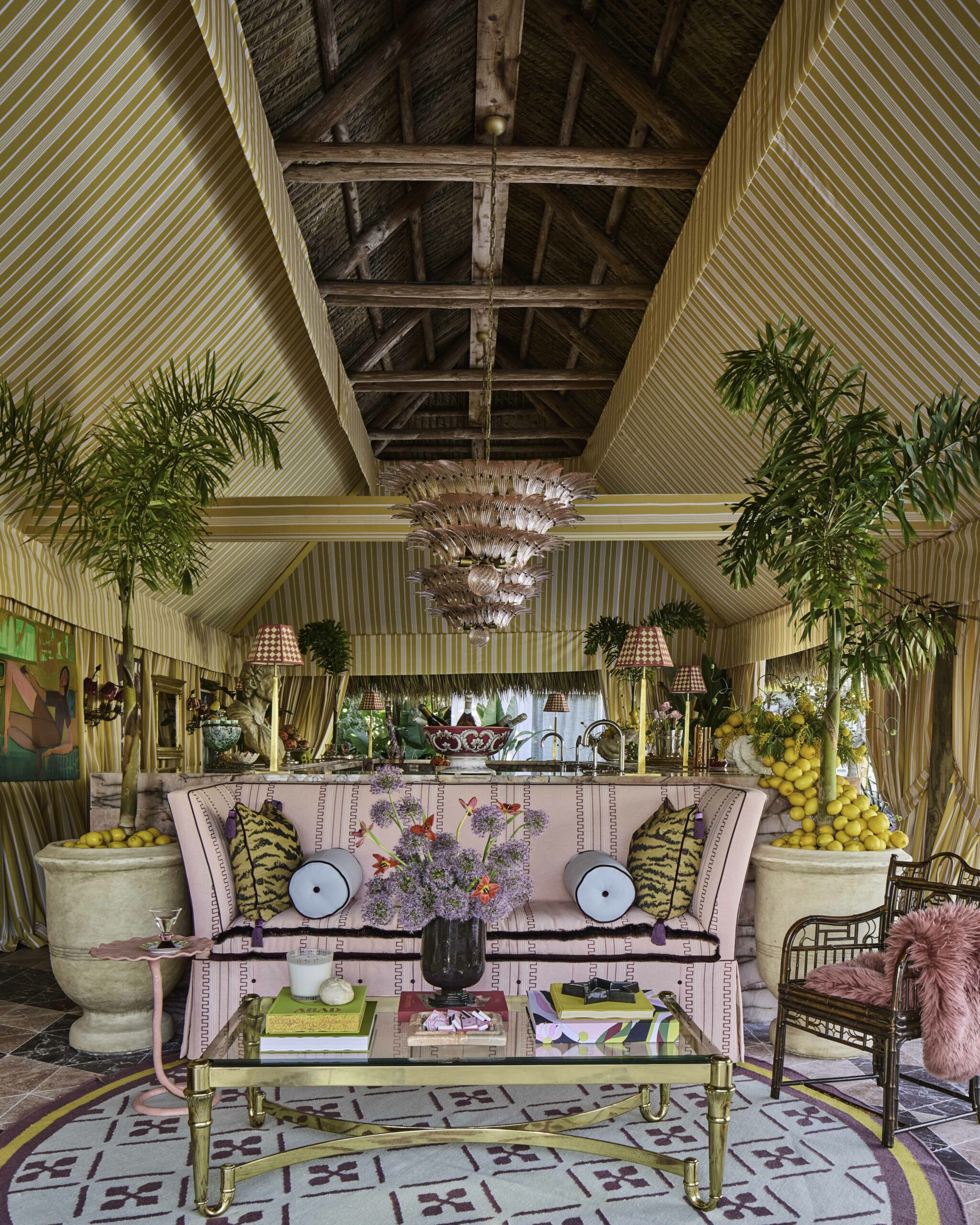
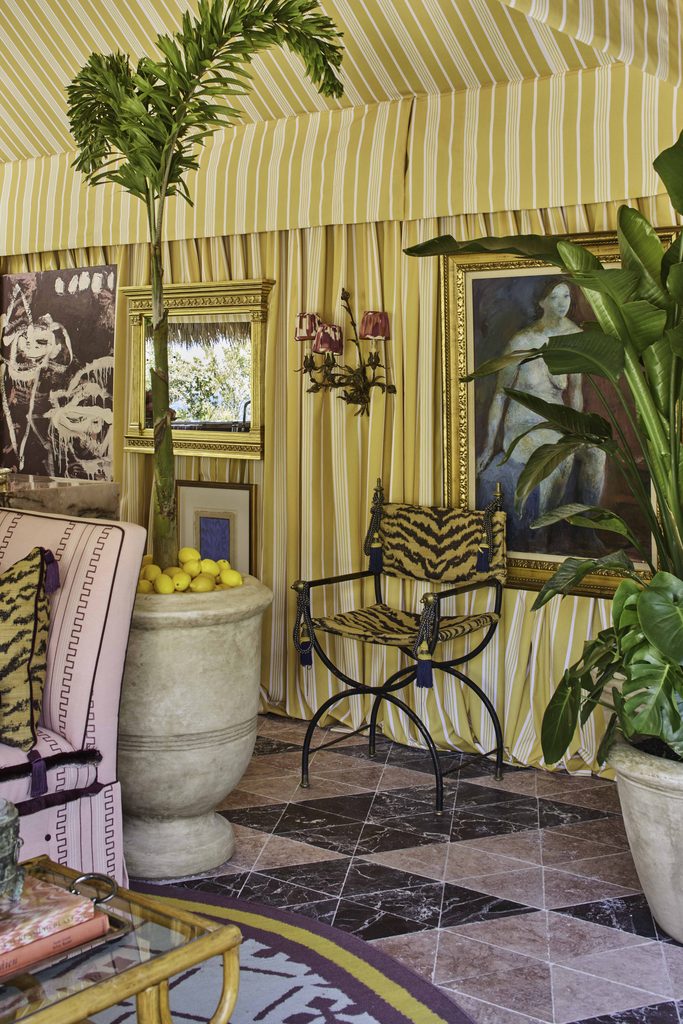
The gesture is significant. Rather than reproducing the past, Misso borrows its codes of pleasure. Approximately 800 yards of Schumacher striped fabric envelop the structure, changing its character almost architecturally. Stone from Calia Stone and graphic marble flooring by Artistic Tile bring permanence to what is, by definition, a light and informal space. At its centre, an oversized bar establishes the social order of the room, with a Kohler workstation sink discreetly integrated into its practical architecture. Nearby, the sculptural Seraphim Bar by Bell Design introduces a more fantastical note, its metalwork recalling the surreal, organic world of Les Lalanne. Smaller seating arrangements around its edges allow for the quieter choreography that accompanies any successful gathering, with pieces from Made Goods, Sherrill Furniture and Lillian August contributing to the deliberately collected mix.
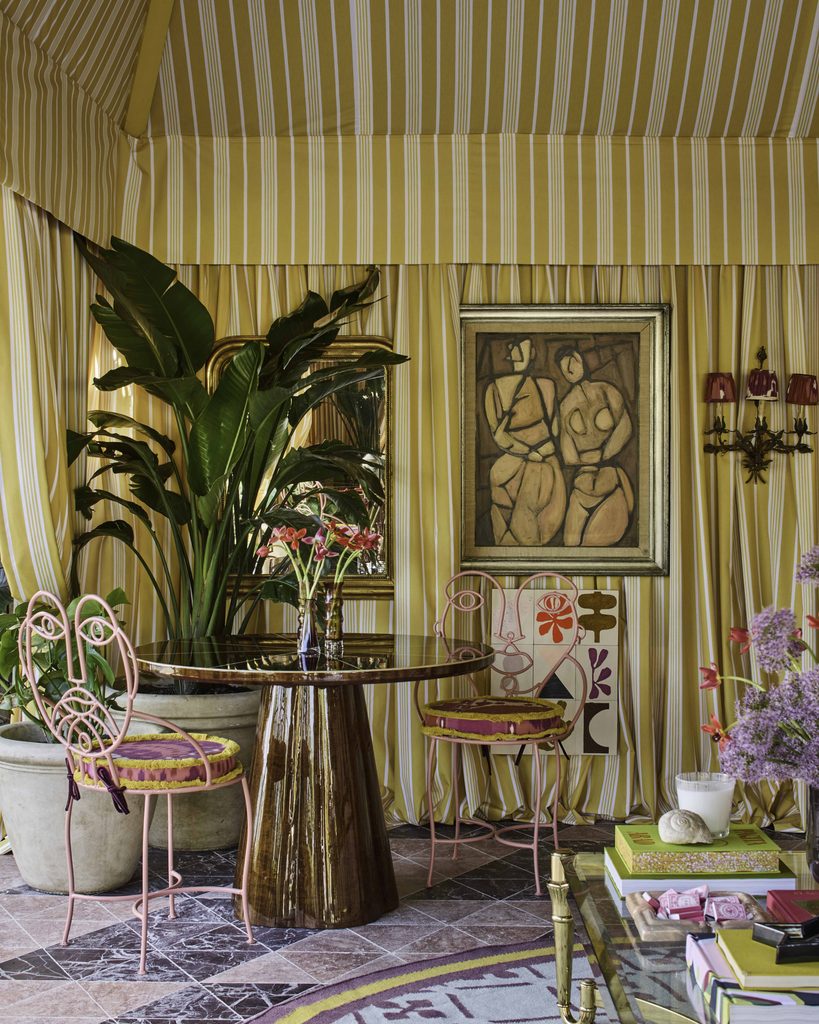
There is something distinctly old fashioned, and rather appealing, about designing a room around the art of receiving people.
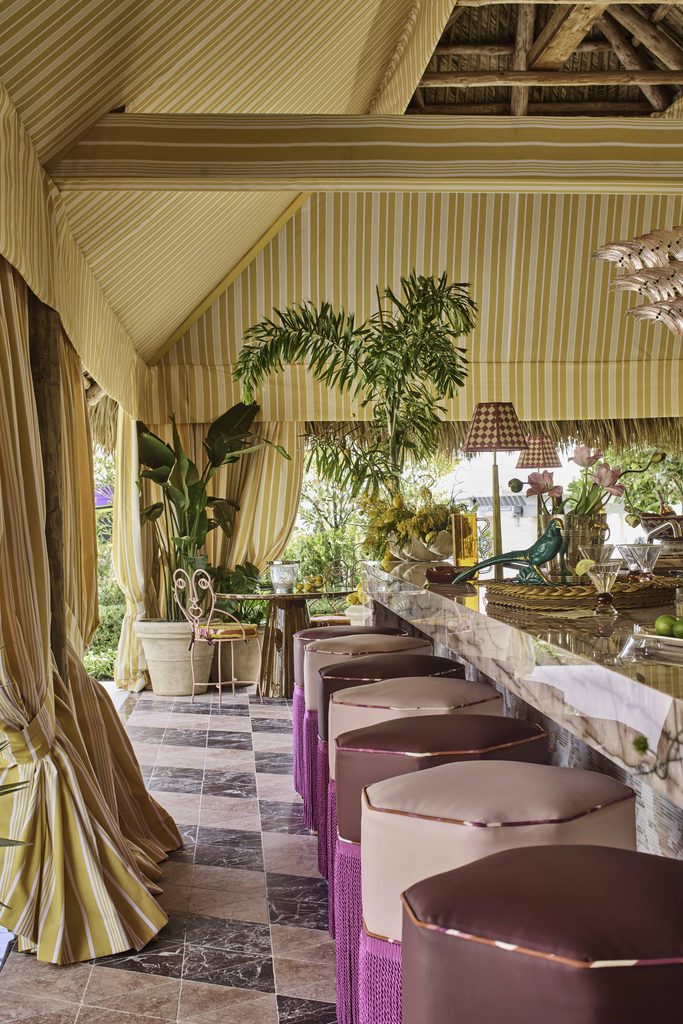
The decorative language is equally unapologetic. Vintage pink Murano palmette chandeliers hang beneath the thatched roof. Twentieth century Italian sconces introduce the formality of a drawing room, joined by decorative lighting from Pooky. Benjamin Moore contributes to the colour story, while drapery frames views of the garden and water beyond, with window treatments by The Shade Store and passementerie from Samuel & Sons adding the kind of finishing detail more readily associated with an interior salon than a poolside shelter. Art from different periods gives the walls the accumulated quality of a house assembled over time. Among the contemporary works is FLO, a bronze sculpture by British artist David Harber, while technology is almost mischievously disguised through a bespoke Reflectel mirror television incorporated into the art display. Pattern, marble, stripes and objects coexist without the restraint usually demanded of contemporary outdoor living.
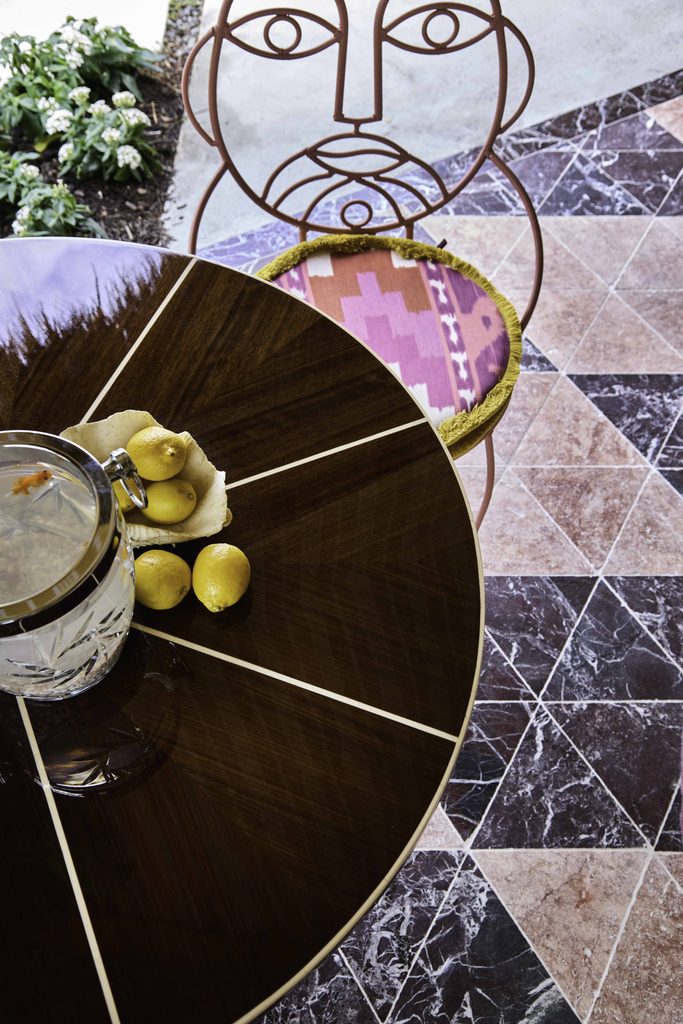
Perhaps this is what makes the project feel unexpectedly current. For years, the ideal exterior has tended towards discretion: pale upholstery, quiet furniture, natural materials and an almost reverential desire not to compete with the landscape. The cabana proposes the opposite. It permits decoration to follow us outside.
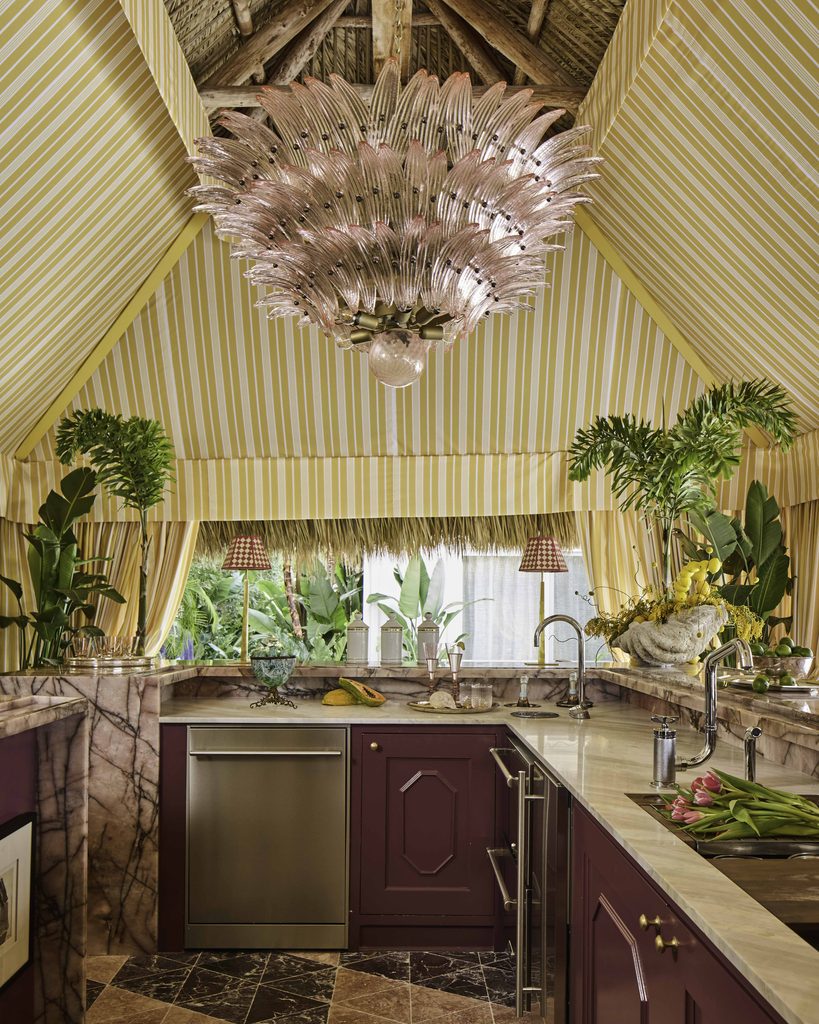
Historically, the cabana has always occupied an intriguing territory. Neither quite architecture nor furniture, neither completely private nor entirely exposed, it creates a threshold between the house and the landscape. At seaside resorts, private pools and Mediterranean terraces, its purpose was never simply protection from the sun. It allowed the rituals of the interior to migrate outdoors: dressing, drinking, reading, entertaining, watching and, perhaps most importantly, being watched.
Its return therefore feels less like the revival of a decorative trend than the rediscovery of a particular way of inhabiting summer. As terraces and gardens increasingly become rooms in their own right, there is renewed pleasure in giving them character rather than neutrality, in allowing textiles, art, lighting and even a degree of eccentricity to cross the threshold.
In Palm Beach, River Brook takes that proposition almost to its logical extreme. The Tiki Tent may be theatrical, but beneath its exuberance lies a rather simple idea about leisure and design.
Perhaps the enduring appeal of the cabana has always resided there. It is architecture with very few obligations. A little shade, a degree of privacy, somewhere to sit and, preferably, a very good bar. The rest is pleasure.