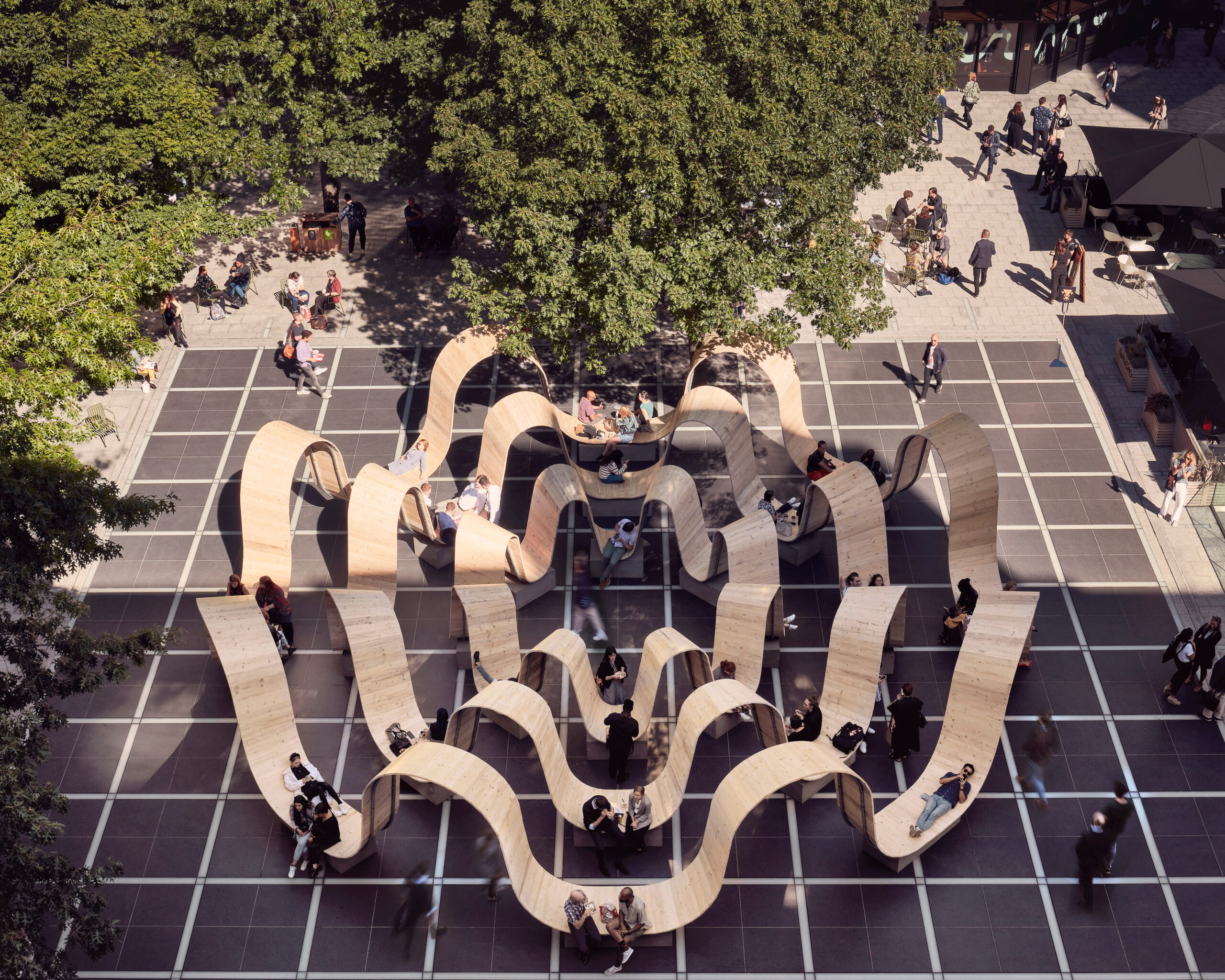
Design in public space carries a different kind of responsibility. Unlike objects conceived for the home, public seating cannot exist solely as an aesthetic gesture. A bench in a square, a park, or along a city street is asked to negotiate something more complex: movement and stillness, privacy and collectivity, utility and pleasure. At its best, design becomes quietly social, shaping not only how cities look, but how they are inhabited.
The bench, perhaps more than any other urban object, reveals this dynamic. Seemingly ordinary, it determines whether we linger or leave, encounter strangers or retreat into solitude, look around or remain in transit. In the hands of designers, it becomes something richer: part sculpture, part invitation, part civic infrastructure.
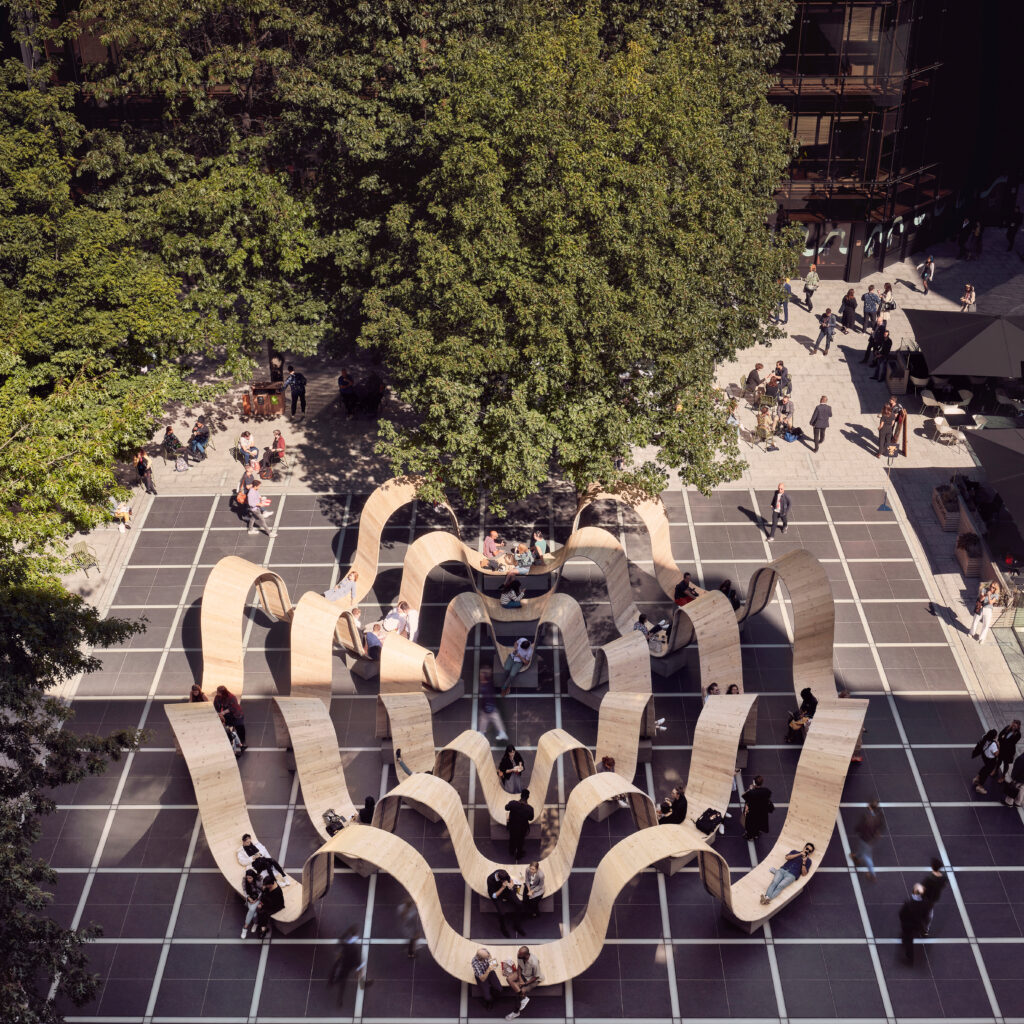
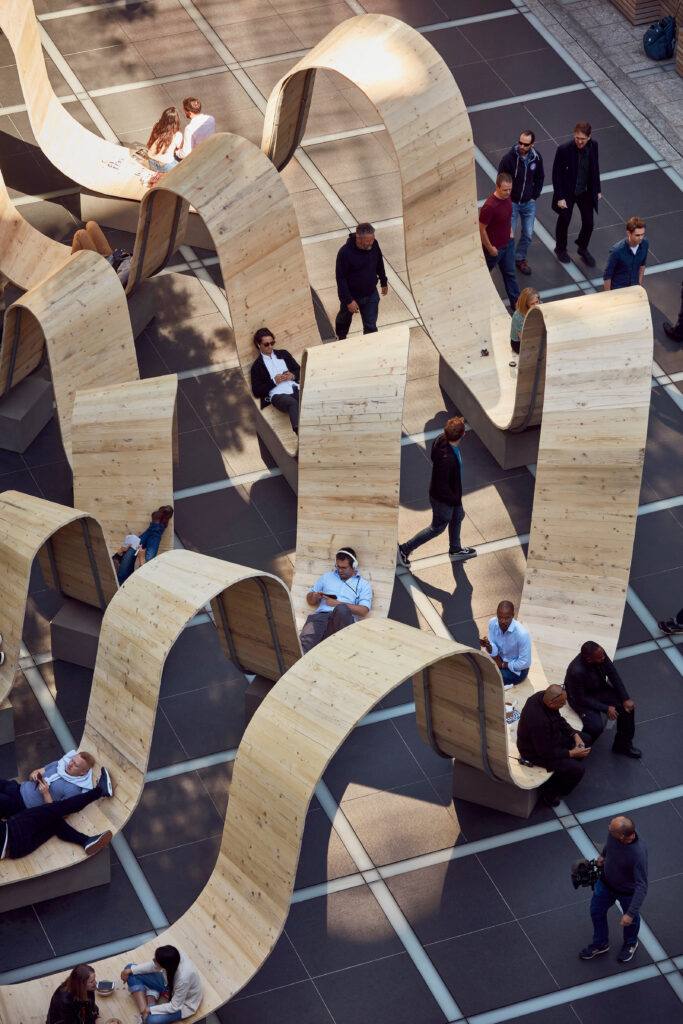
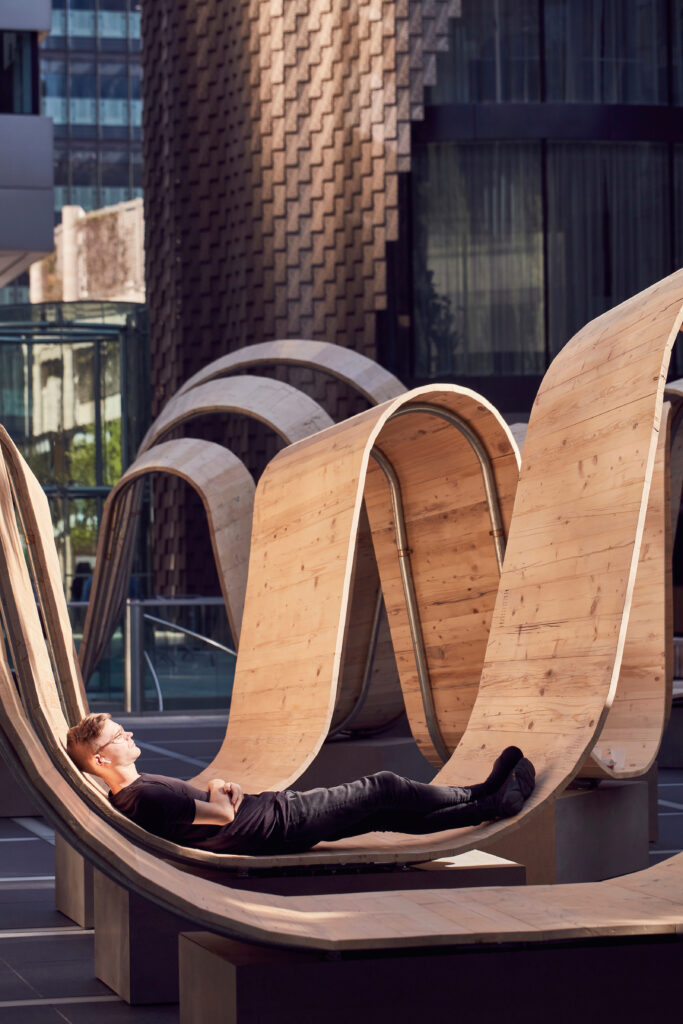
Few contemporary examples embody this more convincingly than Paul Cocksedge’s Please Be Seated. Originally commissioned for the London Design Festival in 2019 in collaboration with British Land and Arup, the installation unfolded across Broadgate as a rippling timber landscape constructed from 152 reclaimed scaffolding boards. Rather than interrupting the public square, it moved with it, rising into arches that pedestrians could pass beneath before curving back into generous places to sit, recline, pause or simply observe. It functioned less as an object than as a choreography of movement, responding, in Cocksedge’s words, instinctively to “the rhythm of people through it.” Here, seating became architecture and architecture briefly slowed the pace of the city. (Images by ©Mark Cocksedge).
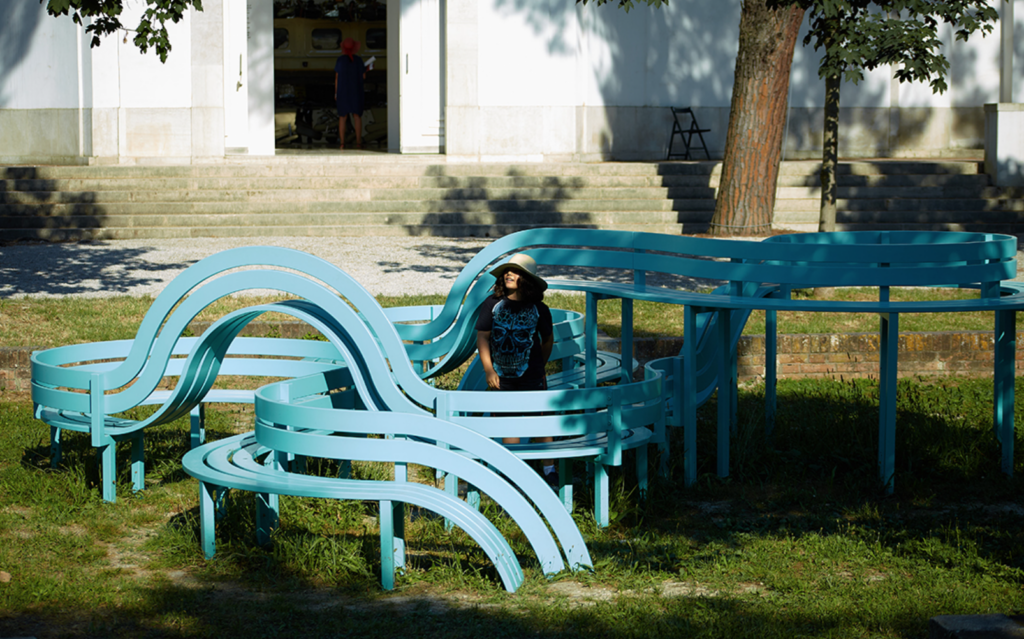
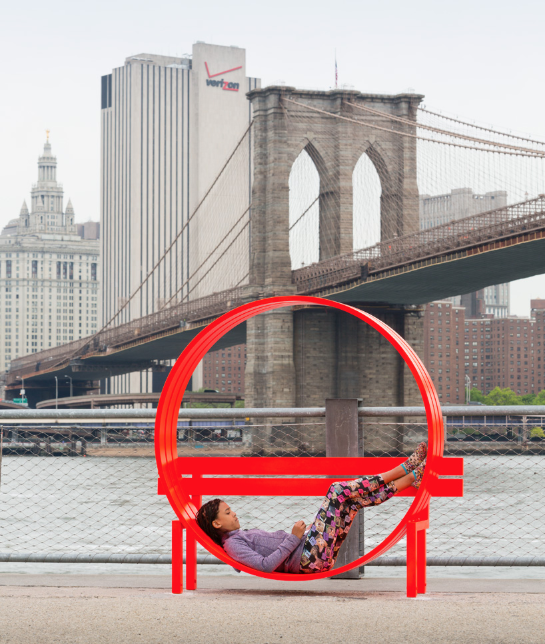
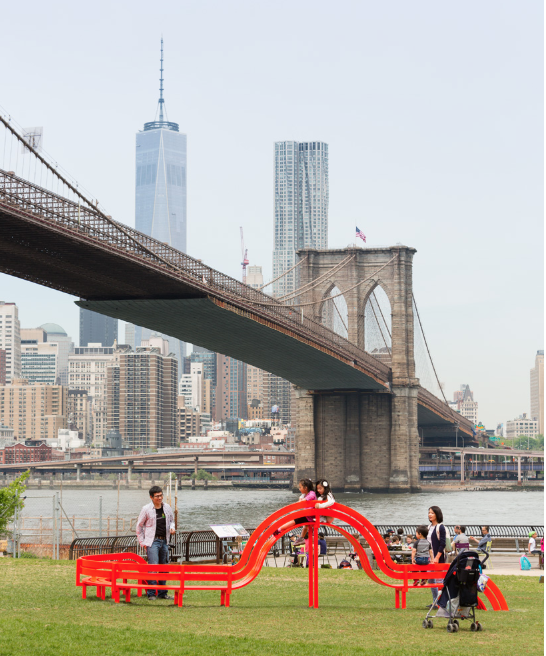
If Cocksedge softens movement, Danish artist and designer Jeppe Hein complicates it. His Modified Social Benches, initiated in the early 2000s and installed in cities around the world, begin with the familiar language of the park bench only to disrupt it. Metal seating twists into loops, bends into impossible curves, or folds back onto itself, subtly destabilising expectations of how bodies occupy shared space. Two strangers may suddenly find themselves facing one another, seated unexpectedly close, or negotiating distance in new ways. Hein’s interest lies precisely here: in how minor spatial interventions alter human behaviour. Familiarity becomes interaction, and public furniture transforms into a social experiment conducted with humour.
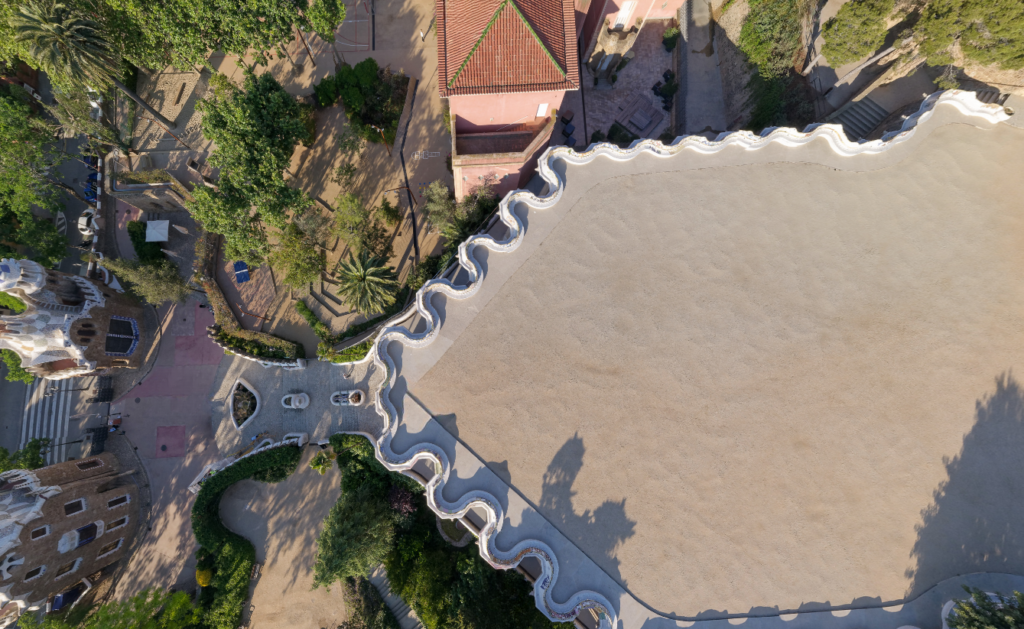
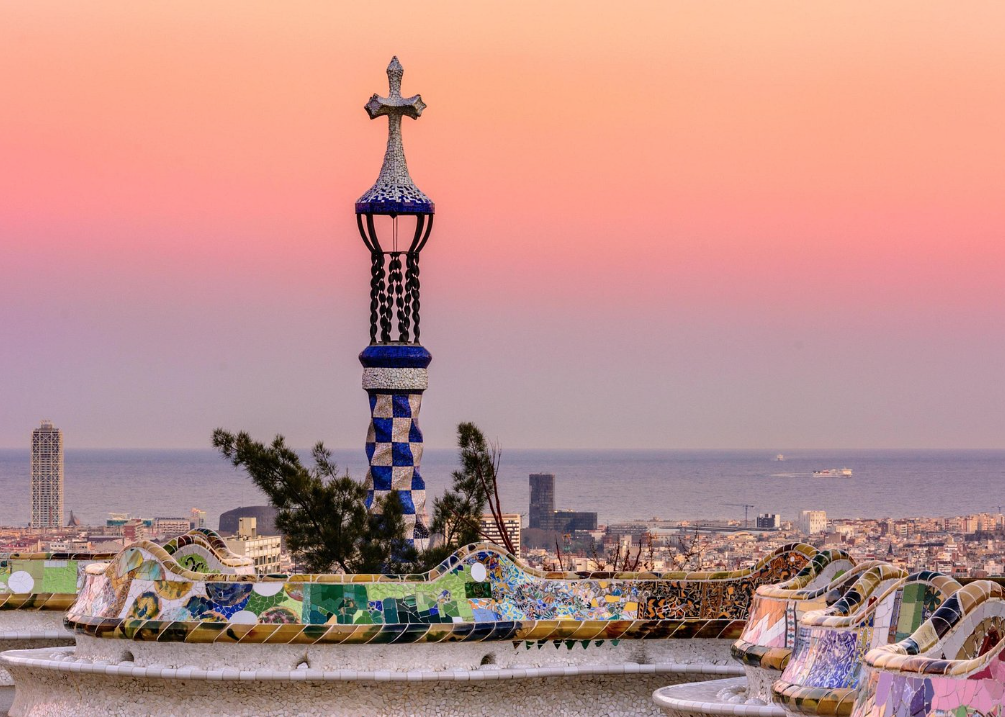
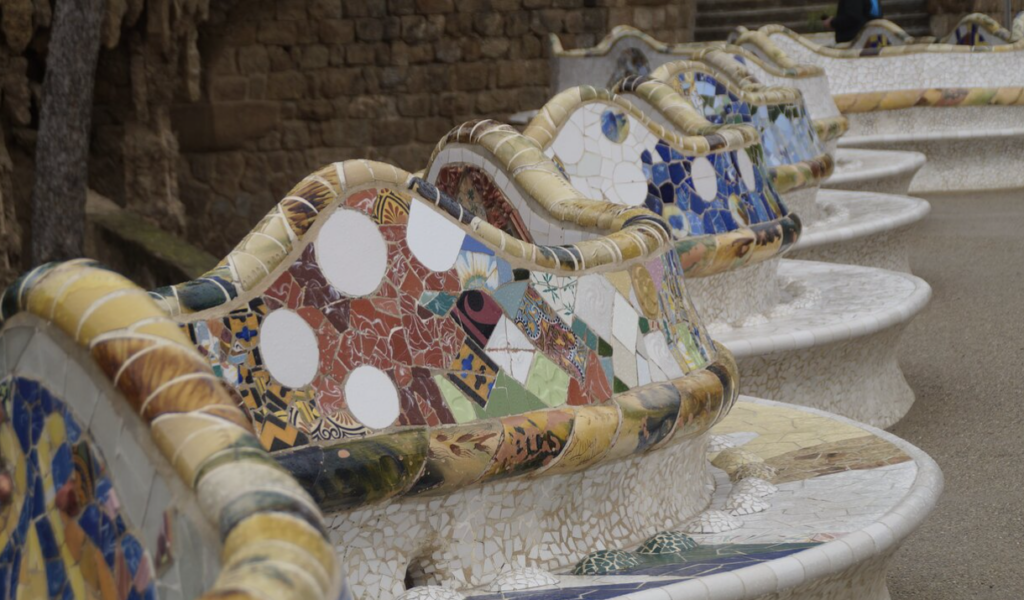
Long before such interventions, Antoni Gaudí had already understood the bench as landscape. At Park Güell in Barcelona, the monumental serpentine bench, completed in the early twentieth century and clad in colourful trencadís mosaic, traces the contours of the monumental terrace like a continuous topography. Far from static seating, its undulating geometry creates pockets of intimacy within collective space, gently orienting the body towards conversation, view and gathering. Its form was famously shaped with ergonomics in mind, reportedly modelled to accommodate the curve of the seated human body. Here, design dissolves into architecture so completely that one scarcely notices where the city ends and seating begins.
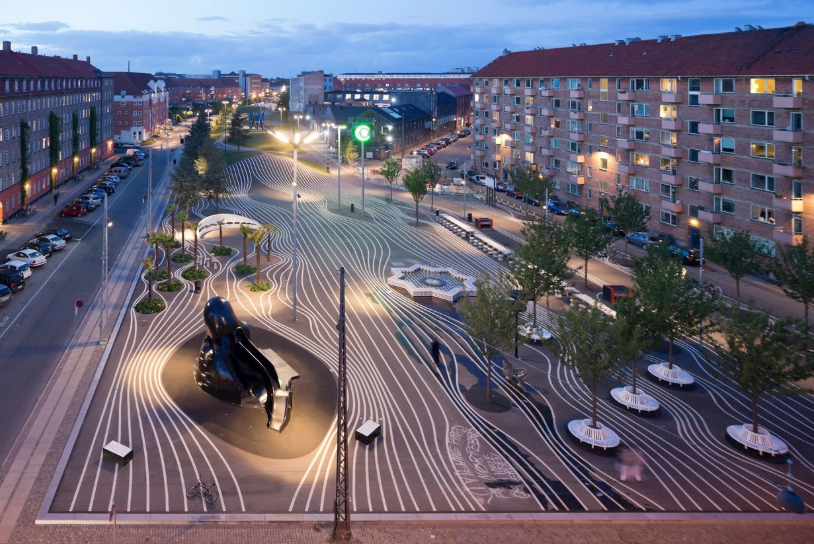
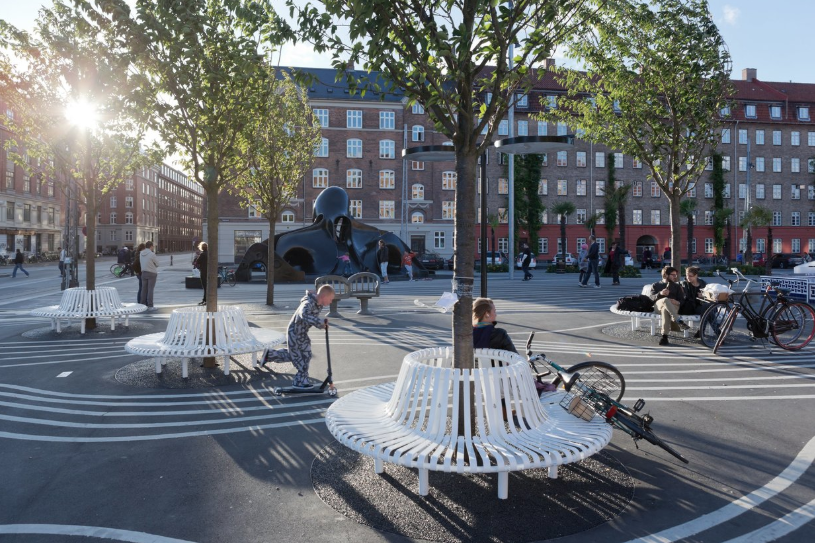
In Copenhagen, the relationship between public life and design takes on an explicitly civic dimension in Superkilen, the urban park designed by BIG, Topotek1 and Superflex. Conceived as a celebration of multiculturalism in the Nørrebro district, the project integrates objects, furniture and urban typologies drawn from dozens of countries represented by local residents. Benches appear throughout not simply as amenities, but as expressions of identity and coexistence. Seating becomes a democratic gesture, reminding us that public space gains meaning precisely when different communities recognise themselves within it.
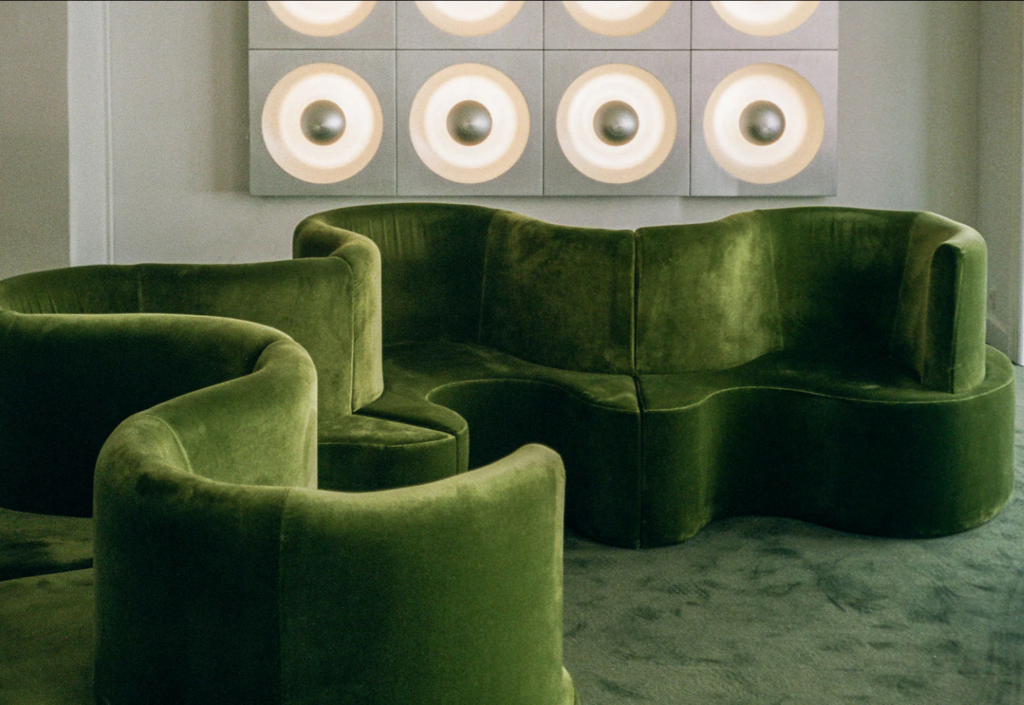
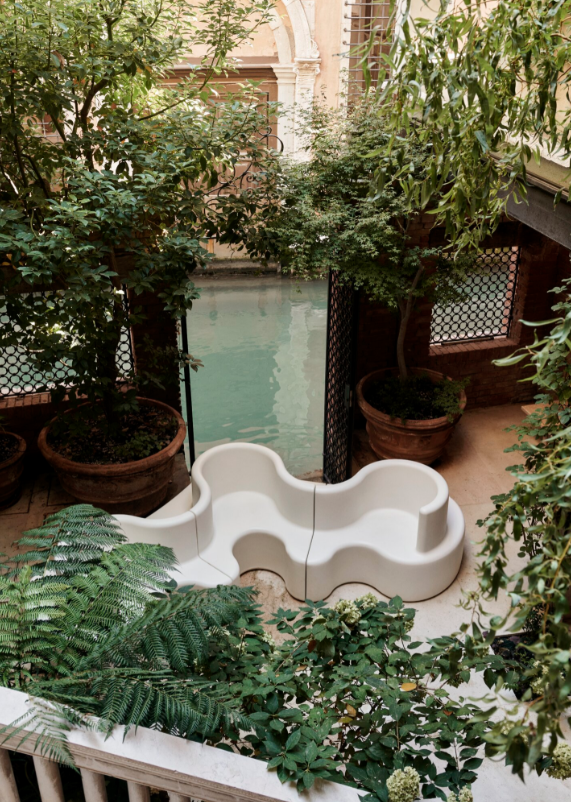
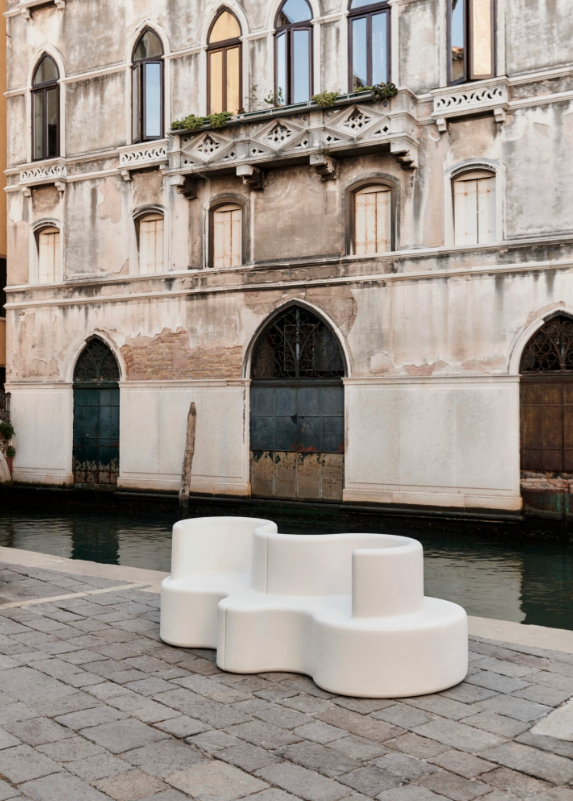
Yet the story of the public bench is also inseparable from design experimentation. Verner Panton’s Cloverleaf seating, first conceived in 1969 and later adapted for outdoor environments, abandons hierarchy entirely. Its sinuous, modular form resists frontality and individual ownership; there is no correct place to sit and no prescribed orientation. Instead, bodies gather organically around curves, facing one another from shifting angles. Panton transformed seating into landscape, anticipating a more fluid understanding of social interaction in public and semi public environments.
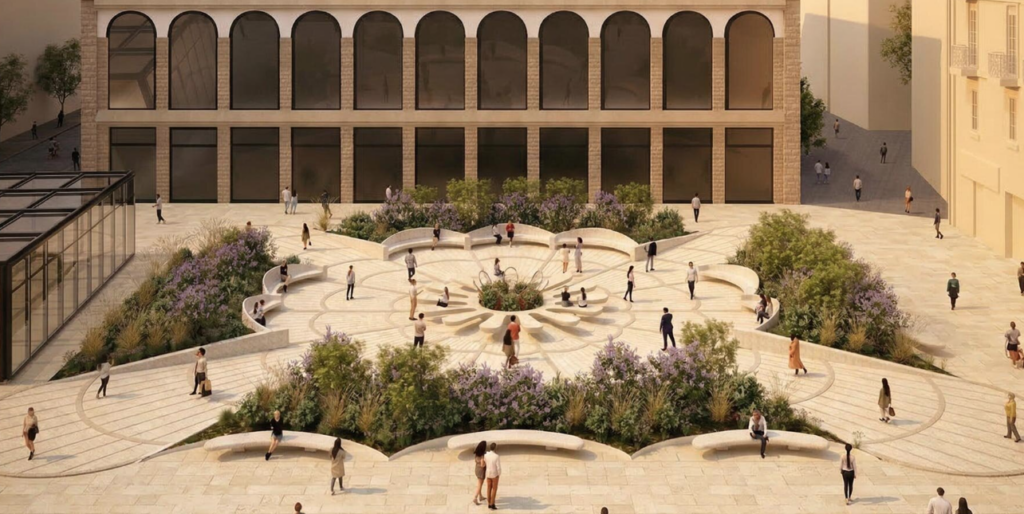
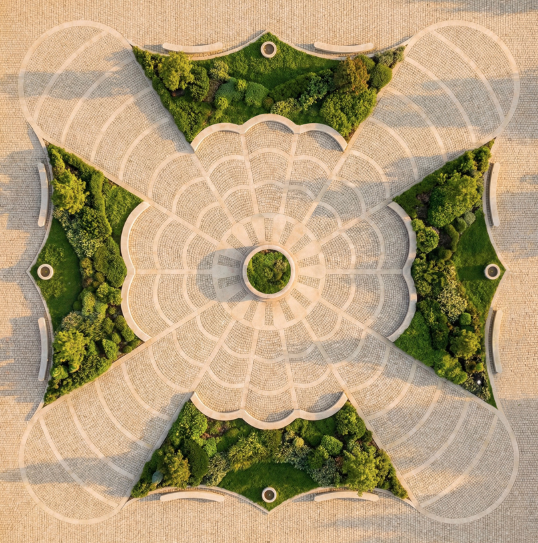
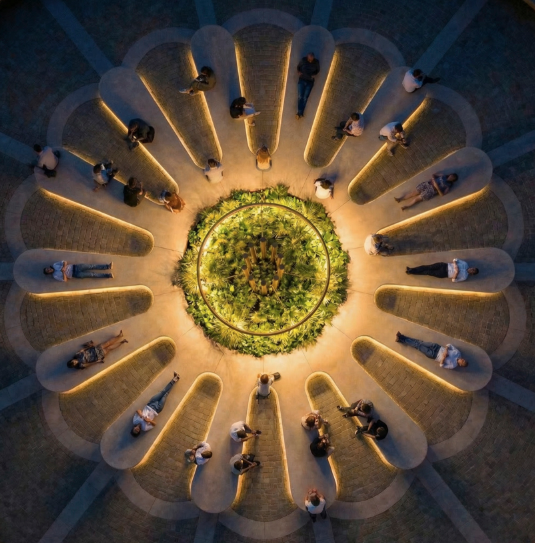
Contemporary designers continue to test how sculptural form can activate collective space. In San Sebastián, zU-studio’s sunflower inspired bench for La Bretxa plaza translates the Eguzki Lore, a flower deeply embedded in Basque symbolism, into an inhabitable civic object. Radiating outward in circular form, it functions simultaneously as landmark and meeting point, giving the square an unmistakable centre of gravity. Likewise, wave-like public seating experiments, where benches rise and dip into continuous sculptural surfaces, challenge conventional distinctions between furniture, architecture and playground, encouraging bodies to sit sideways, recline, gather, perch or pause.
Perhaps this is the quiet power of the design bench in public space. It rarely announces itself loudly. Instead, it operates almost invisibly, asking a city to behave differently for a moment: to gather where it might otherwise pass, to linger where it might otherwise hurry, and to rediscover that public life is not simply movement through space, but time spent together within it.