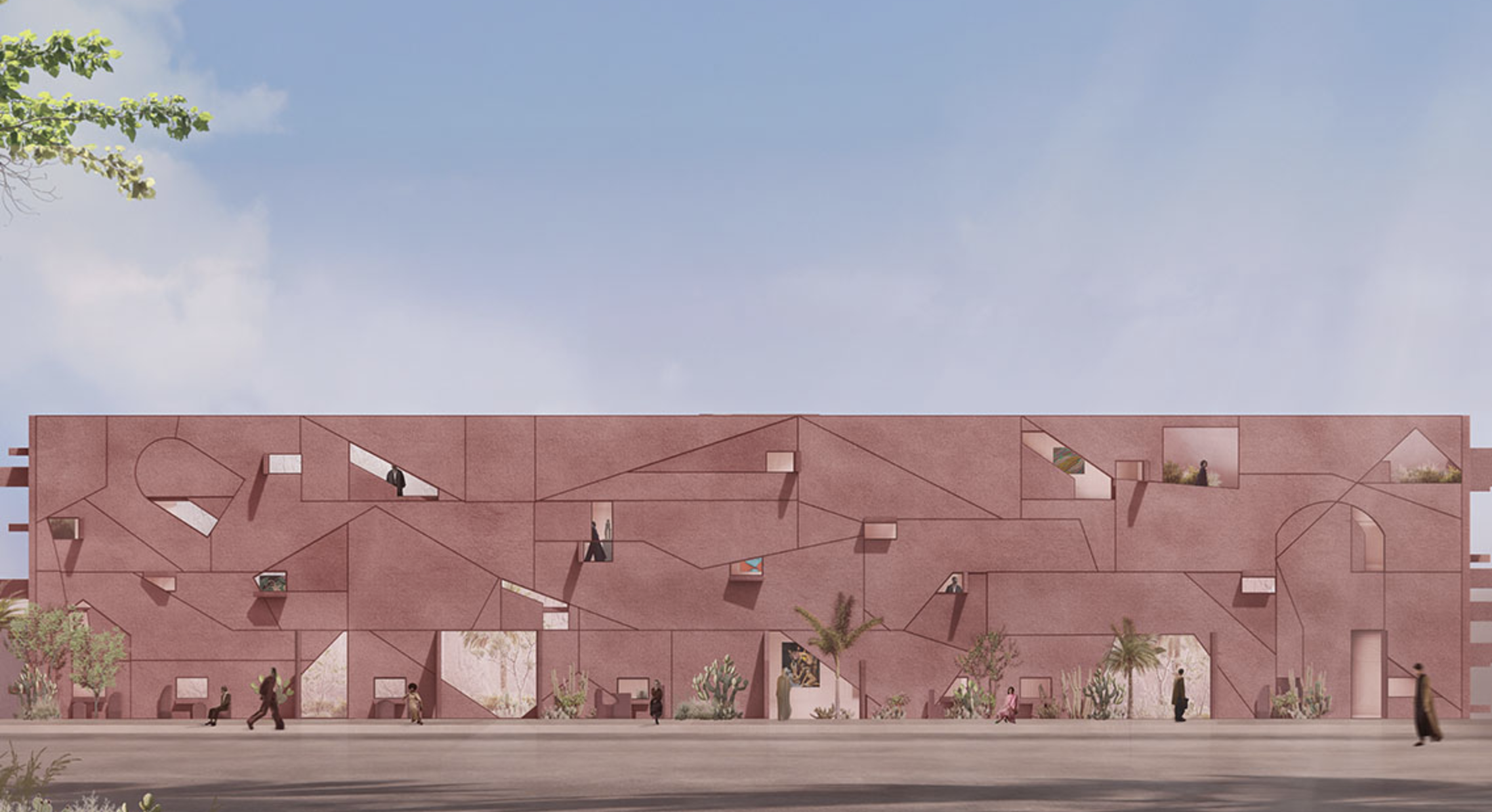
What happens when a private passion for art becomes a public ambition? For French-Lebanese collector and entrepreneur Elie Khouri, the answer is taking shape in Jumeirah 1, where a former family villa is being transformed into the permanent home of the Elie Khouri Art Foundation (EKAF), scheduled to open in late 2028.
The foundation represents a significant evolution in Khouri’s relationship with art. A prominent figure in Dubai’s creative and business community, he has spent over two decades assembling an international contemporary art collection encompassing works by more than 300 artists. Now, his ambition extends beyond collecting to creating an institution that can contribute to the city’s cultural life.
The idea has been years in the making. Khouri began exploring the possibility of establishing a foundation through his involvement with London’s Delfina Foundation, examining how private patronage could respond to the needs of Dubai’s growing art ecosystem. His vision is not simply to make his collection accessible, but to establish a platform for artistic exchange, education and new perspectives.
“Art belongs in everyday life, not apart from it,” says Khouri, articulating a philosophy that has also shaped the project’s architectural direction.
To bring this vision to life, Khouri has commissioned South African architect Sumayya Vally, founder of the Johannesburg- and London-based practice Counterspace. Known for her 2021 Serpentine Pavilion in London and her role as artistic director of the inaugural Islamic Arts Biennale in Jeddah, Vally approaches architecture through the intersections of history, cultural identity and collective experience.
Her proposal for EKAF begins with an unusual premise: rather than erasing the building’s past, its former domestic life becomes the foundation of its new identity. The villa, once occupied by an Emirati family in the 1980s, will retain elements of its original character while accommodating galleries, educational facilities, pavilions, gardens and spaces for cultural gatherings.
The design draws inspiration from two distinct architectural traditions: the intimate courtyards of Gulf homes and the layered urban fabric of Beirut. These references inform an architectural language that negotiates between interior and exterior, private memory and public experience. The proposed rose-coloured façade, with its interplay of geometric forms, openings and recessed spaces, offers a first glimpse of this transformation.
Under the direction of Caroline Louca, formerly managing director of Christie’s Middle East, the foundation will develop a programme combining exhibitions from Khouri’s collection with international loans, institutional partnerships and educational initiatives. Artists from the region will feature alongside international practitioners, reflecting an outlook that is global without losing its connection to the local cultural landscape.
The project also arrives at a moment when private patronage is playing an increasingly visible role in shaping Dubai’s artistic infrastructure. Institutions such as Jameel Arts Centre and the initiatives of Alserkal Avenue have demonstrated how privately supported cultural platforms can become important parts of a city’s creative life.
For Khouri, the foundation is ultimately an investment in the city he has called home for decades. And perhaps its most compelling proposition lies in the choice of architecture itself: a house once designed for private life will soon welcome a public, allowing art, architecture and everyday encounters to inhabit the same space.