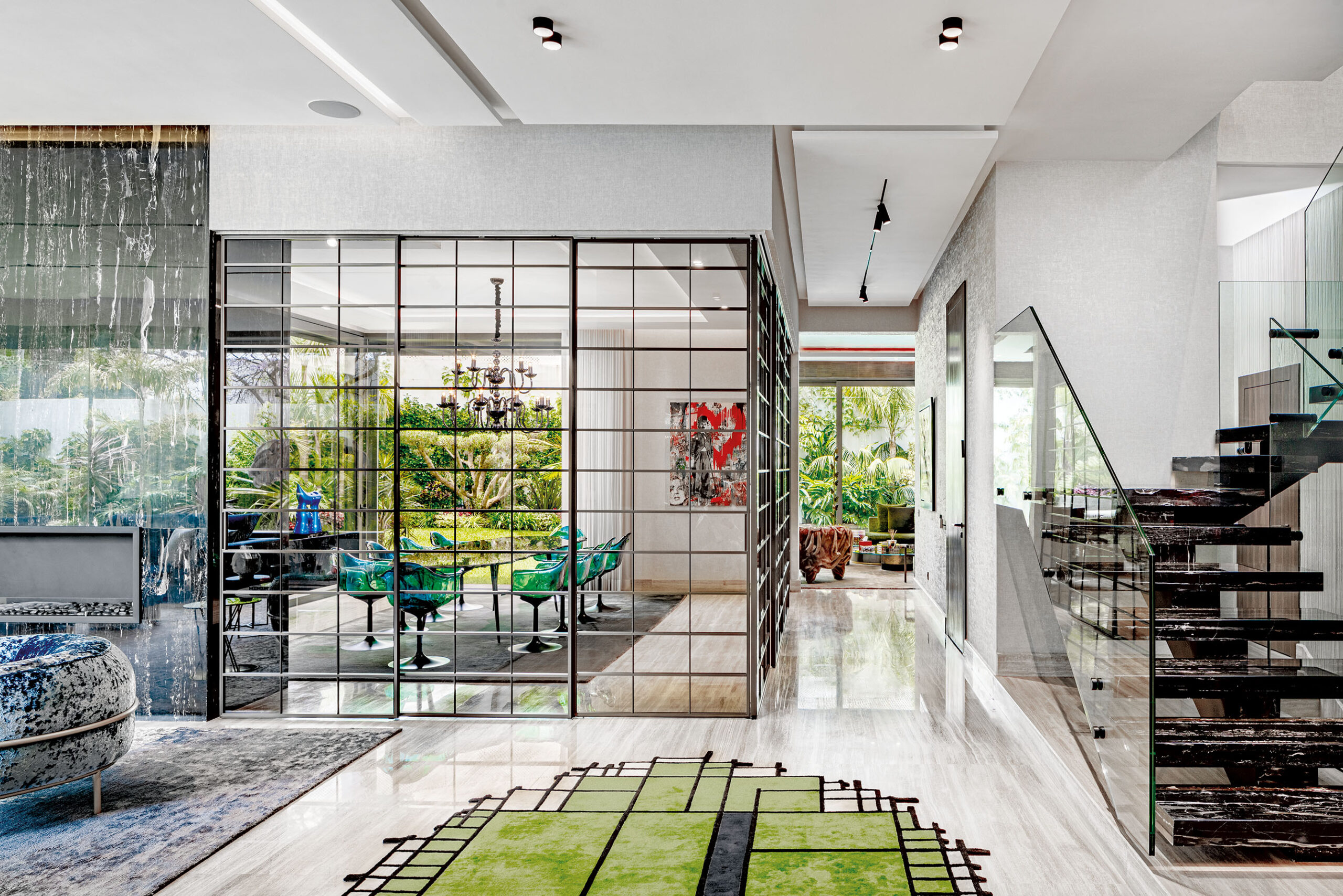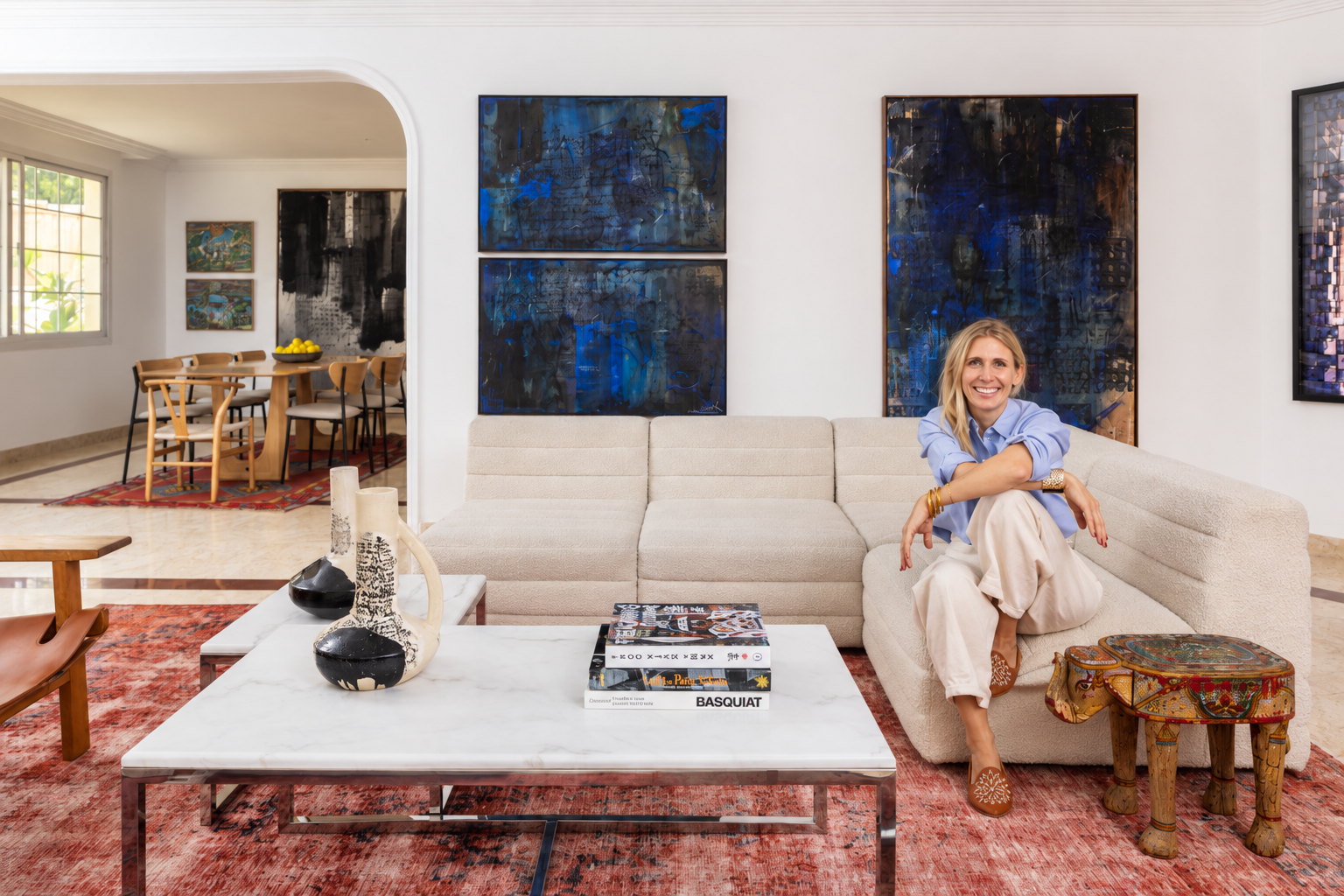
The relationship between art and architecture changes considerably when an exhibition leaves the conventional gallery. In a private home, paintings become part of an inhabited environment, entering into dialogue with furniture, objects and the proportions of domestic rooms. The experience is less formal, allowing visitors to encounter art within a setting that is ordinarily associated with everyday life.
This was the premise behind The Unsaid, a solo exhibition by British artist Michèle Cade Khelifi, presented in Dubai from 10 to 12 November by MEEMS, the independent art agency founded by curator Myriam Djelouat Benaroya.
By bringing the exhibition into a residential setting, the presentation offered an alternative to the neutrality of the white cube. The domestic environment introduced a different relationship between the works and their audience, one in which the boundaries between collecting, displaying and living with art became less distinct.
Khelifi’s practice is particularly suited to this intimate context. Working across painting, works on paper and sculptural vessels, the artist investigates vulnerability, memory and the tension between what individuals reveal and what they choose to conceal.
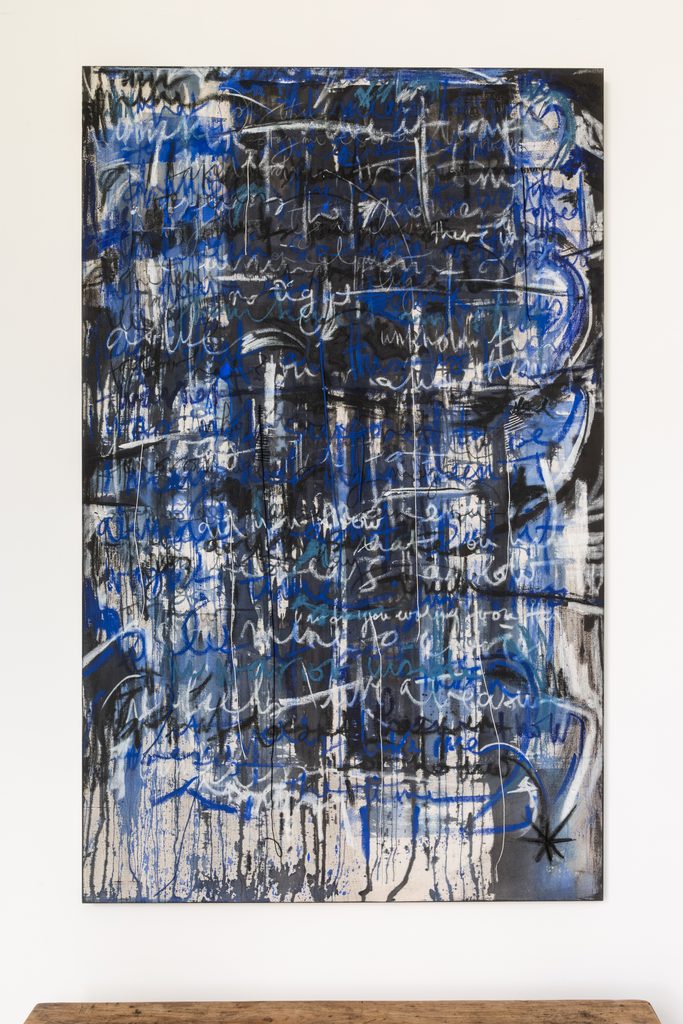
Language forms the foundation of her work. Words are written, layered, erased and rewritten until their original meaning becomes almost impossible to decipher. What remains is a physical record of the gesture, rather than a conventional narrative.
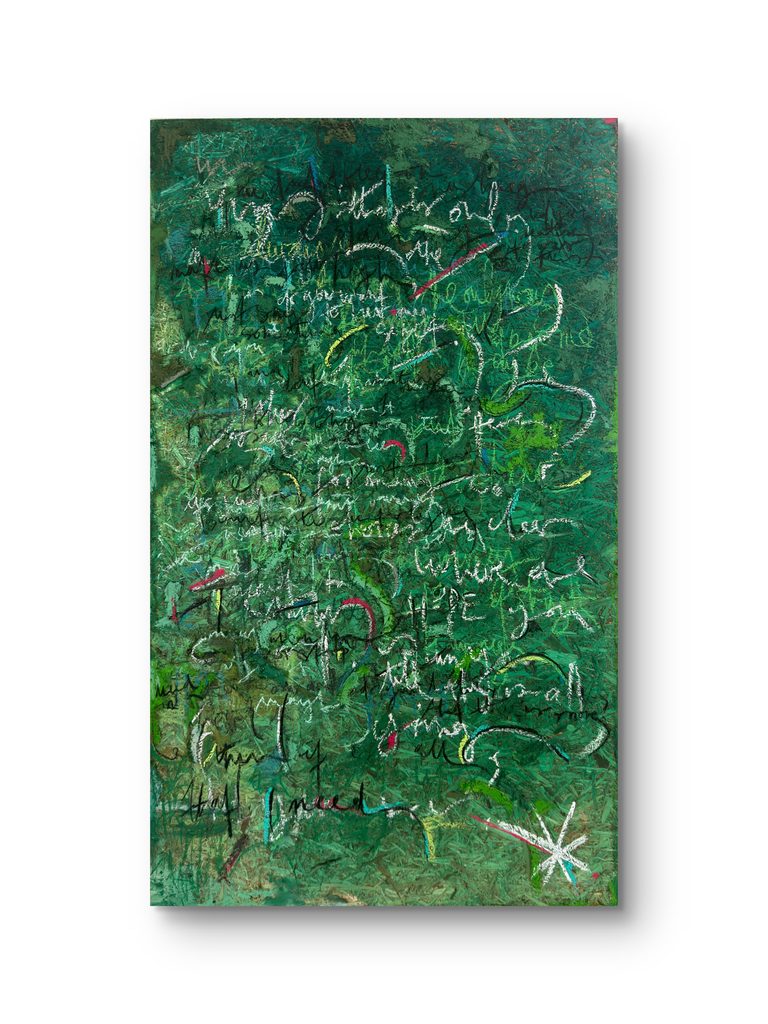
Her choice of materials is equally significant. Raw cotton, repurposed palm leaf wood, handmade paper and recycled ceramics retain their imperfections and previous histories. In What Would You Do (2026), ink, oil, charcoal and stitched threads accumulate across raw cotton, introducing the idea of repair as both a physical intervention and an emotional process. In Becoming (2026), the irregular surface of reclaimed wood becomes integral to the composition.
The sculptural series What We Carry extends this investigation into three dimensions. Made from recycled ceramic and rattan, the vessels incorporate calligraphic markings that suggest fragments of personal histories, transforming familiar functional forms into objects of contemplation.
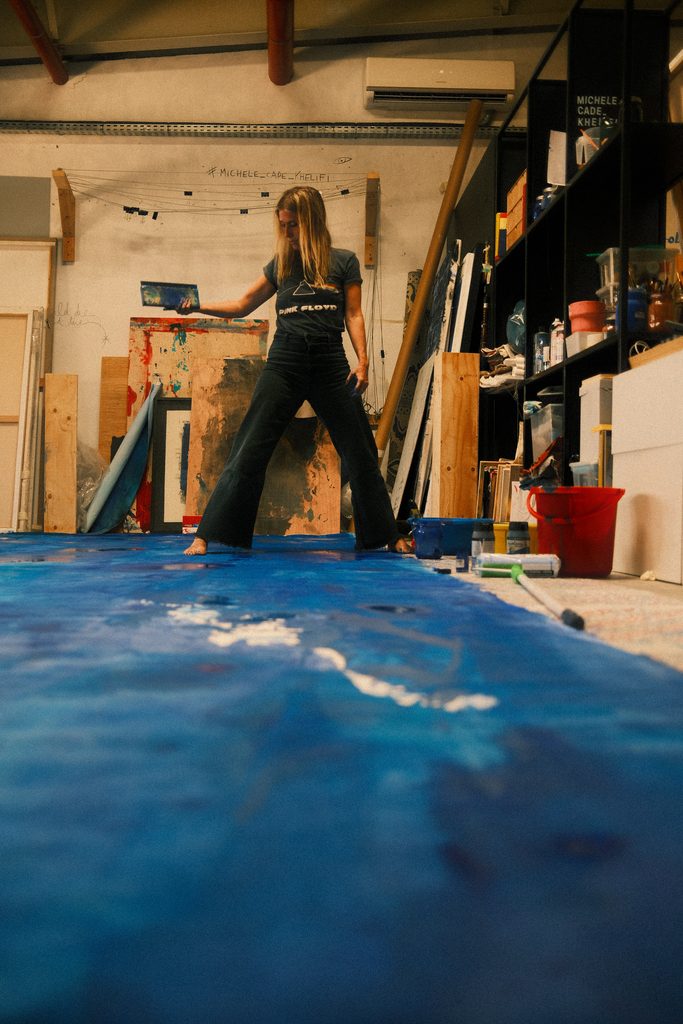
For Benaroya, whose agency works with artists, collectors, designers and cultural institutions across Europe, the Gulf and North Africa, the exhibition also demonstrates the potential of presenting contemporary art beyond established institutional spaces.
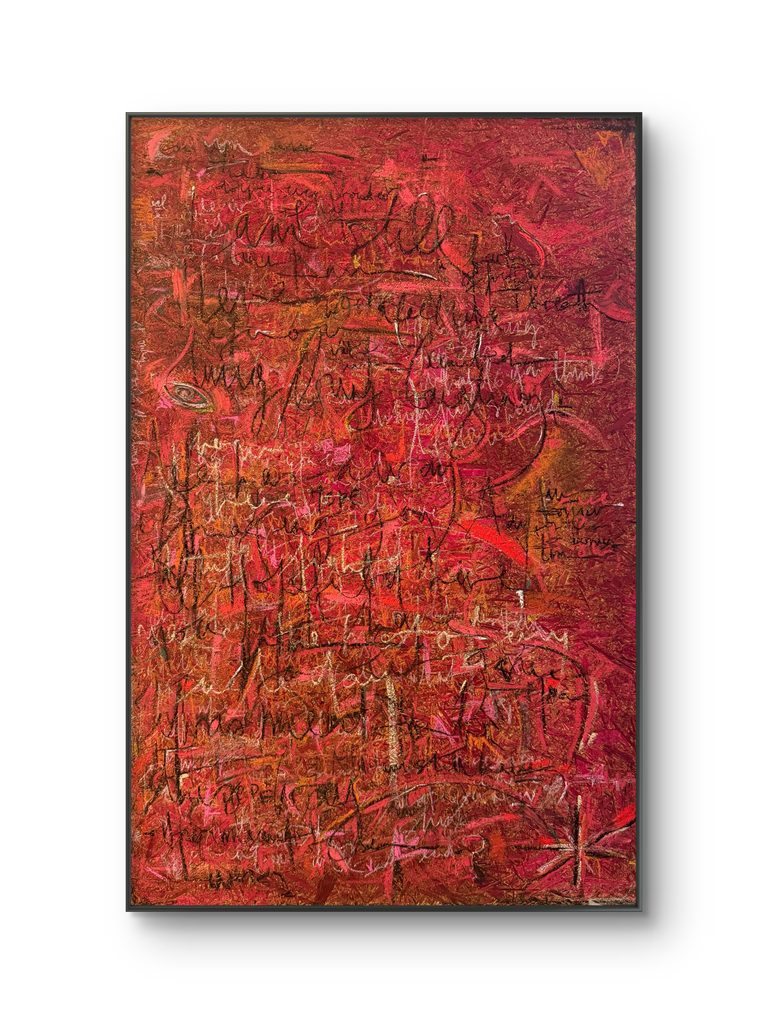
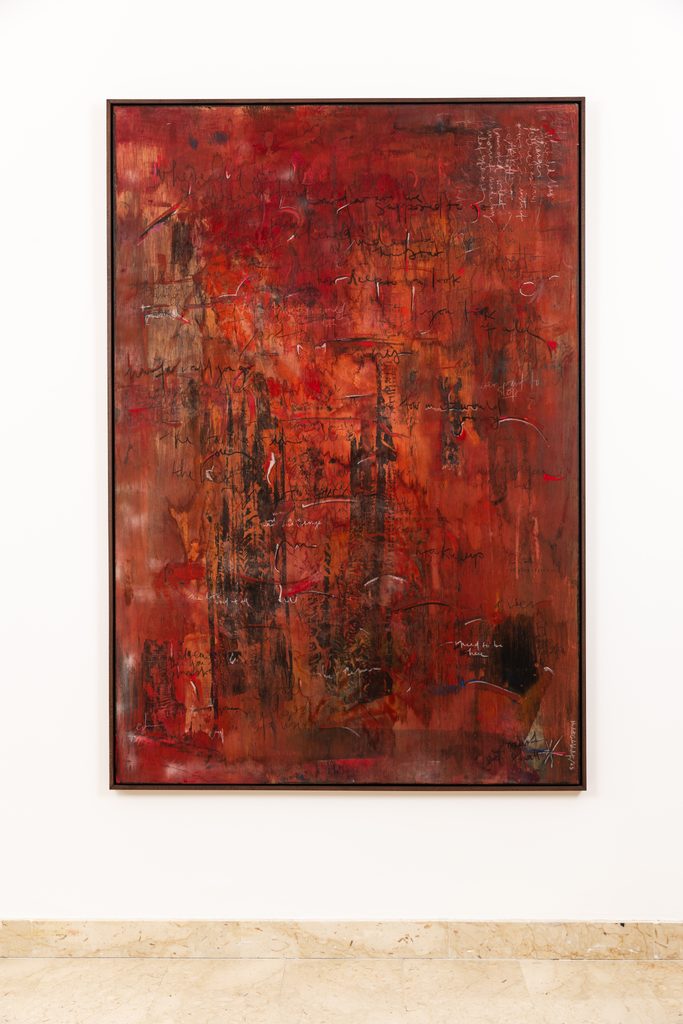
In a home, the works are no longer isolated from daily life. They occupy the same environment as the objects with which we surround ourselves, suggesting that the experience of art need not begin and end at the gallery door.