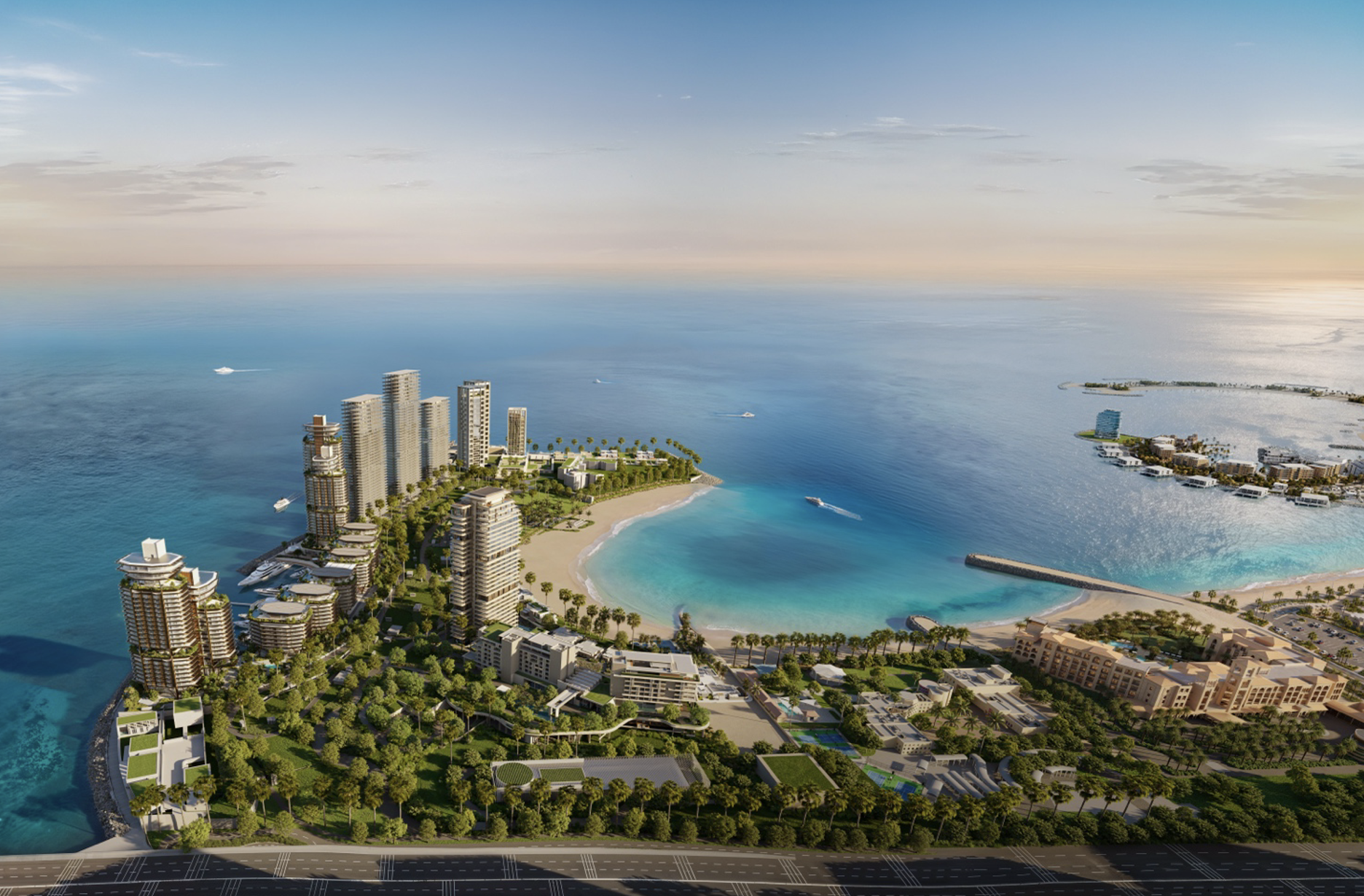
Dubai’s architectural identity has long been defined by individual landmarks. Increasingly, however, attention is turning towards the design of entire urban environments, where architecture, landscape and public space are considered as interconnected elements. Along Jumeirah’s coastline, Dubai Peninsula offers an ambitious example of this approach.
Developed by H&H, the AED 30 billion waterfront project brings together an exceptional roster of international architects, including Kerry Hill Architects, Hopkins Architects, Jean-Michel Gathy’s DENNISTON and RSHP, the practice founded by Richard Rogers. Each contributes a distinct architectural language to a development conceived around residential living, hospitality and landscape.
For Aman Dubai, Kerry Hill Architects proposes a restrained architectural vocabulary, with natural materials, understated interiors and gardens designed by Vladimir Djurovic. The project reflects the practice’s longstanding interest in the relationship between architecture, climate and landscape.
Elsewhere, Hopkins Architects is responsible for Rosewood Residences, with interiors by BANDA and beachfront villas designed by Jean-Michel Gathy. DENNISTON also leads the architecture and interiors of Capella Dubai, while RSHP introduces a different approach through The Residences, Peninsula Dubai, with interiors by 1508 London.
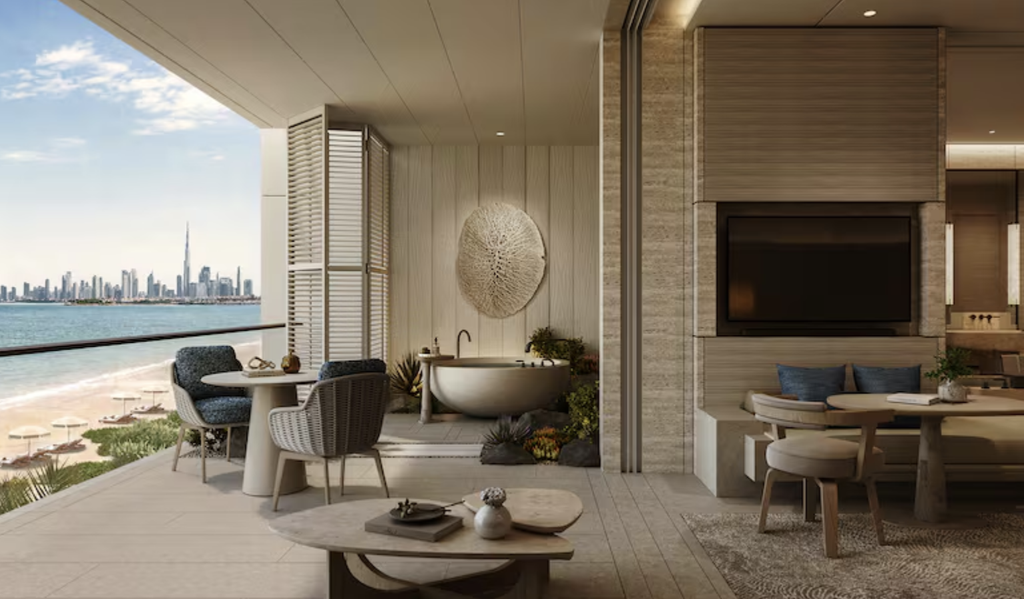
Beyond the individual buildings, the masterplan raises broader questions about the future of coastal development. More than two million square feet of landscaped gardens, a pedestrian route connecting the marina to the beach and infrastructure positioned below ground suggest an effort to give landscape a central role in the organisation of the neighbourhood.
RSHP’s contribution is particularly revealing. Its arrangement of residential towers and lower pavilions incorporates architectural shading strategies that respond to Dubai’s climate, addressing the relationship between built form and outdoor comfort.
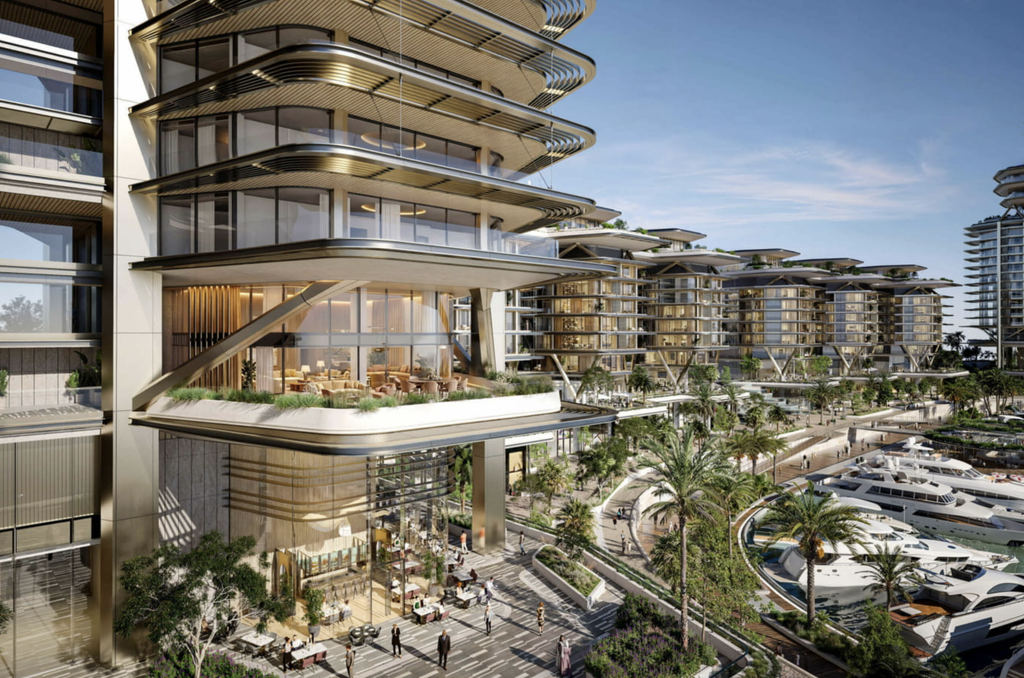
Construction is progressing in phases, with much of the architecture still awaiting realisation. What emerges from the plans is a proposition worth examining: a shift from the isolated architectural icon towards a more comprehensive conception of place.
For a city accustomed to building recognisable landmarks, the next challenge may be less about creating another extraordinary building than about understanding how buildings work together.