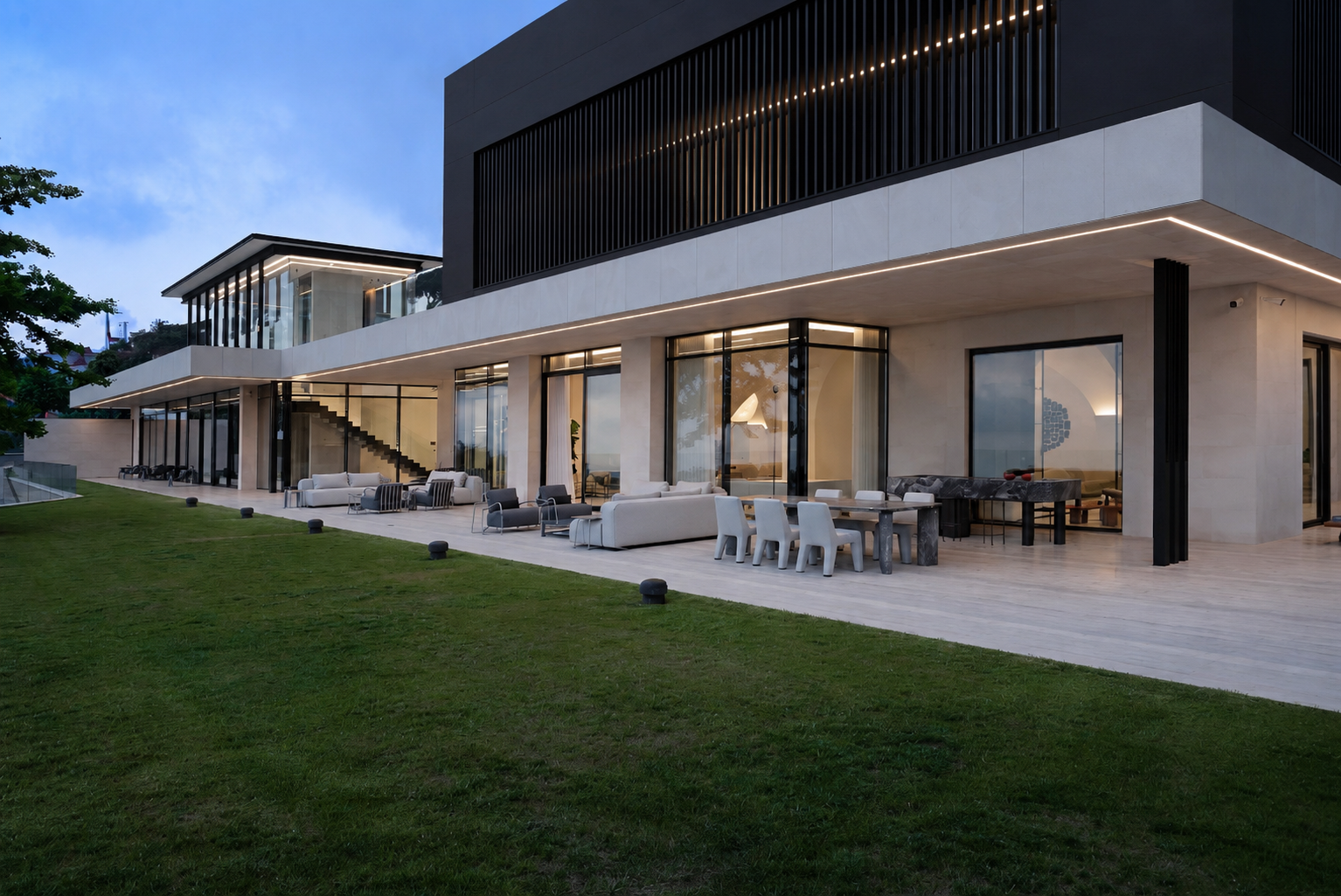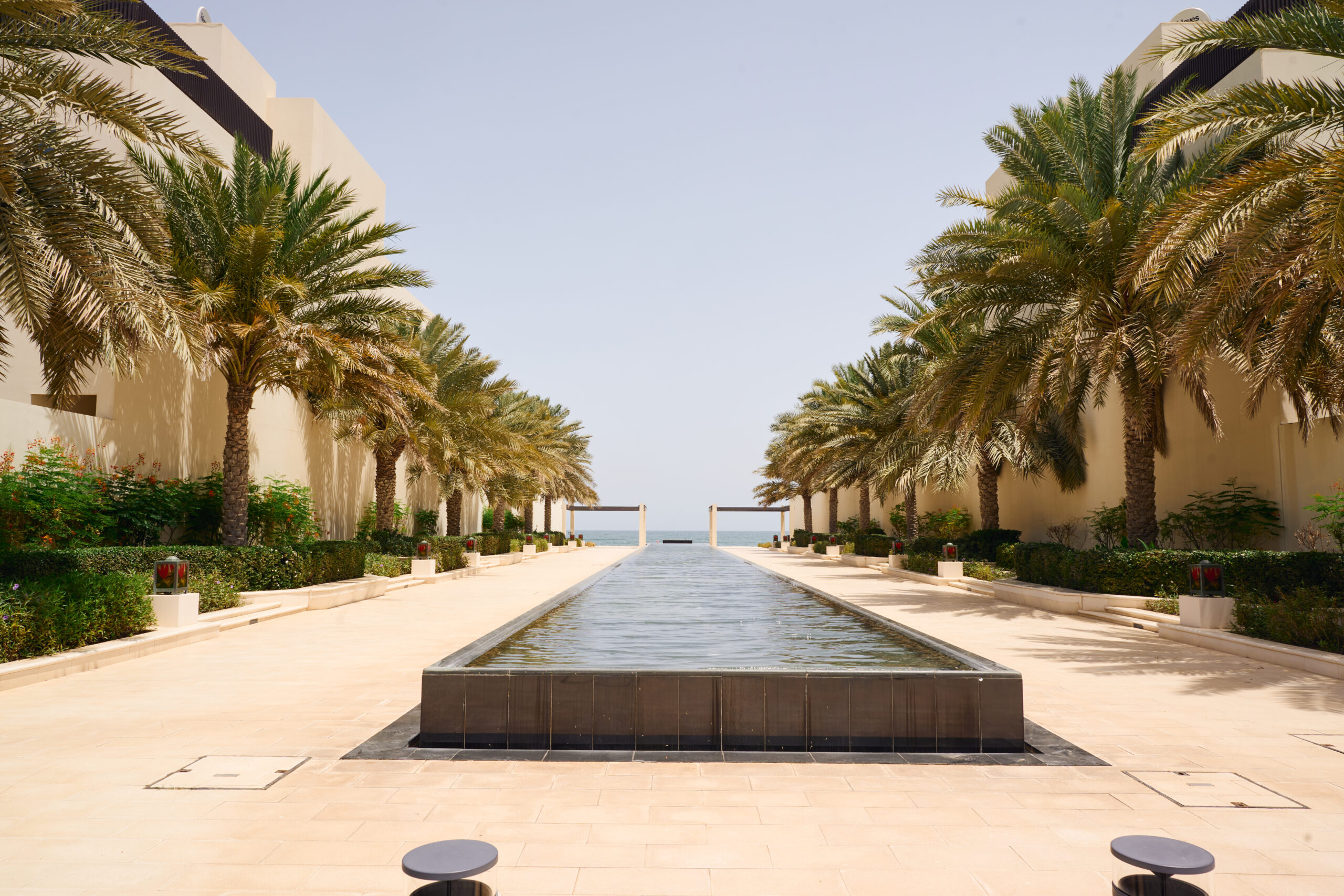
Along the coastline of Muscat, this Omani villa unfolds through a sequence of atmospheres. Designed by Mumbai based studio Fine Lines Designers Pvt. Ltd., the 14,000 square foot residence avoids the polished anonymity that increasingly defines contemporary luxury homes across the Gulf. Instead, the project proposes a more layered idea of domesticity, one rooted in craftsmanship, ornament, memory, and emotional texture.
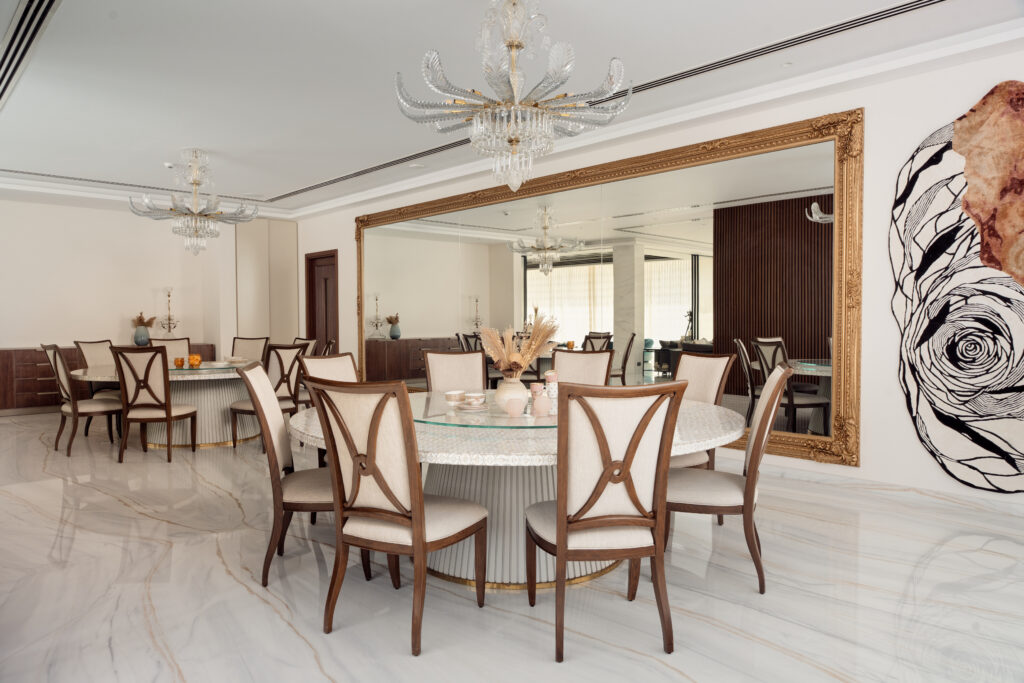
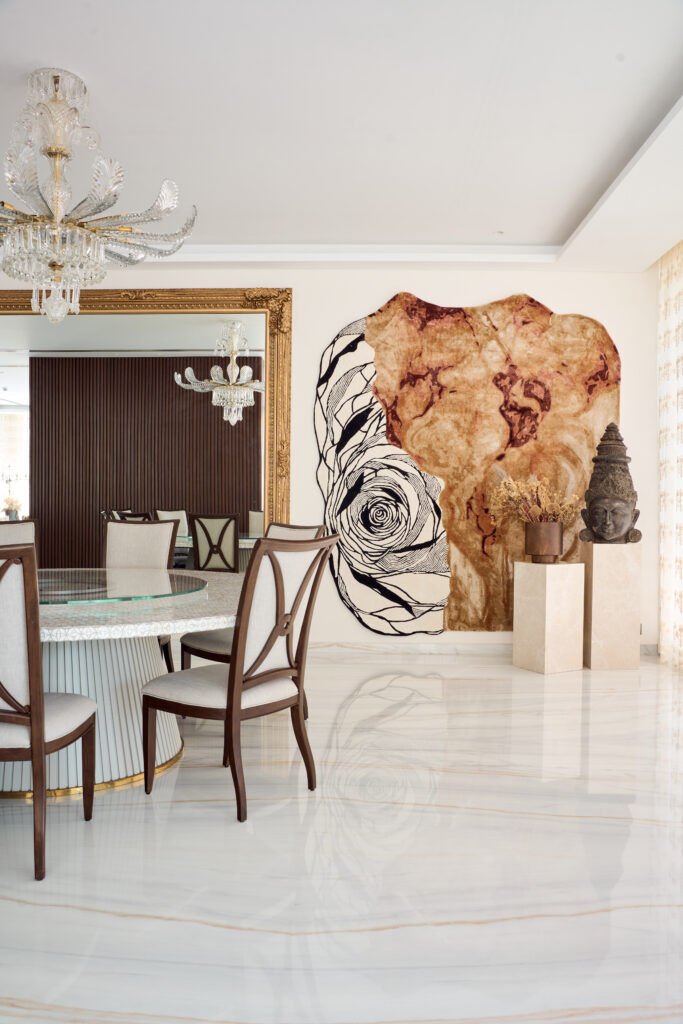
Created by Principal Designer and Co Founder Sangeeta Advani Mansharamani together with architect Aashna Mansharamani, the residence occupies a privileged position along the shores of the Gulf of Oman, where uninterrupted views of water and sky become part of the architecture itself. Yet the project never relies solely on landscape for effect. Its richness comes instead from accumulation: carved plaster walls, embroidered textiles, brass ceilings, Sicis mosaics, Pichwai paintings, mother of pearl inlays, and stones sourced across Italy, Portugal, India, and the Middle East.
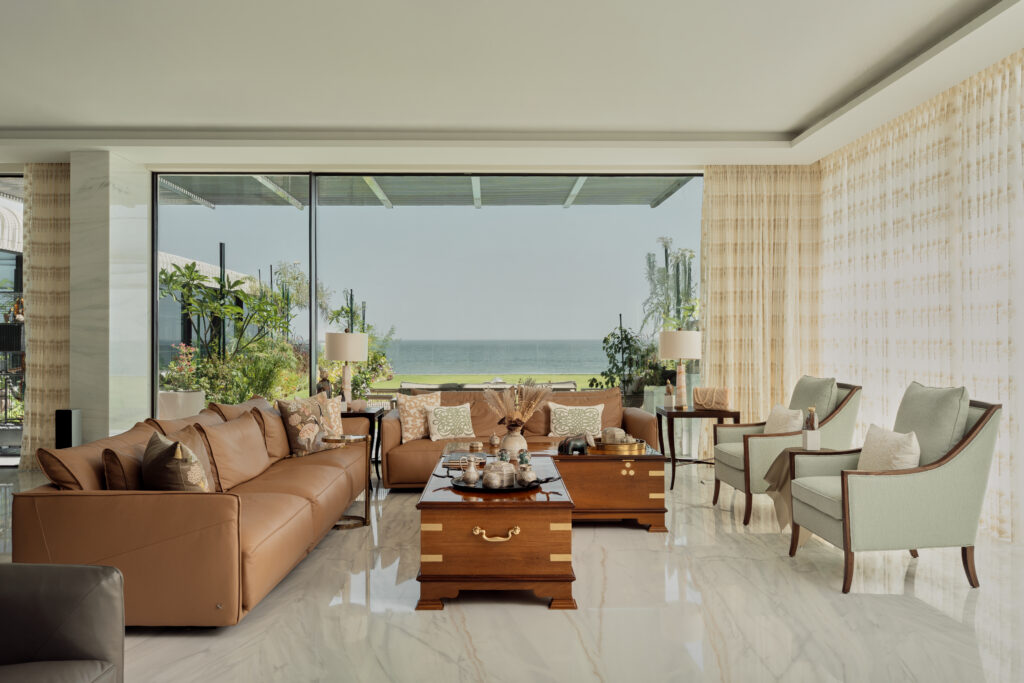
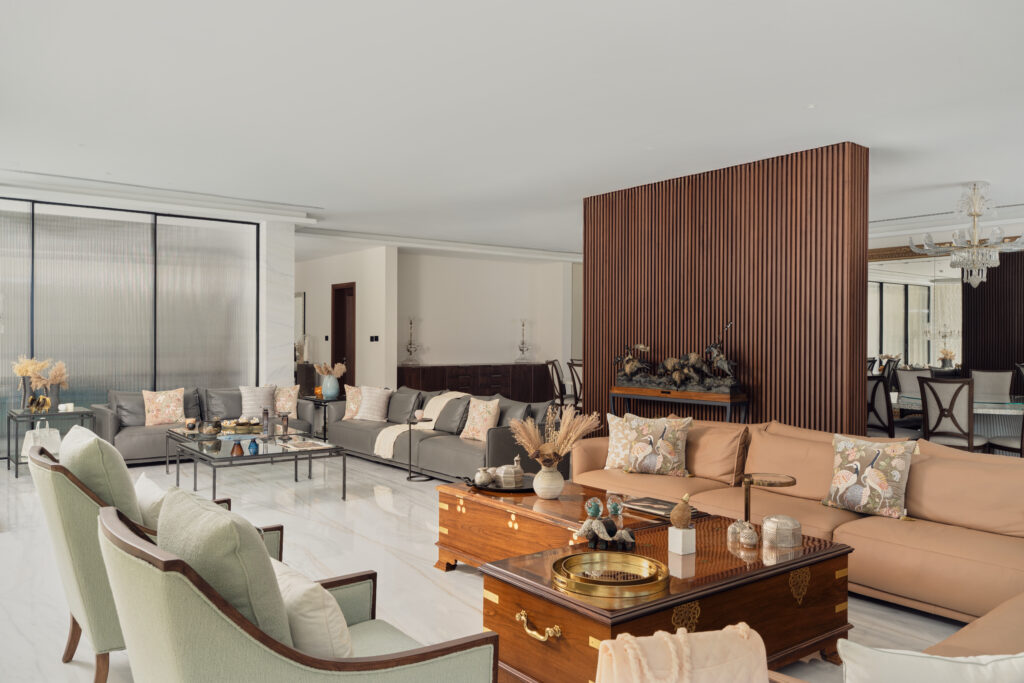
“Our design philosophy centers on creating authentic cultural dialogue through space,” explain the designers. “The project showcases how traditional Indian craftsmanship can be seamlessly integrated with contemporary living requirements.”
That dialogue begins immediately upon entering the double height lobby, where a wavy Sicis installation recalls the movement of the nearby sea while a vibrant Srinathji Pichwai introduces a distinctly Indian visual vocabulary into the Omani coastal setting. Throughout the villa, references to landscape remain subtle yet constant. Fluted marble walls echo the rhythm of waves. Bronze mirrored surfaces capture fragments of light. Turquoise reflections from the pool travel into the bar area, where custom glass murals and patinated ceilings dissolve the boundary between interior and exterior.
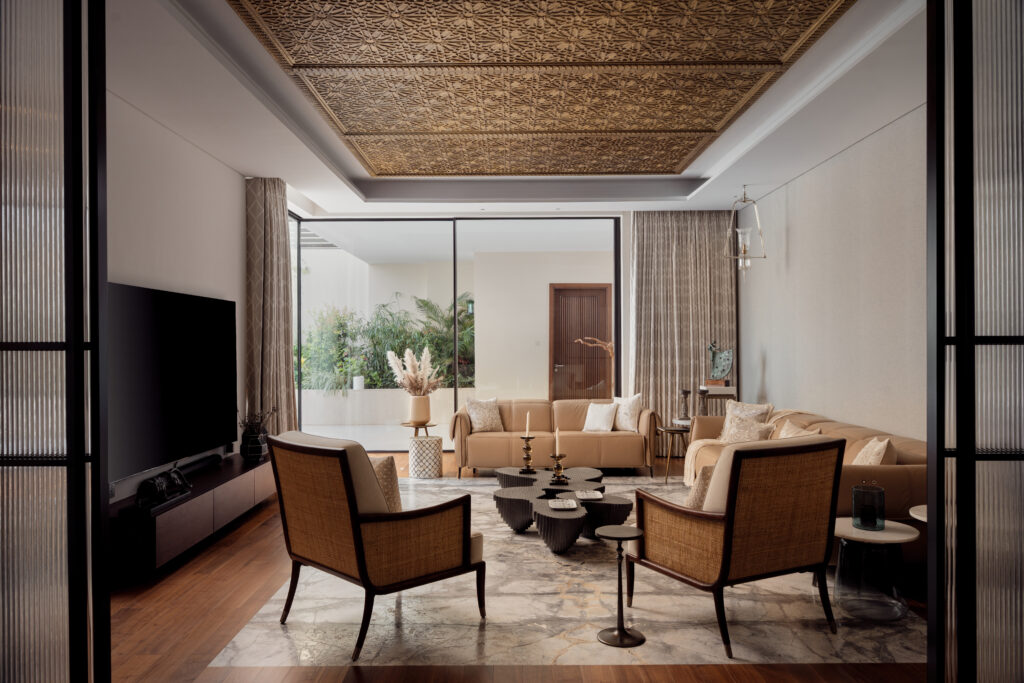
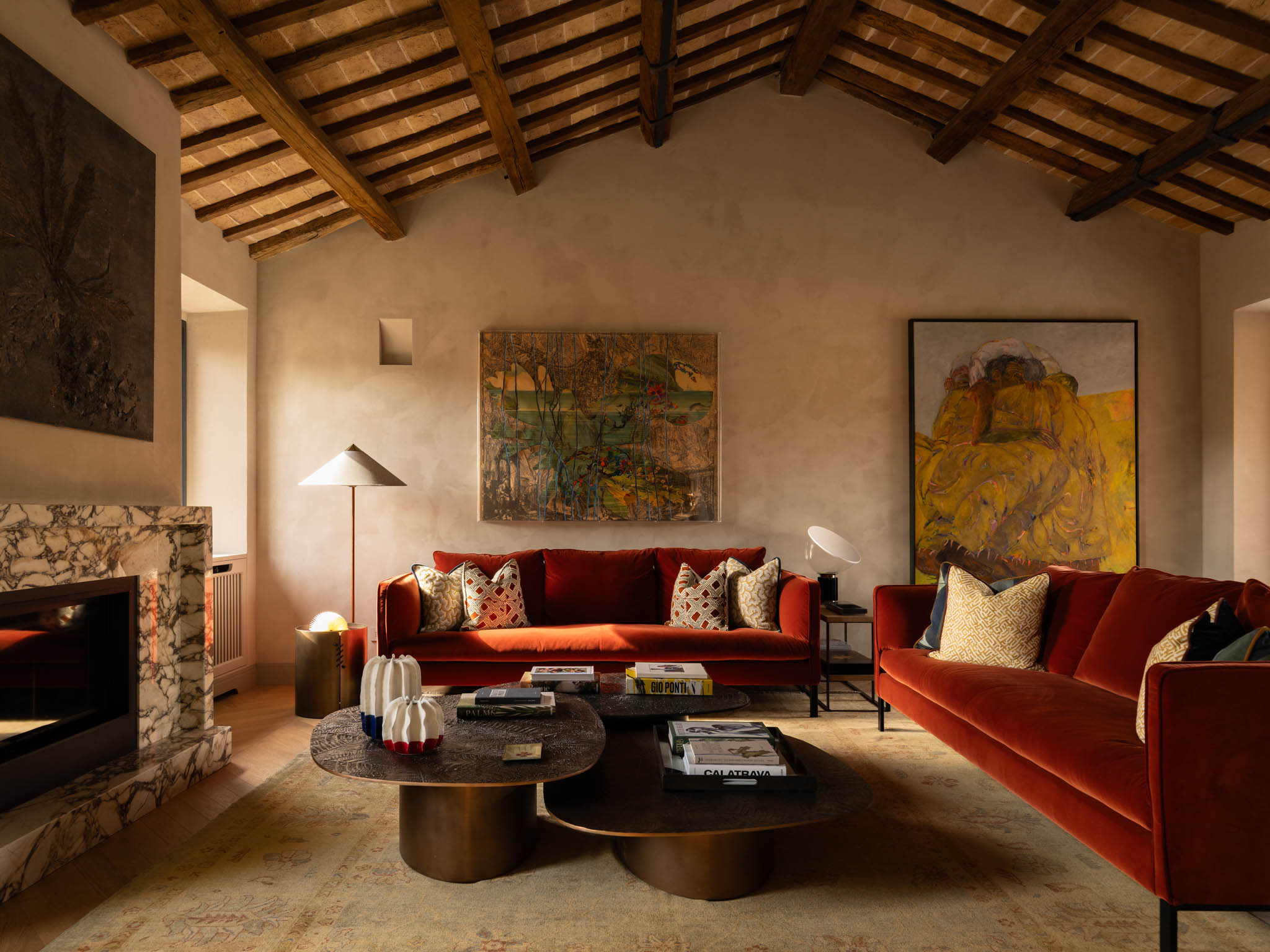
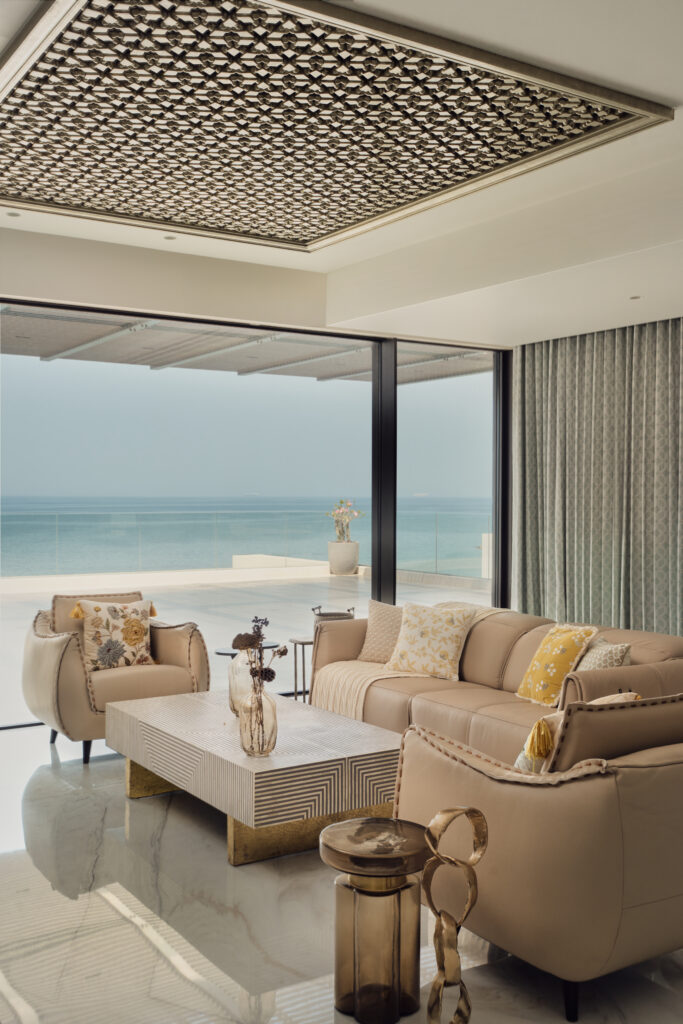
Rather than pursuing minimalism, the designers embrace decoration as an emotional device. In the family room, a geometric brass ceiling competes visually with leather finish Grey Myst marble flooring bordered by wood. Nearby, a sculptural Dali inspired table sits among Natuzzi seating and wicker backed armchairs, balancing theatricality with intimacy. Designer Sangeeta describes this as her favourite room in the house, perhaps because it most clearly captures the project’s larger ambition: to create spaces that feel collected rather than composed.
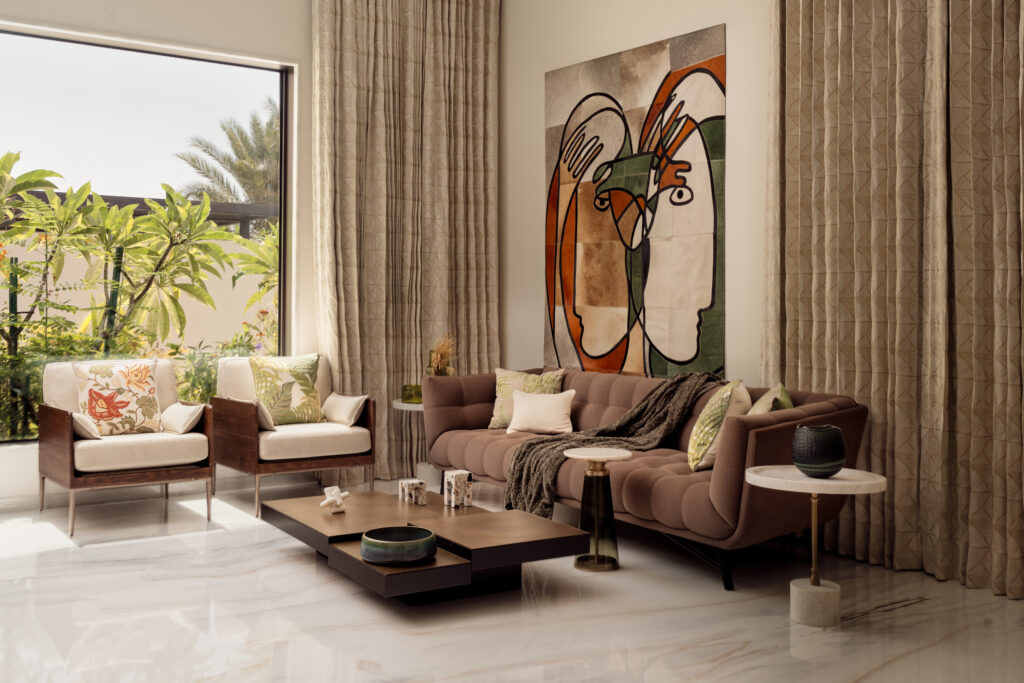
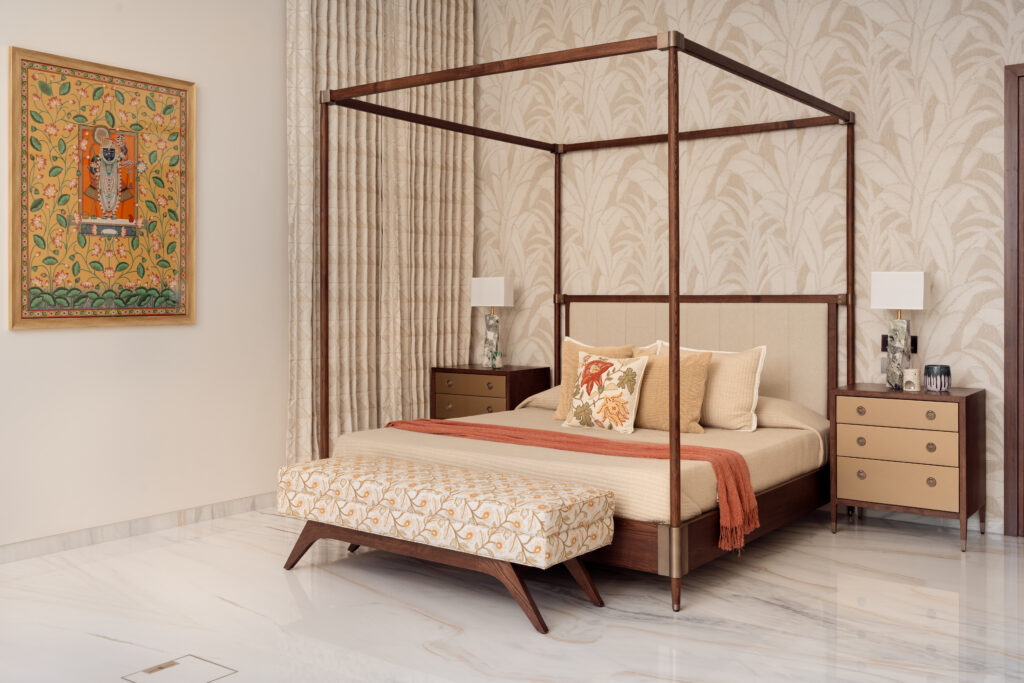
This sense of intimacy becomes even more pronounced in the private areas of the residence. One guest bedroom is wrapped in rust, olive green, and brown tones, with embroidered fabrics and a Picasso inspired tapestry creating a mood closer to that of a collector’s apartment than a beachfront villa. Another room features molded plaster walls depicting cascading wildflowers and foliage, transforming architecture into a form of sculpture.
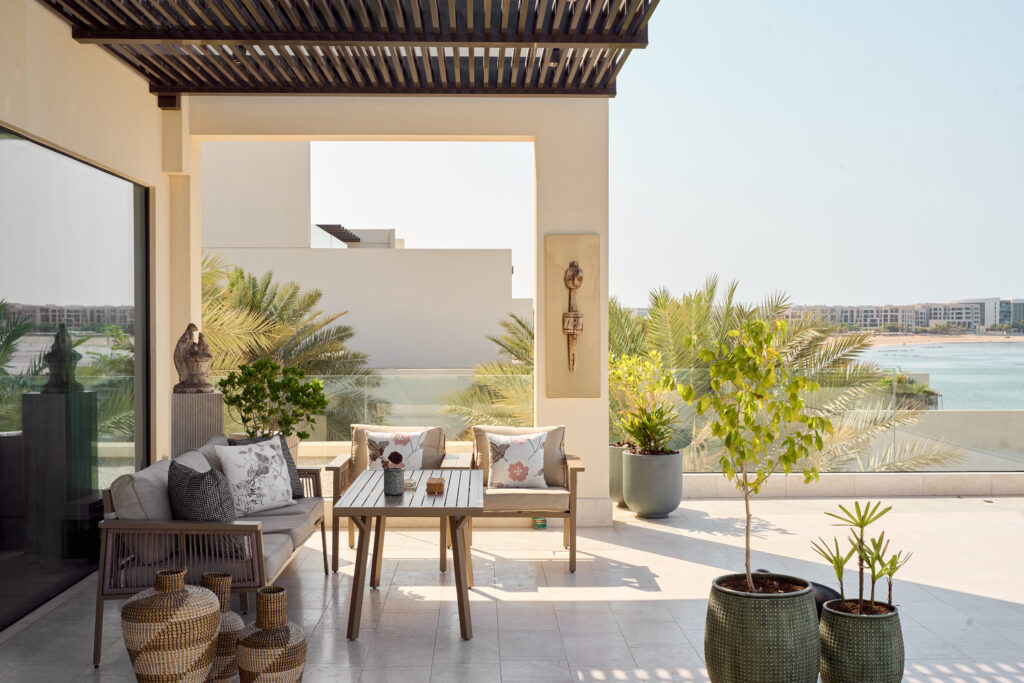
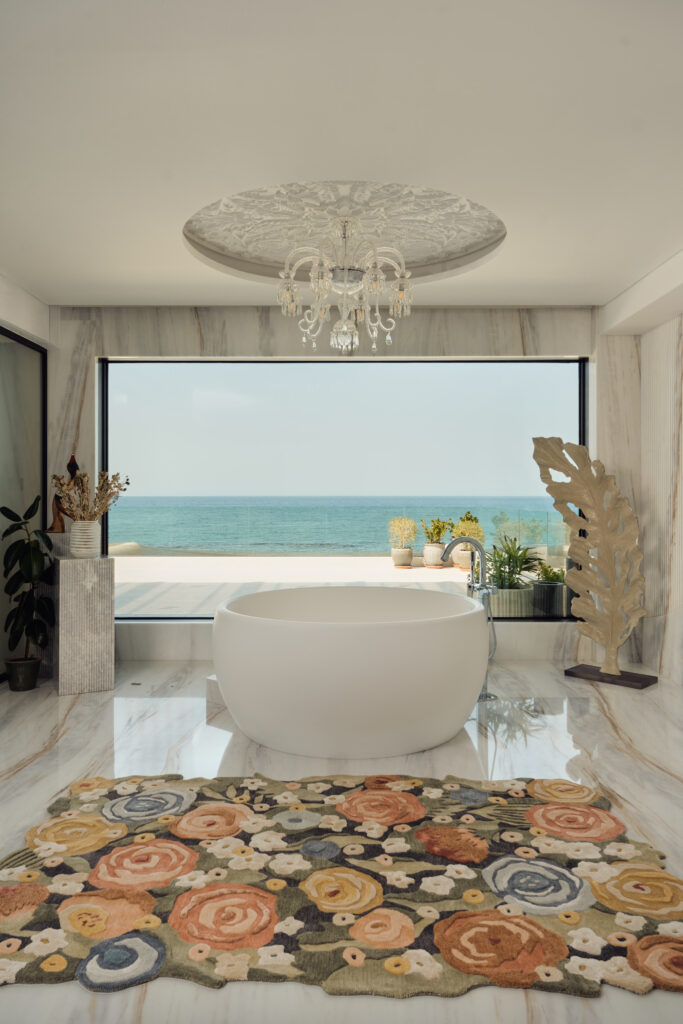
Even the bathrooms resist neutrality. In one, pink Portuguese marble is waterjet carved with hand sketched floral motifs. In another, fluted Bianco Lassa walls and a crystal quartz divider create what Sangeeta calls her “favorite bathroom,” a space designed so there is “not a single dull moment.” Elsewhere, an Antonio Lupi basin glows against lace like Sicis mosaics in shades of blush and terracotta, turning the powder room into a jewel box of colour and texture.
The emotional center of the house, however, may be the mandir. Executed entirely in white Lassa marble and backed with three dimensional plasterwork finished in champagne leafing, the temple introduces stillness into an otherwise visually layered home. Its beaten brass doors, detailed with enamel and marble inlay, reflect the project’s wider commitment to artisanal preservation. Across the villa, collaborations with workshops in Jaipur, Udaipur, Mumbai, and beyond ensure that traditional techniques remain central to the architecture rather than merely decorative additions.
Yet despite its scale and material richness, the villa never feels static. The residence moves continuously between grandeur and softness, between ceremonial spaces and deeply personal ones. Nowhere is this more evident than in the art room, originally intended as accommodation for eighteen dogs before being transformed into a vibrant creative studio for the homeowner. It is a detail that reveals the house at its most human: adaptable, playful, and ultimately lived in.
“Every space tells a story through carefully curated elements,” note the designers. In this Omani villa, those stories unfold through marble veins, embroidered surfaces, collected objects, and the shifting coastal light of Muscat itself. The result is not simply a luxurious home, but a meditation on how interiors can hold multiple geographies, generations, and identities within a single architectural language.