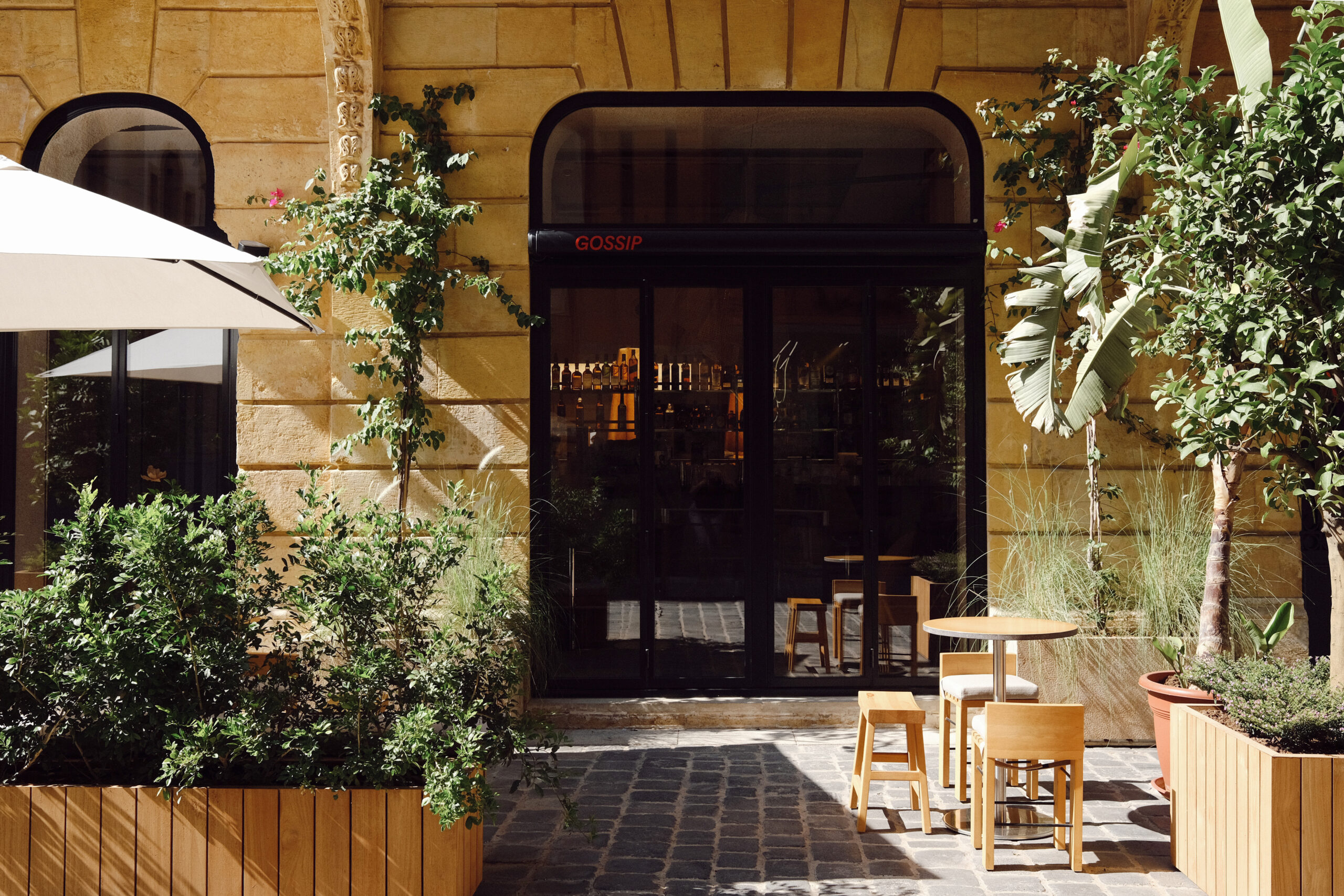
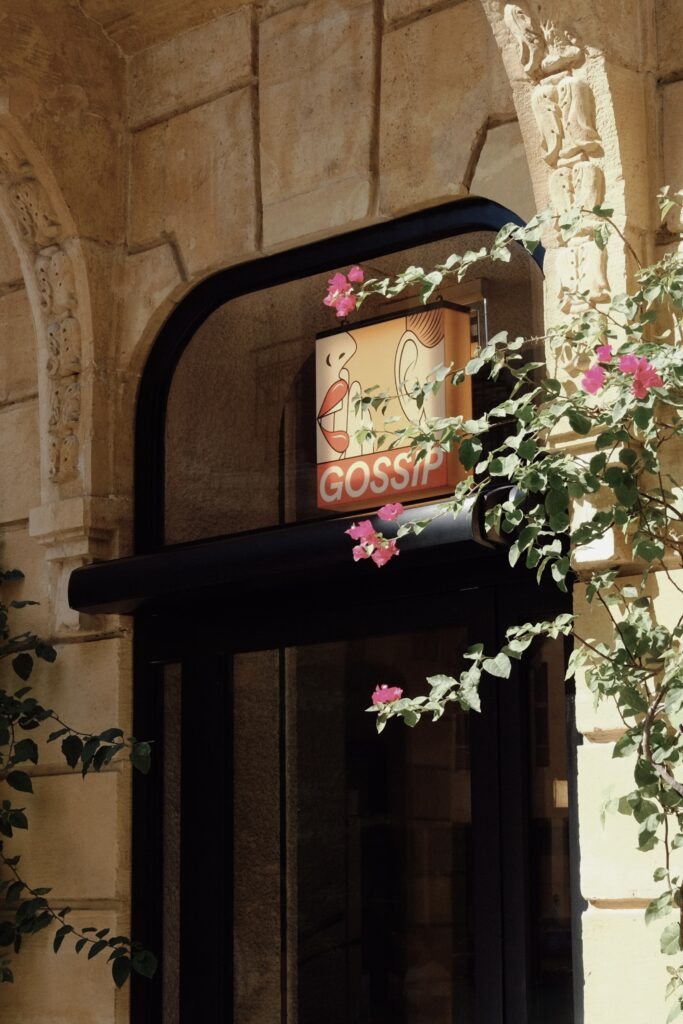
In Beirut, few cities carry material memory quite like its streets. Stone facades marked by time, uneven pavements, shifting layers of history and reinvention all coexist within a dense urban fabric that rarely separates architecture from lived experience. It is precisely this tension between permanence and transformation that defines MARIAGROUP’s latest hospitality project for Aishti, Gossip.
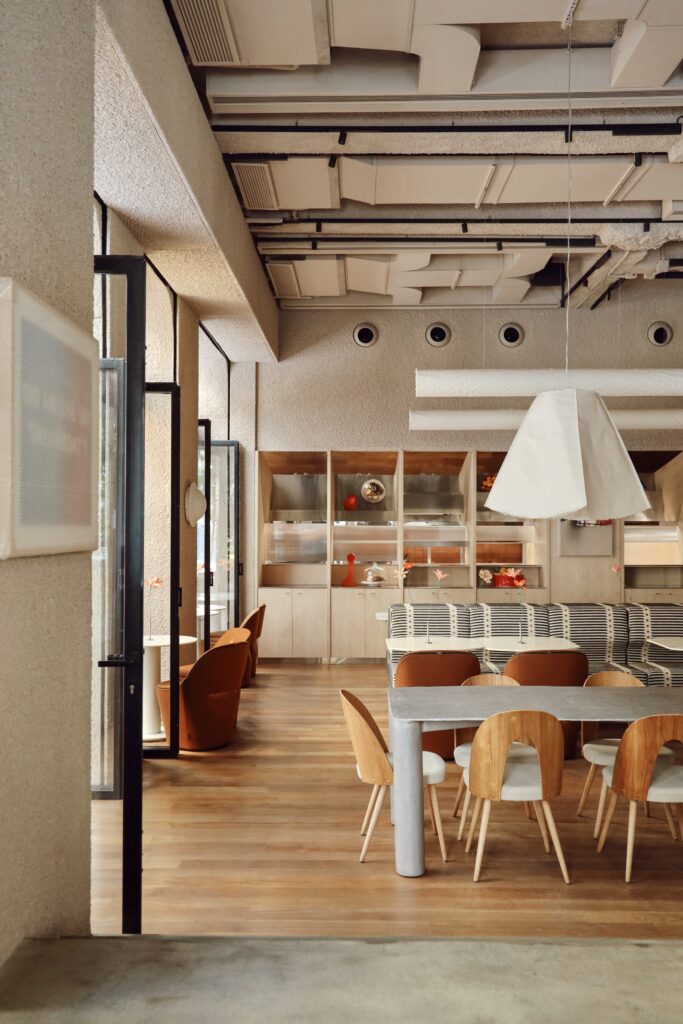
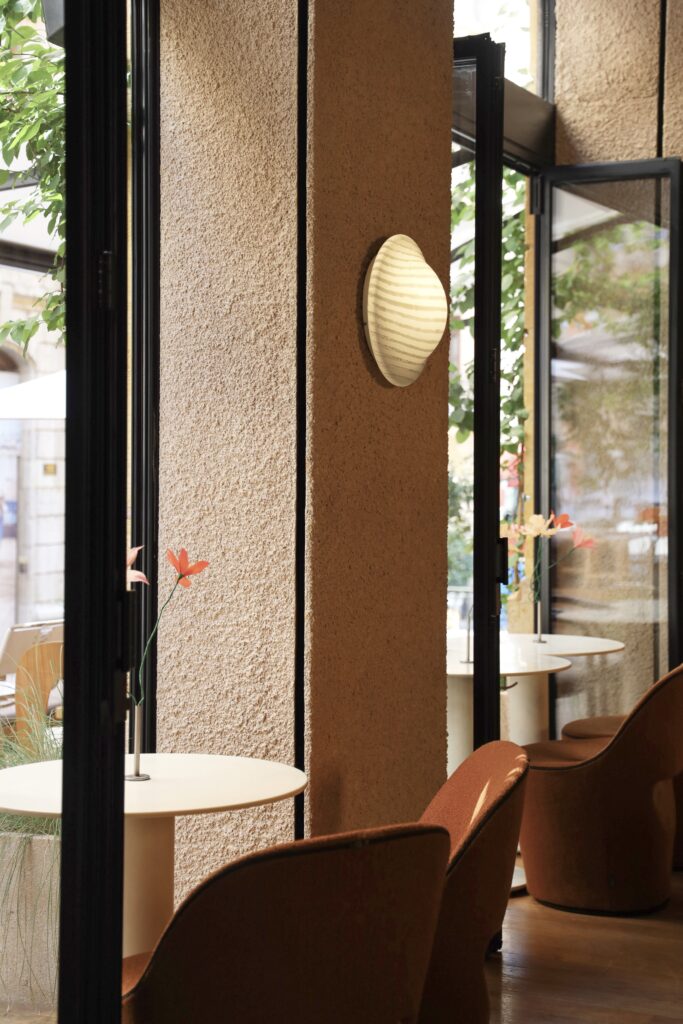
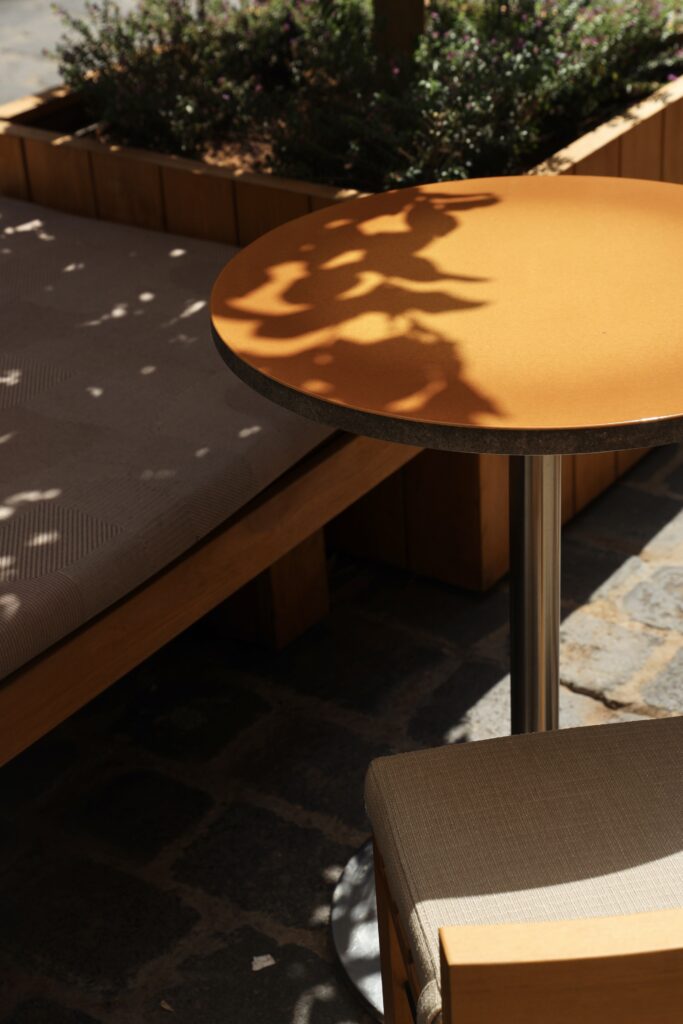
Conceived inside a historical building, the space unfolds less as a conventional restaurant interior and more as an orchestrated sequence of atmospheres. Rather than imposing a radically new identity onto the structure, the Beirut and London based studio worked with the existing shell, allowing materiality itself to become the project’s primary language.
At the center of the main dining space, vintage chairs surround a custom cast aluminum table beneath a washi paper pendant by MARIAGROUP. Nearby, works by Damien Hirst and Richard Prince introduce a sharp contemporary counterpoint against maple wood paneling and heavily textured walls. The juxtaposition feels intentional but never forced. Art here does not decorate the architecture. It participates in it.
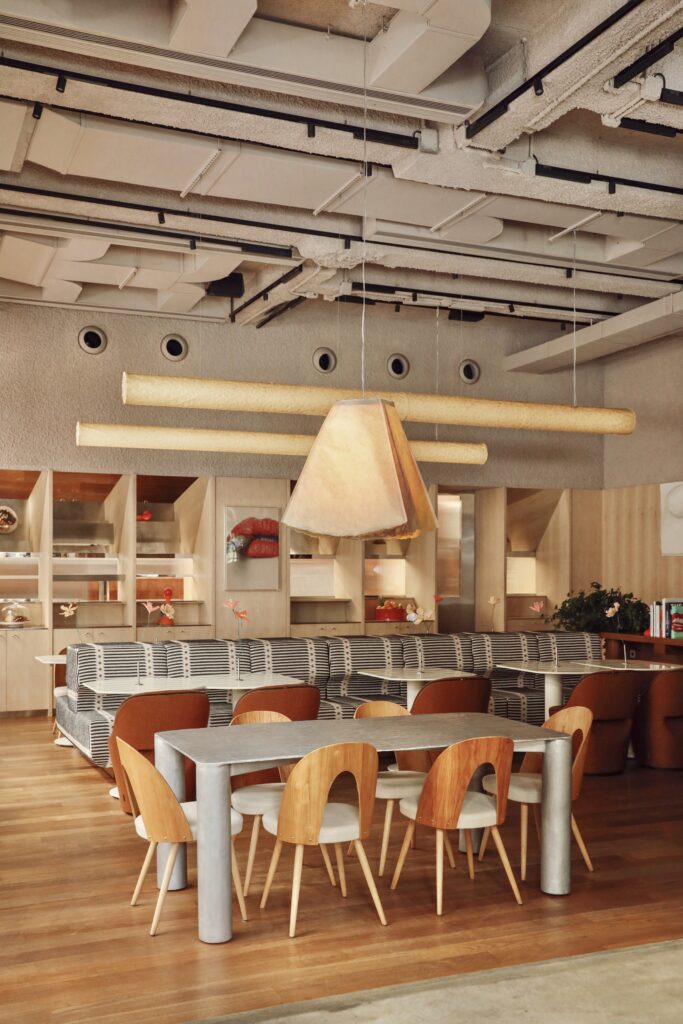
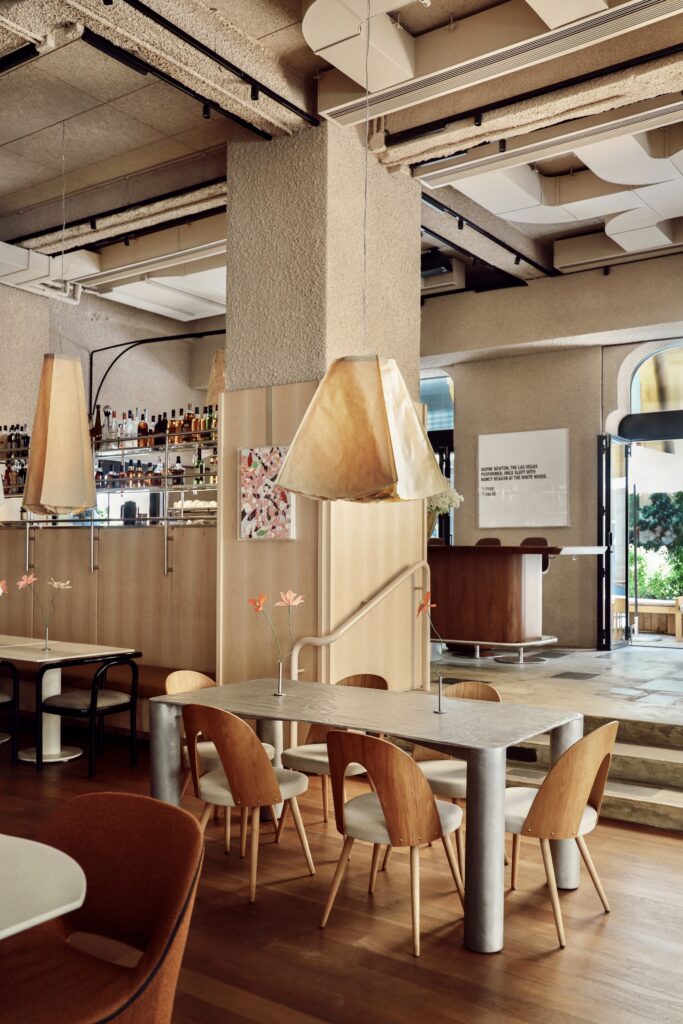
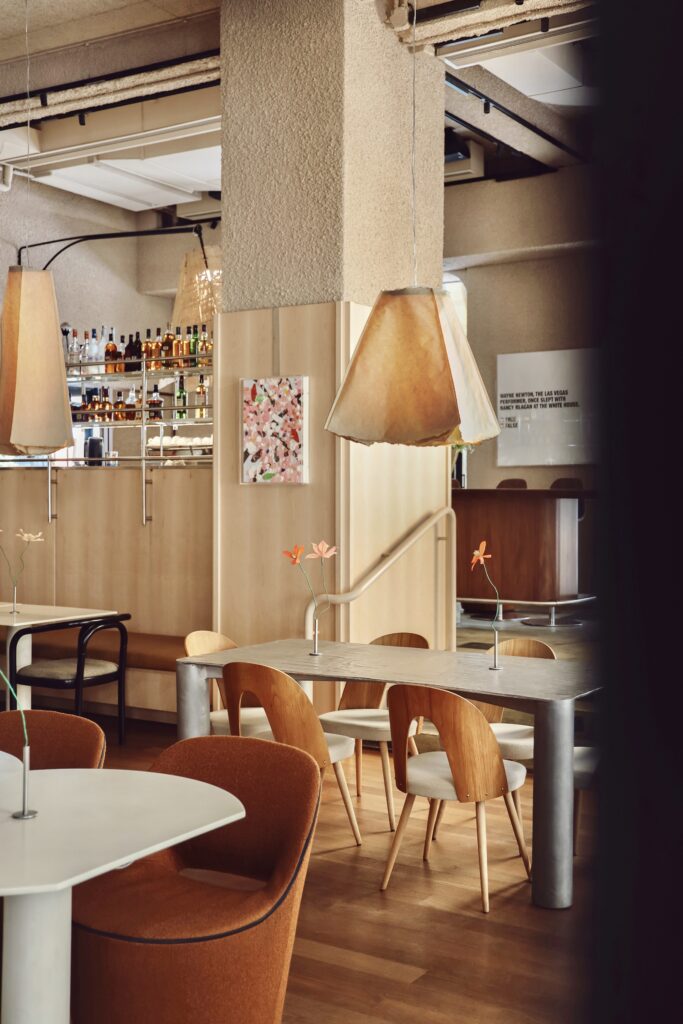
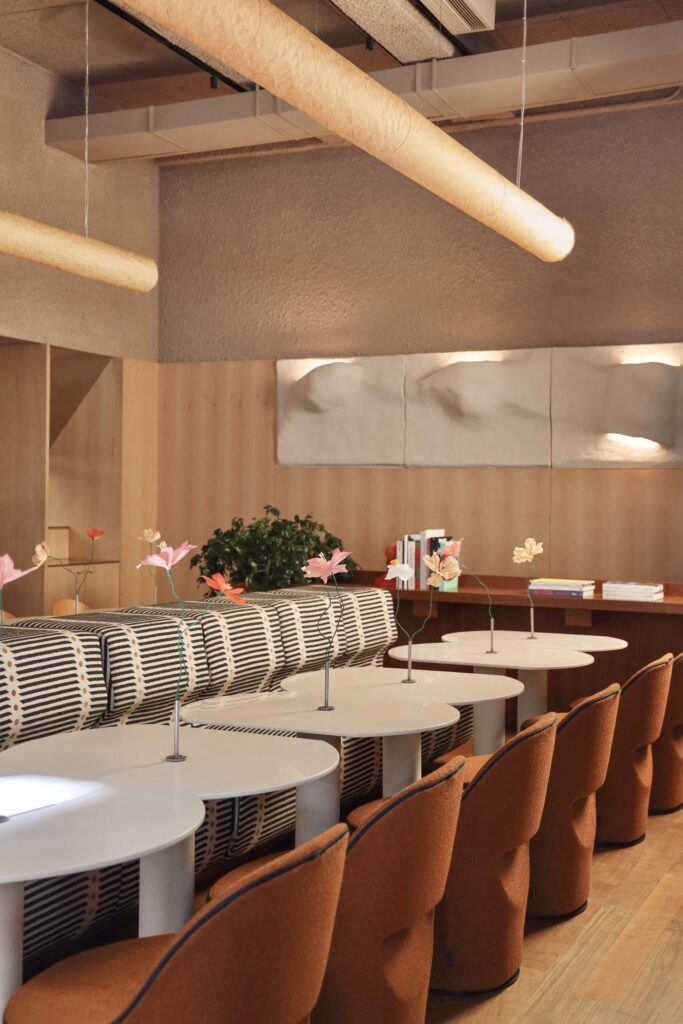
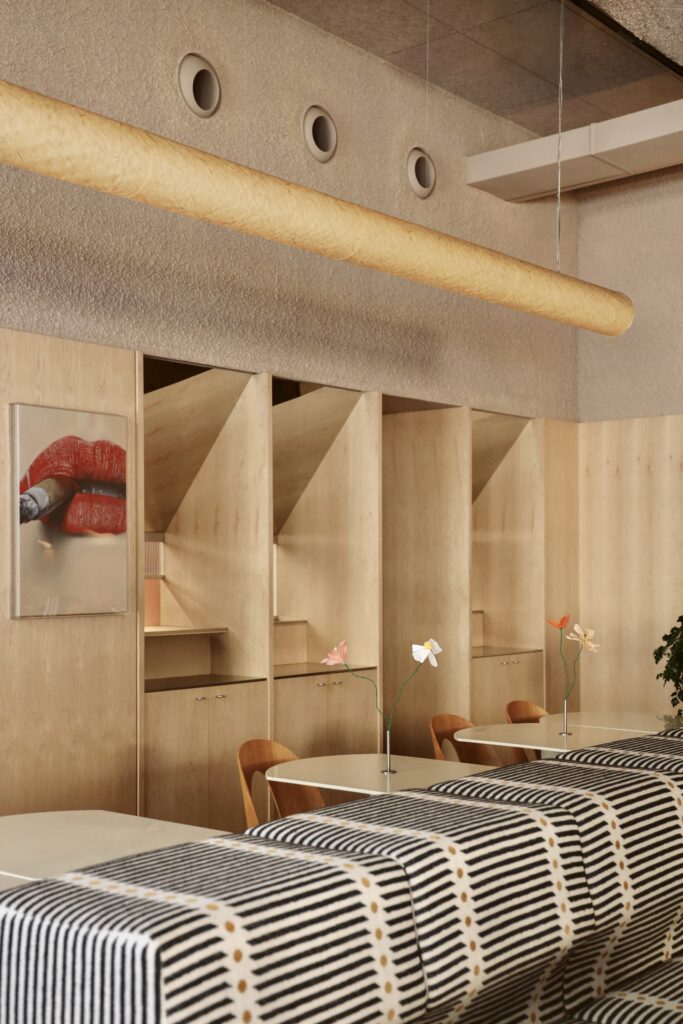
A double sided bench quietly organizes the dining room, anchored by a sculptural concrete wall light specially commissioned from Marylyn & Carlo Massoud. Throughout the project, furniture and lighting operate architecturally, defining movement, framing views, and creating moments of intimacy within the larger spatial composition.
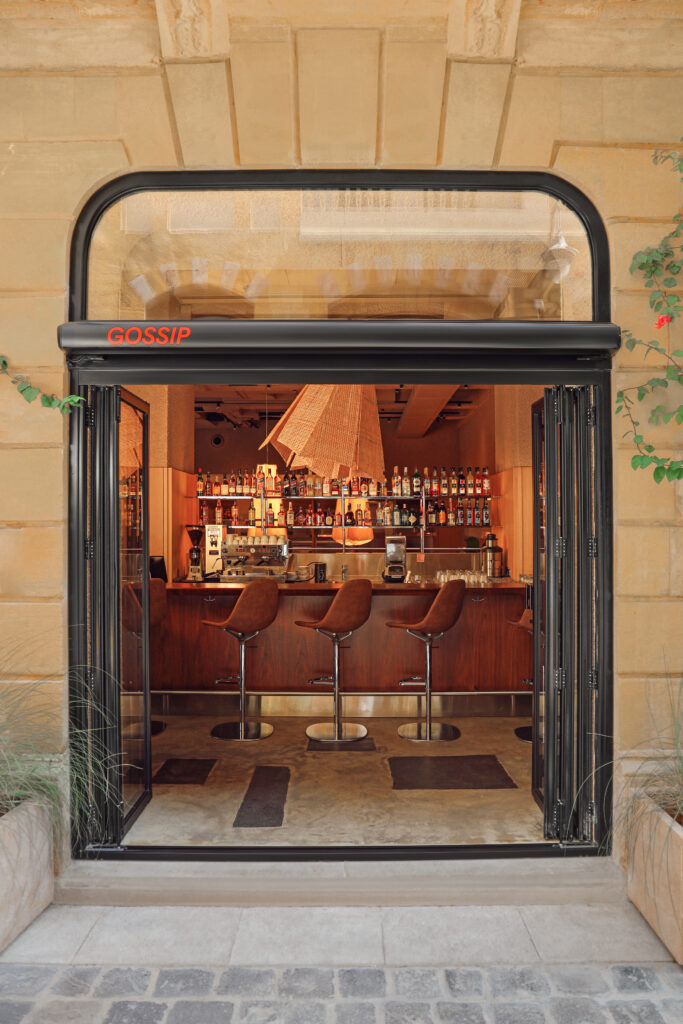
One of the project’s most striking gestures emerges at the bar area, where solid walnut sits atop cast in situ concrete flooring embedded with basalt stones. The detail mirrors the cobblestones just outside the building, extending the city’s texture directly into the interior and dissolving the threshold between street and space. Above, an oversized woven wicker wall lamp hovers almost like a floating installation, softening the rawness of the surrounding materials.
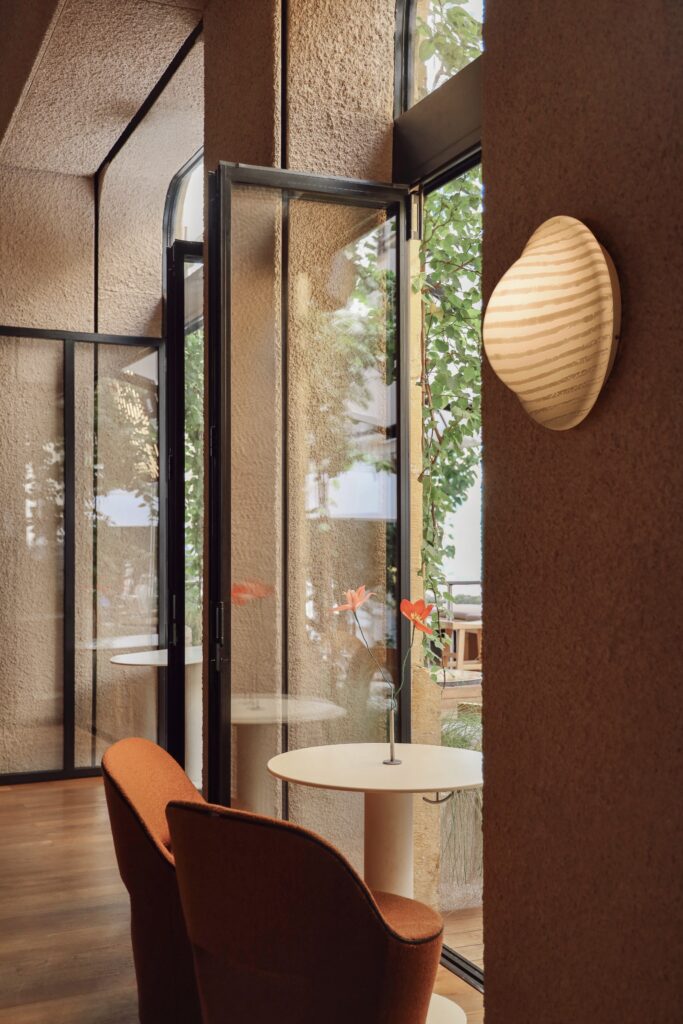
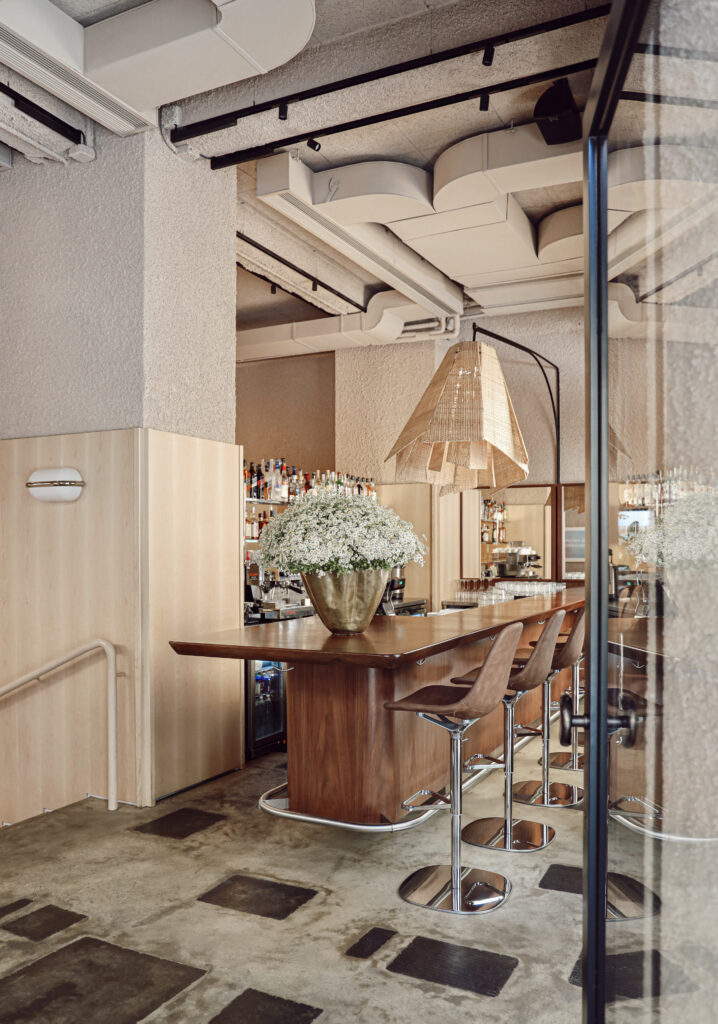
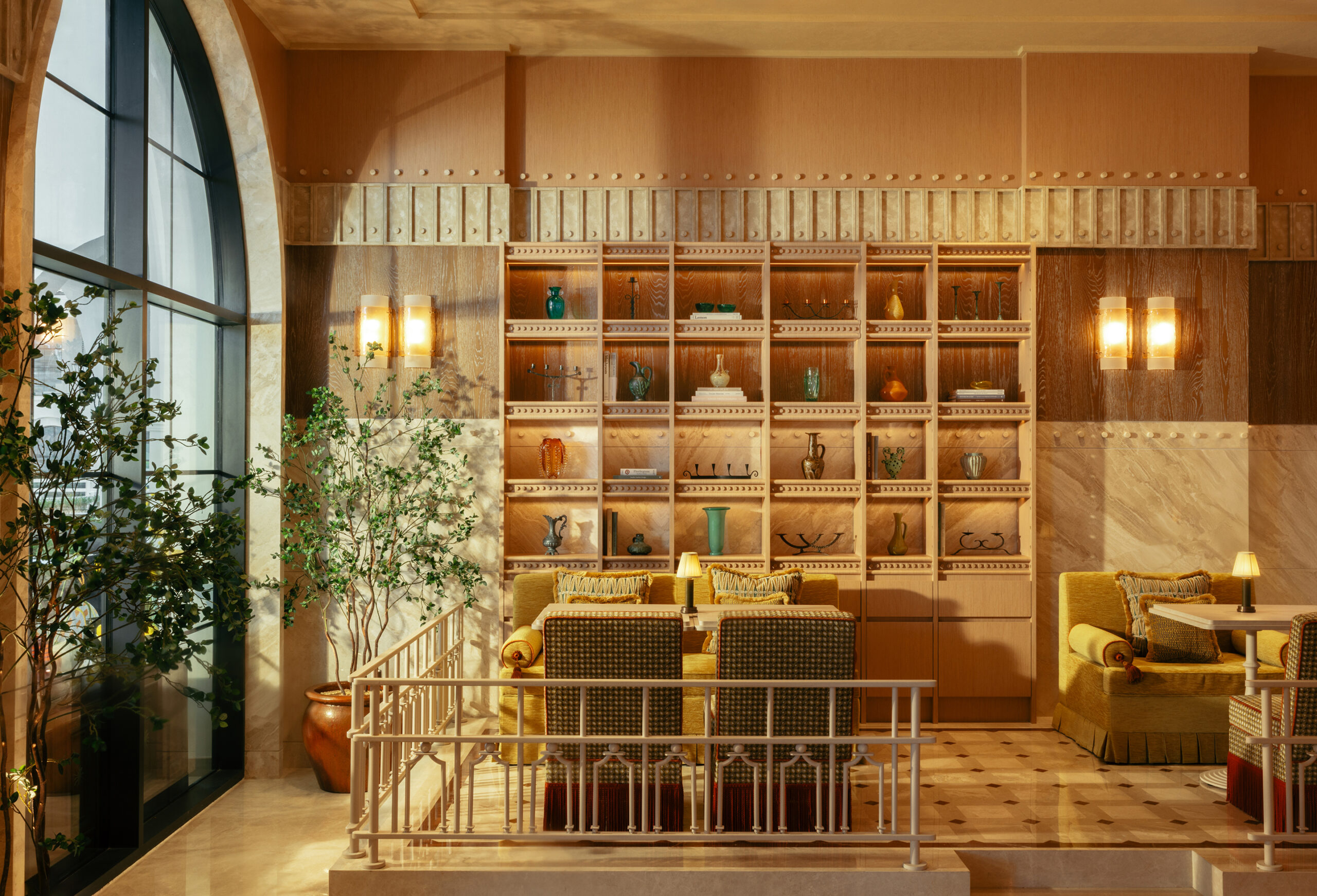
Elsewhere, window seating carved into the textured walls creates quieter moments of pause, while mirrored ceilings and cast cement tiles in the restroom areas further amplify the project’s layered sensory language.
Founded by Michèle Chaya and Georges Maria, MARIAGROUP has become known for an architectural approach that resists spectacle in favor of atmosphere, tactility, and emotional resonance. Here, that philosophy feels particularly aligned with Beirut itself: a city where beauty often emerges through contrast, imperfection, and accumulation rather than polish.
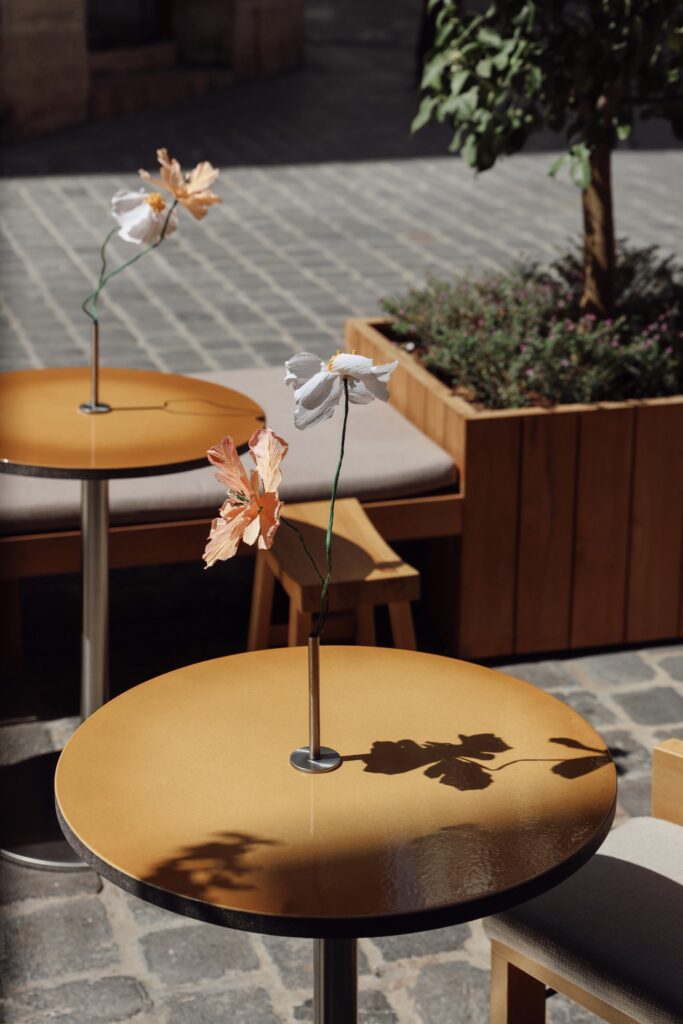
The result is a space that feels deeply rooted in its context without becoming nostalgic. Instead, MARIAGROUP proposes a contemporary Beirut interior defined not by excess, but by density: of texture, memory, material, and cultural references.