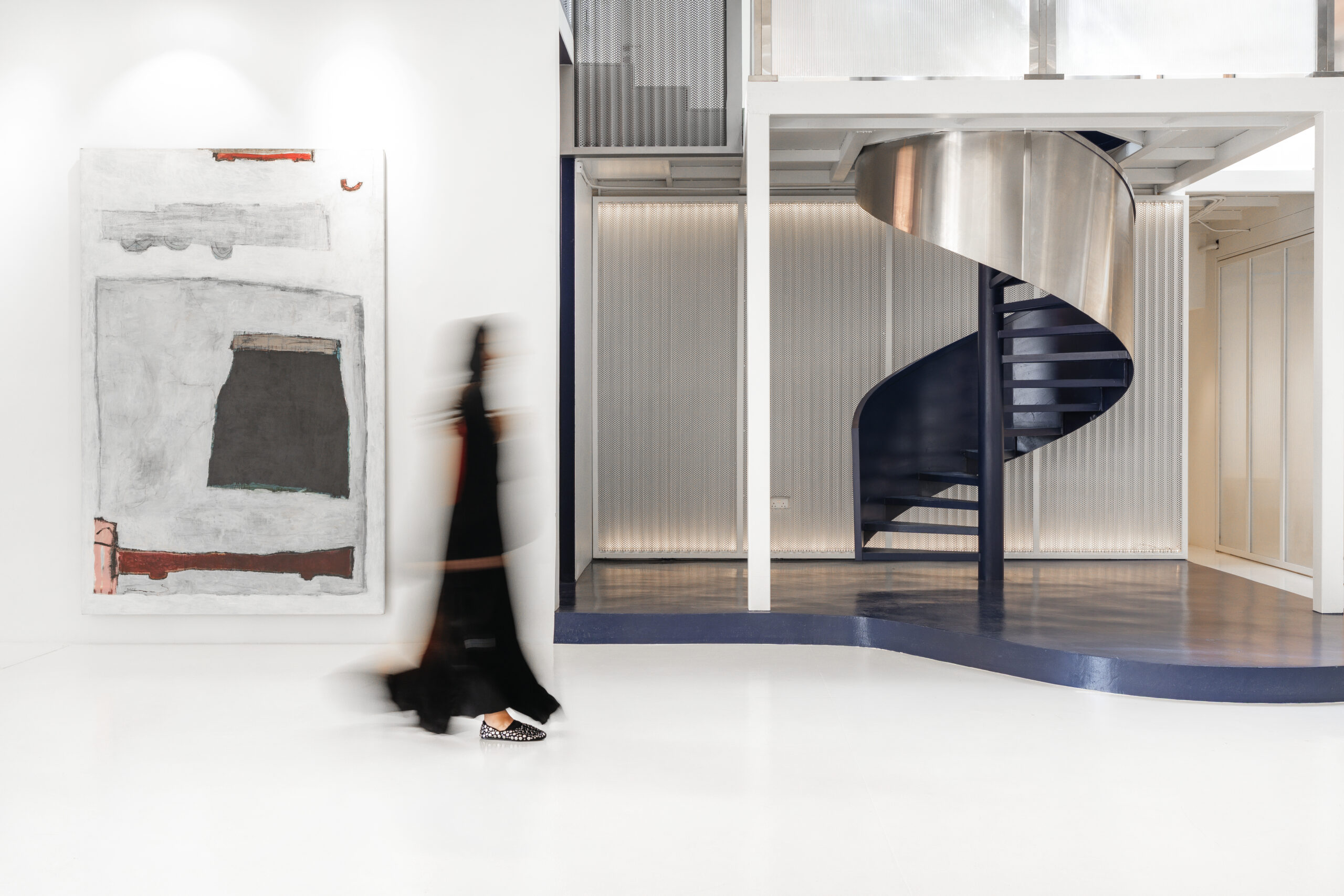
There is a concept in architectural theory for a building that keeps its former life legible beneath its new one: the palimpsest, a surface written over without ever being fully erased, so that the earlier text remains faintly present beneath the later one. Lift, the new cultural platform occupying a former industrial shell in Riyadh’s JAX District, is exactly this kind of structure, and it rewards being read as one.
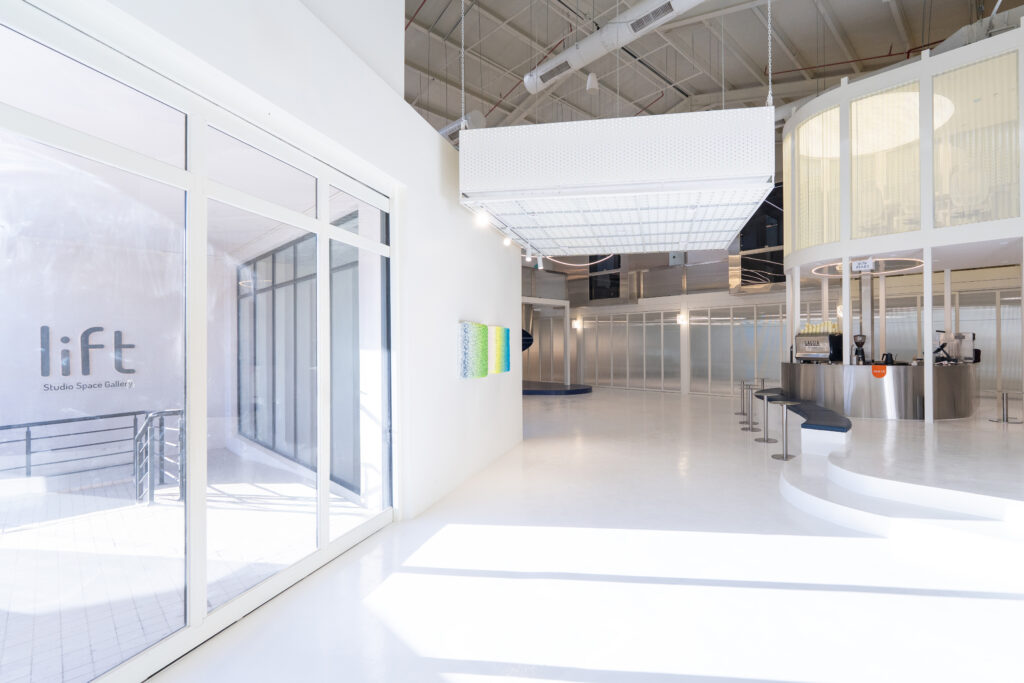
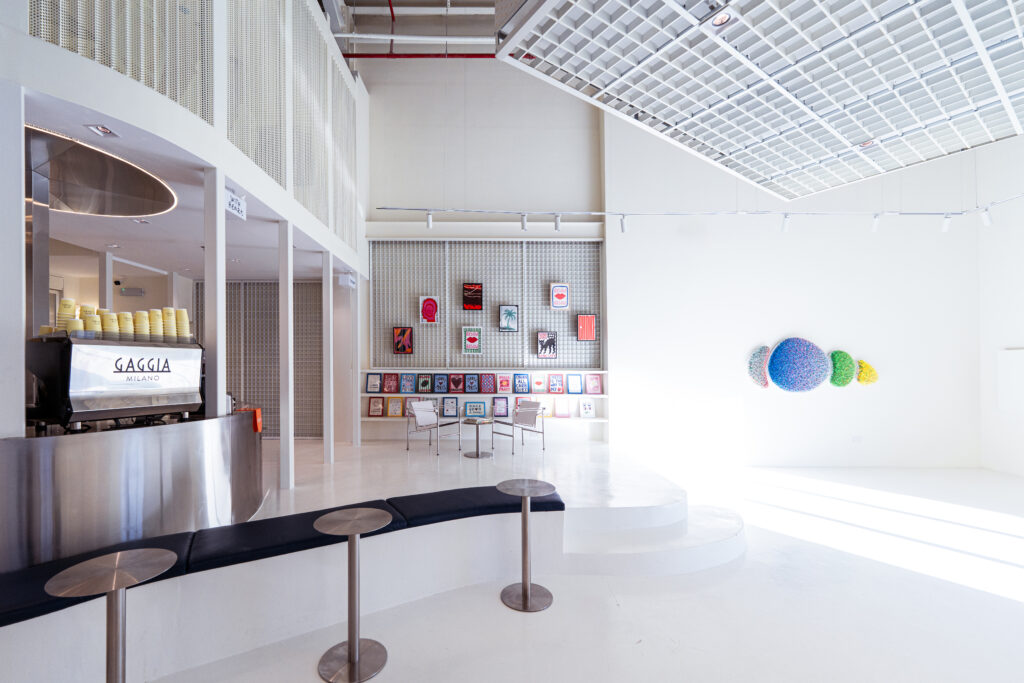
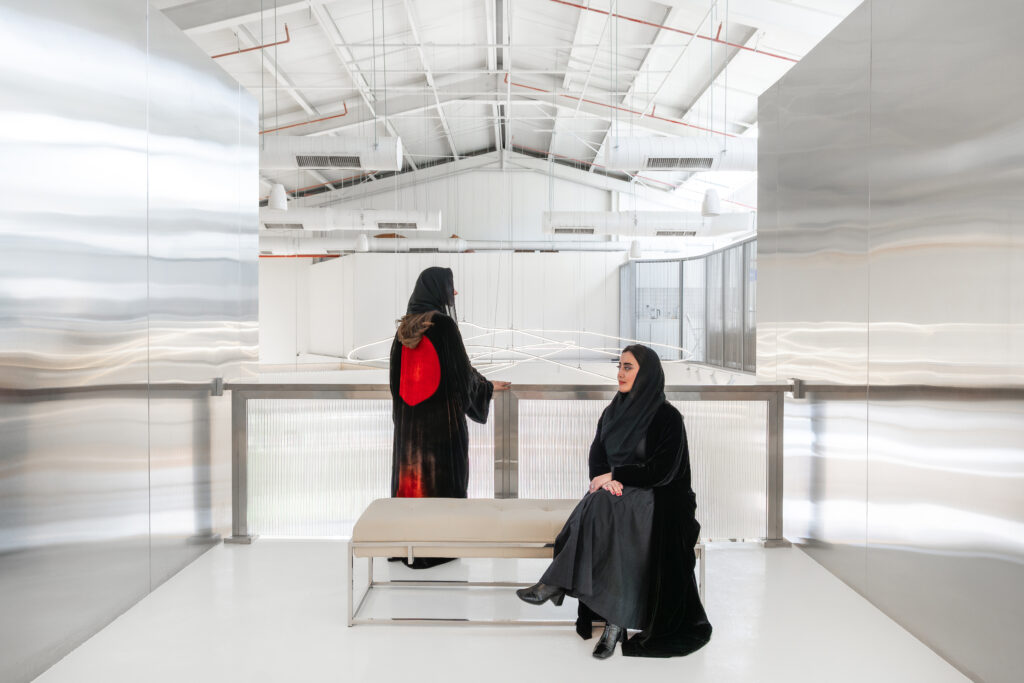
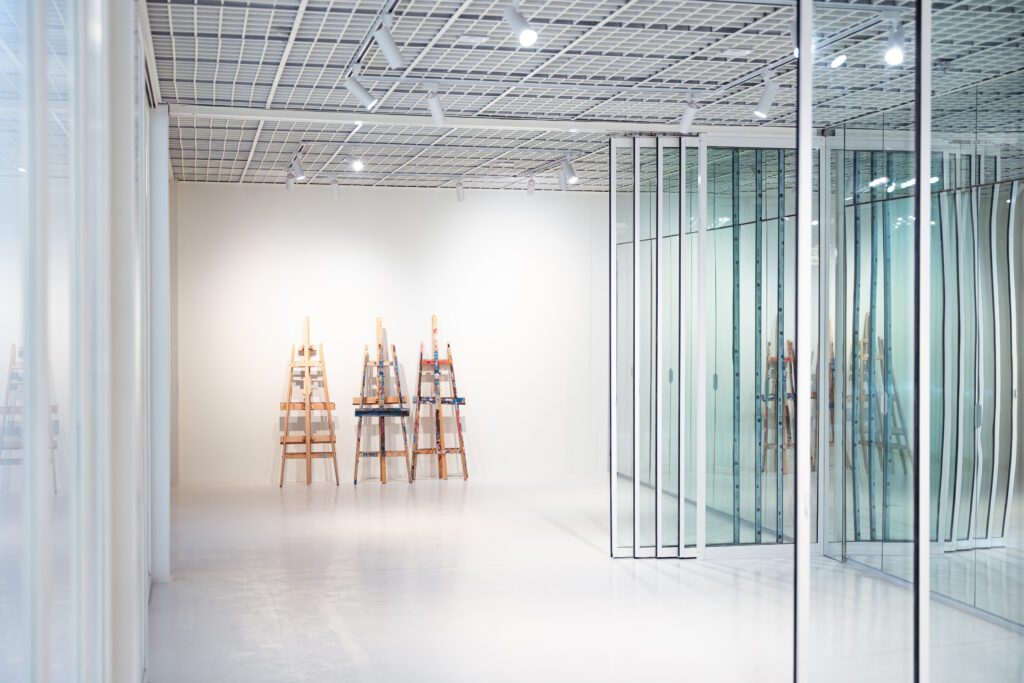
Founded by HH Princess Nouf bint Abdulaziz AlSaud and designed by Quartz Architects, led by Shahad Alsudais with Antonio Soreca and Lubna Tayeb, Lift did not treat its site as raw material to be neutralized into an ideal, generic gallery volume. It treated the site’s own industrial history as a text worth preserving: exposed structure, a double height volume, an unpretentious material palette inherited directly from the building’s working past. The gallery does not erase its former function; it holds that former function legible, quite deliberately, beneath its current one.
“Lift came from a personal need to create a space that supports creatives beyond the final outcome, focusing on the process, experimentation and the journey behind the work. The scene today feels bold and self assured, with creatives shaping their own narratives rather than following expectations” explains HH Princess Nouf bint Abdulaziz AlSaud.
This is a more consequential decision than it might first appear. Architecture has two principal ways of expressing continuity with the past: it can efface prior use entirely, offering a structure as though it had no history at all, or it can allow the trace of that history to remain visible, so that transformation reads not as replacement but as accumulation: one layer of use added onto another, rather than one erasing the other. Lift chooses the second path, and in doing so makes a quiet but precise argument, that a new creative economy need not disown the industrial one it grows out of, but can be built literally within its physical memory.
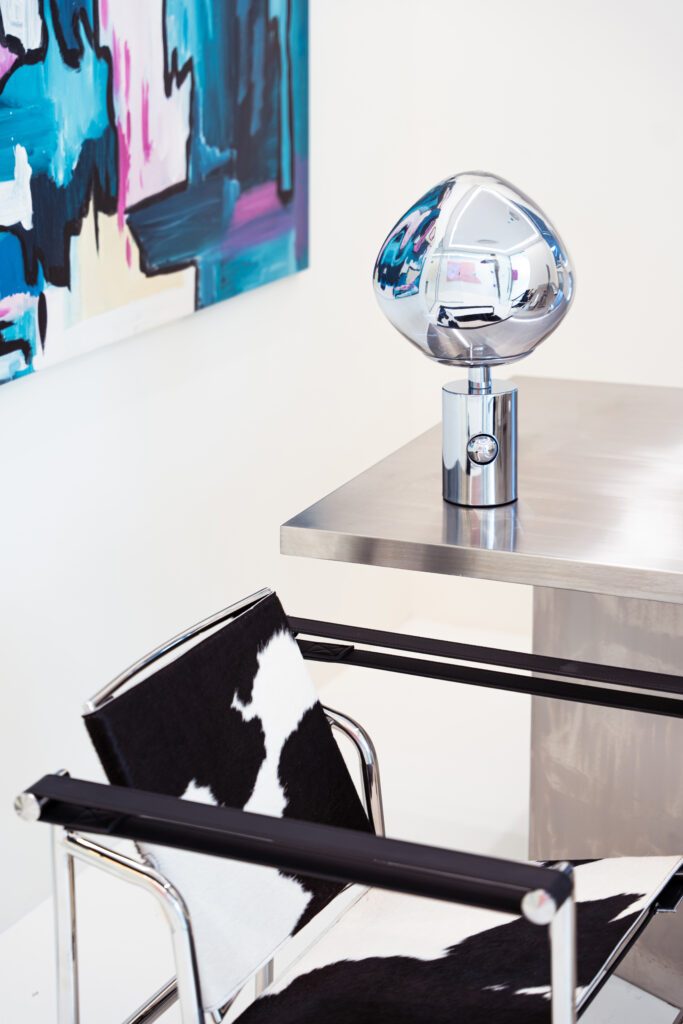
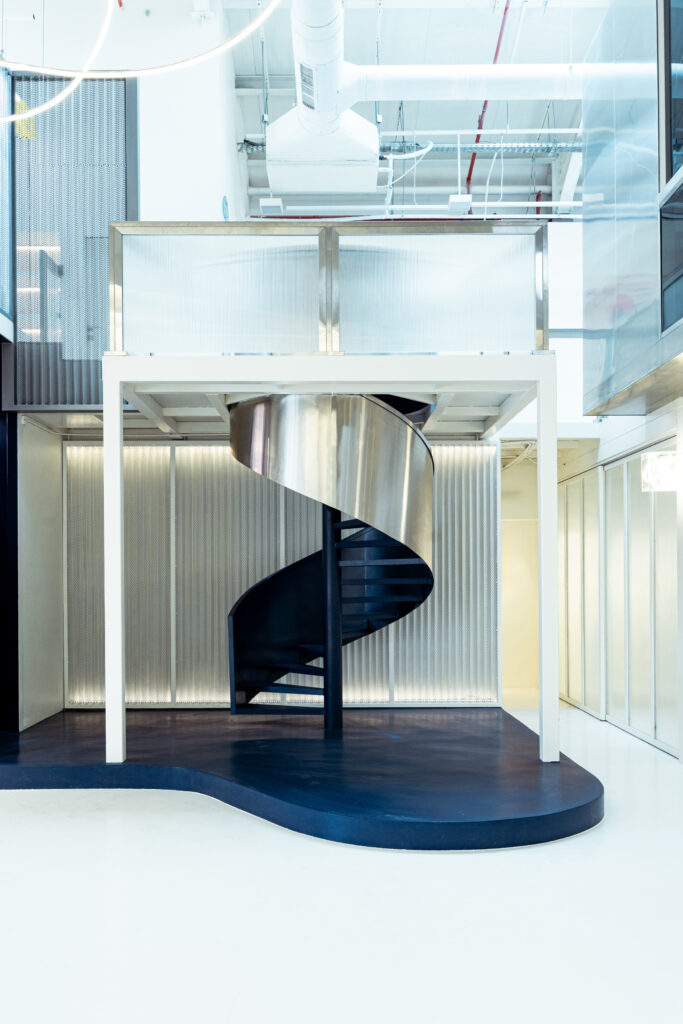
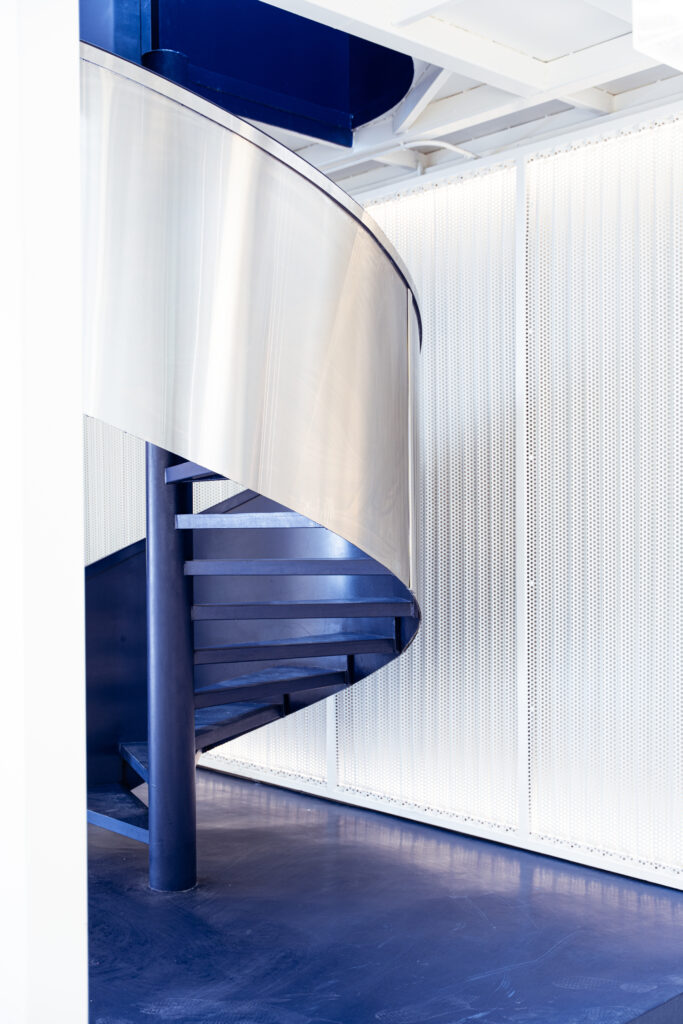
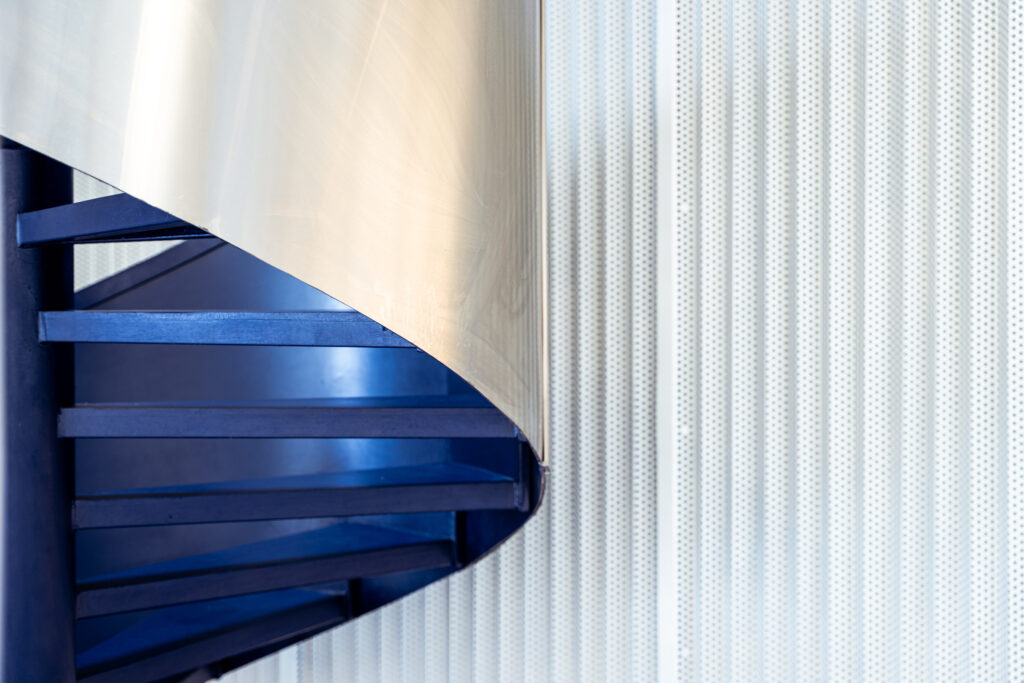
That argument extends structurally as well as materially. The building’s chrome spiral staircase, rising through the double height volume to connect the public ground floor with the working mezzanine above, functions less as ornament than as syntax: the single element that binds the gallery’s public register to its operational one into one coherent, legible whole. Lead architect Shahad Alsudais describes the underlying logic in essentially the same terms: “Identity is shaped by movement and collaboration. We see it as a place where ideas are explored, shared and developed over time. Architecturally, this led to a fluid spatial layout that supports exhibition, production and interaction” says Shahad Alsudais. “We wanted to keep the space very flexible, translating Lift’s collaborative identity through adaptable elements and multi purpose areas.”. The staircase is that sentence, rendered spatially.
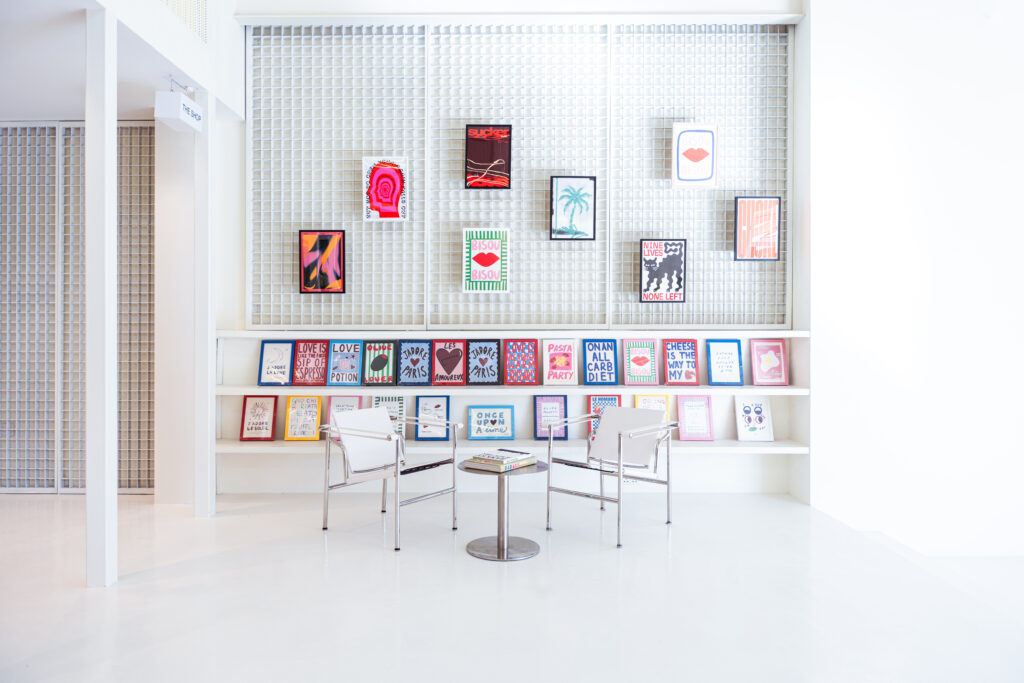
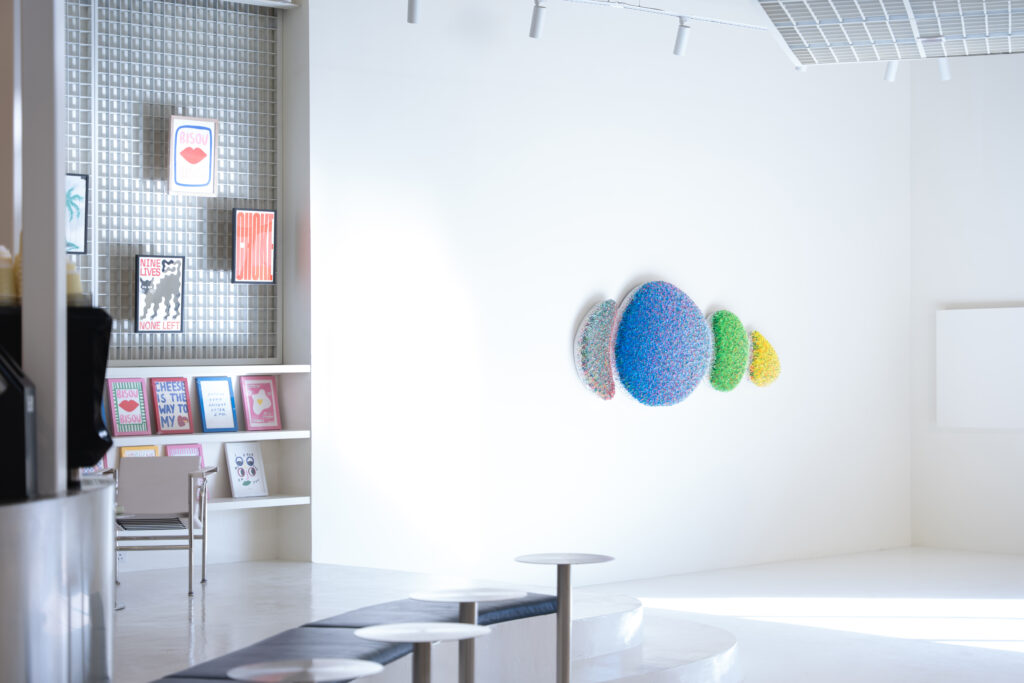
Read this way, Lift is not simply a designed cultural venue; it is a considered piece of architectural reasoning about what a transitional economy is permitted to keep. Vision 2030 asks, at its core, what continuity can look like inside a project of reinvention. Lift answers architecturally, choosing memory over erasure, palimpsest over blank page. It becomes, in HH Princess Nouf’s own words, “a quiet yet influential part of the real cultural landscape,” quiet because it does not announce its intelligence, influential because that intelligence is built into the walls themselves.