You reach the front door of this apartment in the English Quarter complex on Mytnaya Street, in a part of Moscow still lined with buildings raised in the Post Constructivist style of the 1930s, and the building outside has already told you what to expect inside. Svetlana Ozerova, the designer behind the project, took that architecture as her brief before her clients ever said a word. “Post Constructivist interiors and architecture of the 1930s served as stylistic references,” she says, “with a color palette of complex light and medium tones, natural materials, and understated yet elegant shapes.”
The clients themselves, a married couple without children, set a high bar from the first meeting. “The clients for this apartment are intellectuals, thoughtful, well read, and spiritually sensitive,” Ozerova says. “Their high standards for quality work, their meticulous attention to detail and textures, became clear” almost immediately.
The apartment had good bones and real limits: an open plan interrupted by a load bearing column, a pilaster with reinforced concrete capitals, low ceilings that fought for every centimeter of ventilation and air conditioning. Rather than fight the constraints, Ozerova built a logic around them. “We relied on an axial design method,” she explains. “All rooms have an axis of symmetry, the axes of movement in space lead toward light or an object of interest, and all rooms are regularly shaped.”
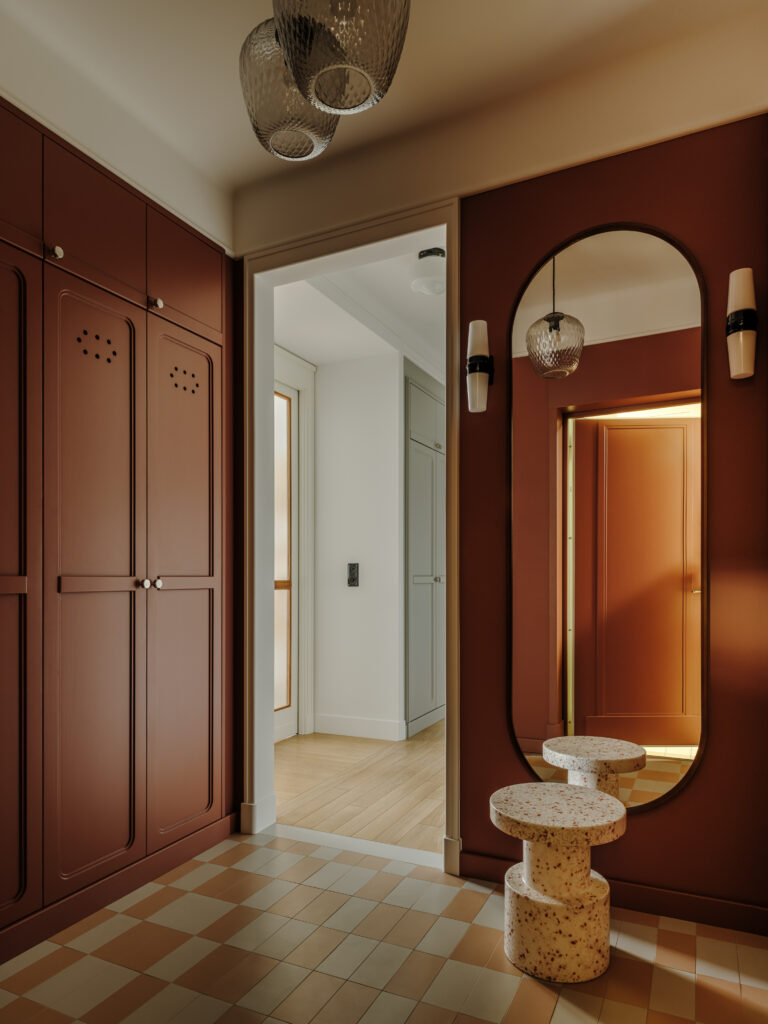
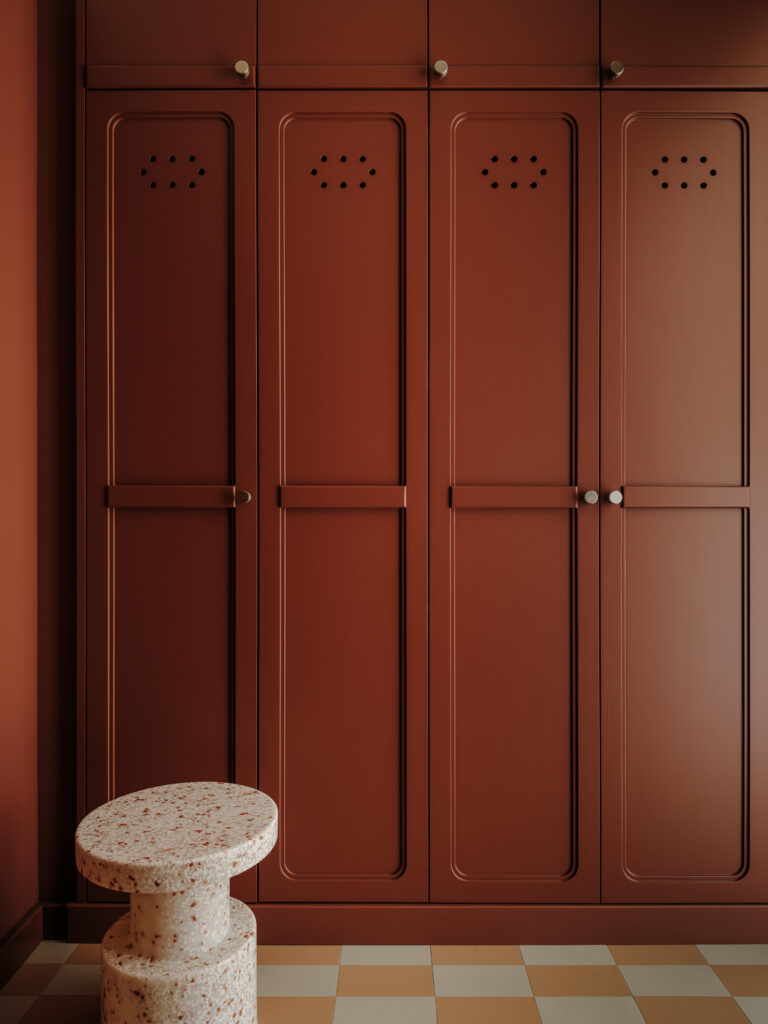
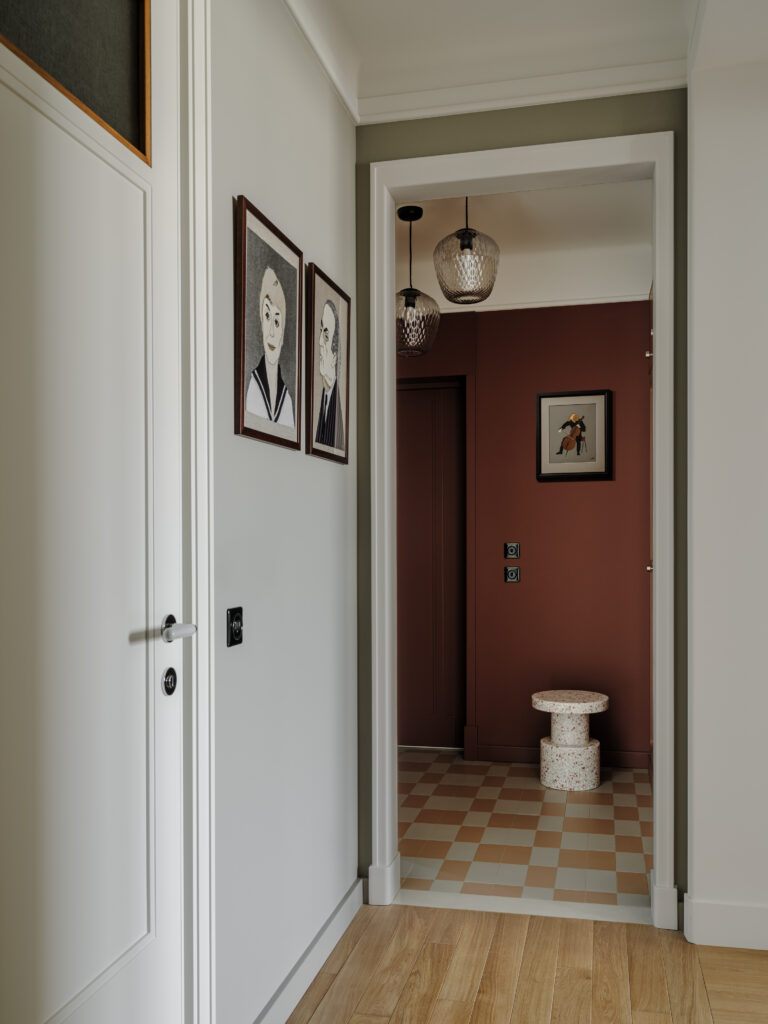
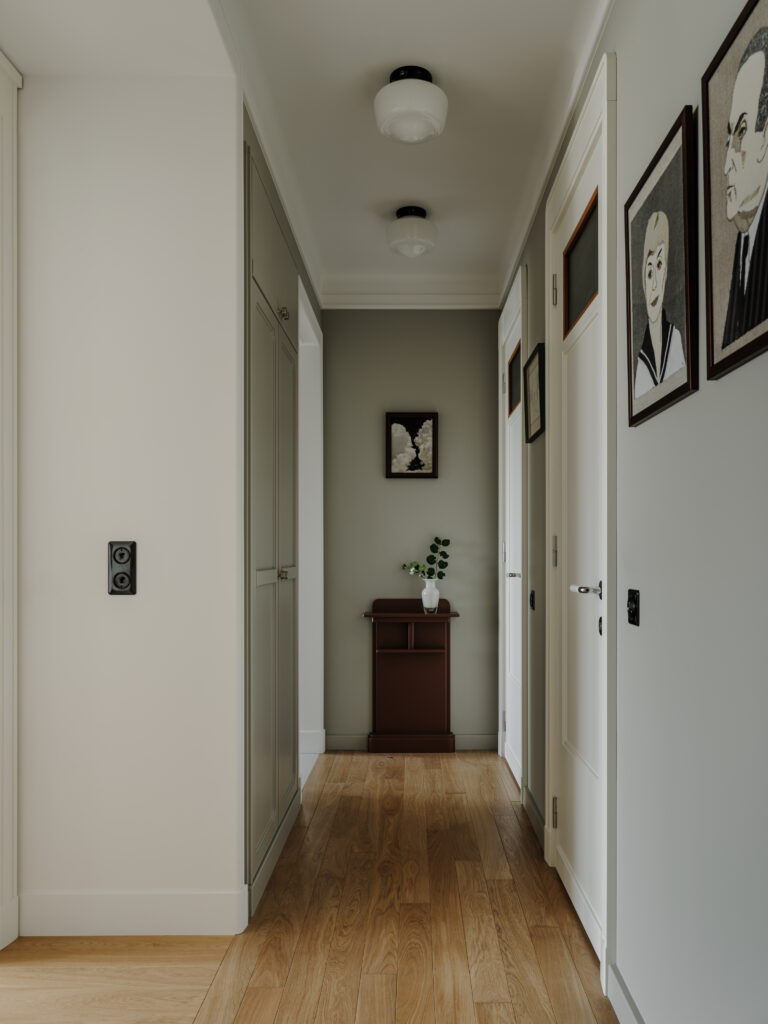
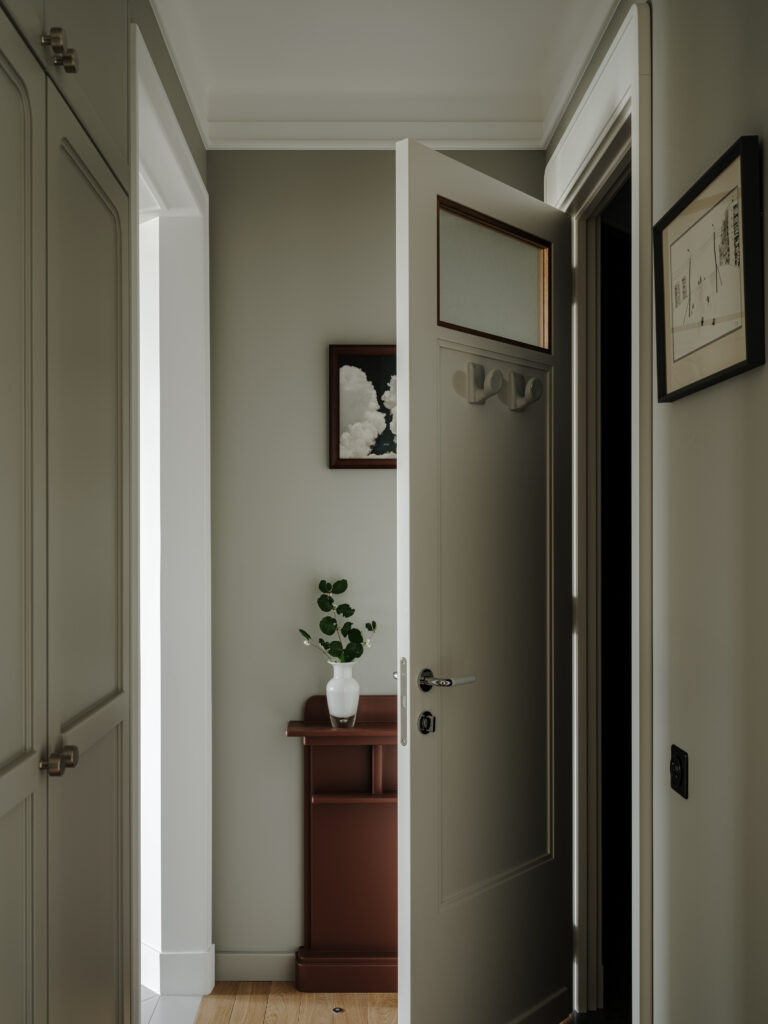
That discipline shows from the first step inside. The entryway is a deep wine colored room, intimate and shaded, with a mirror facing the door and ribbed, smoky light fixtures that ease the transition from street to home. Built in cabinets line the walls, their fronts pierced with small circular openings that hide a washer, a dryer, and storage no one needs to see. From there the hallway opens up, brighter now, its axis closed by a console table and a romantic photograph by Ivan Boyko.
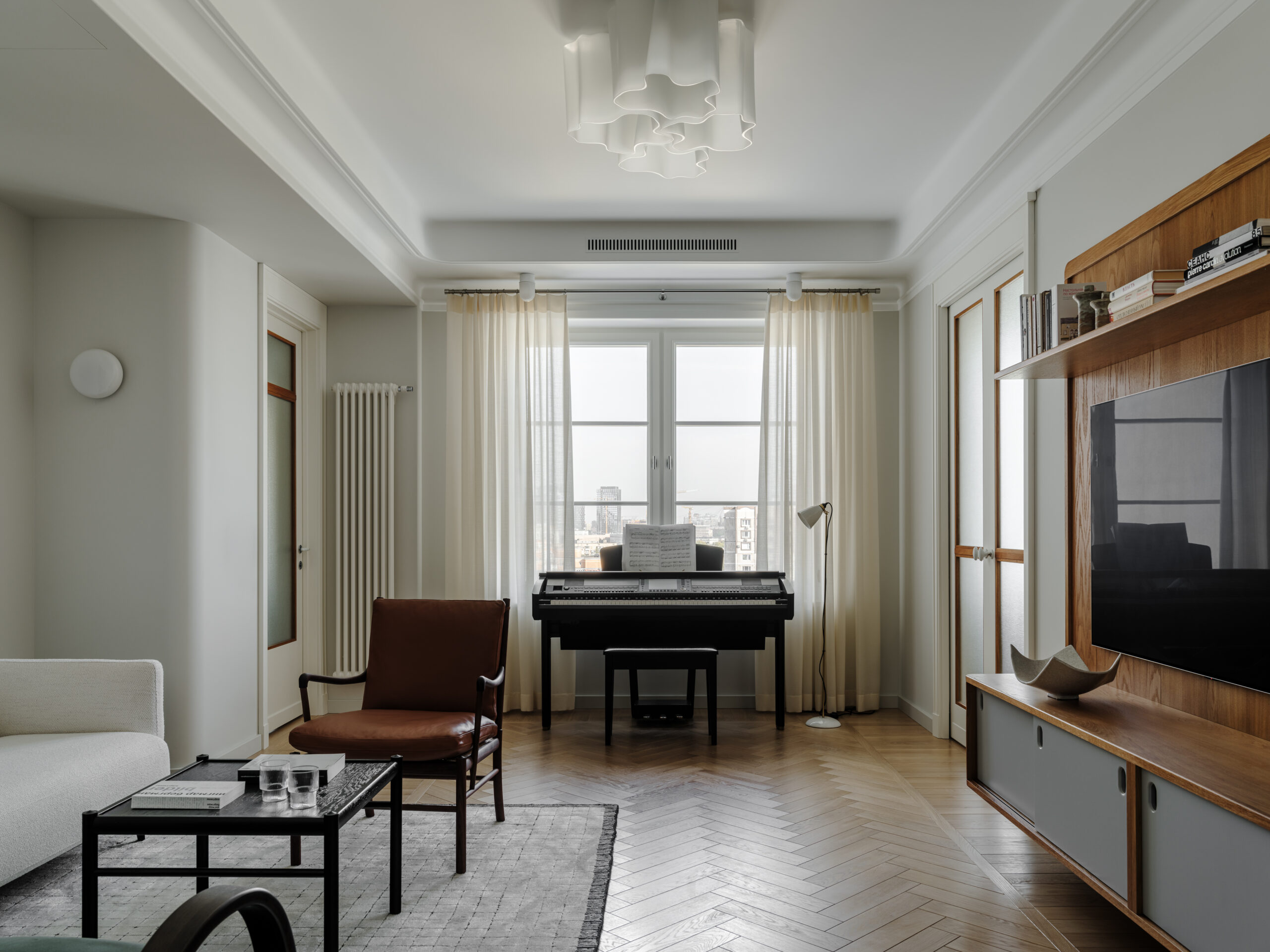
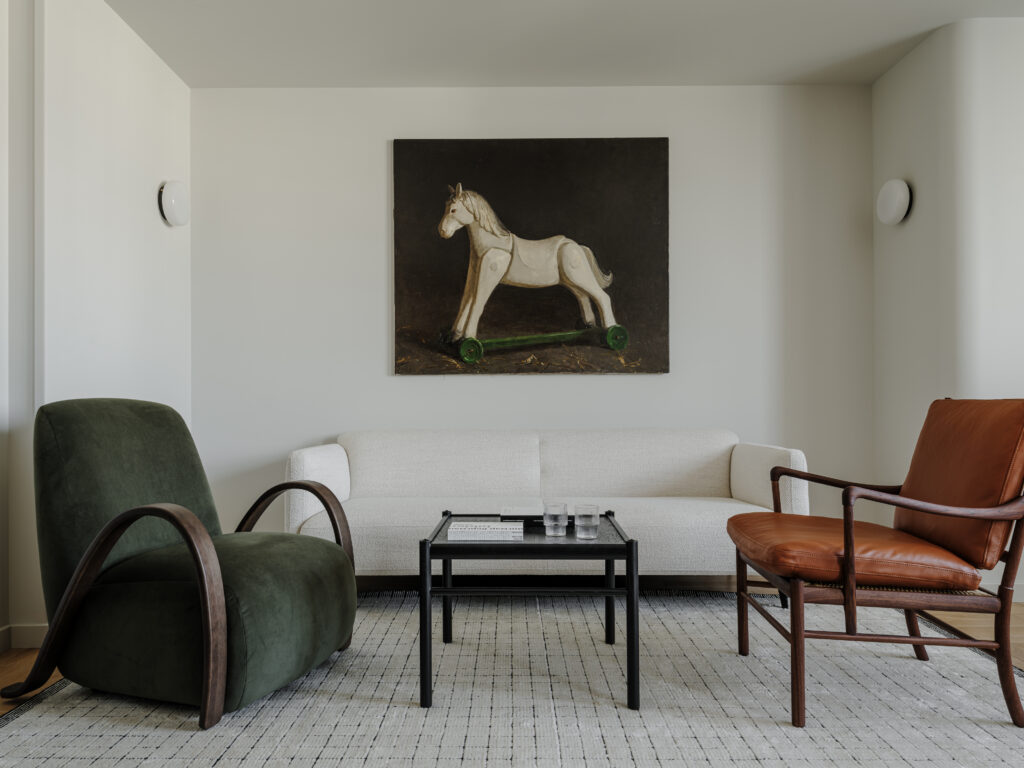
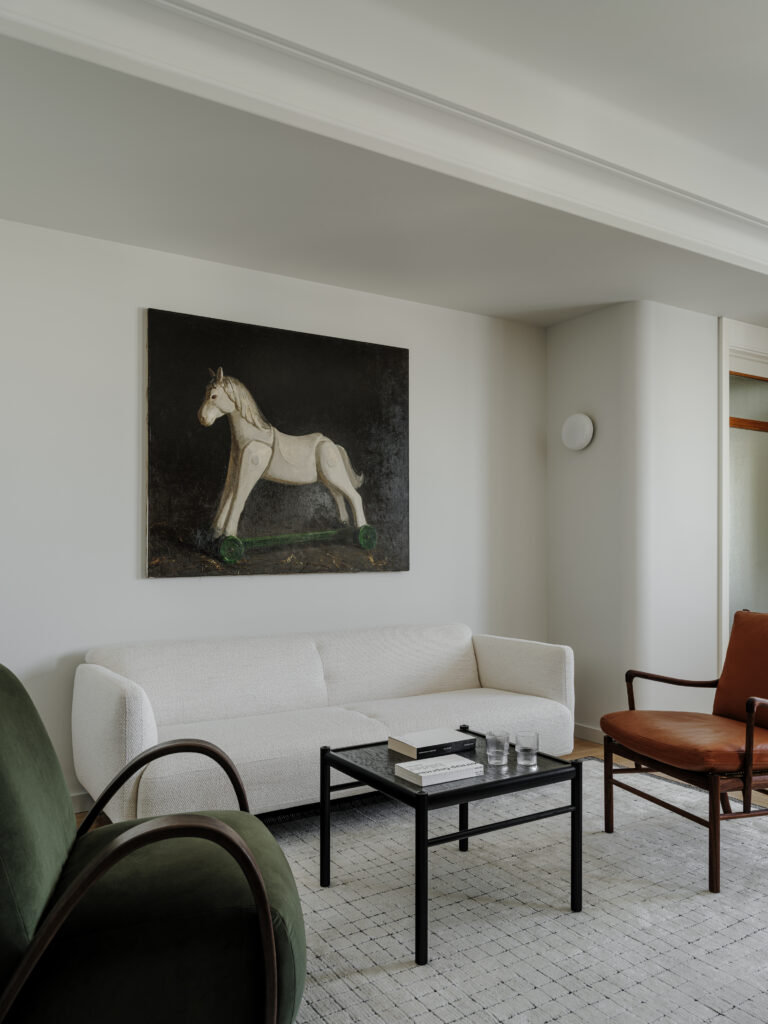
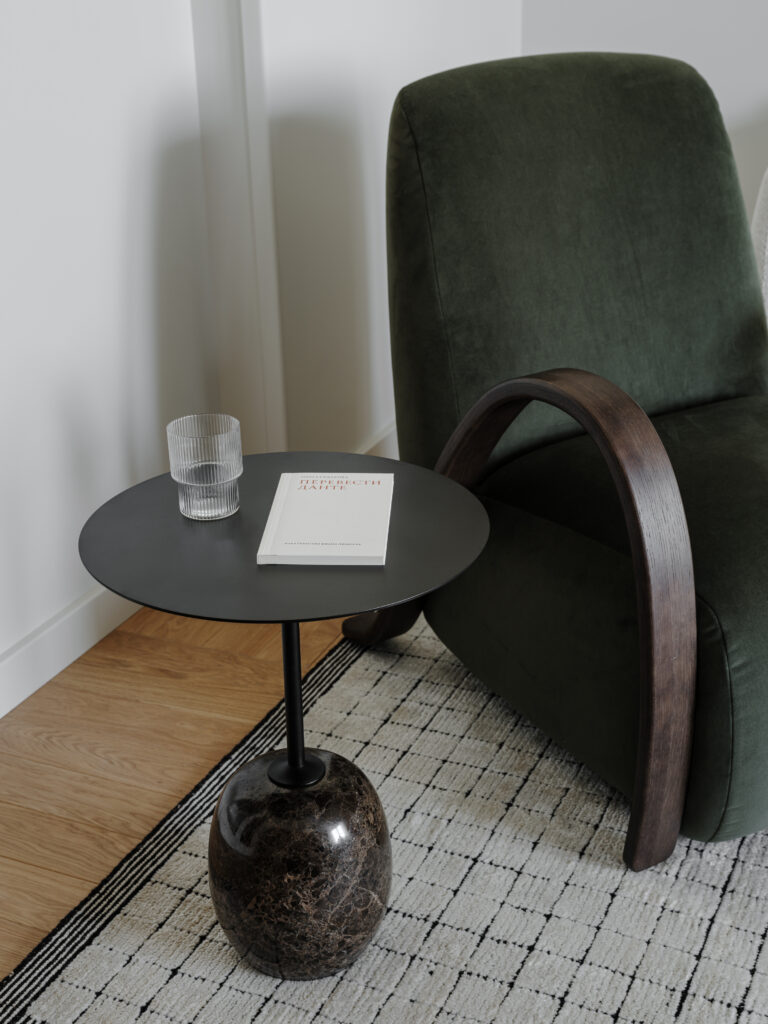
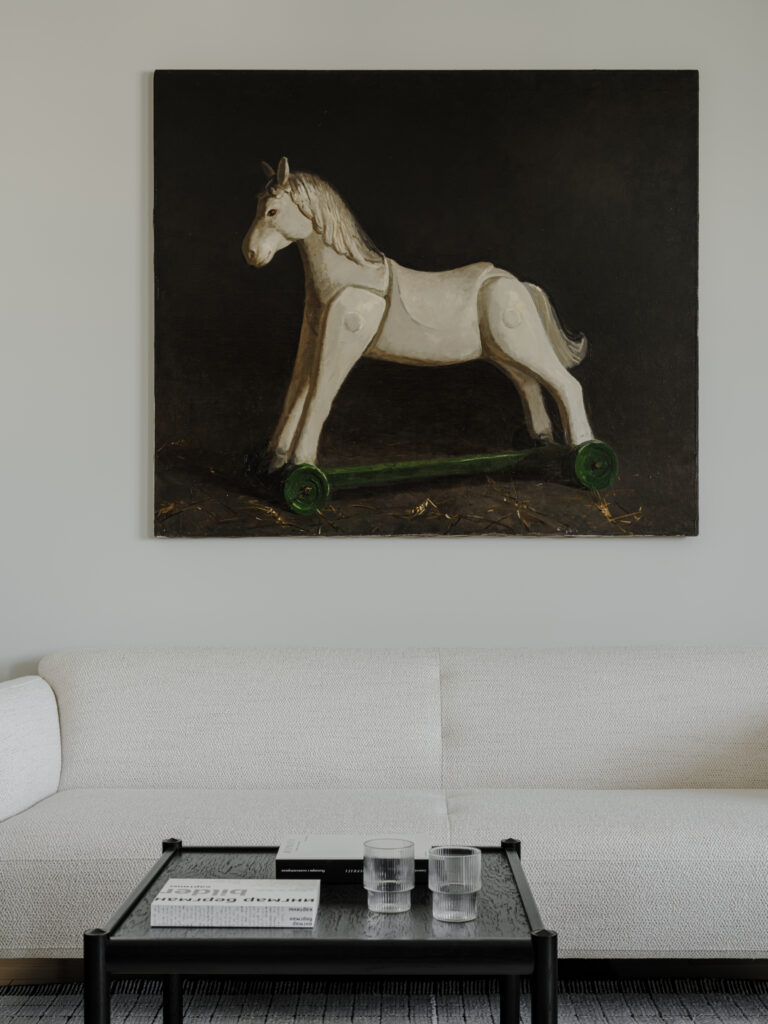
Sliding doors with ribbed glass lead into the living room, the largest space in the apartment and, by the client’s own account, its emotional center. A pale sofa sits in a niche built for it, facing a bookcase and television, with Egor Dmitriev’s painting “Horse” hanging above, its gaze doing more work in the room than most furniture does. Two armchairs complete the seating. By the window, in what Ozerova calls the best spot in the room, a piano waits under a porcelain lamp, framed by curtains the color of butter. A white glass chandelier made of four separate lamps finishes the room. “According to the client,” Ozerova notes, “the living room is practically a place to just contemplate, the interior is so captivating.”
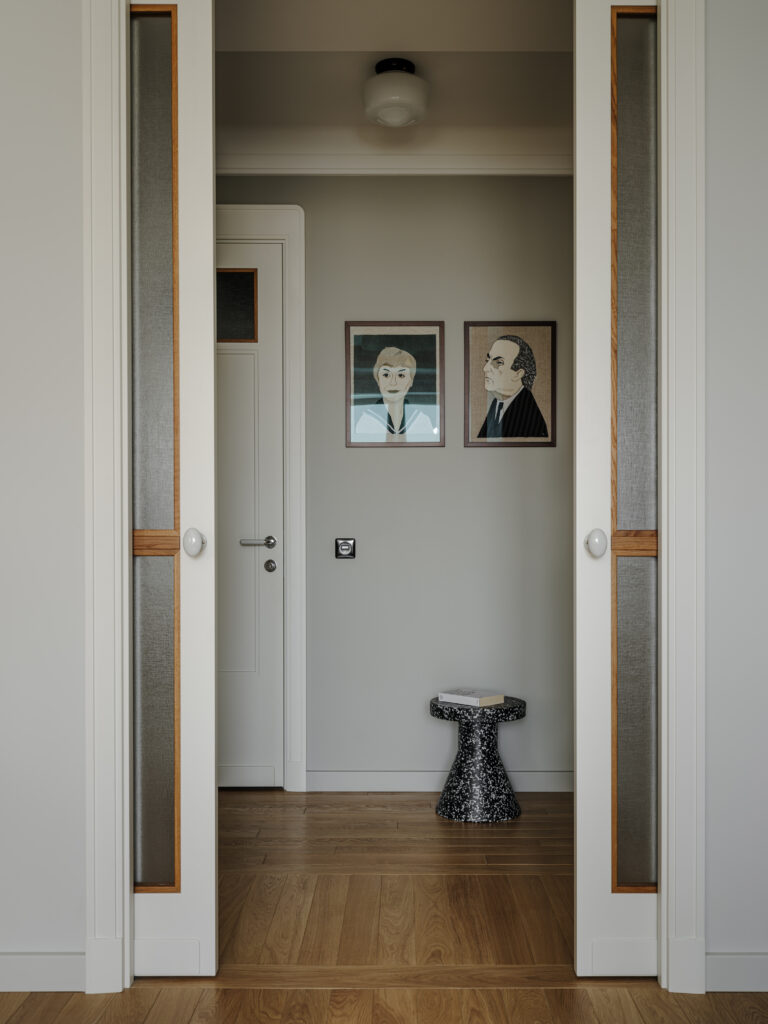
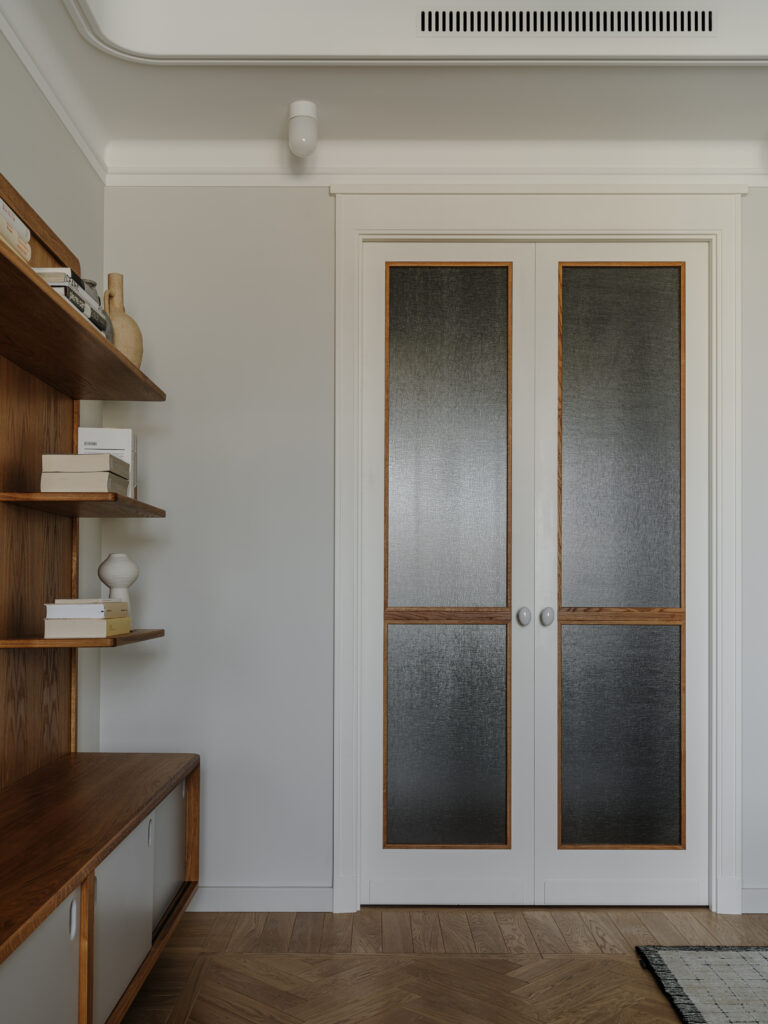
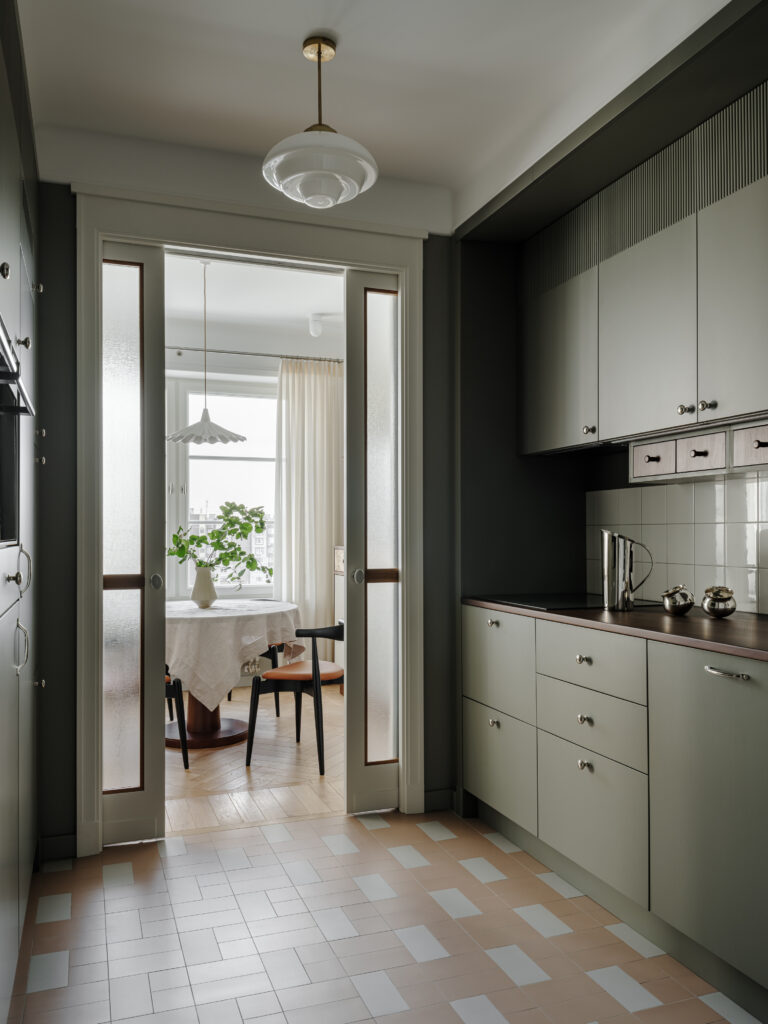
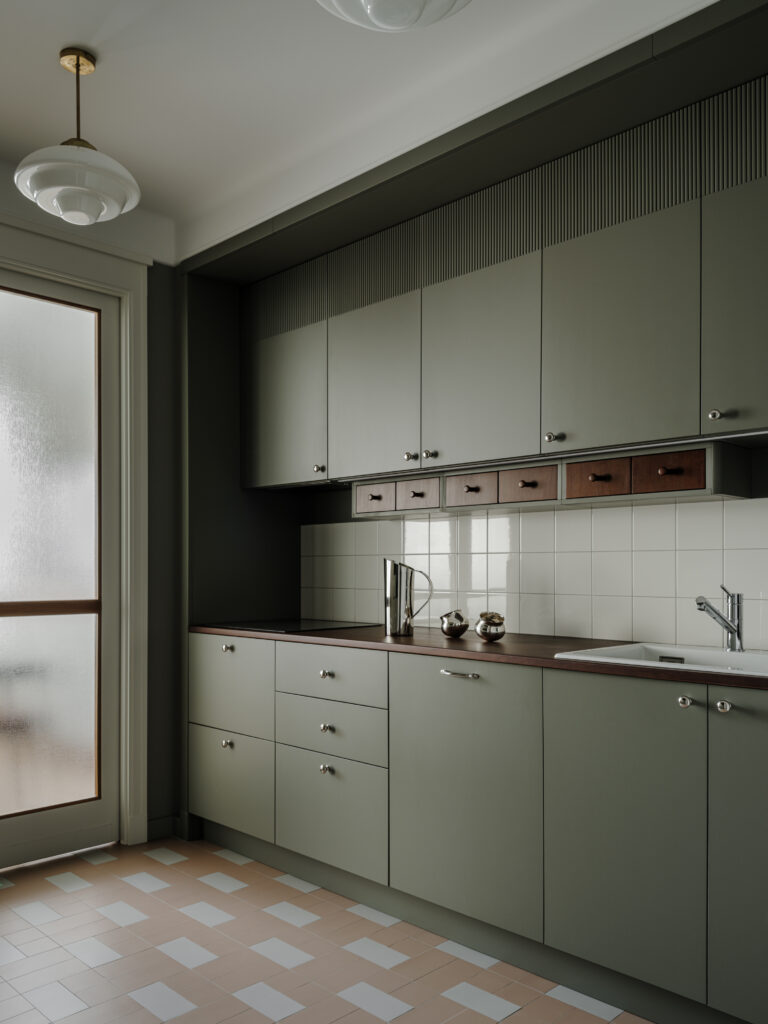
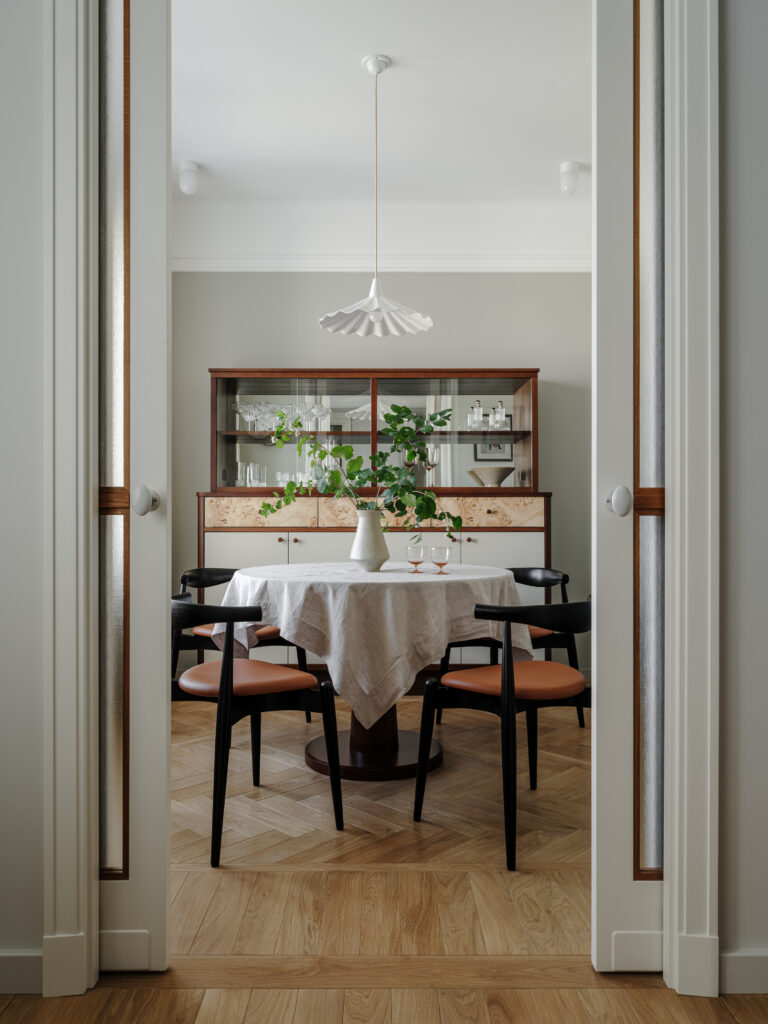
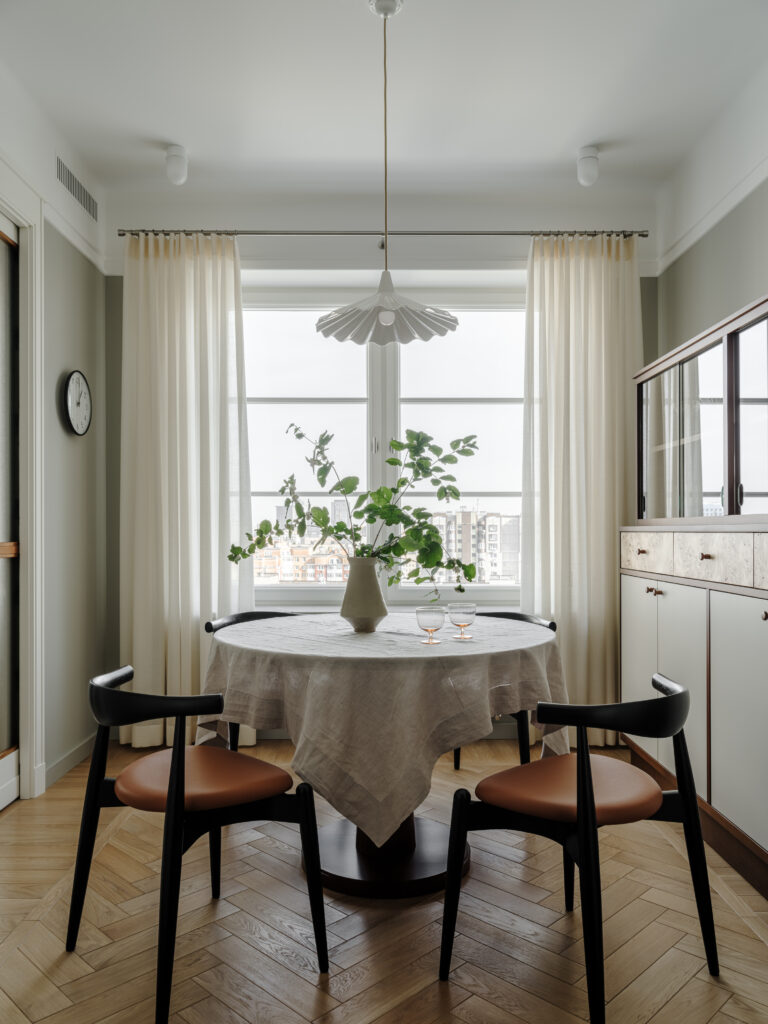
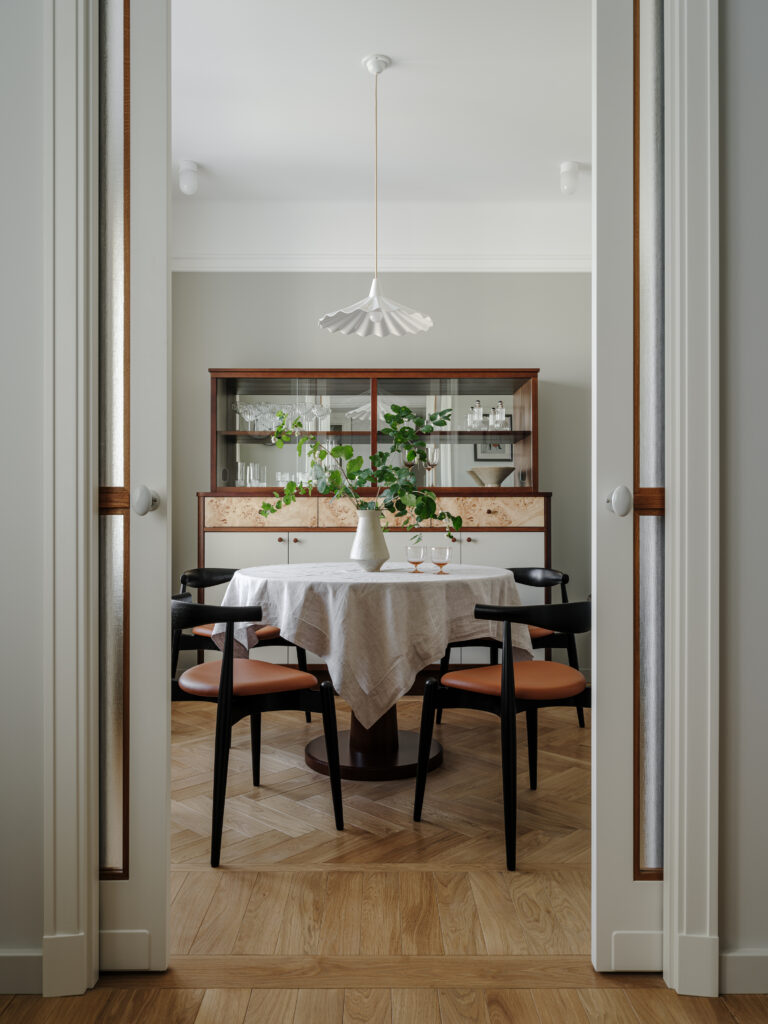
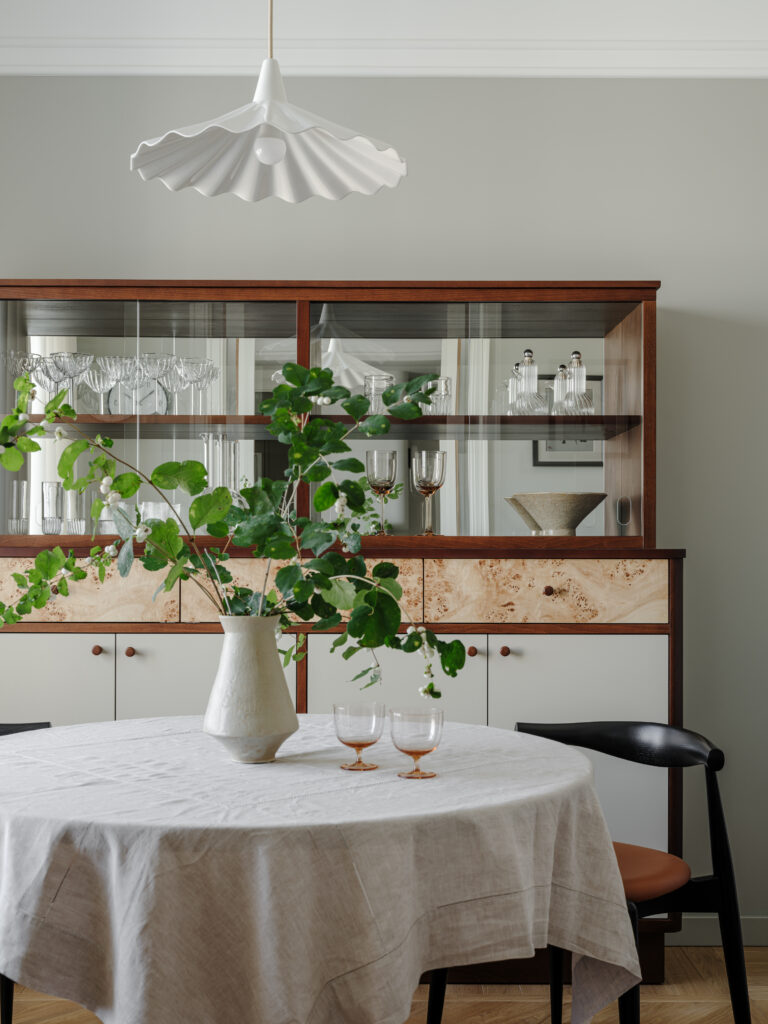
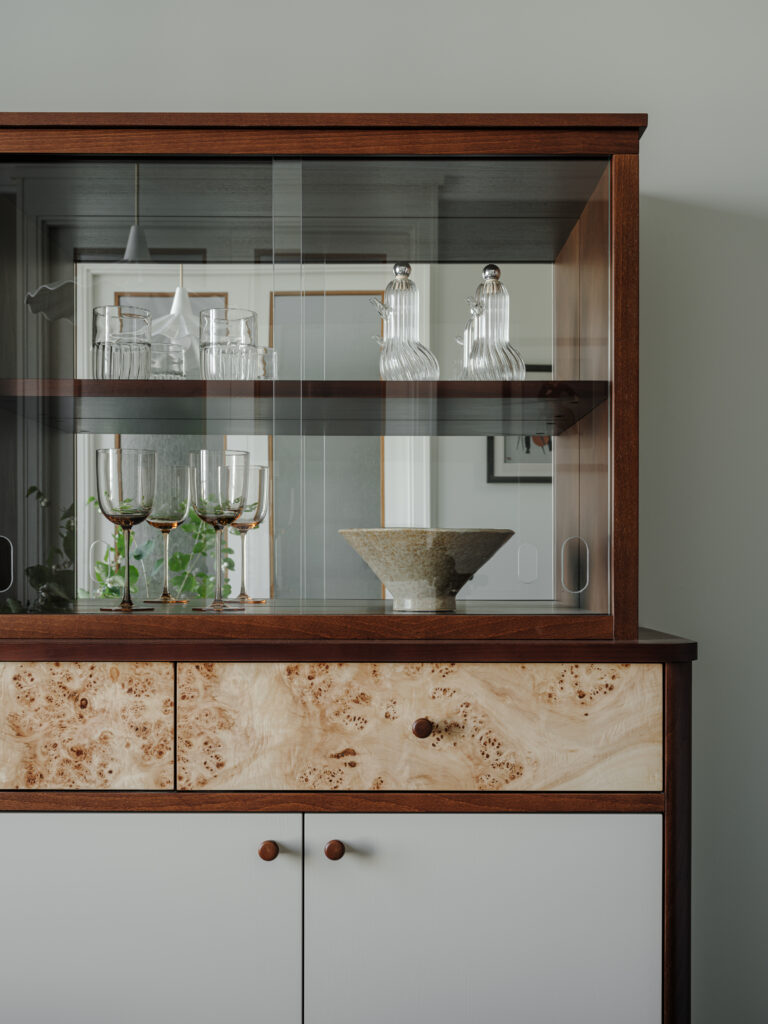
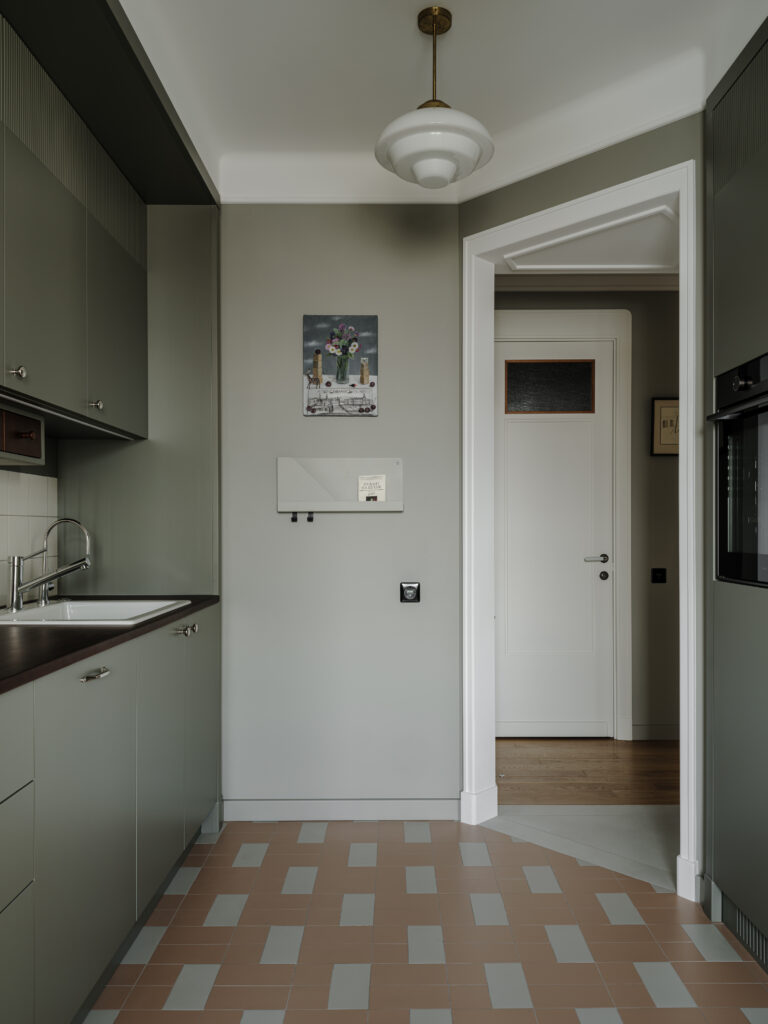
Beyond it, a small dining room doubles as a study, painted a deep gray green with a lime undertone, anchored by a round table and a sideboard inlaid with poplar root, built from prototypes of 1930s furniture. Double glass doors, retractable into the walls, connect it to the kitchen, painted a dark pine gray for contrast. “An emotional transition to a more intimate and dark space,” is how Ozerova describes the shift, one deliberate mood change from the next.
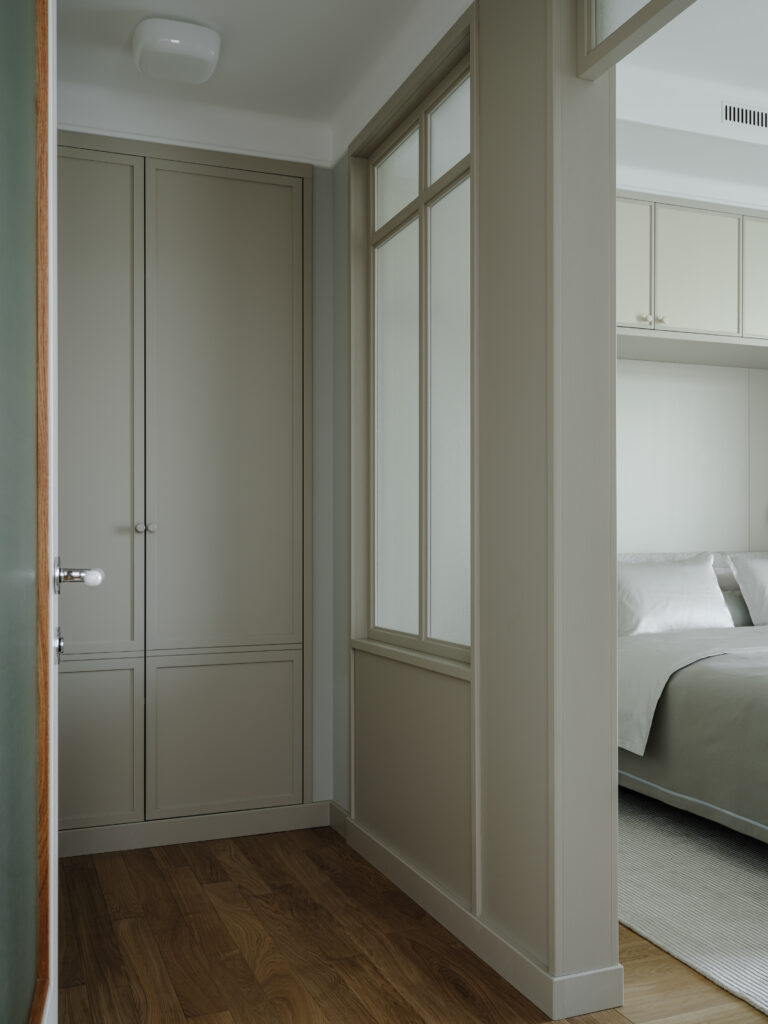
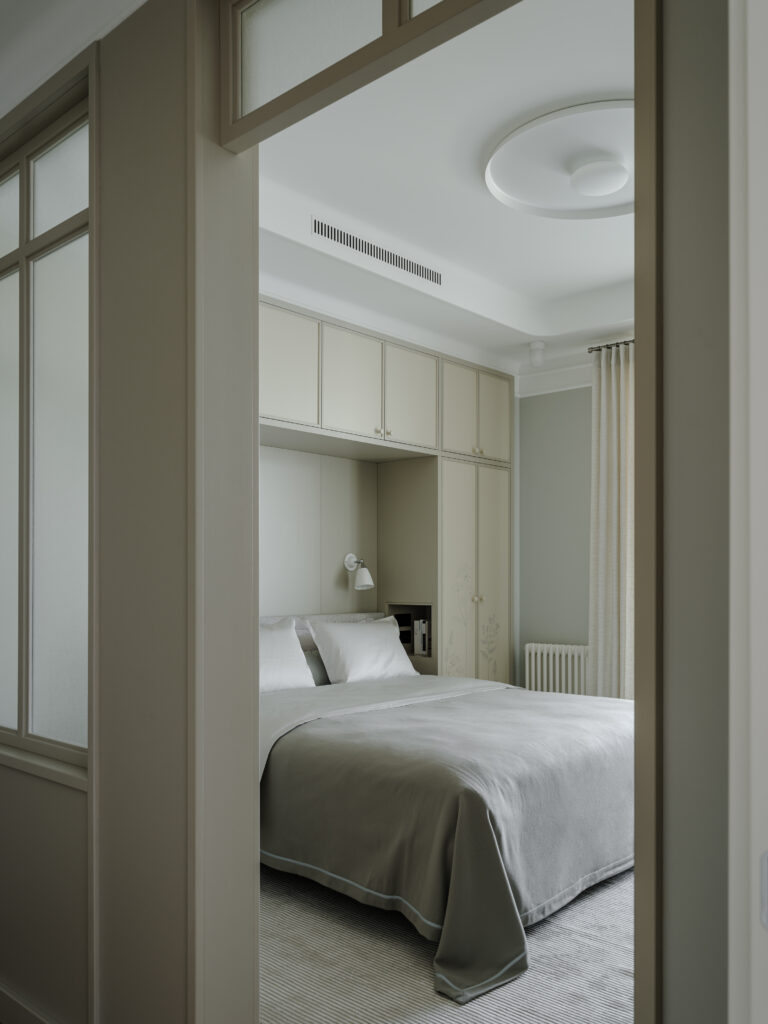
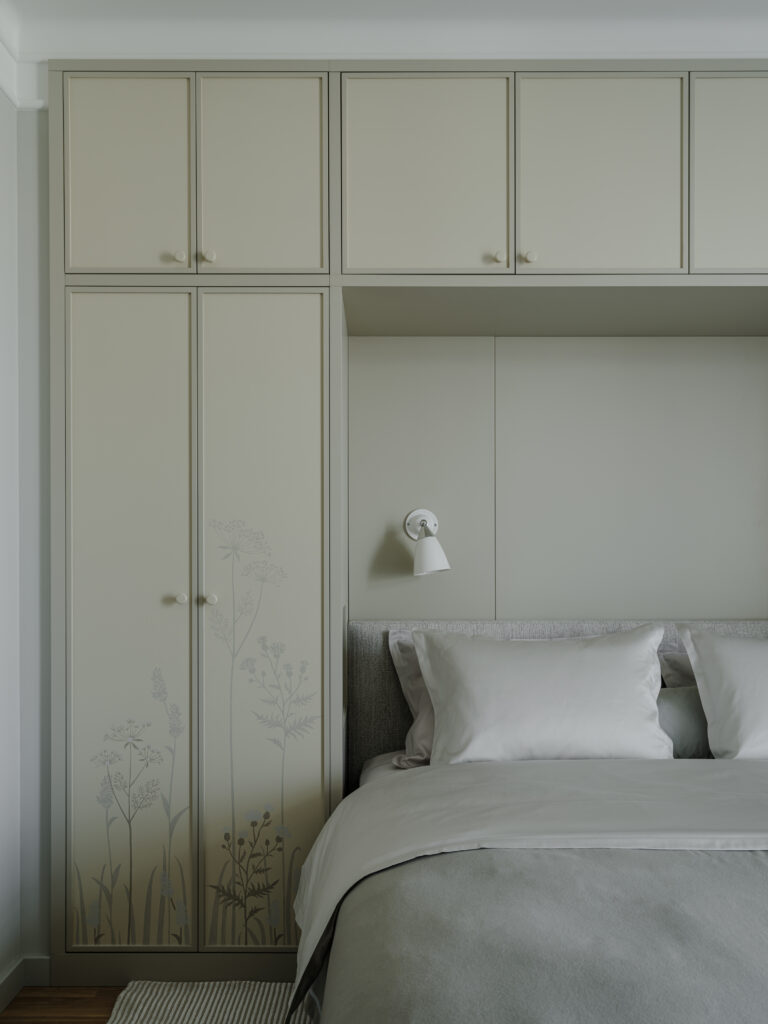
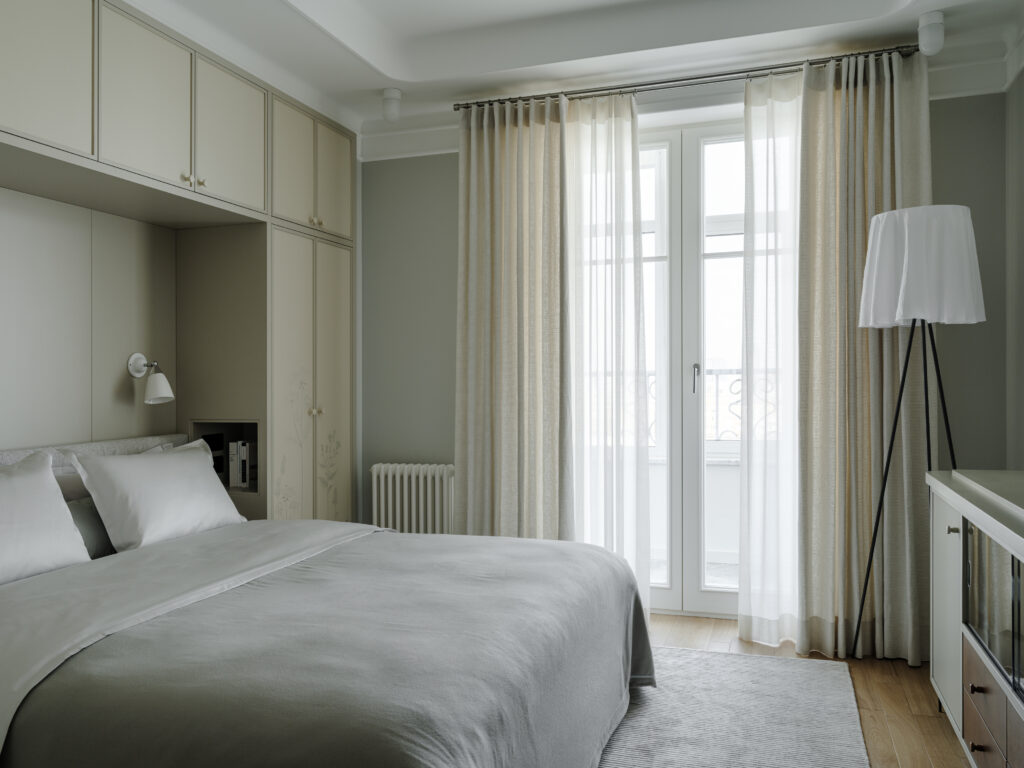
A private glass door off the living room leads to the dressing room and bedroom, both washed in calm natural stone tones with lemon accents, the bed’s headboard set into a niche painted with grasses and spikelets by Alexandra Khlebnikova. The bedroom opens onto a loggia with views across Moscow.
One detail ties the whole plan back to something older than the building itself. A circular, triangular opening connects the hallway directly to the kitchen, a shortcut for carrying in groceries without crossing the living and dining rooms. “We discovered a similar architectural solution in Leo Tolstoy’s house in Khamovniki,” Ozerova says, “in the passage from the hallway to the pantry.”
The art was chosen slowly and specifically: Dmitriev’s “Horse,” a textile embroidery of Fellini and Giulietta Masina by Tatyana Chursinova, made on commission, a painting by Tatyana Sergeeva, graphics by Ildar Gimranov, photographs by Ivan Boyko, and a torn paper portrait of a cellist by Lyudmila Grigorieva Semyatitskaya. None of it reads as decoration. It reads like a couple’s memory, hung on someone else’s careful walls.
“The interior is subtle, captivating, and elegant,” Ozerova says. “It begs to be explored and immersed in it.”