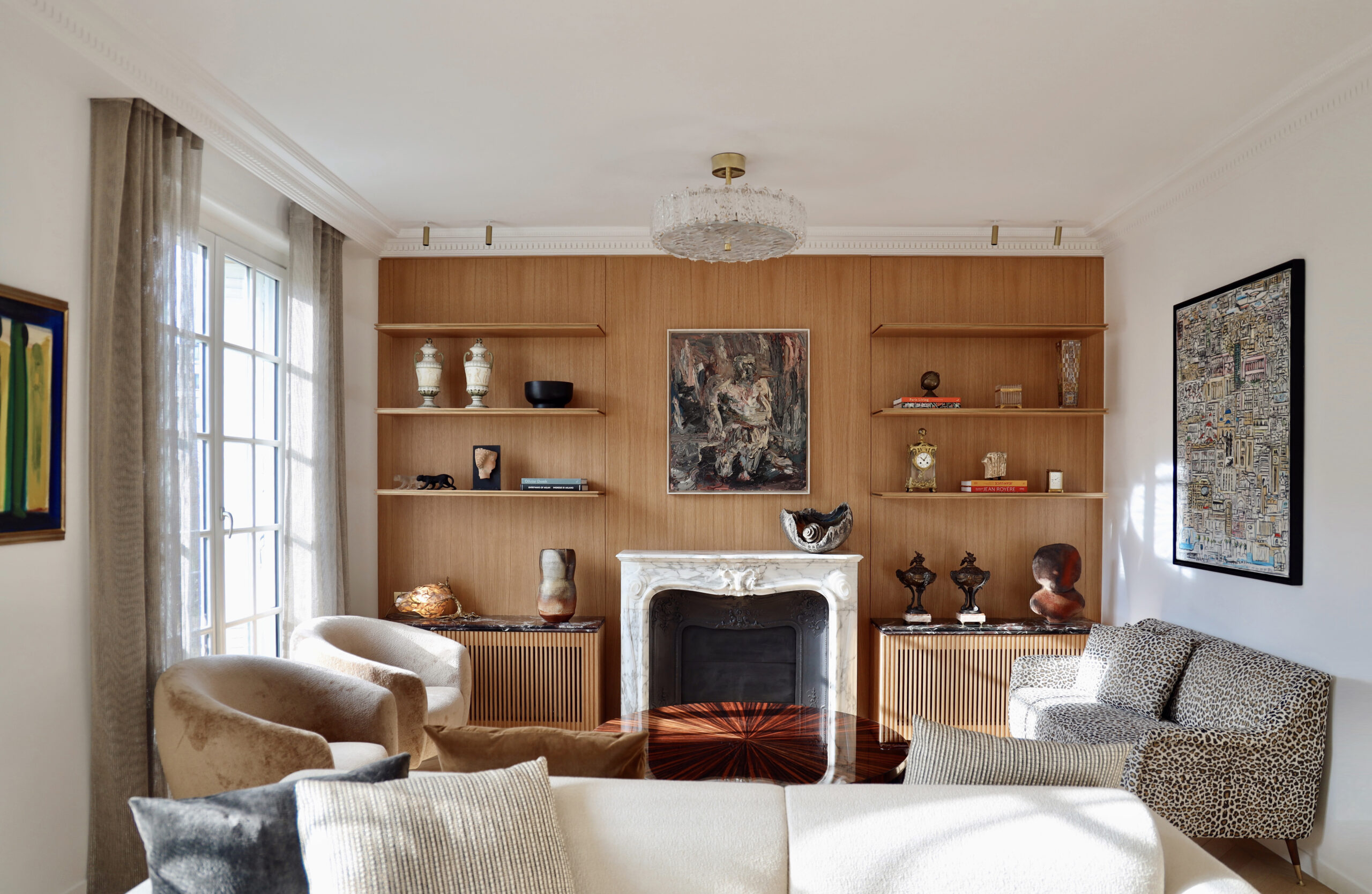
On Avenue Henri Martin, in Paris’s 16th arrondissement, Bouchi Studio has conceived a residence in which the relationship between art and interior architecture determines much of the design. Created for a Lebanese collector whose holdings focus primarily on artists from Lebanon and the wider Middle East, the three bedroom apartment brings together French decorative traditions, contemporary furnishings and works by some of the region’s most significant artistic figures.
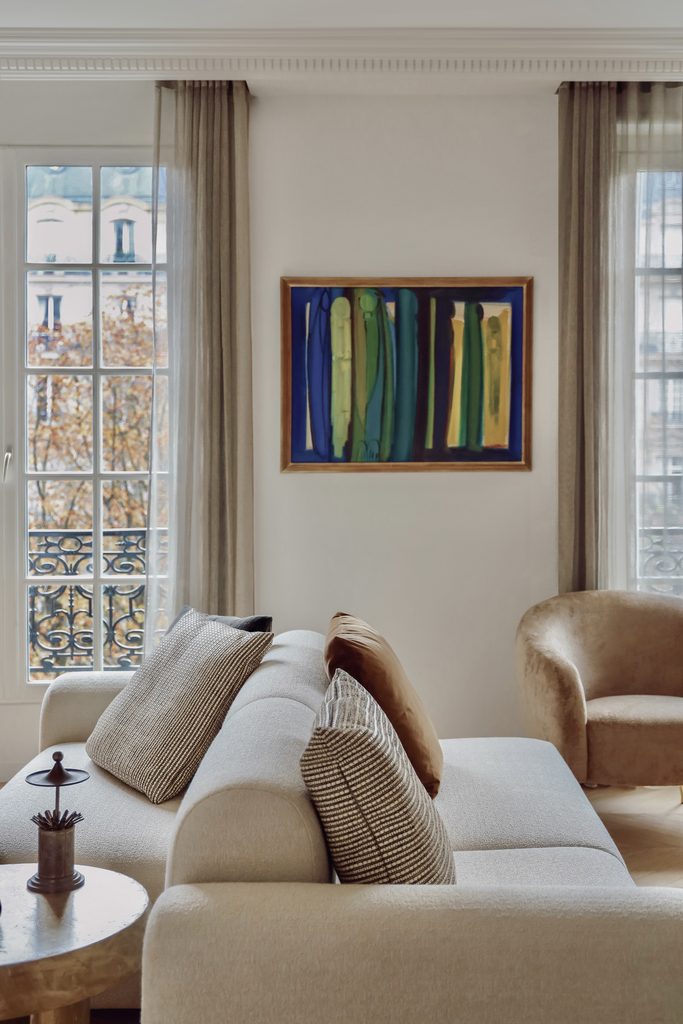
The brief called for a comfortable Parisian pied à terre capable of accommodating the entire family, with the collection occupying a central position in the project. “We carefully placed them and even thought the whole project around these pieces to highlight them as much as possible and put the focus on the conversation between the art and the interiors,” explains the studio.
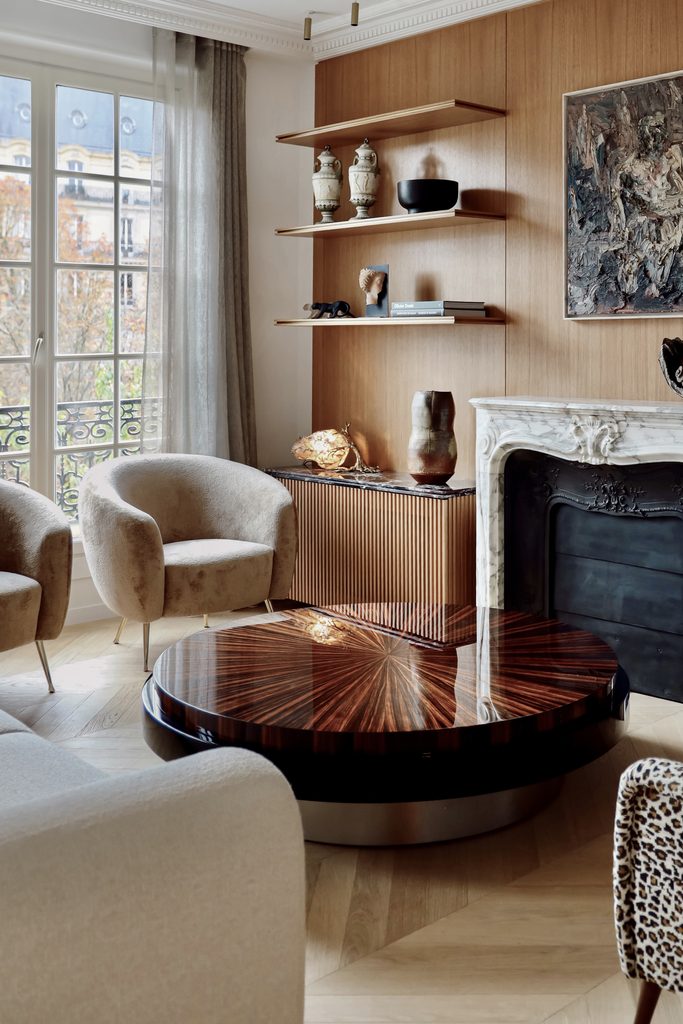
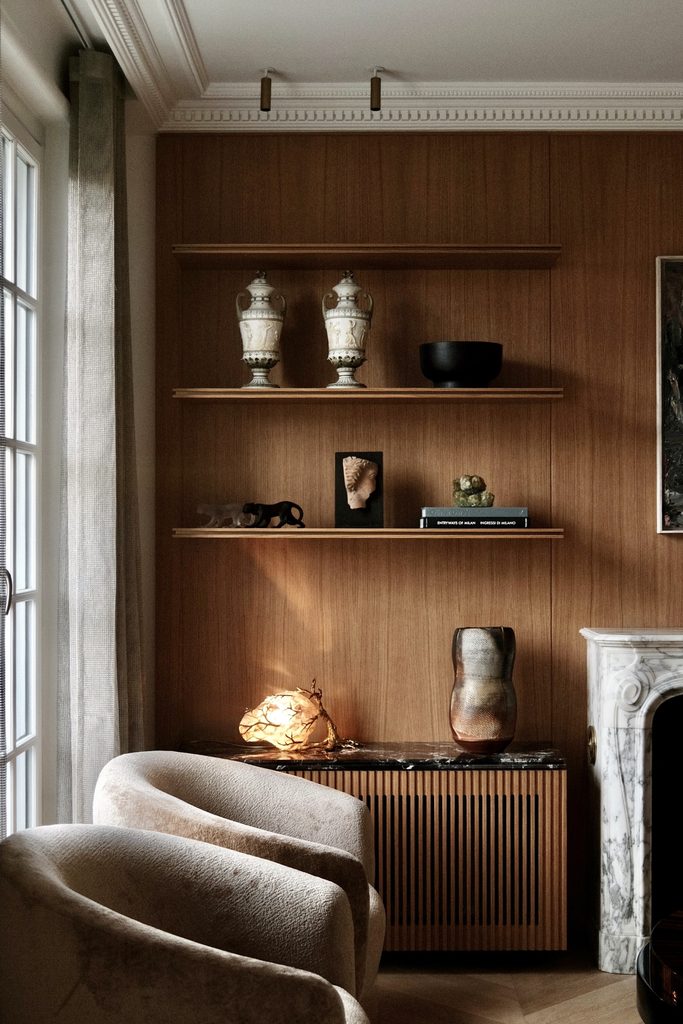
The apartment occupies a Haussmannian building, although successive renovations had removed much of its original architectural detailing. Bouchi Studio approached the renovation as an opportunity to recover this lost identity while reconsidering the spatial organisation for contemporary family life. Ceiling mouldings were reinstated, Versailles pattern parquet introduced in the entrance and herringbone flooring laid throughout the remaining rooms. A Louis XV fireplace in Arabescato marble, sourced from the Paris flea market, further reinforces the architectural character of the residence.
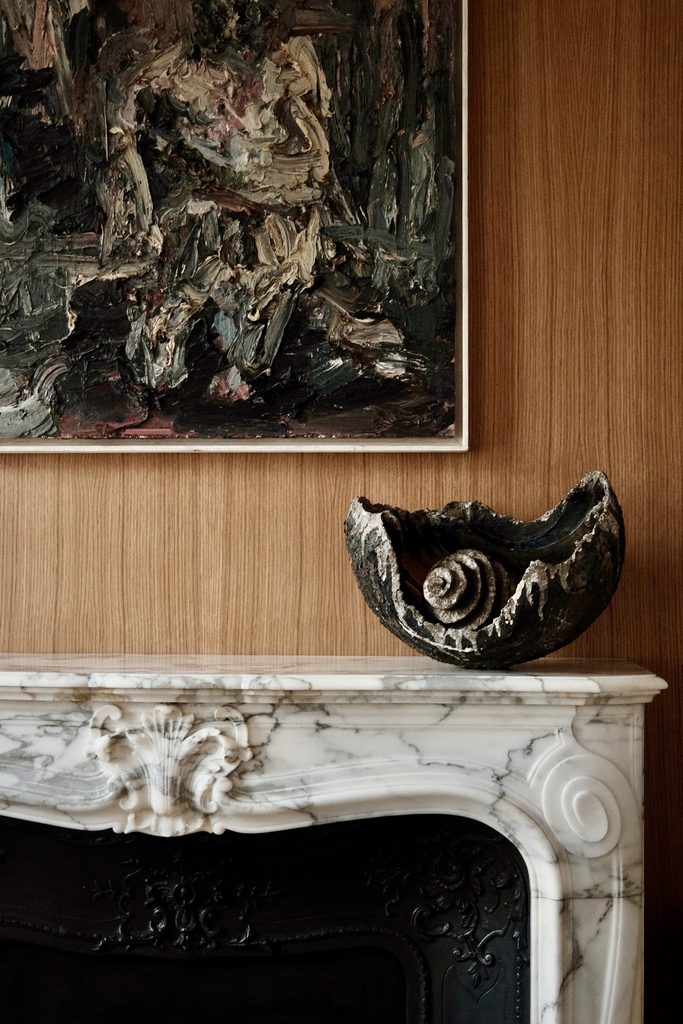
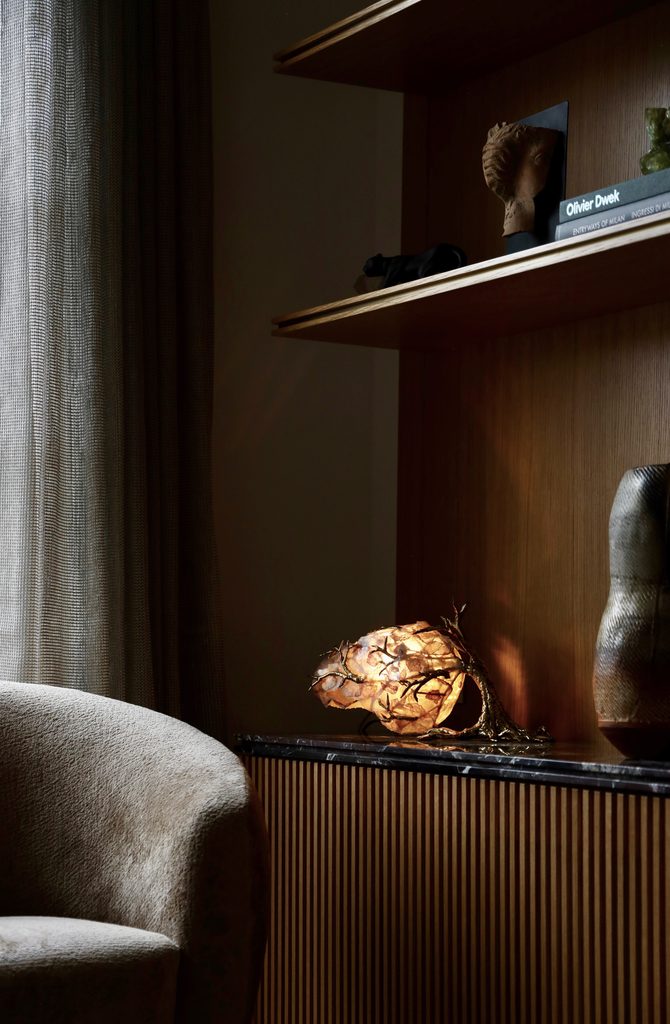
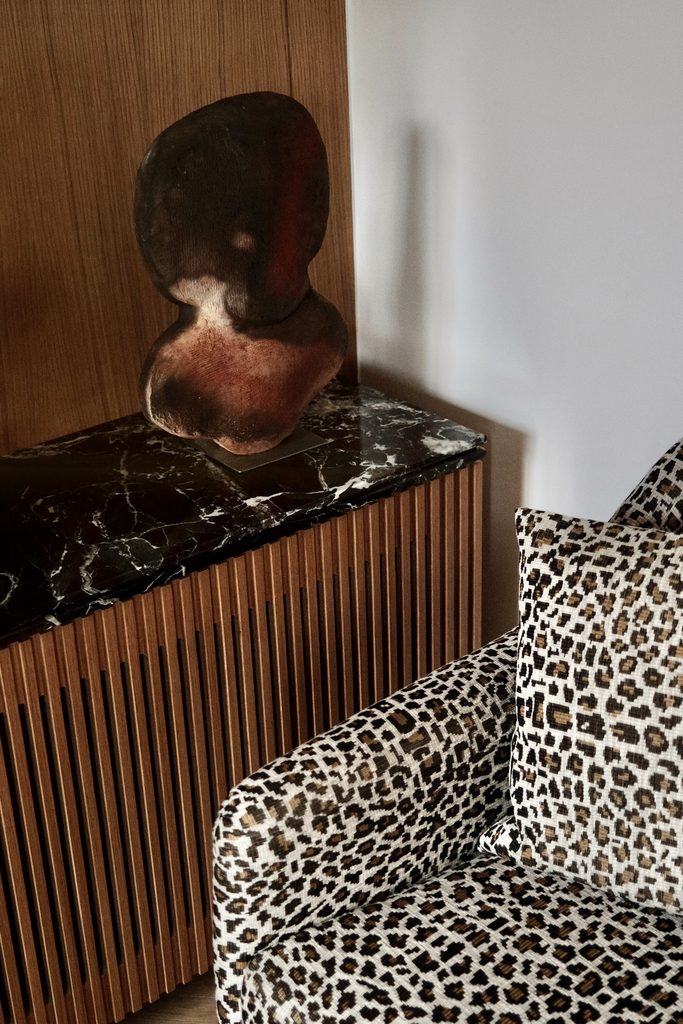
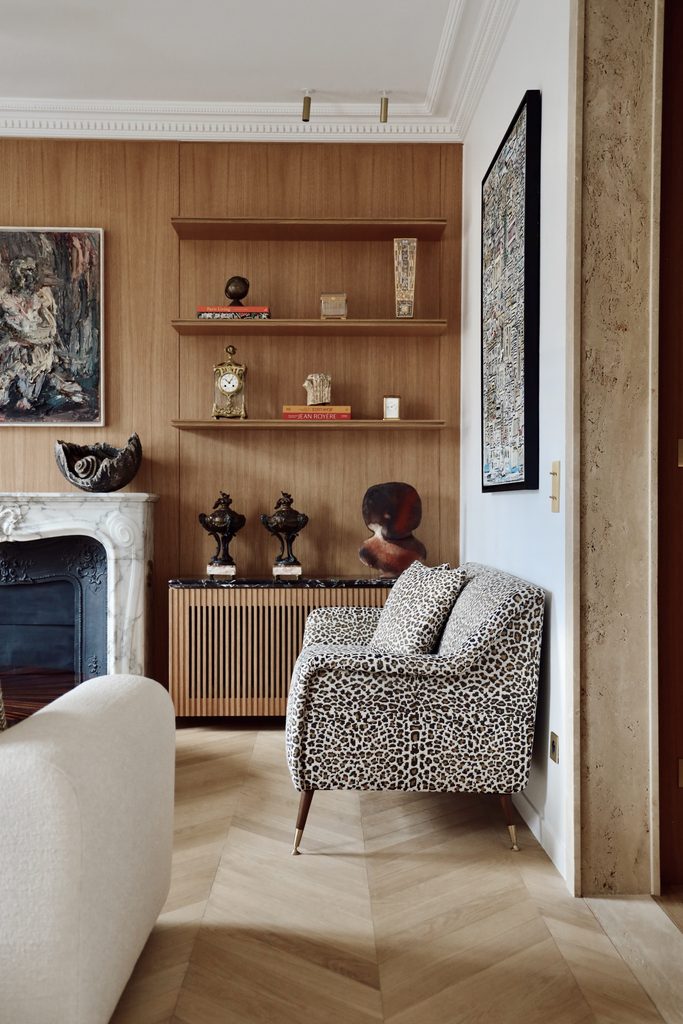
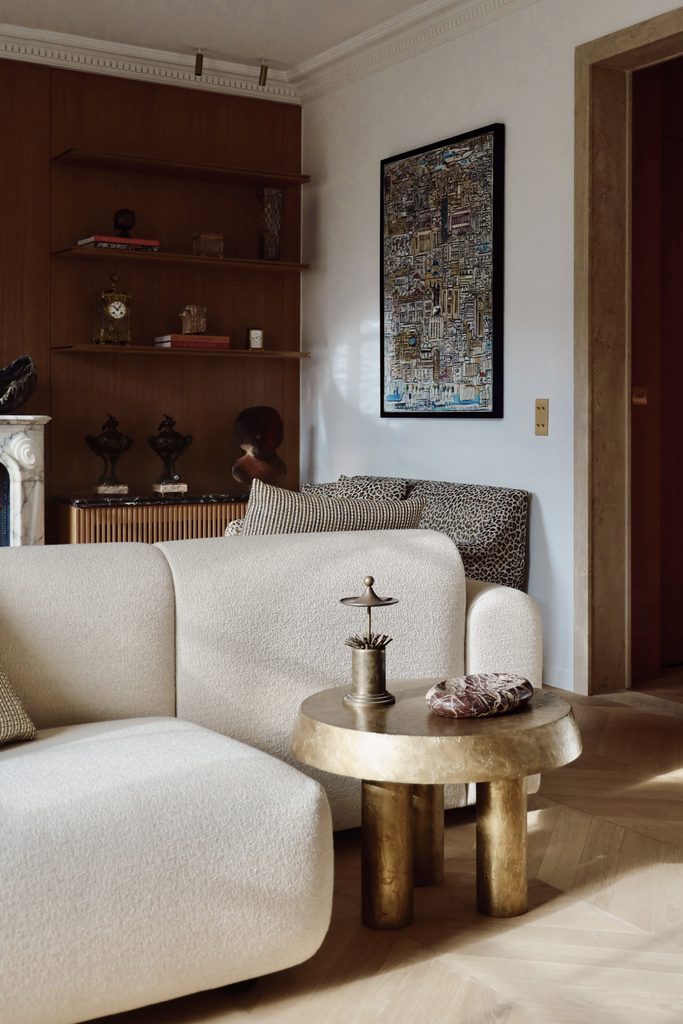
“Rather than recreate a period interior, we wanted to restore the apartment’s architectural identity while introducing our own design language through a considered mix of materials, textures, furniture and lighting.”
This distinction between restoration and historical imitation informs the selection of furnishings. Nineteenth century French antiques, some belonging to the client, are combined with vintage pieces from the 1960s and 1970s, contemporary ceramics by Agnès de Bizet and Éric Astoul, and bespoke furniture conceived by the studio and produced by Lebanese craftsmen.“We enjoy mixing different styles and periods, creating interiors that feel collected rather than overly coordinated,” the designers explain.
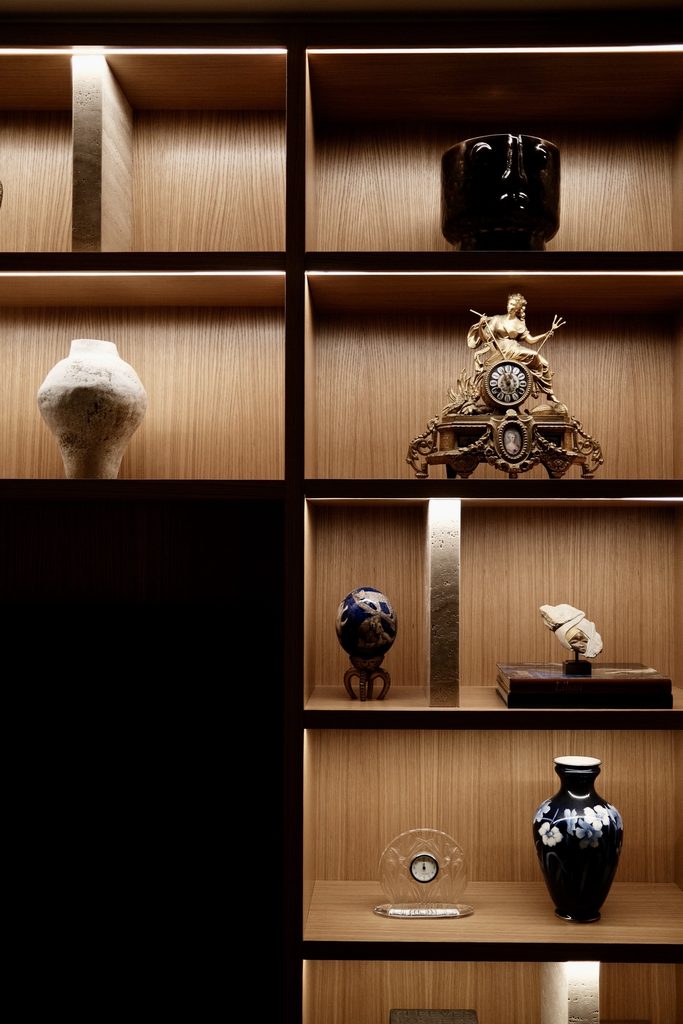
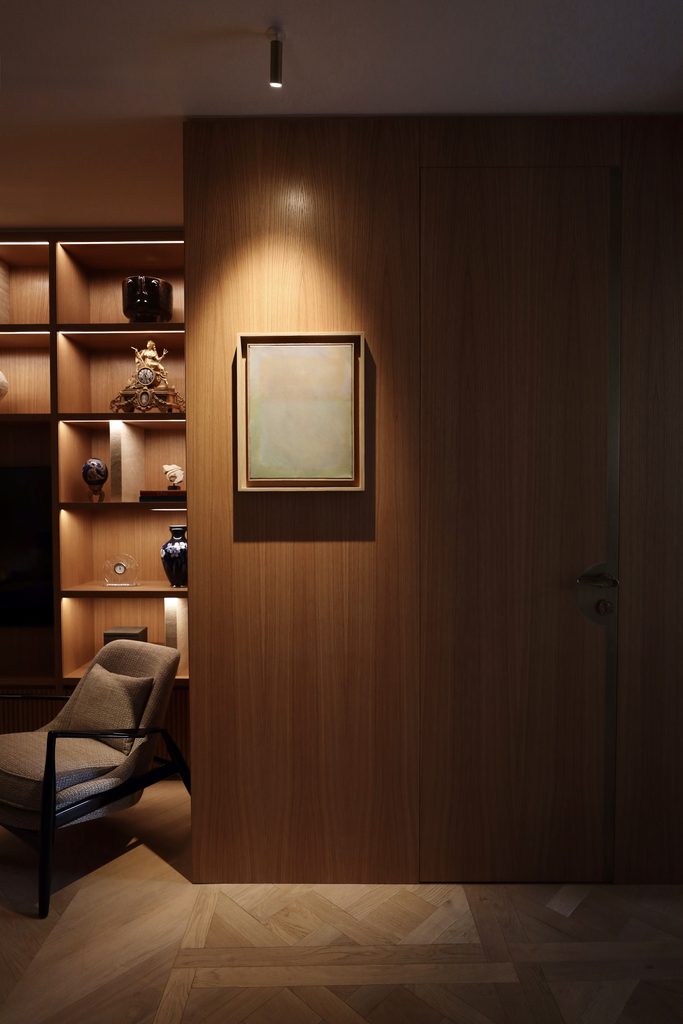
The resulting composition draws on different periods and traditions without establishing a strict hierarchy between them. French oak veneer introduces continuity throughout the apartment, while marble, brass, gunmetal and mirrors create variations in surface and texture. Textiles from Casamance, Misia, Élitis and Nobilis contribute warmth and material depth, establishing a restrained setting for the artworks.
The collection itself offers a compelling perspective on Lebanese artistic production. Works by Paul Guiragossian, Hussein Madi, Helen Khal, Chafic Abboud, Juliana Seraphim, Hiba Kalache and Tagreed Darghouth bring together distinct artistic languages and generations. Their presence gives the Parisian residence a cultural identity closely connected to the collector’s origins.
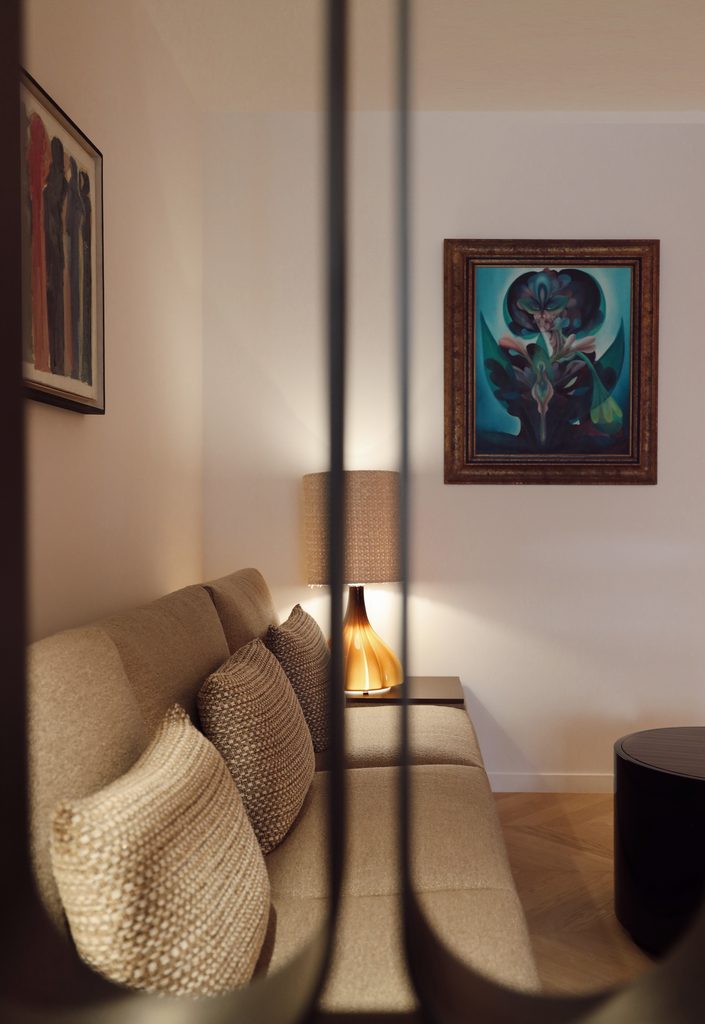
“The art collection was one of the starting points of the entire design process,” explains Bouchi Studio. “We carefully considered the placement of each work and, in many instances, developed the interiors around it, paying particular attention to scale, sightlines, colour and the relationship between the artwork and its surroundings.”
A large work by Hiba Kalache establishes the visual character of the entrance, while Tagreed Darghouth’s olive tree occupies a prominent position in the dining room. Some of the artworks belonged to the client’s existing collection, while others were acquired specifically for the residence. Their placement reflects an approach in which paintings are considered in relation to architectural proportions, furniture and circulation, rather than treated as independent decorative elements.
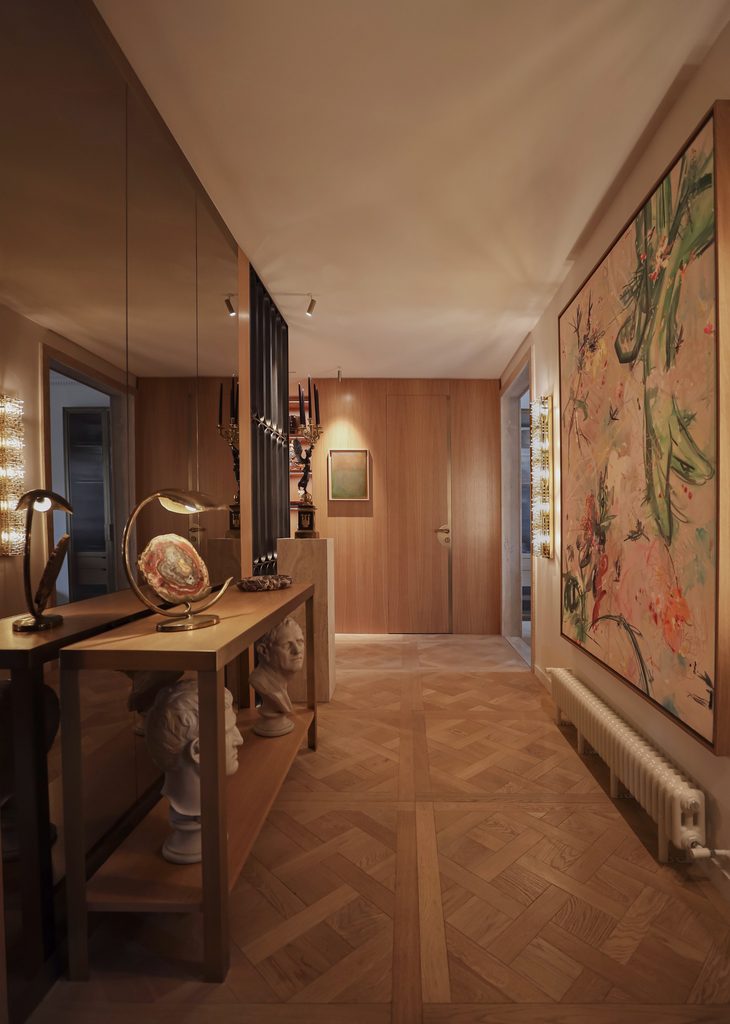
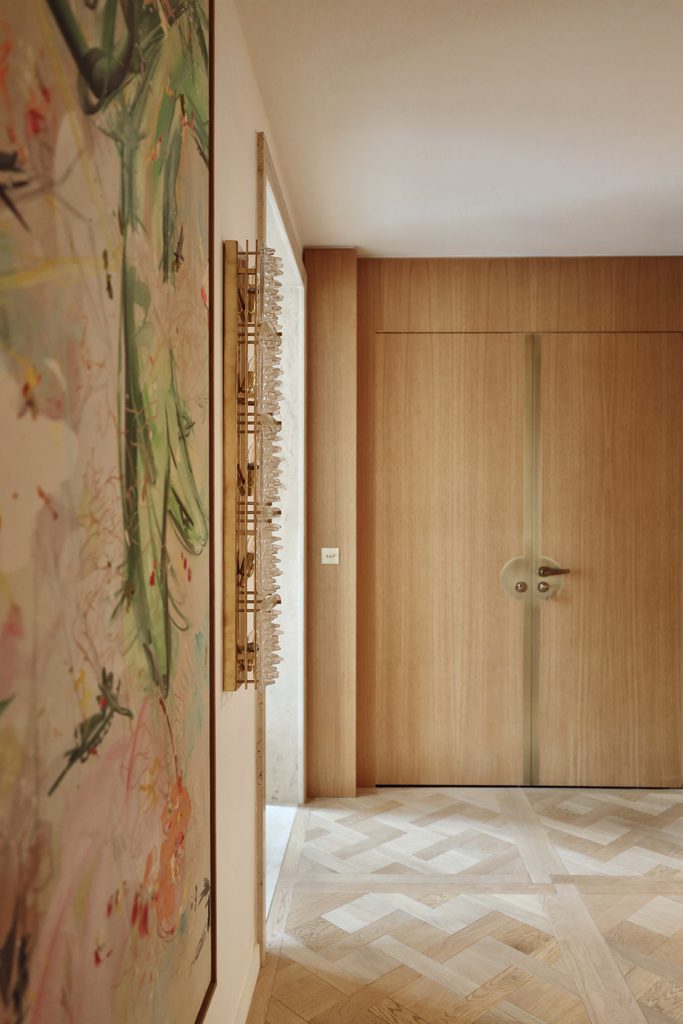
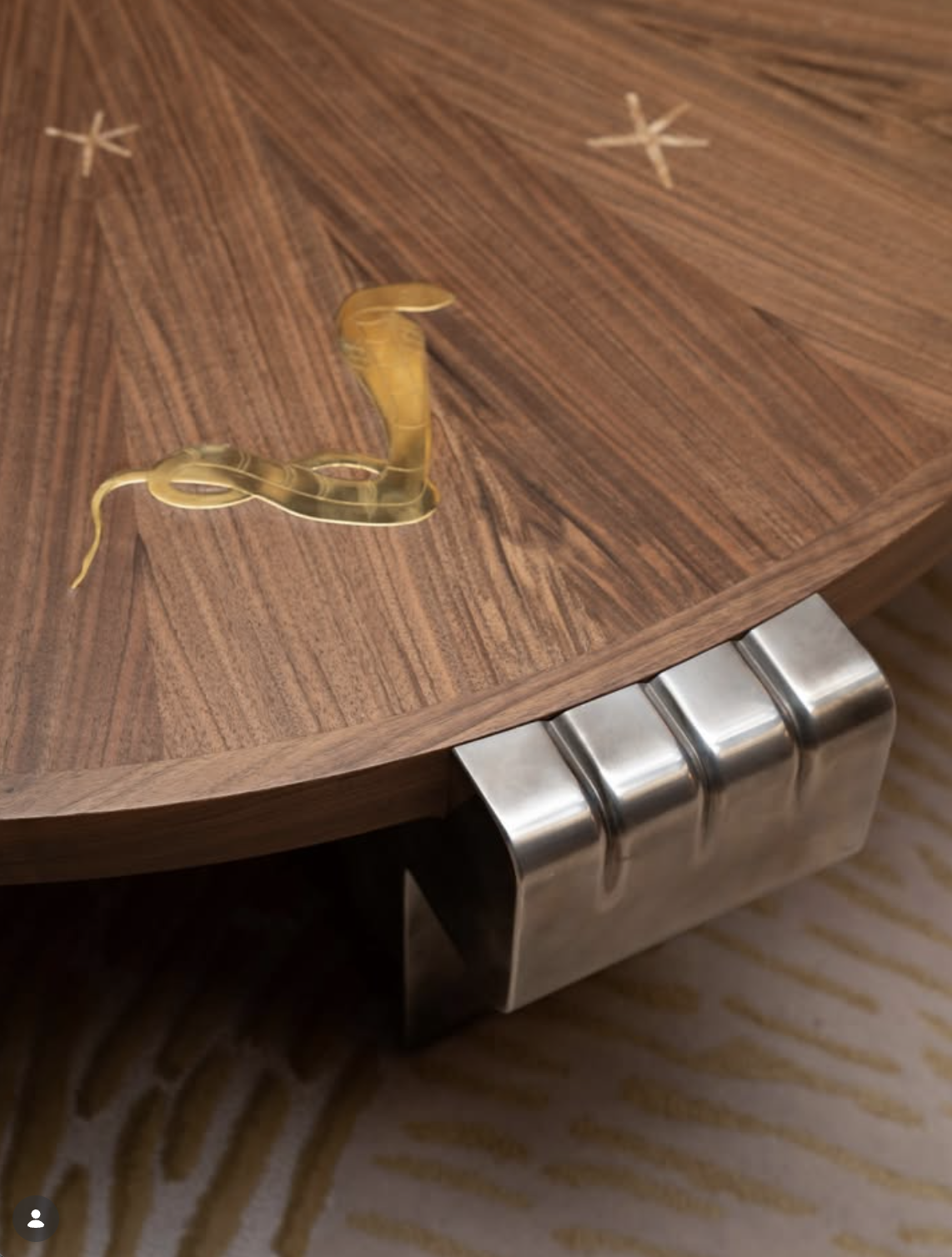
The bespoke interventions extend this dialogue between Paris and Lebanon. Custom furniture and architectural details, executed by Lebanese craftsmen, introduce the studio’s contemporary vocabulary within the restored Haussmannian setting. “Their expertise and attention to detail are an important part of our work, allowing us to translate our ideas into pieces that feel personal to each project.”
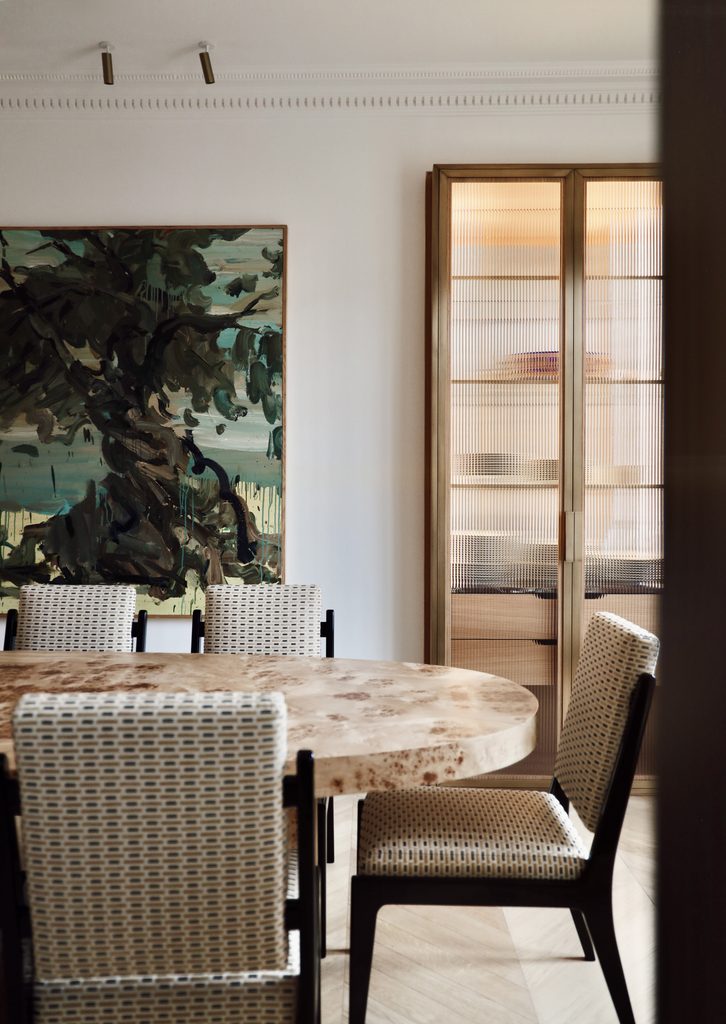
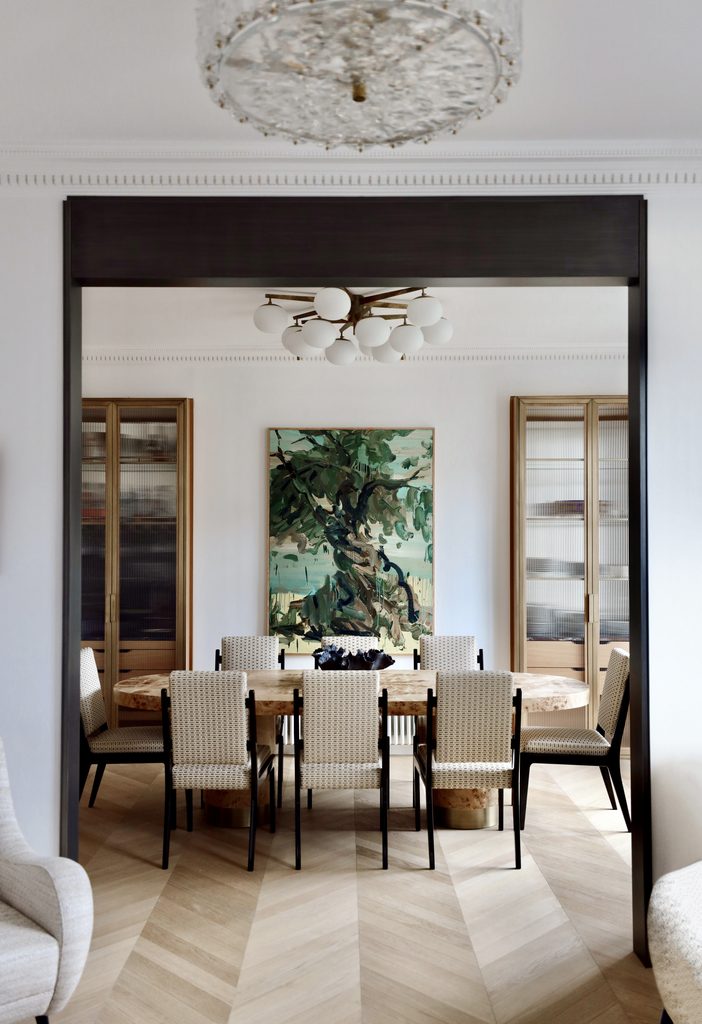
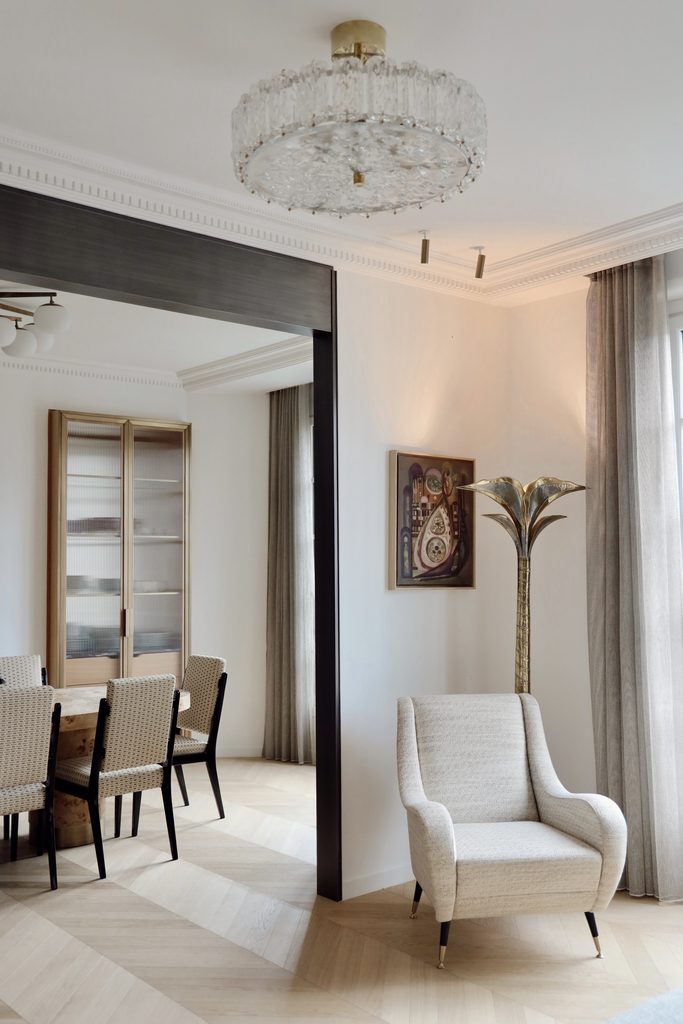
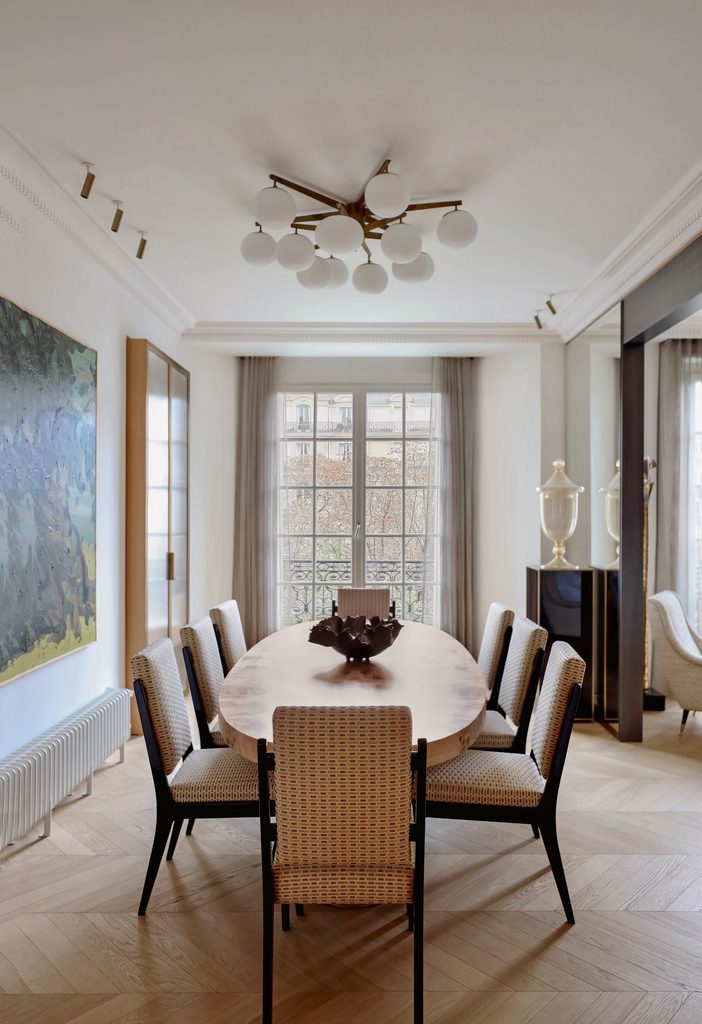
The challenge, ultimately, was to reconcile the formal character of the Parisian apartment with the requirements of a family residence and the particular demands of an important private collection. “For us, the key was to create a dialogue between the art and the interiors without making the apartment feel like a gallery,” the designers observe.
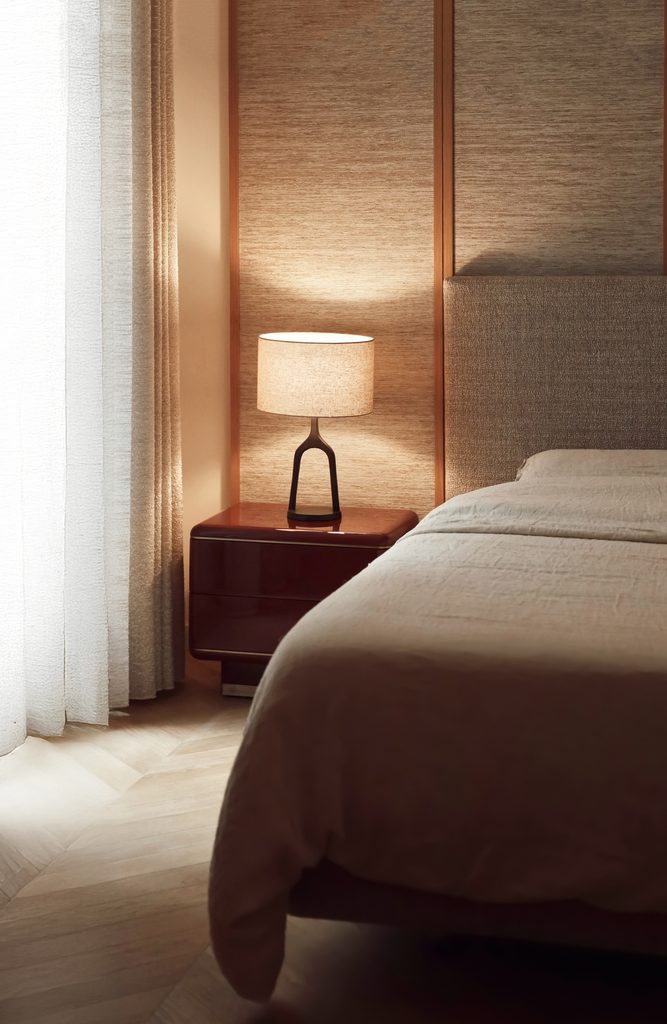
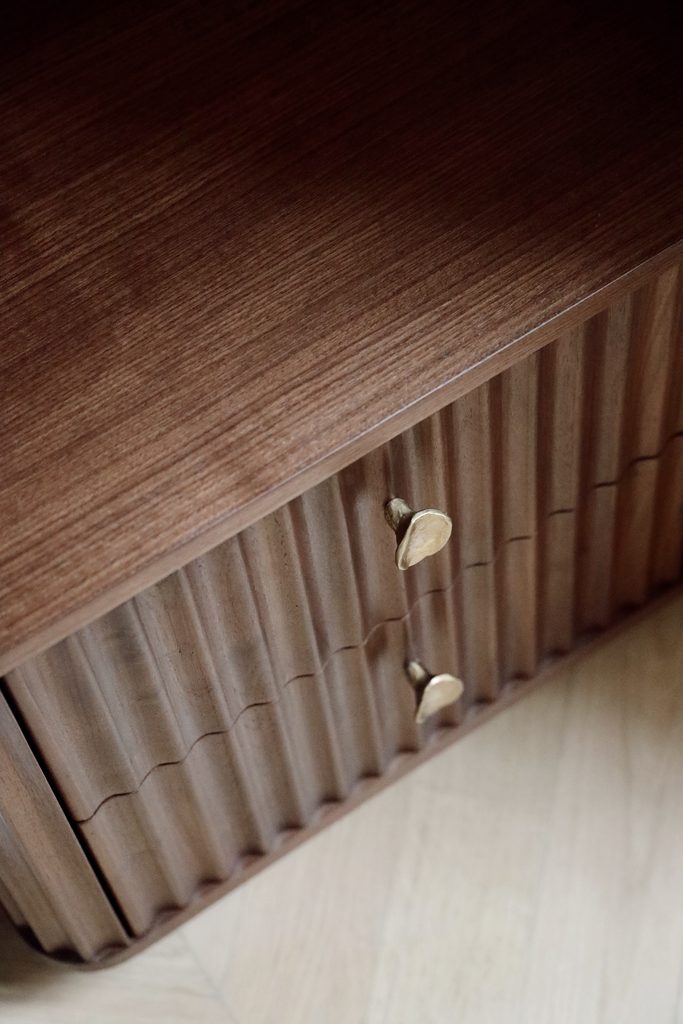
In this respect, the Henri Martin apartment illustrates an approach to collecting in which art is inseparable from the experience of domestic space. The restored French architecture provides a historical framework, while the Lebanese collection and contemporary interventions introduce other cultural and aesthetic references. Together, they establish an interior whose identity emerges from the relationship between these elements rather than from any single decorative language.