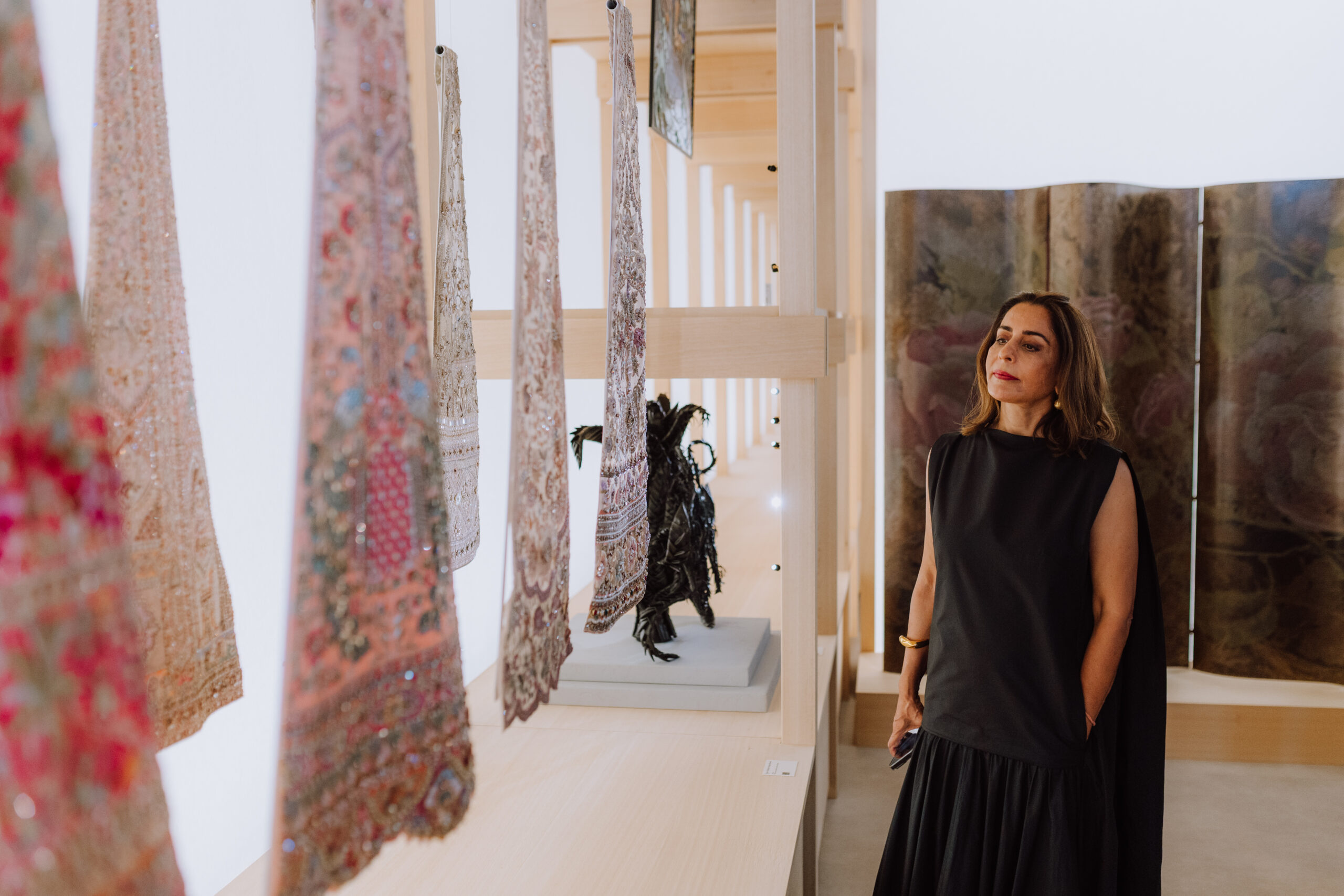
For Shalini Misra, the story of a piece of furniture rarely ends with its making. It continues in the rooms it enters, the conversations it starts, and the distance it travels from the hands that shaped it.
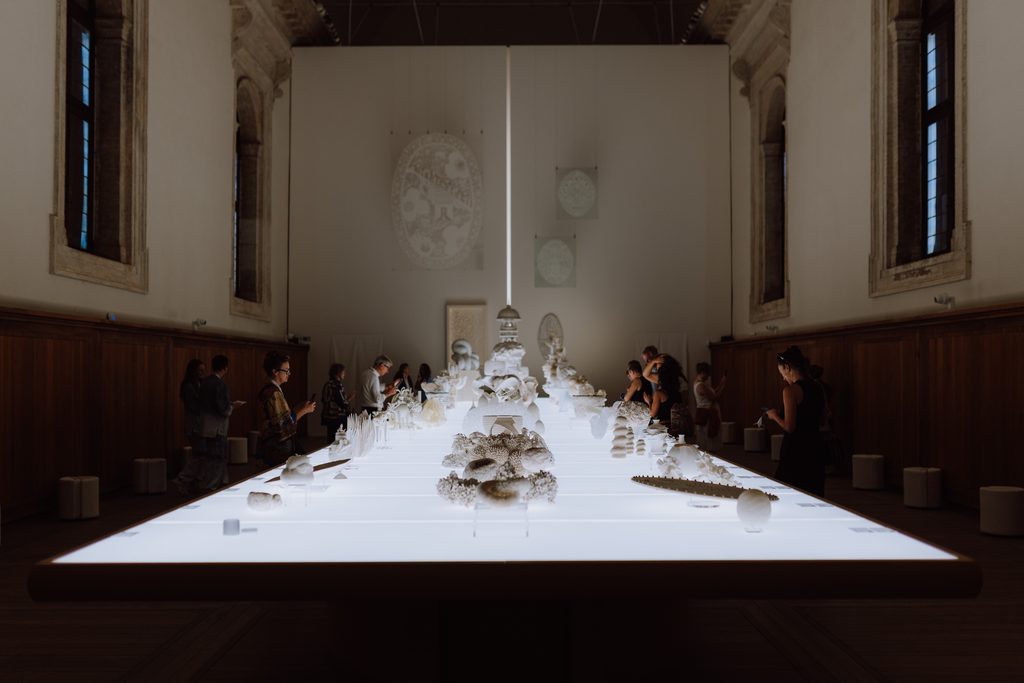
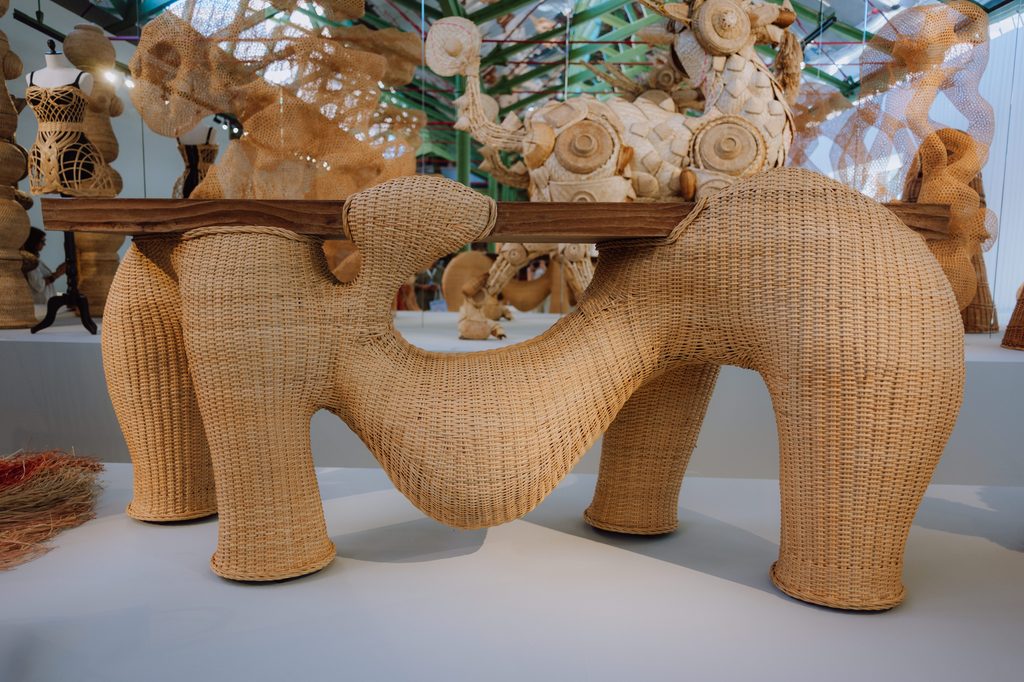
After nearly three decades designing interiors around the world, Misra founded Shakti Design Residency in 2024 to change how that story gets told, pairing international designers with Indian ateliers and treating the maker’s knowledge as inseparable from the design itself. This year, Prorůstání / Growing Into, born in a workshop in Dimapur, Nagaland, travelled from Alcova during Milan Design Week to a very different stage: Fondazione Giorgio Cini in Venice, as part of Homo Faber.
In this edition of In Conversation With, Shalini Misra reflects on patronage as an active practice, the difference between an atelier and a factory, and why the future of Indian craft lies in participation rather than preservation.
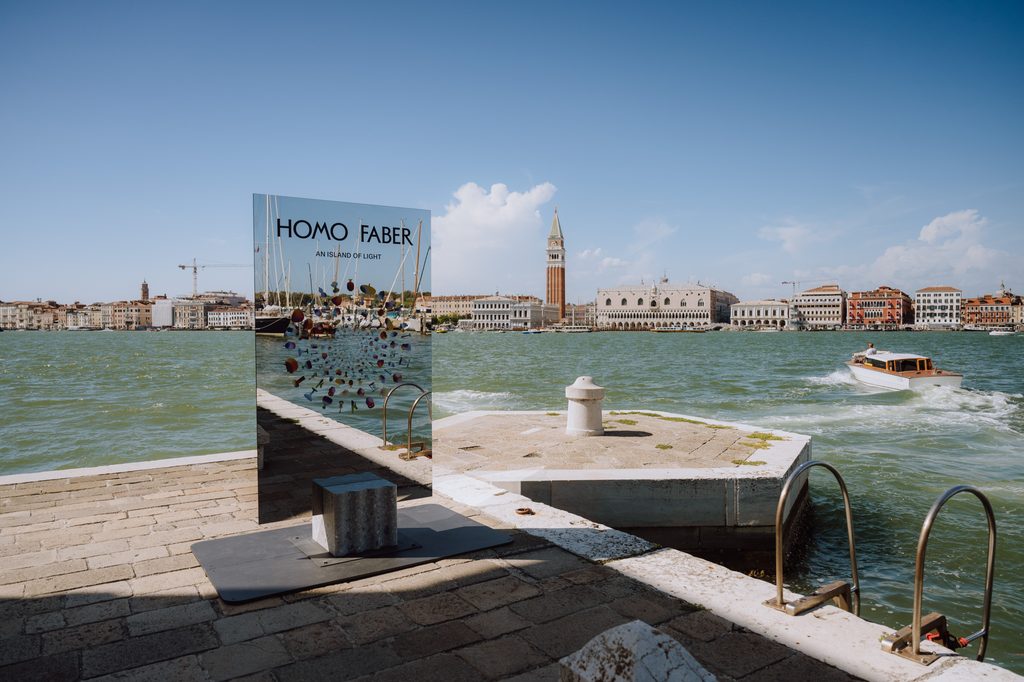
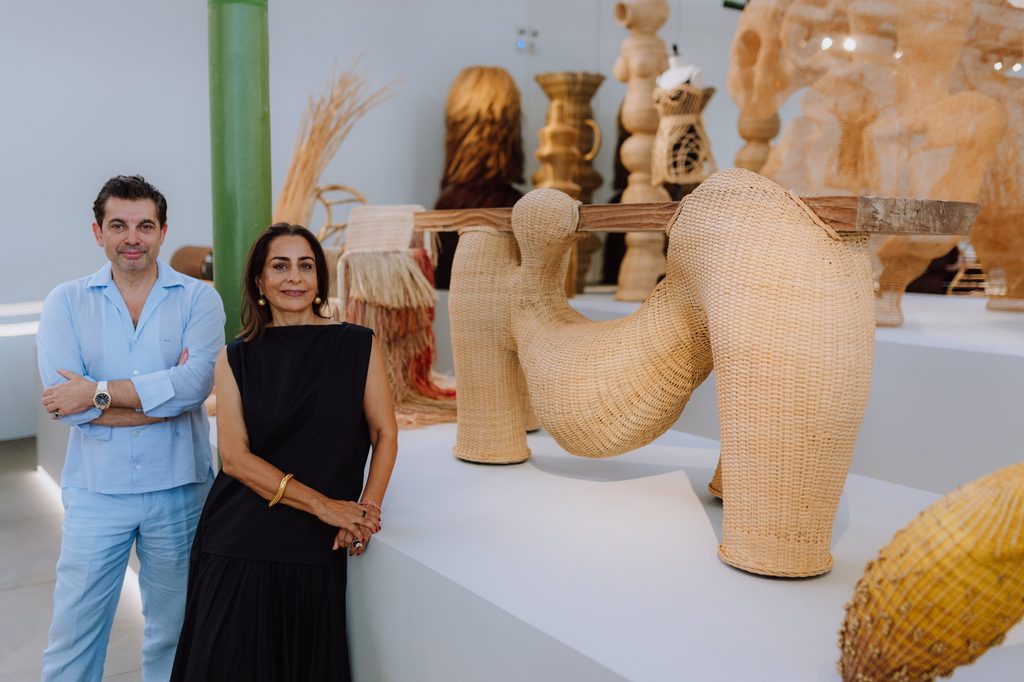
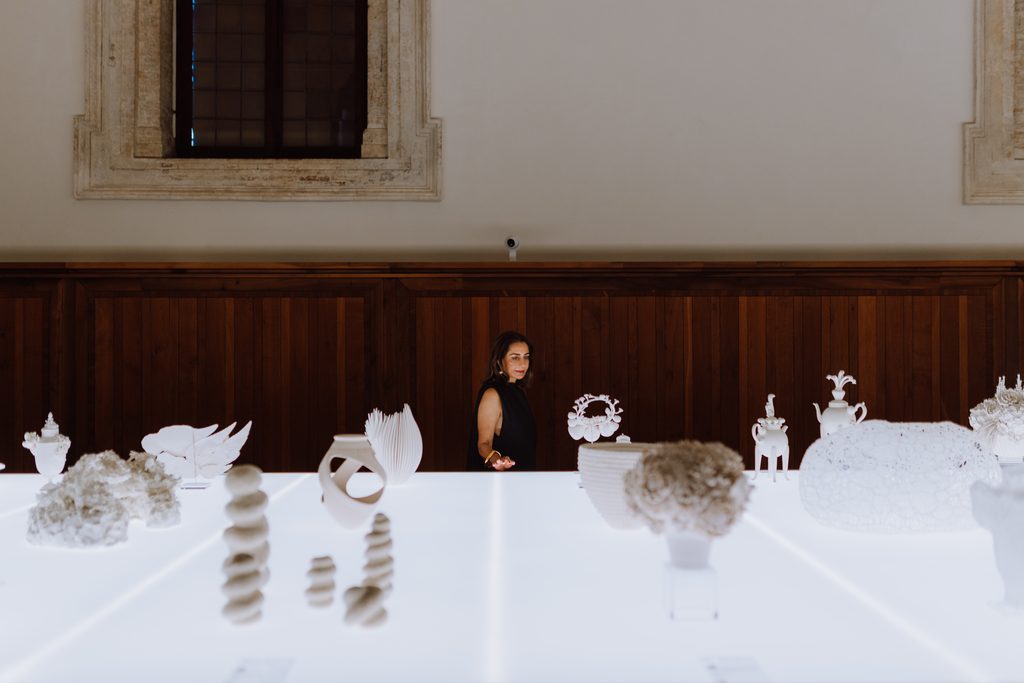
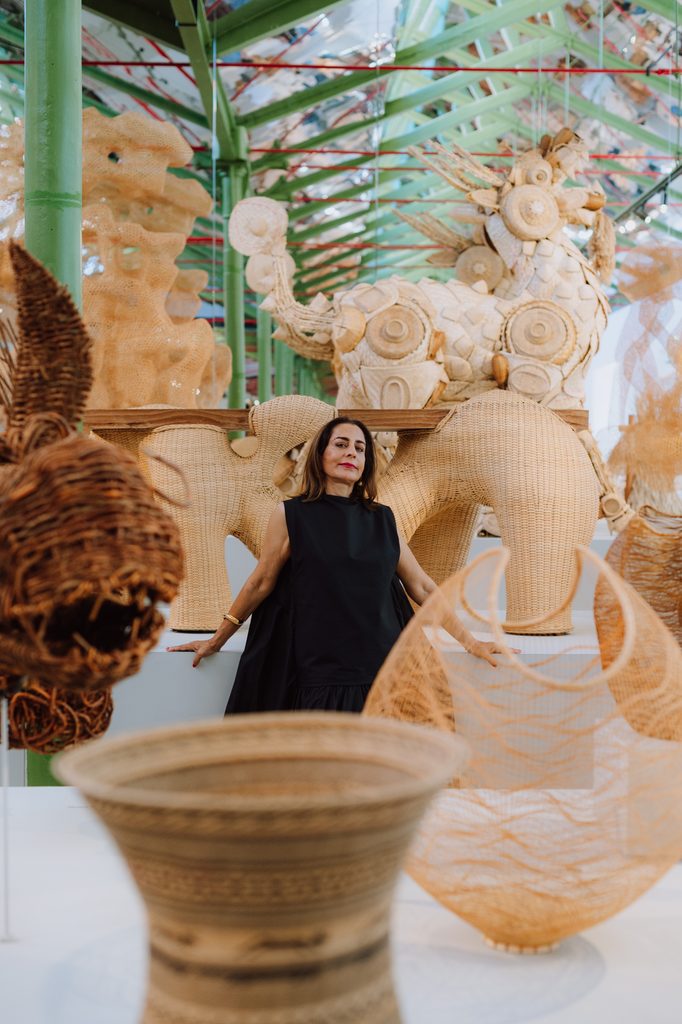
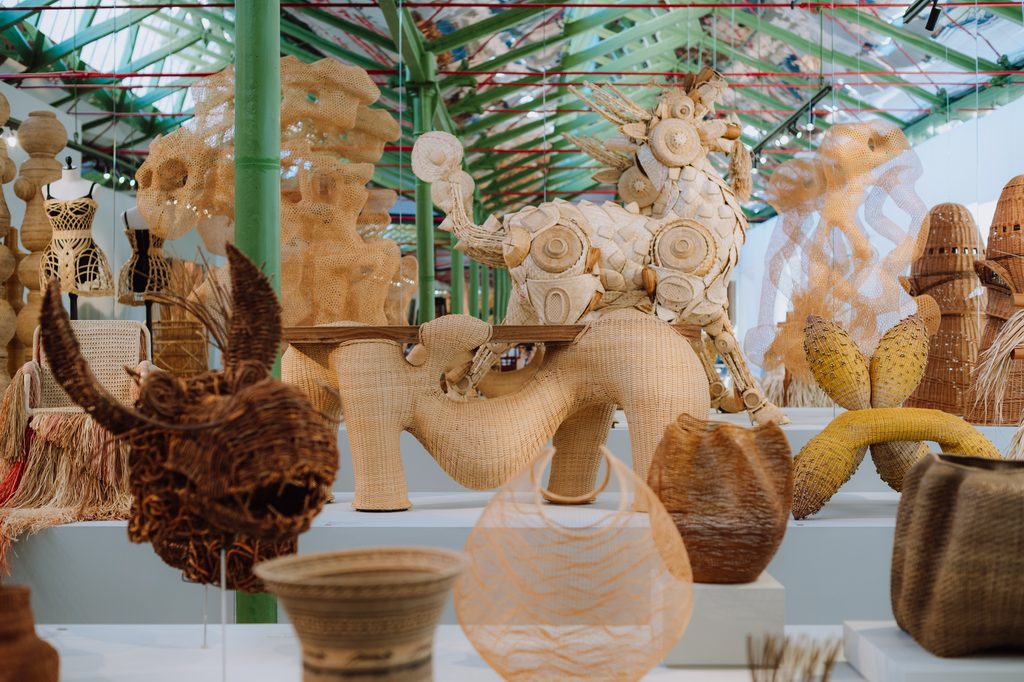
Prorůstání / Growing Into has now travelled from a workshop in Dimapur to Alcova during Milan Design Week, and now to Fondazione Giorgio Cini for Homo Faber. What did it feel like to see a piece born in Nagaland standing inside that setting in Venice?
It was moving because I knew how far the piece had travelled in every sense. I had seen it in the context in which it was developed, through the residency and Tadeáš’s time at the Heirloom Naga Centre. Then we took it to Milan, where it was suddenly being discovered in a completely different international environment. To then see it at the Fondazione Giorgio Cini, selected for Homo Faber, felt like another very important step.
What I loved was that it did not lose its connection to Nagaland by moving into those spaces. As an interior designer, I have spent nearly thirty years looking for objects that have that sort of depth. The pieces you remember are rarely the ones that are simply beautiful. They have a sense of place, of the person who made them and of the process behind them. Seeing Growing Into in Venice reinforced why I started Shakti. I want work developed in Indian ateliers to be seen internationally as important contemporary design while still carrying the people and knowledge that made it possible.
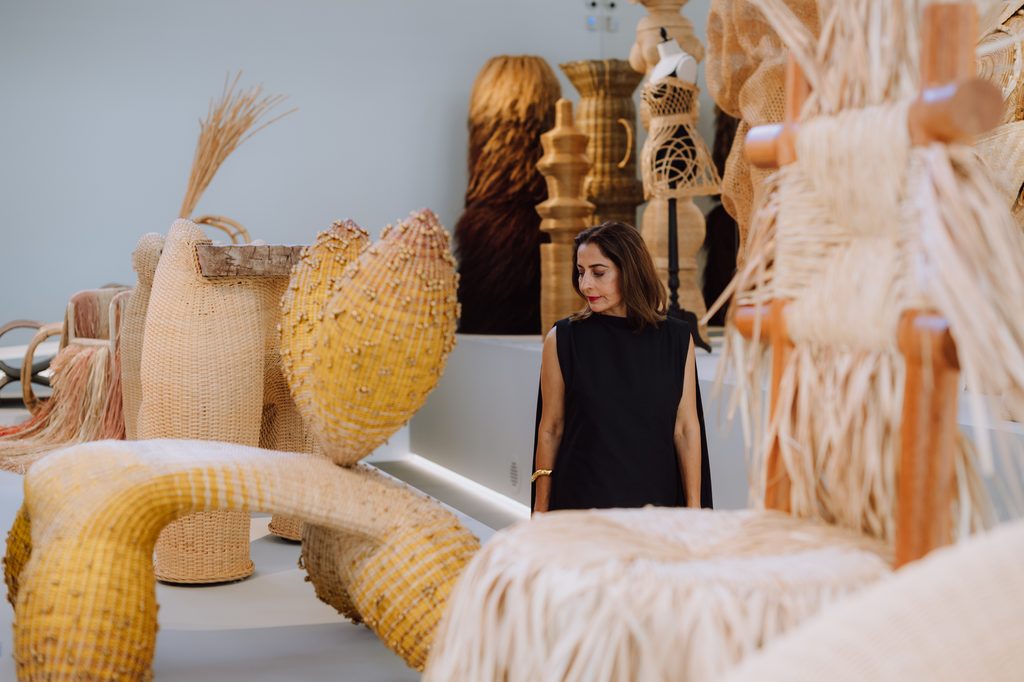
Homo Faber is one of the most rarefied stages in craft anywhere in the world. What did it mean to you personally to bring Indian ateliers into that conversation for the first time?
It meant a great deal. Homo Faber takes making very seriously. You are surrounded by extraordinary technical knowledge from all over the world and there is a real focus on material, skill and the human hand. It felt like a very natural place for Shakti to be part of the conversation.
One of the reasons I founded Shakti was because I felt there was still an imbalance in the way Indian craft was perceived internationally. There has never been a shortage of admiration for what India makes. The problem is that admiration can remain quite superficial. We admire the embroidery, the carving, the weaving, the metalwork, but historically the creative intelligence behind it has not always been acknowledged in the same way as the designer’s idea.
So seeing Ajay Gour and the Heirloom Naga Centre recognised alongside Tadeáš was very important to me. It moves the conversation towards what I want Shakti to stand for: Indian makers being understood not at the edge of contemporary design, but as people actively shaping it.
Was there a particular instant at Homo Faber, a reaction from a visitor, a juror, a fellow exhibitor, that told you the residency’s model was working exactly as you hoped?
I don’t think there was one dramatic moment. For me the more important thing was seeing the work able to stand independently in that environment.
It is easy to forget that Shakti is still a very young programme. When you start something like this you have a very clear idea of the values behind it, but you cannot predict what the work itself is going to become. You’re more an enabler than a controller, so to see the work hold its own in a completely different curatorial setting is a good feeling.
You’ve spent thirty years designing interiors before founding Shakti. Was there a specific commission or a specific maker who first made you think the relationship between designer and artisan needed to change?
It happened over many years rather than through something specific, but there are projects I can look back on now and see how much they shaped my thinking.
My farmhouse project in Delhi was particularly important. It was a very holistic project where we were working across architecture, interiors and landscape and we created a craft village on site, bringing artisans and different trades together. It made the relationship between all those different skills incredibly visible. You realised that the quality of the finished space depended on this huge accumulation of knowledge.
From then I became increasingly conscious of the fact that design recognition does not always reflect design reality. We talk very comfortably about the designer, but not necessarily about the hands and minds that allowed the design to exist.
Shakti came out of wanting to make that relationship much more explicit. Instead of the maker entering towards the end of a design process, what happens if the maker and the designer begin together? What happens when knowledge of material is allowed to affect the concept itself? Those questions had been present in my interior practice for a long time before there was a residency.
Where were you, and what were you doing, the moment the idea for Shakti Design Residency actually took shape?
There wasn’t really one exact moment. It was something I had been thinking about for quite a long time.
I had spent nearly three decades seeking out craftspeople for interior projects and I had also become increasingly involved in collecting art and design. Then Curio gave me another way of working with designers and makers. Shakti grew quite naturally from all of those experiences. I could see extraordinary knowledge, but I could also see that what was often missing was the bridge between that knowledge and a much wider contemporary design audience.
I was also thinking about the limitations of simply talking about “preserving” craft. I understand why we use that word, but it can suggest that the ideal outcome is to keep something exactly as it was. Indian craft has never worked like that. It has always responded to patronage, trade, new materials, different cultures and changing ways of living.
So the idea became to bring designers into these ateliers, give them real time together and let the experience itself become the starting point. Then take the resulting work into international contexts where it can participate in the contemporary design conversation.
You talk about patronage as something more than acquiring or commissioning. When did you first understand patronage that way yourself, rather than the more conventional idea of collecting?
Collecting probably taught me the difference. When you collect something you love, you begin to understand that the object is only one part of a much larger story. You become interested in the person behind it, how their practice developed, who enabled the work and what allowed them to take a risk at a particular point in their career.
As a designer I have commissioned work for many years too, and commissioning can be very powerful because you are asking somebody to make something that does not yet exist. At its best, it isn’t a transaction where you dictate an outcome. It can give a maker an opportunity to experiment or solve a problem in a way they haven’t before.
That is where my idea of patronage sits. It is active. You can provide resources, introductions, context, guidance and visibility. You can create an opportunity and then continue supporting the work once it exists. But you also have to know when to allow it to shape itself.
Shakti is a form of that for me. My role isn’t to design the residents’ work, or to just fund the process. It is to bring together people I believe can have an interesting exchange and create enough support around them for something ambitious to happen.
I also don’t see this as philanthropy in the conventional sense. These ateliers possess extraordinary knowledge. They are bringing enormous value to the relationship. Patronage, to me, is about recognising that value and helping to create the conditions in which it can lead somewhere new.
You’ve said craftspeople shouldn’t be seen as anonymous producers executing someone else’s idea. What does a truly equal creative exchange look like in the room, in practice, when a designer like Tadeáš Podracký sits down with a maker like Ajay Gour?
Equality doesn’t mean that everybody contributes the same thing. It means recognising that different forms of expertise have equal creative value.
Tadeáš comes with his own sculptural language, his research and a particular way of thinking about form. Ajay comes with an intimate knowledge of cane, wood and making that is impossible to acquire through research.
The interesting point is when those forms of knowledge start interrupting one another. A designer proposes something and the maker says, actually the material will behave differently. Or the maker demonstrates a technique and suddenly the designer sees a possibility that wasn’t in the original idea.
That is what I mean by genuine collaboration. It isn’t simply being respectful to the person who makes your design. Their knowledge has to be capable of affecting the design.
For me, the test is quite straightforward: could exactly the same object have been developed if the designer had never met that particular maker or spent time in that particular place? If the answer is yes, then I don’t think we have really achieved what Shakti is trying to do.
Prorůstání draws directly on the Naga morung and its carving tradition rather than using it decoratively. How do you and your jury judge whether a collaboration has gone deep enough into a craft’s meaning, rather than simply borrowing its surface?
This is something I feel quite strongly about because there is often a version of working with craft where you take a recognisable technique or motif and apply it to a contemporary form. It might be beautiful, but that doesn’t necessarily mean there has been a real exchange.
The question I come back to is: what has the designer actually learned and what changed because of it?
If you remove the decorative surface, is there still evidence of the encounter in the structure, the material choices or the way the object has been conceived? Has the artisan’s knowledge altered a decision? Has the designer understood enough about where a technique comes from to know when it is appropriate to use it and when it isn’t?
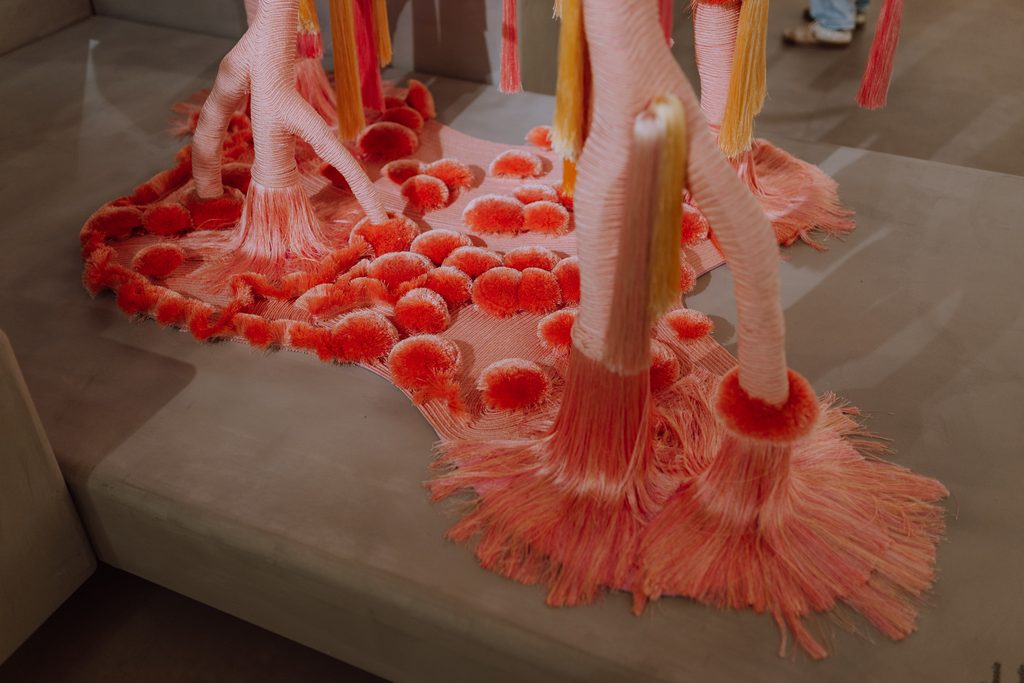
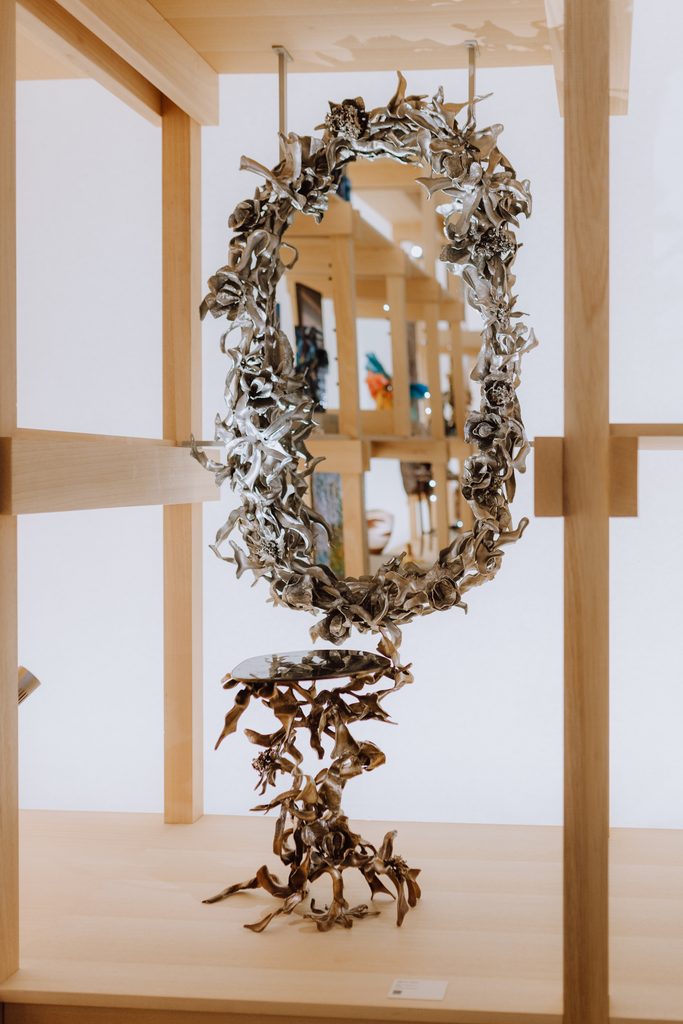
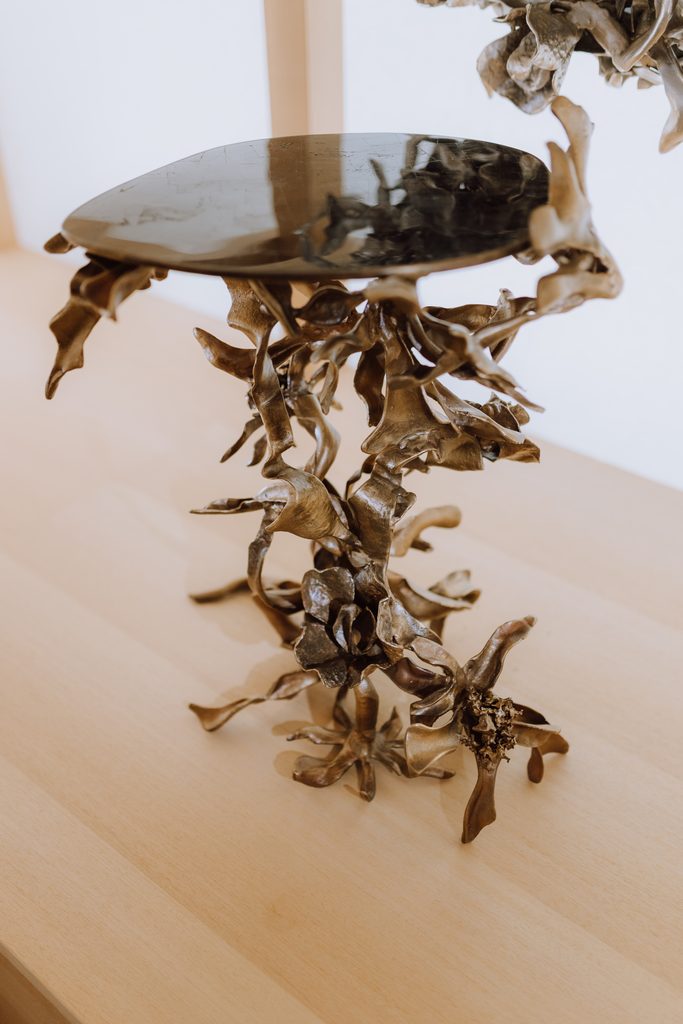
With Growing Into, the morung reference doesn’t operate as an applied pattern. The architecture and carving language of the morung informed the solid timber element while the cane work created something very different in the base. One has weight and permanence, the other has movement. The piece comes from bringing those things together rather than decorating a generic table with a Naga reference.
Contemporary relevance does not mean putting a modern aesthetic over a traditional craft. The craft itself has to participate in the development of the idea.
What is the most difficult part of that exchange to get right, the part you are still learning about with each cohort?
The balance.
You don’t want an international designer arriving with a completely resolved object and treating the atelier as a production resource. But equally, you cannot be so reverential towards tradition that nobody is willing to test anything. That would produce preservation rather than evolution.
There has to be enough respect to understand why something is done in a particular way, then enough trust on both sides to ask whether it might be done differently.
That sounds simple, but people arrive with different languages, working cultures, timescales and ideas about the design process. A highly established craftsperson may work instinctively through the material while a designer may communicate through drawings, models or conceptual research. Neither approach is more valid, but they have to find a way of understanding one another.
Is there a single object from either cohort of Shakti, not necessarily the most celebrated one, that you personally could not part with?
Not in the sense of a singular, standout precious thing. They’re all so different, and so much of the people who brought them to life. I don’t think I’d part with any of them.
You’ve described this as a significant moment for Indian craft internationally. What has changed in the last five years that made this the right time for a residency like Shakti to exist?
I think several things are happening at once.
People have become much more interested in knowing where things come from. In interiors I see a growing desire for pieces with a real story, provenance and evidence of the human hand. We have had a long period where globalisation has made extraordinary design accessible almost everywhere, which has many benefits, but it can also create sameness. The same references travel very quickly. The same objects appear in London, New York, Dubai or Mumbai.
Craft can offer something different because it begins in a particular knowledge, material, community or place. Bespoke design and commissioning are important for the same reason. They allow us to create something specific rather than assembling an interior entirely from things everybody else can access.
I also think the conversation about India is changing. India has often been looked at internationally through an idea of heritage: extraordinary ancient traditions, colour, ornament and manual skill. All of that exists, of course, but it is far from the whole story.
There is an enormous amount of contemporary thinking happening around materials and making in India. The interesting question now is how that depth of inherited knowledge participates in the future of design rather than simply how it is preserved.
Technology has accelerated this too. We can produce images and ideas at extraordinary speed. I am excited by technology, so I don’t see this as technology versus craft. But the more our lives become digital, the more valuable embodied knowledge becomes. Knowing how wood responds to a chisel or how cane behaves under tension is a form of intelligence too.
For me, this is exactly the moment to bring those worlds closer together.
Is there a craft tradition in India you still dream of bringing into this kind of dialogue, one Shakti hasn’t reached yet?
There are far too many.
The wonderful and slightly overwhelming thing about India is the sheer diversity of material traditions. You can travel from one state to another and encounter completely different relationships with textile, metal, wood, clay or stone. Even describing something as “Indian craft” can flatten that diversity.
So I am less interested in creating a checklist of crafts that Shakti needs to cover. I would rather begin with the quality of the atelier and the knowledge that exists there, then find a designer for whom that encounter could genuinely open up a new direction.
I would of course love the residency to become increasingly geographically curious. We are still at the beginning. Two cohorts sounds like a lot when you are running them, but against the scale and diversity of Indian making it is almost nothing.
What do you want the design world outside India to understand about Indian ateliers that it still gets wrong?
That an atelier is not a factory.
I think that distinction is fundamental. There is a tendency, particularly when looking at India from outside, to admire the complexity of what can be made there while still placing the creative authority somewhere else. The design is conceived in one place and India is where the extraordinary skill required to execute it happens.
Of course that relationship exists and there is nothing inherently wrong with production. But it represents only a fraction of what these ateliers are capable of.
The people I meet have extraordinary material intelligence. They understand structure, proportion, process and problem solving. They innovate constantly because they have to respond to materials by hand. Many are working with knowledge that has developed over generations, but that does not make them historical figures. They are contemporary practitioners.
I also think the West has historically interpreted Indian style through its own lens. Certain aspects of India became legible internationally, such as colour, pattern, ornament and exoticism, while other forms of knowledge were overlooked because they didn’t fit that image.
And I would like us to stop talking about India as though it has one craft tradition. It contains many different histories, communities and design languages. That complexity is part of its strength.
What has surprised you most about running Shakti, something you didn’t expect when you founded it in 2024?
The speed and spirit of our growing community. It is a truly special thing.
When I started Shakti, I was of course focused on the structure: finding the ateliers, selecting designers, creating the residency and ultimately producing work that could travel internationally. I knew collaboration would be important, obviously, because that is the basis of the programme.
What I hadn’t fully anticipated was how much would happen around the work.
The residents learn from one another. The ateliers become part of a wider conversation. Jury members come with completely different perspectives. People visit, talk, question things and make connections that may have nothing to do with the object being produced at that moment.
Shakti has become much more than the sum of its parts for me. It is a community, a mission and a way of looking at design. And personally I have learnt an enormous amount from it. I started it because I have strong beliefs about craft, but I don’t want Shakti to become a platform where I simply broadcast those beliefs. I want my own thinking to be challenged by the people we bring into it.
If you could sit three people, living or gone, around a table made through Shakti, who would they be?
I would seat my late mother, father and brother around the Growing Into table. The table is informed by the Naga morung, a place of gathering, exchange and shared life, so it feels fitting to me to bring family back around it.
In Indian culture, family is such a strong thread through our lives. So much happens around a table: food, conversation, storytelling, simply being together. Another evening like this with three of my dearest family, around a piece that itself carries ideas of community, memory and belonging, would be something I’d cherish.
What do you hope people remember first when they think of Shakti Design Residency, once it has grown far beyond this second cohort?
That it changed the relationship.
Of course I want people to remember the work. We are creating collectible objects and I want those objects to be beautiful, ambitious and important in their own right. But if Shakti is successful over the long term, its real legacy should be bigger than a collection of pieces.
I want it to have contributed to a different understanding of authorship. A designer can have a very strong vision without pretending that they alone created everything. Recognising the contribution of a master craftsperson does not reduce the designer’s authorship. It makes the story of the work more accurate and, in my view, much richer.
I would also love Shakti to have helped shift the language around Indian craft away from preservation alone. Preservation has an important role, but a craft stays alive because there is demand, experimentation, pride, transmission and the possibility of a future within it.
That requires new commissions. It requires collectors. It requires young people to believe that this knowledge has relevance. It requires international exposure without forcing everything to conform to an international aesthetic.
What’s next?
The third residency programme starts in mid-October.
I don’t think the ambition is simply to make Shakti bigger every year. I want to make it deeper. I want to continue bringing exceptional designers and ateliers together, but I also want to look at what happens after the residency. That longer life of the work is increasingly important to me.
And on a personal level, Shakti continues to feed back into my interior design practice. The more time I spend around makers, the more convinced I become that bespoke design and serious commissioning are essential to creating interiors with identity. We live in an age when excellent design can be reproduced very quickly and the same visual references can circulate everywhere. I don’t want the homes I design to feel interchangeable.
Working with artists, artisans and specialist makers gives an interior something that cannot simply be copied from an image. It gives it its own history. That has always been part of my work, but Shakti has made me think about it even more closely.