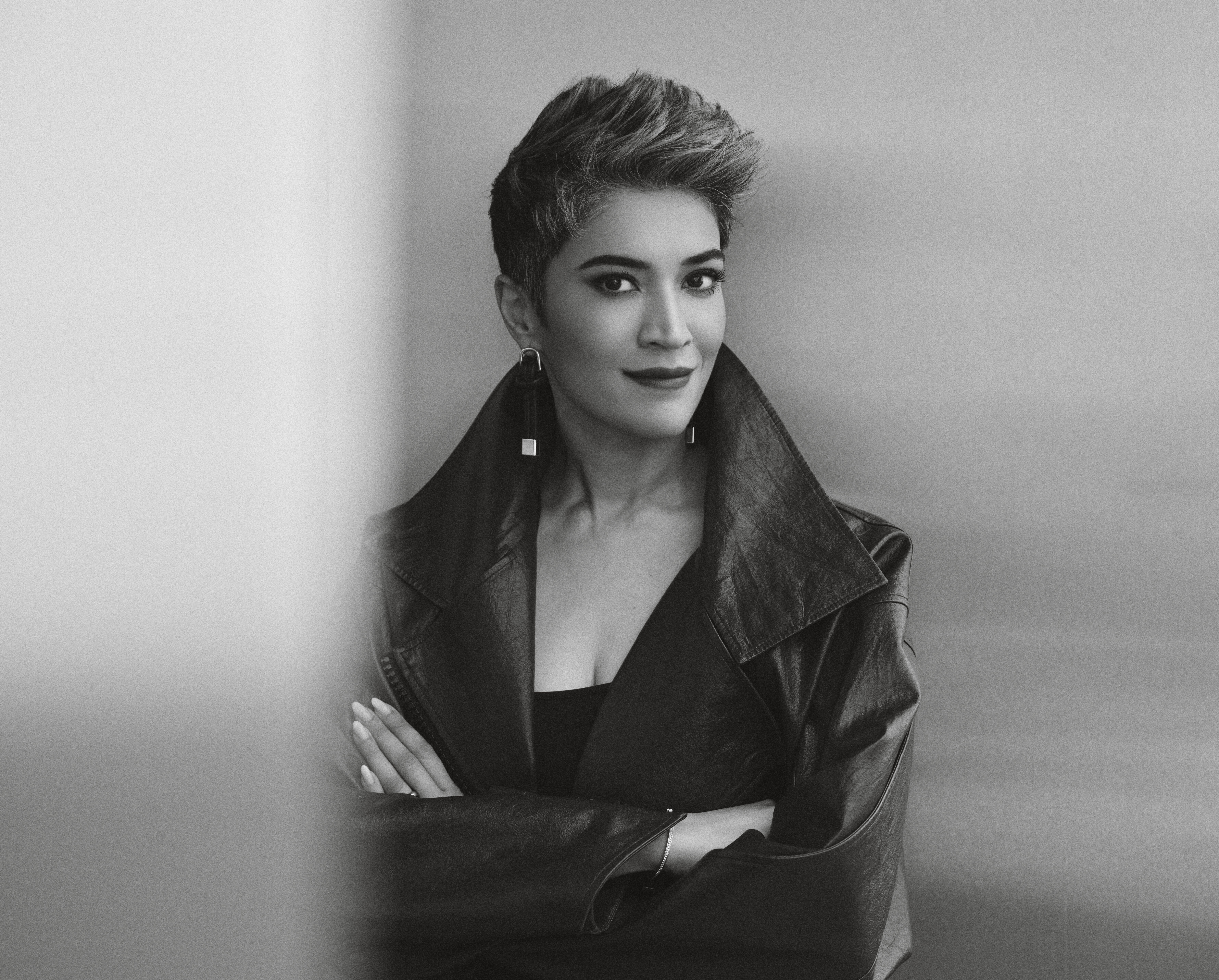
For Pallavi Dean, design has never been simply about aesthetics. As the founder of Roar, the Dubai-born designer has built an internationally active studio around a philosophy that brings together creativity, human behaviour and commercial intelligence. From workplaces and hospitality to retail and education, her approach is rooted in understanding not only how spaces look, but how people experience them.
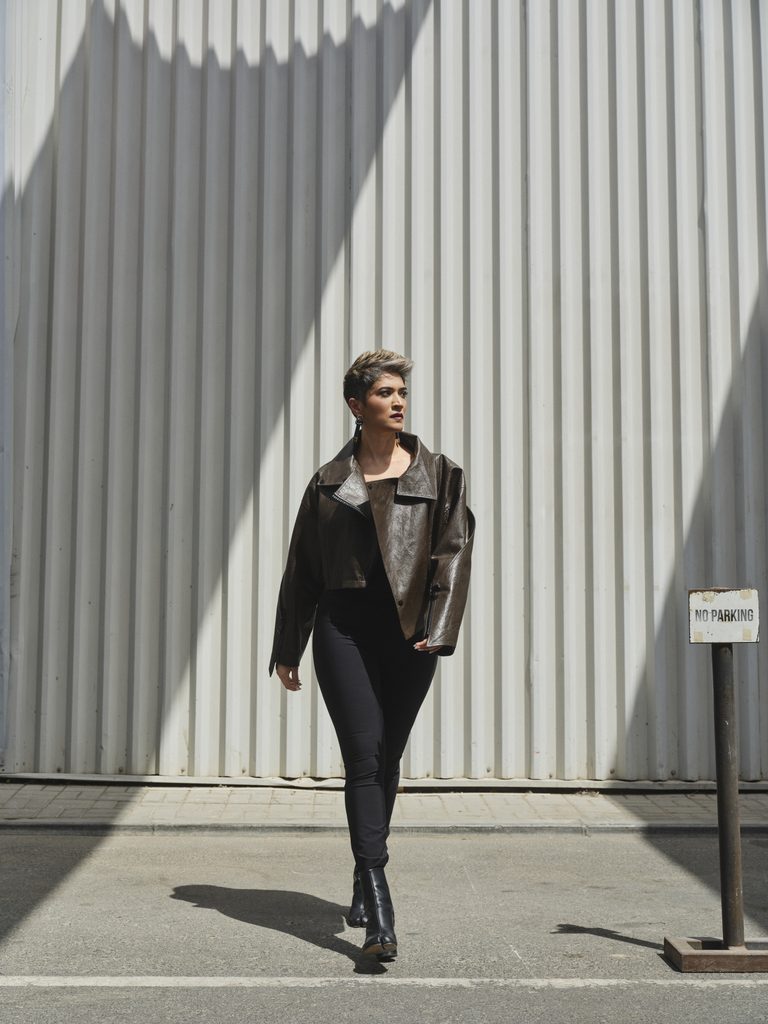
Since establishing Roar in 2013, Dean has expanded her practice well beyond the UAE, with projects spanning Saudi Arabia, India, Europe and the United States. Yet, as the studio continues to grow, she remains committed to the principles that shaped its beginnings: investing in people, cultivating long-term client relationships and creating environments that respond to the complexities of contemporary life. Increasingly, her attention is turning towards environmental psychology and neuroarchitecture, exploring how scientific research can inform more thoughtful and responsive design.
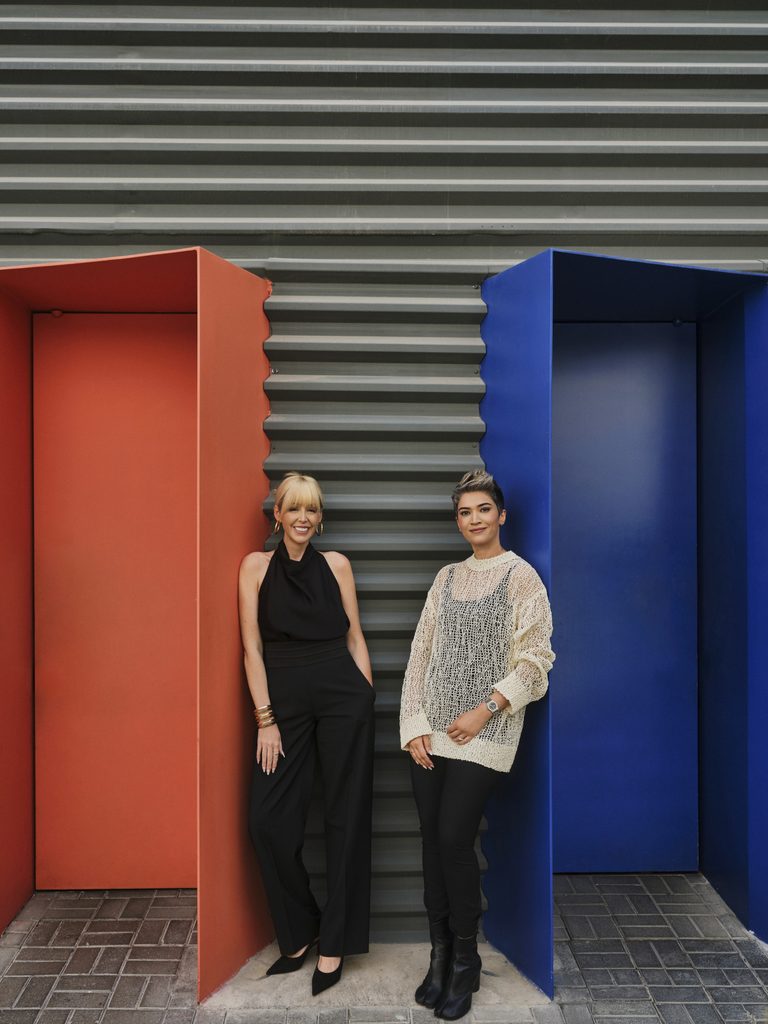
In this edition of In Conversation With, Pallavi Dean reflects on navigating uncertainty, the realities of running a creative business, the enduring importance of craftsmanship and physical experiences, and why rethinking the traditional classroom may be one of design’s most important challenges.
You’ve described the experience of running Roar in recent years as “whiplash”, navigating a business in the UAE while everything else shifts. What does that word actually describe day to day, and has your definition of leadership changed because of it?
I did call it whiplash because one moment it’s all systems go, and then suddenly everything comes to a standstill. We don’t control the geopolitical situation. We don’t control the supply chain. And construction is incredibly iterative, with constantly moving targets, so you have to be agile and move with it.
In terms of leadership, I’ve always been someone who is very comfortable with change, so these things don’t particularly unnerve me. In fact, when everything is constant or static, I tend to get more anxious. I thrive in these high-intensity situations. Perhaps leadership for me is less about trying to control uncertainty and more about being comfortable operating within it.
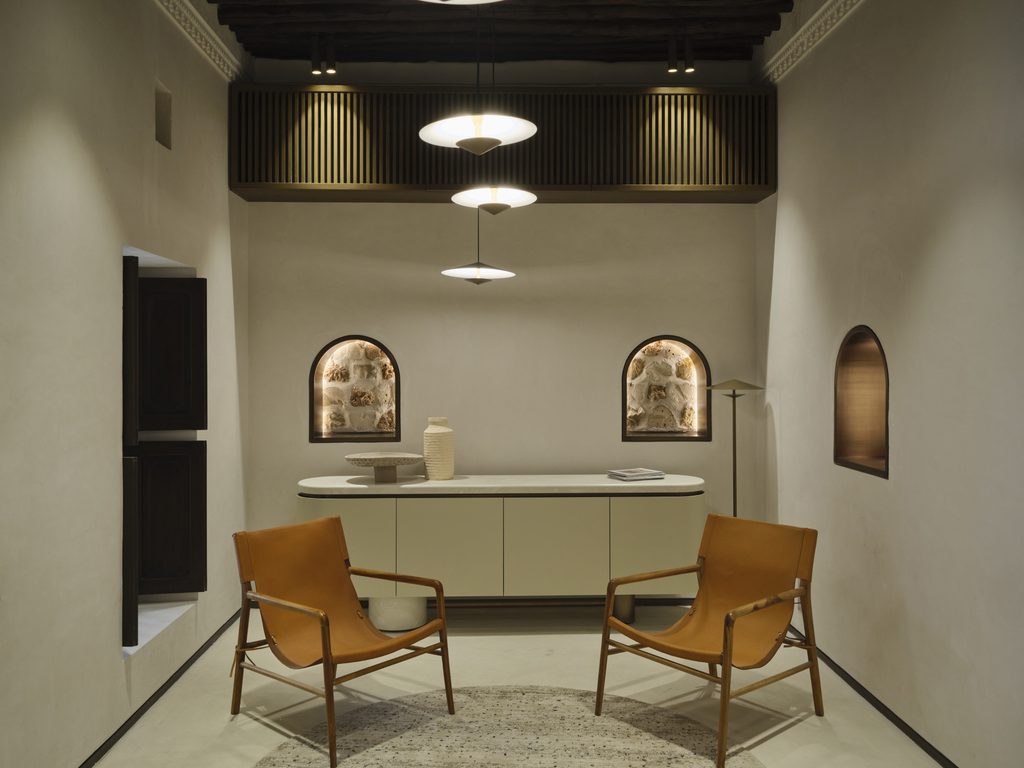
Roar has recently received recognition in Saudi Arabia, alongside its growing presence in the UAE. What is genuinely different about designing for the Saudi market today, compared with the assumptions people outside the region might still have?
I was born and raised in Dubai, so it was very important to me to have a studio in the UAE, where the majority of our work is. When we looked at expanding into Saudi Arabia, I didn’t want to do the typical fly-in, fly-out model. We like to invest in the places we work, hire locally and build a team that actually understands the market.
One of our associates, who had already been with Roar for four years, moved to Saudi to set up the office. Having boots on the ground, especially when we have so many live projects on site, is a game changer. I still spend quite a lot of time in Saudi, but I know we have a reliable team there who can run the projects, service our clients and give every project the attention it needs.
We’ve now completed work across several sectors, from commercial workplaces and hotels to education, and we’re currently working on a very exciting cultural museum project. I think that breadth itself challenges some of the assumptions people outside the region still have about what is happening in Saudi Arabia.
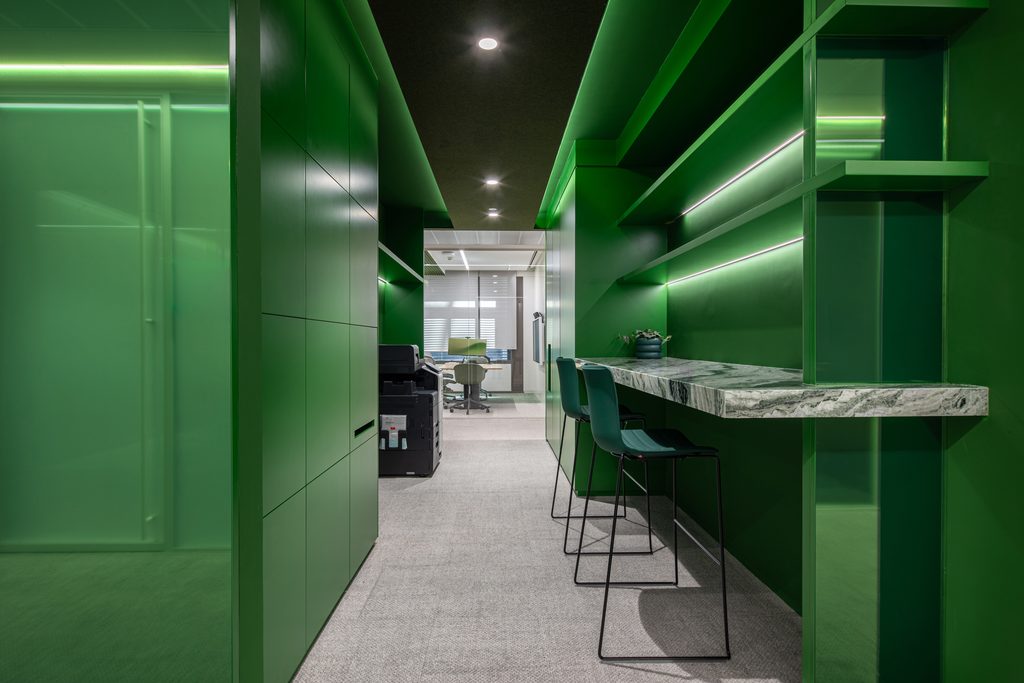
Speaking about Jaipur Rugs, you once said that “people will always need touch.” In a design world increasingly obsessed with digital rendering and AI visualisation, is that a philosophy or a bet?
Think about our five senses. One of them is touch. No matter how much we get sucked into the virtual world, that sensorial input will always be essential, particularly in a retail experience.
You can’t quite understand a colour on a screen, how it changes and moves with the light, or really experience texture. All of those things matter, whether you’re buying a dress or buying a rug. So even though online shopping will continue to grow, I don’t believe it will ever completely replace bricks and mortar. We are physical beings. We still need to touch things.
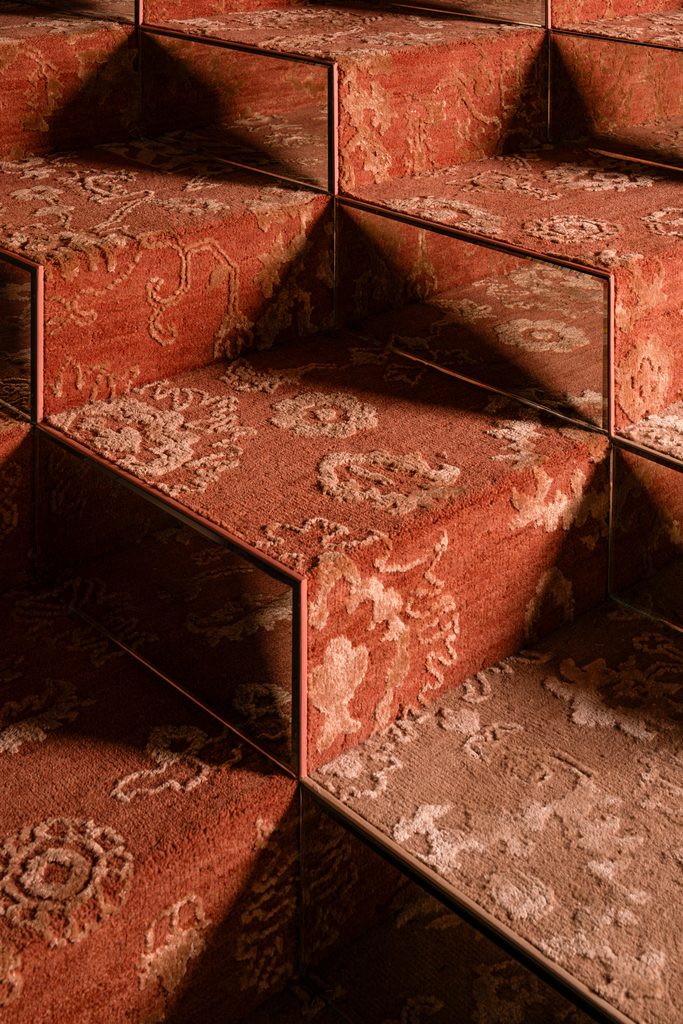
You designed the Jaipur Rugs flagship in Dubai before creating its Mumbai store. What did the first project teach you, and how did that experience influence the second?
We actually designed the Dubai flagship first. We have a long-standing relationship with the client, and the Mumbai store was particularly meaningful to me because it was my first built project in India. My parents are from Mumbai, although I’ve never lived there, so having the opportunity to work in the city they came from was quite special on a personal level.
The client is incredibly trusting of the design process. He gives us carte blanche and allows us to really run with the narrative.
One of the things we learned from Dubai was that although we hadn’t designed it as an event space, it naturally became one. It hosted talks and gatherings, and when Bella Hadid came to Dubai, rather than renting a hotel venue, they rented the Jaipur Rugs store for their event.
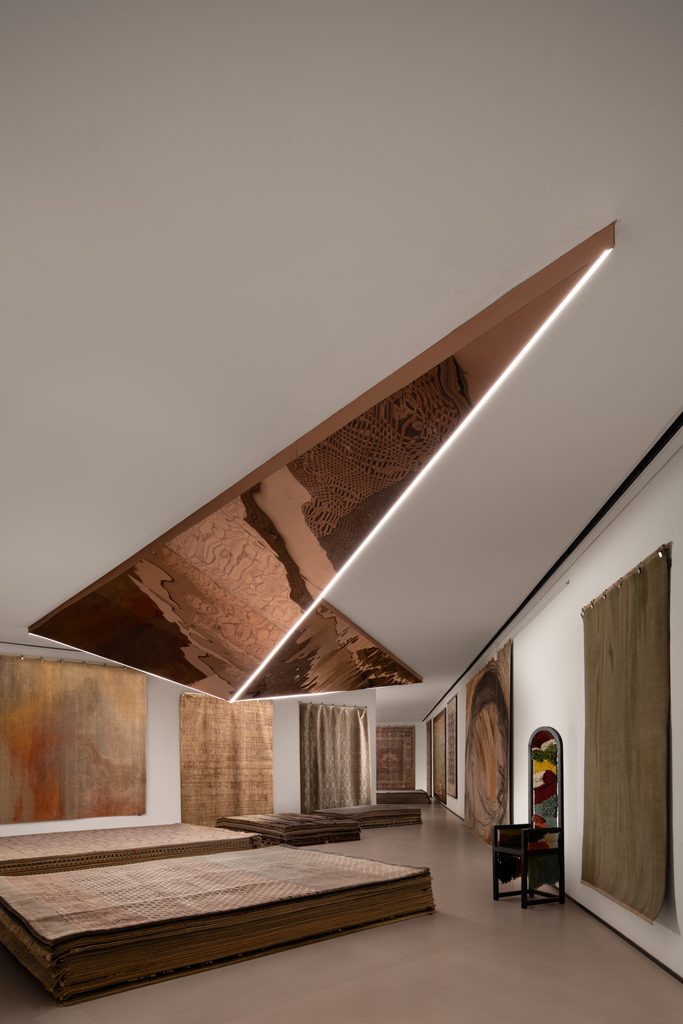
I wanted to bring that thinking into Mumbai. It became a very museum-like space that celebrates the tools, the raw materials and then the finished product. That connection between process, craftsmanship and object is what gives it this gallery-esque quality rather than feeling like a conventional retail store.
You’ve spoken about why design alone is not enough to build a successful studio. What do you mean by that, and what do you think is missing from the way many creative practices operate?
For me, it’s not about being a starving artist. Art for art’s sake can be a hobby. To run a business in design, you have to keep your eye on your profit and loss statement. It’s about finding the balance between the right brain and the left brain.
Yes, creativity is incredibly important and you have to keep pushing it, but at the same time I have salaries to pay, rent, overheads and responsibility for the livelihoods of the people we employ. So for me, design alone isn’t enough. You can be incredibly creative, but you also have to be commercially minded.
That thinking extends to the way we deliver projects. Our projects tend to be delivered on time and on budget because we ask clients what return on investment they’re looking for. How do we materialise that? How do we give them bang for their buck without being wasteful or compromising the design?
So it works on two levels: how I run the business and how we design for our clients.
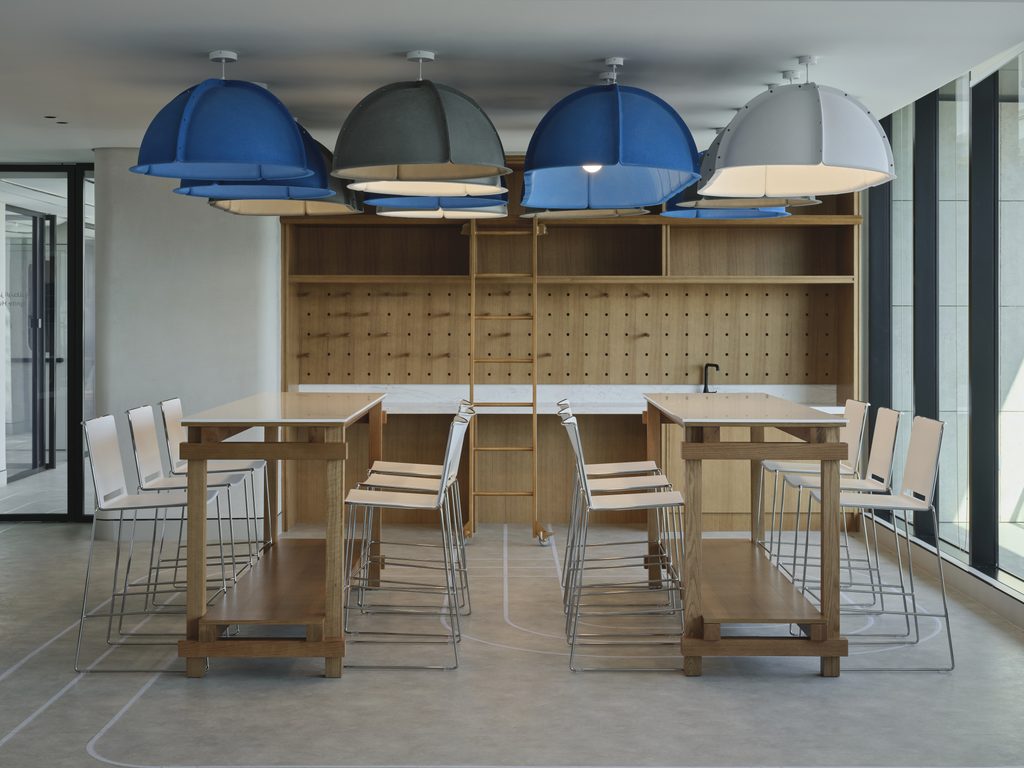
You’ve spoken publicly about motherhood and minimalism alongside the demands of running an international studio. Do these different aspects of your life inform one another, or do you have to keep them separate?
I think this conversation about work-life balance is overstated. Being a good mother and being a good business owner are not mutually exclusive. They’re simply different facets of my personality and different facets of my life.
On a certain day, motherhood might be the priority. On another day, being a designer or business owner is the priority. I want to lead a very full, very intense life. I like travelling, I like working and I like being a mum. It’s about finding a routine that allows all of those things to coexist.
I’ve always said that on some days I’m an amazing mother, and on some days I’m an amazing business owner. I pick and choose those days. Within a week I might have balance, but I certainly don’t have it every day. I can’t be everything to everyone every day.
And of course they inform each other. Motherhood has taught me to be a much more patient leader. I don’t think I was nearly as patient before I had children. Equally, some of the techniques I use with my colleagues at work to motivate and incentivise people somehow make their way home to my children. So it’s a win-win.
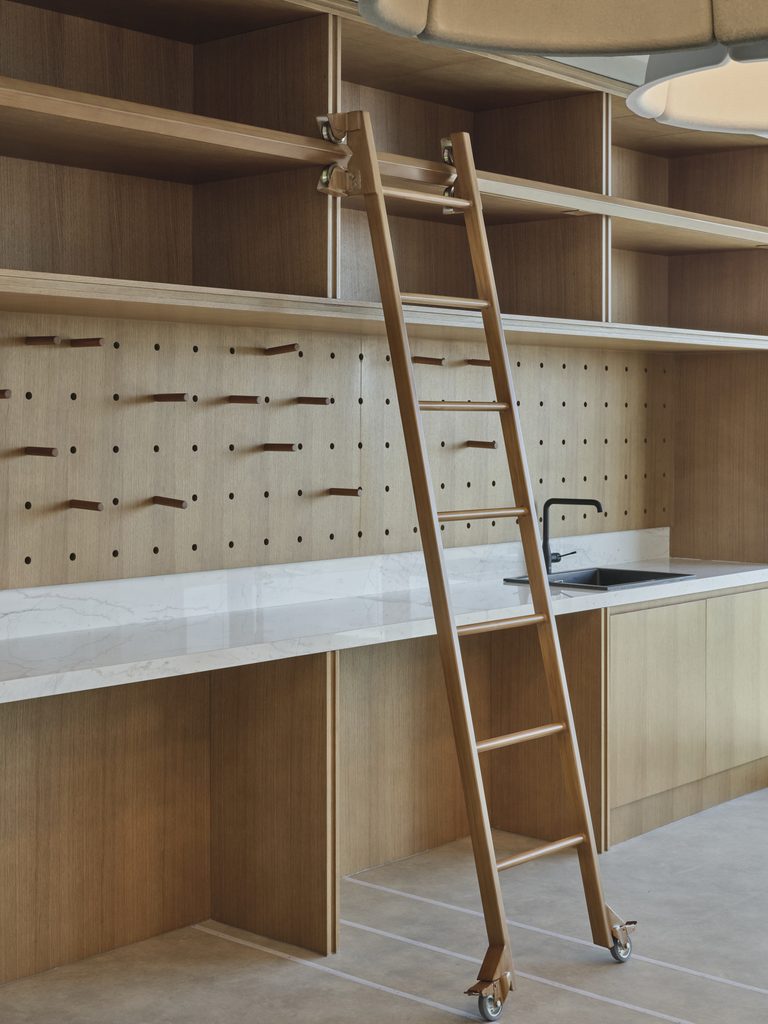
You founded Roar in 2013 as a small, homegrown studio. What is the one instinct from those early years that you’ve had to unlearn as the practice has expanded internationally?
Sometimes I have to pinch myself that a little studio in the UAE is now doing projects in Frankfurt, Bali, Chicago, Boston and India. I genuinely didn’t expect it to snowball in the way it has.
I’ve always had this bootstrap, start-up mentality, and I don’t think it always serves me anymore. We’re a much bigger studio now, but in many ways I still operate as though we’re a tiny boutique. I always have my eye on expenses and how we spend our money.
At the same time, our biggest investment has always been people. If you look at our balance sheet, our biggest cost is our team. We’ve always been predominantly a design studio, whereas many studios have one star architect or designer supported by a large production team. Our model is different. We operate more like a design agency.
One instinct from the early days that I absolutely haven’t unlearned is that you have to deliver phenomenal projects because you’re only as good as your last project. I don’t rely on PR or marketing. Those are add-ons. Deliver good work, look after your clients and build repeat business. Around 85% of our business comes from repeat clients and referrals, and we pride ourselves on that.
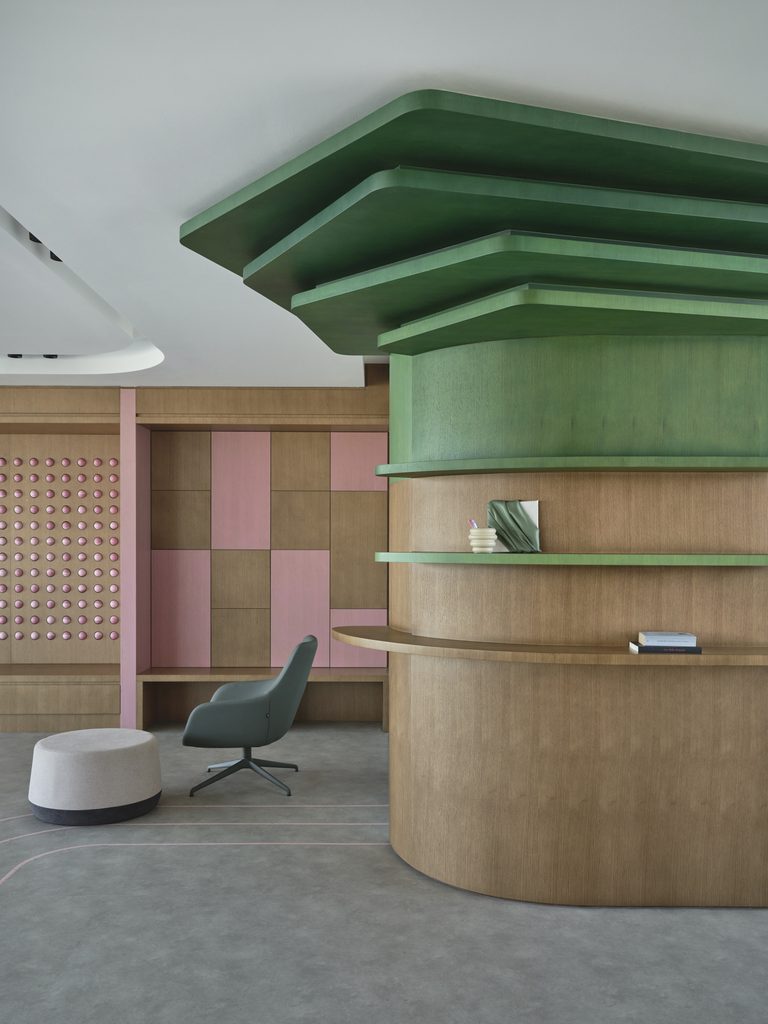
At Clerkenwell Design Week, you participated in a panel entitled “Sensory Beings.” What does a sensory-first approach actually change when you’re sitting in a boardroom, justifying a design budget to a client?
Cost and good design are not mutually exclusive. As a studio, we design for the human and the user experience. We draw on environmental psychology, behavioural science and neuroarchitecture throughout our work, but these aren’t add-ons. It’s simply how we design.
It comes through in material selection, lighting, acoustics and the way we plan spaces. There is a growing body of research examining how indoor environmental factors such as light, noise, thermal comfort and air quality relate to our physiological and psychological states. I find that intersection between science and design fascinating. But I’m also careful about how we talk about it. Neuroarchitecture is an emerging field, not a magic formula. For me, it is about using the best evidence we have alongside good design judgement, rather than using neuroscience as a marketing buzzword.
So when I’m sitting in a boardroom justifying a budget, sensory design isn’t an expensive layer we put on top. It’s embedded in the decisions we’re already making. Roar works across workplaces, hospitality, education and residential design. Is there a particular typology you believe needs to evolve in the region, one you would particularly like to rethink?
It’s very easy to sit here and criticise, and I’m sure most people could walk into my work and criticise it too. But one typology I would really like to see evolve is education. We’re moving into an AI-native, digital-first world, yet so many classrooms are still incredibly static. We’re still essentially working with the model of a teacher at the front and students sitting in rows.
Meanwhile, the way we learn has changed. We have flipped classrooms, blended learning, online learning and far more opportunities for active and collaborative learning. There is evidence behind some of this. Meta-analyses of flipped classrooms, for example, generally find improvements in learning outcomes compared with conventional teaching, although the results vary considerably depending on how the model is implemented. One of the important ingredients appears to be the opportunity for structured, active learning rather than technology for technology’s sake.
AI adds another layer. UNESCO’s current position is interesting because it recognises AI’s growing role in education while arguing that teachers remain fundamental to the social and human side of learning. I think the physical classroom has to catch up. Instead of designing one room around one assumed way of learning, we should be creating adaptable environments that allow for collaboration, focused individual work, discussion, digital learning and different sensory needs. Neurodiversity has to be part of that conversation too, because there simply isn’t one ideal learning environment for every child. For me, the future classroom isn’t about filling a room with more technology. It’s about questioning what a classroom needs to be in the first place.
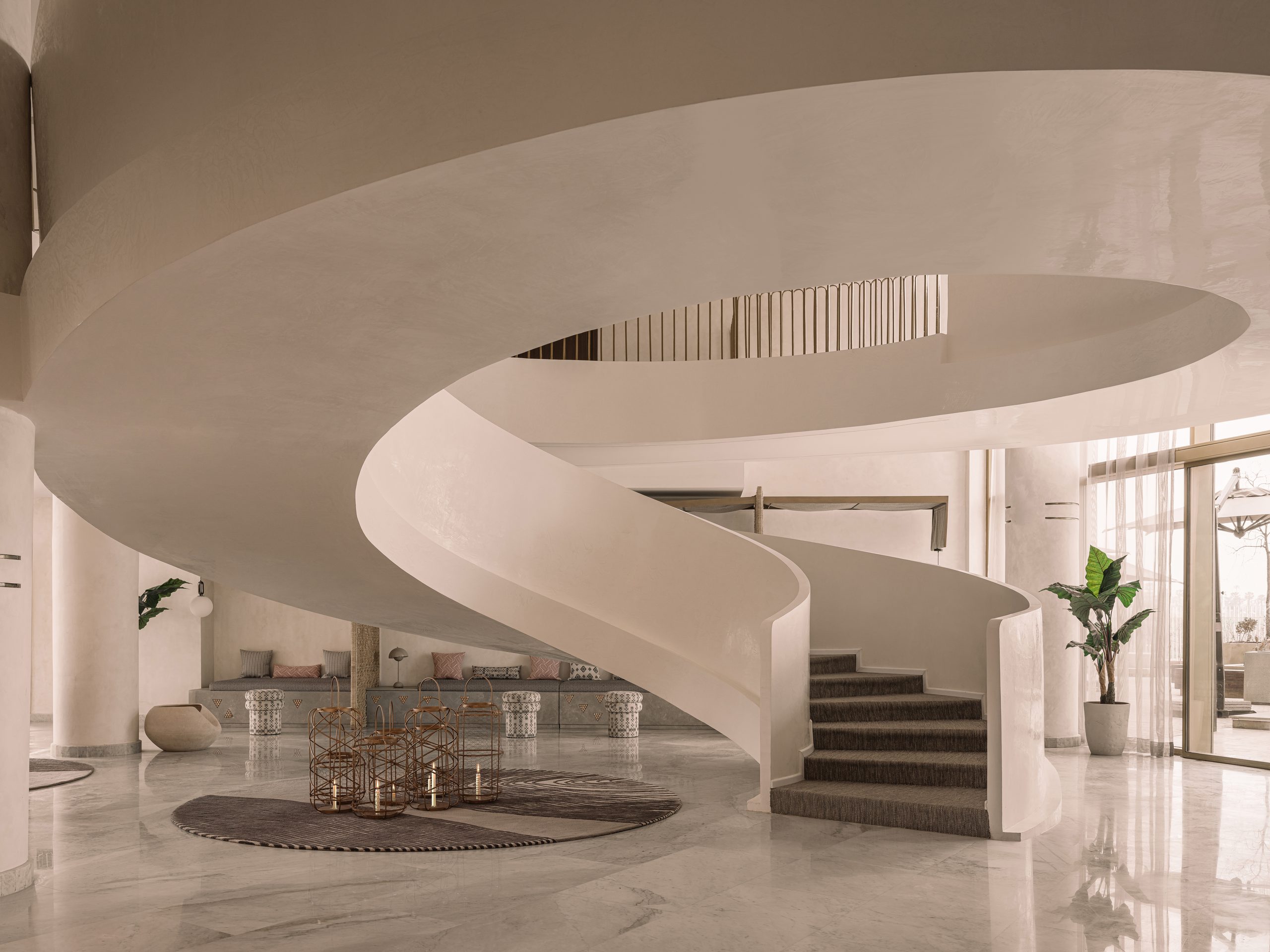
Looking ahead, what would you like Roar to stand for in five years, not simply in terms of what it designs, but what it is known for?
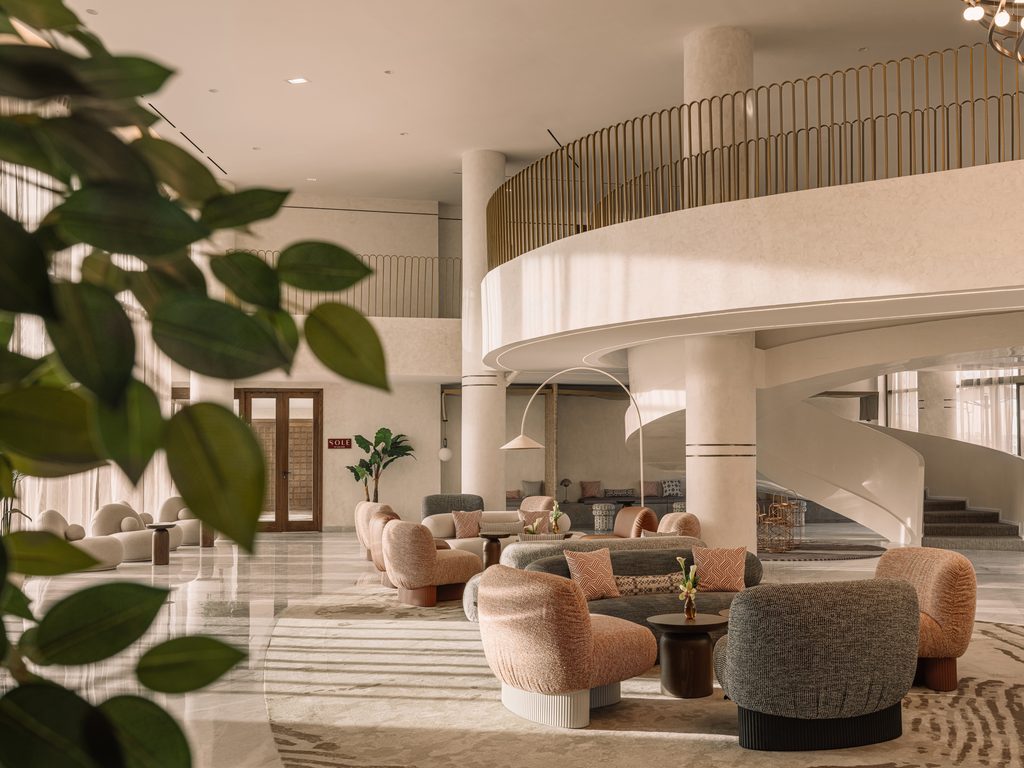
I would really like Roar to be known for embedding and experimenting with neuroscience and neuroarchitecture, and for being one of the leaders in environmental psychology and behaviour-based design, rather than focusing purely on aesthetics.
Of course, I still want us to win all the accolades and prizes for great design. I’m not going to pretend I don’t. But I want the thinking behind that creativity to be increasingly science-led, while bringing the same rigour to the other side of the equation: delivering projects on time and on budget.
For me, the sweet spot is where creativity, science and commercial rigour come together. If Roar becomes known for that, I would be incredibly proud of the work we’re doing.