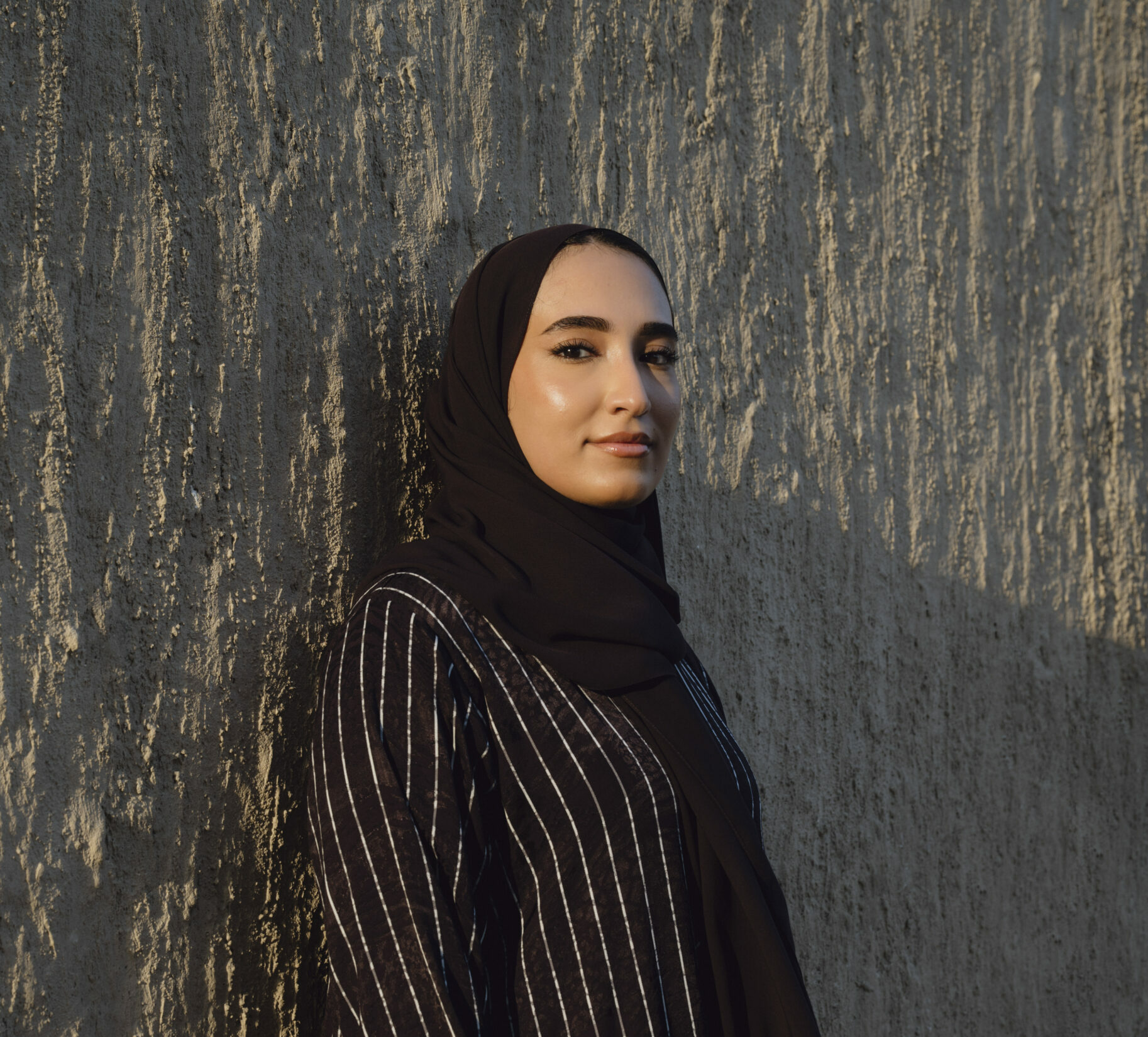
What does it mean to inherit a culture, and how do we carry it into the future? For Emirati designer AlZaina Lootah, the answer lies not in preserving the past unchanged, but in understanding how memory, materials and traditions can become the foundations for new forms of creative expression.
At Downtown Design Dubai 2026, Lootah brings this perspective to Inherited Futures, the UAE Designer Exhibition featuring the work of 30 UAE-based designers. Conceived as a contemporary interpretation of the majlis, the exhibition moves beyond the conventional display of individual objects to create what she describes as a Landscape of Conversations, where different materials, disciplines and creative approaches come together in dialogue.
In this edition of In Conversation With, AlZaina Lootah reflects on the relationship between heritage and innovation, the cultural significance of gathering, and the evolving identity of contemporary design in the UAE. From her personal exploration of family archives to the possibilities of material experimentation and collaboration, she considers how the next generation of designers is shaping a creative language that is both deeply rooted in its environment and open to new interpretations.
Inherited Futures explores the relationship between what we inherit and what we create. What does this idea mean to you personally, and how has it shaped your vision for the exhibition?
For me, inheritance goes beyond physical objects or traditions. It includes the ways we see, understand and experience the world around us. Through my own practice, and particularly through exploring my grandfather’s photographic archive, I’ve become more aware of how our understanding of the present is shaped by what came before us.
I don’t think inheritance necessarily means preserving things exactly as they were. It’s also about how we interpret them, question them and give them new meaning. This became an important part of my approach to the exhibition. I wanted to create a space that brings together different interpretations of what we carry forward, allowing each designer to explore that relationship in their own way.
You’ve conceived the exhibition through the spirit of a Majlis of the Future. How have you translated this idea of gathering, dialogue and exchange into the physical space?
The idea of the majlis was never about recreating a traditional setting, but rather understanding what it represents. A majlis is a place where people come together, share perspectives, exchange knowledge and learn from one another.
I wanted to translate that same spirit into the exhibition, where the works are not presented as isolated objects but become part of a shared environment. The arrangement encourages visitors to move through the space, discover different perspectives and make connections between the pieces.
In a way, the exhibition becomes a contemporary interpretation of the majlis, where the conversation takes place through design rather than words alone.
You describe the exhibition as a Landscape of Conversations. How does the layout encourage dialogue between the different works, materials and creative approaches?
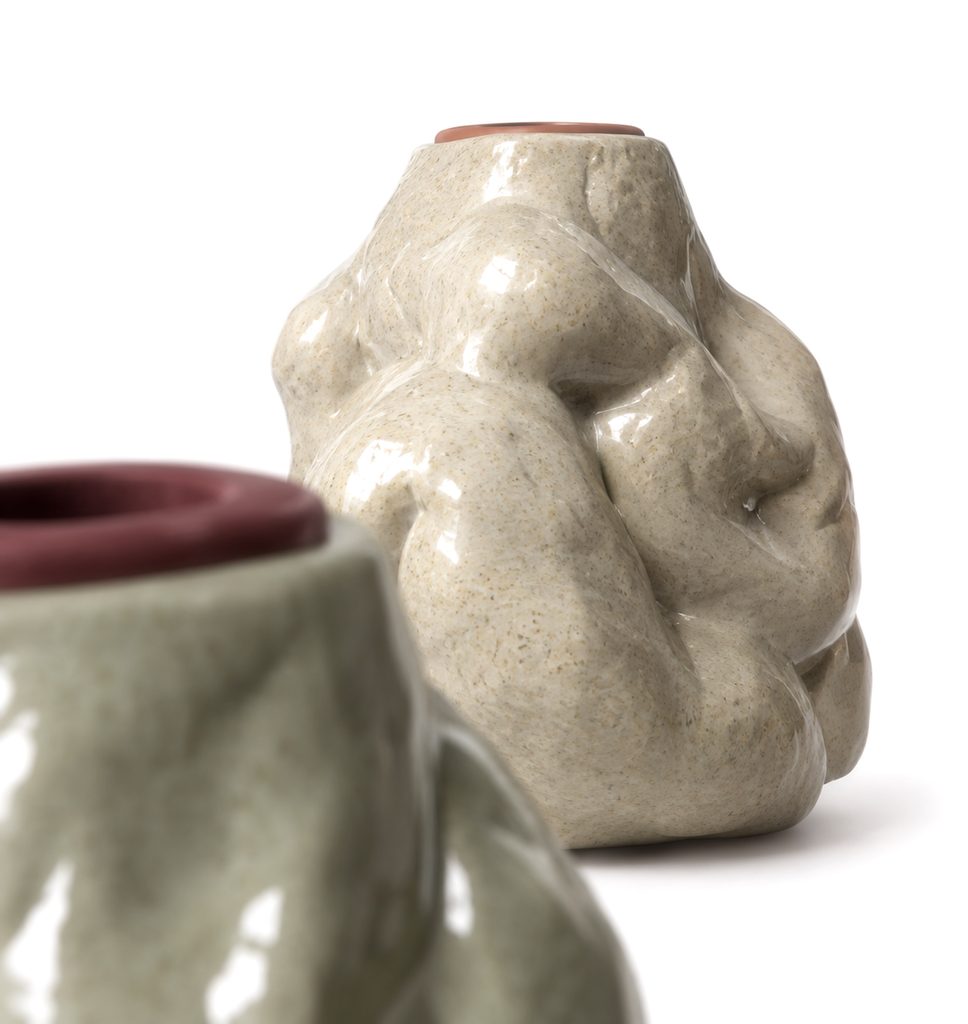
The idea of a Landscape of Conversations came from wanting to create a space that felt collective, while still allowing each work to have its own presence.
Rather than organising the exhibition into rigid categories, I approached the layout as one continuous composition, with different levels, materials and arrangements creating relationships between the works.
Some pieces sit together because of similarities in material or form, while others are brought into conversation through contrast. I was interested in these moments where two very different approaches could sit alongside one another and offer a different way of looking at each piece.
The landscape is also something visitors experience differently depending on how they move through it, allowing them to discover their own connections along the way.
Bringing together 30 UAE-based designers, each with their own creative language, is an ambitious undertaking. What guided your approach to creating a coherent exhibition while allowing each designer’s identity to emerge?
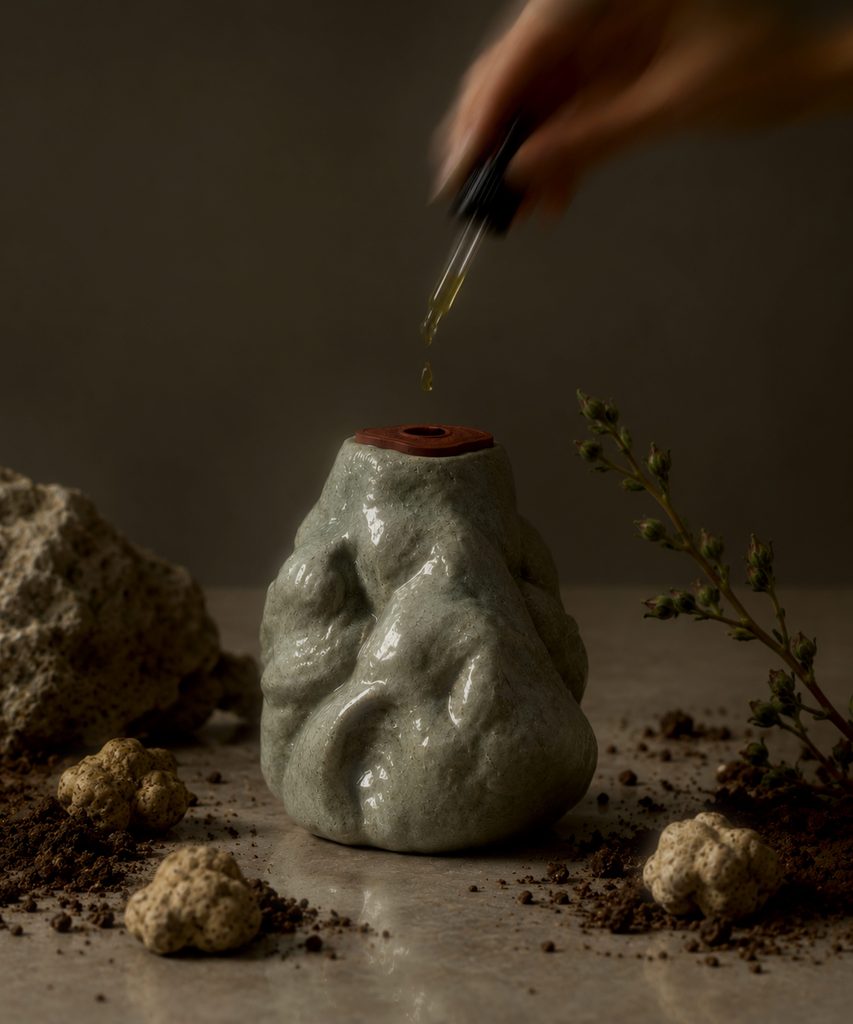
One of the most important things for me was to respect the individuality of each designer. With 30 different practices, there are naturally very different approaches to materials, processes, forms and storytelling, and I didn’t want the exhibition design to take away from that.
I started by understanding the works themselves, their scale, materiality and the intentions behind them, and then considered how they could relate to one another spatially.
The coherence comes through the overall exhibition language, the use of materials and the relationships created between the pieces, rather than trying to make everything look the same. I think the diversity of approaches is what makes the exhibition interesting, and the design needed to support that.
The exhibition explores inherited materials, landscapes, technologies and cultural narratives. Which of these themes has opened up the most unexpected possibilities for you?
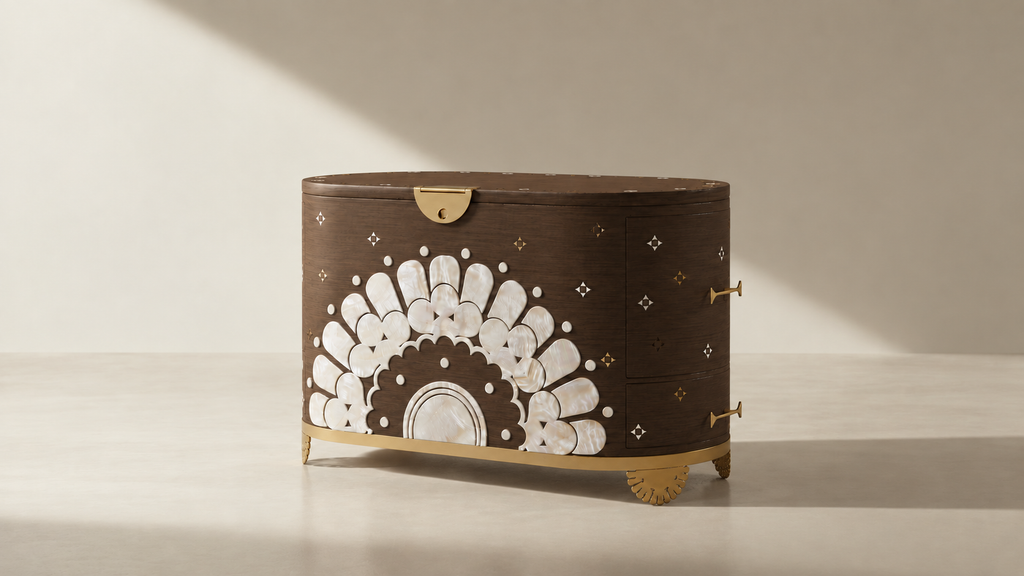
What I found particularly interesting was how differently designers approached the idea of inheritance, especially when looking at the landscape and the everyday things we often overlook.
We tend to associate heritage with recognisable objects, patterns or traditions, but there is so much knowledge embedded in our natural environment, everyday rituals and ways of making.
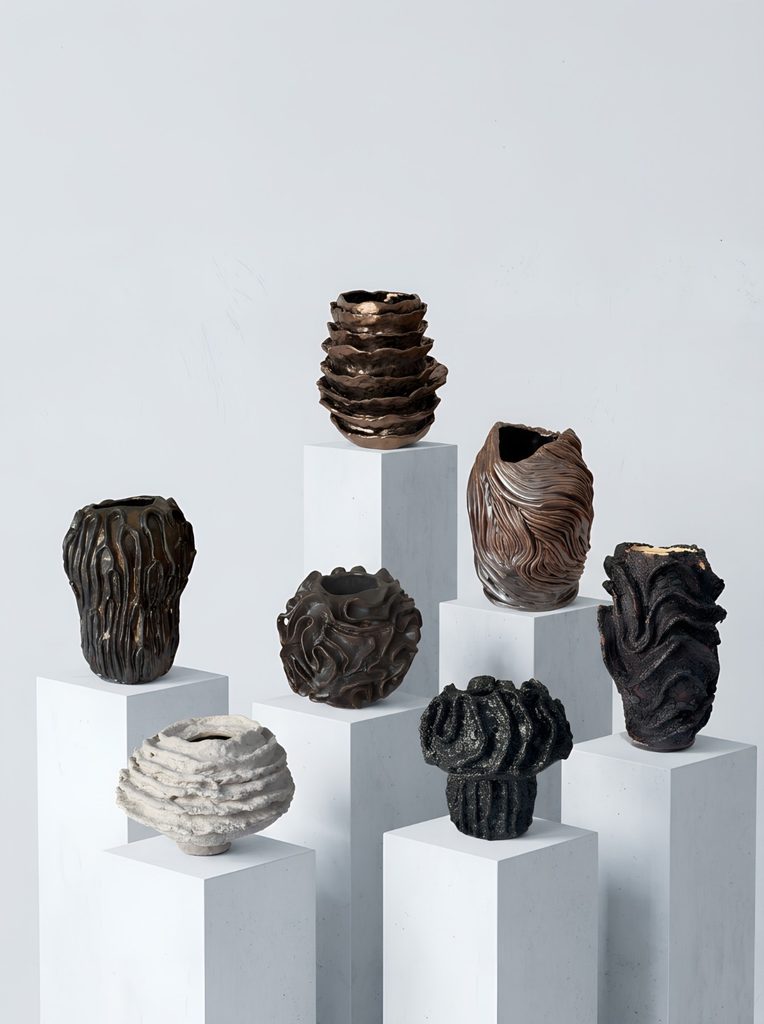
For example, seeing something as familiar and seasonal as the faqaa become a starting point for contemporary design was particularly interesting to me. It shows how inspiration can come from something deeply connected to our environment without necessarily translating it in a literal way.
I think these interpretations open up a much broader understanding of what we consider inherited knowledge.
Your own practice often explores the relationship between materials, memory and place. How has this perspective influenced your approach to Inherited Futures?
Materiality is a big part of how I approach design. I’m interested not only in how materials look, but also where they come from, how they’re made, how they age and what happens to them over time.
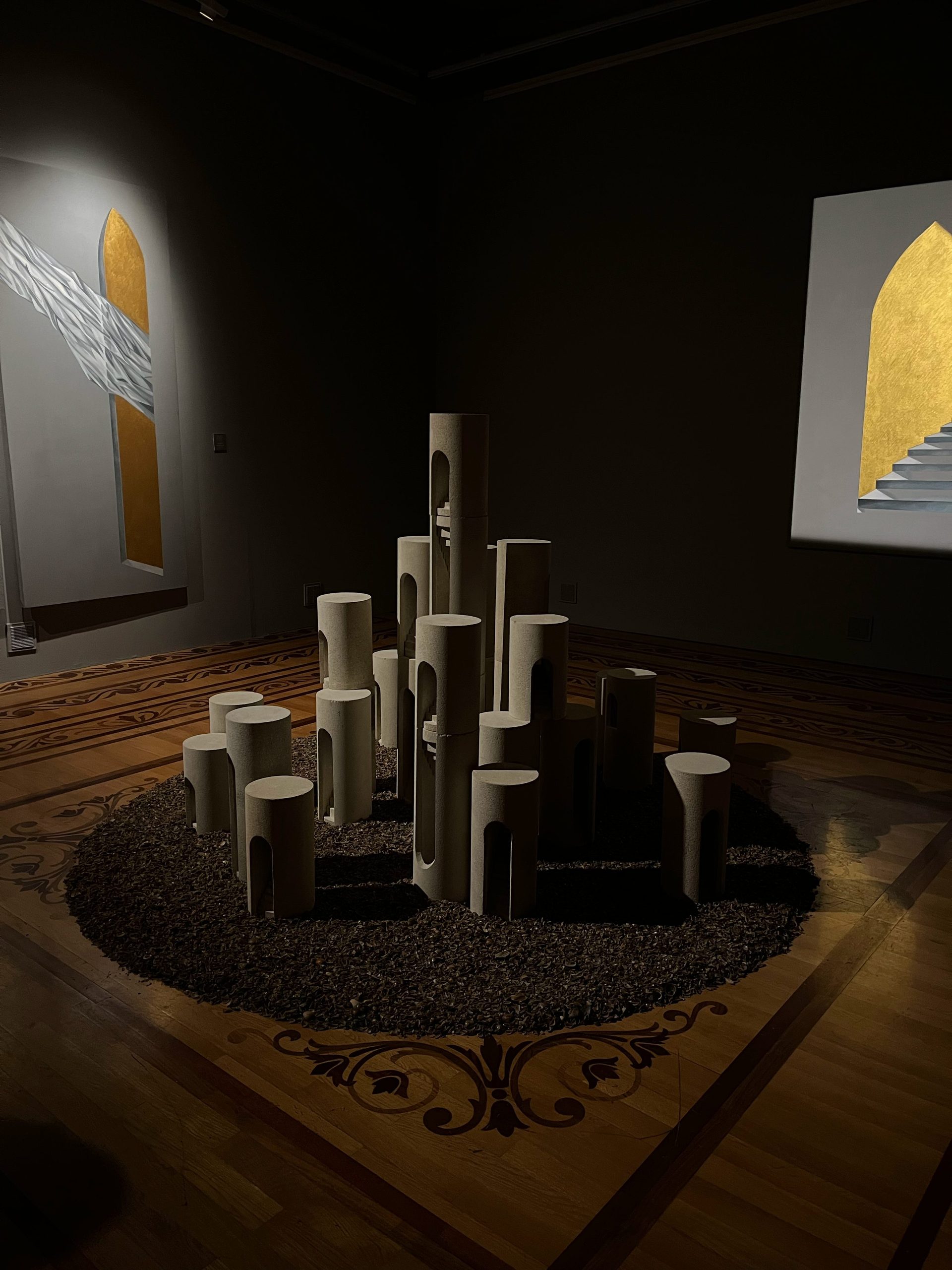
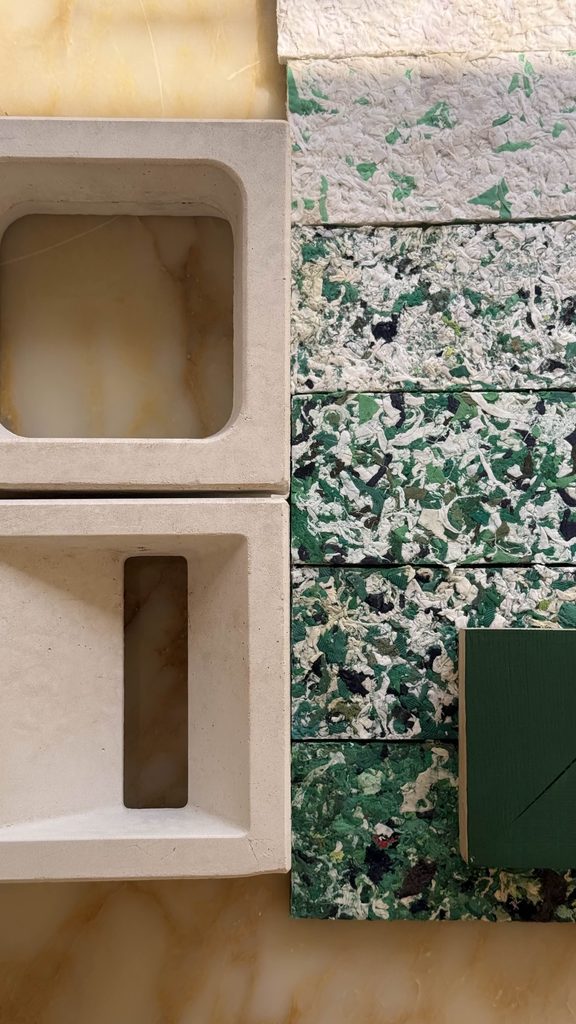
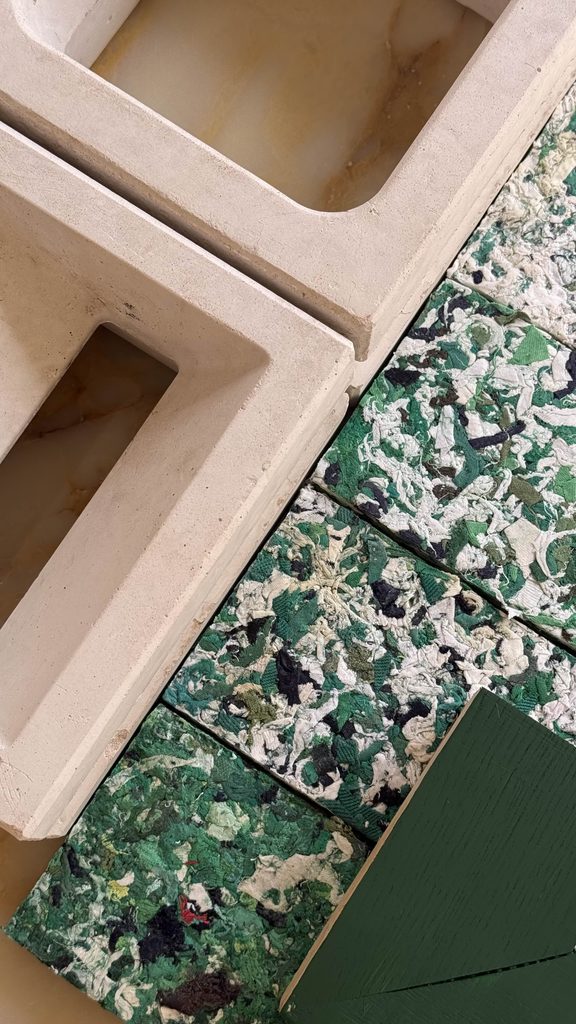
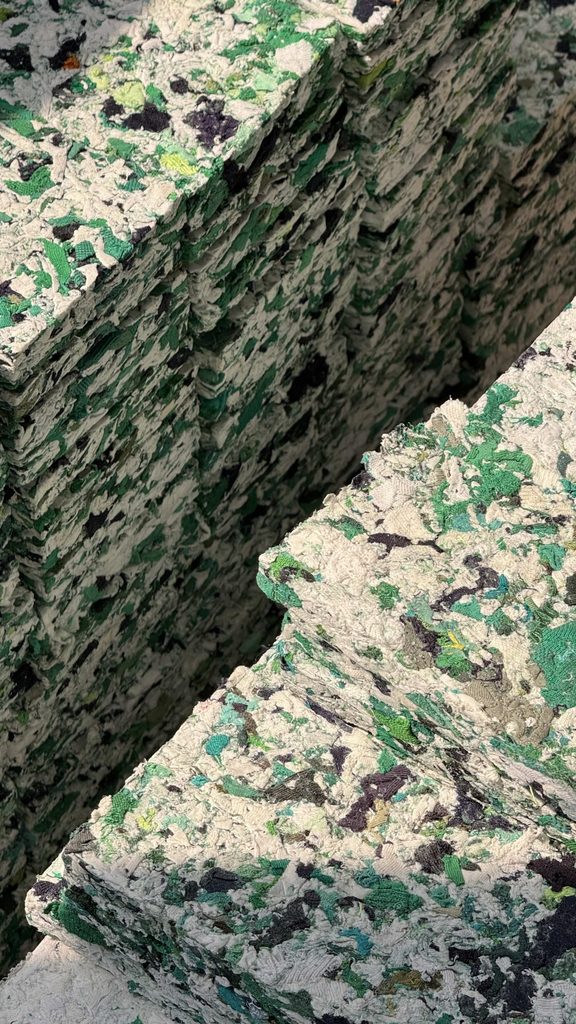
This was something I wanted to bring into the exhibition design itself. Through collaborations with Oksan Group and Ardh Collective, we explored the use of TexBricks and DuneBlocks as part of the spatial composition, allowing the materials to contribute to the exhibition’s narrative rather than simply serve as display elements.
We also considered the life of these materials beyond the exhibition, and how they could potentially be reused in other contexts. For me, that is equally important. The way we design and build the exhibition should reflect some of the same questions we’re asking through the works being presented.
Looking at the works presented this year, what emerging ideas or approaches do you find particularly exciting about the UAE’s contemporary design scene?
What excites me is that there isn’t one particular visual language defining design in the UAE. We’re seeing a growing diversity of practices, each approaching design through their own experiences, research and interests.
I’m particularly interested in designers who are experimenting with materials, challenging familiar production processes and finding new ways to interpret cultural and environmental references.
There’s also a growing willingness to collaborate across disciplines and work more closely with makers and manufacturers, which I think is important for the development of the industry.
What I appreciate about this exhibition is that it brings these different approaches together. It reflects a design scene that is still evolving, experimenting and finding its own ways of expressing itself.
Beyond the exhibition itself, what do you hope Inherited Futures will contribute to the wider conversation about design in the UAE?
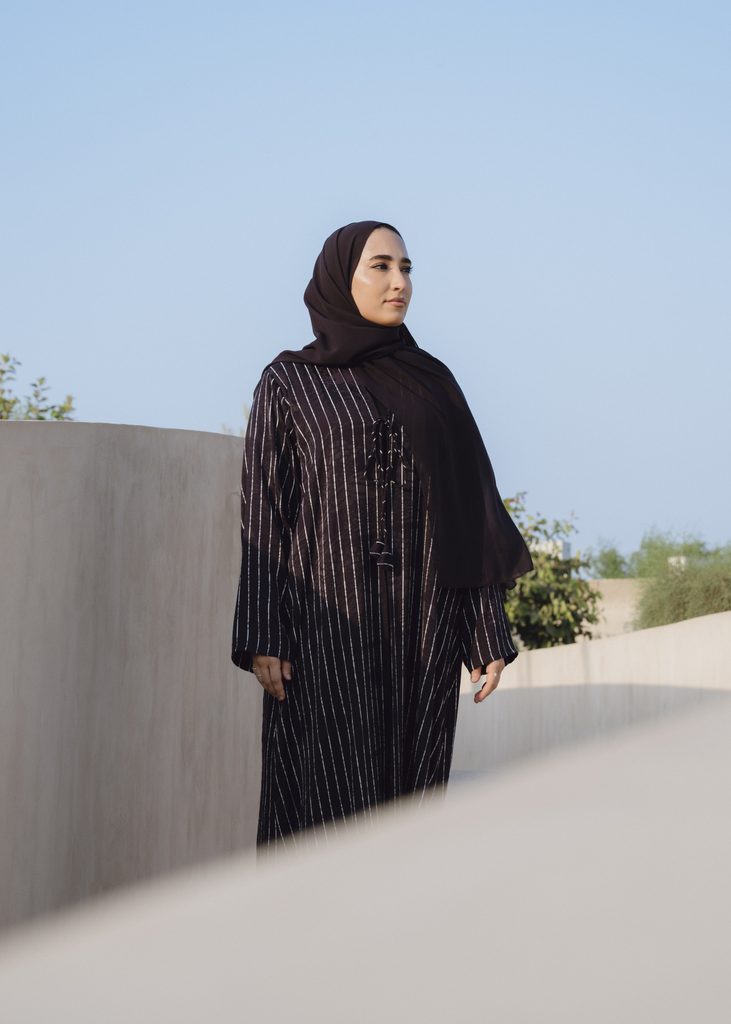
I hope the exhibition encourages us to look at design in the UAE beyond individual objects or projects, and more as a growing ecosystem of designers, makers, manufacturers and institutions.
There is a lot of interesting work happening here, but I think there’s still an opportunity to create stronger connections between the people designing, the people producing and those supporting the industry.
I would love for the exhibition to become a starting point for new collaborations and conversations, and for some of these works and relationships to continue developing beyond the exhibition itself.
More than anything, I hope it encourages a broader understanding of what contemporary design from the UAE can be, one that reflects the diversity of people, perspectives and practices contributing to it.