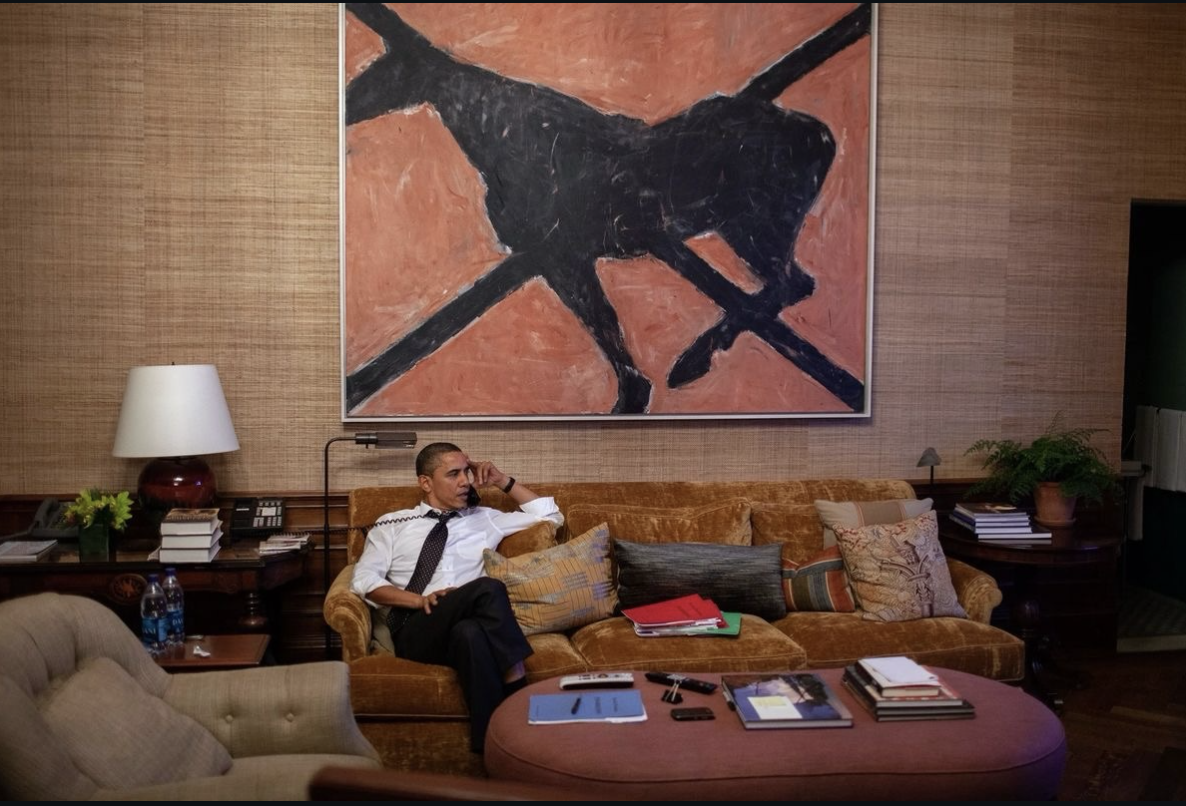
In the Obama era, the White House was not simply redecorated, it was reauthored through art, where each work shaped the atmosphere, rhythm, and psychological depth of the rooms it inhabited.
When Michael S. Smith was appointed by Barack Obama and Michelle Obama in 2009, the brief extended beyond aesthetics. What emerged was not a stylistic update, but a recalibration of how art could operate within one of the most symbolically charged interiors in the world. Rather than introducing new acquisitions, the administration worked within the existing White House collection, transforming selection into authorship.
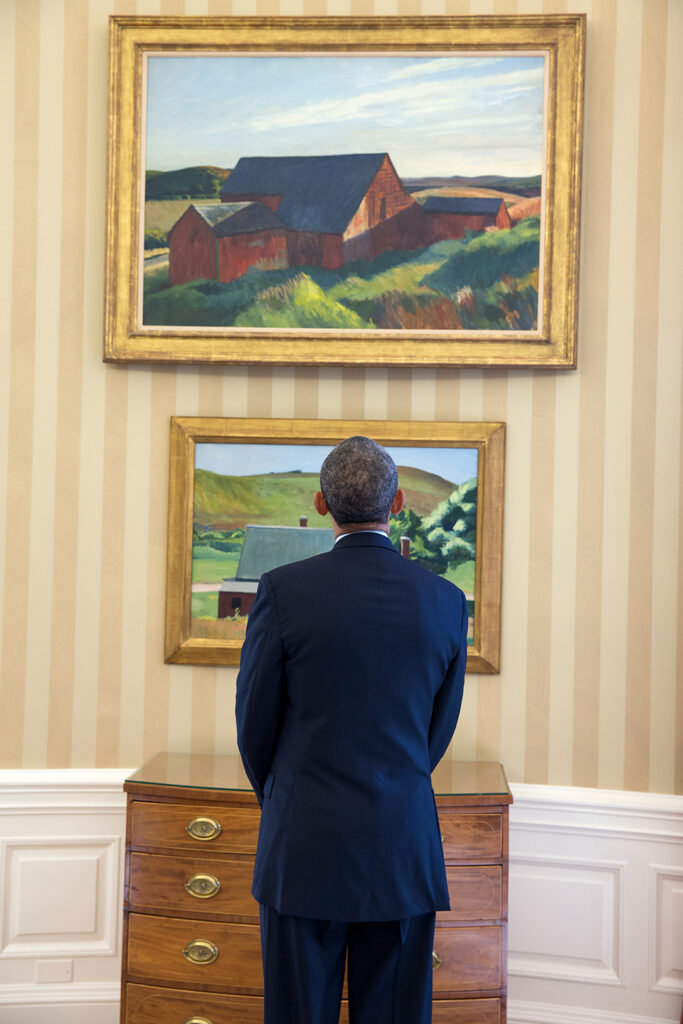
In this context, art ceased to be decorative and became spatial. Edward Hopper’s Cape Cod Morning brought a quiet, almost cinematic stillness into private quarters, its solitary figure framing leadership as introspection rather than projection.
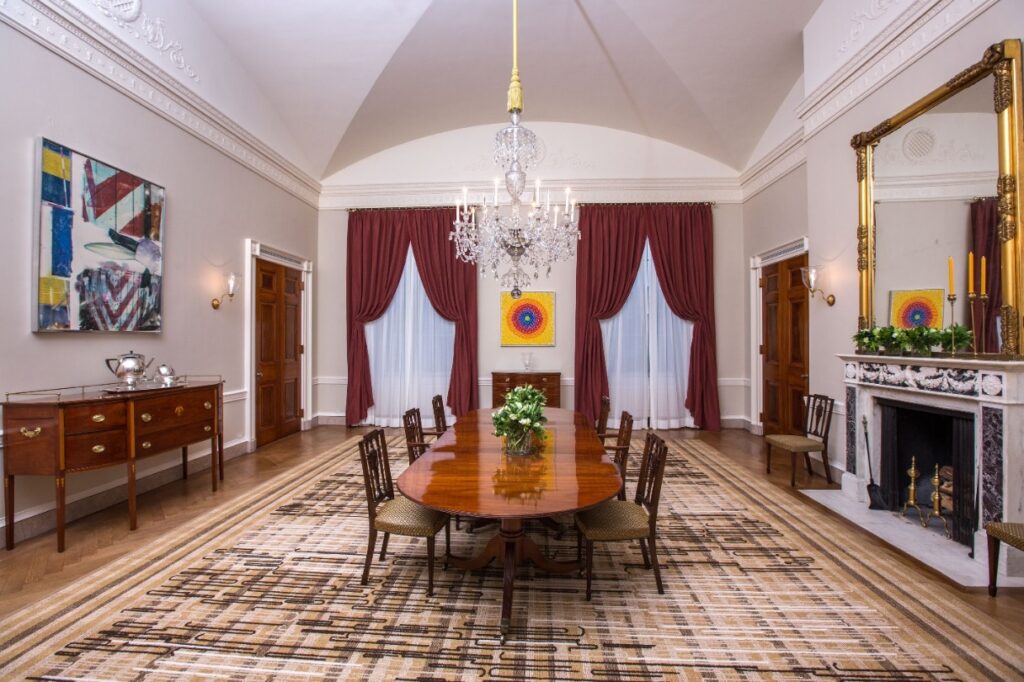
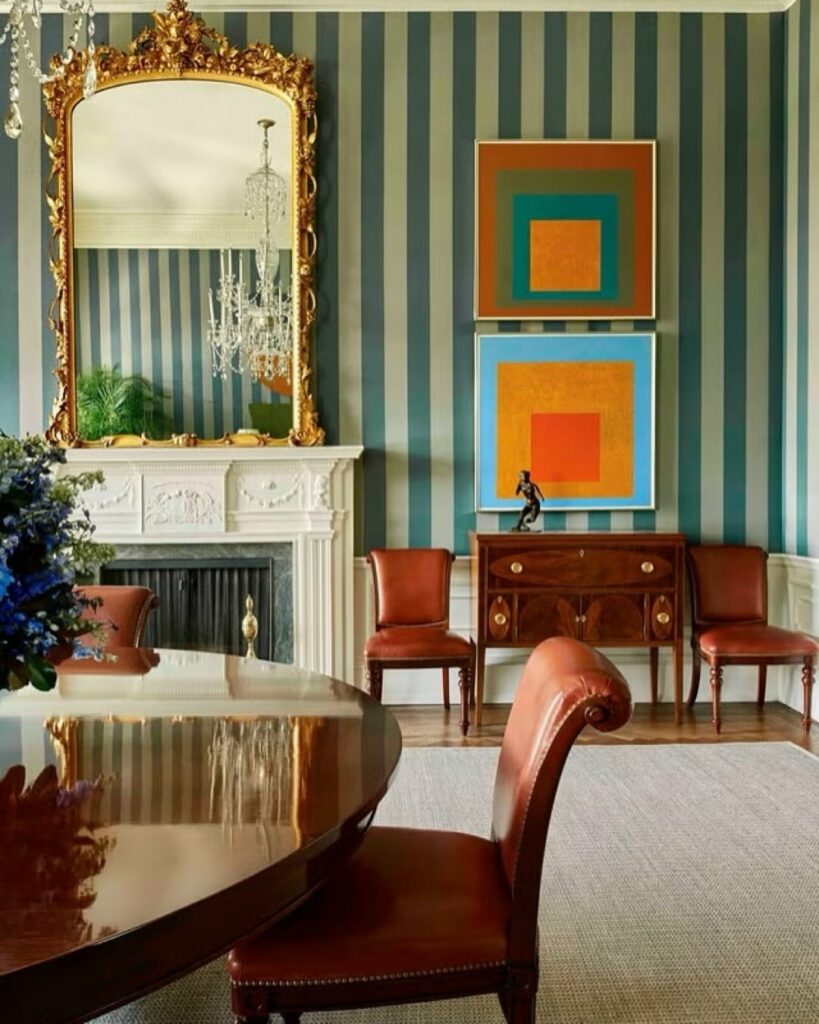
From there, a more structured language emerged. Late-1960s works by Robert Mangold, installed in the Family Dining Room against Jasper-fabric-covered walls, introduced a restrained geometric clarity, their measured forms entering into quiet dialogue with historic furnishings, including a circa-1800 sideboard.
The presence of Alma Thomas marked a significant expansion of the narrative. Her Resurrection, the first work by an African American woman to enter the White House collection, animated the interiors with a vibrant, almost pulsating field of colour. Installed in the Old Family Dining Room, it shifted the emotional register of the space, introducing movement where tradition had long favoured stillness.
What distinguished this approach was restraint. Rather than overwhelming the historic framework, the selection of modern and contemporary works created moments of pause, intervals within the architecture where thought could settle. The White House, long defined by its ceremonial weight, was reoriented toward a quieter form of authority, one rooted in clarity, reflection, and cultural breadth.
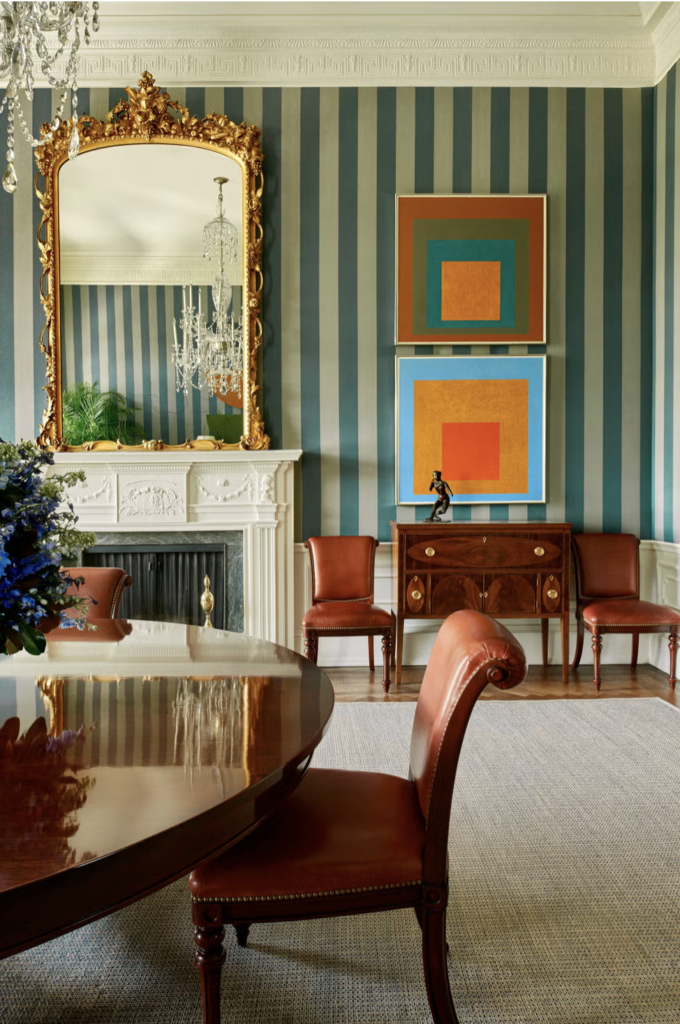
Within this recalibrated interior, each artwork operated as a spatial anchor, subtly redefining the character of the rooms it inhabited. A composition from Josef Albers’ Homage to the Square series introduced a precise chromatic order, its nested forms establishing a quiet but rigorous visual rhythm.
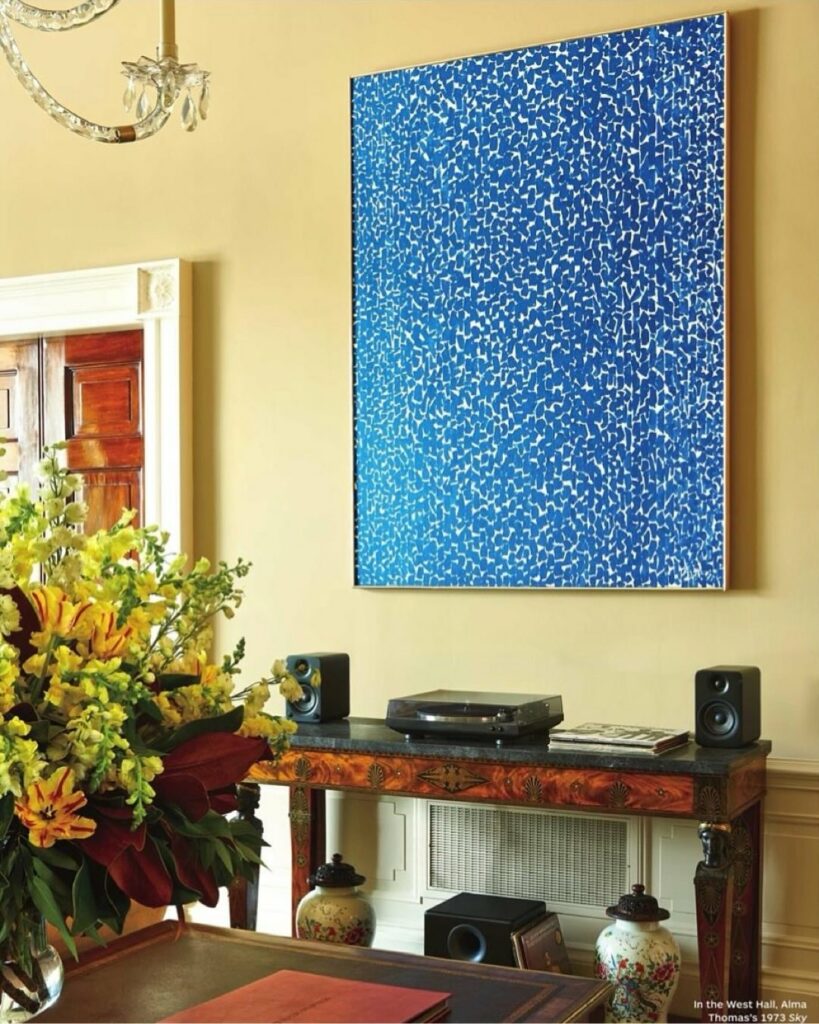
In the West Hall, Alma Thomas’ Sky Light (1973) unfolded as a vibrant, rhythmic field of colour, composed of small, mosaic-like brushstrokes inspired by nature and the cosmos.
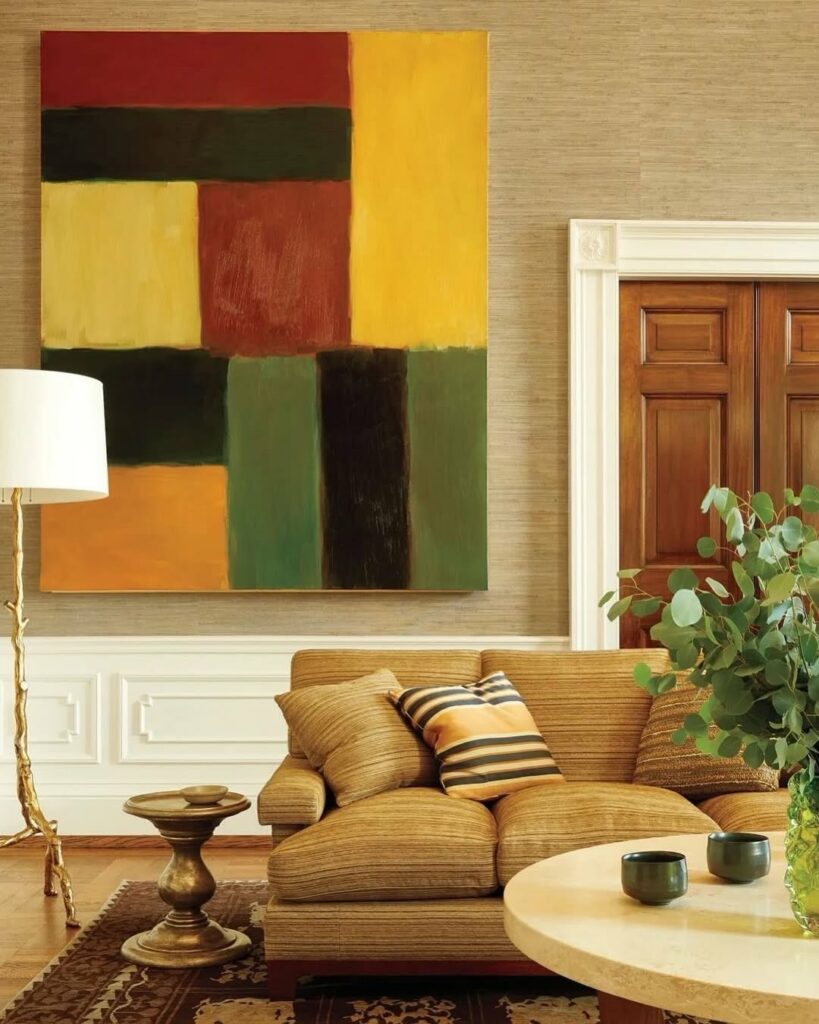
In the Family Sitting Room, a work by Sean Scully introduced a more tactile, architectural presence. Set against a Roman Thomas sofa, a Baker floor lamp, and a Jasper side table, its layered bands of colour brought weight and rhythm to the space, anchoring the room through a balance of structure and softness.
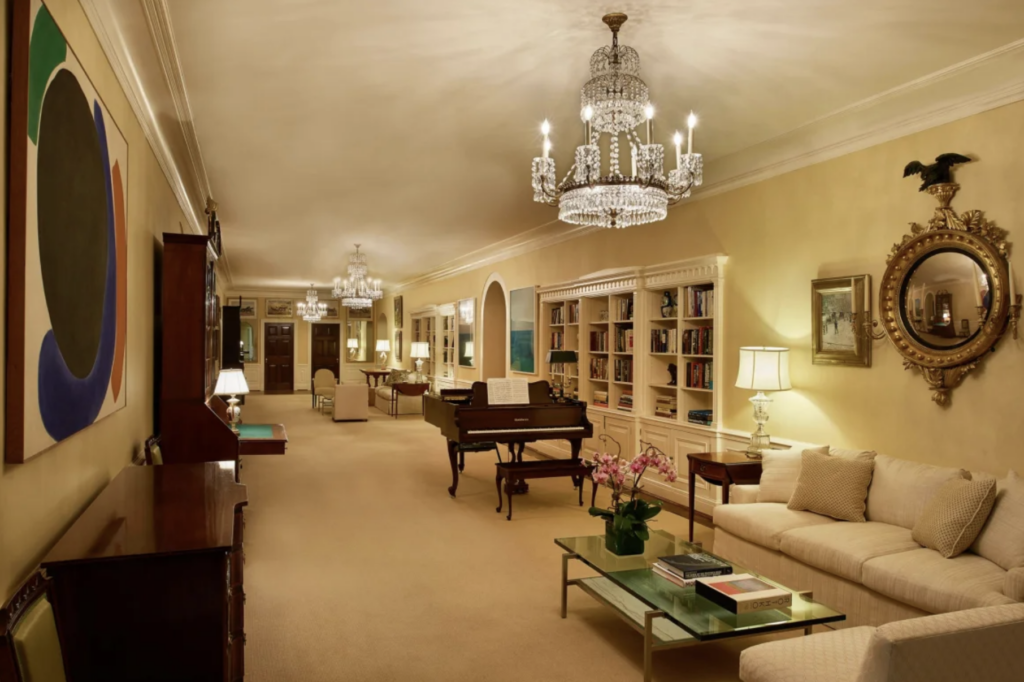
Along the third-floor corridor, Jules Olitski’s Jean Harlow’s Night, Black and Blue extended this language into a more atmospheric register, its diffused surface dissolving edges and introducing a sense of depth that feels almost immaterial.
Works by Claude Monet and Paul Cézanne introduced a quieter, more contemplative register. Their landscapes, suspended between observation and construction, dissolved form into light and colour, tempering the surrounding abstraction with a sense of continuity and lived stillness.
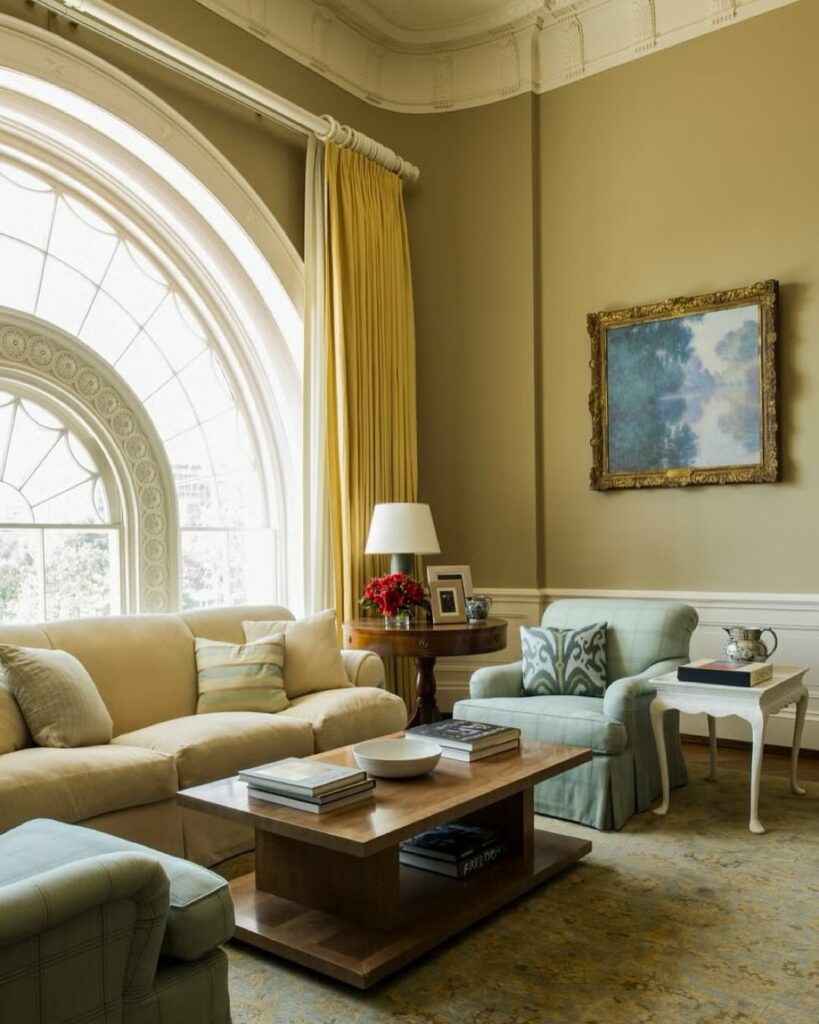
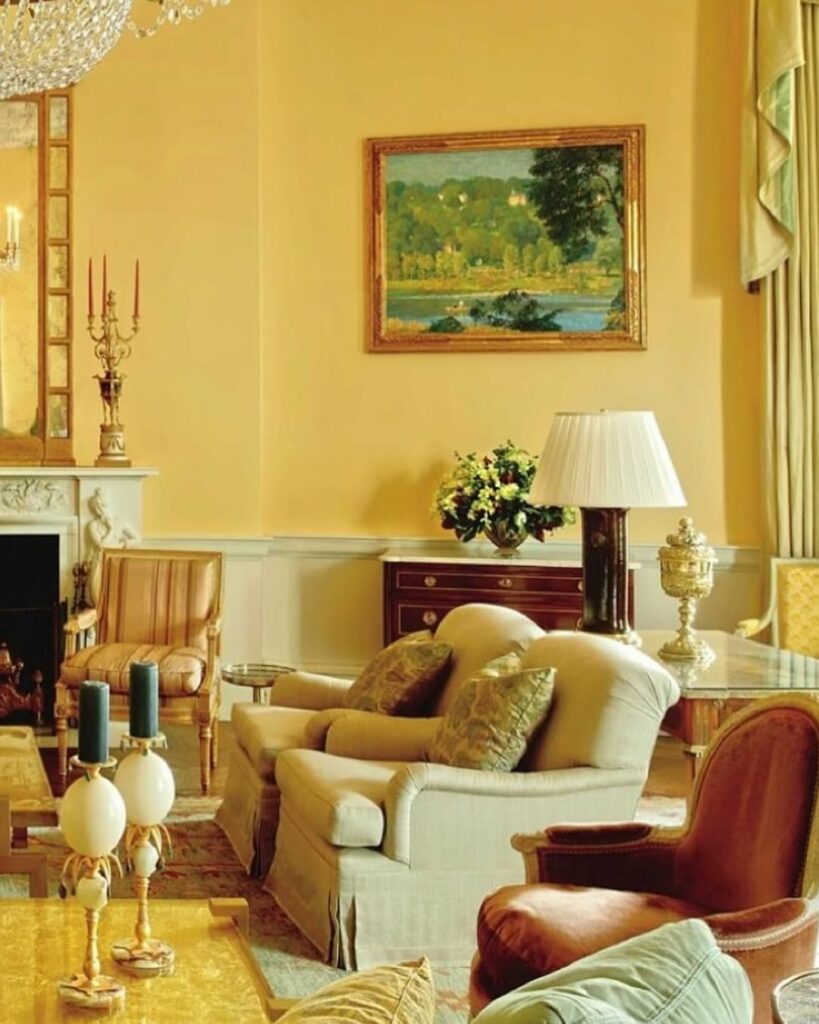
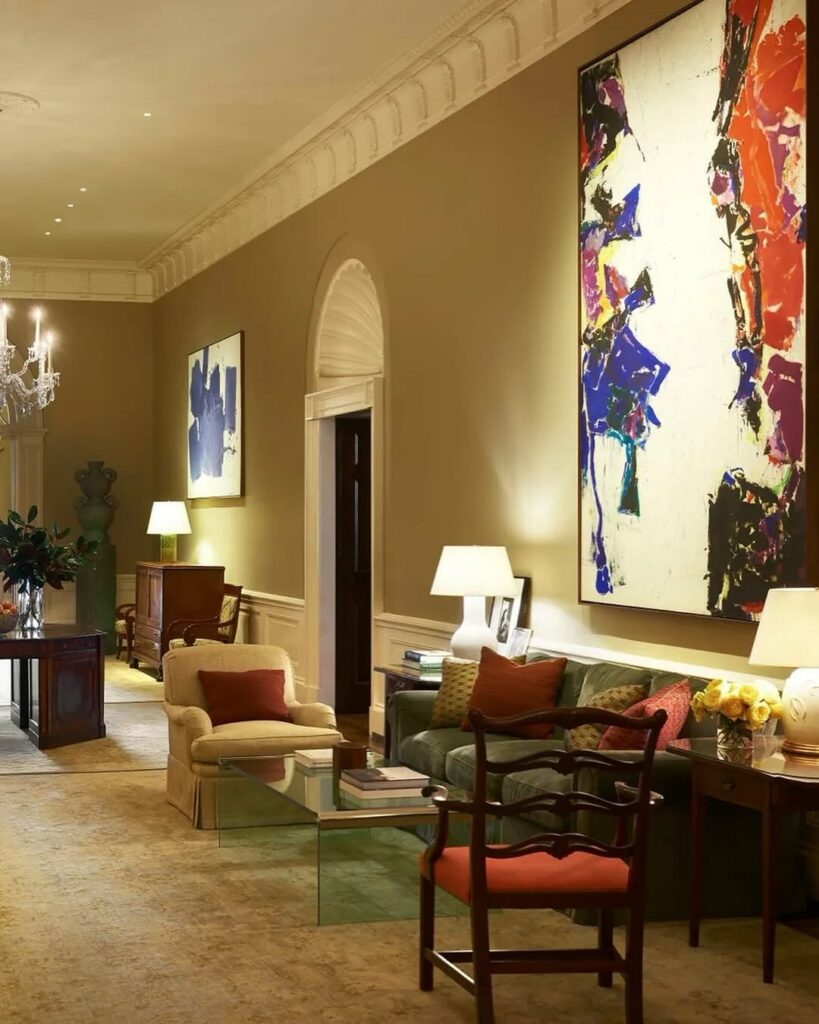
In this reconfiguration, art no longer occupied the walls as a collection to be observed, but as a presence to be lived with. Each work calibrated the atmosphere of the rooms, shaping not only how they were seen, but how they were experienced. The White House, long understood as a symbol, revealed itself instead as an interior in motion, where art, space, and daily life converged into a quiet, deliberate form of authorship.