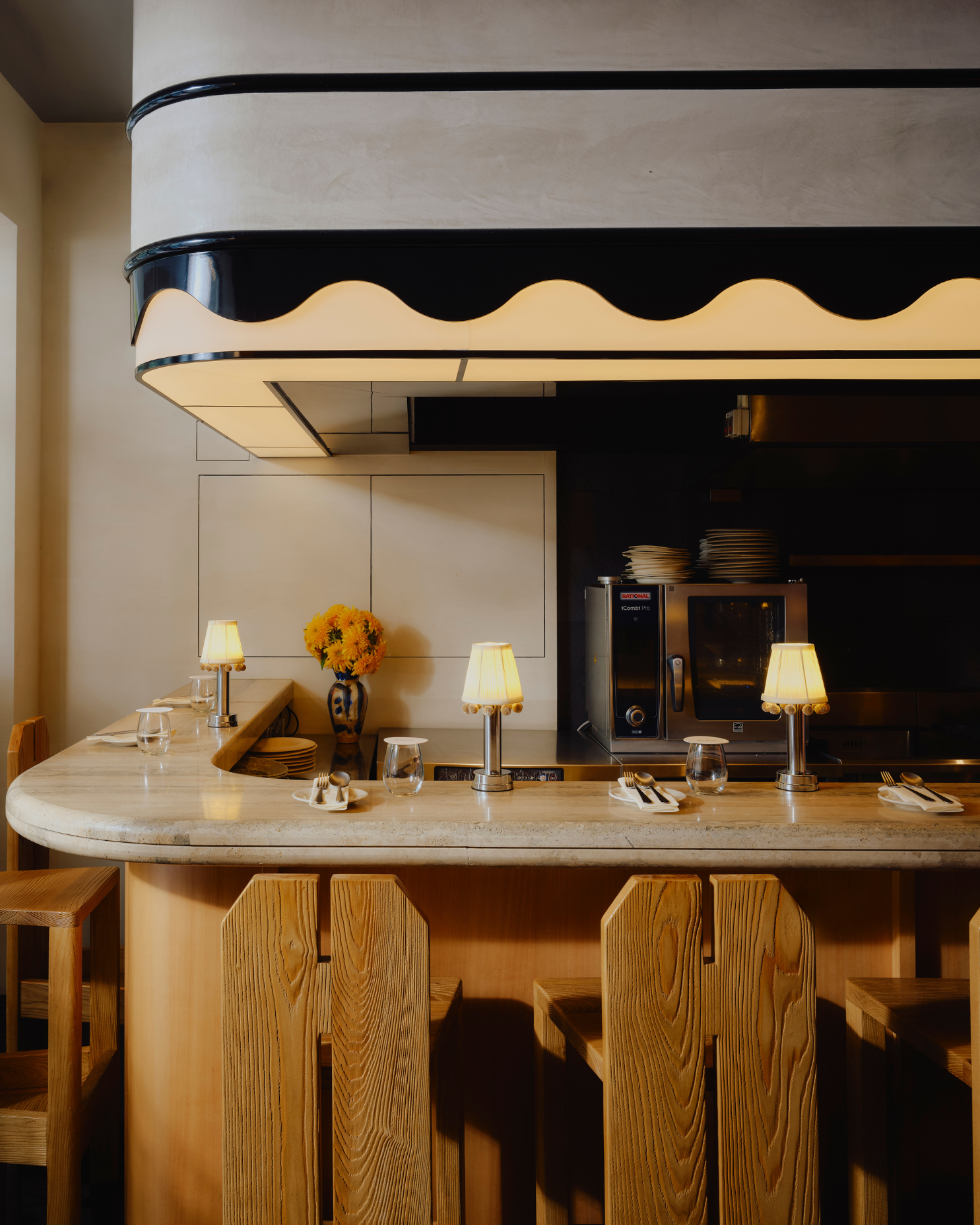
At first glance, the pairing may seem unexpected. Yet at The Flow, Taipei’s vibrant street-food culture and the timeless rituals of the European bistro find a remarkably natural dialogue. Conceived by Ecru Studio for Draft Land—one of Asia’s most celebrated draft cocktail groups—the restaurant transforms an 80-year-old former watchmaker’s workshop into an immersive dining destination where East and West meet through architecture rather than nostalgia.
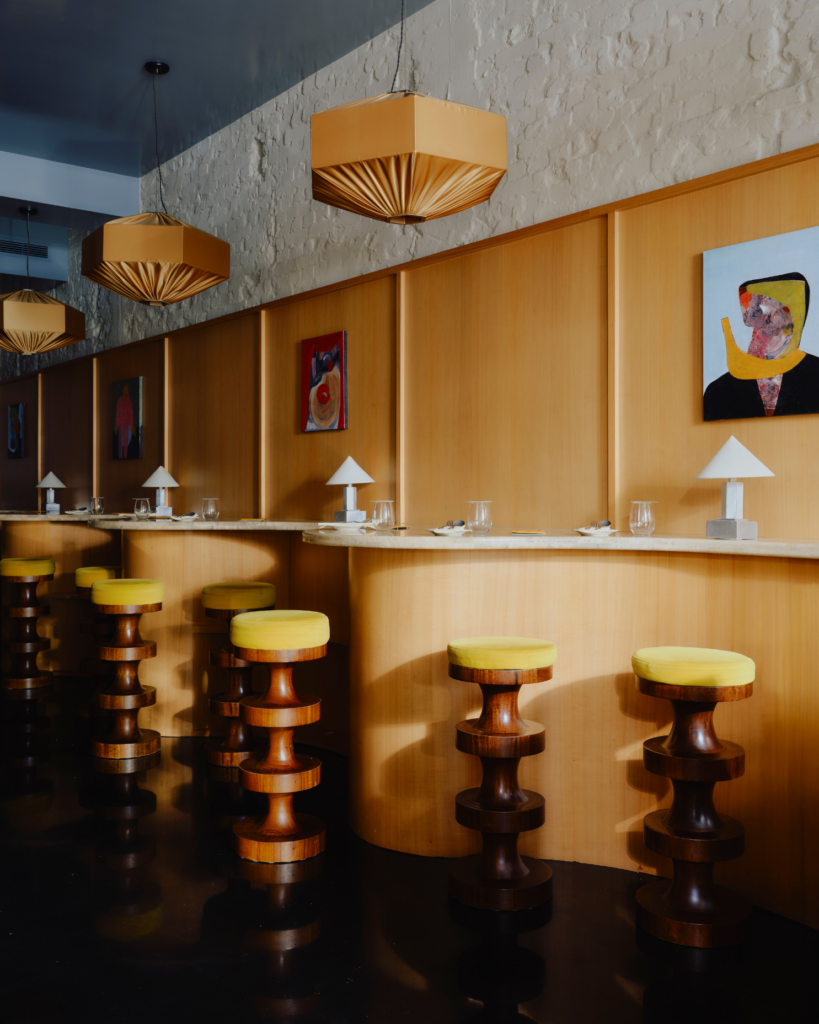
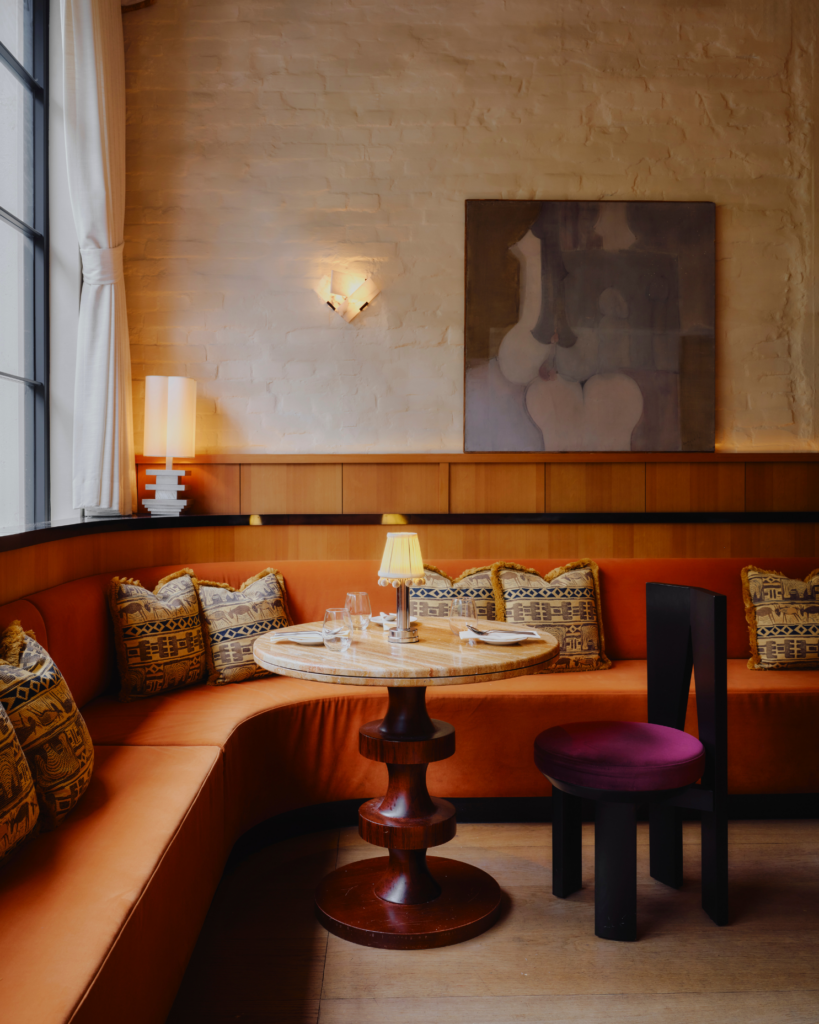
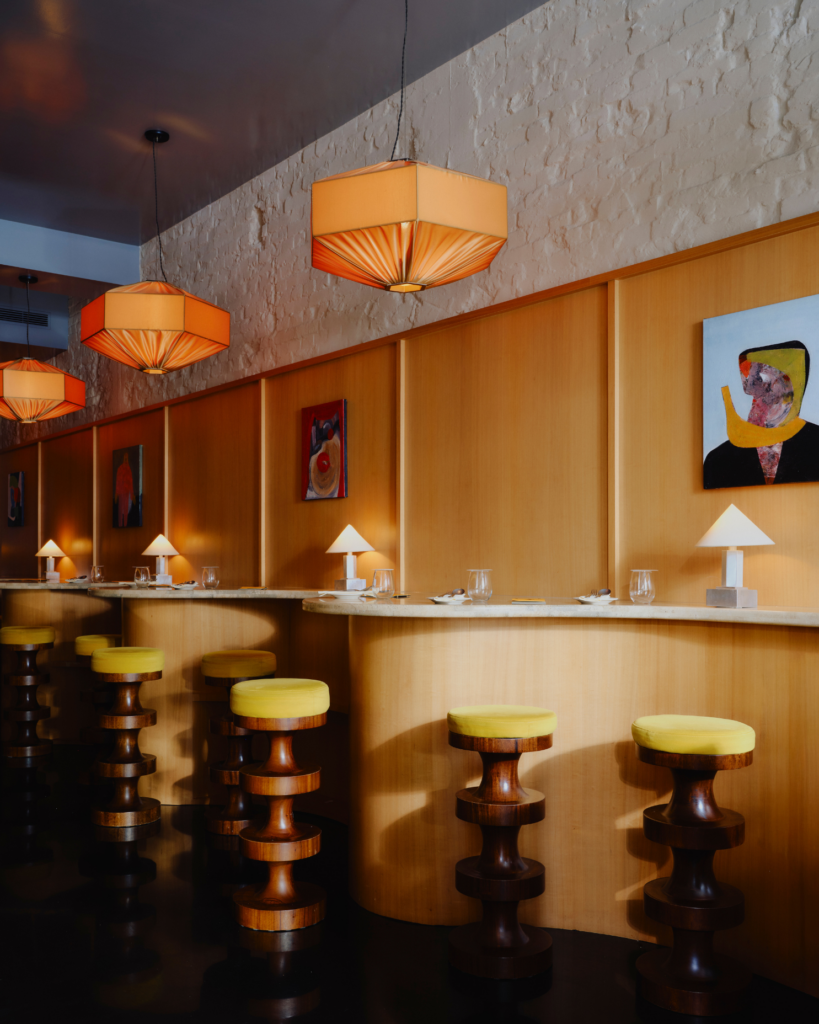
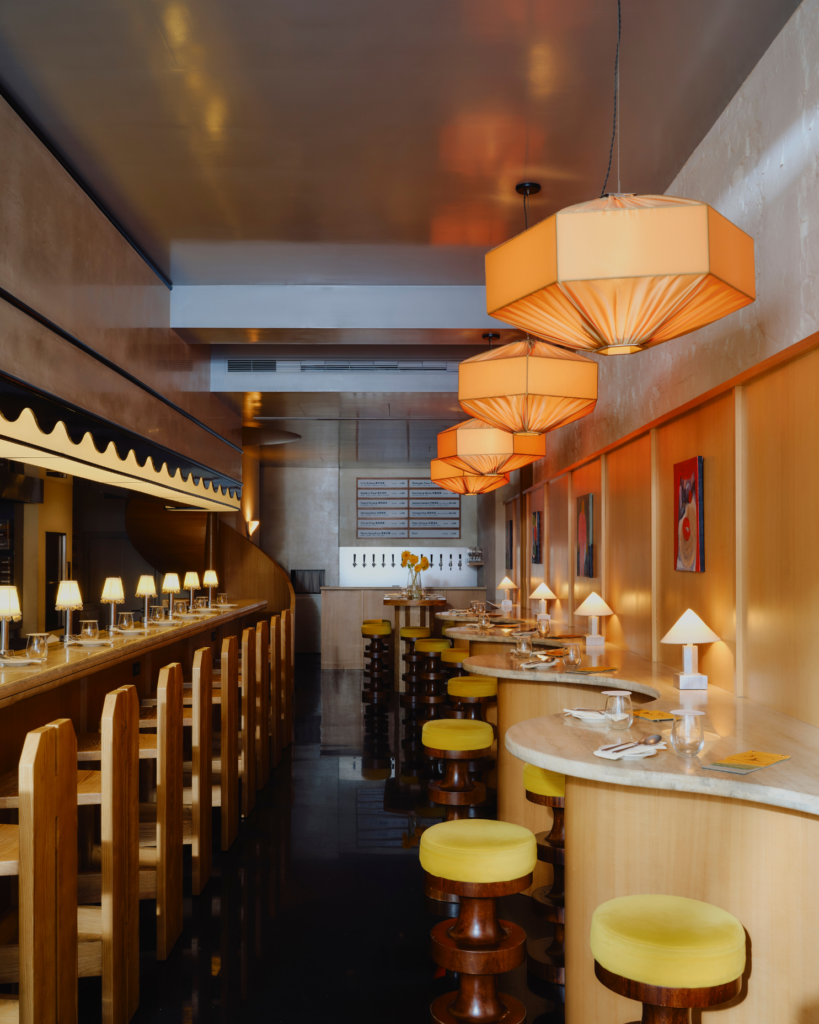
Located in the historic Zhongshan District, the 200-square-metre restaurant unfolds across two floors, each interpreting a different pace of dining. The ground level embraces the spontaneity of Taiwanese street culture, with seating gathered around a sculptural bar that encourages conversation and movement. At its centre, a sinuous travertine counter references the undulating metalwork of 1930s European craftsmanship while simultaneously functioning as the social heart of the space.
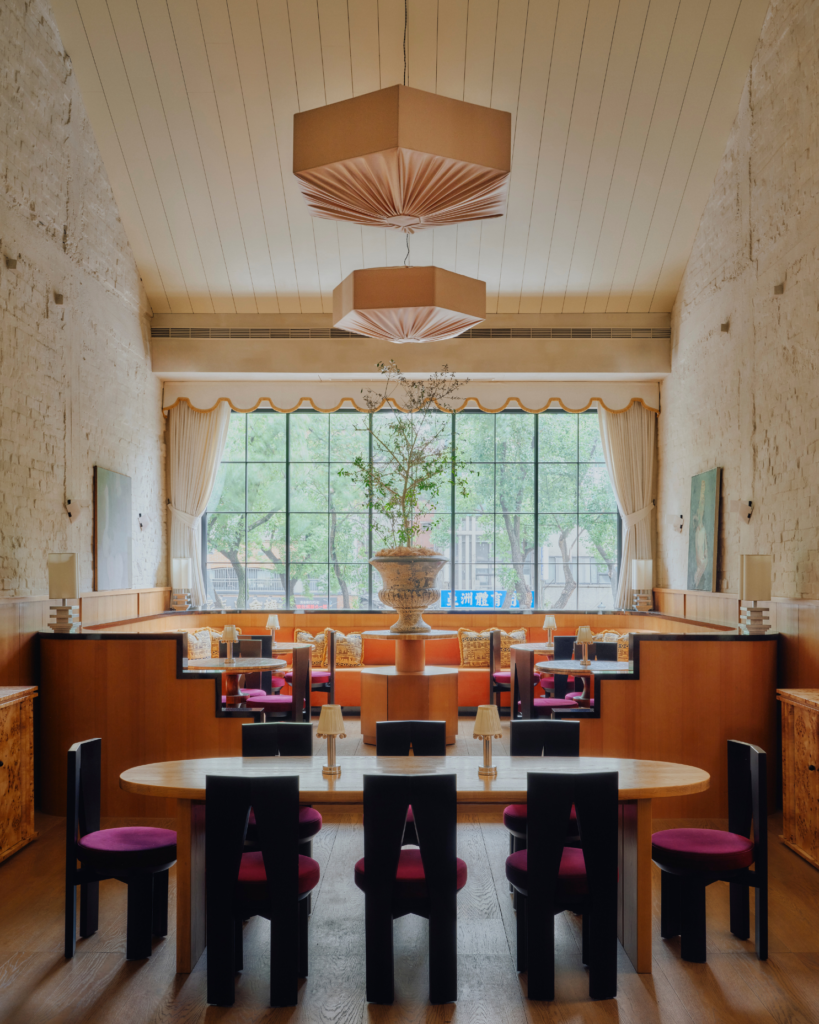
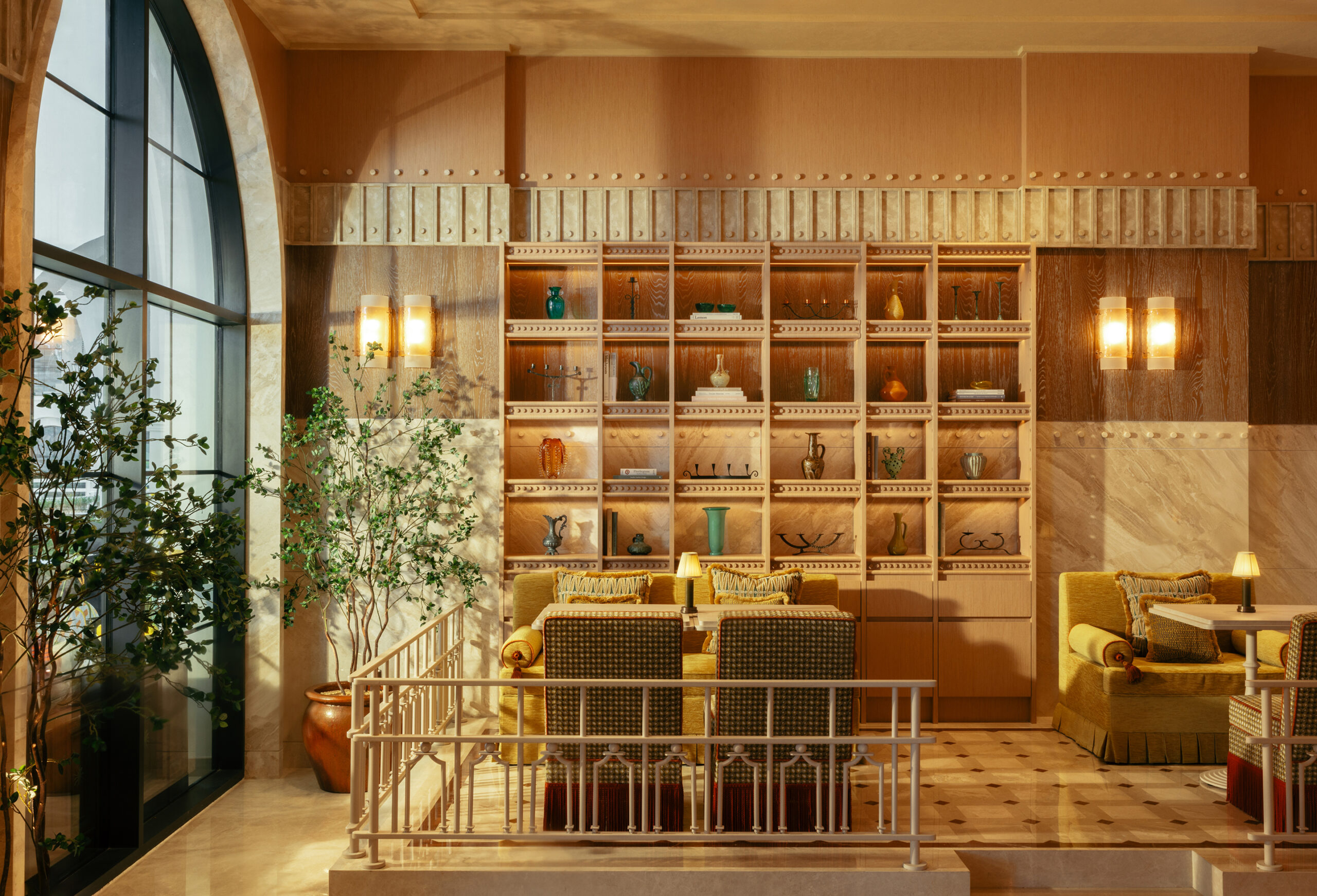
Throughout the interiors, Ecru Studio relies on custom-designed furniture and lighting to establish a distinctive visual identity. Pendant lamps reinterpret the silhouette of traditional Taiwanese lanterns, while stools merge Art Deco geometry with Brutalist proportions. Glossy lacquer, natural stone and warm timber create a tactile palette that feels both contemporary and deeply rooted in craftsmanship.
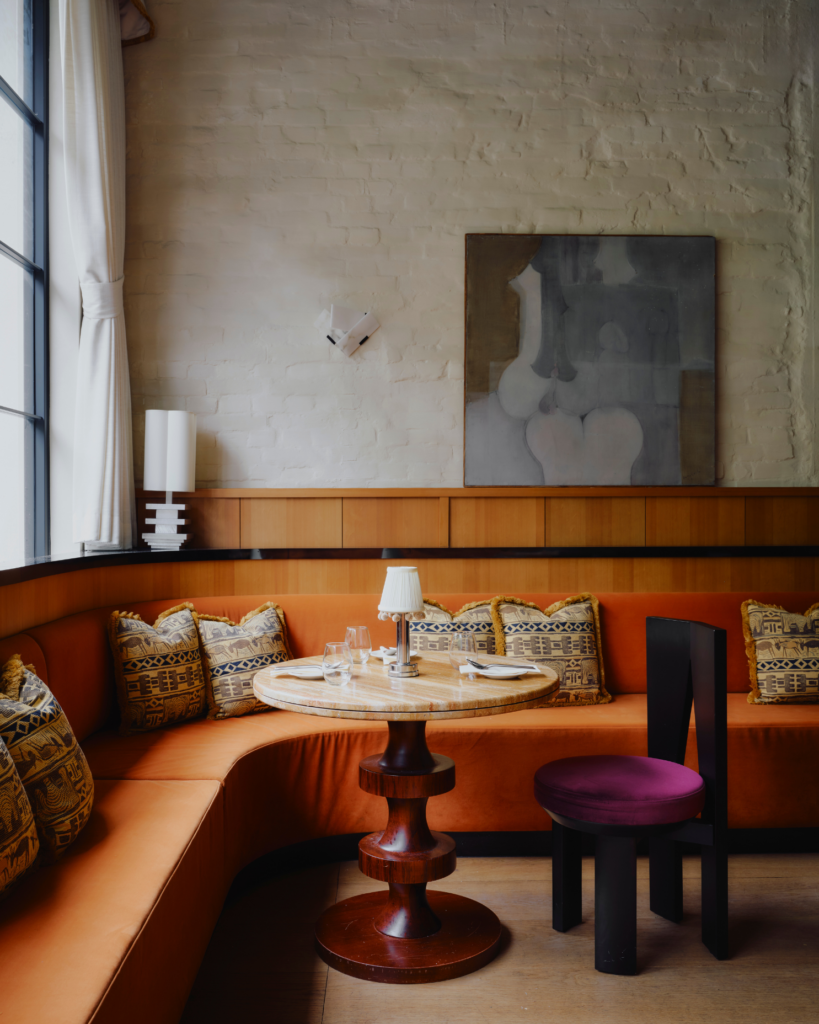
Upstairs, the atmosphere shifts. Here, the rhythm slows into the elegance of a classic European dining room, where curved banquettes, oak furnishings and Nordic pine panelling introduce warmth beneath soaring ceilings. Original wall sconces by French designer Pierre Chareau provide a subtle historical layer, connecting the project to the legacy of European modernism without overwhelming its contemporary expression.
Founded by Jin Chen, whose creative background spans music, collectible design and interiors, Ecru Studio approaches every project as an exercise in spatial storytelling. At The Flow, that narrative unfolds through materiality, proportion and carefully choreographed circulation—proving that cultural exchange is often at its most compelling when expressed through design rather than decoration.