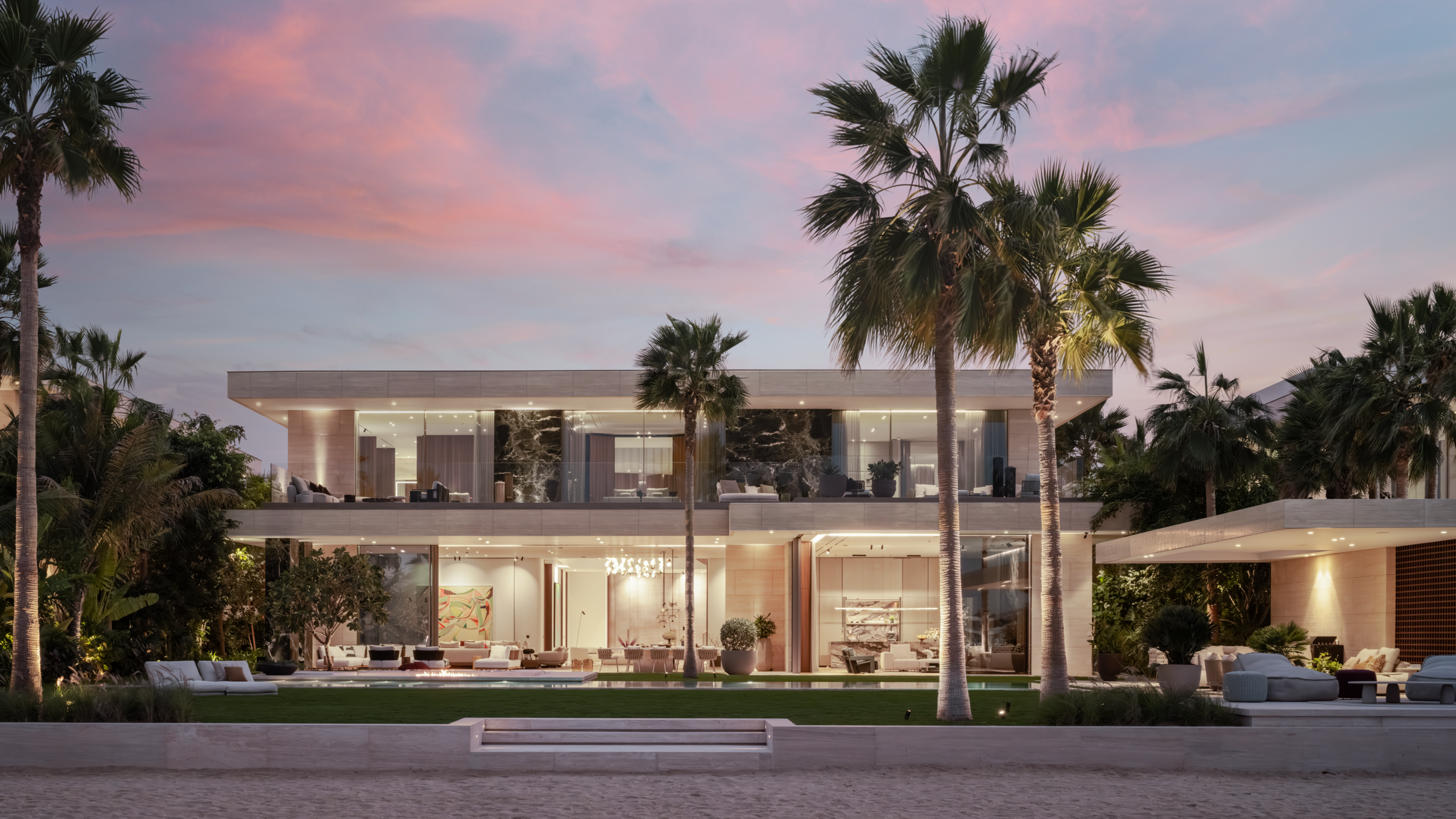
On Palm Jumeirah, luxury has historically been articulated through visibility. Architecture here was conceived for spectacle: grand façades, ornamental gestures, houses designed to be seen from land, sea, and increasingly, from the screen. Display was part of the currency.
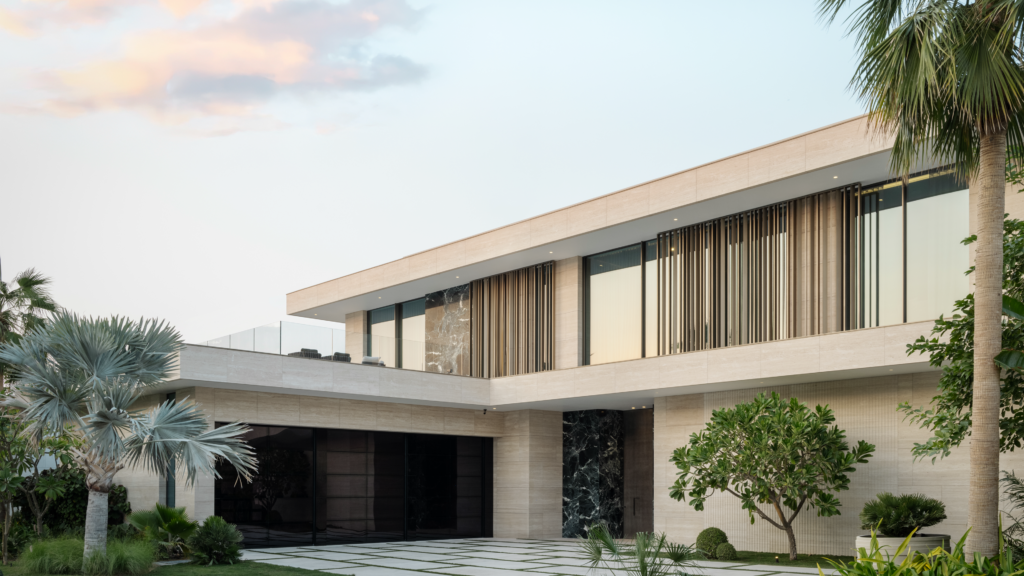
Yet within a newly built enclave of twenty-four villas known as EŌME, a different architectural attitude emerges. The question is whether this signals a broader shift in Gulf residential culture — from expressive excess to calibrated restraint.
The residence, shaped by the architectural language of Paul McClean in dialogue with Alexandra Fedorova, adopts a vocabulary more commonly associated with Beverly Hills than the Gulf. Horizontality replaces ornament. Glass frames the horizon instead of competing with it. Volume and void do the work once performed by embellishment. If earlier iterations of super-prime living leaned toward conspicuous scale, this house privileges proportion and sequencing.
Arrival is telling. Rather than announcing itself through theatrical façades, the experience unfolds inward. A marble-framed entrance opens to a nine-metre foyer illuminated by a skylight. At its centre, a sculptural liquid-metal staircase rises in a single continuous gesture — dramatic, yet disciplined. The effect is cinematic without being decorative. The architecture performs, but quietly.
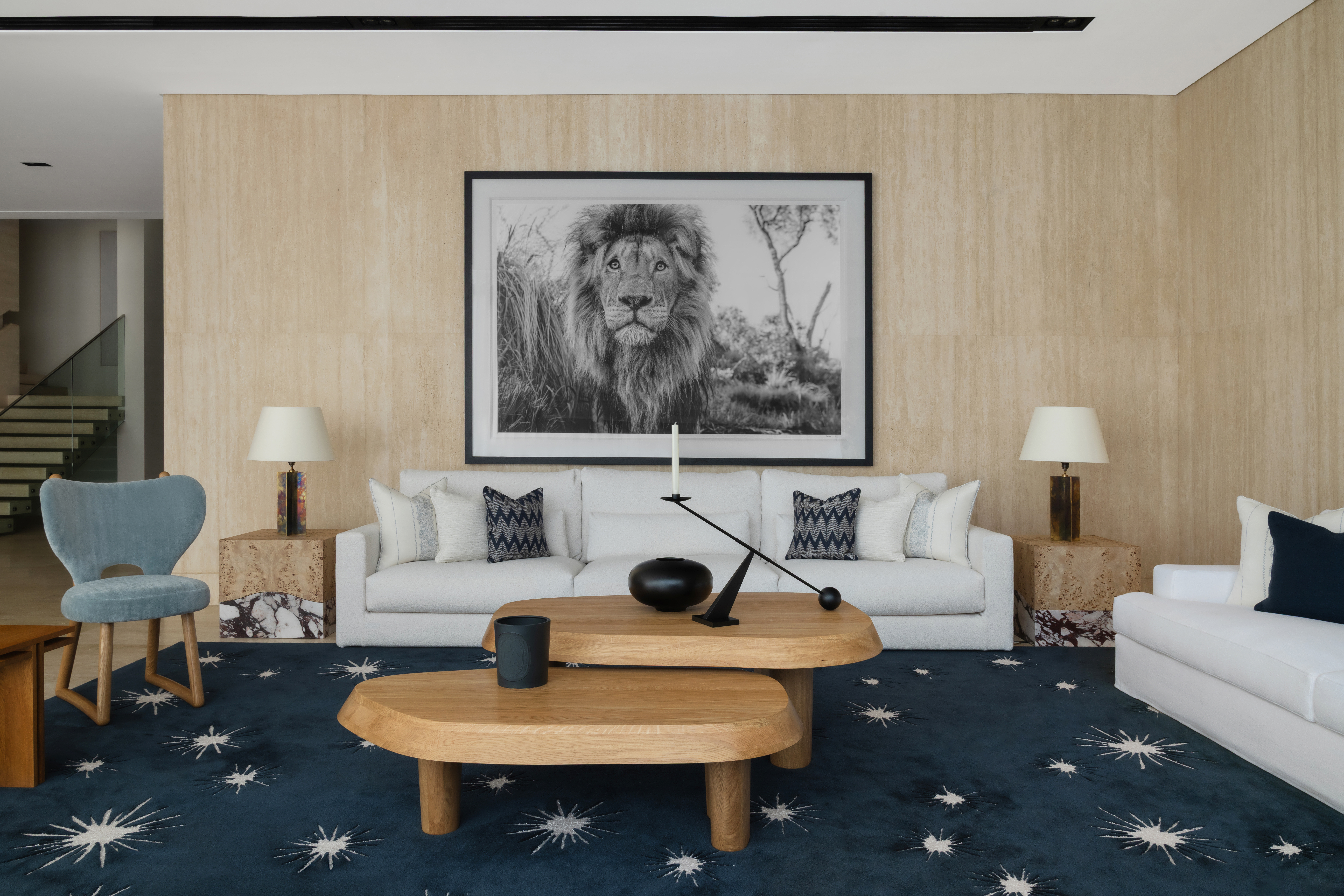
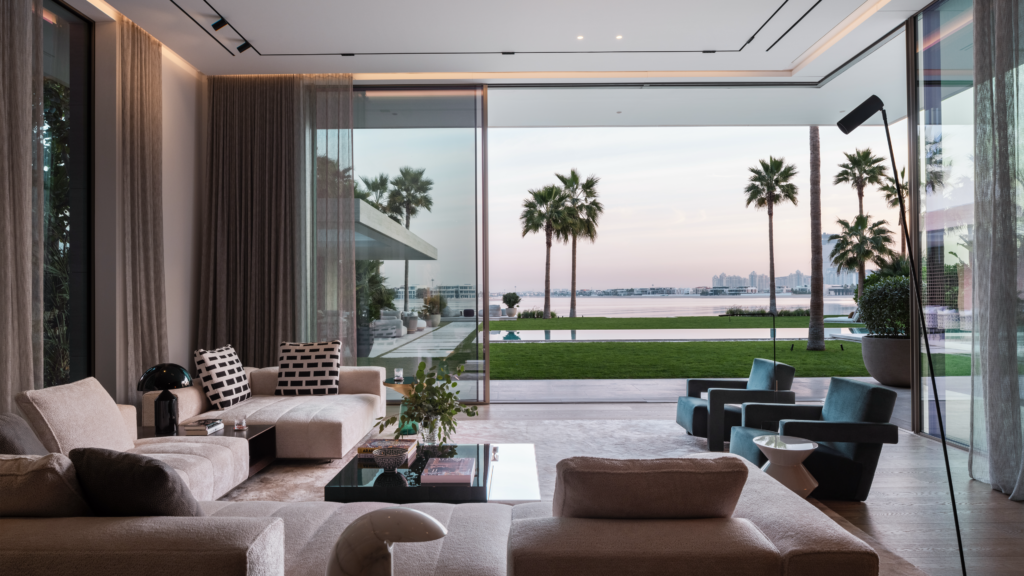
This calibrated approach continues throughout. The principal living space reads as a gallery, its museum-grade lighting designed to foreground art and materiality rather than opulence. Dual kitchens by Gaggenau are integrated seamlessly, acknowledging hospitality as infrastructure rather than spectacle. Guest suites, a private office, and a media lounge are positioned as self-contained retreats, reinforcing autonomy within the plan.
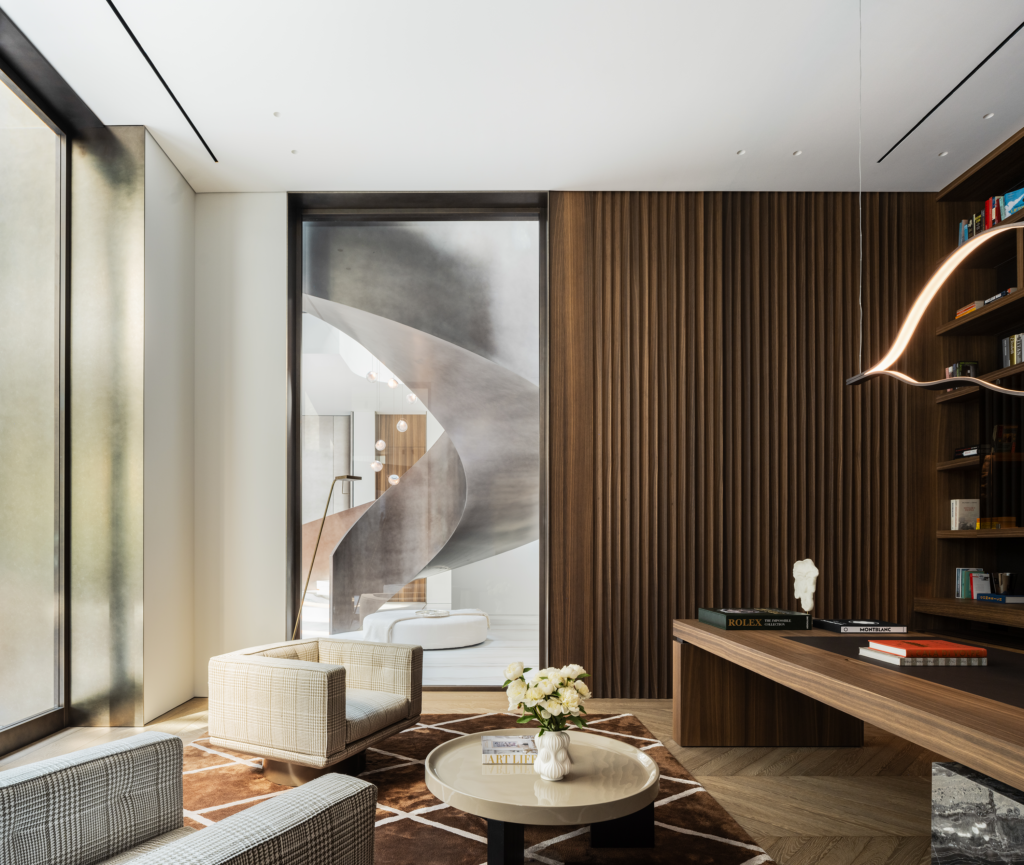
Upstairs, four corner suites articulate privacy along the perimeter. A centrally positioned library tempers the scale, introducing a note of introspection. The Arabian Gulf is present, but not indiscriminately exposed; views are framed, edited, composed. This restraint extends to materiality. Furnishings by Minotti and bespoke wardrobes by Poliform sit against Casa Bianca marble and dark hardwood floors — a palette that supports structure rather than overwhelming it.
Landscape, conceived by Johann Matthysen, further reinforces this sensibility. Layered greenery mediates between architecture and shoreline, softening edges and shielding interiors from view. An infinity pool parallels the coast; shaded terraces and a sunken firepit establish graduated thresholds between public and private. Even the private beach feels less like a display of privilege and more like a continuation of spatial logic.
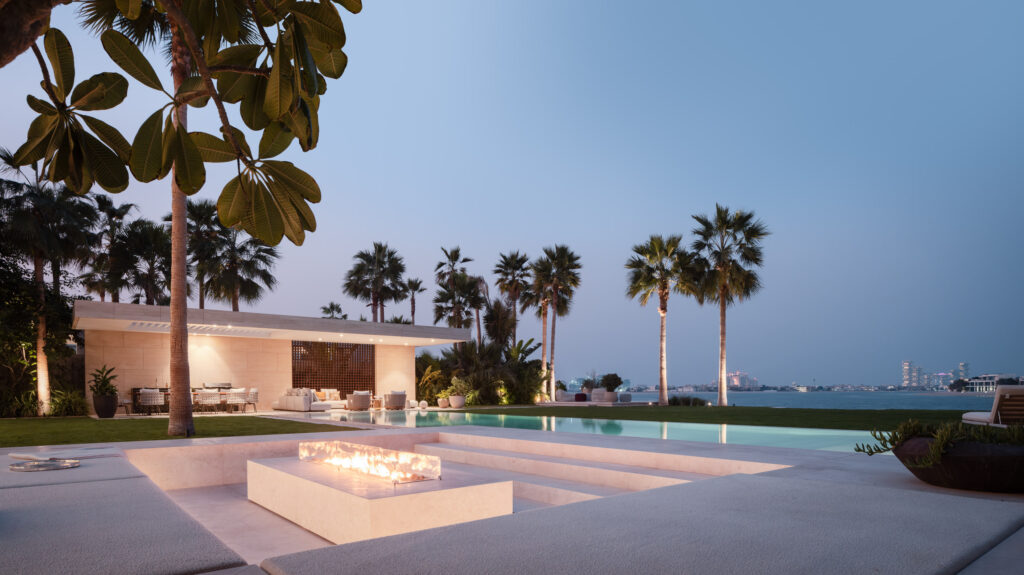
So, are we witnessing a maturation of Gulf luxury? Projects like this suggest that the answer may be yes. The markers of status have shifted. Where once scale and ornament dominated, now proportion, privacy, and authorship assert themselves. The architectural language imported from Los Angeles — glass, horizon, sculptural circulation — becomes a vehicle for this evolution, translating discretion into built form.
On Palm Jumeirah, spectacle is no longer the only narrative available. In its place, a quieter paradigm takes shape: one in which luxury is measured not by what is shown, but by what is carefully concealed.