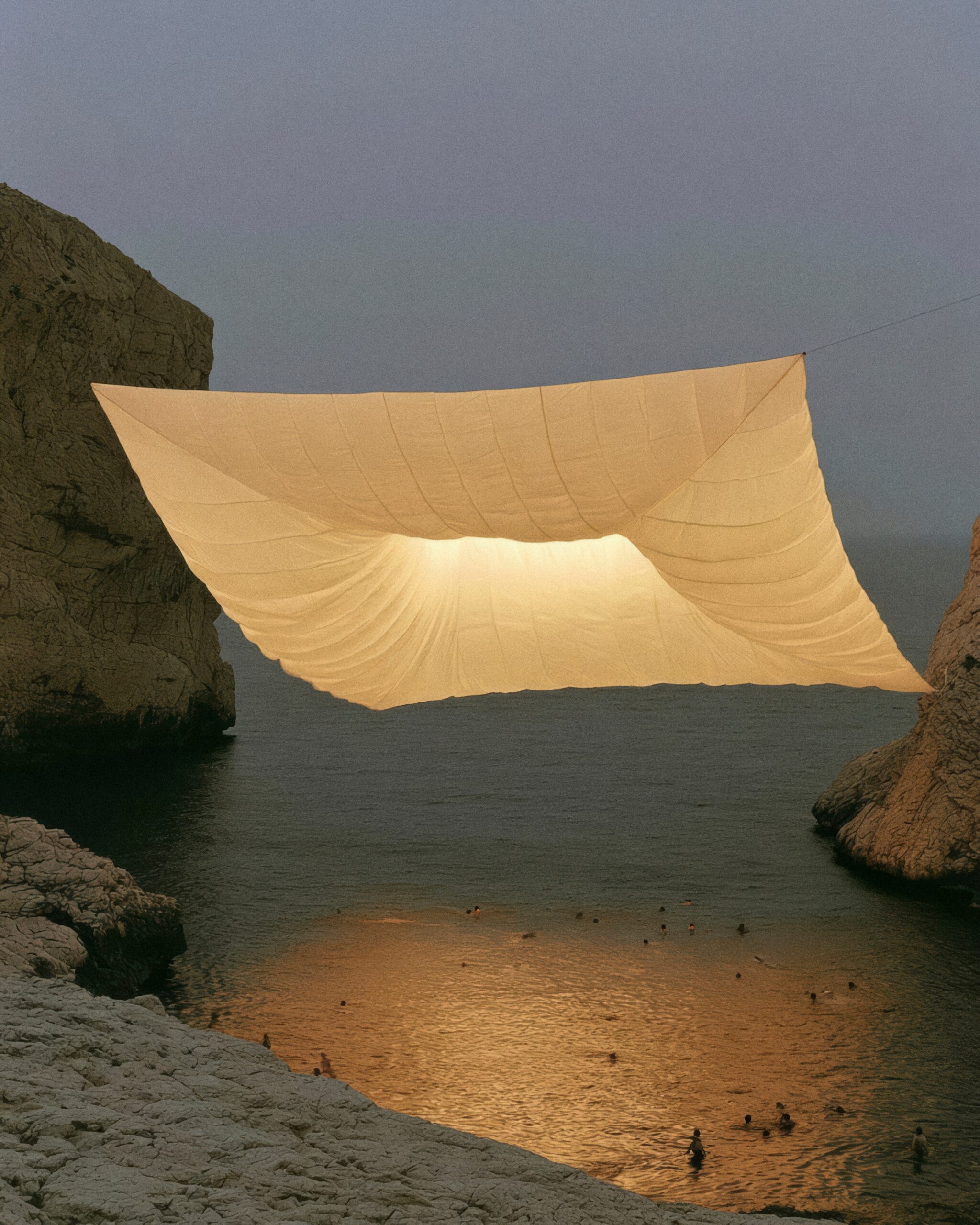
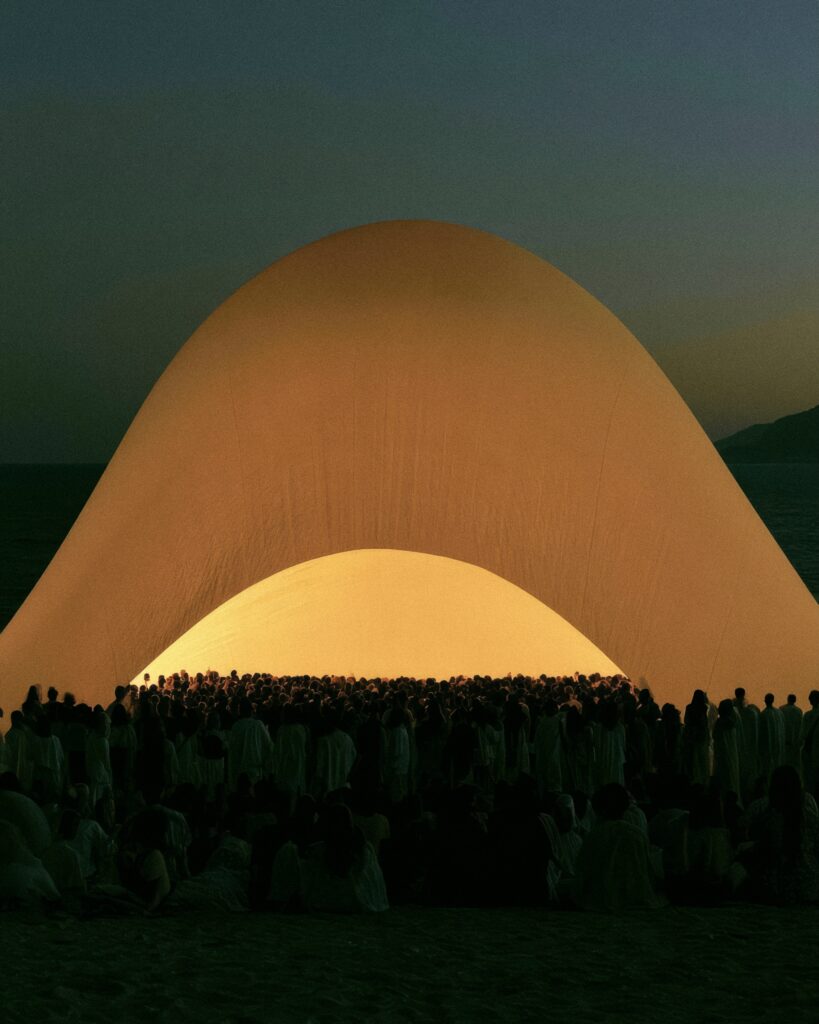
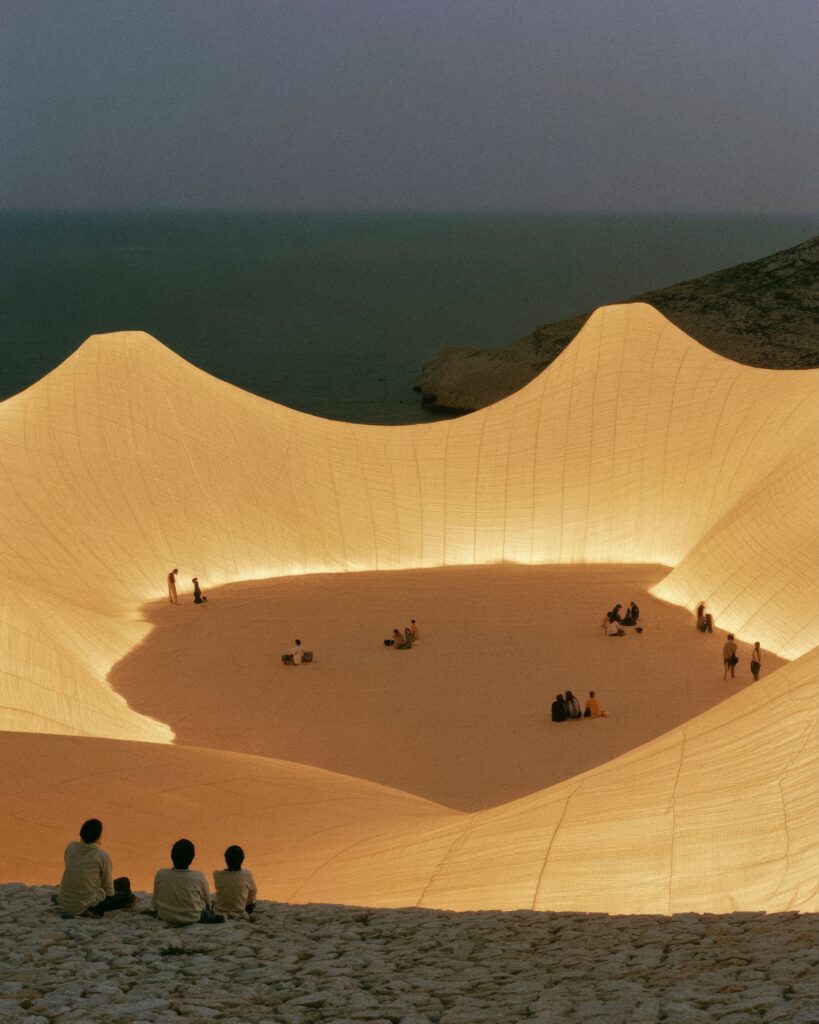
Le Festival du Soleil has no coordinates. It cannot be found on a map, reached by ferry or booked for next summer. It exists only as a series of AI-generated images: luminous terraces carved into Mediterranean cliffs, architecture dissolving into landscape, bodies gathered beneath an impossible sun.
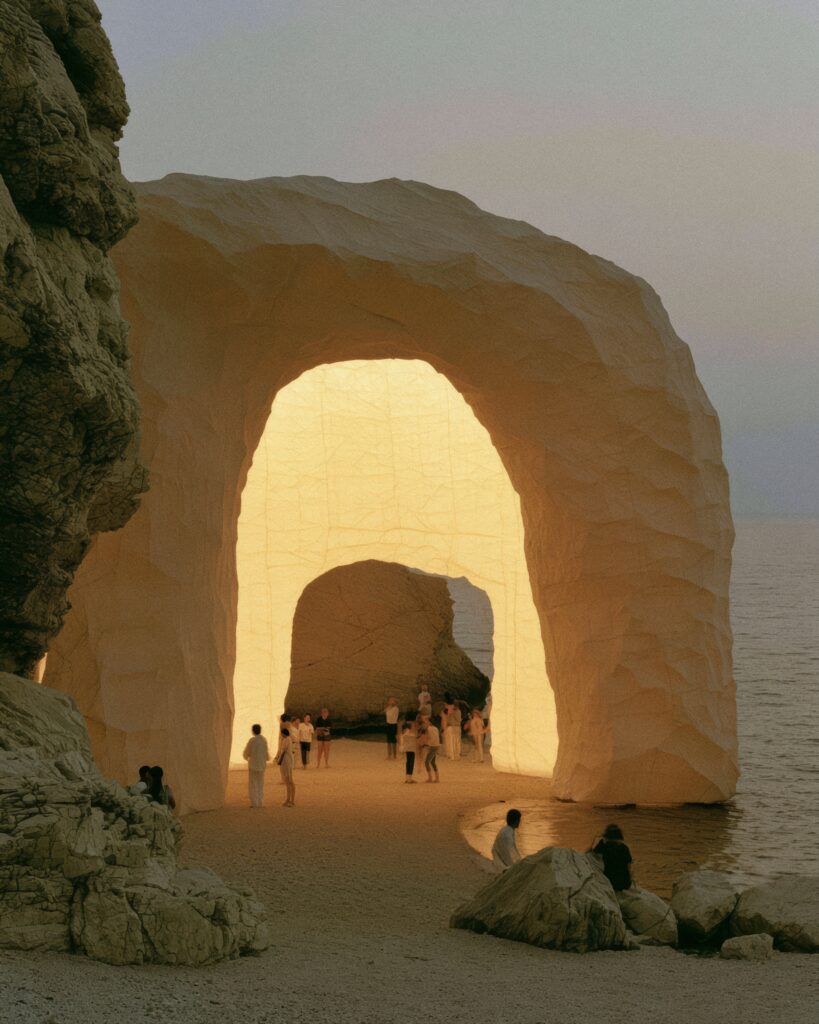
And yet thousands of people reacted as though they had discovered a destination. They asked where it was. They wanted to go.
The instinct is revealing. Not because people were fooled, but because they were willing to believe.
Human beings have always imagined places before inhabiting them. Every culture has envisioned landscapes that embody its deepest aspirations: gardens of paradise, mythical cities, sacred mountains and islands beyond the horizon. A place is never simply a location. It is a constellation of meanings, memories, rituals and projections. Geography alone has never been enough.
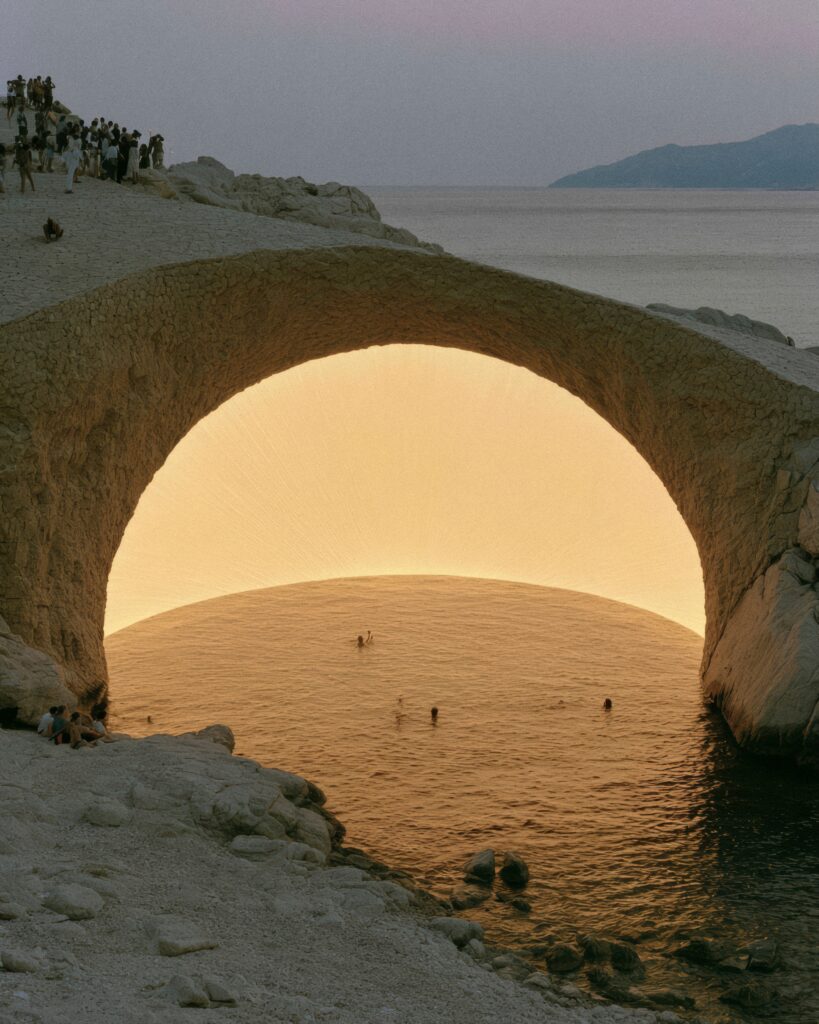
Perhaps this is why we can feel homesick for cities we have never visited, mourn buildings that have already disappeared, or dream with astonishing precision of landscapes that have never existed. Gaston Bachelard, in The Poetics of Space, argued that we inhabit spaces psychologically long before we inhabit them physically. The house, in his view, is not merely a structure but a repository of imagination. Architecture begins in the mind before it becomes matter.
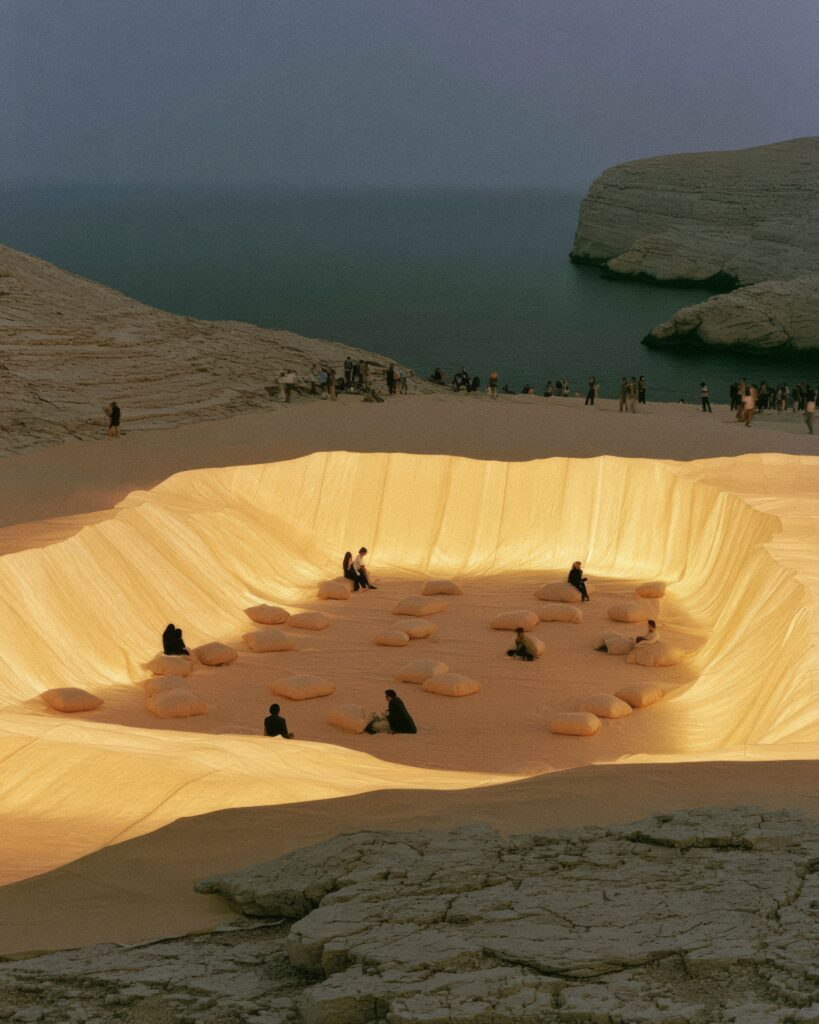
If this is true, then Le Festival du Soleil presents a more unsettling question than whether AI can generate convincing images. It asks whether materiality is still the defining condition of place.
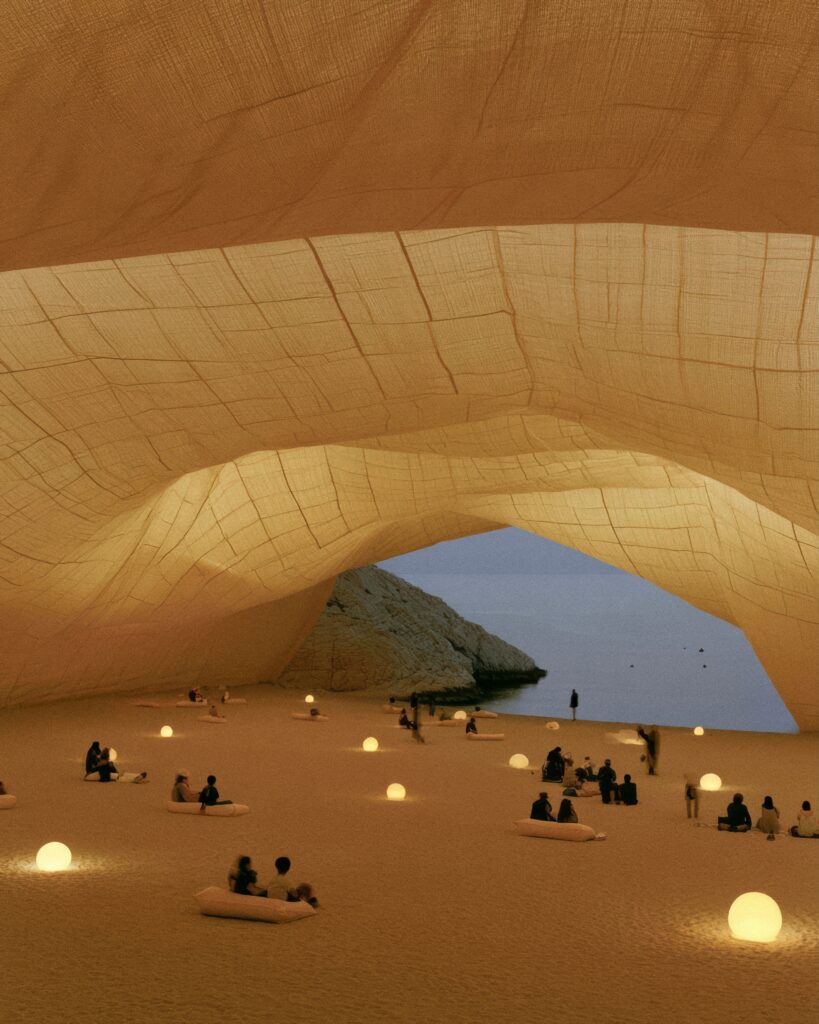
The images are undeniably seductive. But their power lies less in their novelty than in their familiarity. Every cliff, every stair, every reflection of sunlight on water feels strangely remembered. They do not depict a specific landscape but an ideal one, assembled from centuries of cultural imagination. Artificial intelligence has not invented a paradise. It has assembled one from the visual archive we have collectively produced.
In this sense, AI functions less as an author than as an archaeologist of desire.
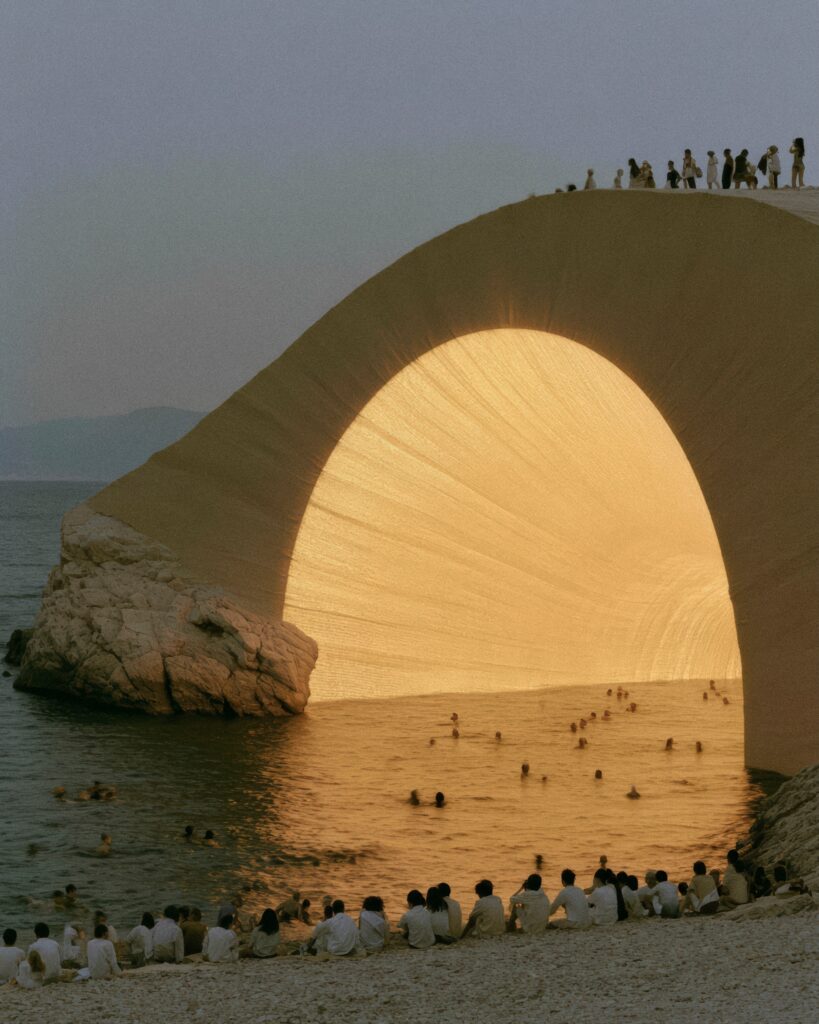
For architects, this raises an uncomfortable question. If architecture has always been judged by its capacity to shape human experience, what happens when the experience precedes construction? What becomes of architecture when imagination is no longer waiting for matter to catch up?
Perhaps this is why the disappointment feels genuine when we discover these places do not exist. Nothing tangible has been taken from us, yet something has undeniably been lost. We experience absence without ever having experienced presence.
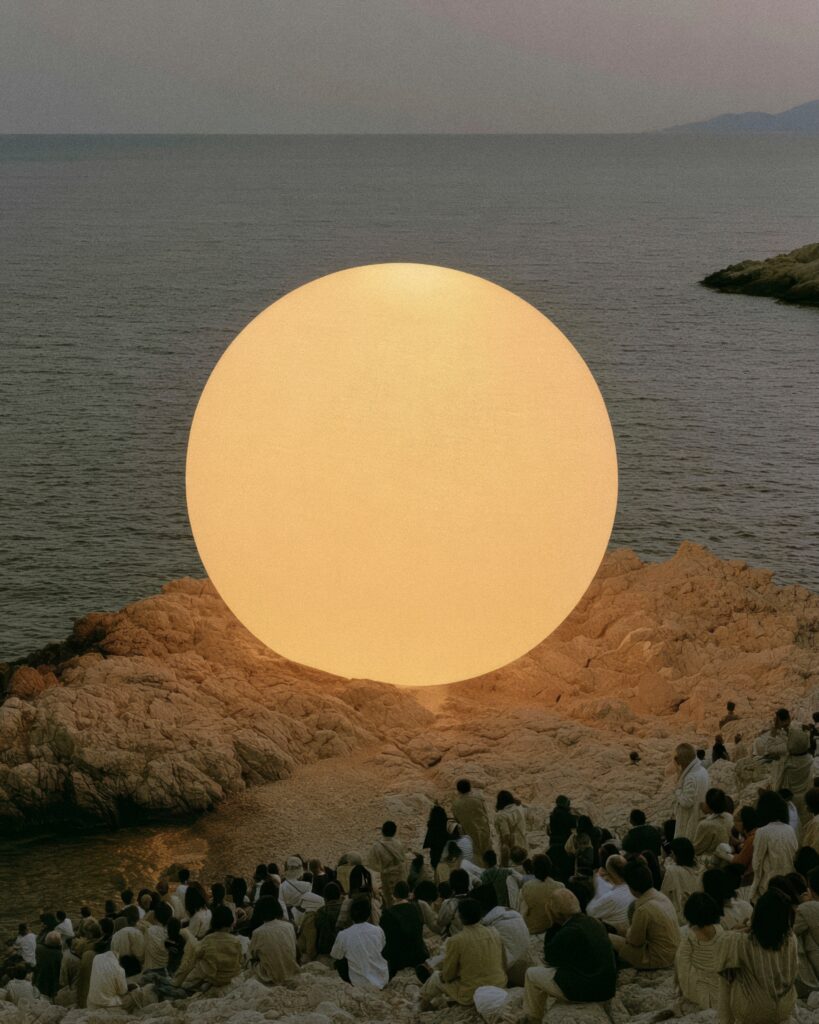
Philosophers have long distinguished between reality and representation, treating the latter as a secondary copy of the former. But architecture has always complicated that hierarchy. We rarely encounter buildings for the first time in person. We know them through drawings, renderings, photographs and screens. Increasingly, we fall in love with architecture before it is built, sometimes before it is even possible to build. Representation is no longer a substitute for experience; it has become experience itself.
Much of the Gulf’s architectural identity has been shaped through visionary renderings long before projects became physical realities. From cultural districts and museums to ambitious masterplans and entirely new cities, architecture has often existed first as a promise—a compelling image of the future. AI does not invent this condition; it intensifies a relationship between imagination and construction that has long defined contemporary urban culture.
The question, then, is not whether AI-generated places are real. It is whether our emotional investment depends on their reality at all.
After all, nations are imagined communities. Money derives its value from collective belief. Myths shape civilizations despite their impossibility to verify. Human culture has always been sustained by shared fictions. Perhaps architecture is no exception.
Le Festival du Soleil may never be constructed. Its terraces will never weather, its stone will never age, its pathways will never accumulate footprints. Yet for a brief moment it occupied a space within the collective imagination. It generated anticipation, conversation and longing. It altered behaviour. It produced desire.
What, then, is the threshold at which an imagined place becomes a real cultural object?
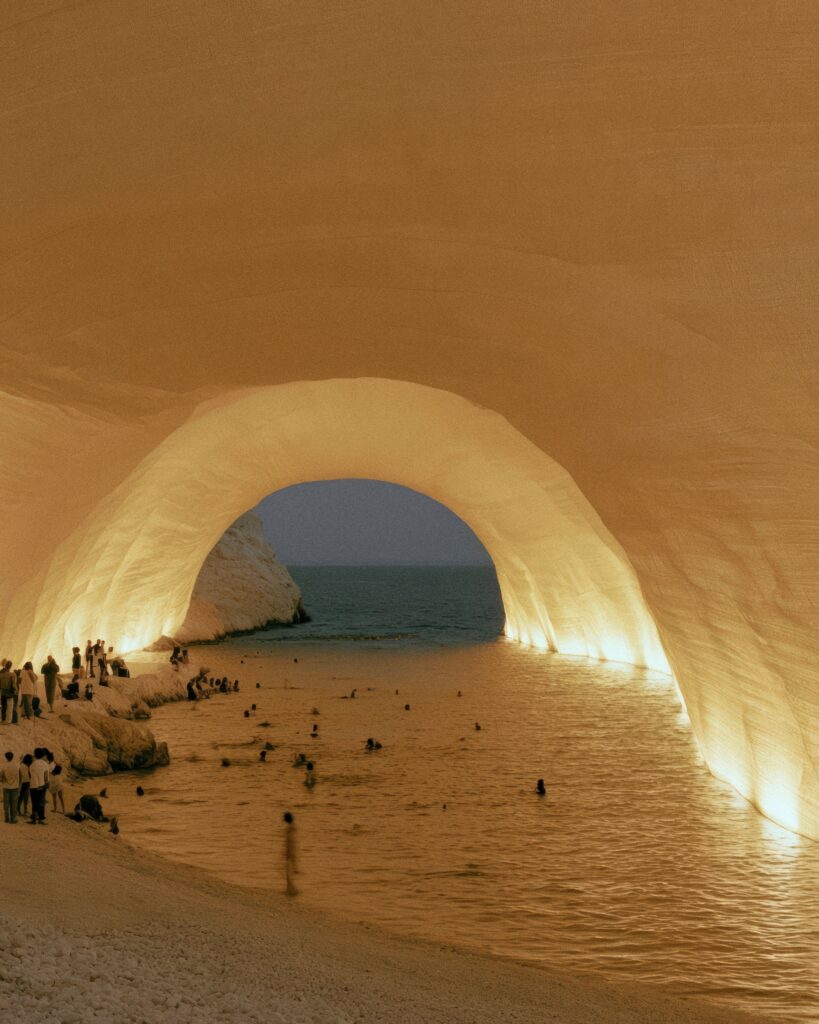
Perhaps artificial intelligence has not blurred the boundary between reality and fiction. Perhaps it has simply exposed that the places we value have never belonged entirely to the physical world. They have always existed somewhere between matter and imagination, between memory and projection.
Perhaps architecture’s first material has never been stone, timber or concrete. Perhaps it has always been imagination.