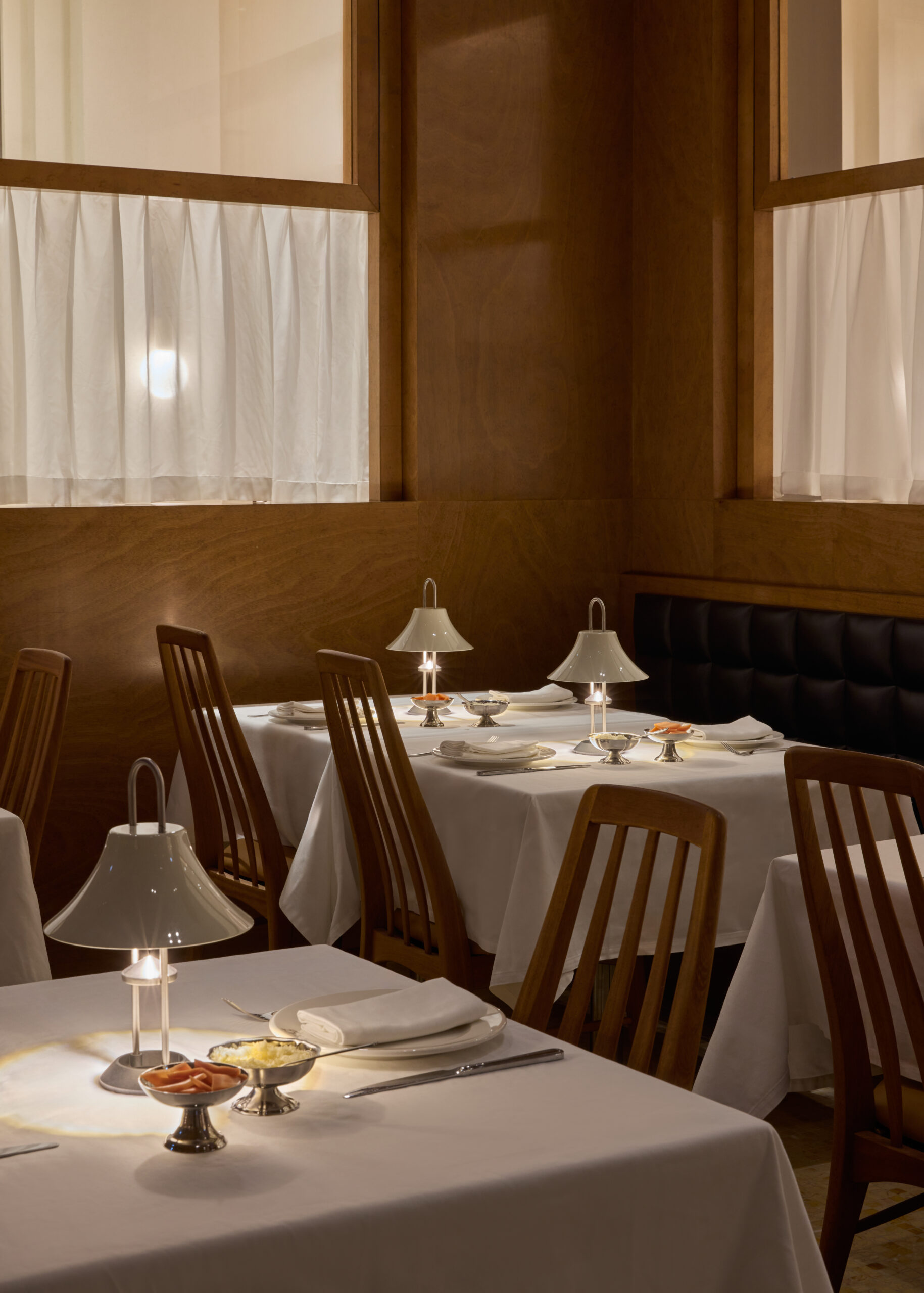
In a place defined by spectacle and velocity, Moon Slice at Dubai Mall proposes something quietly radical: the slowing down of time. Conceived by designer Rania Hamed of VSHD Design, the restaurant draws inspiration from the atmosphere of a traditional Italian trattoria, where the experience of dining unfolds gradually through sound, memory, and human connection.
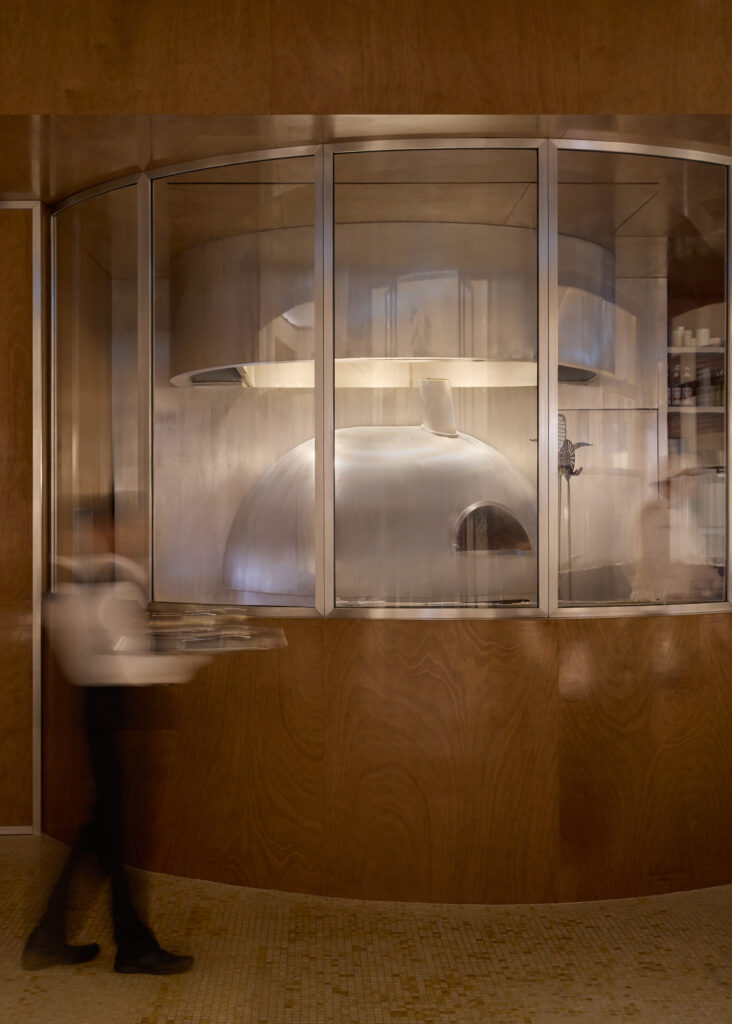
Rather than relying on decorative excess, the design operates as a quiet stage for everyday rituals. The clinking of plates, the gentle murmur of conversations, the traces left behind on a table after a meal all become part of the architecture of the space. Here, design does not seek to dominate the experience but to frame it.
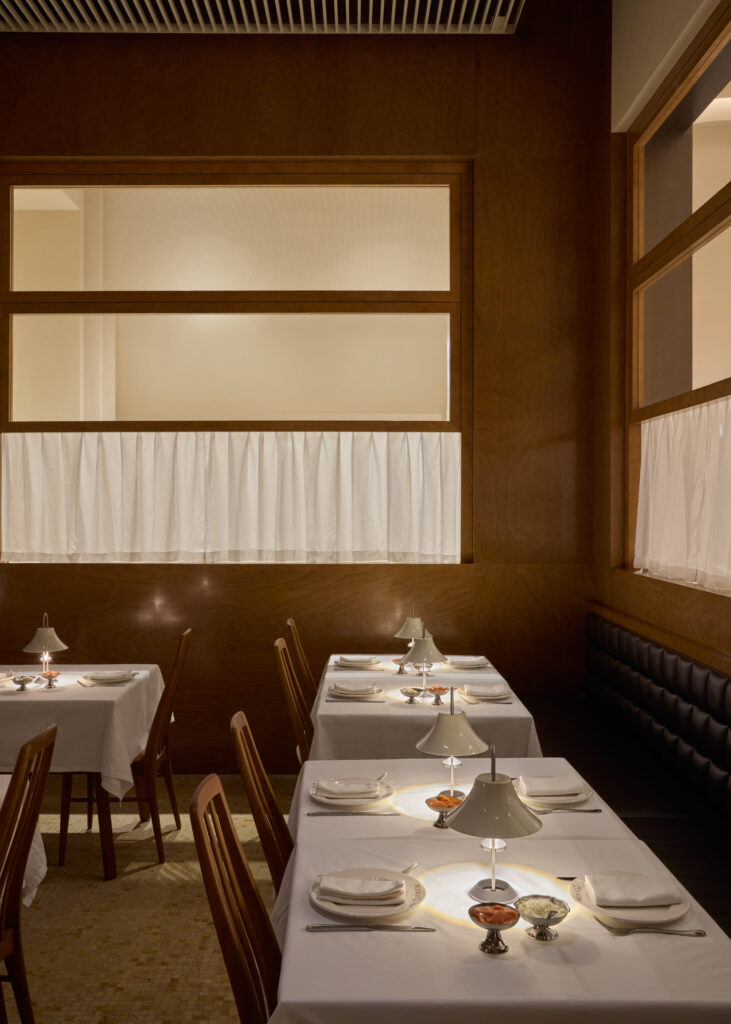
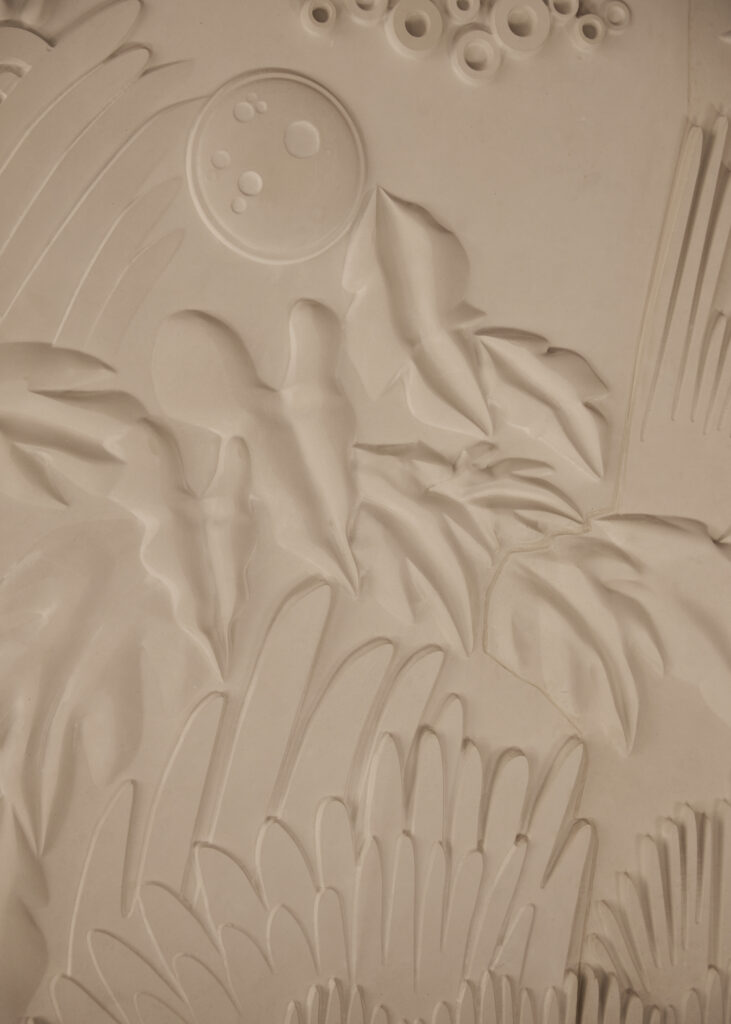
The interior opens with warm grey washed walls, subtly enriched by a decorative plaster frieze that lends the room a sense of depth and quiet history. Against this softened backdrop, stainless steel framed glass partitions introduce a contemporary counterpoint, reflecting movement and light across the space while maintaining visual openness. The dialogue between traditional textures and modern materials creates a carefully balanced atmosphere that feels both familiar and unmistakably current.
Tables draped in crisp white cotton tablecloths anchor the dining room with understated elegance. High backed vintage dining chairs and capitonné black leather cushions introduce tactility and comfort, encouraging guests to linger. Beneath them, a yellow marble mosaic floor and warm wood paneling ground the interior with a sense of permanence, as though the space had evolved slowly over time rather than been newly constructed within the energetic context of a shopping mall.
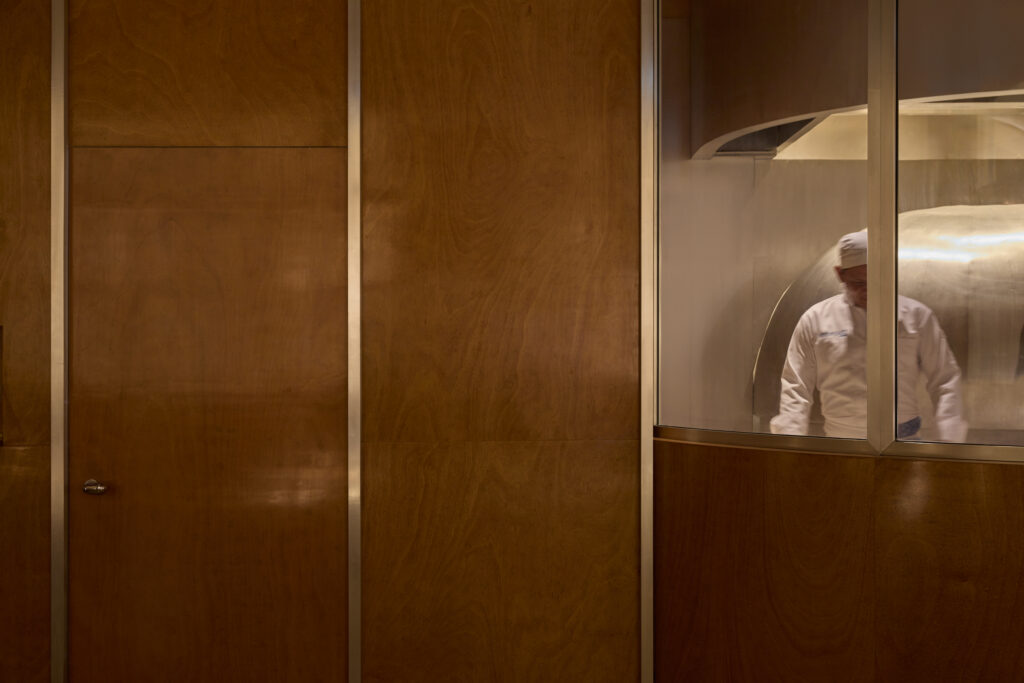
At the center of the restaurant, the pizza gallery remains fully exposed, drawing diners into the rhythm of preparation and cooking. The gesture recalls the informal intimacy of gathering around a kitchen counter at home, where food and conversation flow naturally between guests and cooks. It transforms the act of making pizza into a quiet performance, reinforcing the sense of collective experience that defines the space.
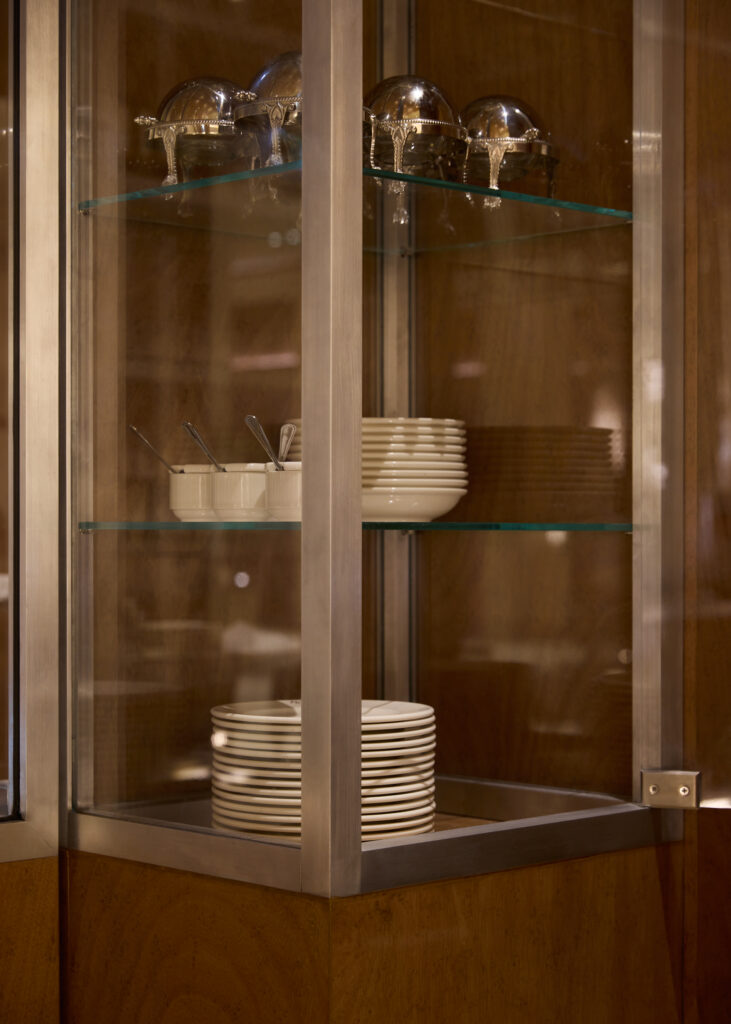
Light plays a subtle but essential role in shaping the atmosphere. Soft illumination settles gently across the cotton tablecloths, casting shifting shadows that animate the room throughout the evening. A marble frieze runs through the interior like a whispered narrative, referencing the origins of ingredients and the craftsmanship behind each pizza.
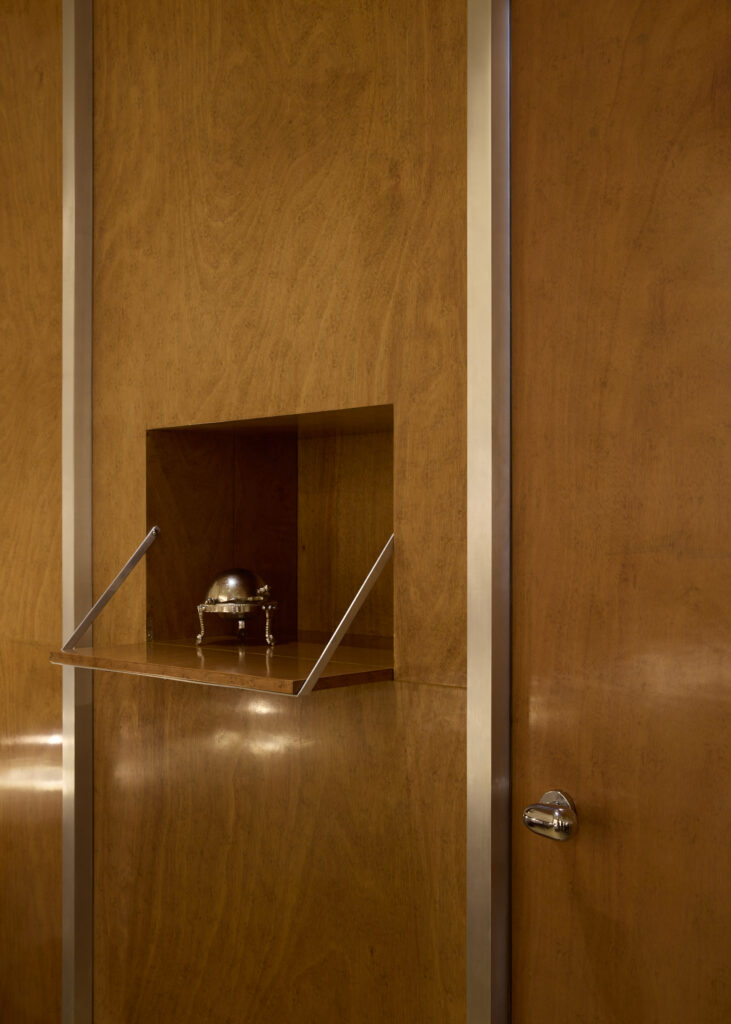
In the end, Moon Slice is less about spectacle and more about memory. Through material restraint, careful choreography, and an emphasis on shared rituals, Rania Hamed creates a space that captures the soul of a neighborhood trattoria. Long after the last slice has been shared, what remains is a feeling carried quietly beyond the restaurant’s walls.