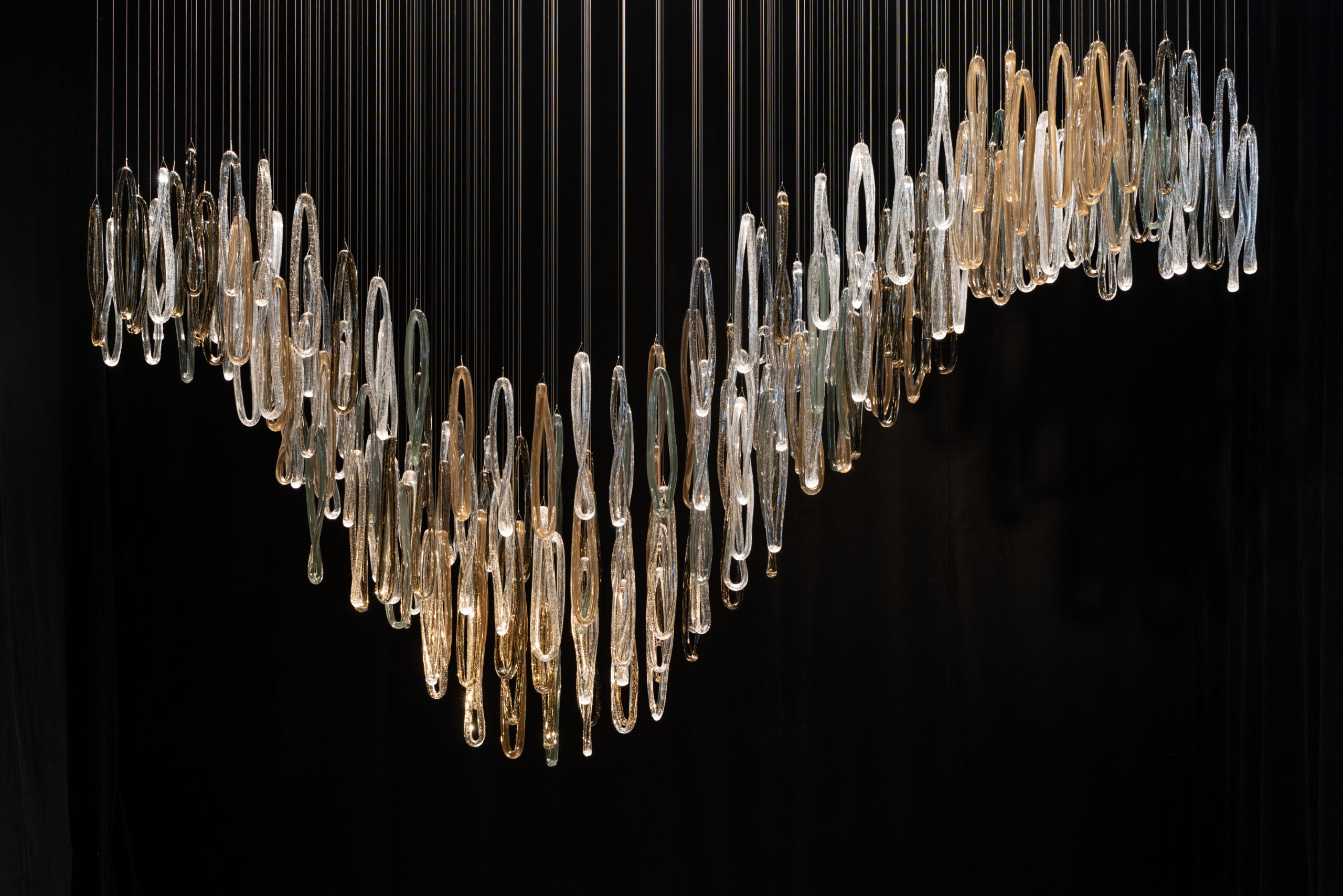
Glass is fragile yet enduring, transparent yet capable of transforming the spaces it inhabits, it is a material that exists somewhere between presence and absence. For Leon Jakimič, founder and president of Czech design house LASVIT, its fascination lies not only in its physical properties, but in its ability to preserve something fundamentally human: the gesture, emotion and imagination of its maker.
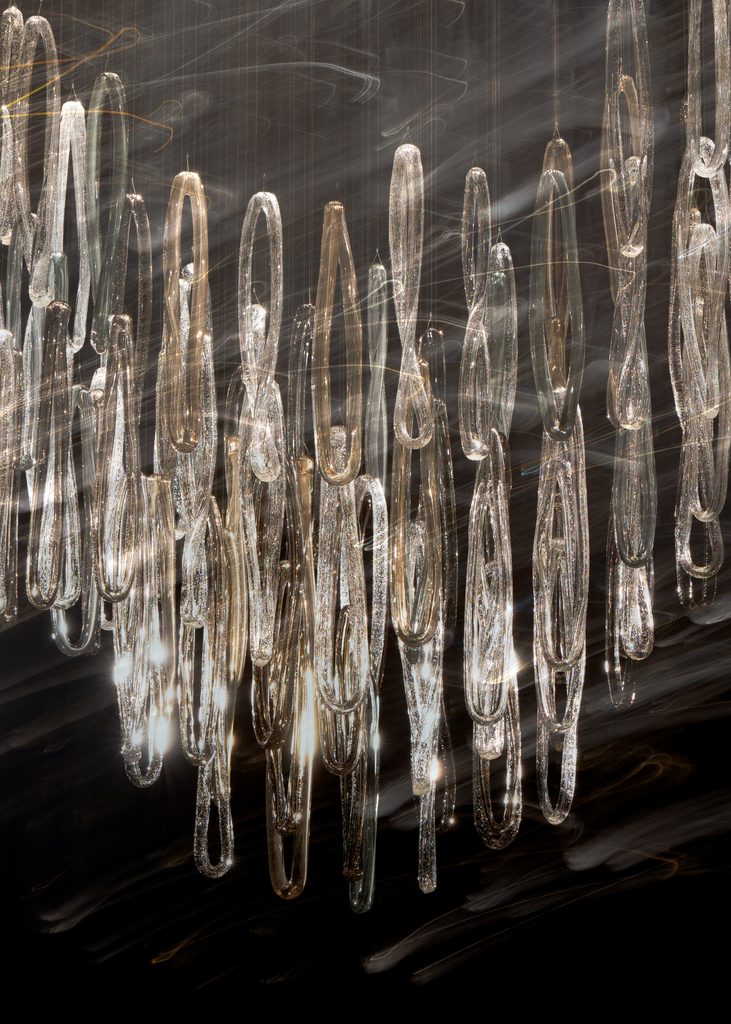
Founded in 2007, LASVIT has built an international reputation for translating the centuries-old traditions of Bohemian glassmaking into contemporary installations that move between design, sculpture and architecture. At Downtown Design Dubai 2026, the company presents Endless Light, bringing together Aura and Eternity in an exploration of the relationship between glass and illumination.
As the company approaches its twentieth anniversary, Jakimič speaks to Marie Claire Maison Arabia about the importance of preserving craftsmanship in an age of accelerating technological change, the creative ambitions of the Middle East and his belief that the future of design will depend as much on our capacity to feel as on our ability to innovate.
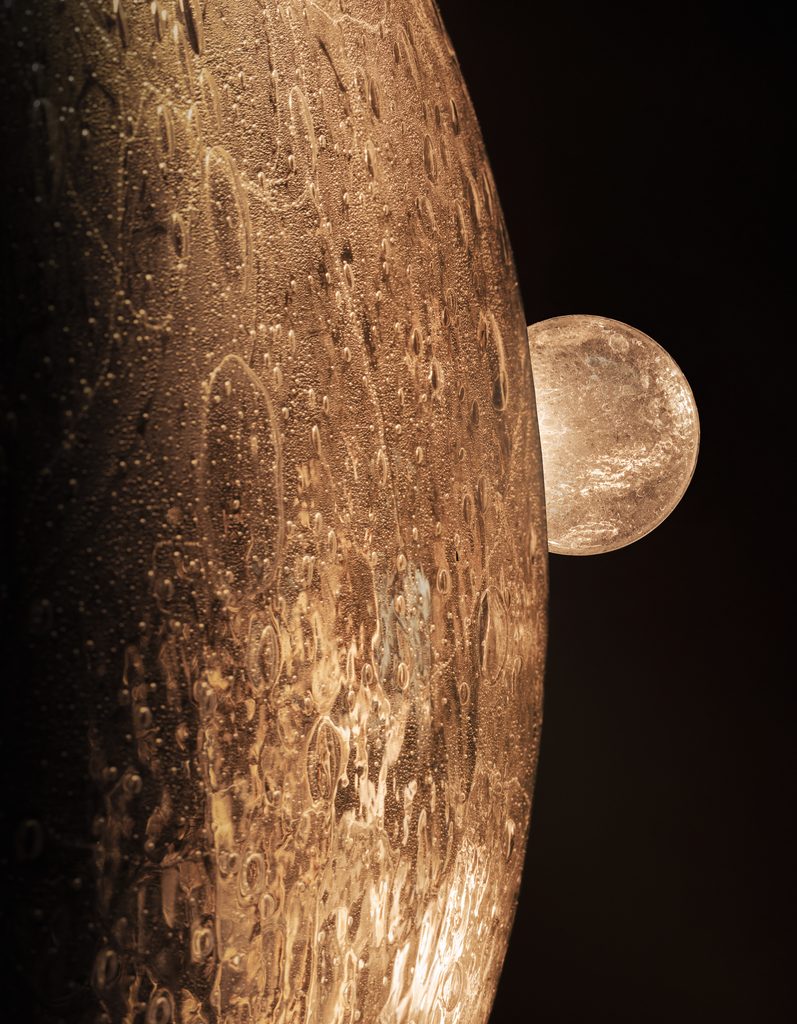
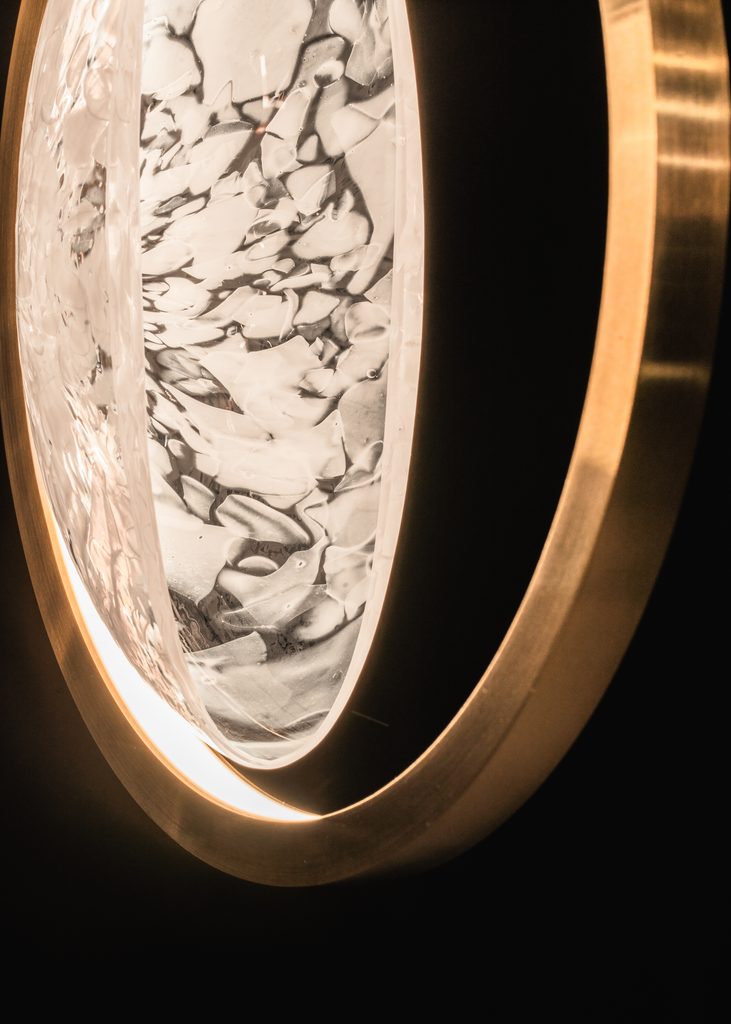
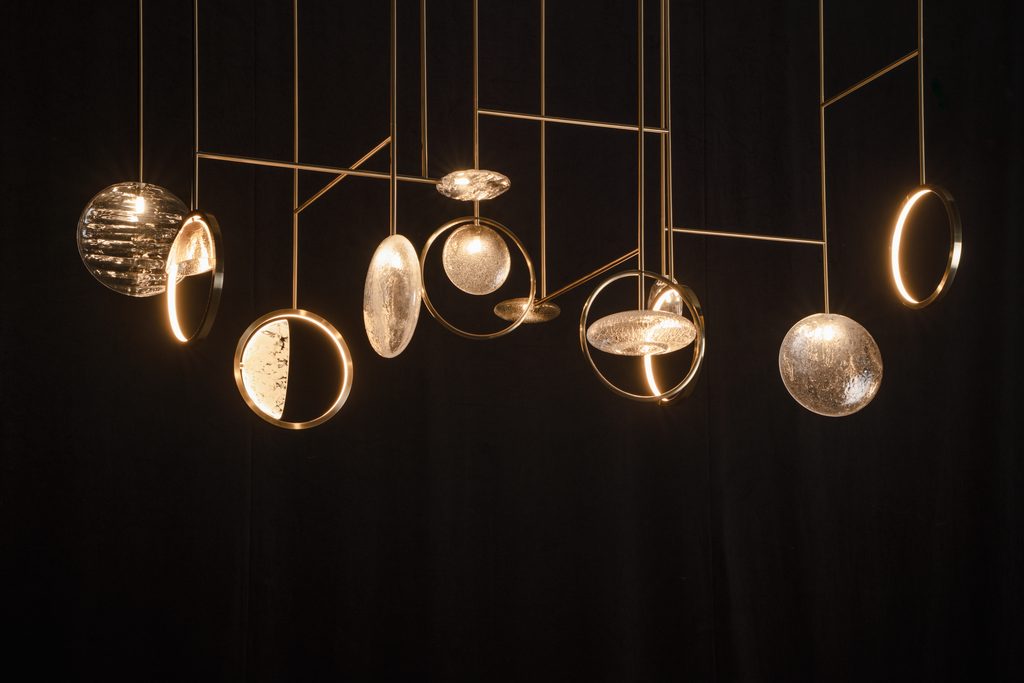
At Downtown Design this year, LASVIT presents Endless Light, bringing together Aura and Eternity. What is the idea connecting these two creations, and what do you hope visitors will experience?
Leon Jakimič: I believe that once light gets captured by glass, it becomes endless. I can always feel the light inside the glass. Even when the light is off, glass keeps radiating a positive energy of its maker, his never-ending passion for glass, his “light”. Thus “Endless Light”. This philosophy comes alive through our Aura and Eternity, hence their choice for this exhibition.
LASVIT has transformed a centuries-old Bohemian glassmaking tradition into a contemporary design language. How do you balance the preservation of traditional craftsmanship with the constant need to innovate?
Leon Jakimič: A company who doesn’t grow and innovate wouldn’t excite me, so in Lasvit we innovate literally every day. Not all innovations must be technological. Often it is about new ways of translating designers’ ideas into works of glass shaped by our artisans, interconnected by our design engineers, and lit by our lighting designers.
But what I find the most fascinating nowadays is that, given how fast everything around us evolves, with AI and robots literally taking over the planet, our biggest innovation is actually rediscovering centuries-old glassmaking techniques that purely rely on the artisans’ skills and passion, so people can feel the positive human energy as it radiates from our work, thus giving them peace of mind, a moment to slow down and rediscover oneself. In Czechia we have a word for this that is hard to translate: people find “Klid”.
Glass is a particularly fascinating material: fragile yet enduring, transparent yet capable of transforming an entire space. What continues to surprise you about working with it?
Leon Jakimič: I love glass’s oxymoronic characteristic: fragile yet resilient. Like our Czech nation, which survived for centuries nestled between global powers from both Western and Eastern Europe. I believe our glass defines Czech culture and vice versa.
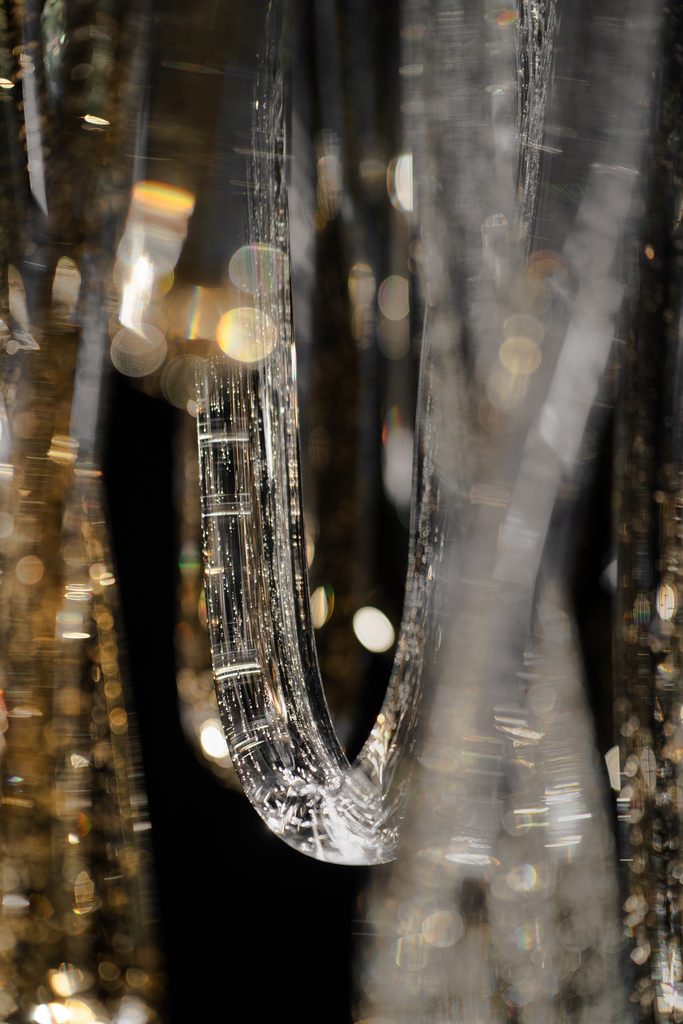
And there is more about glass that fascinates me: its ability to reflect and multiply light. Glass is a light that you can touch. Glass is an alchemistic material that can store its maker’s emotions and radiate them. I can feel them when drinking from a hand-blown glass that was created by a glassmaker who loved what he was doing.
LASVIT’s installations often exist somewhere between functional lighting, sculpture and architecture. Where do you draw the line between design and art, or is that distinction no longer relevant?
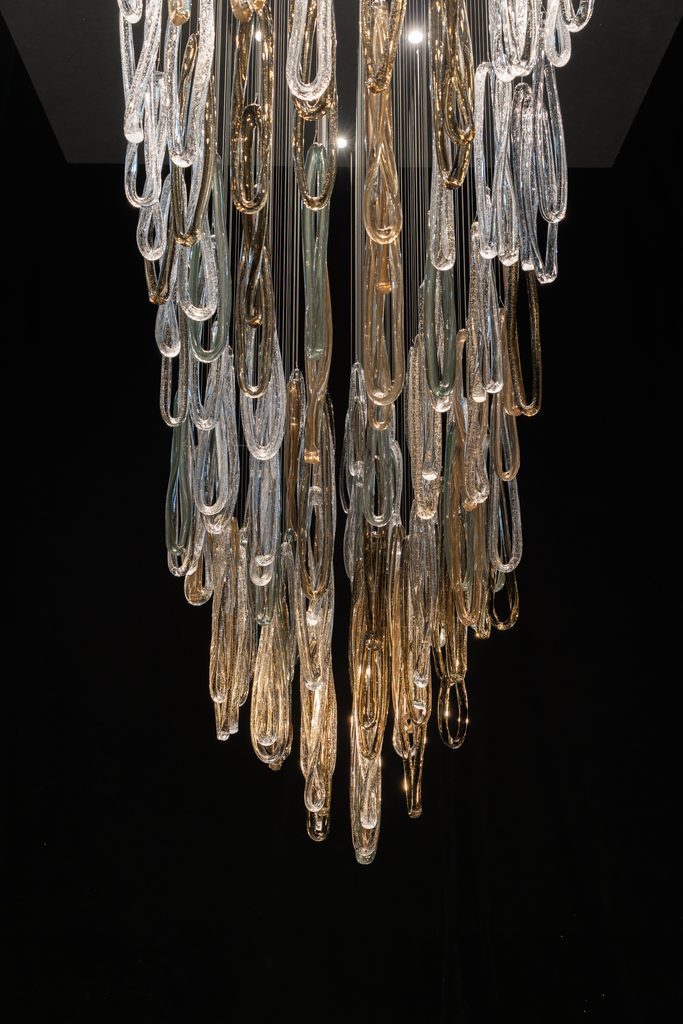
Leon Jakimič: The constantly changing interaction between glass and light that takes place in vases, suspended glass art installations, or artistic glass facades is what matters to me. Whether some of our works are categorised as design and some of our limited editions as art matters less.
It is the creativity of the designer, artistry of the maker, and passion of both that makes Lasvit who we are. Even our name Lasvit is a combination of two Czech words: Láska and Svit — love and light. Both very dear to our values.
As LASVIT approaches its 20th anniversary, how has your original vision evolved? Is there something you believe in today that you might not have considered when you founded the company?
Leon Jakimič: My vision for Lasvit is to create a House of glass, light, and human touch, across objects, space and architecture. I didn’t know in 2007, but have always been hoping that glass would stay relevant as an artistic material in this ever-changing world.
Now, after almost 20 years of creating and installing unique works of glass and light in nearly three and a half thousand of the world’s most inspiring interiors and even exteriors, I feel we have surpassed our wildest expectations. And these are only our bespoke installations made for specific commercial and residential clients, not counting tens of thousands of our lights sold by our retail partners to many beautiful homes all over the world. I believe that even my Italian friends would agree with me that Lasvit has started a glass renaissance.
The Middle East has become an important destination for ambitious architectural and interior projects. What distinguishes the region in terms of its approach to light, scale and bespoke design?
Leon Jakimič: Even though the USA is our largest market, the Middle East has always been our favourite destination because of the spirit, vision, creativity and originality of our clients here. In no other part of the world are our designers and artisans pushed to their creative limit, both artistic and technological. And we love it.
We opened our Dubai Atelier in 2009, just two years into our life. Our first major project was the Dubai Metro: large bespoke glass art installations for Al Rigga and BurJuman stations. One series inspired by fire, the other by water. All our designs personally approved by Sheikh Mohammed.
Then came the Dubai Opera’s main lobby with our almost 20-metre-tall glass art installation, dynamically lit by thousands of LEDs creating a constant movement of light within the sculpture, viewable from above, below and even outside the Opera.
By now we have been blessed by being able to enhance interiors and perhaps tell stories through our glass in hundreds of the UAE’s buildings, both private and public. In the last few years, Saudi Arabia has become our largest market in the Middle East, with the UAE being a close second.
Looking ahead, what do you believe will define the future of luxury lighting? Will it be technological innovation, craftsmanship, personalisation, or something entirely different?
Leon Jakimič: All of the above will stay important, but the most important thing will be the willingness of people to dream, feel, and imagine. The virtues that make us human, unlike AI, which can’t feel and touch anything.
If people will continue to enjoy being surrounded by works of glass that have been shaped by fellow human beings with all their virtues and deficiencies, by people who love what they do and imprint their emotions into the molten silica sand called glass, then I have no worries about the future of beautifully handcrafted glass and light.