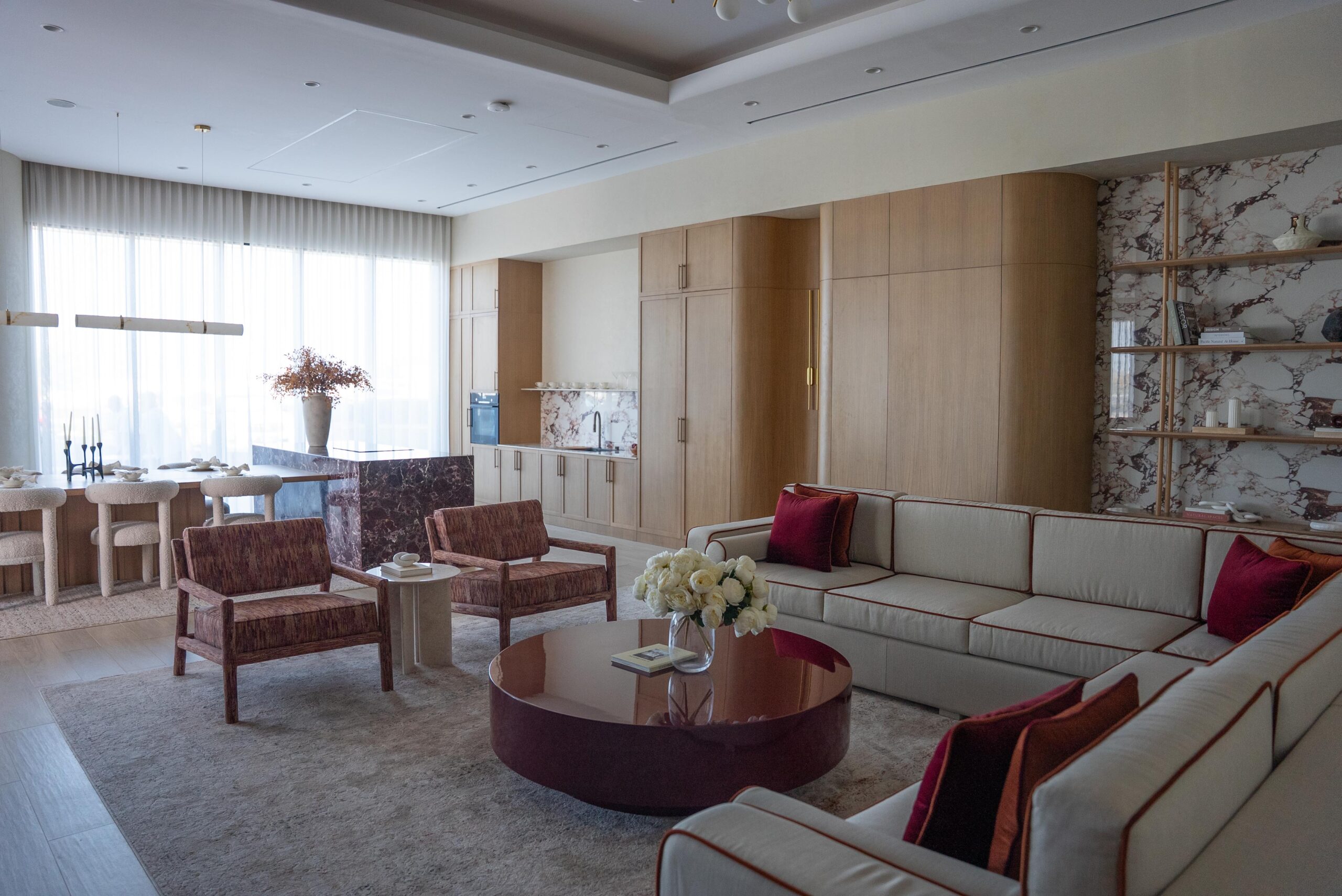
In Muscat, a 190-square-metre apartment offers an interesting perspective on the relationship between geography and contemporary interior design. Conceived by Kate Kerdi, the Latvian-born founder of Kate Kerdi Interiors, the residence reflects an approach shaped by years spent living and working across Europe, Asia and the Middle East. Yet rather than relying on recognisable regional motifs, the designer translates her experience of Oman into a more abstract language of materials, textures and proportions.
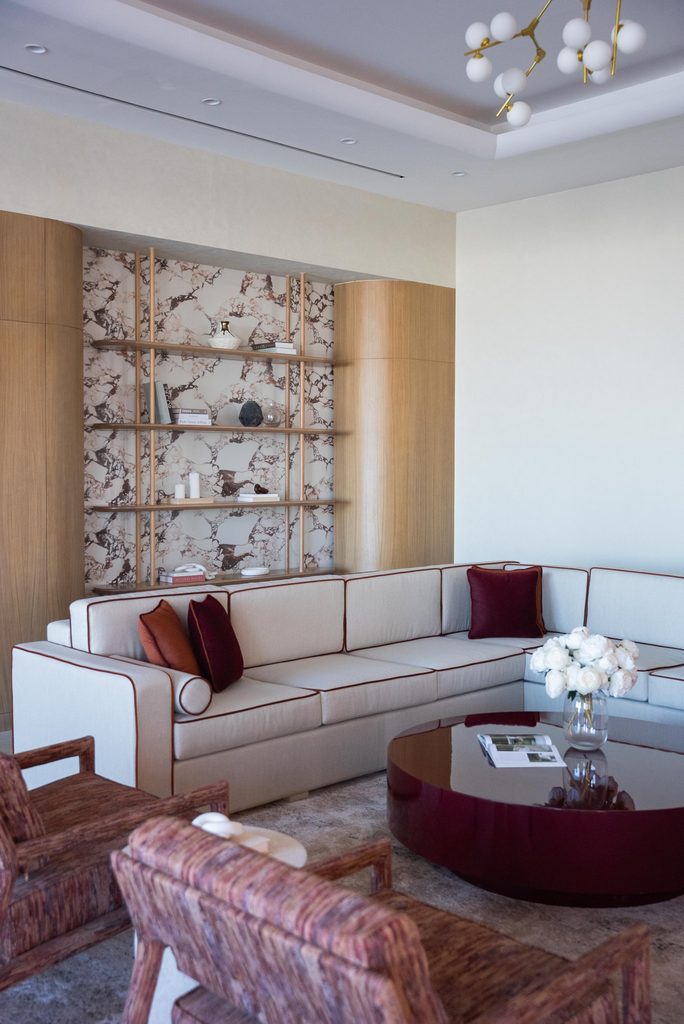
Having moved to the Sultanate nine years ago, Kerdi has developed a particular appreciation for its architectural and cultural sensibilities. “There is a strong appreciation here for natural materials, craftsmanship, and a more understated expression of luxury,” she explains. This understanding informs the apartment’s composition, where sandy-toned textured walls evoke the surrounding desert landscape without resorting to literal interpretation.
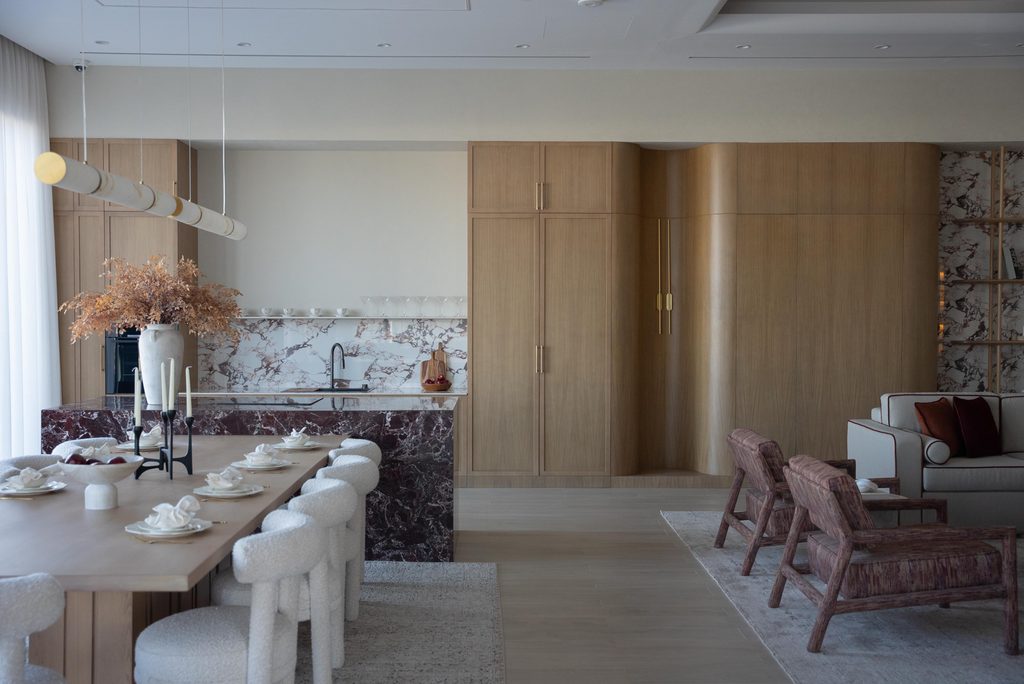
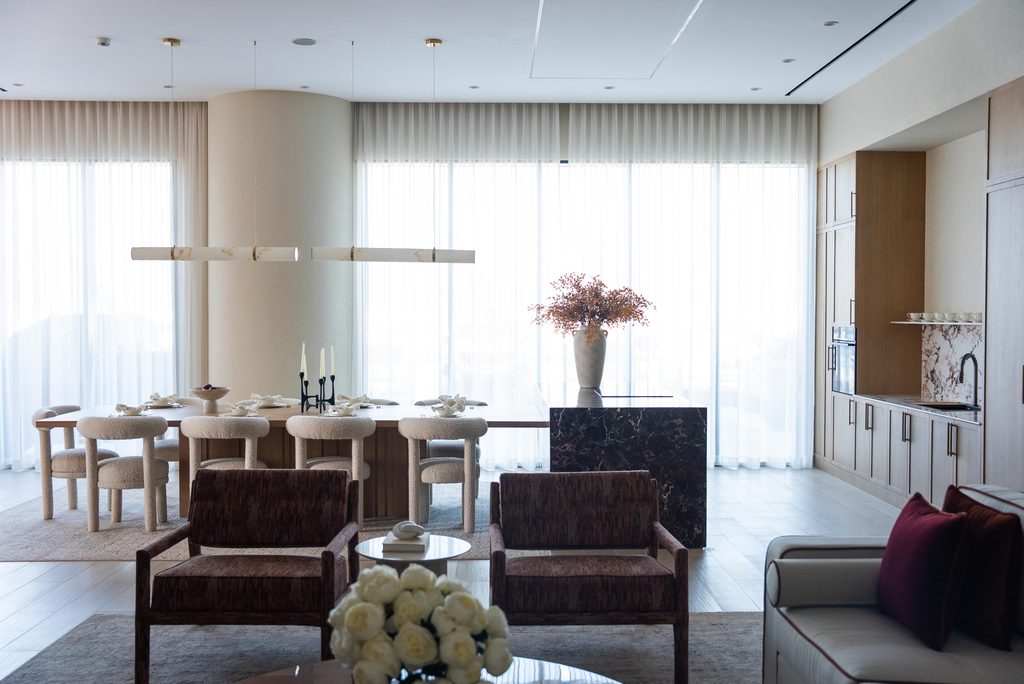
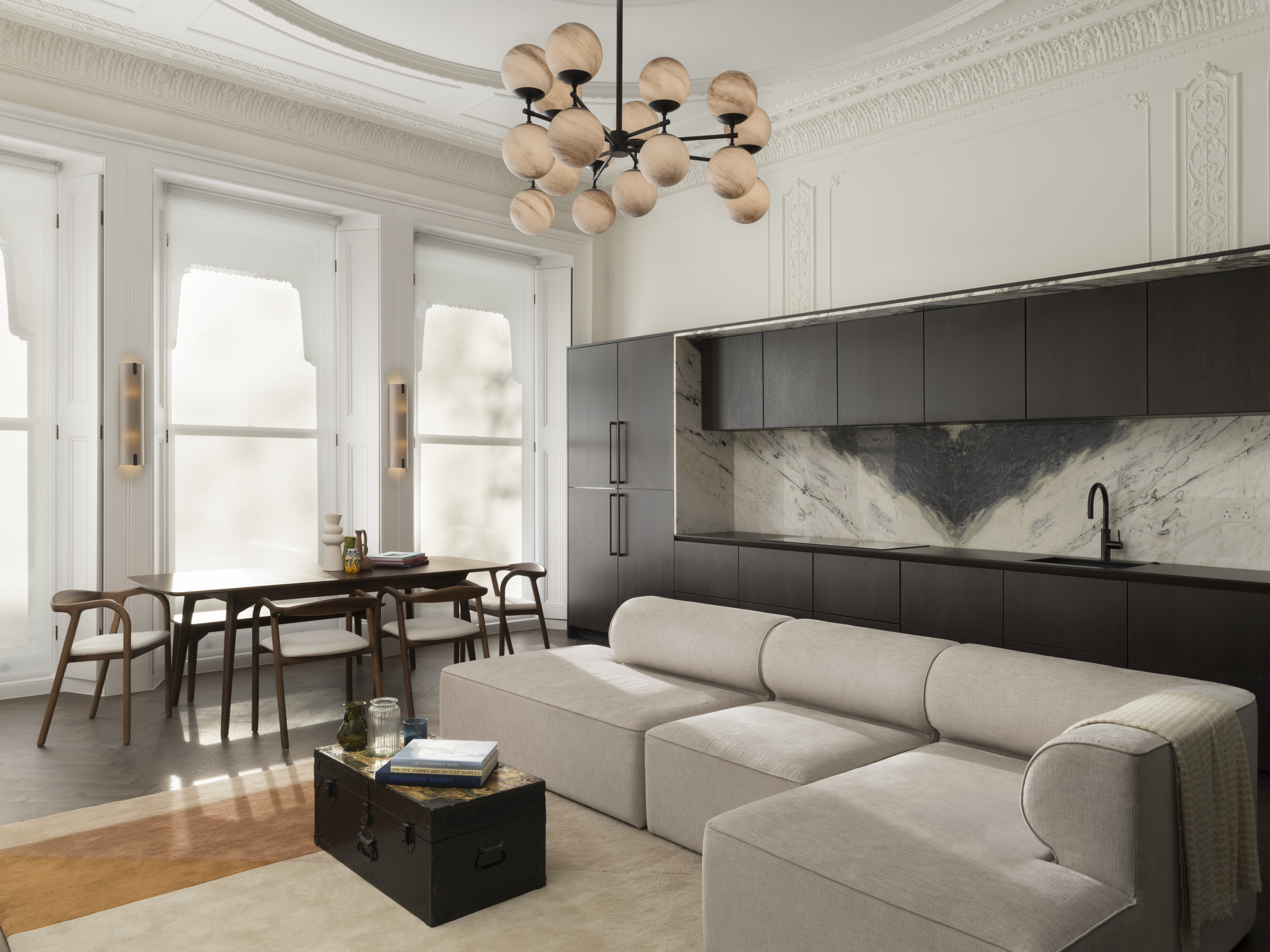
Designed from the outset as part of a new residential development, the one-bedroom property offered considerable freedom in defining its spatial identity. An open-plan arrangement brings together the kitchen, dining and living areas, establishing a continuous interior articulated through contrasts of colour and material.
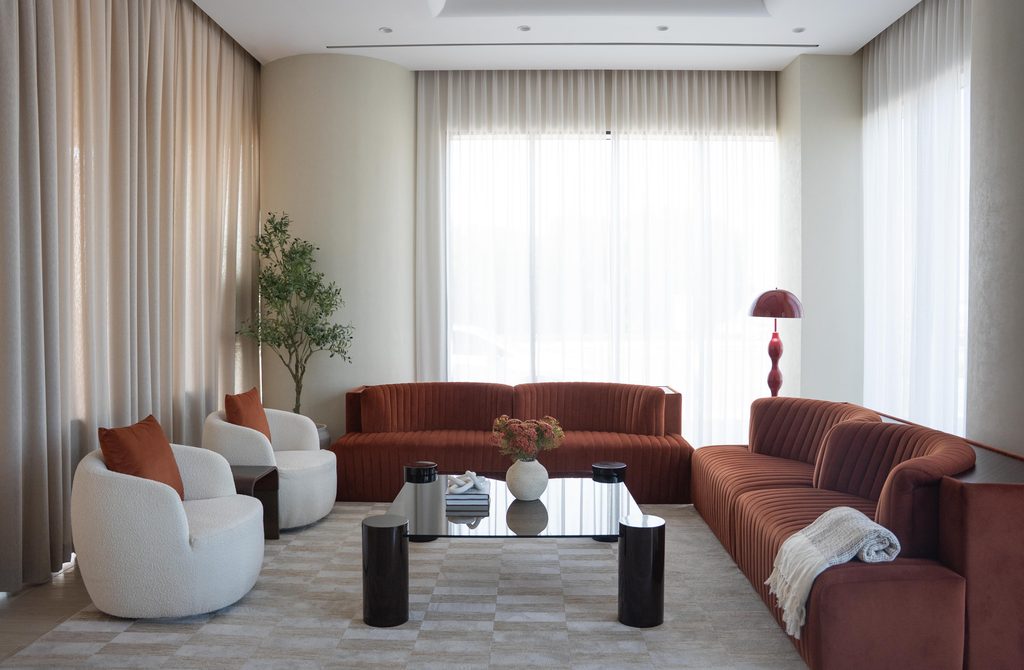
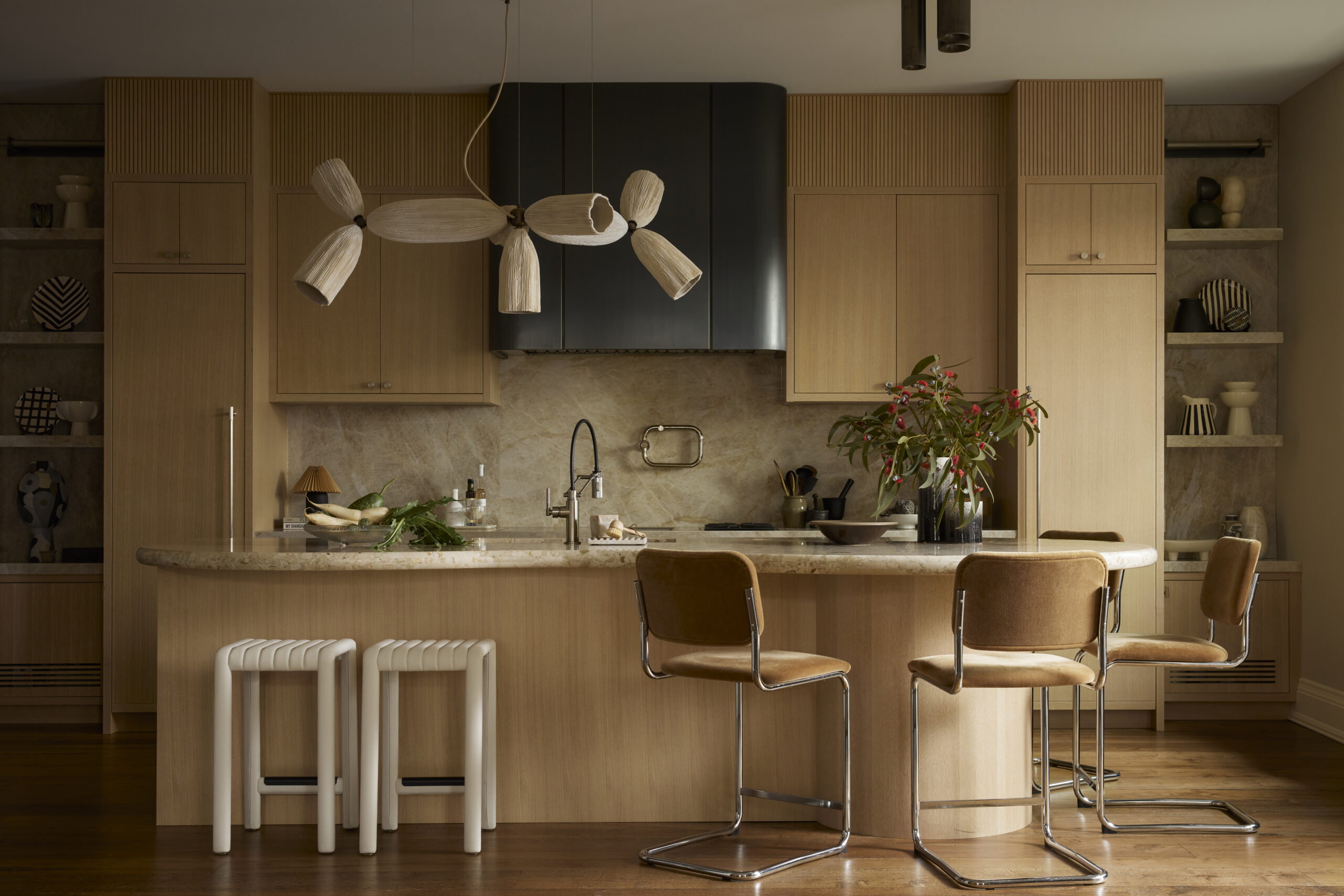
The most prominent element is a burgundy marble kitchen island incorporating a dining table, transforming a functional surface into the architectural centrepiece of the apartment. “The marble kitchen island best represents my design approach in this project—combining material richness with a bold visual statement while remaining fully integrated into the space,” says Kerdi.
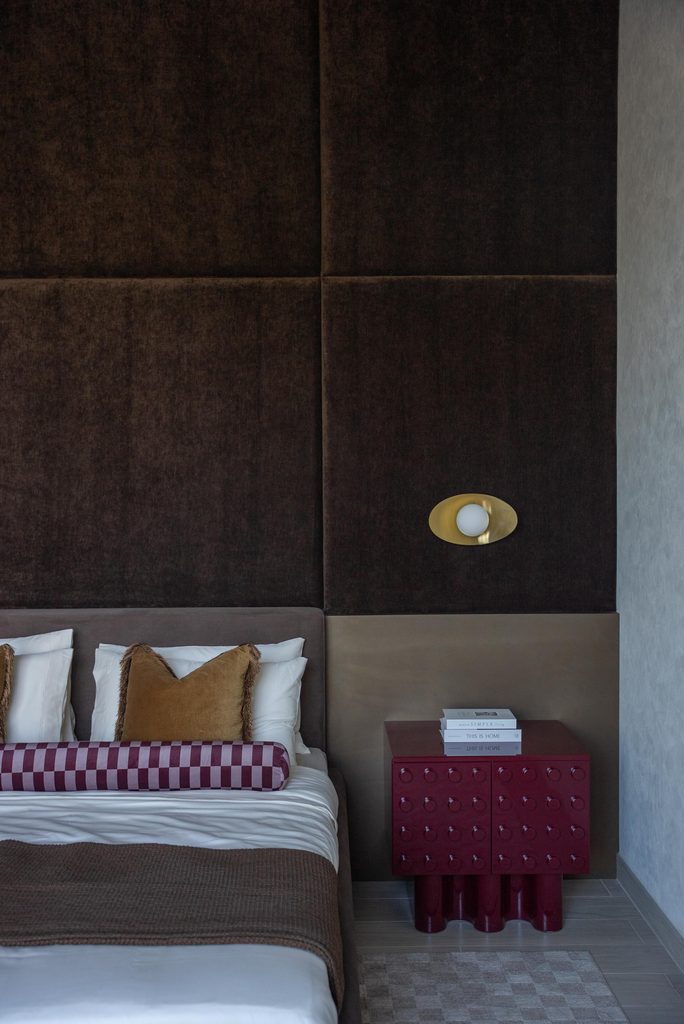
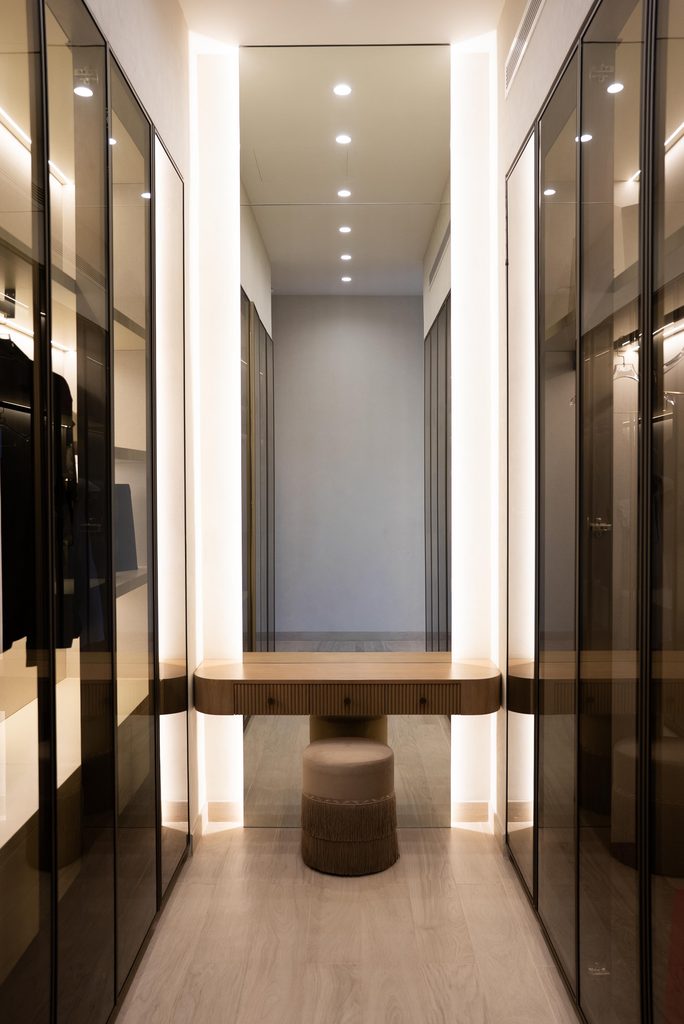
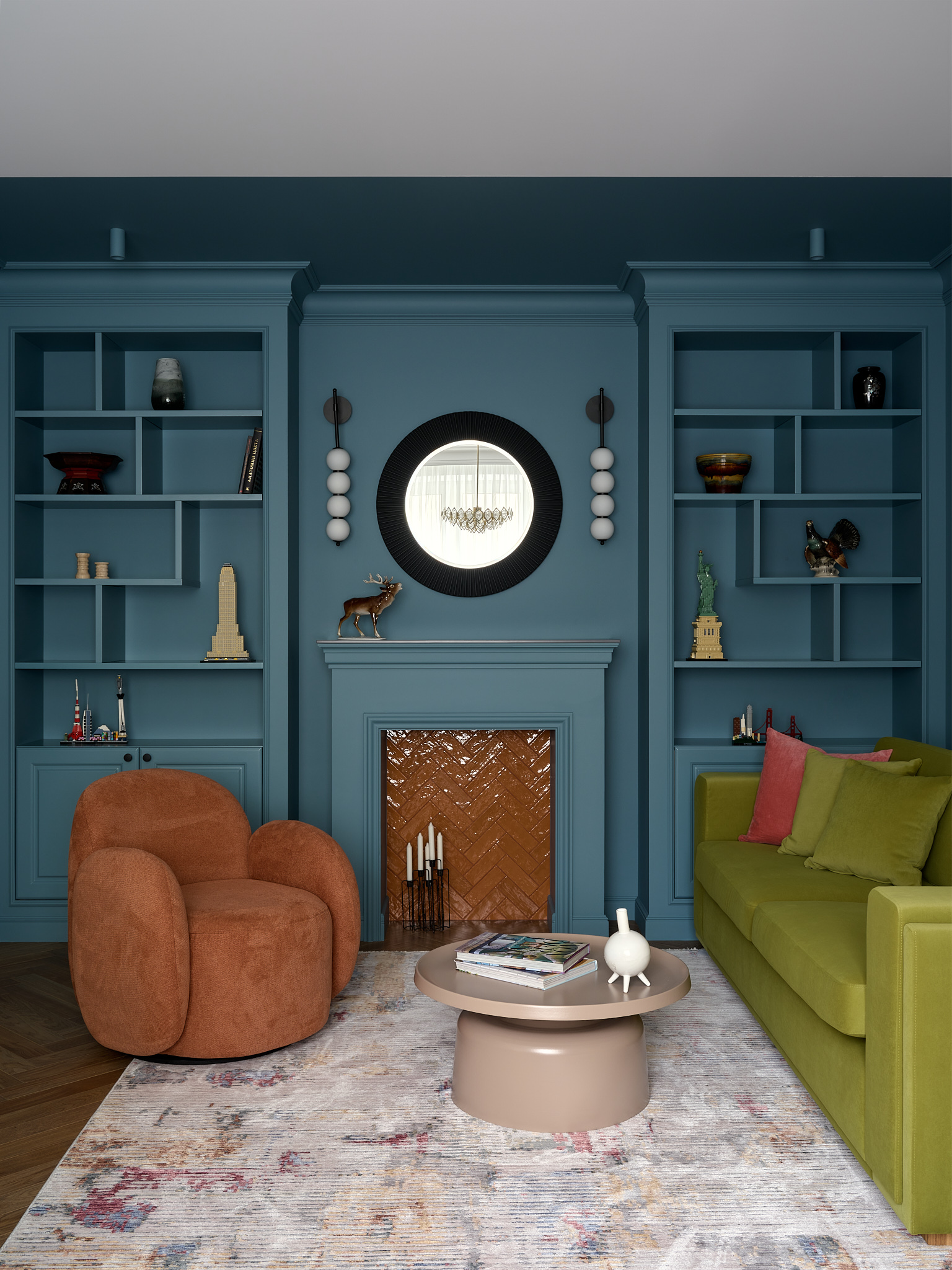
Against a foundation of warm beige and natural tones, accents of burgundy and caramel introduce depth, while wood, velvet and Omani marble contribute distinct tactile qualities. Sculptural armchairs upholstered in custom checker-pattern fabric provide a graphic counterpoint to the more restrained architectural surfaces.
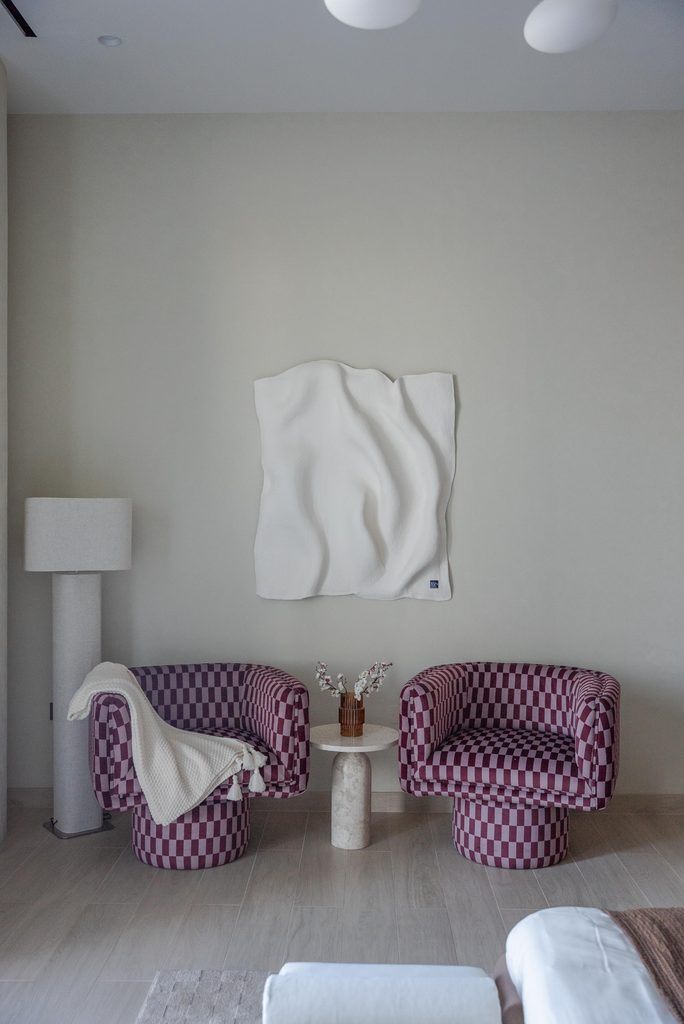
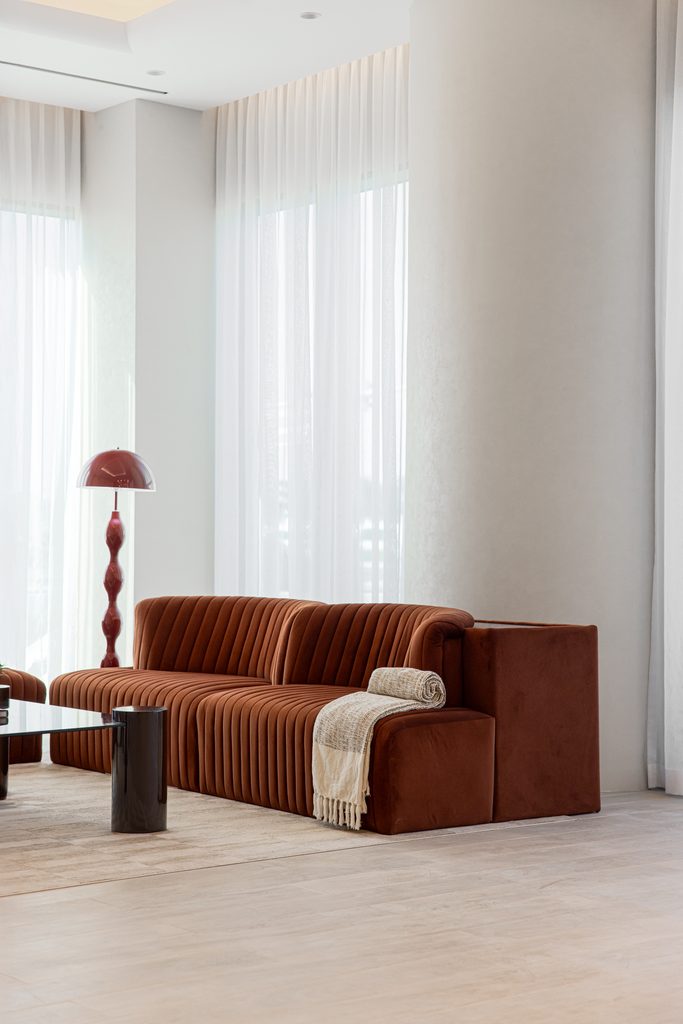
Approximately 95 per cent of the furniture was designed specifically for the residence and manufactured locally, demonstrating the importance of bespoke production in establishing a coherent interior. Among the pieces is a sofa whose proportions and detailing reference the refined design vocabulary associated with Hermès, reinterpreted rather than reproduced.
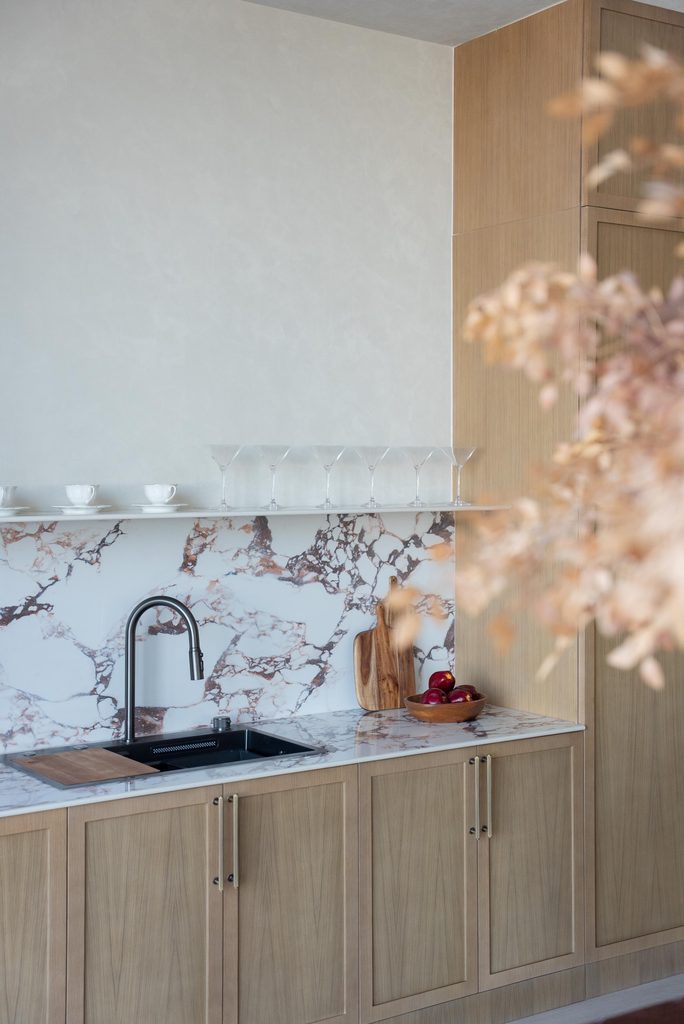
For Kerdi, the significance of the project lies in its balance between local identity and an international design language. The use of Omani stone establishes a material connection to place, while the furniture and spatial composition remain distinctly contemporary.
Rather than presenting regional influence as decoration, the apartment demonstrates how a sense of place can emerge through material choices and craftsmanship, allowing the surrounding landscape to inform an interior without determining its aesthetic.