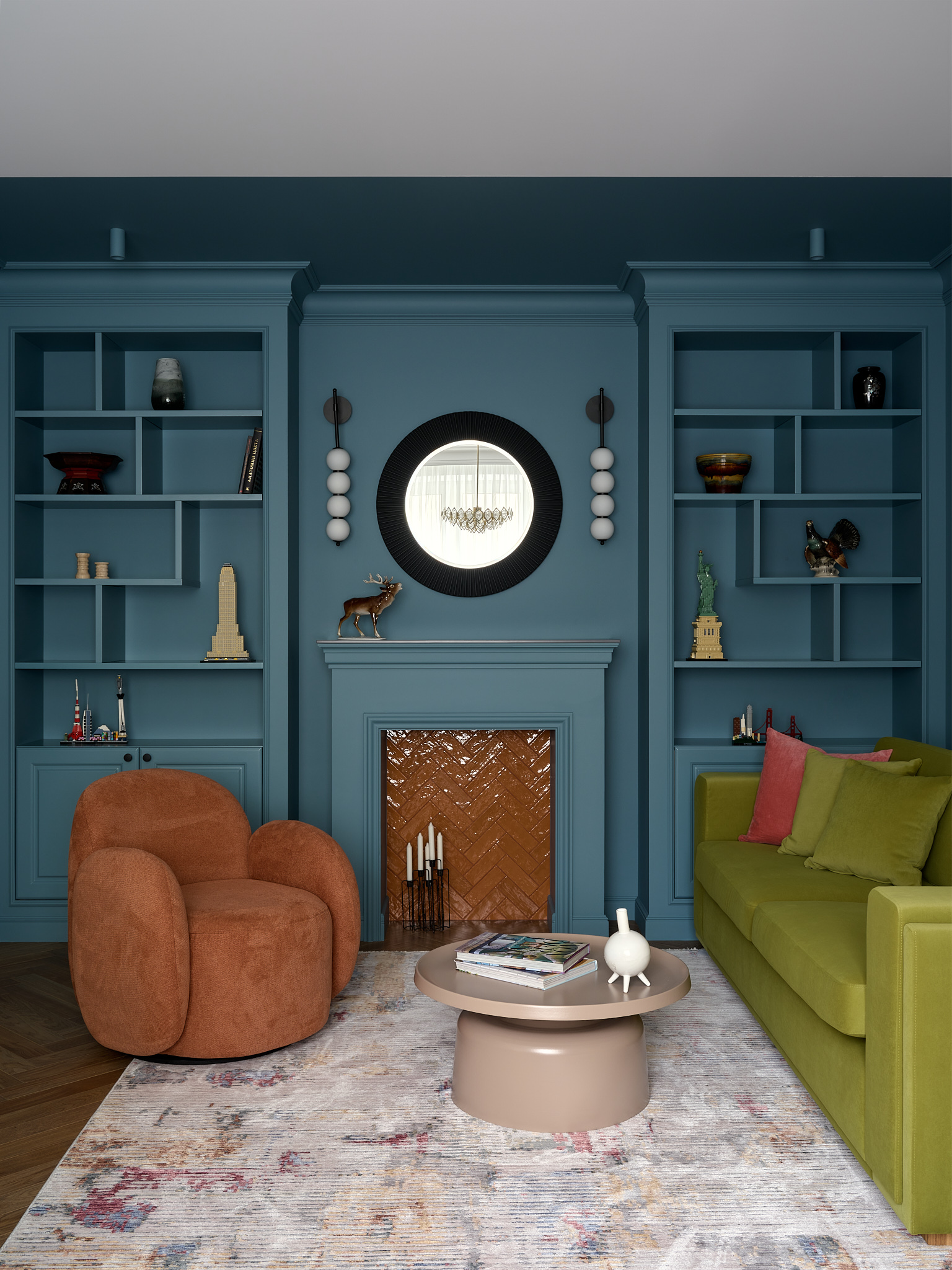
What makes a home truly personal? Beyond the selection of furniture and materials, perhaps it is the objects that accumulate meaning over time, carrying memories that no new acquisition could reproduce. For designer Olga Tsurikova, this idea became the starting point for the transformation of a family apartment, where contemporary design and inherited pieces establish an intimate dialogue between generations.
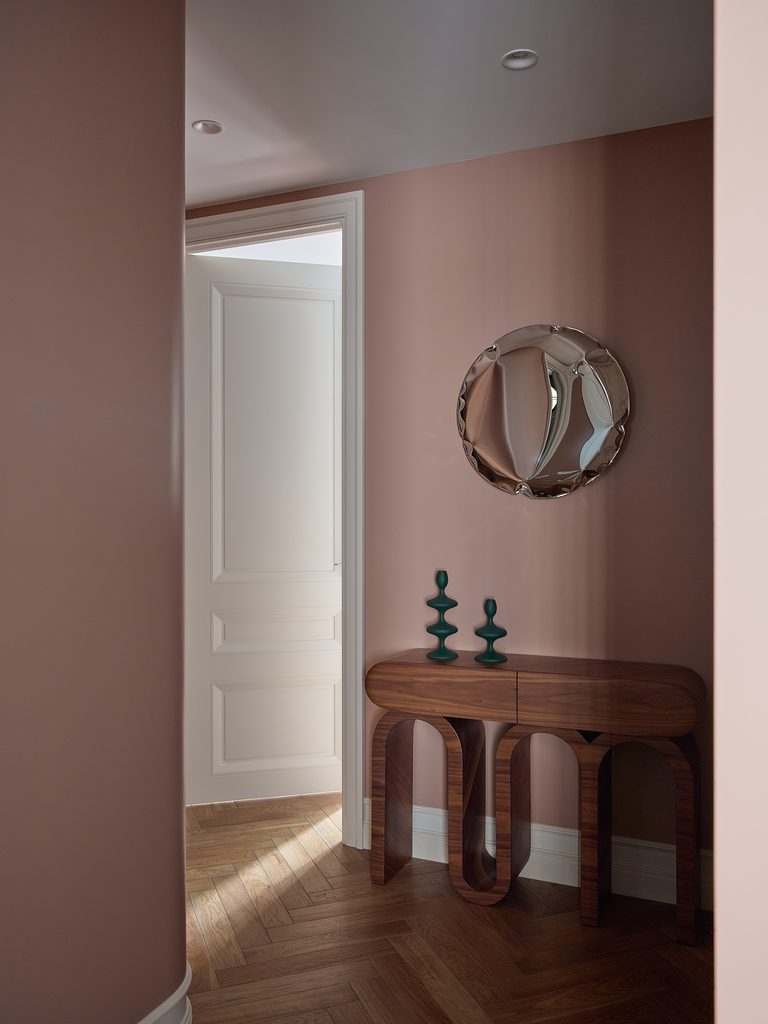
Rather than treating the renovation as an opportunity for complete reinvention, Tsurikova approached the existing interior as a collection of stories worth preserving. A Czech chandelier inherited from the homeowner’s grandmother, a childhood bookcase and a 1960s sideboard were given renewed significance within an entirely reconfigured spatial arrangement.
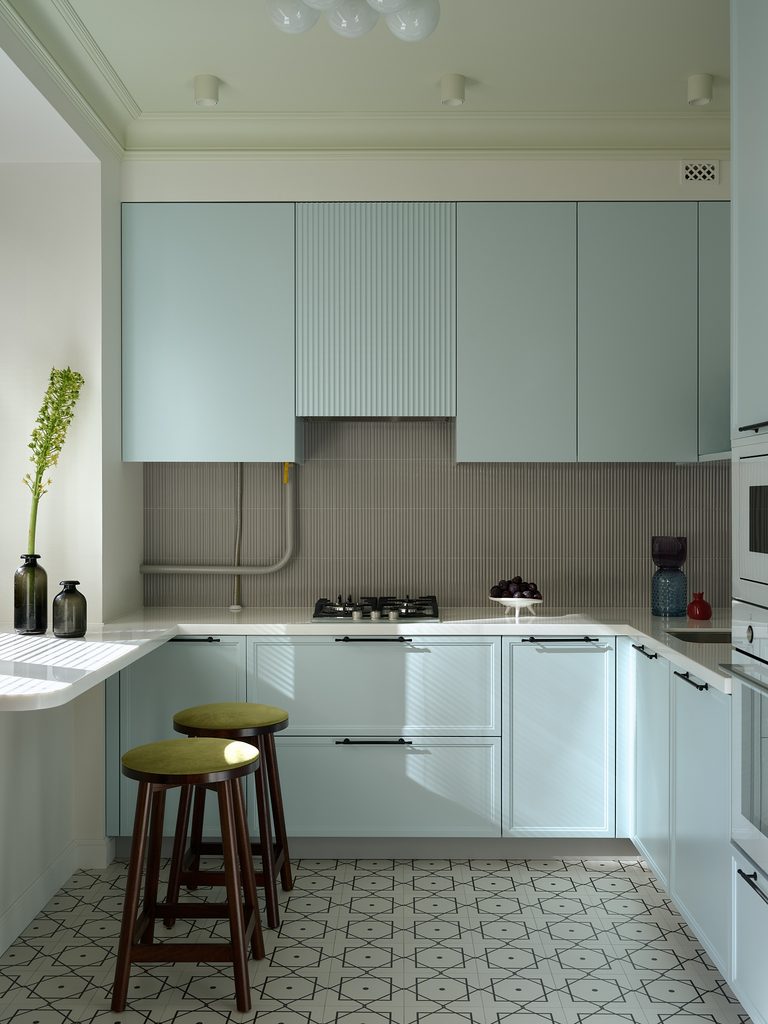
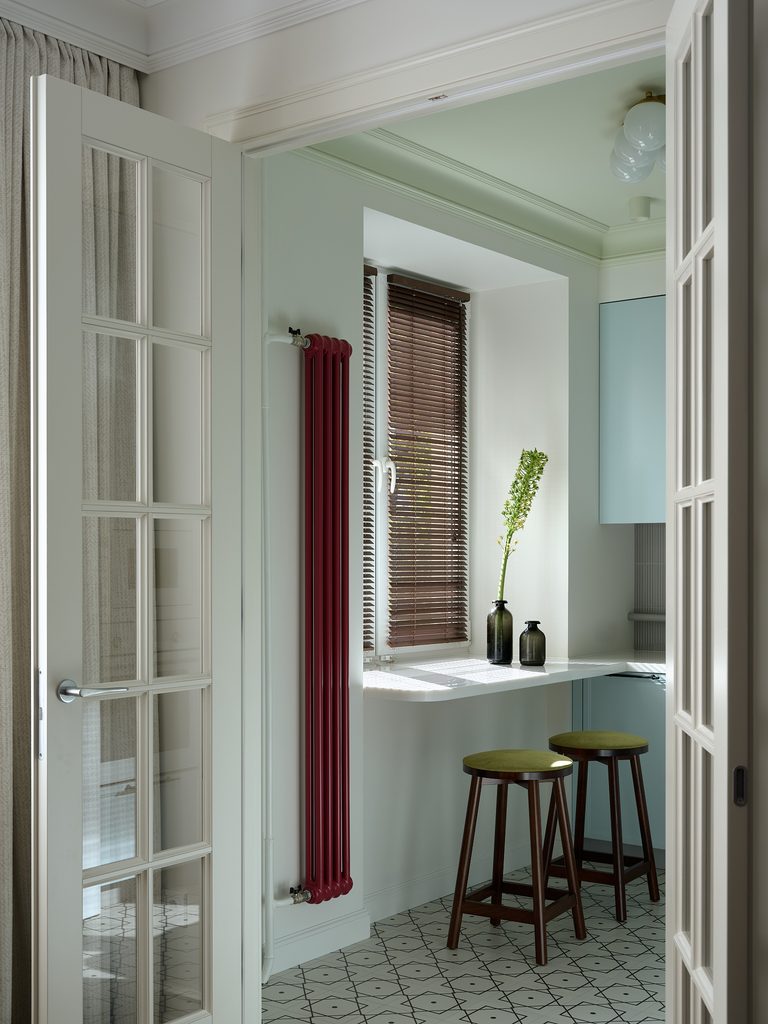
The most substantial architectural intervention involved reorganising the relationship between the kitchen and living room, creating a more fluid sequence of spaces. In the kitchen, a countertop extends into the windowsill, while a circular window and raspberry-red radiator introduce unexpected geometric and chromatic accents. Custom cabinetry in pale blue, complemented by a sage-green ceiling, establishes a distinctive palette that continues throughout the apartment.
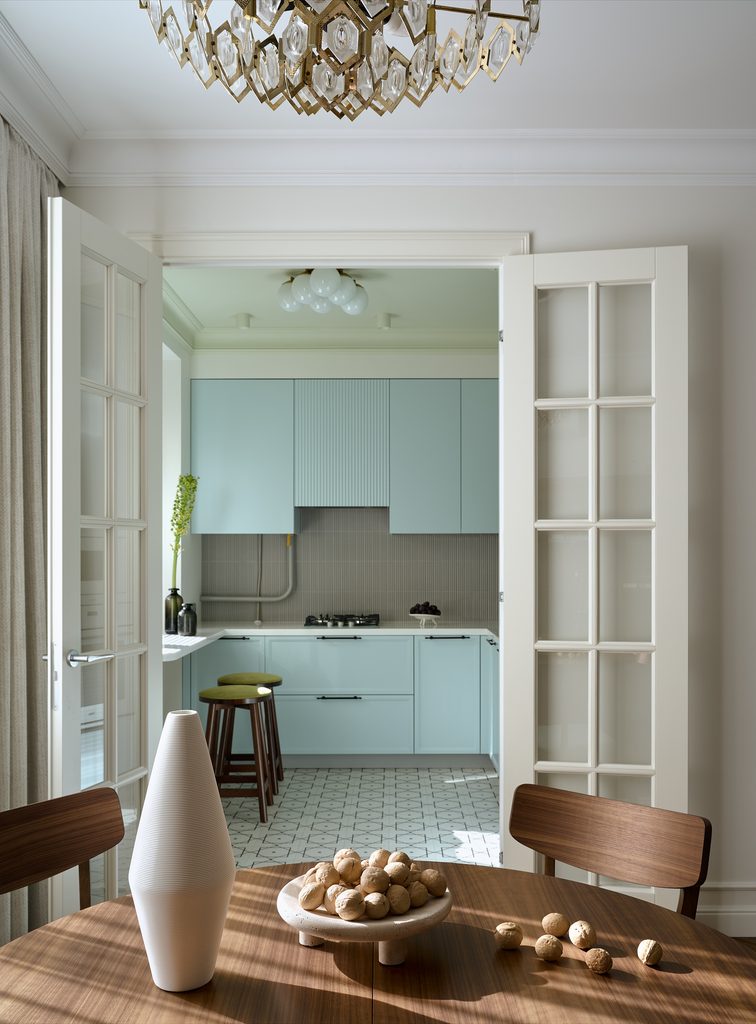
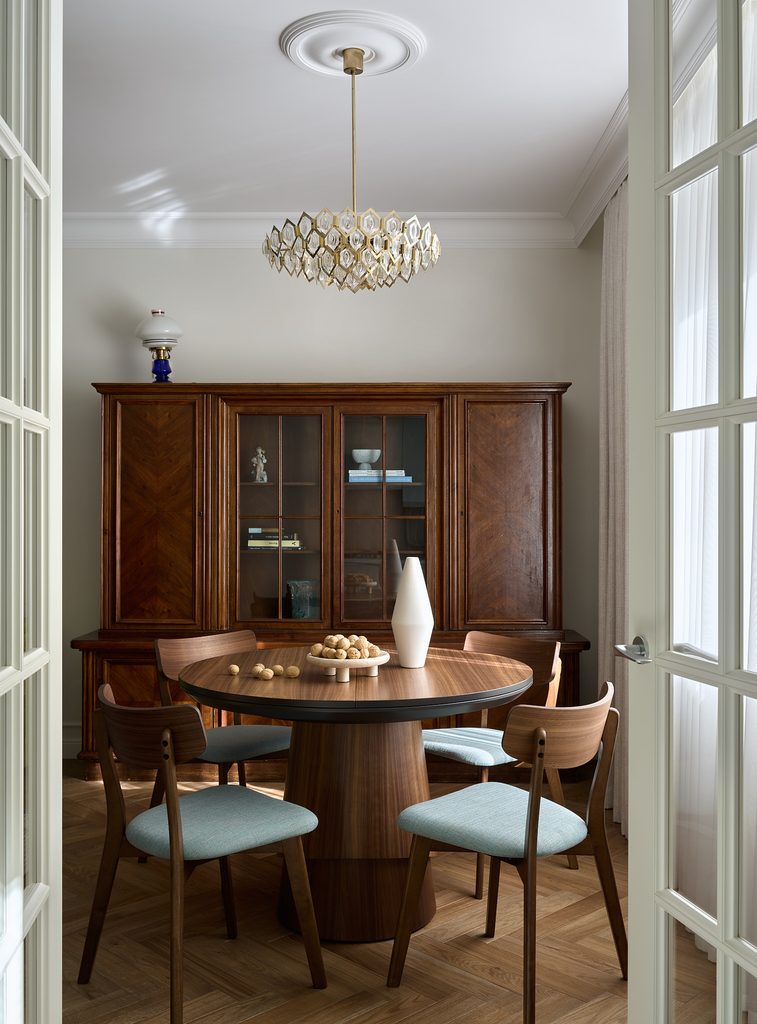
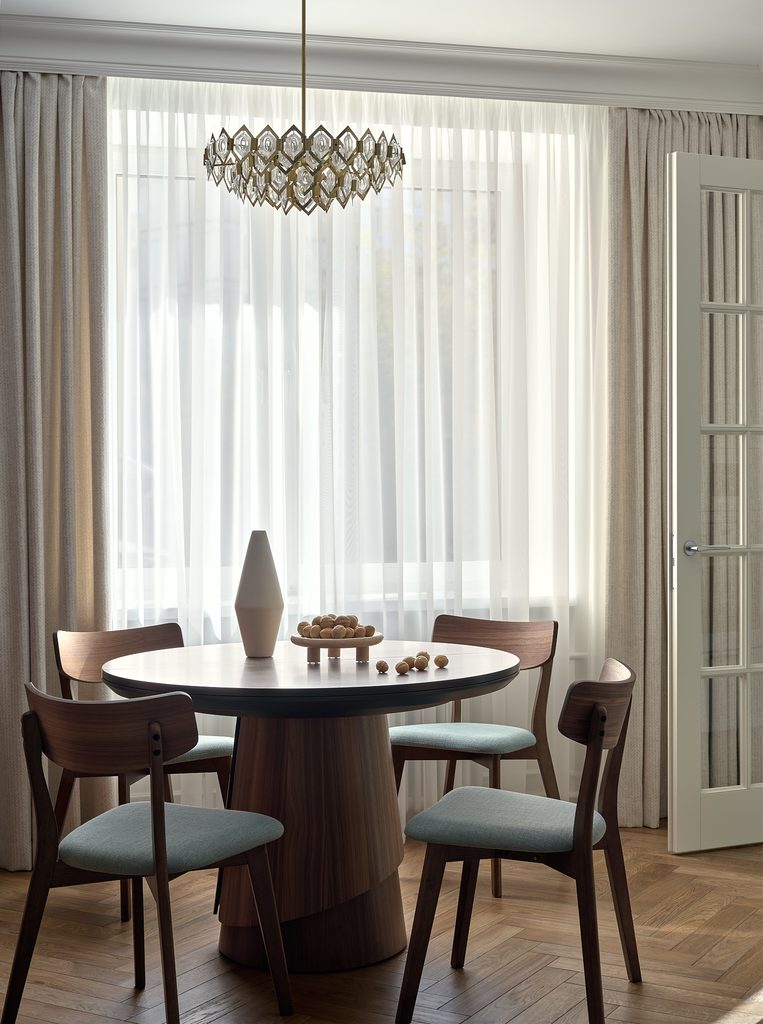
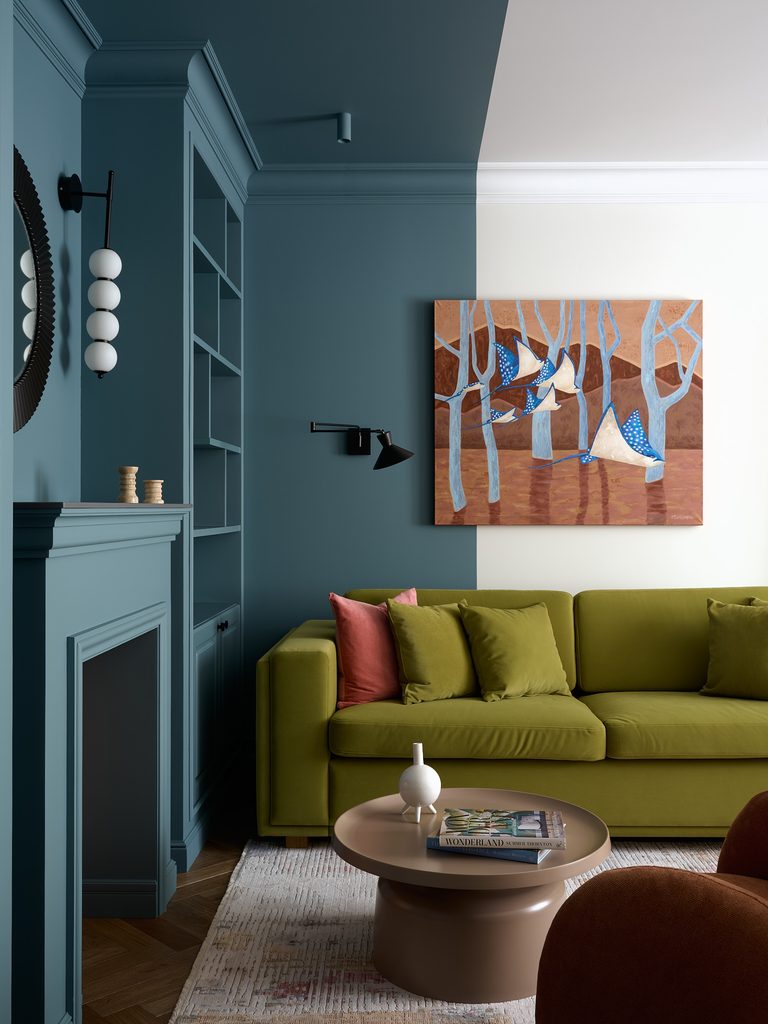
The living room brings together different periods of design. A vintage Kamenický Šenov chandelier, created by Jaroslav Bejvl Sr. and manufactured by Lustry n.p., remains in its original position, surrounded by contemporary pieces including the Collar Table by VOLOSHEK, chairs from La Redoute and a custom-designed green sofa. Marina Beresneva‘s painting Terracotta Lake introduces another layer of artistic expression.
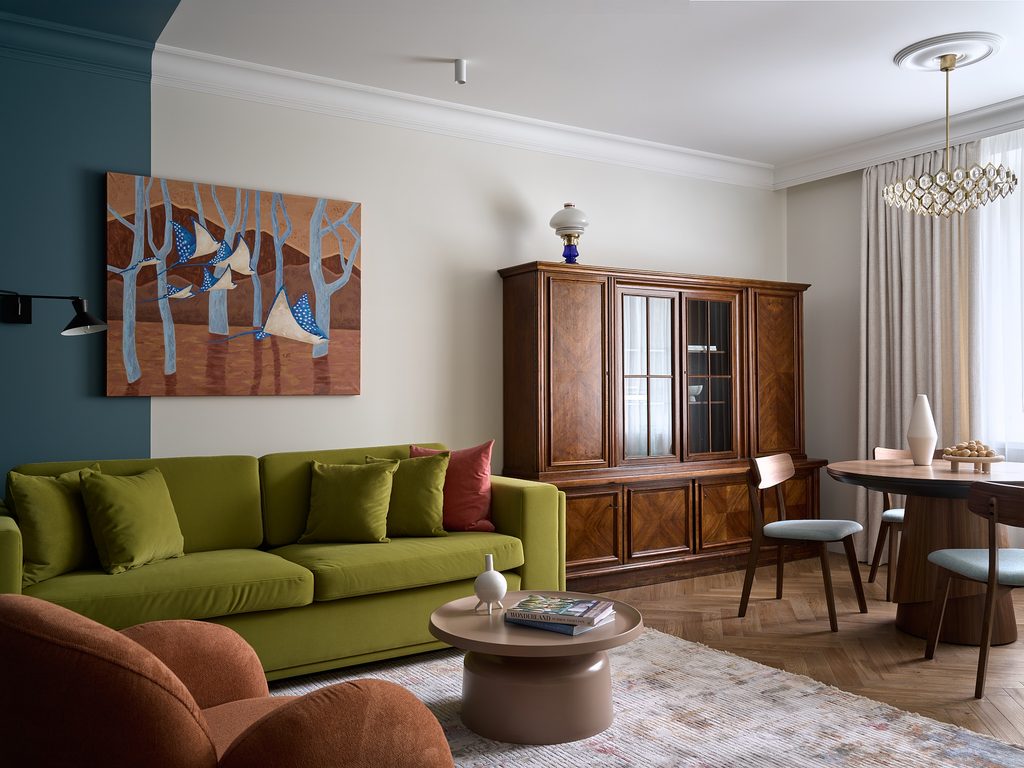
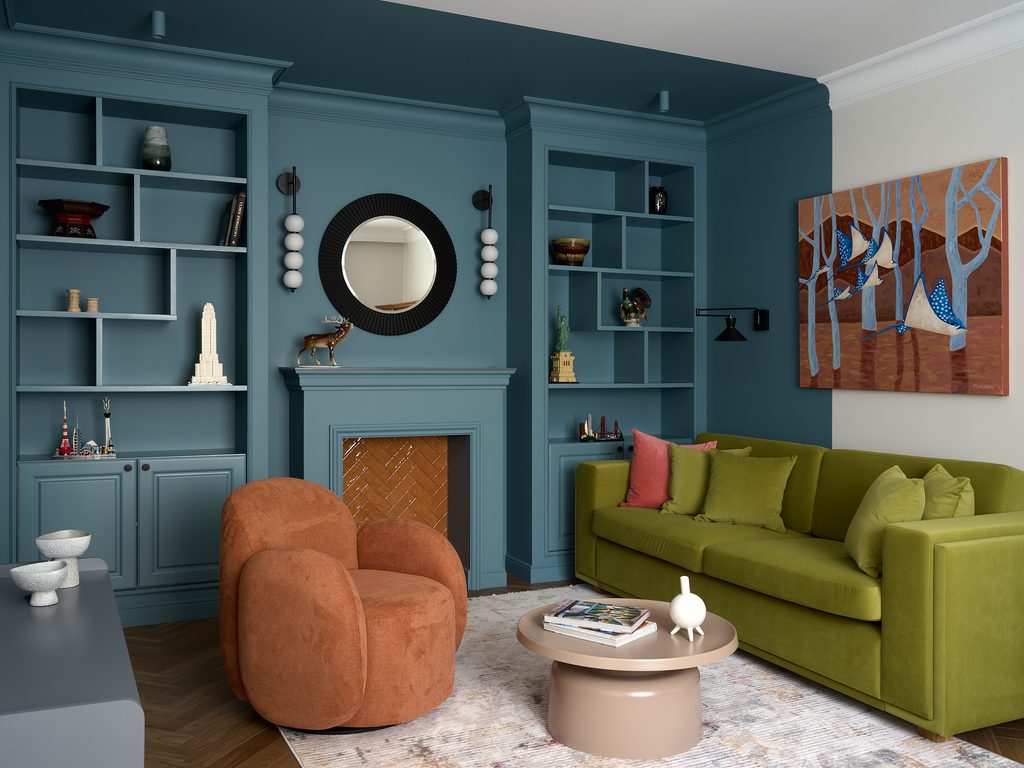
Elsewhere, the designer’s attention turns to the relationship between memory and function. In the bathroom, a family sideboard is transformed into a bespoke vanity, accompanied by Equipe tiles and glass blocks. The bedroom combines custom furniture with wallpaper from Respace, while a constellation of recessed ceiling lights introduces a subtle poetic dimension.
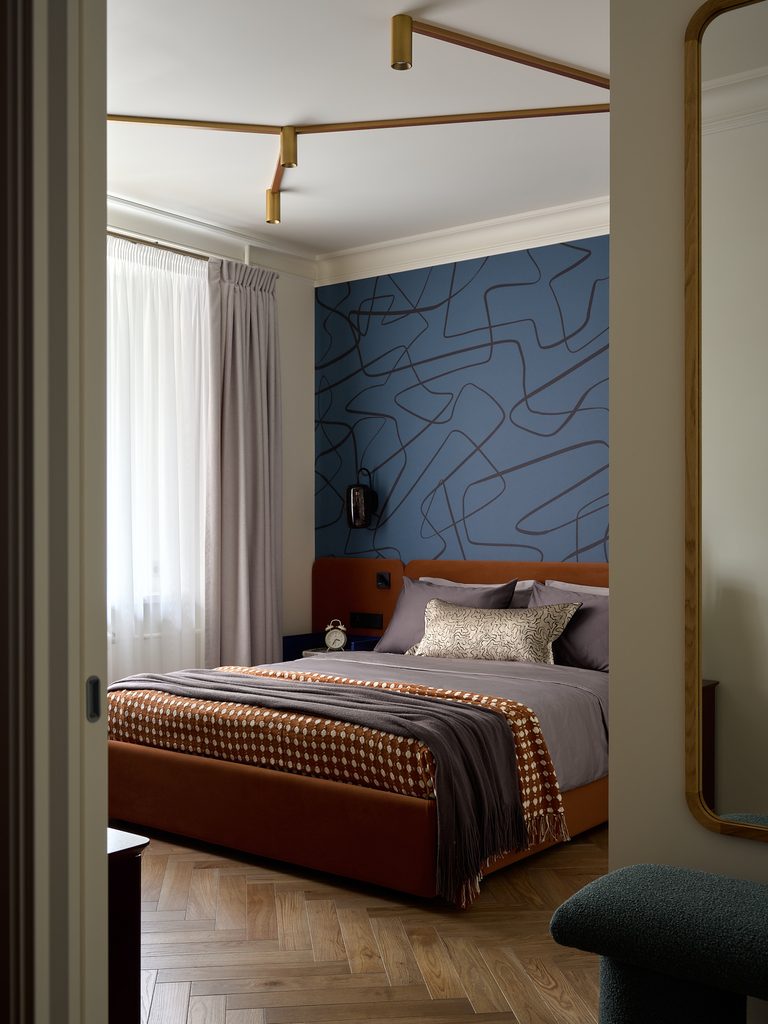
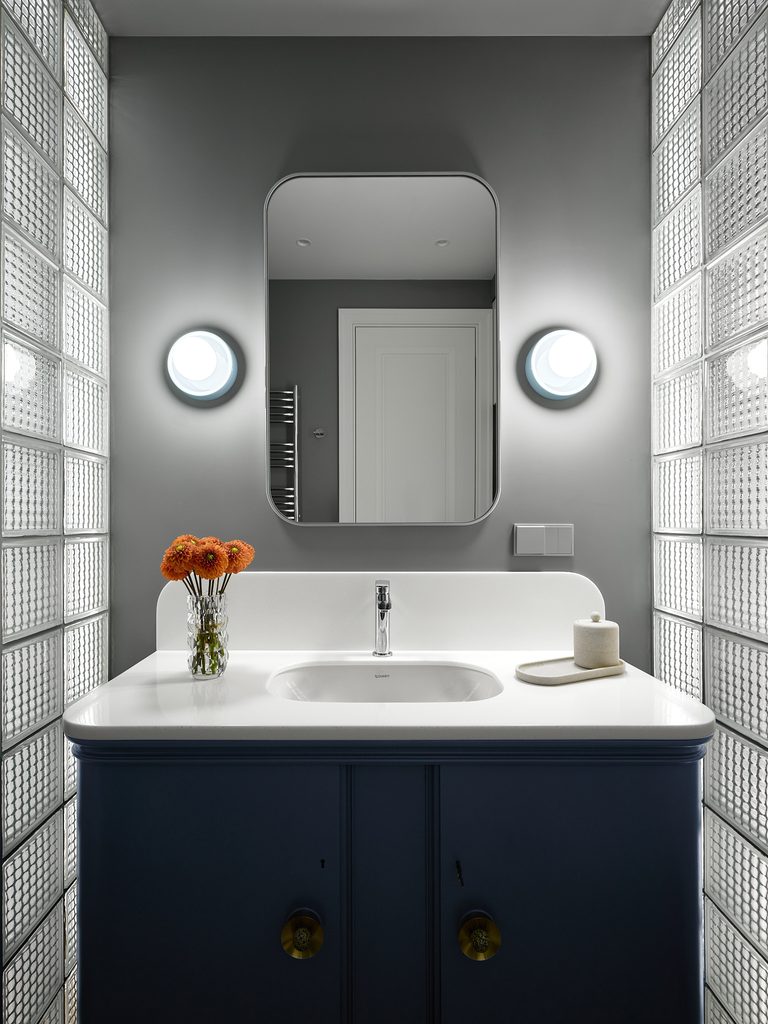
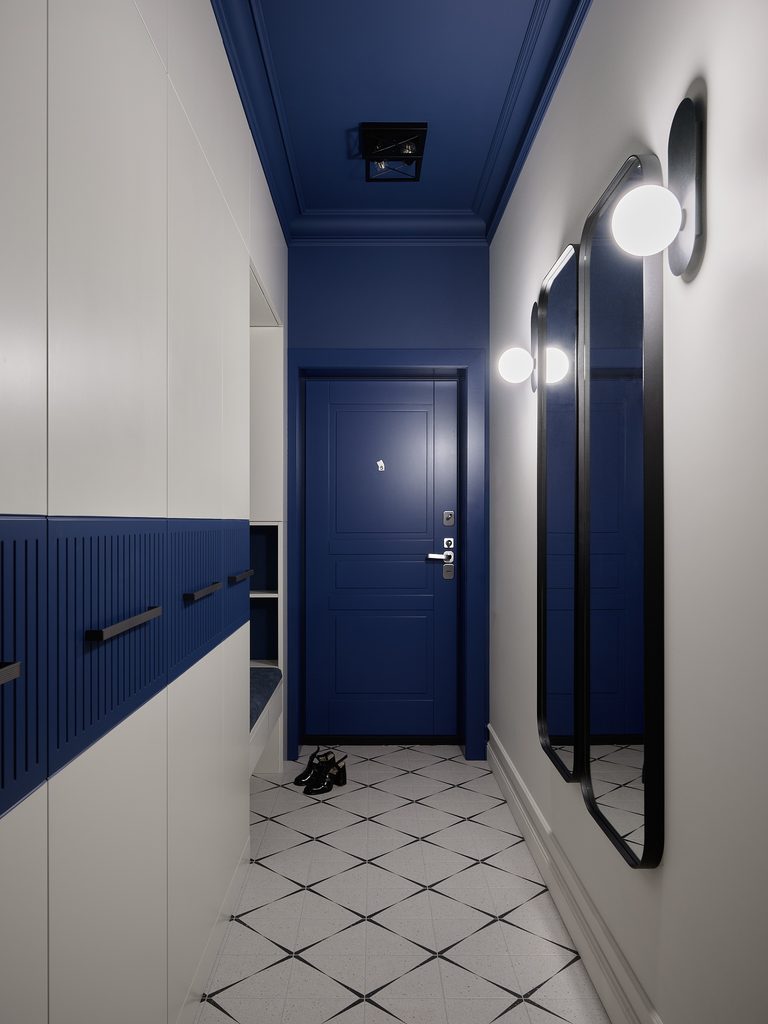
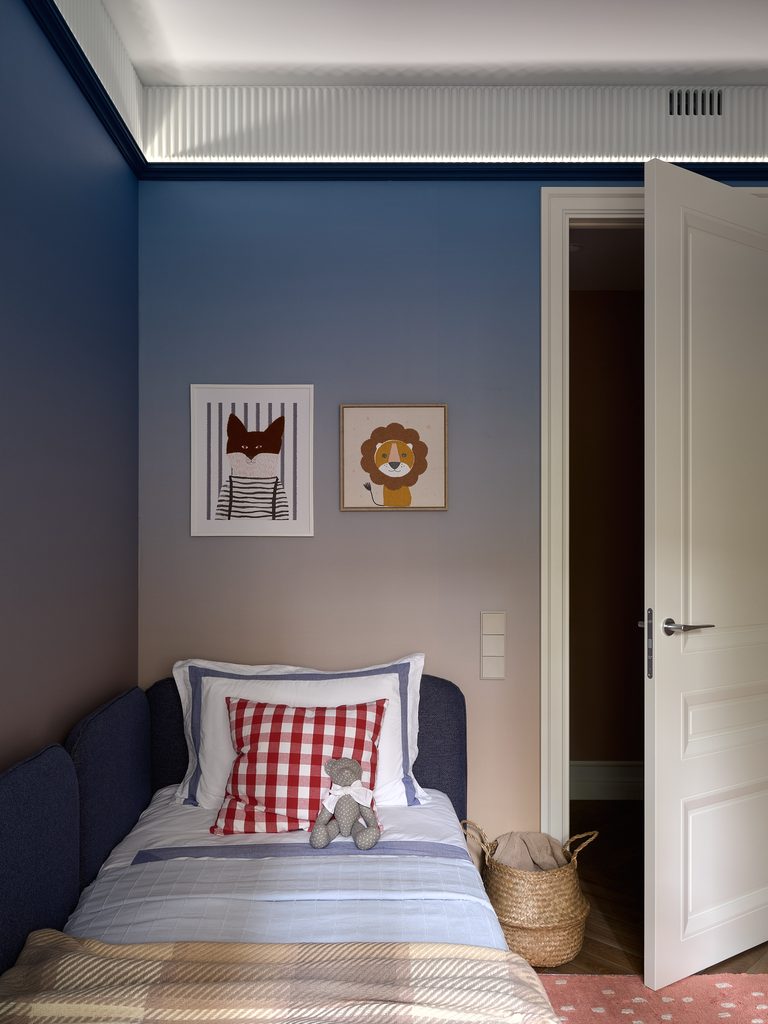
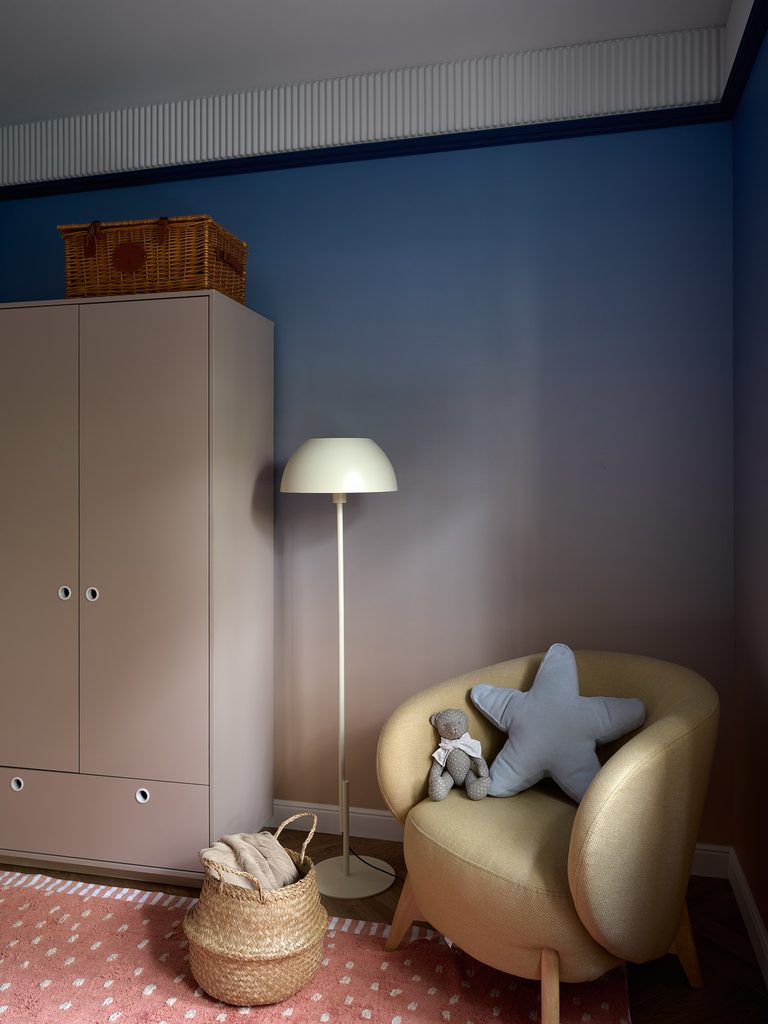
Throughout the residence, rounded corners, rhythmic vertical lines and carefully calibrated colours create continuity without imposing uniformity. Even the children’s room, furnished with pieces from Divan.ru, is conceived to evolve rather than remain confined to a particular age.
Ultimately, Tsurikova’s project offers an alternative to the idea that contemporary interiors must begin with a blank canvas. Here, the most meaningful design decisions emerge from what already existed, demonstrating how personal history can become an architectural resource rather than something to leave behind.