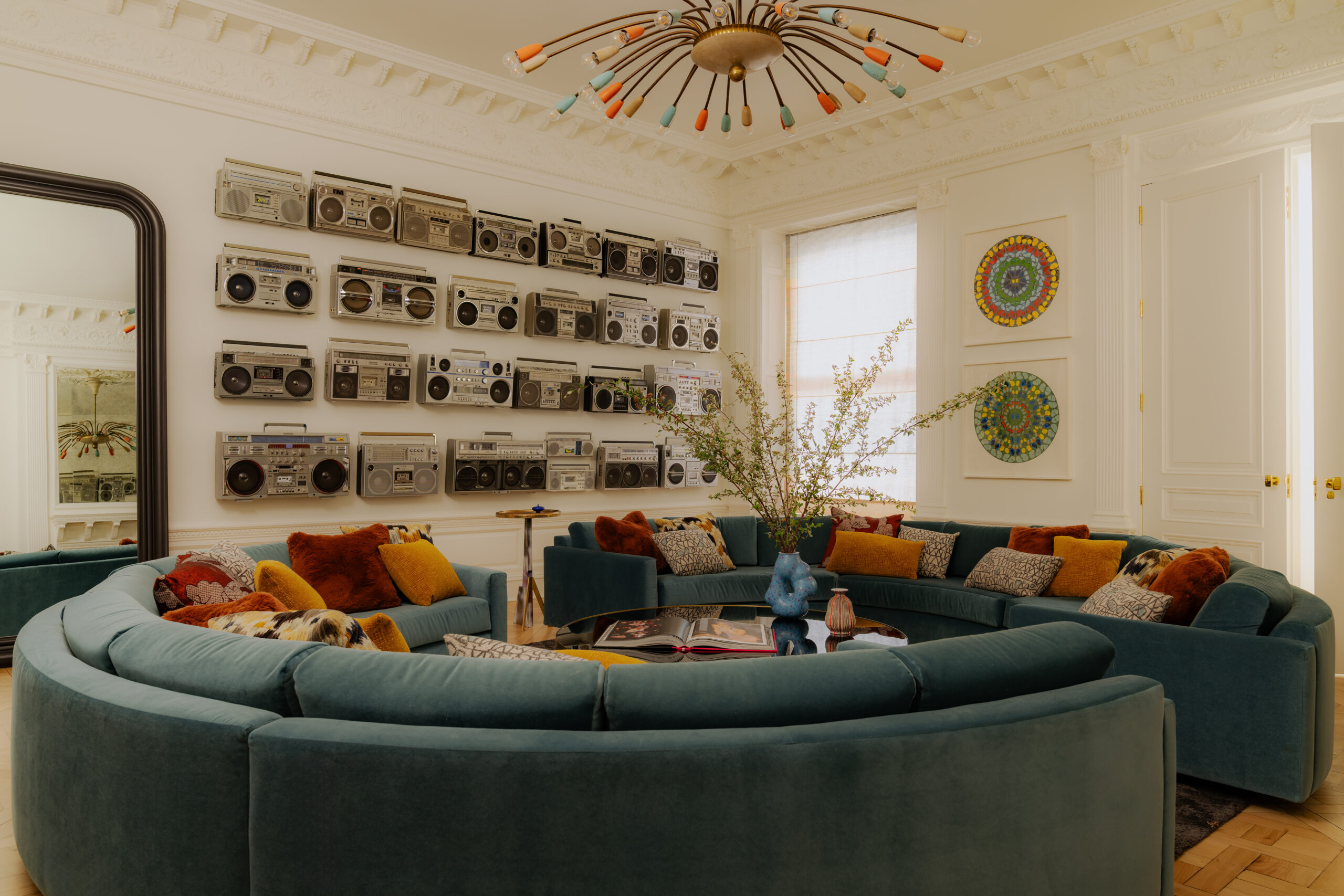
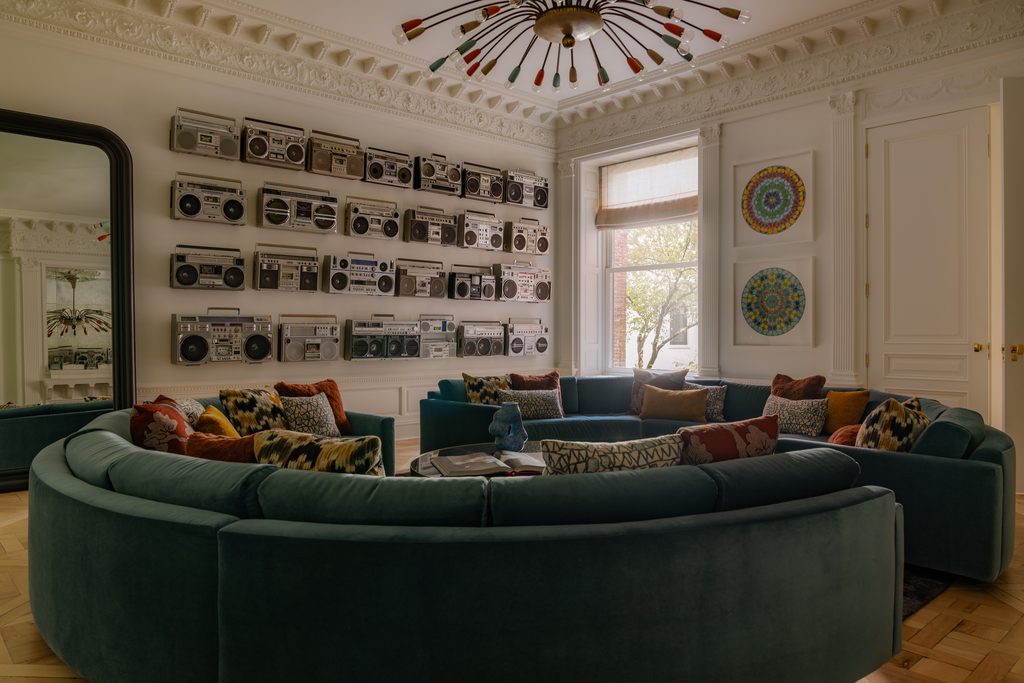
A wall of 26 vintage boom boxes is not what one might expect to encounter inside a grand nineteenth century New York townhouse. Yet in the Upper West Side home of Tony and Grammy Award winning performer Patina Miller, venture capitalist David Mars and their daughter Emerson Harper, it makes perfect sense. Conceived by interior design studio Evan Edward, the installation celebrates Mars’s lifelong passion for hip hop while offering an introduction to a home where personal history and collectible design coexist.
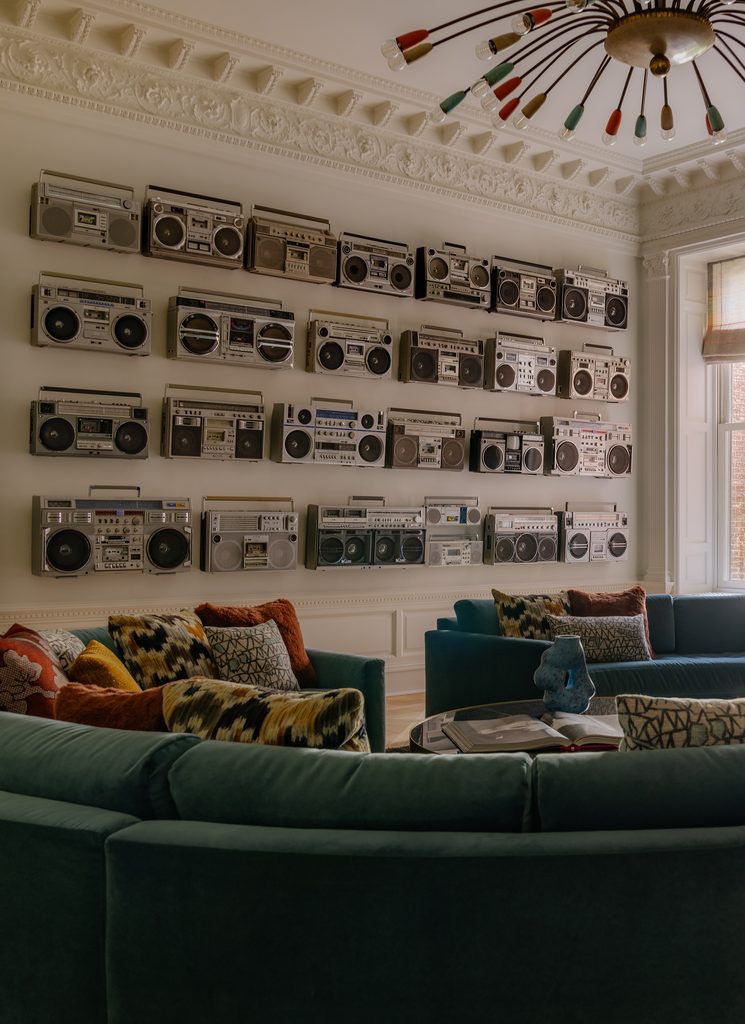
“That wall could really only exist in David and Patina’s house, which is exactly why we love it,” explain the designers. More than a decorative statement, the installation brings together nostalgia, humour and autobiography. “The best rooms tell you something about the people who live there.”
For Joshua Evan Goldfarb and Michael Edward Moirano, the principals of Evan Edward, this was familiar territory. Having previously designed the couple’s Chelsea apartment, they approached their second collaboration with an established understanding of their clients’ tastes and routines.
“That initial residence helped formulate a design dialogue rooted in prominent artwork, vintage design and lighting, and distinctive pieces with real artistic weight,” they explain. The townhouse offered an opportunity to develop that vocabulary while respecting its architectural heritage.
That established relationship also gave the designers greater creative freedom. With an understanding of how the family lives, they could introduce more ambitious ideas while preserving a sense of continuity between the two homes.
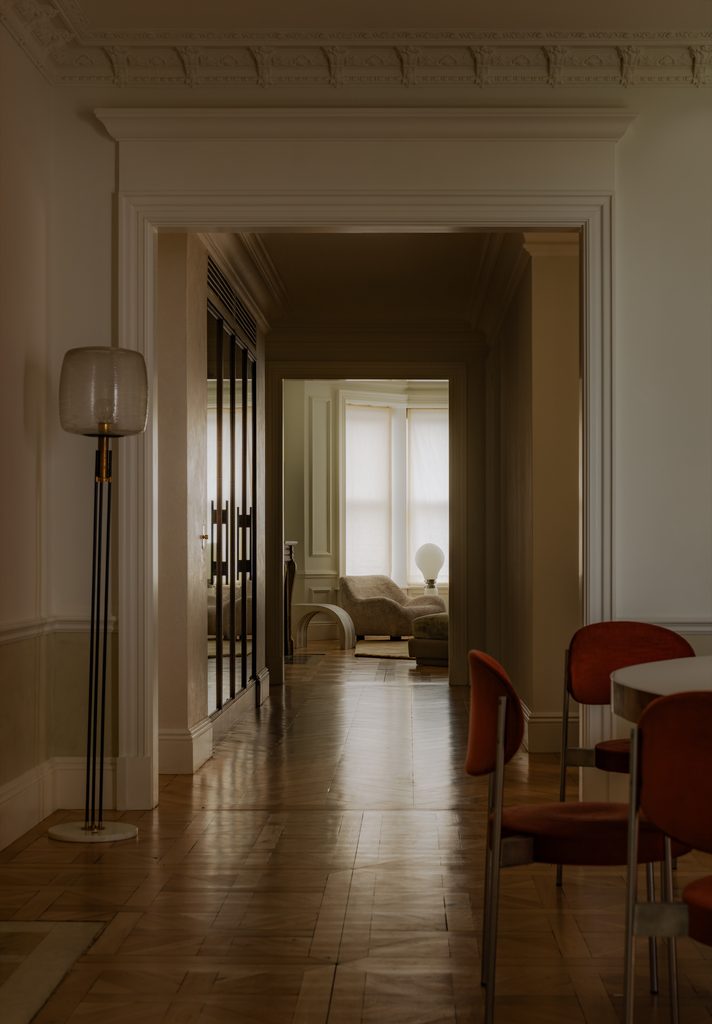
Dating from the American Gilded Age, the property retains its dramatic crown mouldings, grand archways and exceptional hand carved staircase. Rather than compete with these features, the designers introduced contemporary interventions that complement the original architecture.
“Our approach was to identify the elements that gave the townhouse its provenance and allow those to remain with pride, while being more assertive in areas where the architecture could support new ideas.”
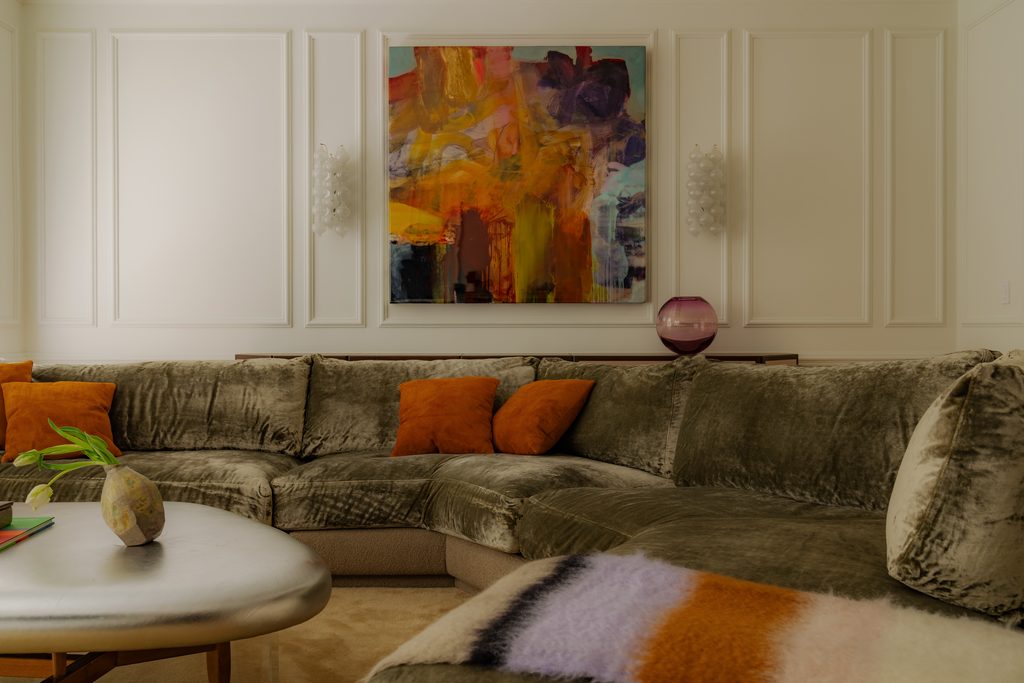
Their guiding principle was what Goldfarb describes as “high impact minimalism”, an approach in which disciplined editing allows individual objects to command attention without overwhelming their surroundings.
“Rather than overwhelming a space, a single extraordinary piece, whether a prominent work of art, dynamic vintage lighting, or beautifully veined marble, can convey far more depth than several understated elements.”
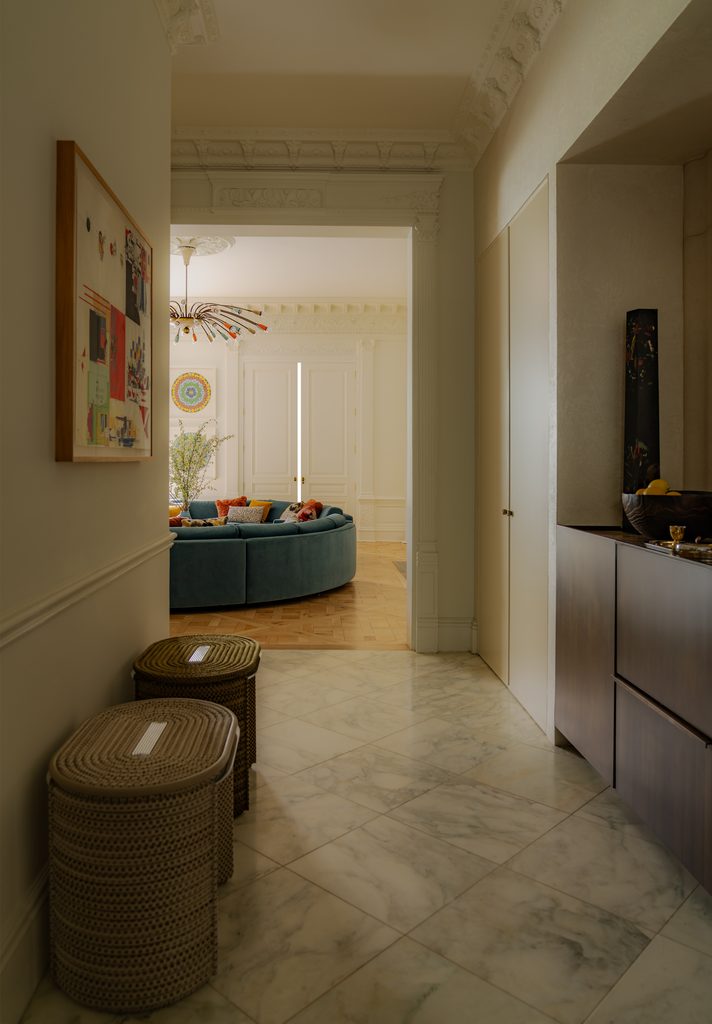
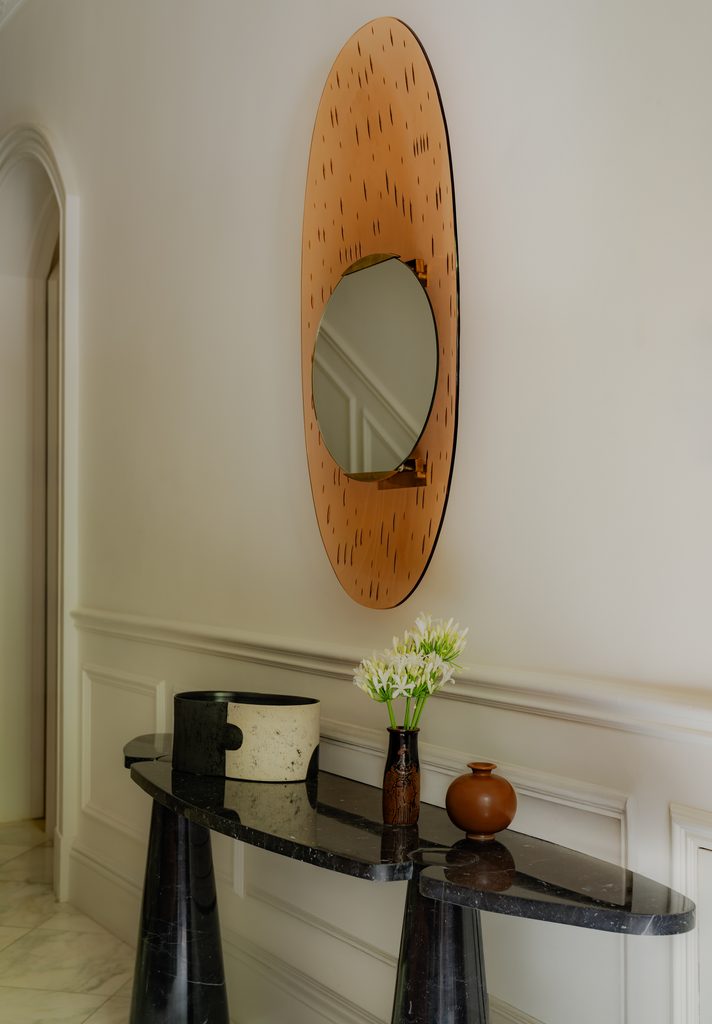
Nowhere is this more apparent than in the dining room. Against creamy white walls and original mouldings, a monumental bespoke Murano glass chandelier, composed of nearly 100 individually blown elements, becomes the room’s sculptural centrepiece.
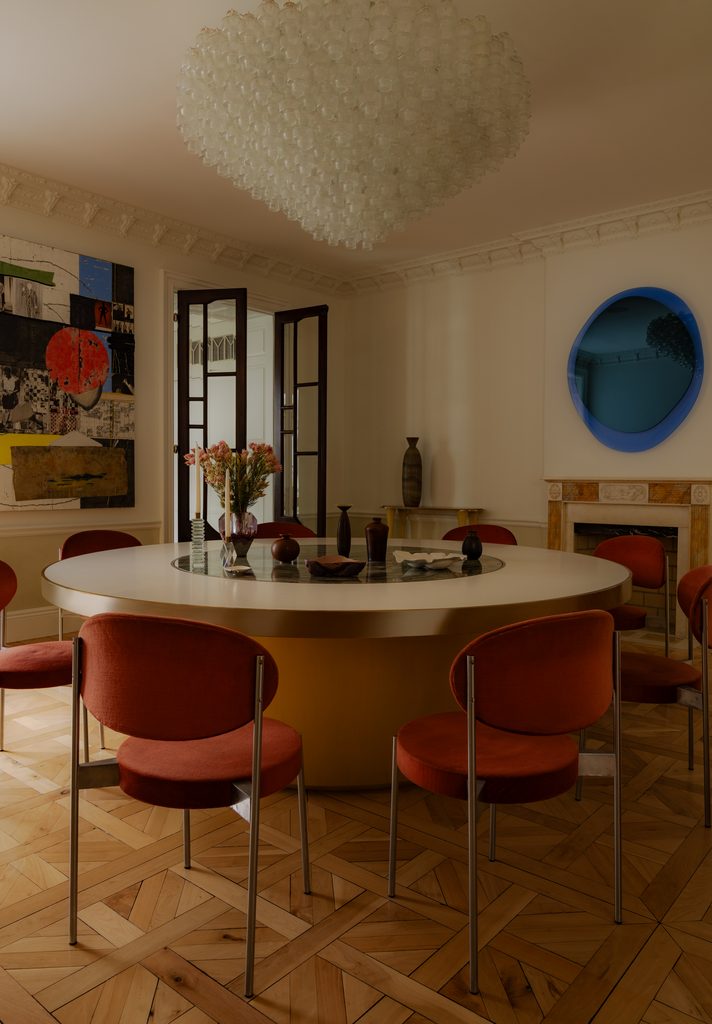
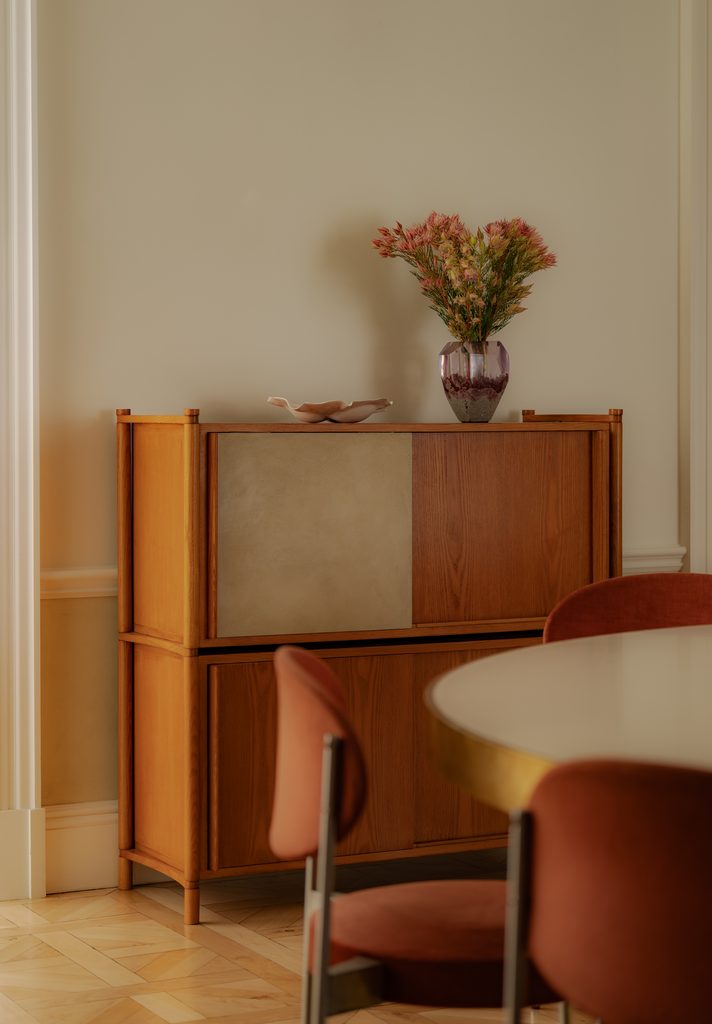
“We think about lighting almost as we would sculpture,” the designers explain. “Of course it has to illuminate a room properly, but it can also establish scale, create movement and completely change the way you experience the architecture.”
Interestingly, the chandelier’s monumental scale serves to emphasise rather than obscure the room’s original detailing. “From a distance the room is clean and composed, but the closer you look, the more detail you discover.”
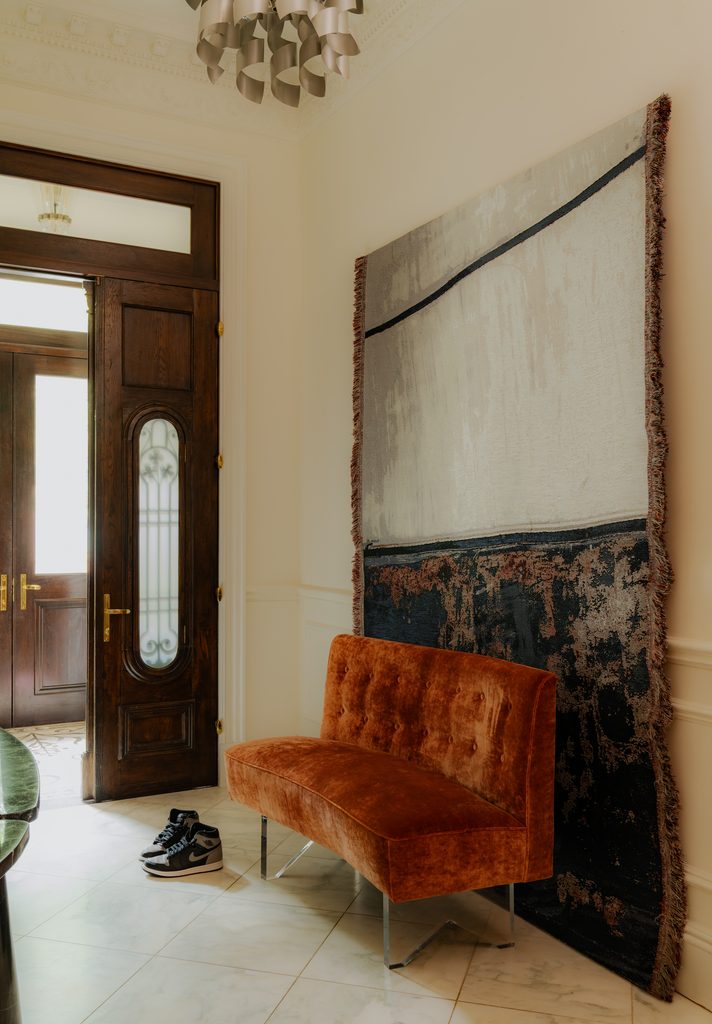
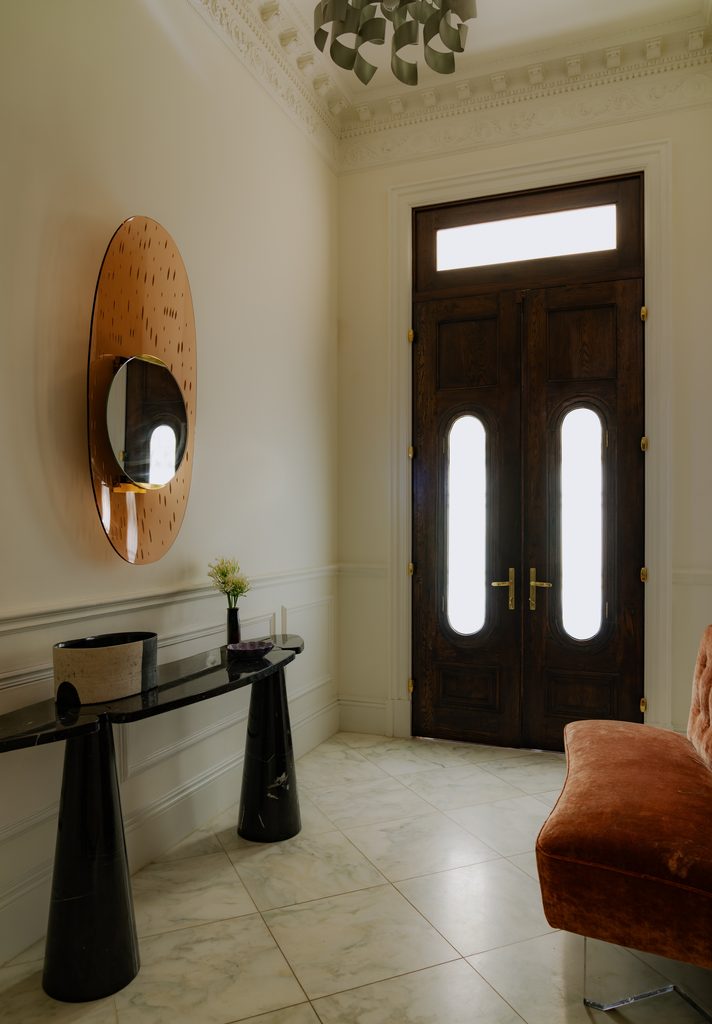
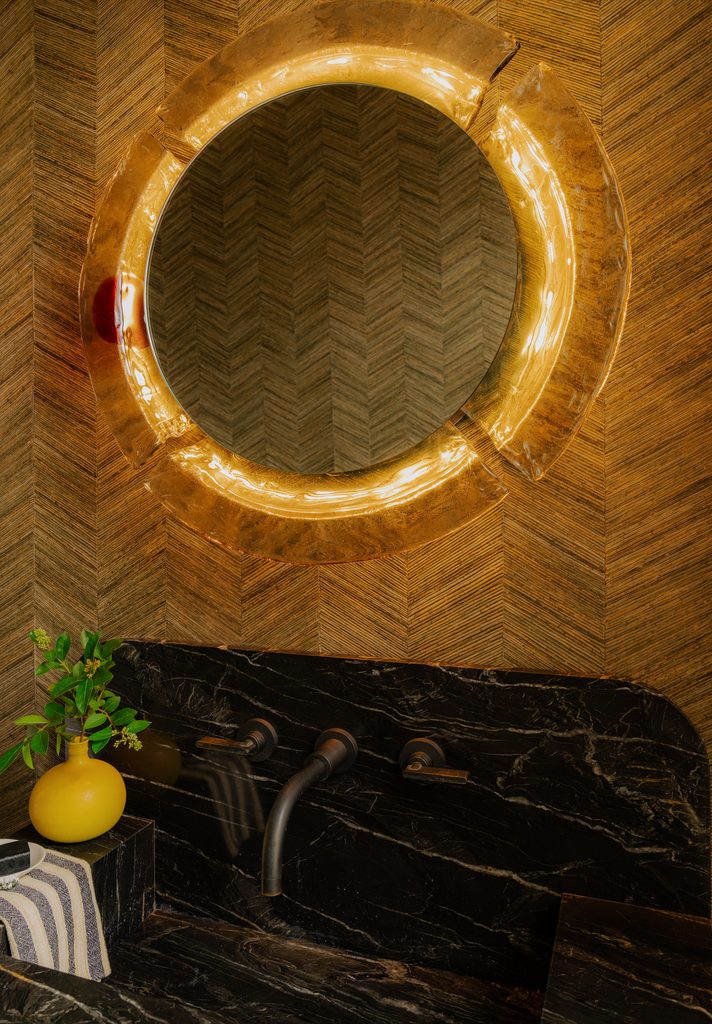
Materiality plays an equally important role. Calacatta Paonazzo marble, Byzantine pink onyx, bleached walnut and Murano glass introduce richness through contrasting textures rather than excessive ornamentation.
The designers are particularly interested in the relationship between contrasting finishes. Highly polished surfaces gain depth alongside tactile materials, while dramatic stone becomes unexpectedly inviting when paired with pale timber. The kitchen’s richly veined marble and the primary bathroom’s luminous pink onyx illustrate this approach. “For us, warmth does not necessarily mean softness or neutrality. It can come from variation and texture.”
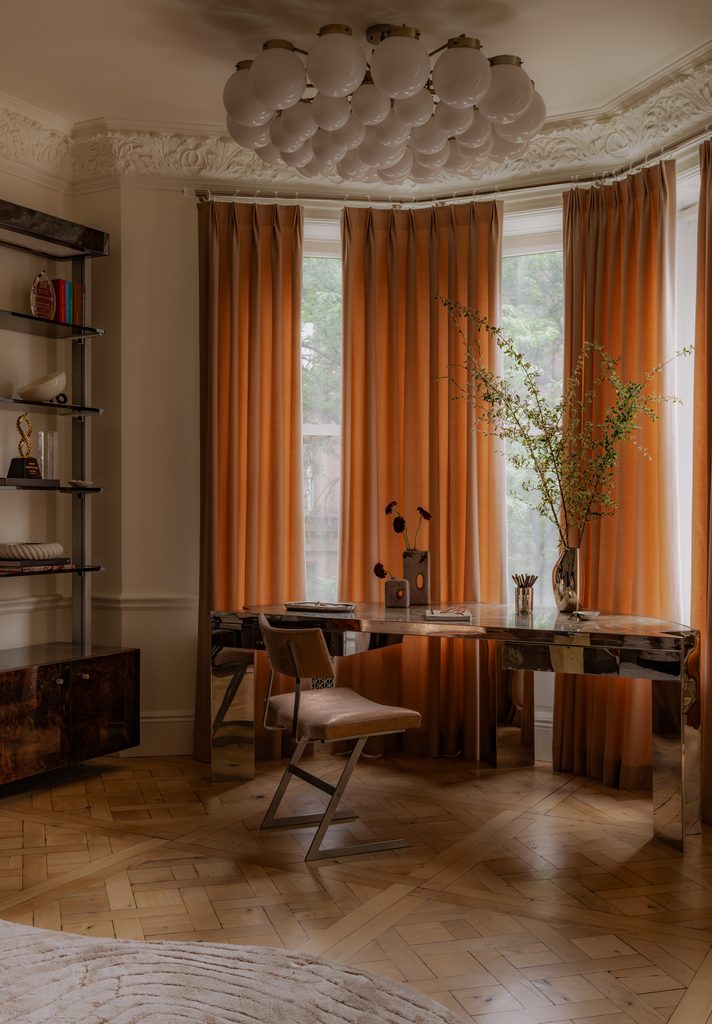
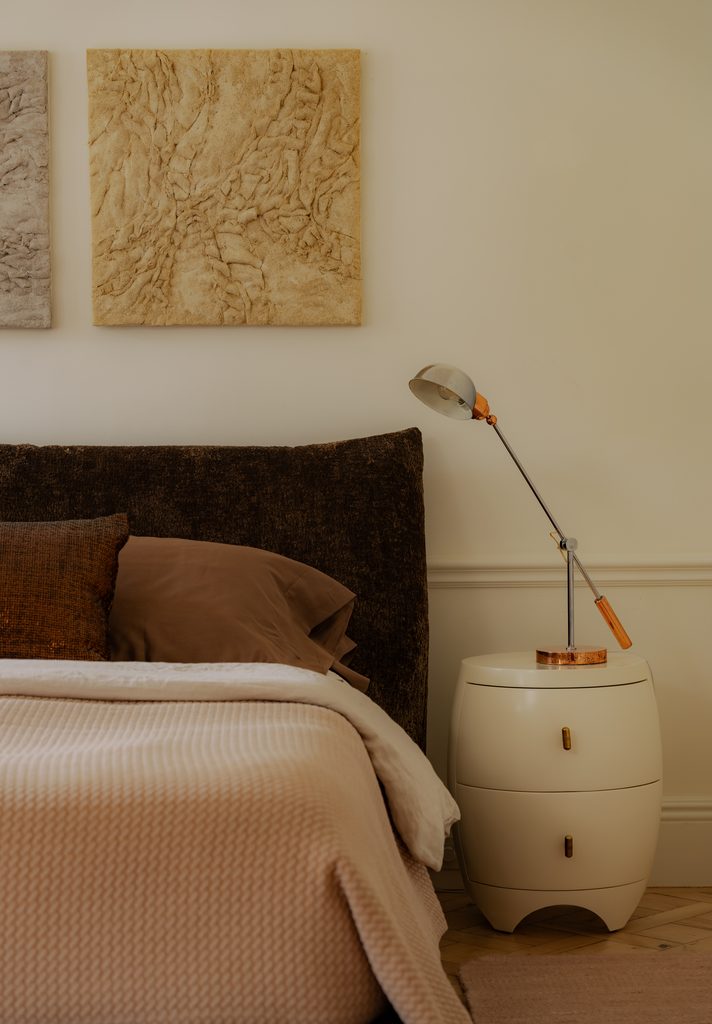
Upstairs, the atmosphere shifts. Smaller rooms have been combined to create an expansive primary suite inspired by a private Parisian apartment, complete with a boudoir, writing alcove and bathroom. The intention was to create something “glamorous, but also intimate and cocoon-like”, offering a quieter counterpoint to the more energetic communal spaces.
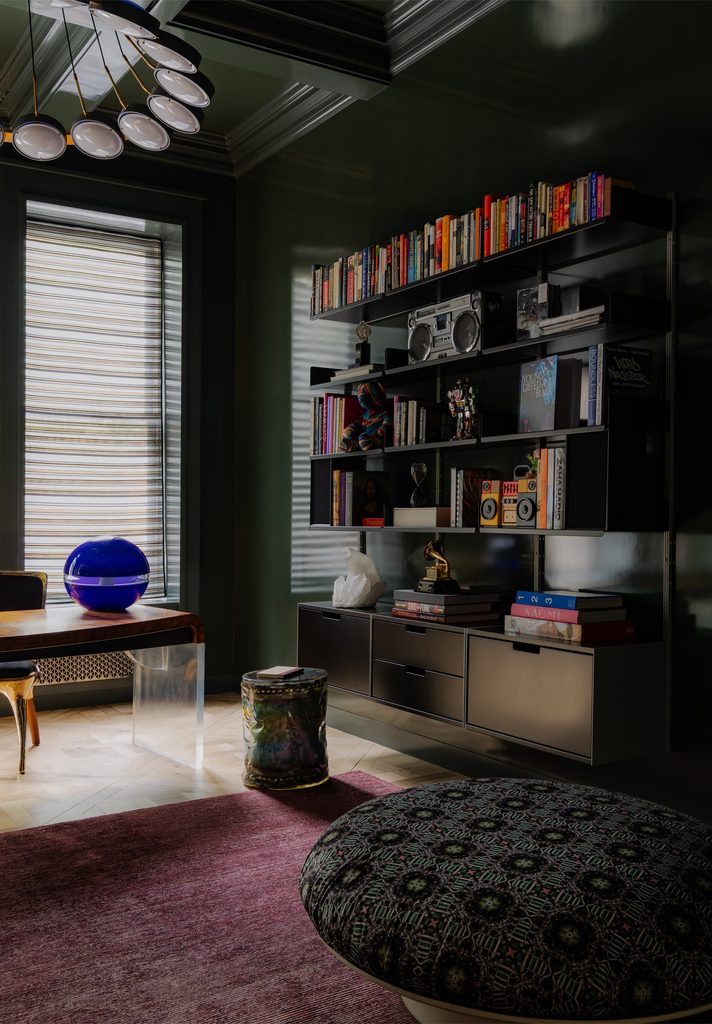
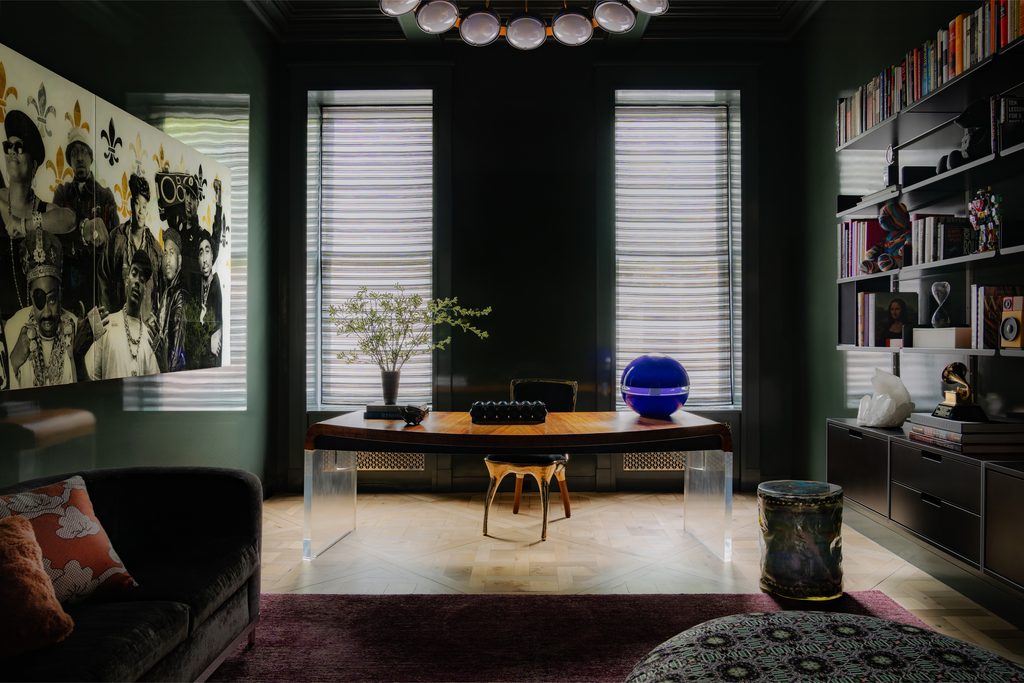
“We wanted the primary suite to feel like a destination within the house,” the designers explain. The result is a private retreat whose atmosphere deliberately contrasts with the theatricality found elsewhere. A sculptural 1970s Mezzaluna desk by Leon Rosen for Pace Collection occupies Miller’s writing alcove, while an oversized soaking tub, installed with the assistance of a crane, brings another dimension to the suite.
Despite its remarkable collection of vintage furniture and contemporary art, the townhouse remains resolutely a family home. Pieces inherited from the couple’s previous apartment sit alongside new acquisitions, creating continuity between past and present.
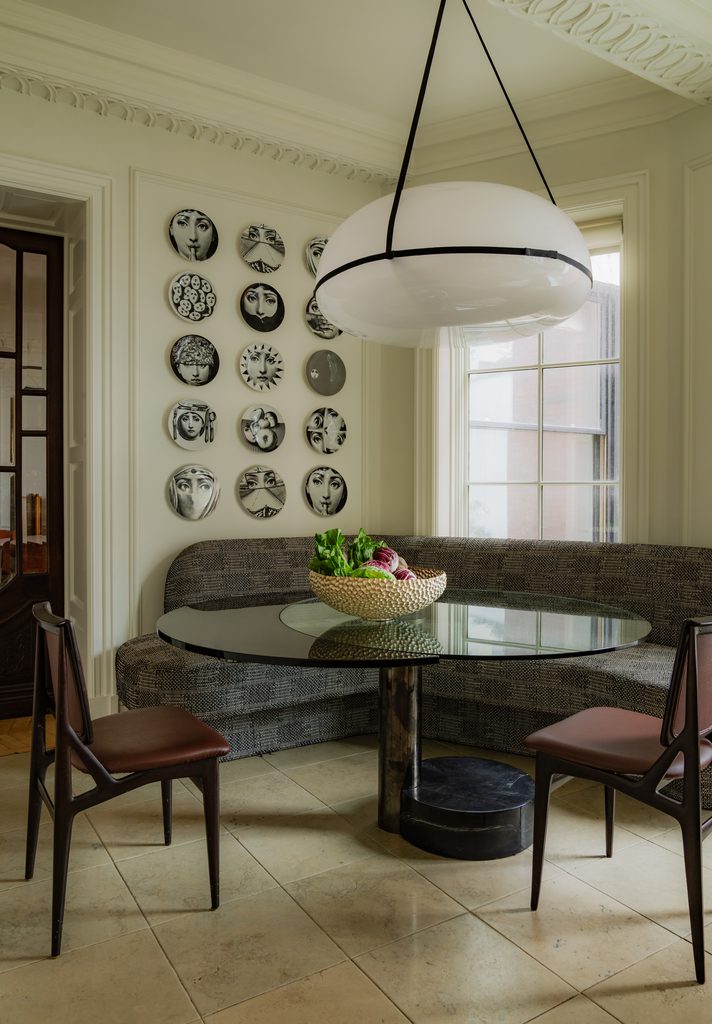
“We never begin with the idea that a home should function as a backdrop for a collection,” the designers observe. “The art and design in a space need to participate in daily life.”
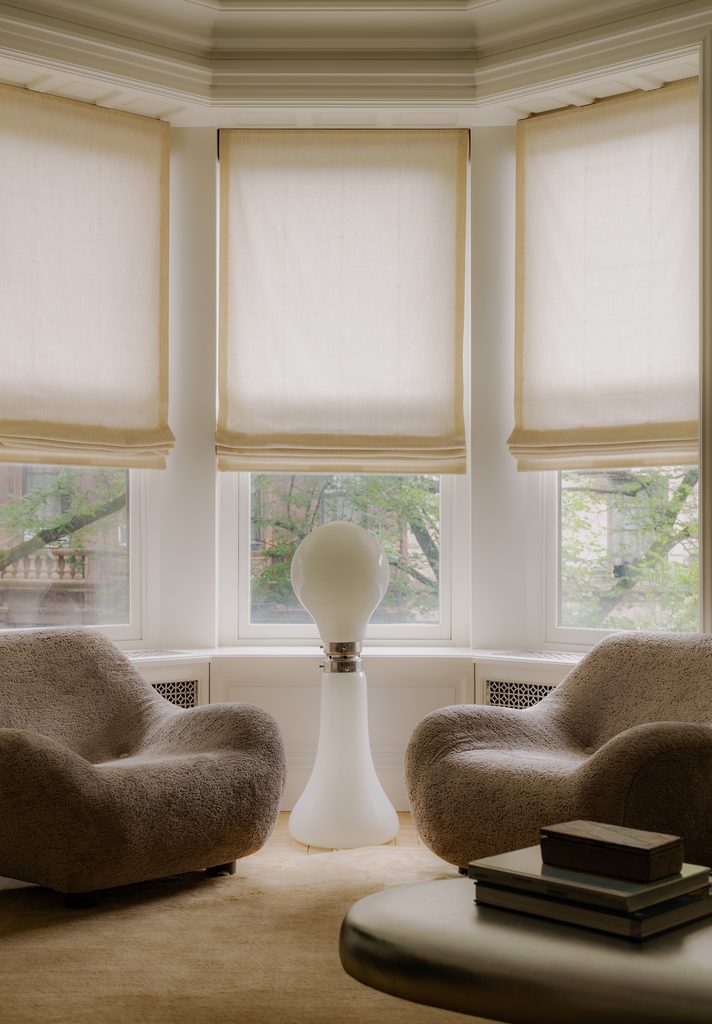
For Goldfarb and Moirano, the presence of important artworks and collectible furniture should never compromise comfort. A Damien Hirst painting or an exceptional vintage chair is simply another element in a home designed around the everyday routines of its inhabitants.
It is perhaps this philosophy that defines the project. Beyond the spectacular lighting, exceptional furniture and unexpected boom box installation lies a carefully considered home that reflects its inhabitants rather than simply displaying their possessions.
Ultimately, the designers believe the house is best understood through the relationships between its different elements. “No single object tells the whole story.” Instead, it is the coexistence of historic architecture, contemporary art, vintage furniture and bespoke interventions that captures their approach: a balance between preservation and experimentation, refinement and surprise.