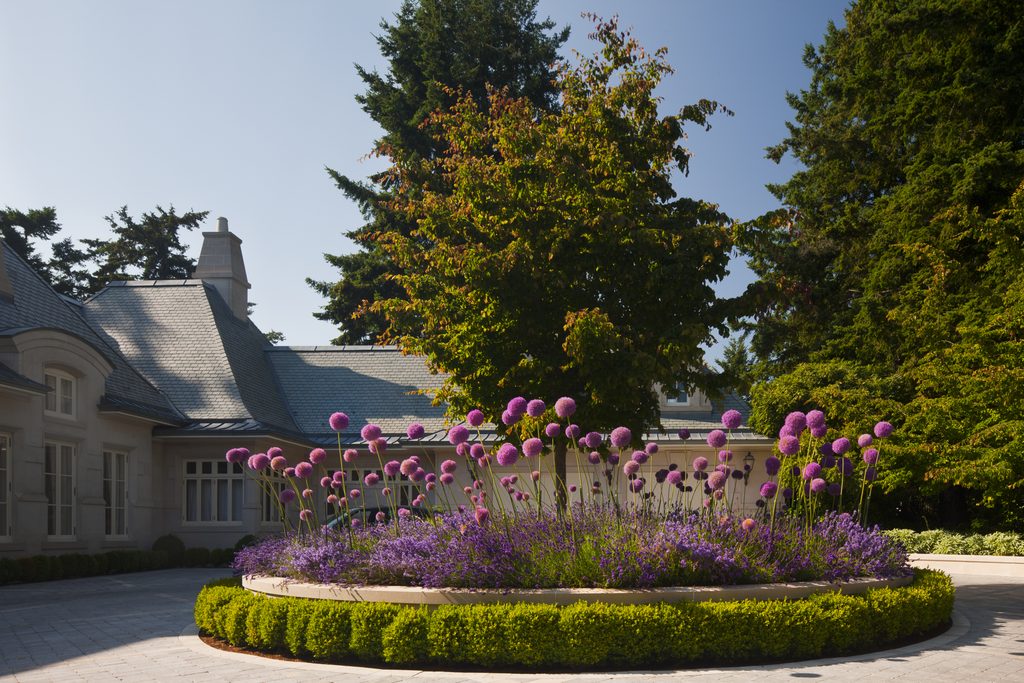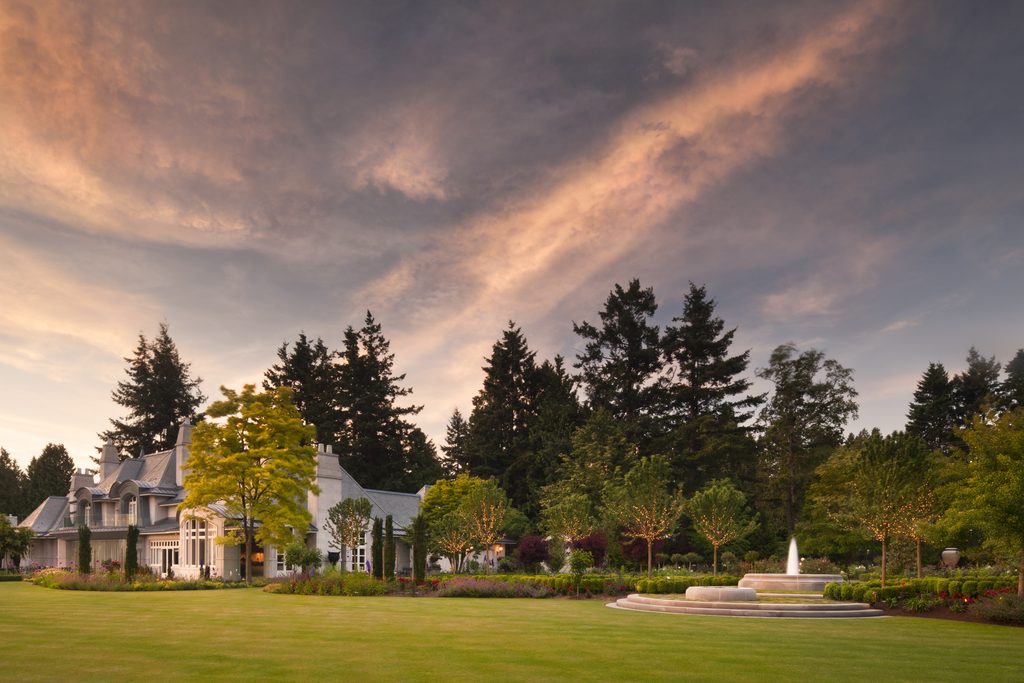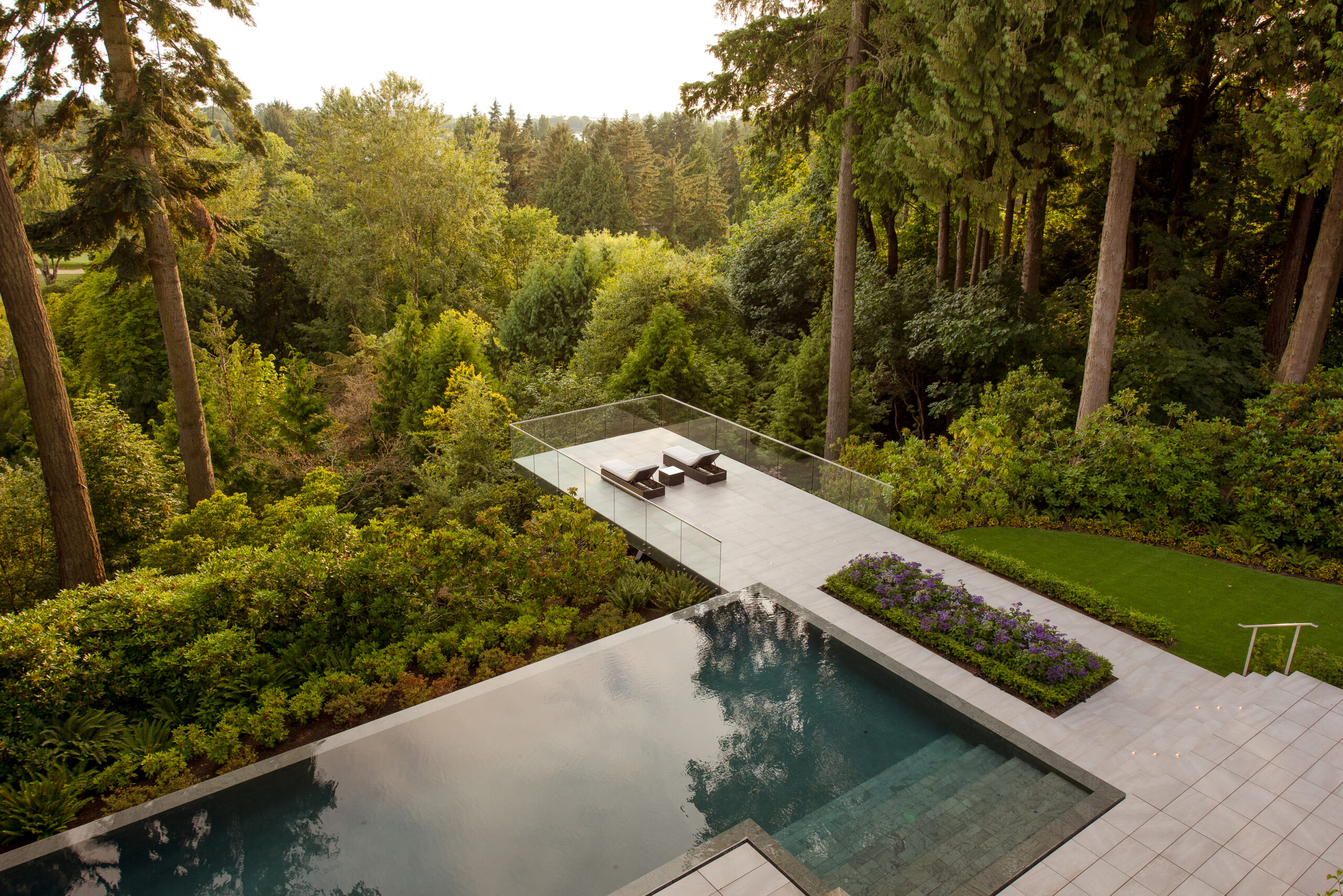
“True luxury today is space.” It is a deceptively simple observation from Canadian landscape architect Paul Sangha, but one that says much about the way our understanding of the home has changed. Space to gather. Space to be alone. Space in which architecture gives way to landscape, and the rhythms of daily life are momentarily interrupted by water, stone, trees and changing light. “That became especially apparent over the past decade, when access to outdoor space shifted from being desirable to essential,” says Sangha. “People began to understand the value of being able to move seamlessly between indoors and outdoors, and having space to live, gather, and restore.”
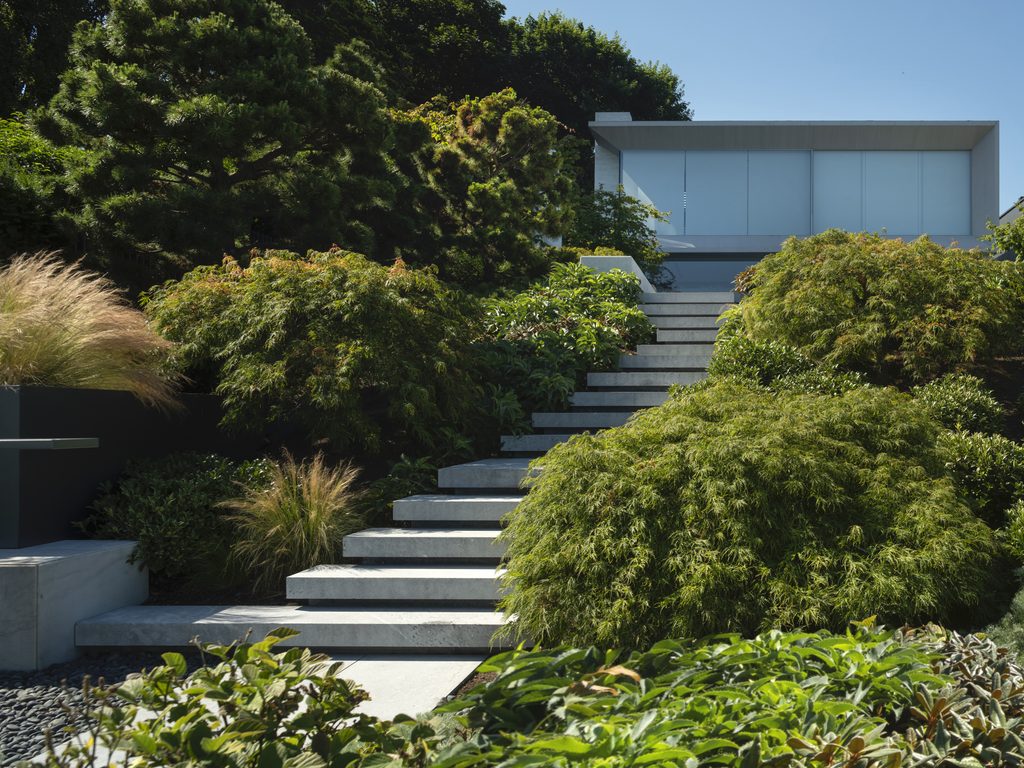
It is an idea that has occupied Sangha for much of his career. He became a landscape architect in 1986 and established his own Vancouver practice in 1999, initially working from a small solarium at home while his daughters were still young. He remembers the period less as a courageous entrepreneurial leap than as an uncertain beginning. “At the time, it felt less like a bold move and more like starting over. I was worried there would not be any work.” A call from Vancouver developer Ryan Beedie changed the trajectory. Beedie asked Sangha to continue working on his private residence, setting in motion a practice that would eventually become Paul Sangha Creative and extend from British Columbia across North America and beyond. Some of those early relationships have endured to the point where the studio now designs landscapes for the grown children of former clients.
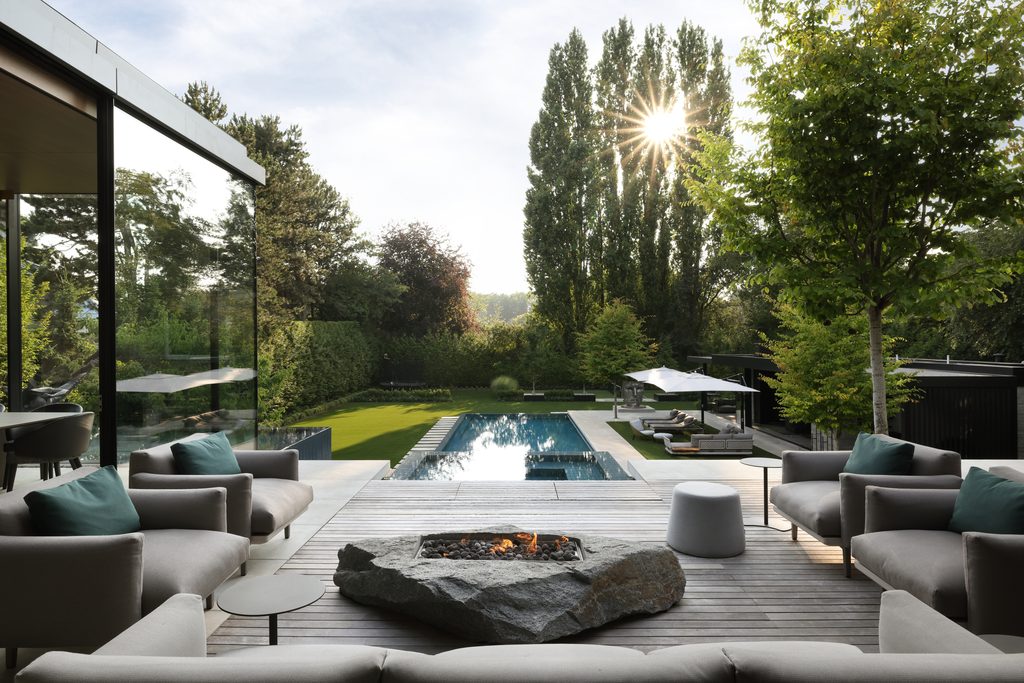
Today, Sangha’s gardens offer a useful window onto a broader transformation in residential design. The exterior is no longer treated as the decorative conclusion to a house. Landscape is increasingly conceived alongside architecture, sometimes before the building itself has been fully determined. “Landscape architecture has evolved significantly in recent years, particularly within residential and hospitality design, where outdoor spaces are now understood as integral to how a place is experienced rather than as a final layer added at the end of a process,” says Sangha’s daughter Tasha Sangha, a Senior Landscape Architect at the practice. “There is a much deeper expectation today that landscape architects help shape not only gardens, but the overall planning, sequencing, and emotional experience of a site from the earliest stages.”
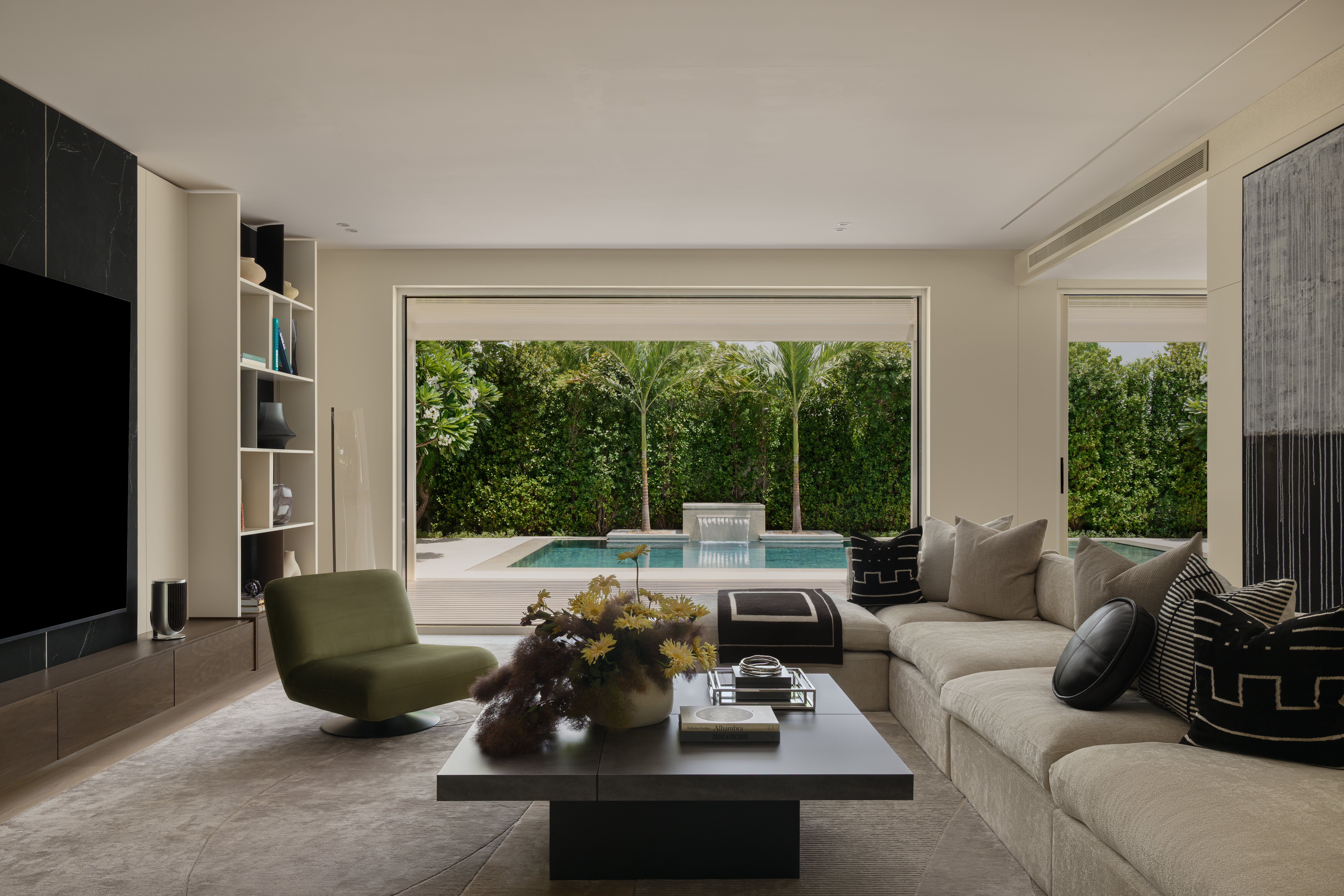
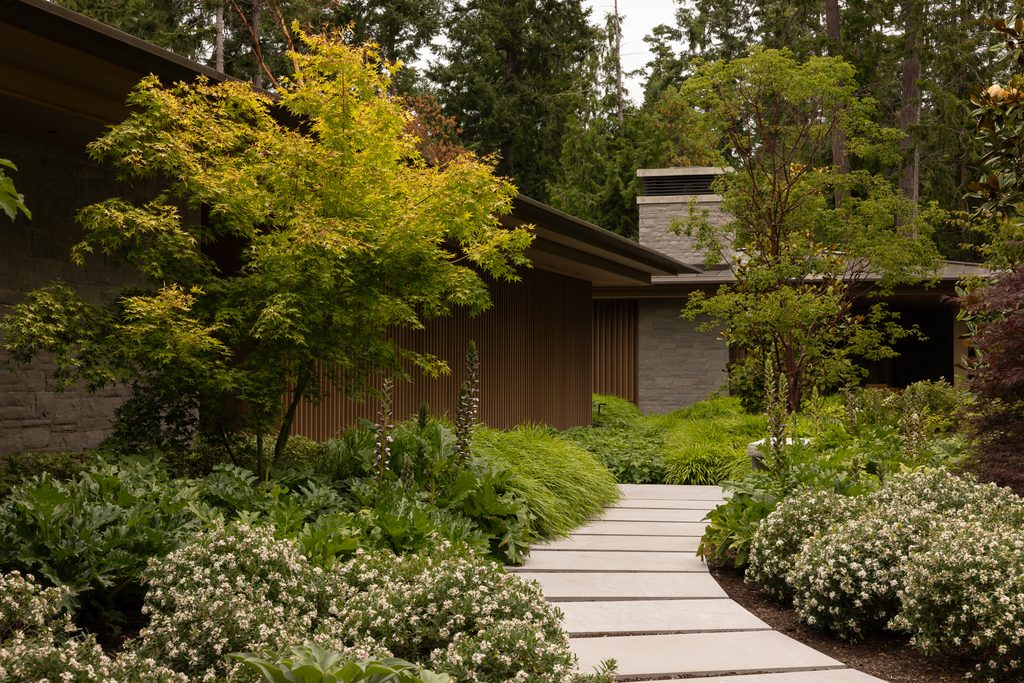
This is particularly apparent in the way interiors and exteriors are beginning to borrow from one another. “Materials, lighting, and furnishings now match the quality of interior spaces,” says Paul Sangha, “allowing the exterior to feel like a true extension of the home.” Yet this new interest in outdoor living is not simply about acquiring a more elaborate terrace or another place to entertain. It reflects a more profound desire for respite. Earlier in his career, Sangha recalls gardens that tended towards classical and ornamental expression. Today, he sees clients moving in another direction.“There has been a shift toward a more minimal and restrained aesthetic,” he says. “I think that’s partly a response to how much stimulation people experience in their daily lives. The garden becomes a counterpoint and a place to slow down.”
Certain desires, Sangha points out, have barely changed at all. “There is still a strong draw to natural materials like stone, to the presence of water, to the structure that mature trees provide.”At Paul Sangha Creative, restraint is not synonymous with emptiness. Rather, it is used to establish a sense of permanence. Tasha describes the studio’s philosophy as being rooted in “restraint, timelessness, and emotional resonance”.“Our philosophy centers on creating outdoor environments that inspire, nourish, and restore,” she says. “We are interested in how spaces unfold over time, how they frame movement, light, atmosphere, and memory. The goal is not simply to design something visually beautiful, but to create landscapes that feel deeply grounded and enduring, spaces that belong to their setting rather than being imposed upon it.”
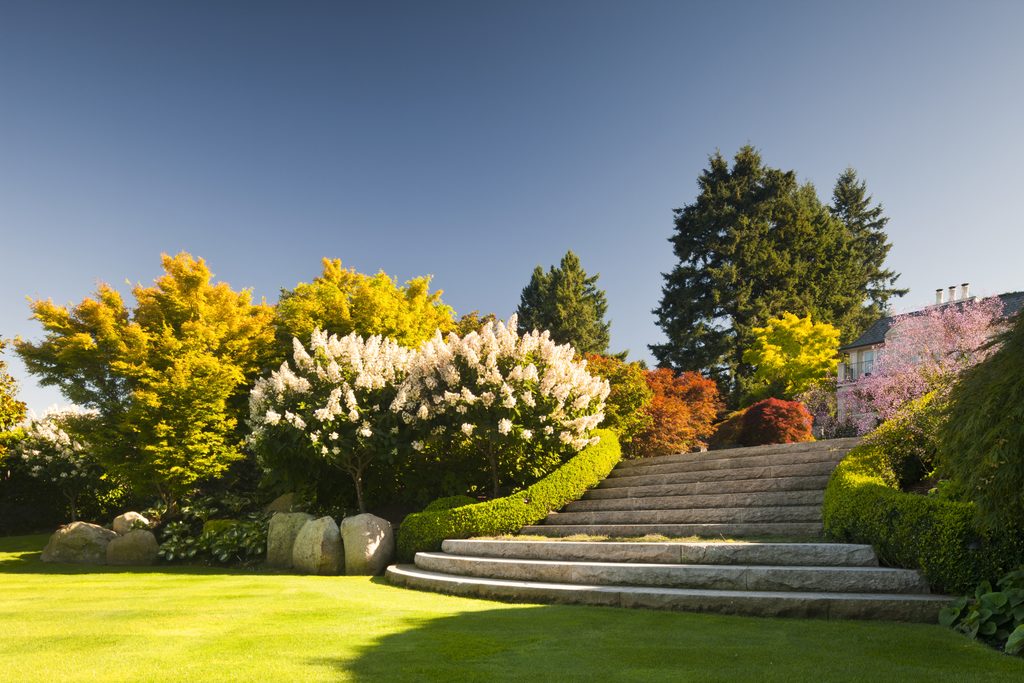
The distinction is important. A garden can photograph beautifully and still fail as a place. Sangha’s test for an exceptional landscape is not how immediately it reveals itself but precisely the opposite. “It comes down to how a space reveals itself,” he says. “In a successful garden, you’re drawn to move through it. There’s a sequence of experiences and moments that unfold gradually, rather than everything being understood at once.”
A garden also needs to accommodate different states of mind. “It should be able to meet people where they are, whether they’re seeking something restorative, social, or simply a place to observe.” This introduces an element that cannot easily be captured in a drawing. Landscape is alive. “The balance between built form and planting is critical,” says Sangha, “but so is the ability for the space to evolve. To change with light, with seasons, and over time.”
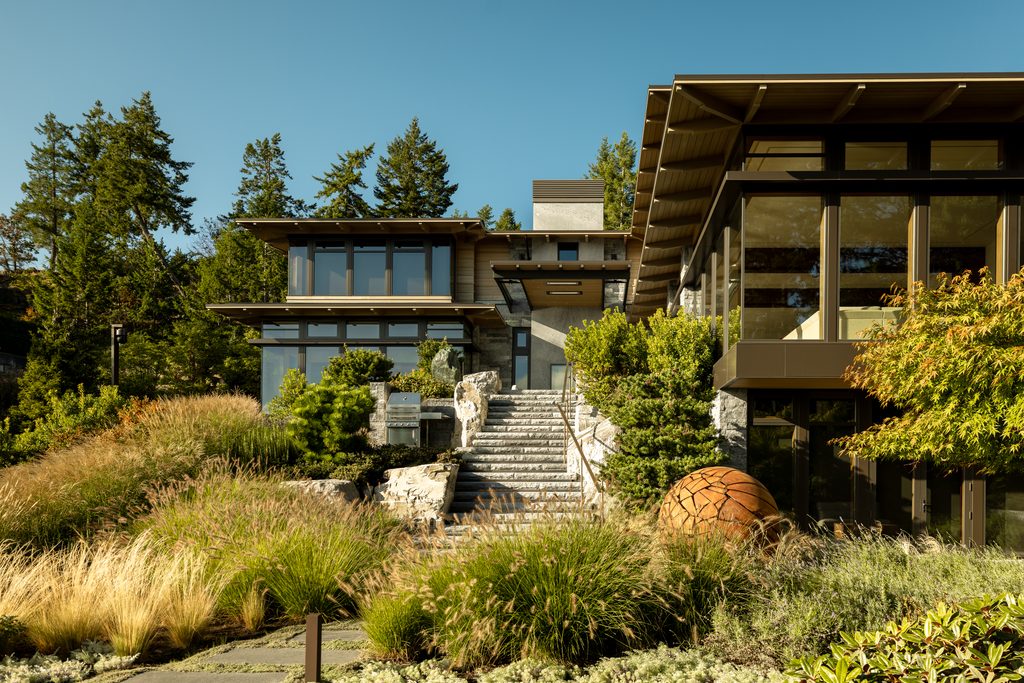
The studio’s method begins, appropriately enough, without a computer. Every project starts with hand sketches and trace work before ideas migrate into digital modelling and visualisation. For a practice operating on complex residential estates and large developments, it is a deliberately tactile beginning. “Our creative process begins with listening,” says Tasha. “To the client, the architecture, the history of a site, and the natural landscape itself.”
That listening frequently starts long before a garden is discussed. The studio works with architects and clients on the siting of buildings, circulation through a property, views from important rooms and the relationship between indoor and outdoor spaces. “This collaborative approach allows the architecture and landscape to evolve together from the outset rather than as separate elements,” she says. Paul puts the ambition more simply. When the process succeeds, “it’s not always clear where architecture ends and landscape begins.”
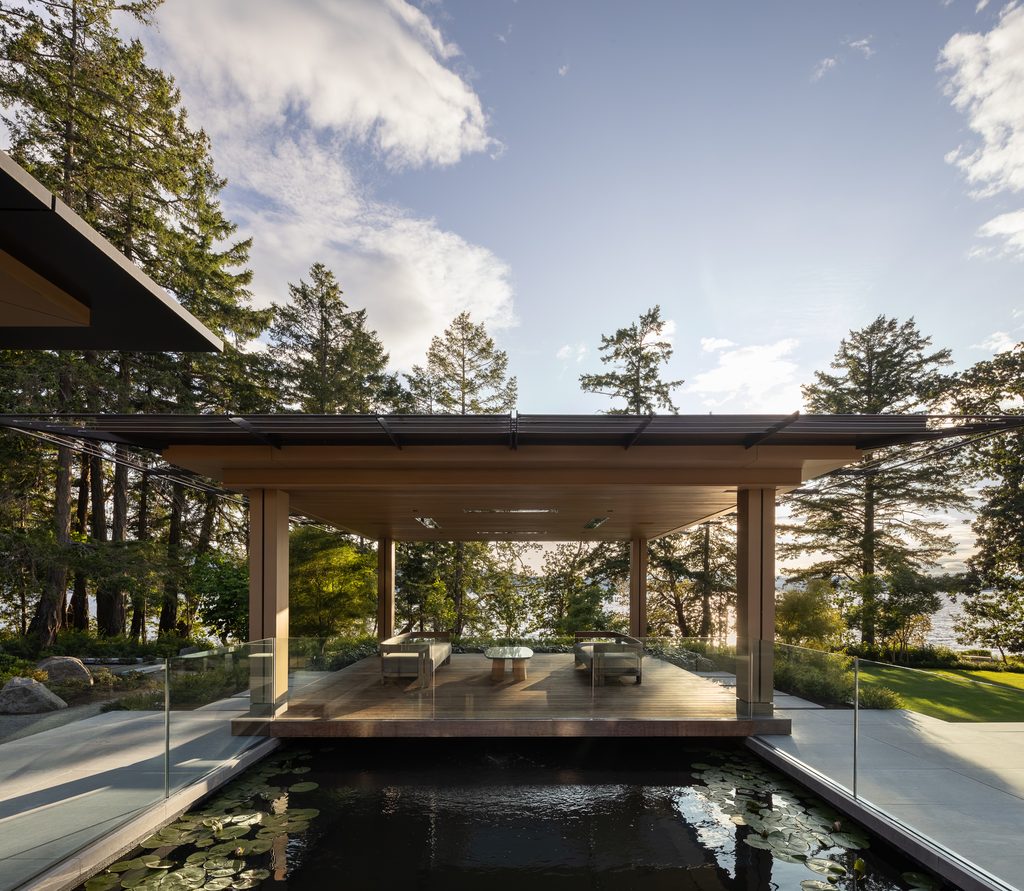
It has enabled the practice to work across markedly different scales, from intimate penthouse gardens to major projects such as Dubai Creek Tower with Santiago Calatrava Architects. What links them is not a recognisable visual formula but an insistence that the landscape respond to the architecture, client and place. Sangha has gradually become more economical in how he achieves that. “Over time, I’ve become more interested in expressing ideas with greater clarity and less intervention, and conveying more with fewer moves,” he says. “There’s a discipline to designing with restraint.”
Restraint does not preclude drama. Art has become one of the defining elements of the studio’s landscapes, placing its work at an intersection between architecture, ecology and collecting. “Art is a critical component of our gardens and one which we feel sets us apart,” says Tasha.
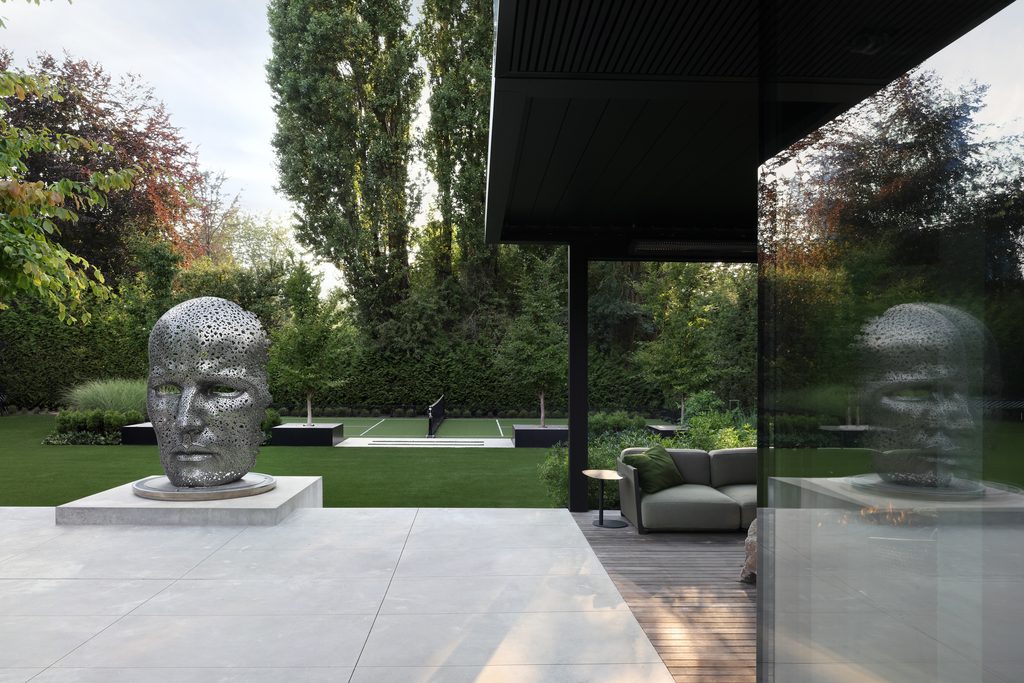
Rather than treating sculpture as an object to be placed on a lawn after the landscape is finished, the studio works with collectors and artists to integrate pieces into the spatial composition of a garden. Landscapes have been designed around works by Spanish artist Jaume Plensa, British sculptor Tony Cragg and Canadian artist Bill Reid. Other commissions begin with the landscape itself. The studio has collaborated with Lebanese born Canadian artist Marie Khouri to create bespoke sculptures conceived specifically for private gardens. The result is less an outdoor gallery than a conversation between object and setting. Sculpture can determine a sightline, interrupt a journey through planting or become something encountered unexpectedly rather than announced.
It also reflects the unusually broad composition of Paul Sangha Creative. Landscape architects and designers work alongside horticulturists and 3D artists, while senior members of the practice bring experience spanning architecture, urban planning, horticulture, interior design and fine arts. Many have worked alongside Sangha for more than two decades, giving the studio a continuity uncommon in an industry accustomed to movement.
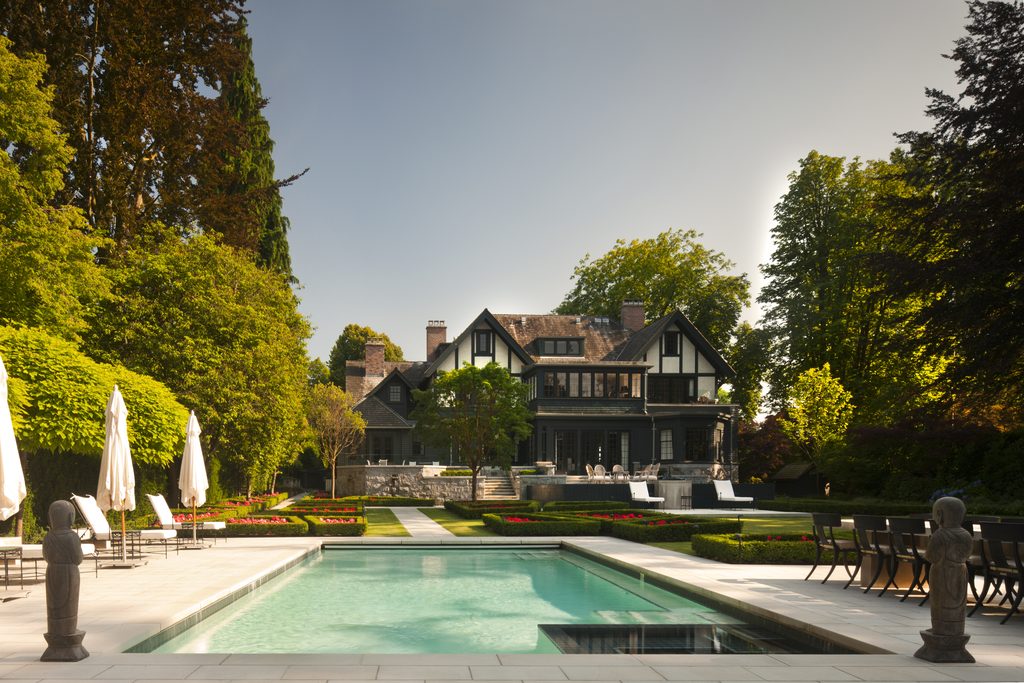
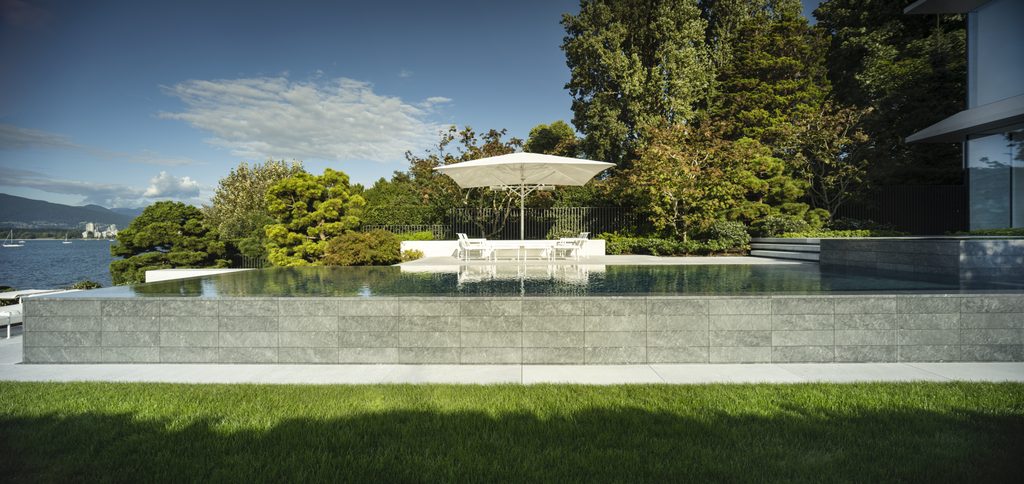
The idea of landscape as sanctuary becomes more complicated at the water’s edge. Some of Paul Sangha Creative’s most interesting recent work concerns the restoration of waterfront properties along the Canadian West Coast, where climate resilience, private ownership and ecological stewardship inevitably collide. “Many waterfront properties were historically designed with a focus on control,” says Sangha. “Hard edges, retaining walls, a separation from the natural shoreline.” The approach is changing. “What we’re seeing now is a shift toward restoration, where the goal is to reintroduce more natural systems while still supporting how the property is used.”
The studio has spearheaded more than 1,800 linear feet of shoreline improvements adjoining its waterfront projects, with a further 2,100 linear feet of restoration work underway. At the Tatlow and Volunteer Park creek daylighting project in Vancouver’s Point Grey, the team unearthed a buried stream and reconnected it to the ocean while introducing foreshore habitat, raising the beach grade and creating a universally accessible route to the beach.
The work suggests that private investment and public benefit need not necessarily occupy opposite sides of a boundary. “These interventions don’t just benefit the individual property, they contribute to a broader ecological system,” says Sangha. “So there’s a shared outcome between private investment and public good.”
Tasha describes a similar approach on private waterfront estates, where interventions are designed to protect homes against increasingly severe storm events while creating more beach and viable riparian habitat beyond the property. For Paul, the technical challenge does not excuse aesthetic compromise. “It becomes a question of how to create something that is both functional and responsible, and also spectacularly beautiful, where the design feels intentional, visually powerful but also regenerative.”
The same philosophy is now travelling beyond the private garden. Paul Sangha Creative is increasingly working on resorts, wineries, hotels and other hospitality projects in which landscape, architecture and interiors are conceived as a continuous experience. New commissions are underway in downtown Vancouver, the Okanagan and Vancouver Island, alongside private residential estates across North America. The studio’s international reach now includes projects in Miami, Los Angeles, New Jersey and Texas, as well as Turks and Caicos and the British Virgin Islands.
One recent example is MARCON’s Tricity Pavilion, where Paul Sangha Creative was invited to work with the wider team on the form of the pavilion itself within the landscape. It is indicative of how the studio’s role is expanding beyond the conventional boundaries of its discipline. “We’re increasingly being engaged for projects that are less about a specific typology and more about experience,” says Sangha. “At its core, the work remains the same, it’s about how people experience space, but the scale and context continue to evolve.”
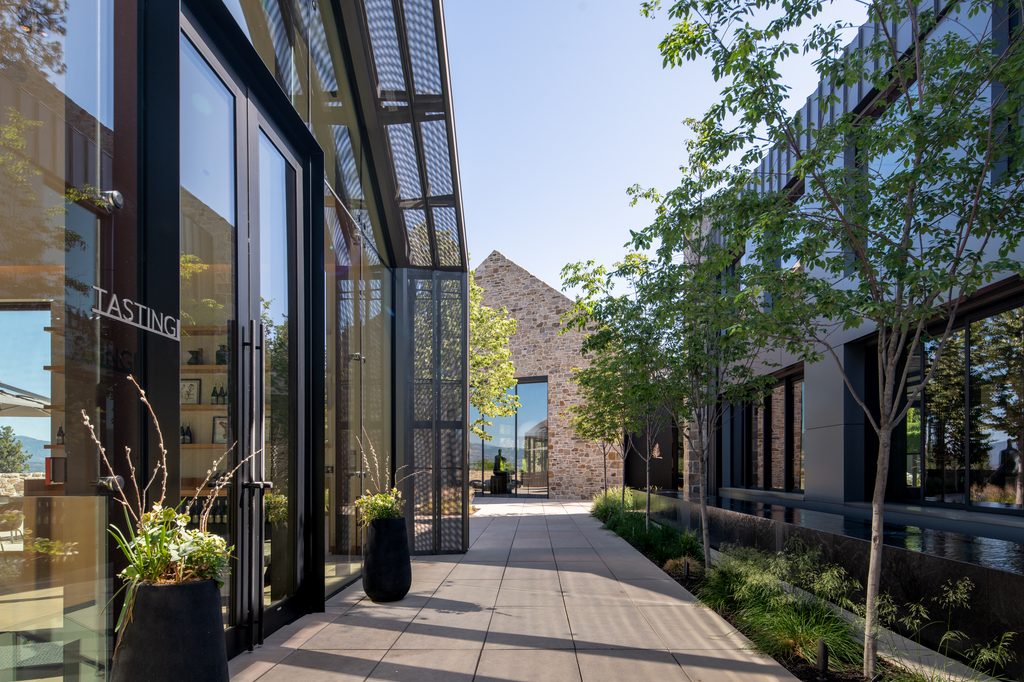
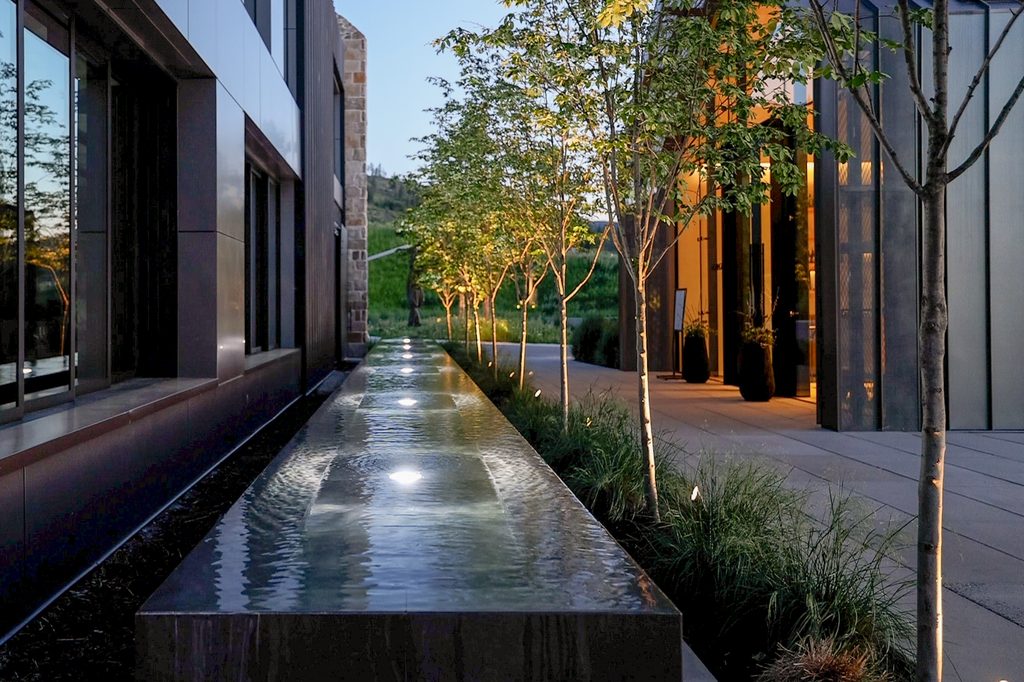
Travel has inevitably influenced that experience. Sangha’s clients increasingly arrive having spent time in highly considered resorts and hotels around the world, bringing with them expectations about atmosphere as much as architecture. “What they’re seeking is not a particular style, but a certain feeling,” he says. “Something that is considered, grounded, and lasting.”
There is another form of continuity quietly shaping the studio. Both of Sangha’s daughters now work within the practice. Tasha joined full time as a designer in 2017, although her education in landscape began rather earlier. From the age of five she spent summers around construction sites, design meetings and the studio, eventually studying business management before completing a master’s degree in landscape architecture, where she graduated as the gold medallist of her class. Today she combines design with marketing, business development, brand direction and strategic partnerships.
Her sister Riva Sangha, whose background is in commerce and banking, oversees the operational side of the practice, from internal systems and team coordination to client and consultant relationships.
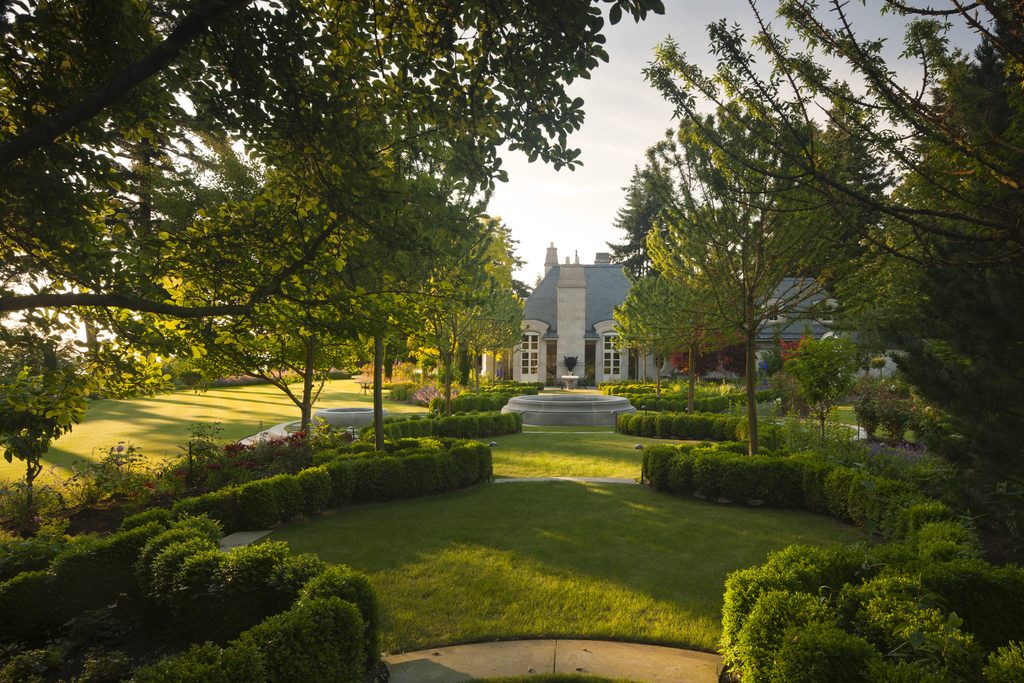
For their father, their presence is less about succession than continuity with room for change. “It’s meaningful in that it allows for continuity, but also evolution,” he says. “They each bring different perspectives and areas of focus, which naturally expands how the practice operates.”
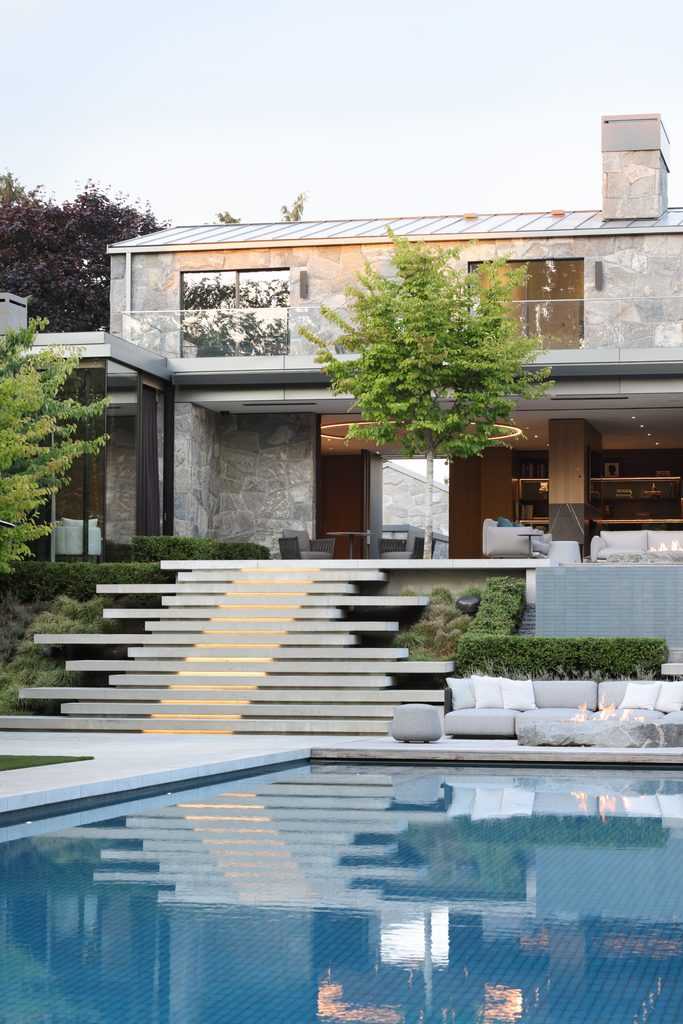
It mirrors what happens in the landscapes themselves. A garden cannot remain static if it is to endure. It must mature, adapt and occasionally relinquish control. Perhaps this is also why Sangha increasingly speaks about gardens in terms of legacy rather than possession. “There’s a growing realization that you are a custodian of the land and what you create should extend beyond your own time,” he says. Clients are beginning to talk about future generations and landscapes capable of remaining meaningful long after their original commissioners have gone.
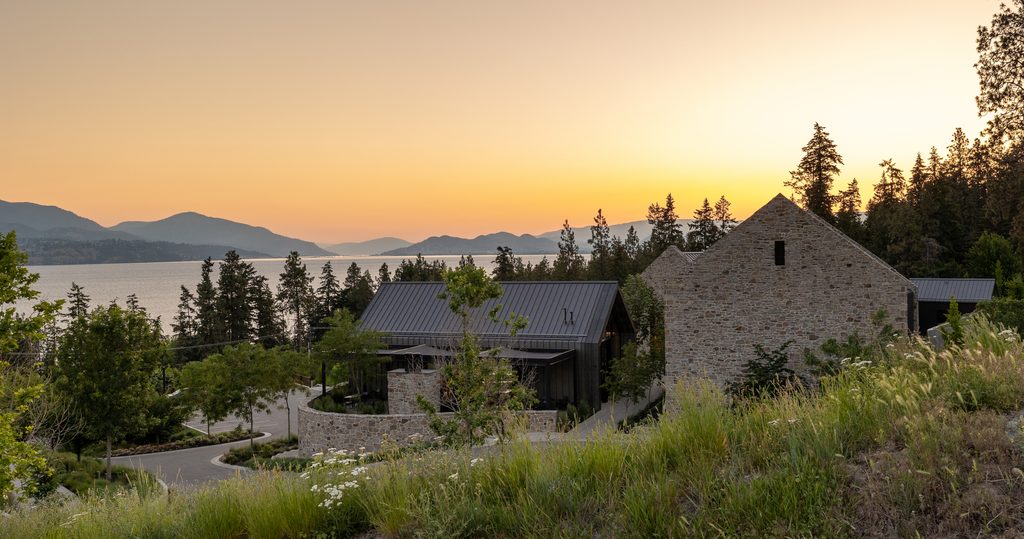
After four decades in landscape architecture, Sangha has also learnt that longevity does not necessarily come from adding more. Asked what advice he would offer the young designer who began his career in 1986, his answer consists of two words. “Loosen up.” “When you’re starting out, there’s a tendency to overwork ideas, to try to justify every move,” he says. “Over time, you begin to trust your instincts and work more intuitively.”
It is an apt philosophy for the garden too. In a world increasingly concerned with speed, novelty and control, perhaps luxury lies in allowing a place enough room to breathe.
And, as Sangha puts it, “to do less, but with more intention.”