RARARES: The Gallery That’s Changing the Vibe in DIFC

Words By Allegra Salvadori 
 June 20, 2025

Words By Allegra Salvadori | Photos courtesy of RARARES Gallery

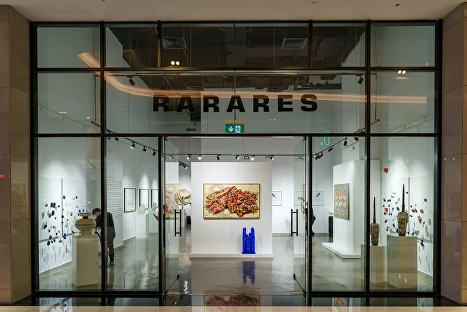
Forget everything you think you know about white-walled galleries. At RARARES, in the heart of DIFC Gate Village, founder Marina Baisel is rewriting the rules—one moment at a time.
corral party 1
Photo courtesy of RARARES Gallery

With a background in interior design, Baisel sees art not as a static object, but as something that lives and breathes with space. “I don’t believe in white cubes,” she says. “A gallery should feel like a conversation, not a showroom.” That ethos runs through everything at RARARES: the warm lighting, the unexpected textures, the way each work seems to tell a story.

Screenshot 2025 06 20 at 09.38.24
Photo courtesy of RARARES Gallery

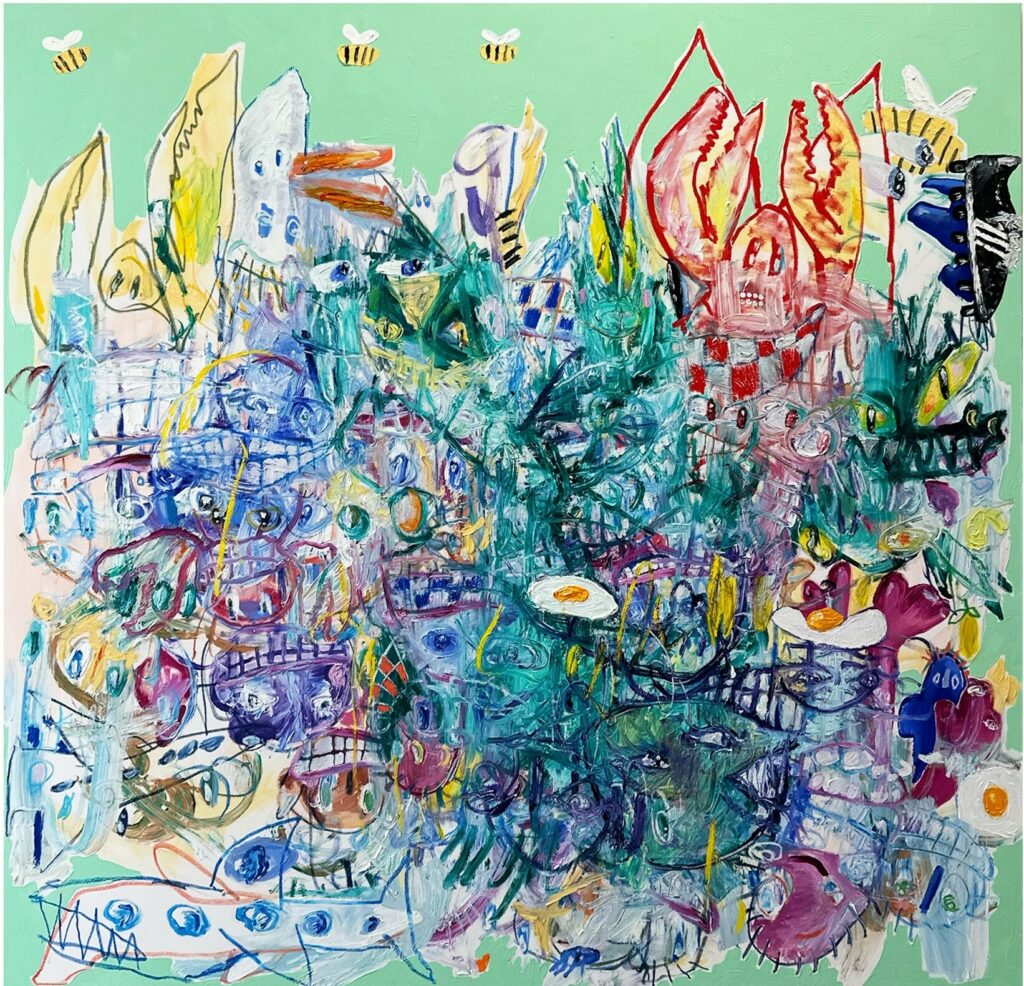
Since opening earlier this year, the gallery has made waves with a bold mix of global perspectives and underrepresented regional voices. Think Emirati icon Fatma Lootah alongside rising names like Mathias Masarati Hagen and Sara Al Haddad. The vibe? Smart, soulful, and unapologetically tactile.

RARARES made a splash at Art Central Hong Kong with Fish Market—a buzzing, immersive take on everyday chaos. And this summer, it heads to Volta Basel with A Contemporary Cabinet of Wonders, a beautifully curated mix of glass, fabric, memory, and myth.
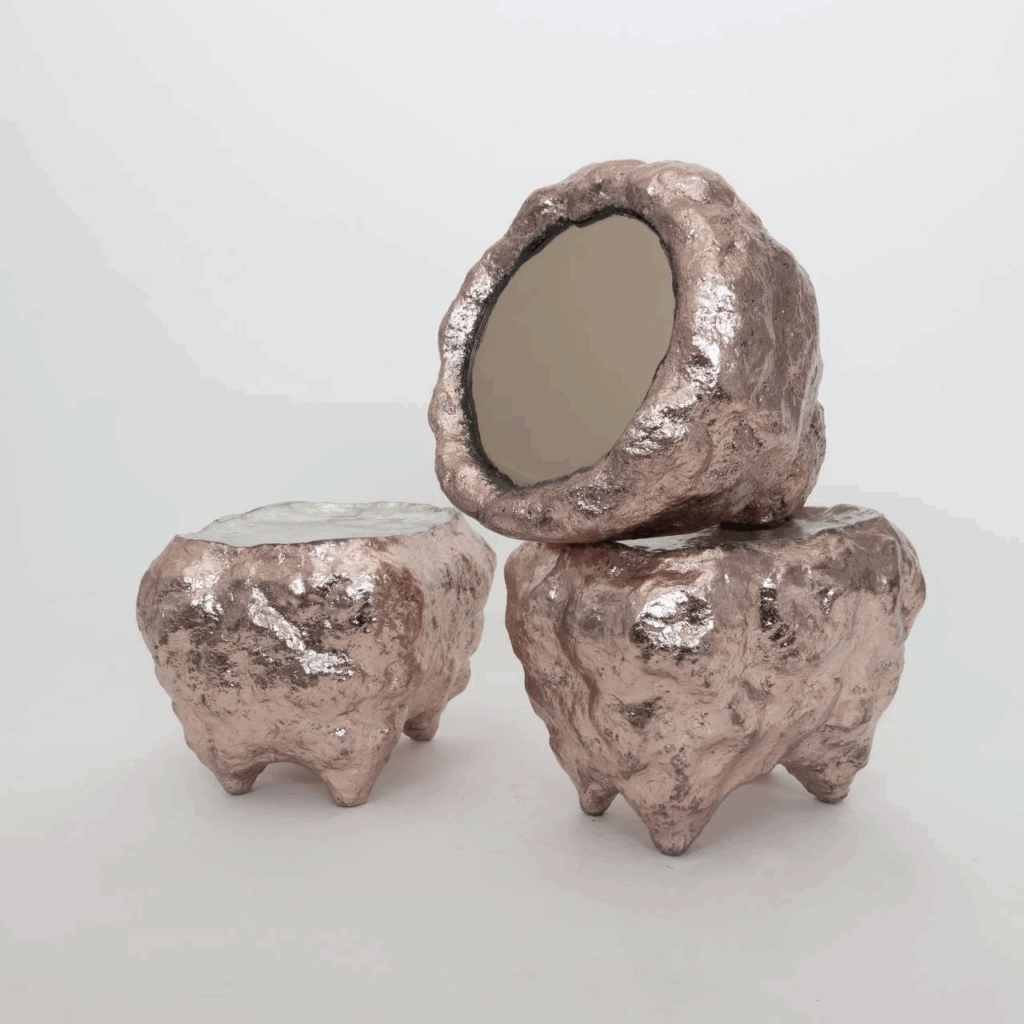
IMG 1324
Photo courtesy of RARARES Gallery

But the magic of RARARES isn’t just what’s on the walls—it’s the way Marina makes you feel like you’re part of something unfolding. Like you’ve stepped into a softer, smarter future of art collecting.

RARARES isn’t trying to impress—it’s trying to connect. And in a city that moves fast, that kind of intention is what truly stands out.
LATEST

The Space Between: Nada Debs Establishes Her First International Flagship in Dubai

For more than two decades, Debs has operated at the intersection of craft and contemporary design, developing a body of work that resists both nostalgia and minimalism. Her furniture and objects — defined by mother-of-pearl inlay, hand carving, marquetry and meticulous joinery — draw on Levantine decorative traditions while maintaining the restraint and clarity often associated with Japanese design. The result is neither ornamental nor austere, but calibrated somewhere in between. This position of “in-between” has long structured the studio’s identity. Born in Lebanon, raised in Japan and educated in the United States, Debs approaches design less as style than as translation: between cultures, between techniques, between past and present. The new Dubai address gives that philosophy architectural form. Located within Alserkal Avenue, the city’s leading arts district, the 230-square-metre flagship is conceived not simply as a boutique but as a spatial extension of the studio’s methodology. Rather than prioritising display, the interior foregrounds materiality and scale. The space slows the visitor down, encouraging proximity and tactility over spectacle — a notable stance within Dubai’s retail landscape, where monumentality and visual impact typically dominate. Faced with a raw industrial shell defined by high ceilings and a narrow footprint, Debs responded with what she describes as “a box within a box”: a timber-clad volume inserted into the larger metal envelope. The intervention is both practical and conceptual. Architecturally, it restores human scale and warmth. Symbolically, it places craft — wood, joinery, touch — at the centre of an otherwise impersonal structure. Material choices remain deliberately restrained. Pale timber surfaces, terrazzo flooring, and muted tones establish a calm, almost domestic atmosphere that allows the work to be encountered as objects of process rather than commodities. Bestselling pieces sit alongside new collections, while a dedicated customization area brings clients closer to the act of making, reinforcing the studio’s emphasis on handwork and dialogue. Upstairs, the environment shifts. The gallery-like studio and sample library adopt a more industrial language, exposing the operational side of the practice. This contrast between levels — intimate below, utilitarian above — reflects the dual structure of the brand itself: craft and production, emotion and system, tradition and contemporaneity. Rather than blending these conditions into a seamless whole, Debs allows them to coexist. That logic of duality is distilled further into two circular openings — referred to internally as “the two dots” — that punctuate the architecture. Subtle yet intentional, they act as a graphic metaphor for the studio’s broader philosophy: distinct identities sharing the same space without hierarchy or opposition. The move to Dubai also carries historical and generational significance. When the studio’s original Gemmayze boutique was damaged in the 2020 Beirut port explosion, the event prompted a reassessment of the brand’s future beyond Lebanon. Five years later, the flagship represents a strategic reorientation — positioning regional craftsmanship within an international design conversation rather than a local one. At the same time, Nada Debs’ son, Tamer Khatib, steps into the role of Managing Director, signalling the studio’s transition into its second chapter. The pairing of expansion and succession underscores a broader ambition: not simply to grow, but to institutionalise the practice as a lasting design house. In this context, the Dubai flagship operates less as a store than as infrastructure — a platform from which a specific understanding of craft can circulate globally. Debs’ work has always argued that traditional techniques are not relics of heritage but active tools for contemporary design. Here, that argument becomes spatial, embedded in walls, proportions and movement. If the project avoids the rhetoric of luxury, it is deliberate. Instead of excess, it proposes precision; instead of spectacle, attention to the hand. In doing so, Nada Debs positions craft not as decoration, but as structure — and Dubai as the stage for its next evolution.