Inside a former tram depot in the Uzbek capital, Studio KO’s architecture and the inaugural exhibition at CCA Tashkent reveal a story told through materials, from century-old brick and locally made ceramics to clay, copper, steel and wood.
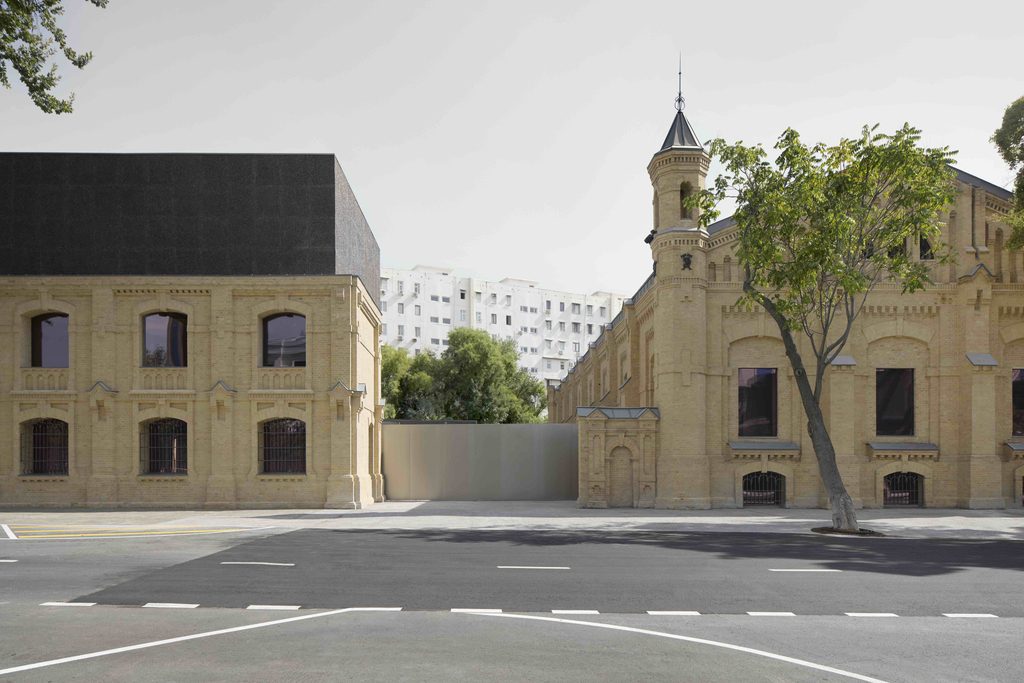
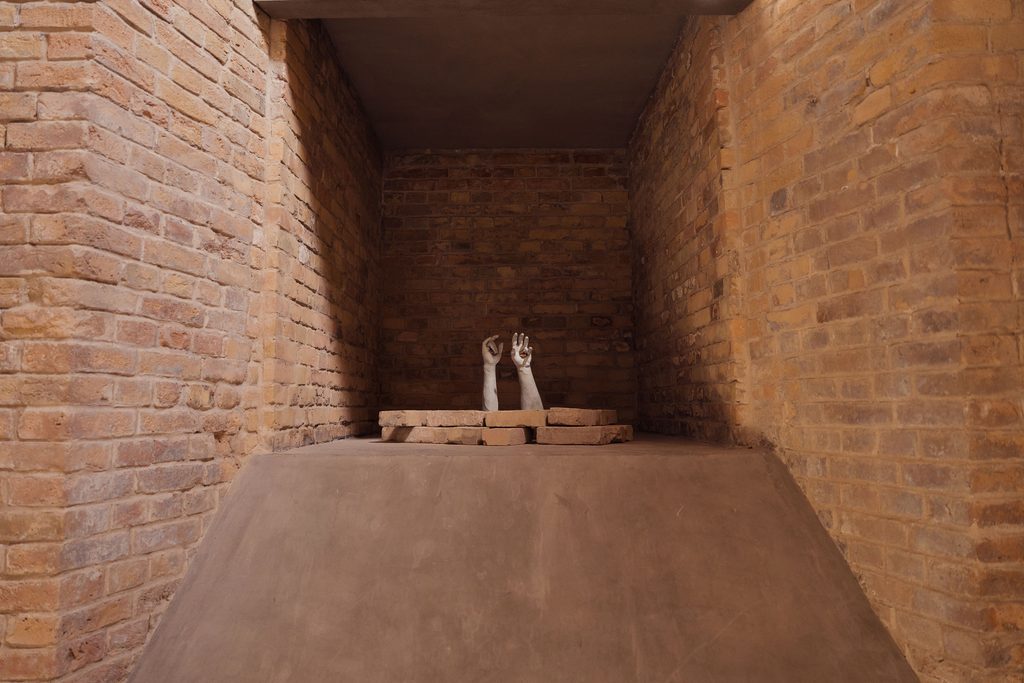
Begin with the brick. It has been in Tashkent for more than a century, part of a diesel station and depot built in 1912 for the city’s first tramway. When Studio KO transformed the building into the new Centre for Contemporary Arts Tashkent, the brick stayed.
Then came concrete made with local materials. Bespoke tiles produced by a Tashkent ceramics family. Clay rolled between visitors’ hands. Copper, bronze, steel and wood. To understand CCA Tashkent, perhaps the most interesting place to begin is not with the art, or even the architecture. It is with what they are made of.
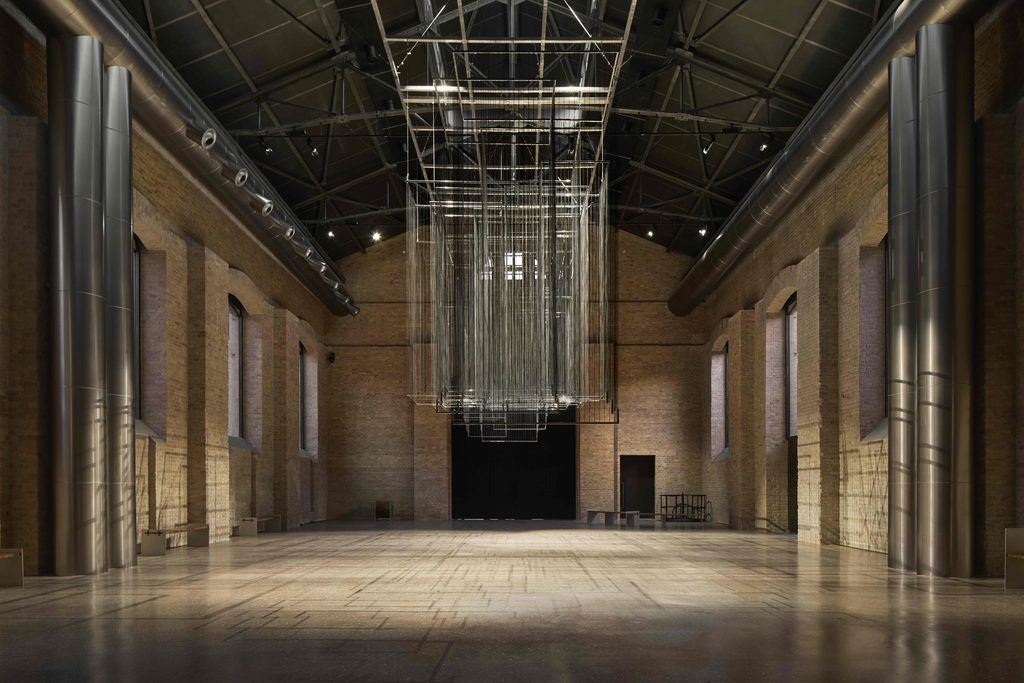
Opened to the public this September, the Centre occupies one of Tashkent’s significant surviving pieces of industrial architecture. Designed by Wilhelm Heinzelmann, the complex remained part of the city’s electricity network for more than a century before being entrusted to the Uzbekistan Art and Culture Development Foundation in 2019. Its latest incarnation, conceived by French architecture practice Studio KO, does not attempt to disguise that previous life.
Brick, Concrete, Ceramic
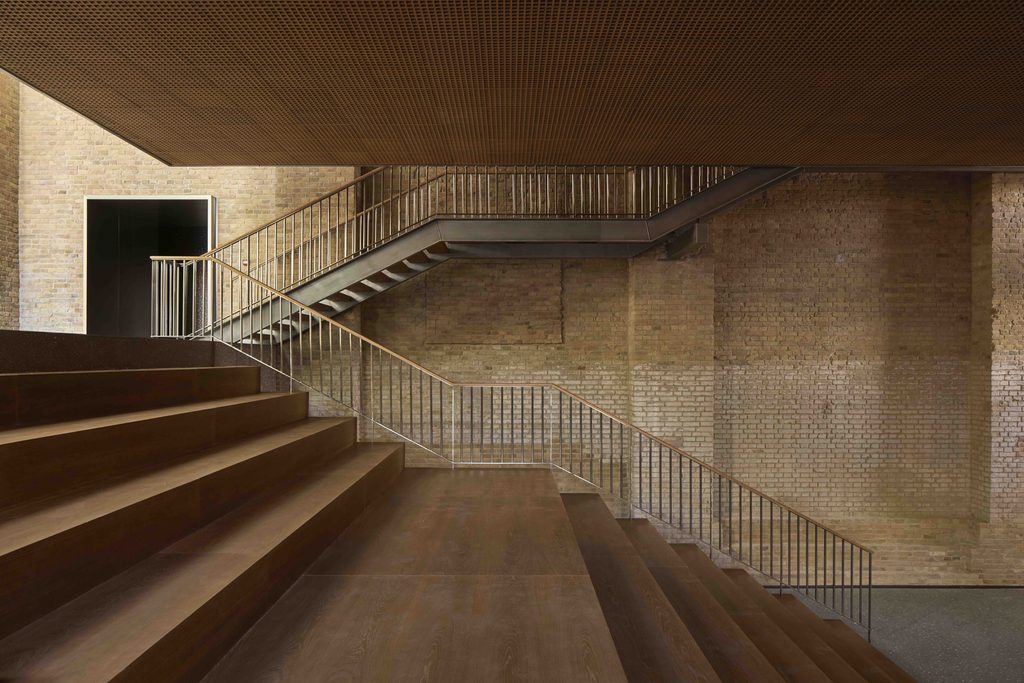
The former diesel station is now CCA Tashkent’s principal exhibition space, but much of its original architecture remains visible. Early 20th-century brickwork has been restored; the old administrative building has become a bookshop and library; and the courtyard now accommodates gatherings, workshops and an outdoor cinema.
What Studio KO added is just as revealing as what it retained.
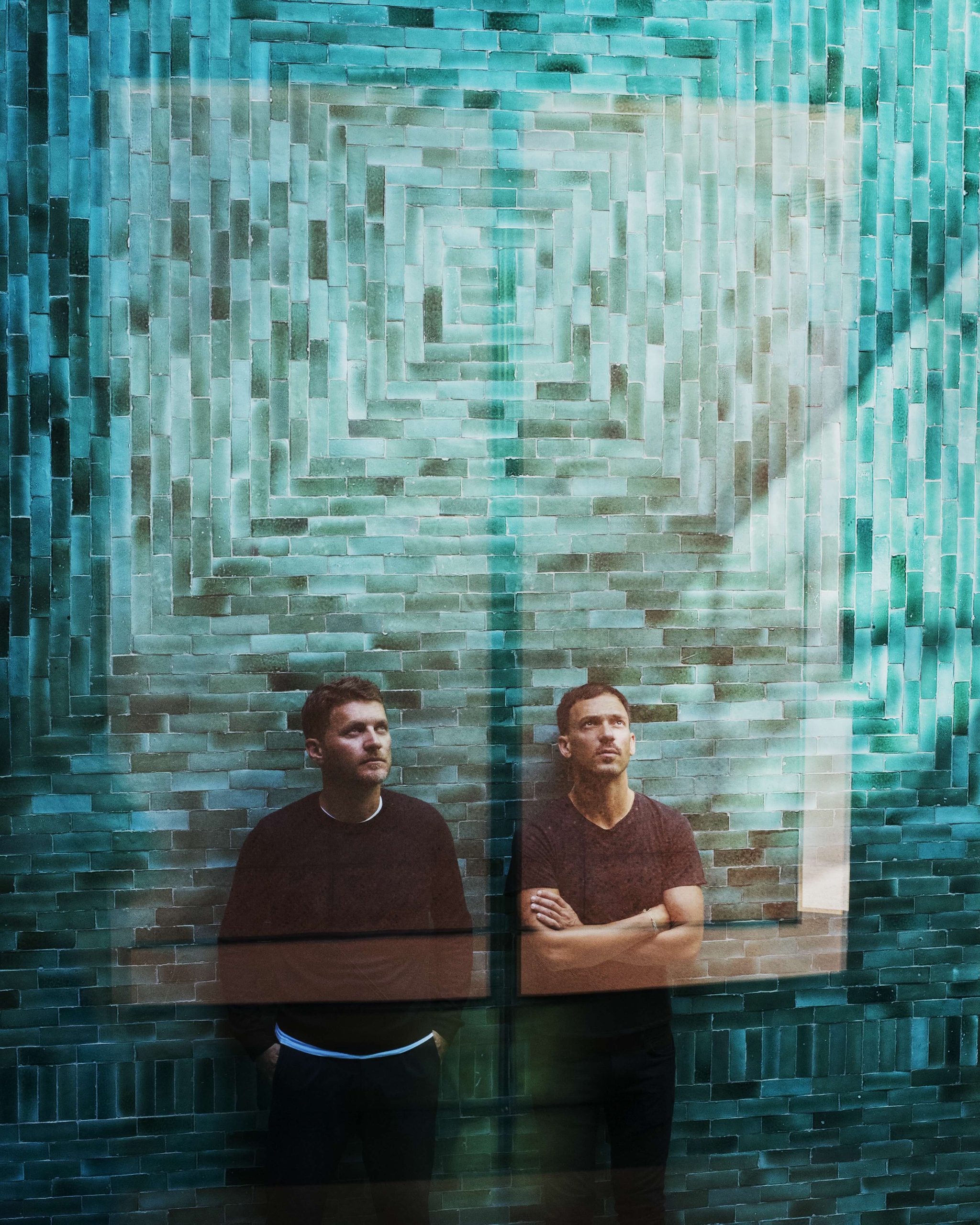
For the renovation, a new concrete mixture was developed using local materials, while bespoke tiles were commissioned from the Rakhimov family ceramics studio in Tashkent.
These are details, but consequential ones. They locate the architecture. Instead of treating Uzbek craftsmanship as a decorative layer applied to an international architectural language, material becomes one of the ways the new institution establishes a relationship with the city around it.
Studio KO founders Karl Fournier and Olivier Marty describe their approach as one intended to honour the industrial building while introducing traditional Uzbek materials and light-filtering motifs. Their aim, they say, was to create an architecture capable of evolving alongside the art and ideas it would eventually contain.
And now that the art has arrived, something interesting happens.
When Craft Crosses the Threshold
The Rakhimov name reappears inside the galleries. Shokhrukh Rakhimov is a seventh-generation ceramicist based in Tashkent. For The Colour of Silence, In Search of Truth, presented as part of CCA Tashkent’s inaugural exhibition Hikmah, he has created seven large-scale ceramic orbs enriched with minerals and pigments sourced locally.
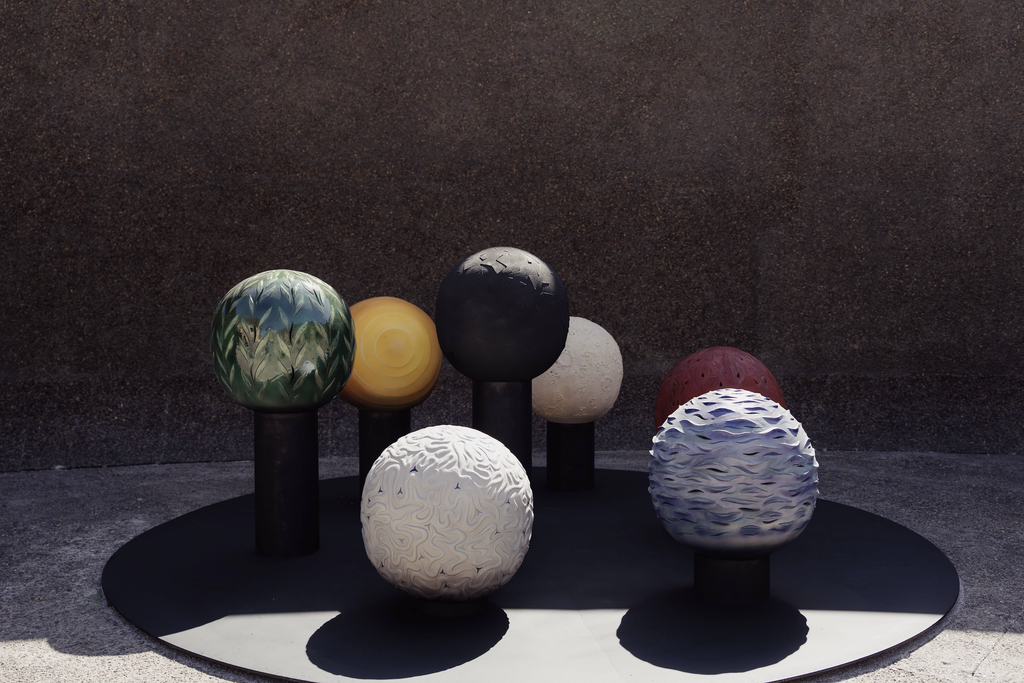
Outside the gallery, a family ceramics studio participates in making the building. Inside it, a new generation uses the same broad material tradition as a medium for contemporary artistic expression.
It is a small connection, but one that captures something fundamental about the Centre: craft here does not sit neatly on one side of the boundary between architecture and art. Nor does material.
Clay, Copper, Steel
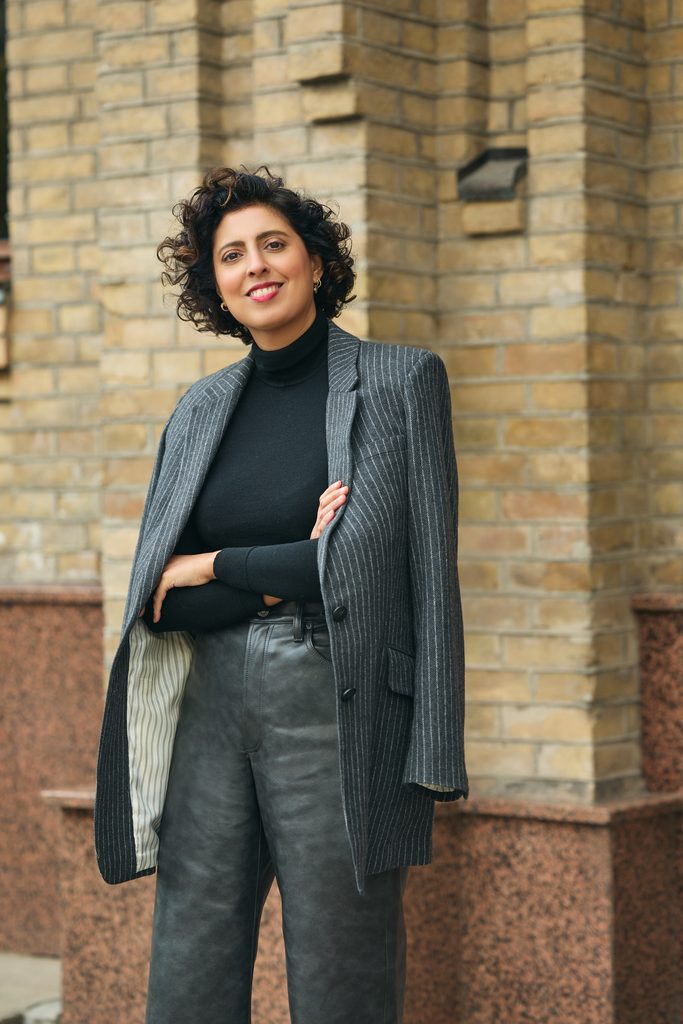
Curated by CCA Tashkent Chief Curator Dr Sara Raza, Hikmah takes its name from the concept of wisdom and brings together new commissions and recent works by ten Uzbek and international artists. But viewed through the physicality of the works, another conversation begins to emerge. Material carries ideas from one geography to another.
Saudi artist Muhannad Shono’s Tower for a Single Breath, developed during his residency at CCA Tashkent, is a monumental construction of black compressed composite tiles. Its references, however, reach beyond the material itself, drawing upon the Sufi traditions of Bukhara and Samarkand.
Nearby, South Korean artist Kimsooja asks visitors to do something elemental: take local clay into their hands and roll it into spheres. In Archive of Mind, those repeated individual gestures gradually accumulate into a collective work.
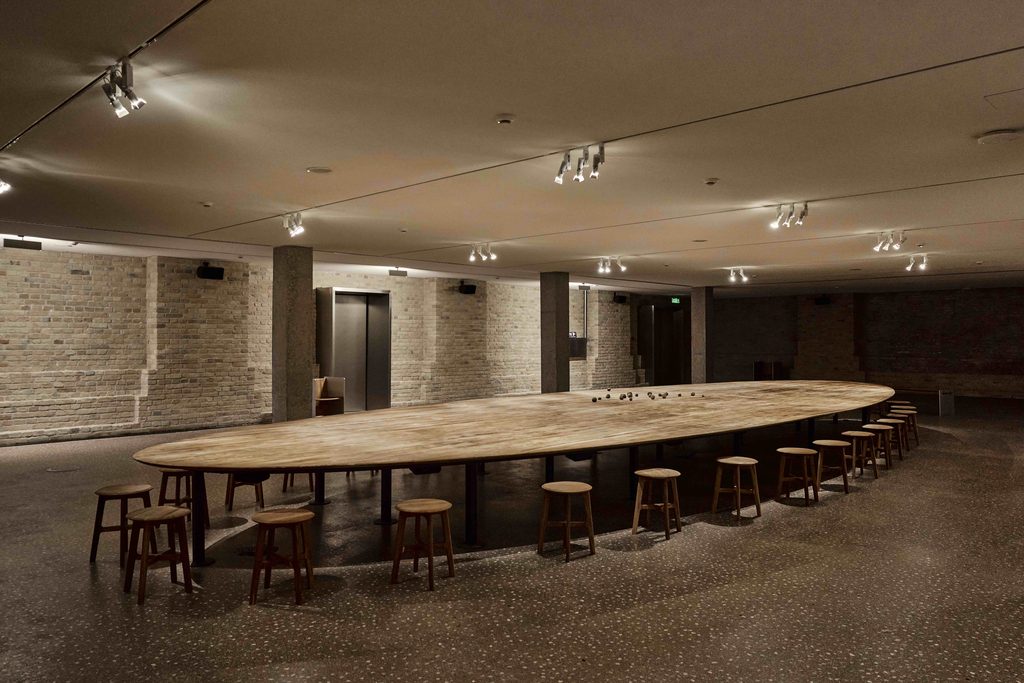
Nadia Kaabi-Linke turns to steel. Her suspended Flying Carpets takes its dimensions from the woven mats used by migrant street vendors in Venice, transforming an everyday object associated with movement and precarious labour into a rigid sculptural presence.
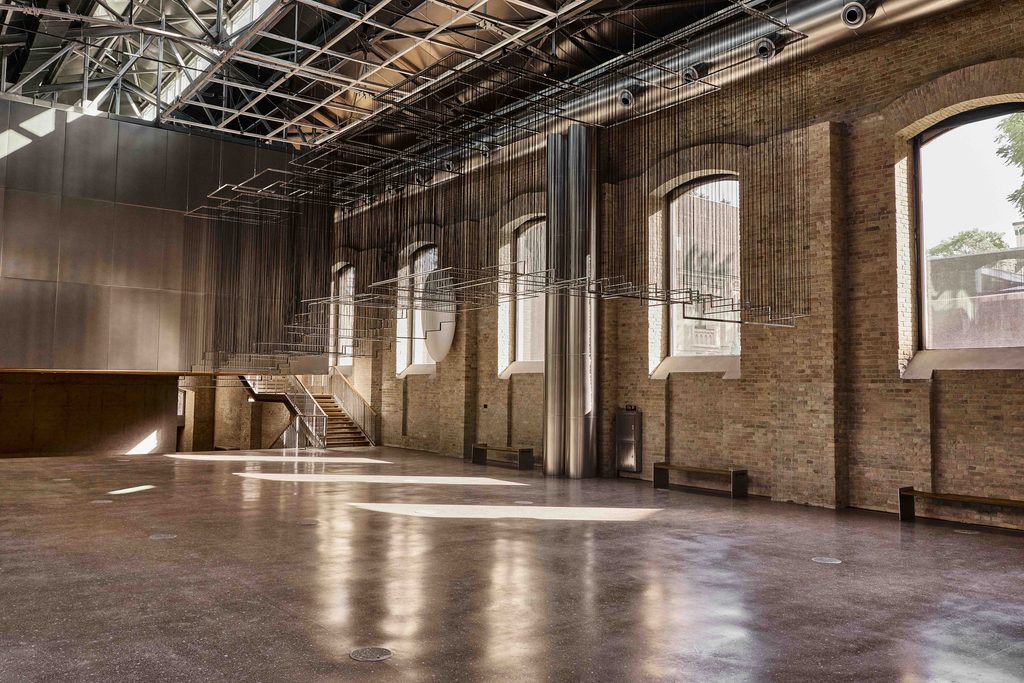
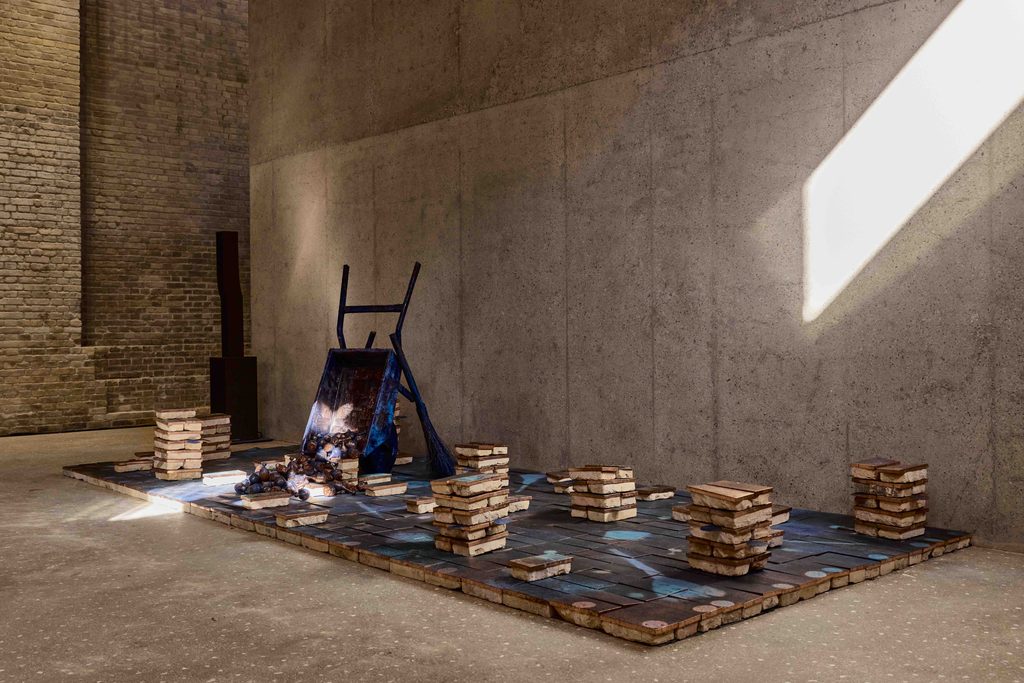
Nari Ward, meanwhile, looks directly back at the building. His site-specific Tashkent Groundin incorporates found materials and copper patina, allowing the work to pick up the industrial vocabulary of the architecture surrounding it.
The materials keep changing. The relationship with place does not.
What Material Can Carry
There is wood, too. Historic works from the State Museum of Arts of Karakalpakstan sit alongside the contemporary commissions in Hikmah: a gypsum portrait by Vladimir Pan, Bakhtiyar Saipov’s introspective study in clay, and Daribay Saipov’s carved wooden column and door, made around four decades before CCA Tashkent existed.
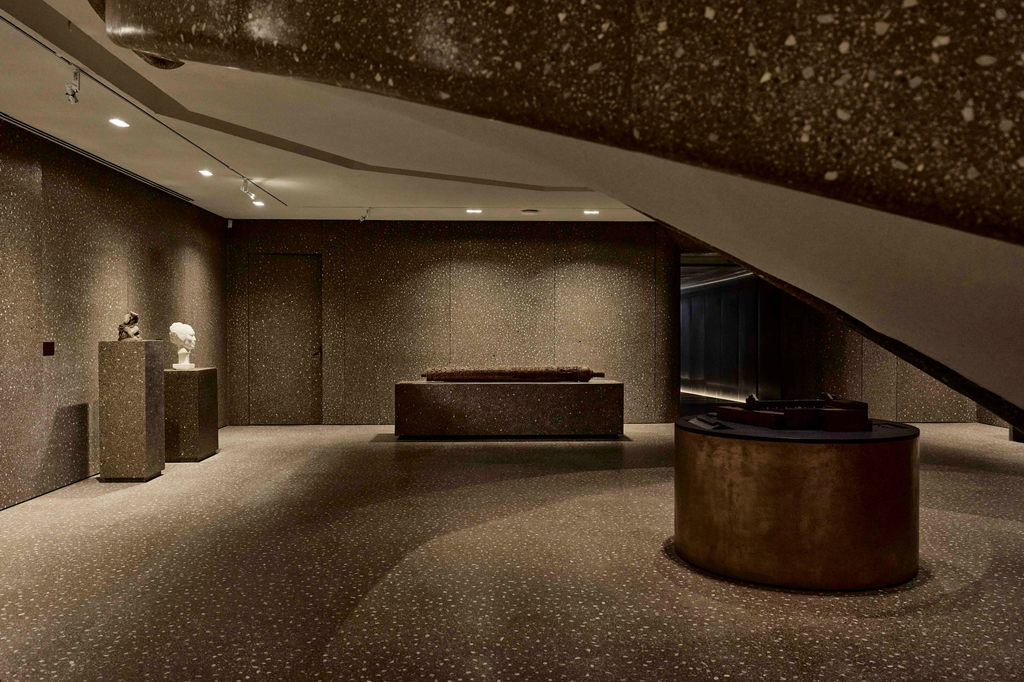
Their inclusion complicates any simple division between old and new.
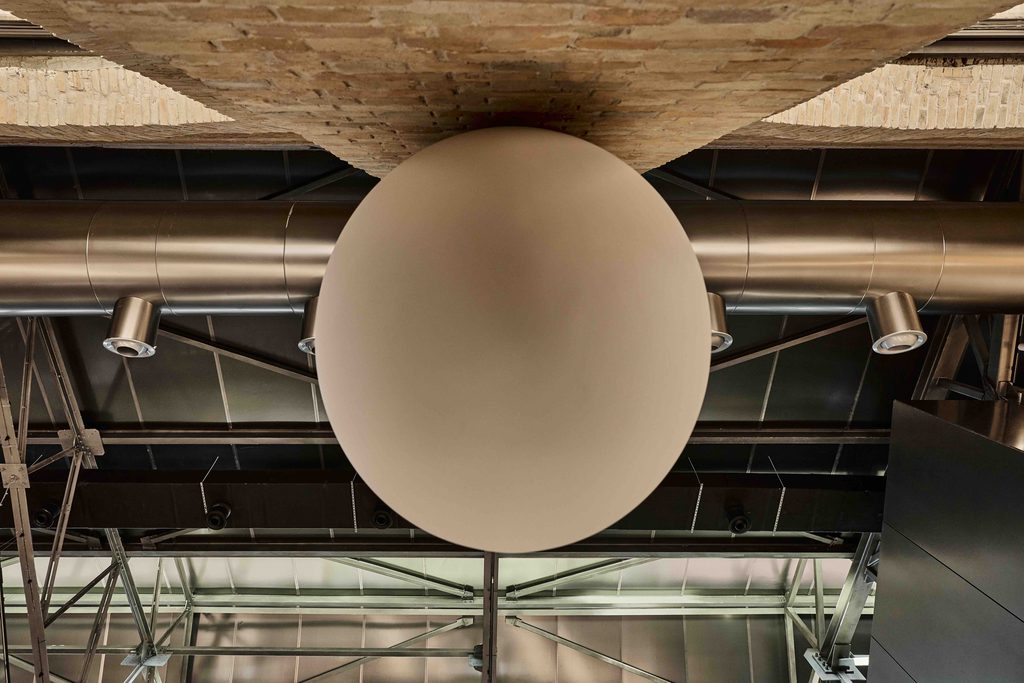
A piece of carved wood can carry a tradition forward. Clay can become both inherited craft and participatory contemporary art. Copper can evoke an industrial past. A new concrete mixture can root an architectural intervention geographically. A century-old brick wall can remain exactly where it is while everything around it changes purpose.
Material, in other words, does more than give the Centre its surfaces. It carries information: about where something was made, who made it, what existed before it and what has been added since.
And that may be where the architecture and Hikmah meet most convincingly.
CCA Tashkent is housed inside a building that has itself been treated almost like a found material, something inherited, examined and adapted rather than discarded.
The diesel station has become a gallery. Its administrative rooms now hold books. Art occupies spaces once designed for machinery. New concrete meets old brick; contemporary ceramics enter a building more than a century their senior.
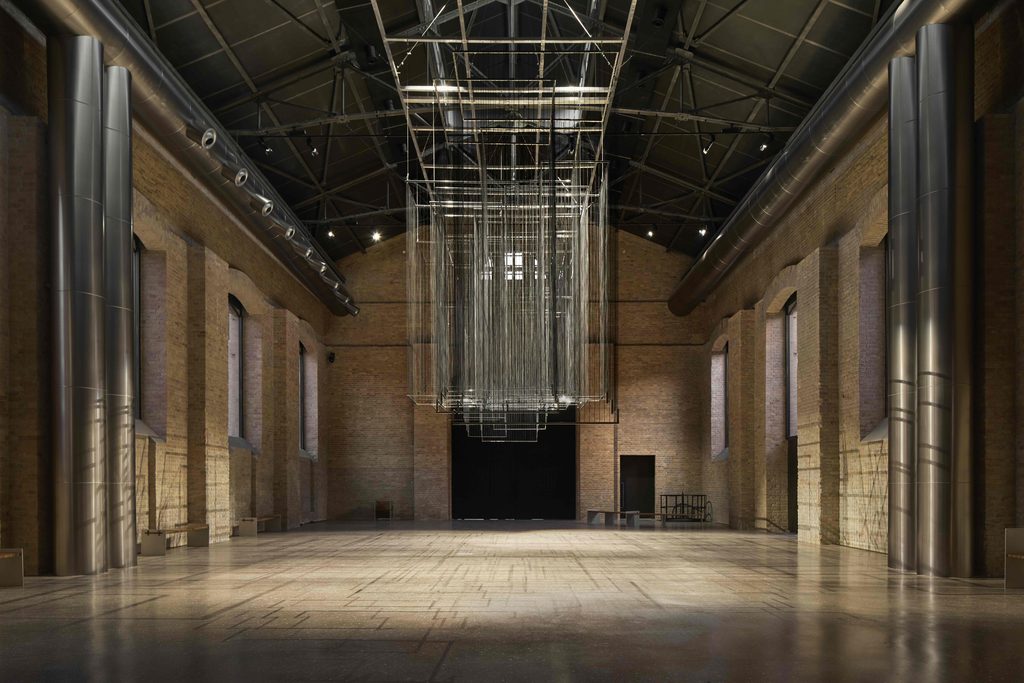
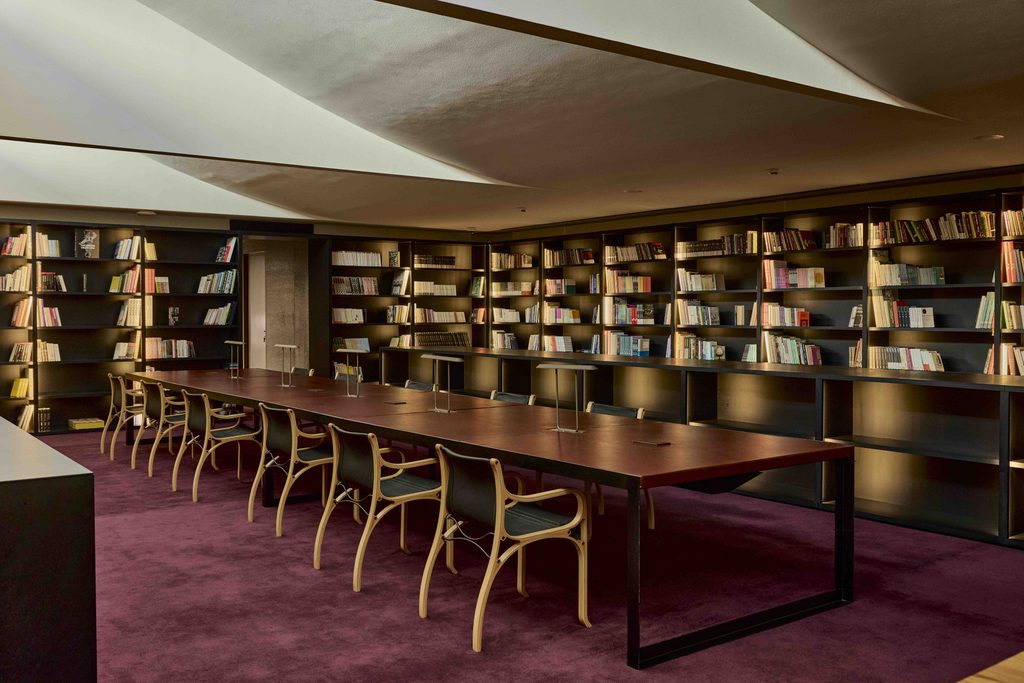
The function has changed. The material tells you what came before.
CCA Tashkent is now open to the public in Tashkent, Uzbekistan. Hikmah, curated by Dr Sara Raza, runs until 31 January 2027.