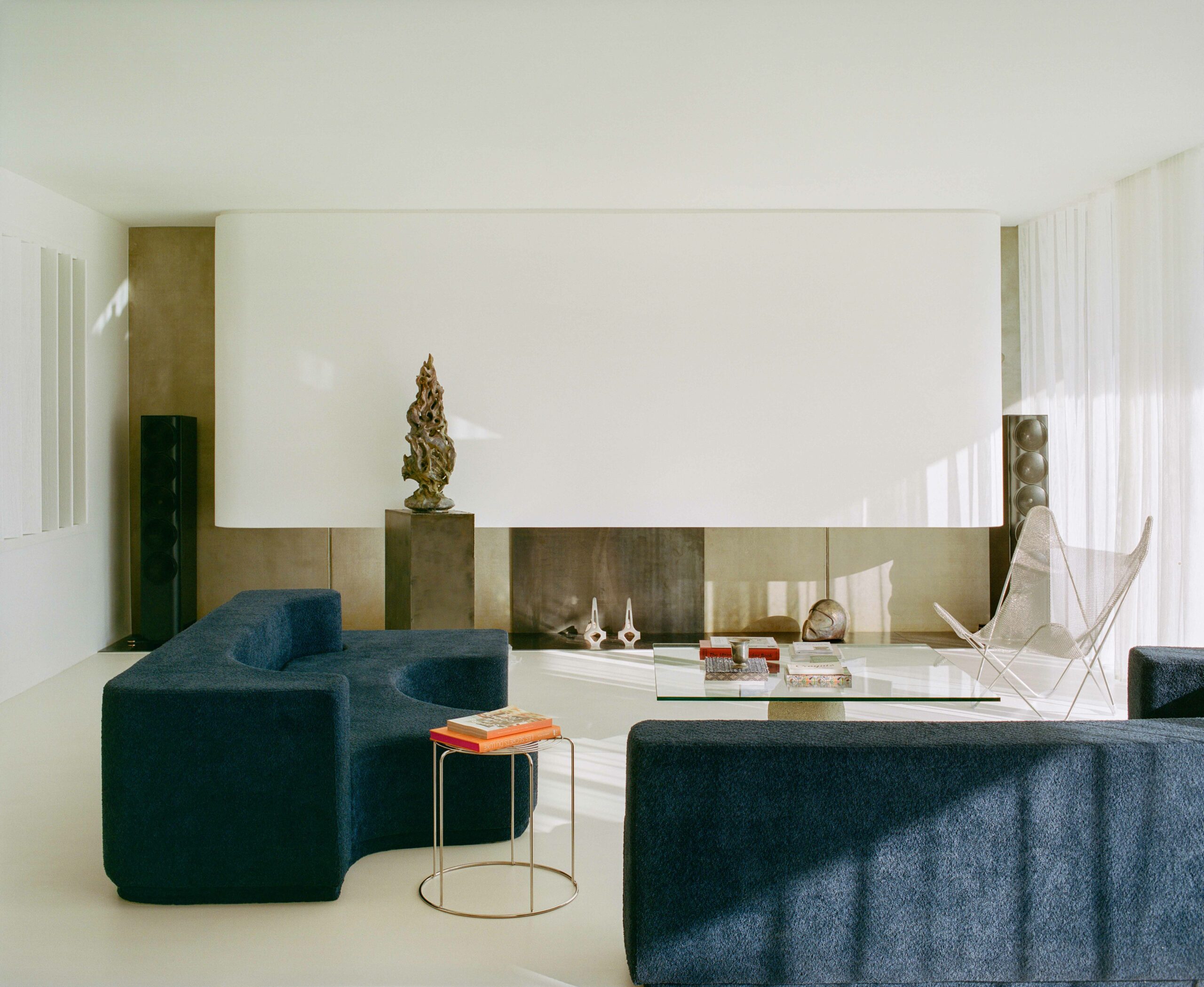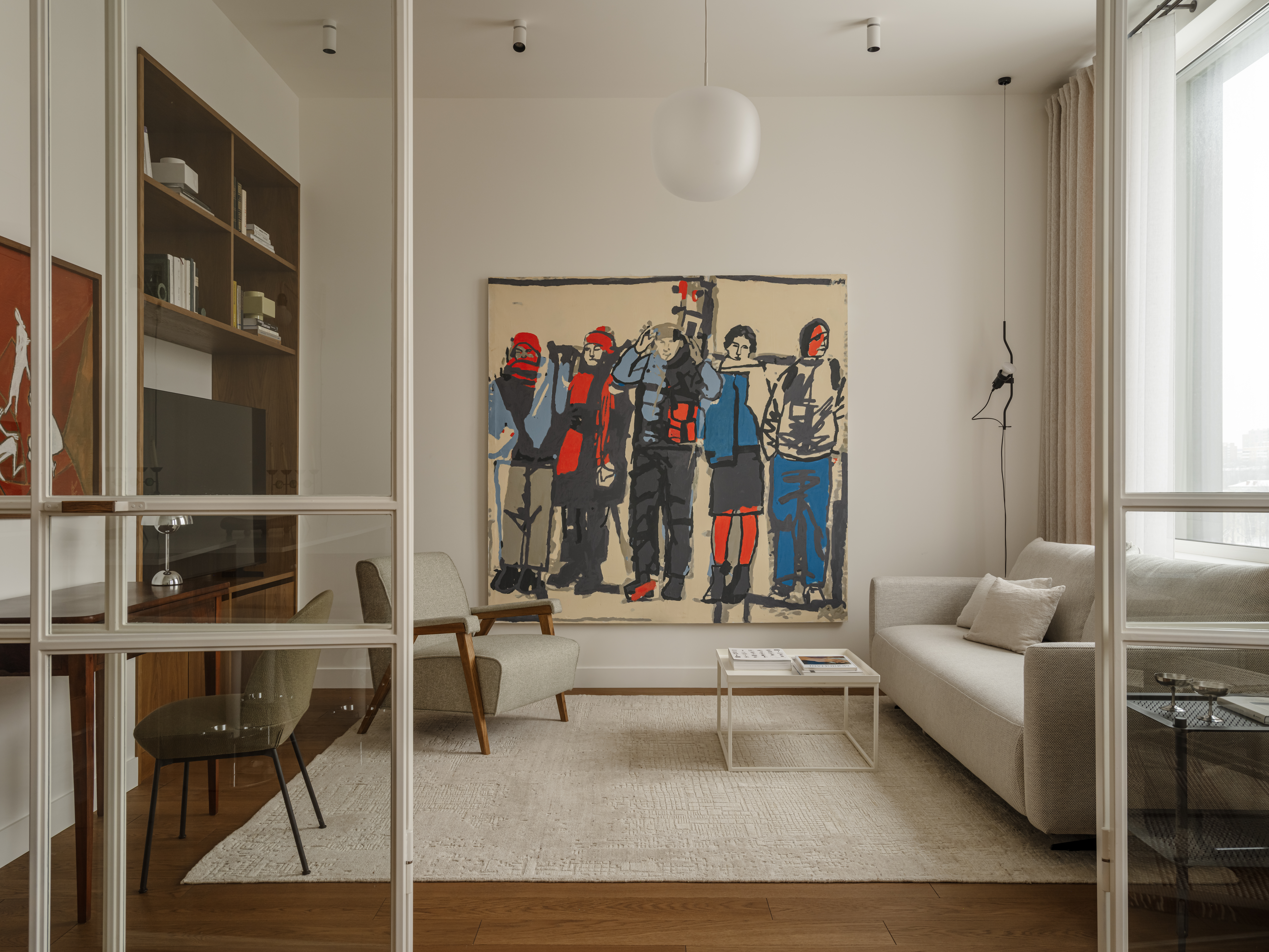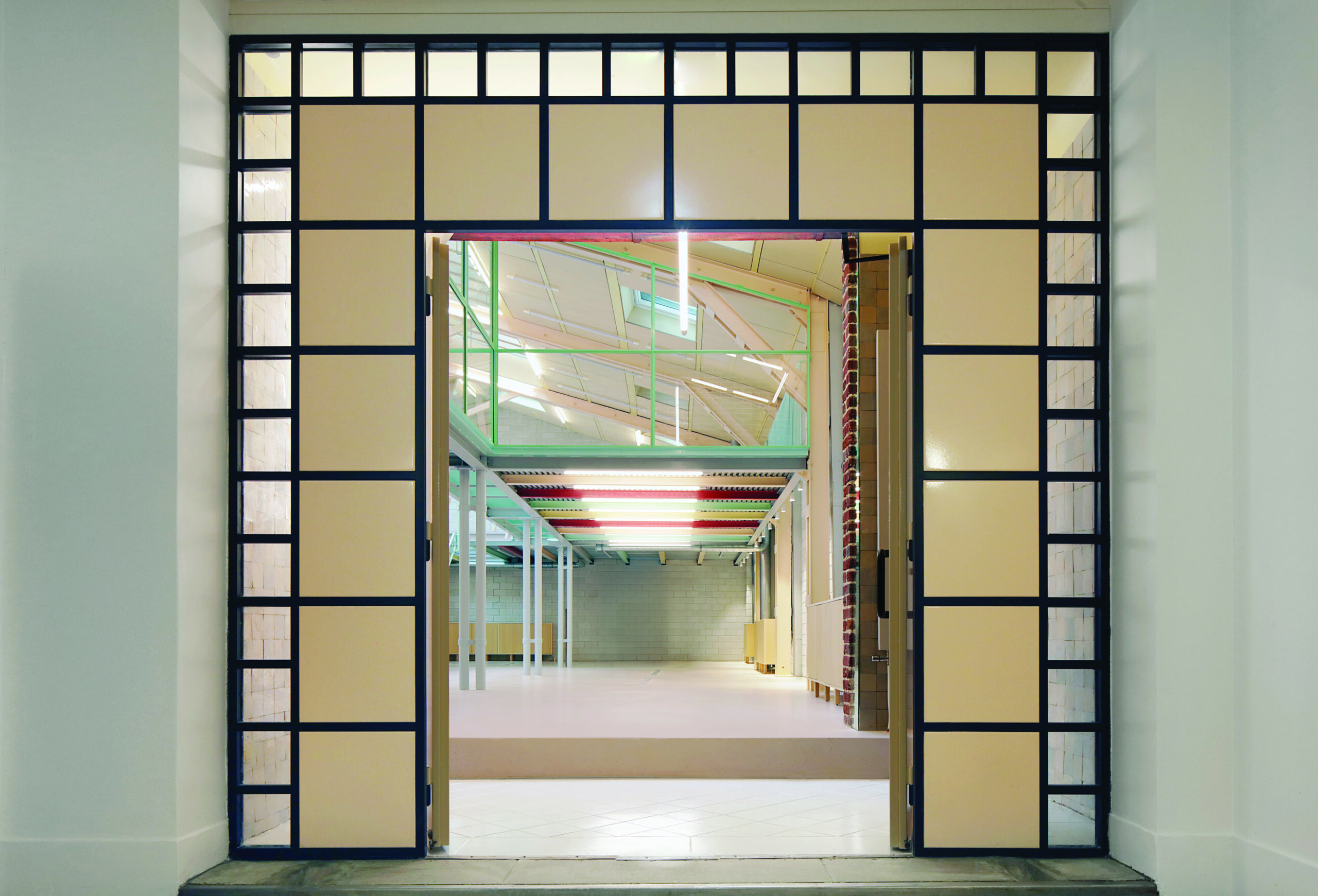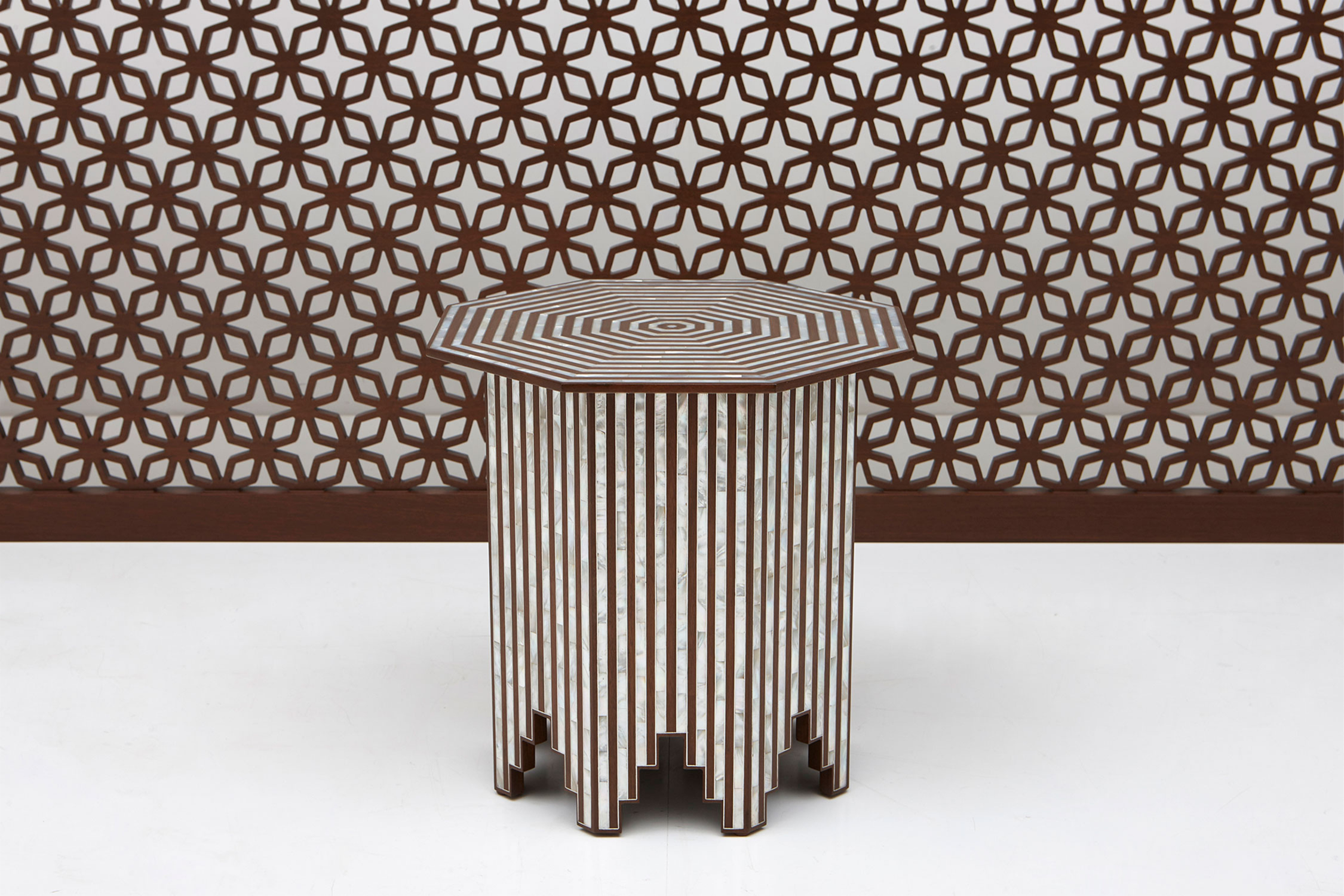
A line of mother-of-pearl catches the light; coloured threads cross the frame of a chair; architectural details move from stone to textile. Across the region, this transfer of memory into material has its own long history: the geometric complexity of Mamluk Cairo, a century of carpet trading built up in Beirut’s souks, the irrigation channels that once shaped where and how Gulf communities settled, the funerary iconography carved into Ancient Egyptian temple walls. Contemporary designers are returning to these sources now, at a moment when regional design identity is asserting itself on an international stage, not to replicate them but to keep them working.
Two impulses run through that return. In the studios of Nada Debs and Kahhal 1871, family workshops and inherited techniques are extended forward: the same inlay, the same knot, applied to a new silhouette. In the hands of Aljoud Lootah and Boo Design Studio, it is symbol rather than craft that migrates, an irrigation system or a piece of jewellery reappearing as the organising logic of a sofa or a chair. And in a handful of practices, among them BEIT Collective and Don Tanani, technique and symbolism fuse entirely, so meaning is not applied to an object’s surface but built into its construction.
The eight designers and brands that follow show what that continuum looks like in practice.
Technique as continuity
Nada Debs
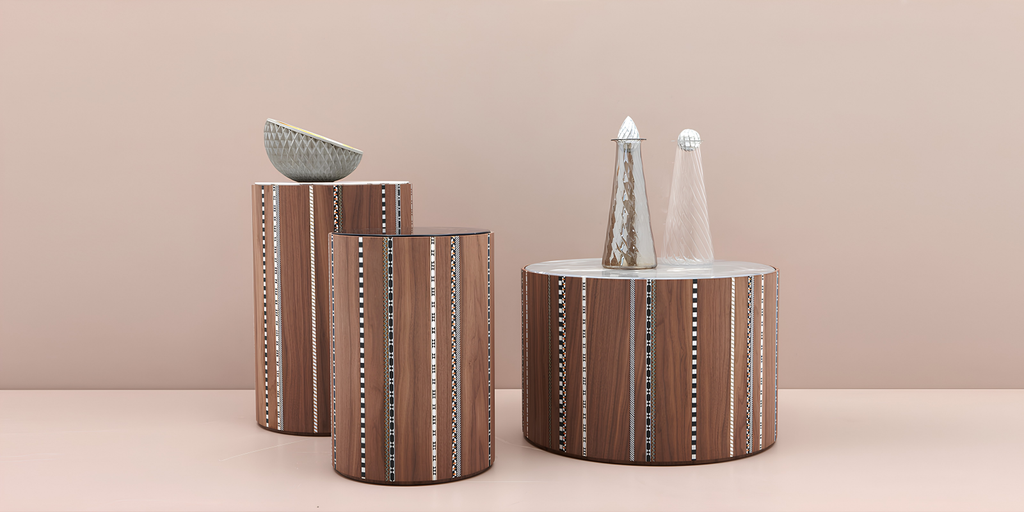
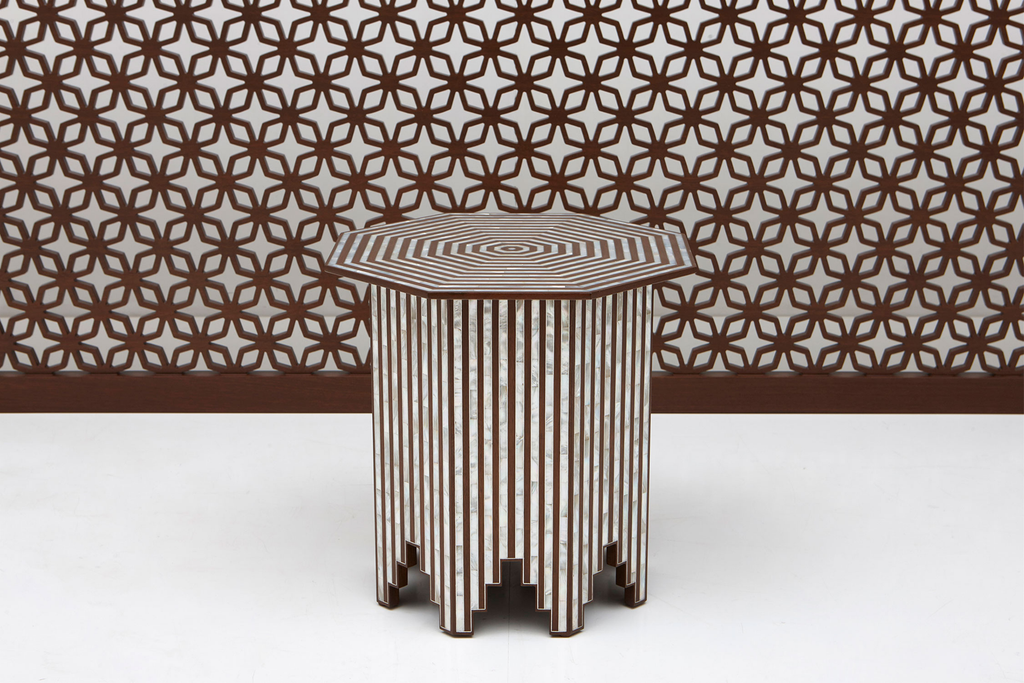
Nada Debs has spent three decades developing what she calls a Contemporary Arabesque: mother-of-pearl inlay, rainbow-stained and traditionally the preserve of Levantine furniture and instrument making, reworked through a sensibility shaped equally by her Lebanese upbringing and her Japanese schooling. Her Beirut studio produces two collections built on that inheritance. In Classic, she applies Islamic geometric patterning to contemporary silhouettes through the traditional inlay technique. In Funquetry, strips of coloured walnut are sliced and shifted across pleated surfaces, so the geometry breaks and reforms as a viewer moves around consoles, cabinets and screens, a deliberately playful counterpoint to Classic’s precision.
Iwan Maktabi
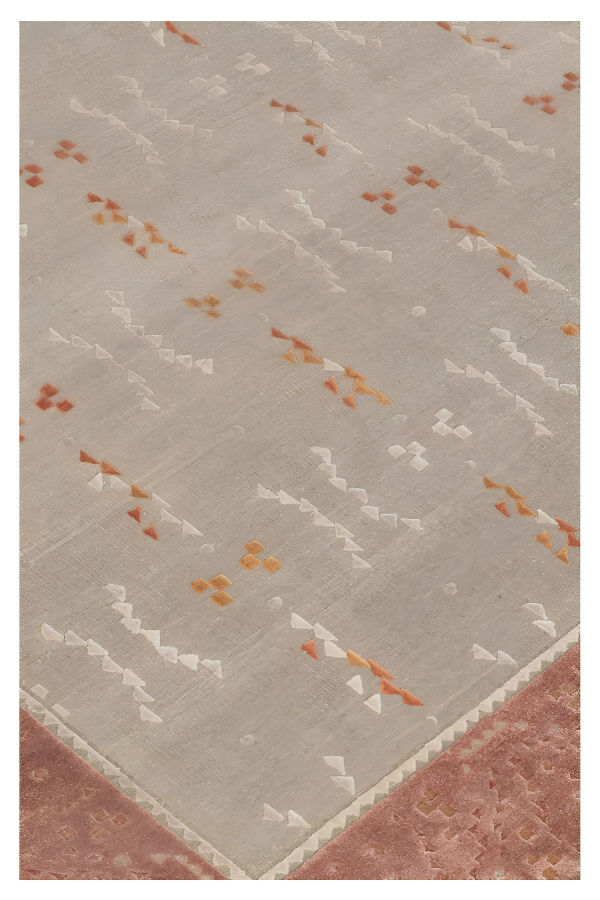
Iwan Maktabi has traded in carpets from the same corner of Beirut for more than a hundred years, and its recent collaborations treat that inheritance as a live material rather than an archive. For Orientations, the house worked with David Raffoul and Nicolas Moussallem of David/Nicolas on a limited-edition series of four rugs, titled North, South, East and West, hand-knotted in Jaipur from hand-carded wool and natural silk. The patterns read as antique medallion motifs pulled apart and reassembled as constellations, retro-futurist in effect but built entirely on the vocabulary of the traditional carpet.
Kahhal 1871
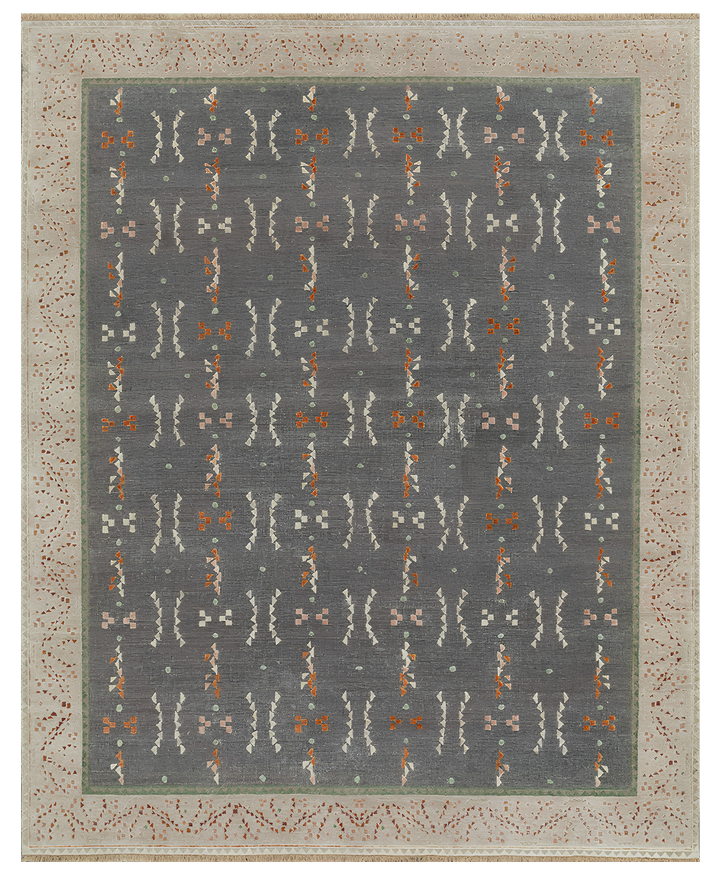
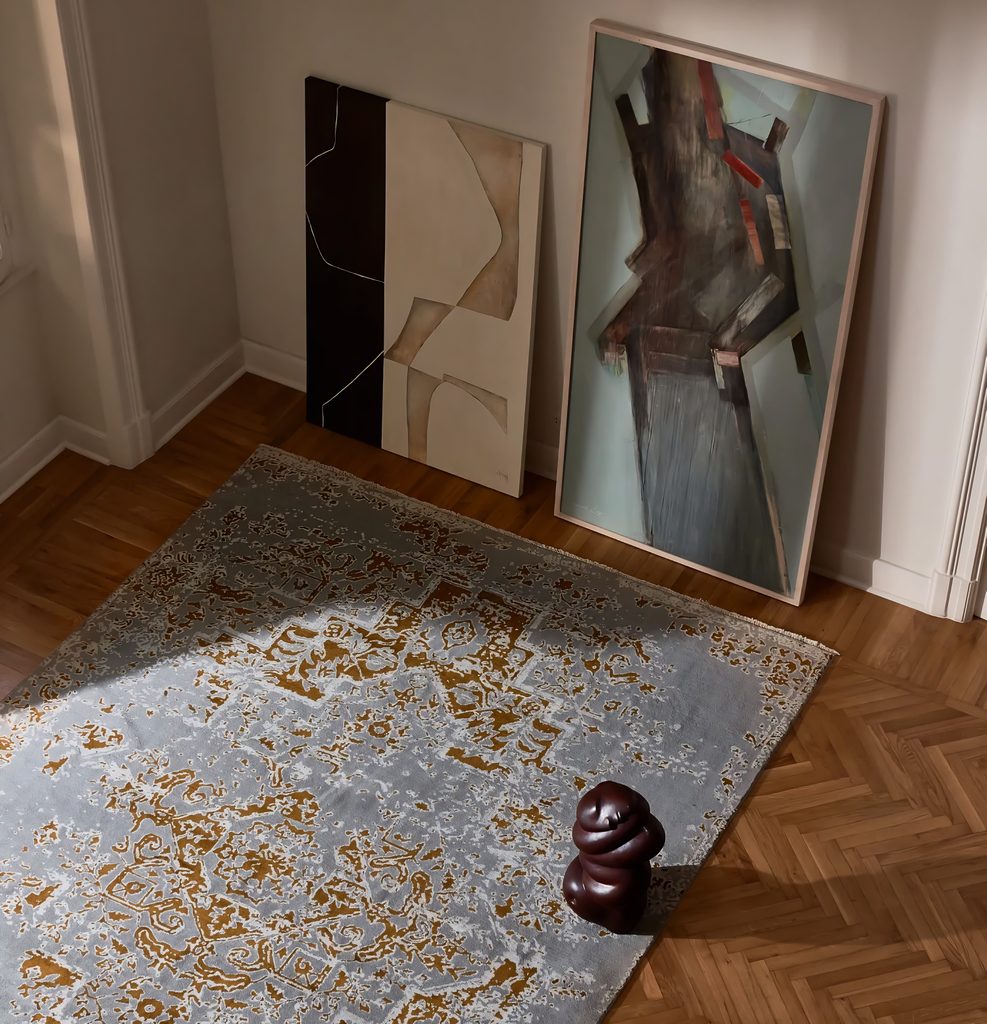
Founded in Cairo in 1871 and now run by Mohamed El Kahhal, the fifth generation of the family to lead it, Kahhal 1871 treats its Mamluk Collection as a direct translation exercise: the metalwork and stone inlay of Mamluk-era Cairo, decoded and rebuilt as hand-knotted rug pattern. Architectural detailing determines the geometry, while natural dyes reproduce the deep, historical colour palette of the original stonework, so the finished rugs read less as a reference to the Mamluk period than as a continuation of the same design language on a new surface.
Symbols translated into form
Aljoud Lootah
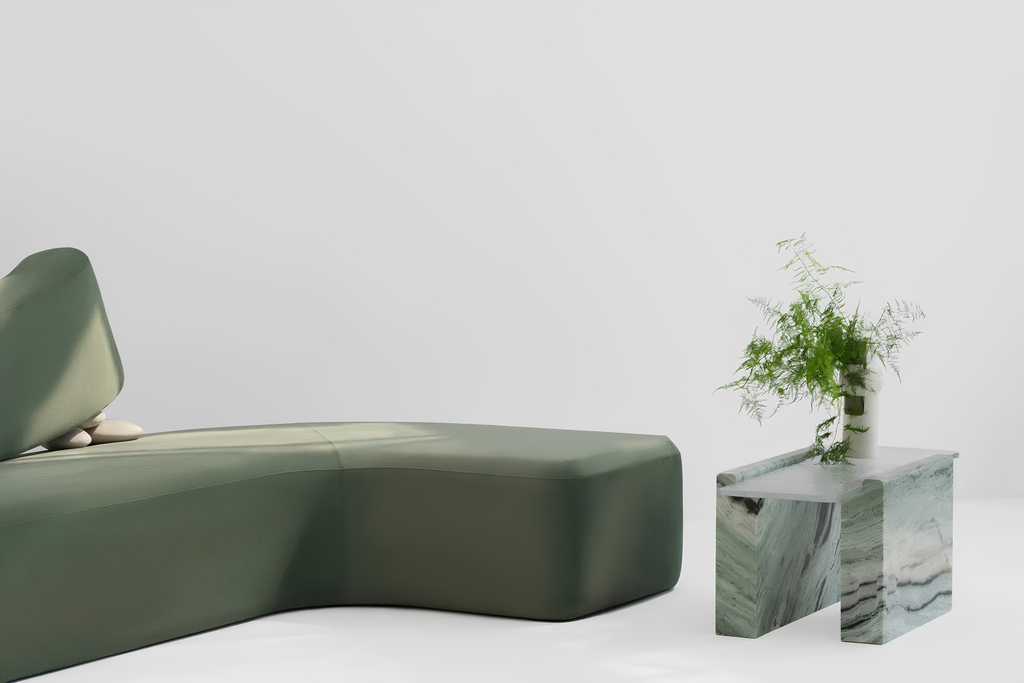
Aljoud Lootah’s Falaj Collection takes its logic from the Emirates’ ancient irrigation channels, the aflaj that once distributed water and, with it, organised where and how communities settled. The curves, divisions and reconnections of those channels become the collection’s structural principle, translated into a three-seater sofa, an L-shaped sofa and two coffee tables upholstered in green velvet and grey suede, set on textured glass over marble. The palette, drawn from the greens of the UAE’s oases, keeps the reference legible without illustrating it directly.
Boo Design Studio
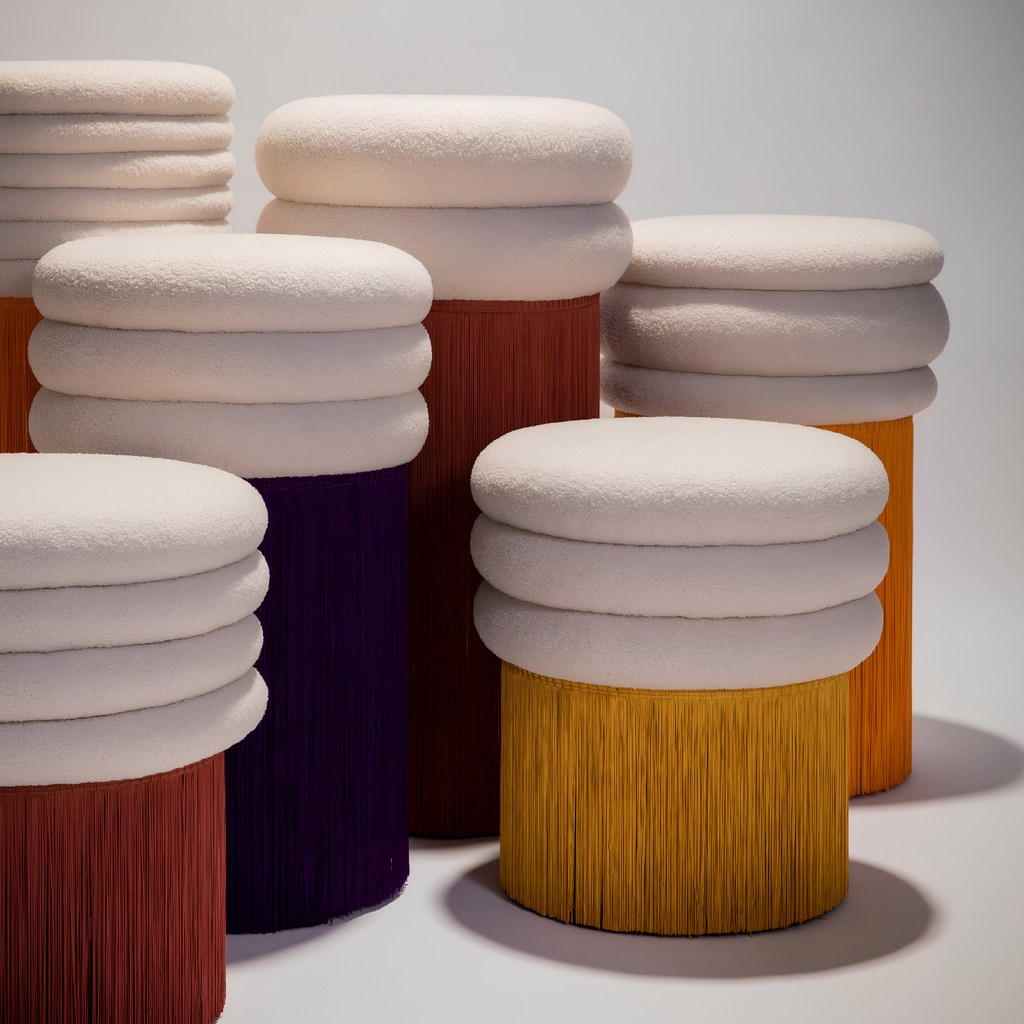
Founded by Joe and Amanda Bou Abboud, Boo Design Studio works from the decorative vocabulary of Qatari craft, translating small-scale ornament into furniture at full size. Medaillon takes the geometry of traditional Qatari jewellery and enlarges it into metal lighting, mirrors and tables, a dialogue the studio calls “juxtaposed jewellery.” Tassels stools draw on the tassel itself, an intrinsic motif in Qatari decorative design: soft, looped white fabric tops sit above bases finished in long, colourful fringes, pieces designed to be mixed and matched across a room.
Where technique and symbolism meet
BEIT Collective
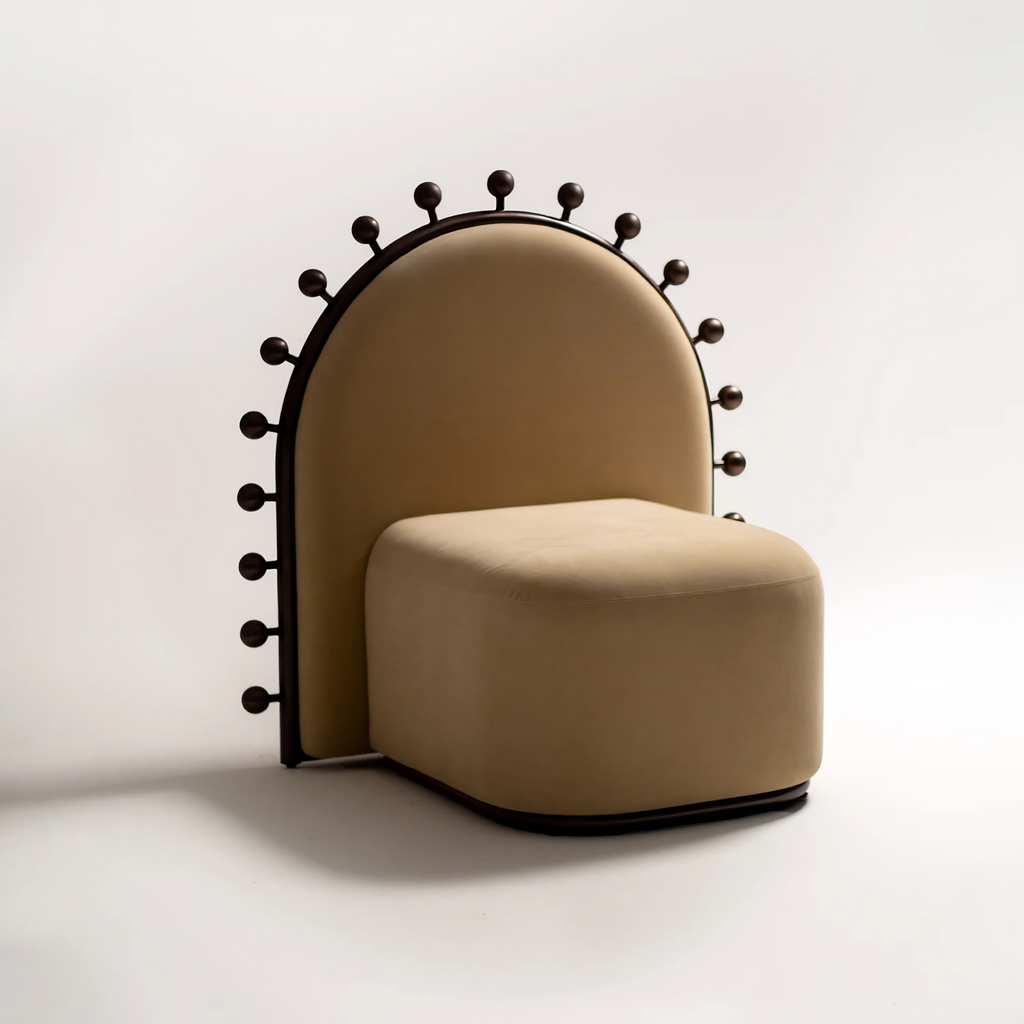
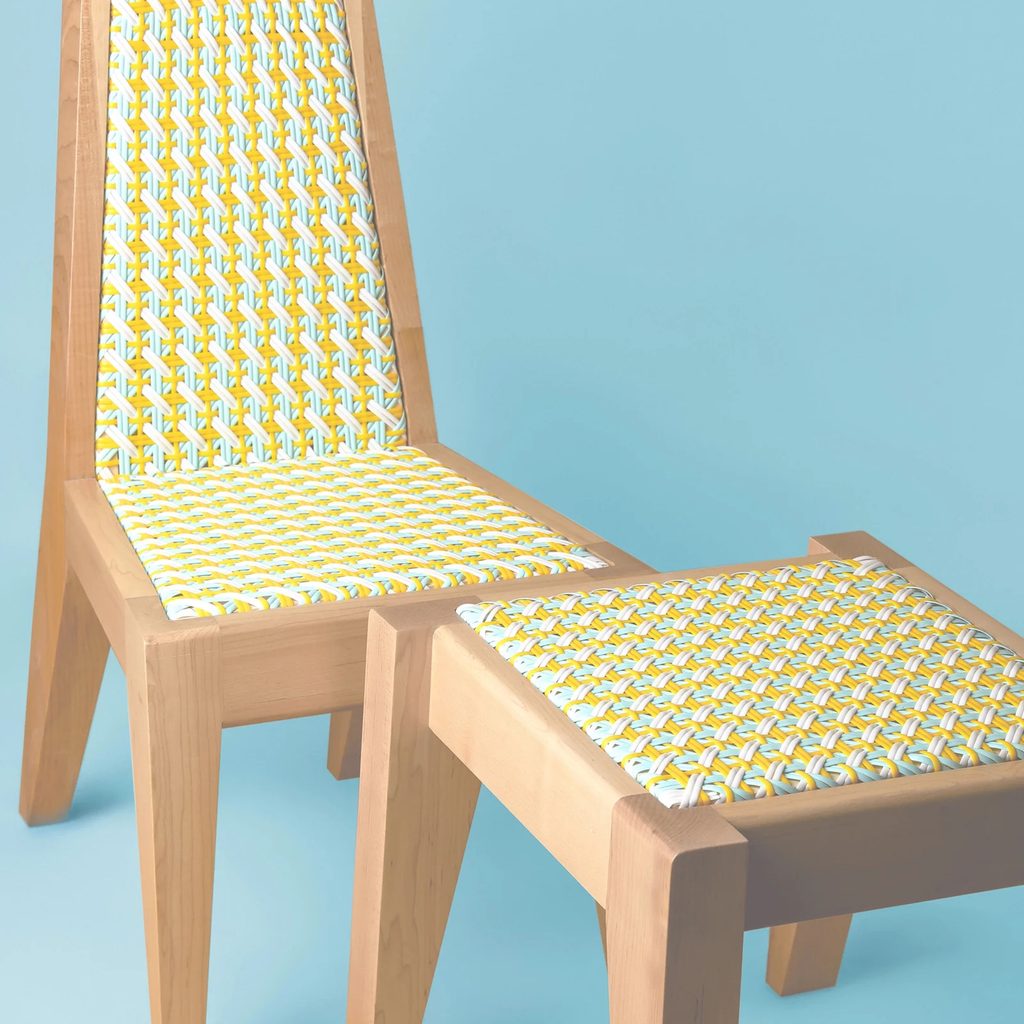
BEIT Collective works from a simple premise, stated on its own site as “inspired by and made in Lebanon,” producing everything through a network of close to a hundred Lebanese artisans working across wood, glass, metal and terrazzo. For Beiruti, designer Adam Nathaniel Furman applied khayzaran, the traditional Lebanese practice of cane furniture weaving, to maple-framed chairs and a stool influenced by the sleek lines of post-war modernist furniture. Coloured, biodegradable threads replace the traditional weave’s muted palette with vibrant pattern, extending a craft historically tied to utility into something closer to decoration.
Khalid Shafar
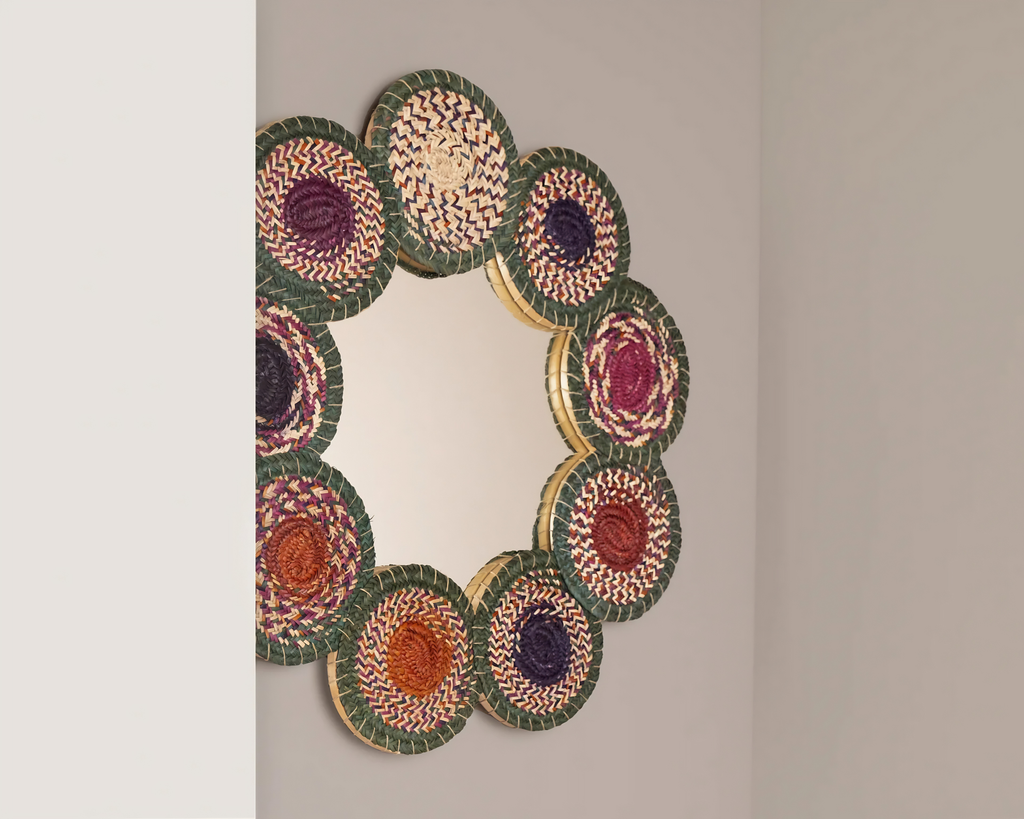
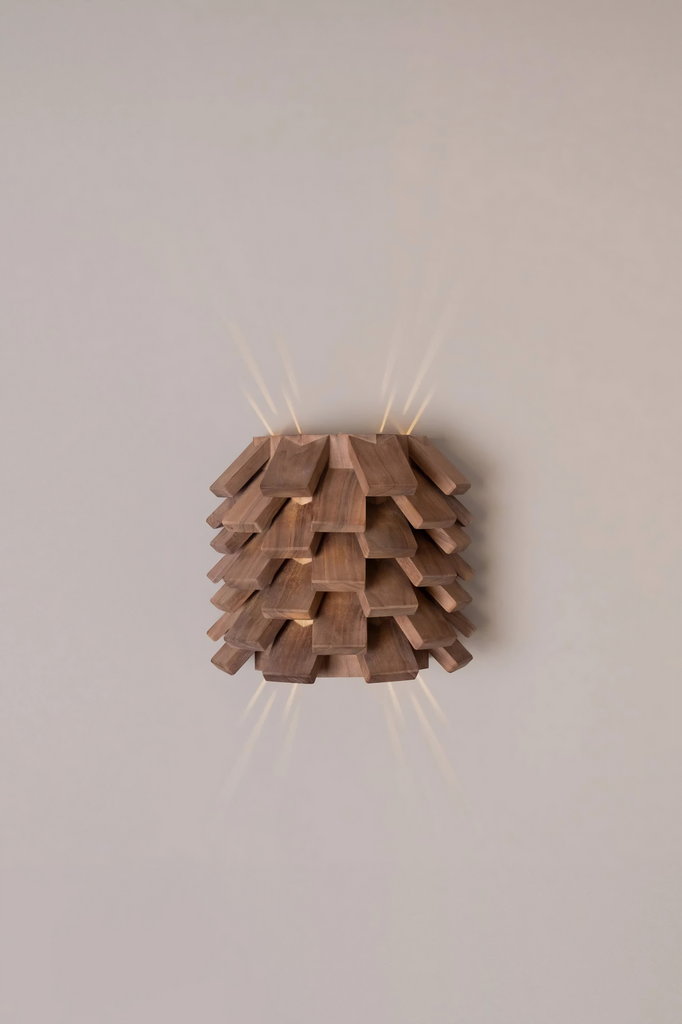
The Palm begins with a single, familiar image: sunlight filtering through a palm frond. Khalid Shafar builds that filtering effect into a full collection of furniture and lighting, combining dried palm leaves, hand-woven into mats by regional artisans, with natural wood and metal accents in brass, stainless steel and copper. Coffee tables, stools, wall lamps and a floor lamp all carry the same principle: light passing through woven fibre the way it once passed through the tree itself.
Don Tanani
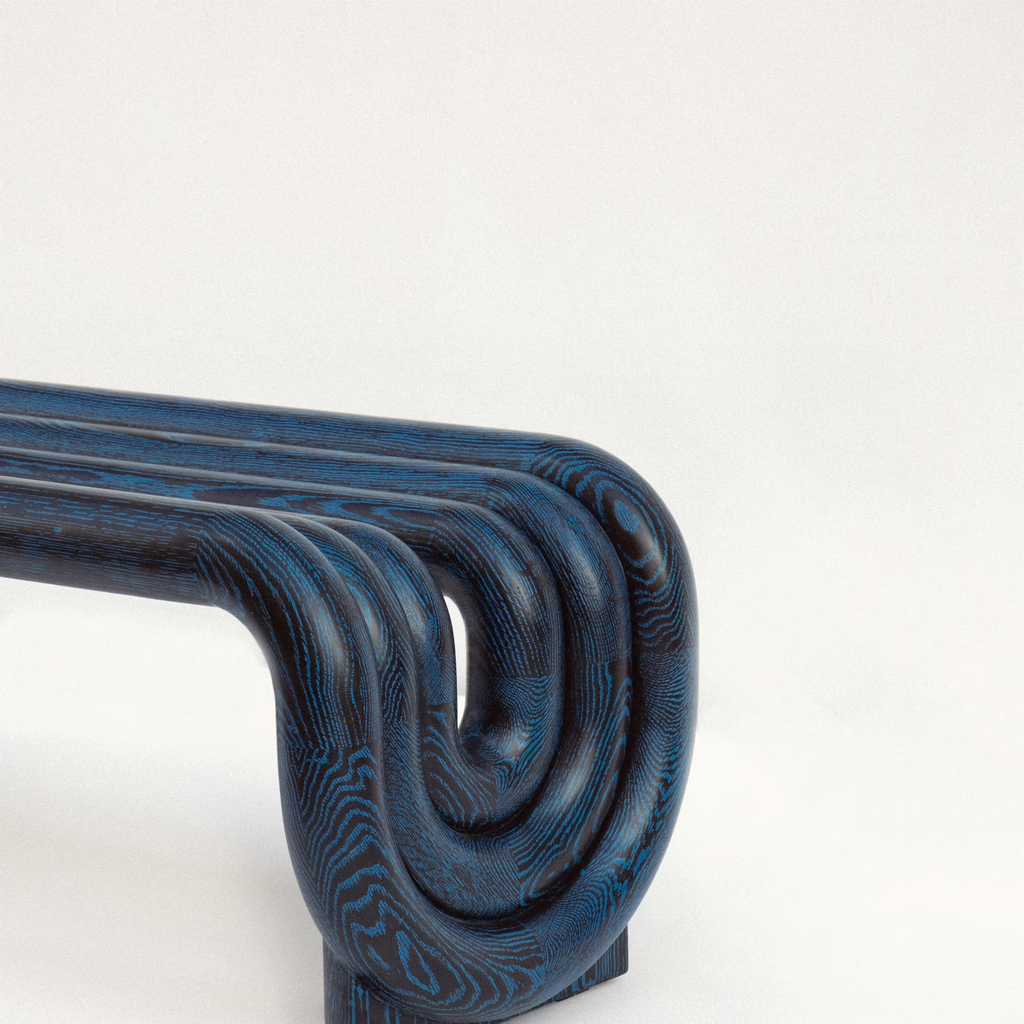
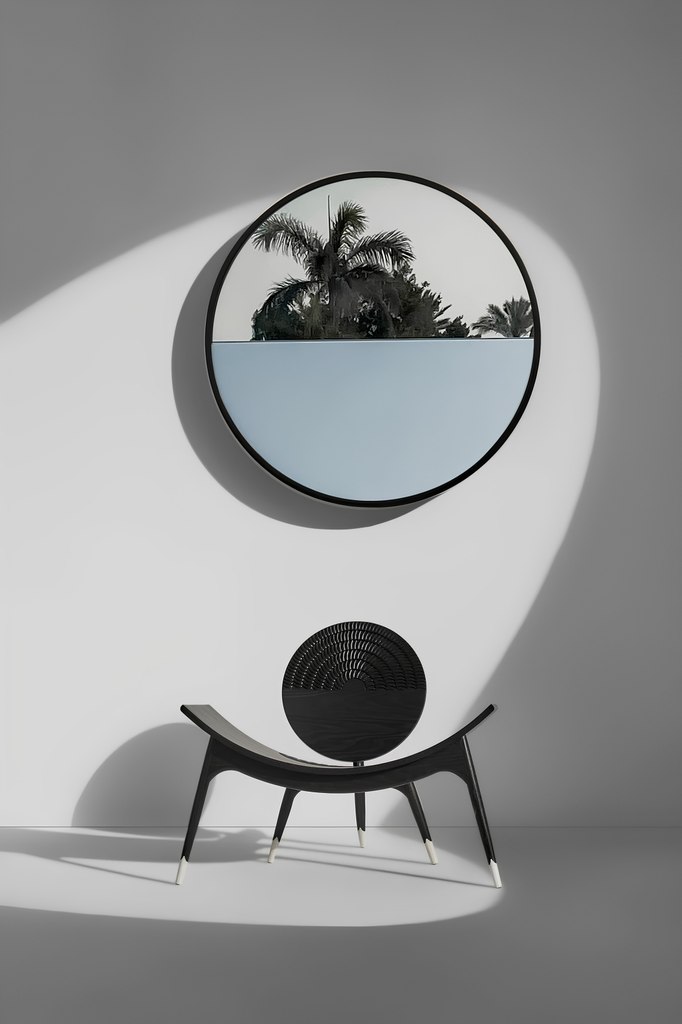
Lina Alorabi has worked from Cairo since 2009, and Duality, her debut collection for Don Tanani, launched at NOMAD St. Moritz in 2021 as a sustained study in Ancient Egyptian symbolism carried through material rather than decoration. Ouroboros, a bench built from oxidised oak, uses precise joinery and an inlay of blue pigment to render the piece as a single unbroken form, a direct reading of the serpent that consumes its own tail as a symbol of renewal. Atet, meanwhile, sets camel-bone inlay into oxidised oak to trace the mythology of Ra’s solar barge, the vessel that carried the sun god through the sky by day and the underworld by night.
Read together, these eight practices suggest that heritage in Gulf and Levantine design is not a finished inheritance to be quoted but an active material, still being cut, knotted, inlaid and rewoven into new form. A joint in oxidised oak, a knot in wool, a line of mother-of-pearl: each carries centuries of technique into an object built for the present.