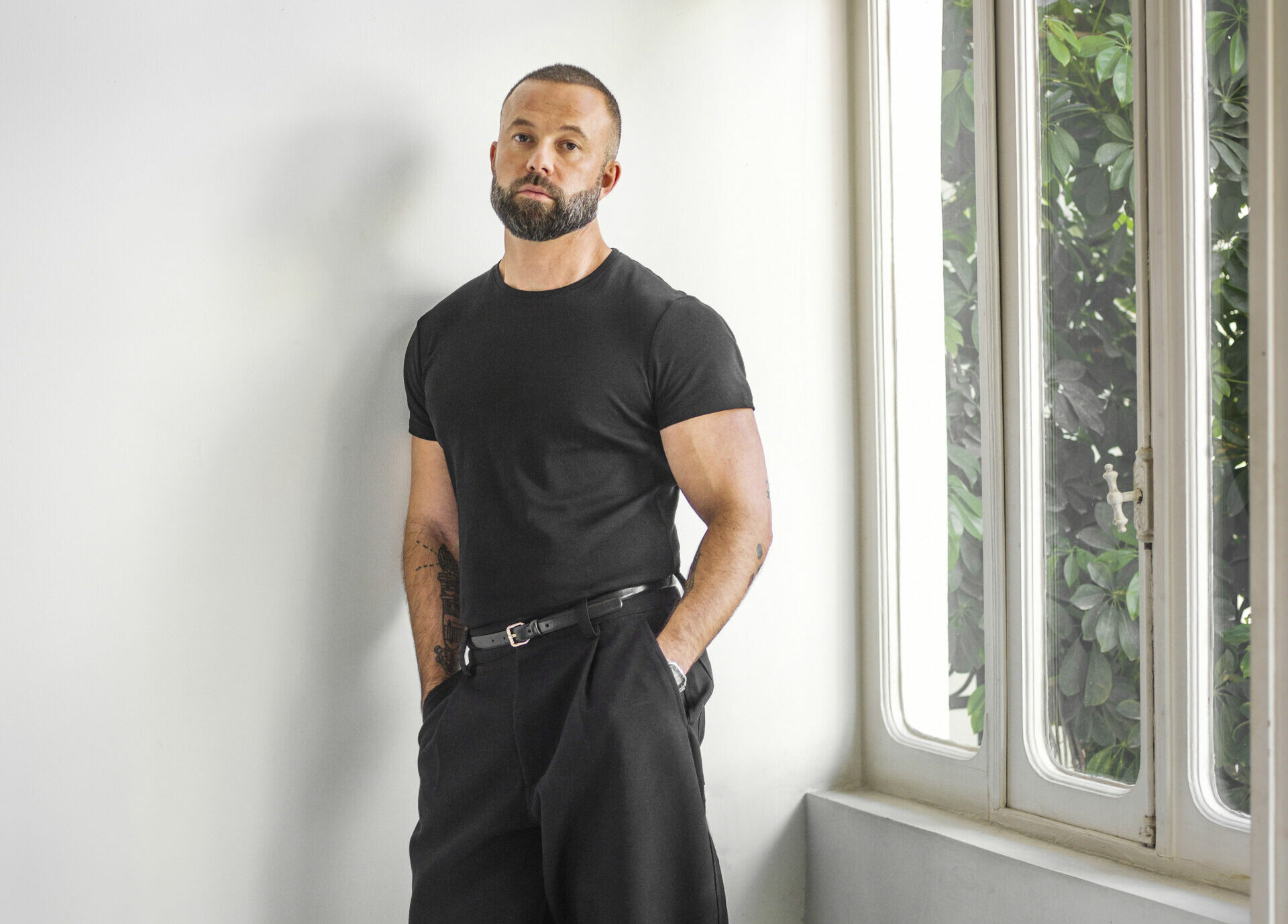
For Fadi Yachoui, recognition was never the point. Since founding Atelier L’inconnu, he has built a practice where the object is allowed to speak before the maker does, where wicker, wood, stone and metal are treated less as materials to master than as languages to be put in conversation with one another.
Living between Beirut and Milan, and shaped as much by the fragility of his native Lebanon as by the rigour of Italian design culture, Yachoui approaches the atelier as a living collective rather than a personal signature. His collections, among them CACTI and La Volupté, have carried the studio from SaloneSatellite to Rossana Orlandi’s gallery, all while keeping Lebanese wicker weaving and its artisans at the centre of the work.
In this edition of In Conversation With, Fadi Yachoui reflects on the meaning behind the atelier’s name, the cost and reward of manufacturing in Lebanon, and why slowness, for him, is a form of intention rather than inefficiency.
Atelier L’inconnu — yet your work is becoming very well known. Is there a tension in that, and has the meaning of the name evolved for you?
I don’t see it as a contradiction. From the beginning, Atelier L’inconnu was never about hiding the person behind the work; it was about shifting the focus away from the designer and onto the pieces themselves. Many people advised me against that approach because they believed a brand should revolve around a recognizable personality. But I always believed that if the work is honest enough, it should be able to speak for itself.
For me, “the unknown” has never referred to anonymity. It refers to allowing each piece to be discovered on its own terms, without relying on my name to validate it. I want people to connect with the emotion, the craftsmanship, and the story embodied in the object before they know who designed it.
As the studio has become more recognized, the meaning hasn’t really changed. If anything, it has become stronger. Recognition was never the objective; creating work with enough depth and authenticity to resonate independently was. If the pieces become known before the designer does, then I feel Atelier L’inconnu has fulfilled its purpose.
Atelier L’inconnu is described as a collective where no single member is named. How do you balance that ethos with the reality that you, Fadi Yachoui, are the public face?
I’ve naturally become the public face of the atelier, but I’ve never seen myself as its sole author. Atelier L’inconnu has always been a collective in the truest sense. Every project carries many hands, many conversations, and many forms of knowledge. While I may be the one speaking publicly, the work is never created alone.
The atelier is shaped by architects, artisans, engineers, craftspeople, collaborators, and even our clients. Sometimes a simple conversation or a request for a custom piece, even one that is never commissioned or purchased, can spark an idea that eventually becomes part of a collection. Many of our pieces were born this way. Inspiration doesn’t belong to one person; it grows through dialogue, curiosity, and shared experiences.
My role is to guide the vision and bring these different voices into a coherent language, but the work belongs to everyone who has helped shape it. That’s why the atelier has always been more important than the individual. The “unknown” isn’t about erasing authorship; it’s about acknowledging that creation is never the result of a single mind. It’s a living process fuelled by every encounter, every exchange, and every person who contributes to its evolution, whether visibly or invisibly. That collective energy is what truly defines and sustains Atelier L’inconnu.
I’ve also always imagined Atelier L’inconnu as something that could eventually grow beyond me. Not as a personal brand, but as a creative house that continues to evolve across different disciplines, ideas, and collaborations. I hope that, over time, it becomes a platform where many people can contribute, create, and leave their mark. In that sense, the atelier is less about one designer and more about building something enduring, something that can keep growing through others long into the future.
You live between Milan and Beirut. You’ve described fragments of your work being sent into the world, much like Beirut’s children and stories. How does distance from Lebanon shape what you create?
Distance changes the way you remember. Beirut becomes less about its buildings and more about sensations, the light, the imperfections, the contradictions, and the people who continue to create through uncertainty. Living between Milan and Beirut allows me to look at Lebanon with both affection and clarity. I don’t try to recreate Beirut literally. I translate its emotions into objects. Every piece leaving the atelier carries a fragment of that city with it.
Since I was young, I’ve never felt rooted in just one place. I’ve always believed that the world is meant to be experienced chapter by chapter, and that every place you live, every person you meet, and every culture you encounter leaves something behind. Life has a way of taking us in unexpected directions, and I’ve learned to embrace each one with curiosity rather than certainty.
At some point, I made a conscious decision that we all have a story to write. Mine would not be defined by a single city, but by the experiences I collect along the way. I trust the process of where life leads me, knowing that every chapter, every encounter, and every challenge has something to teach me and inevitably finds its way into my work.
Beirut is my origin and will always be part of me, but every chapter, whether in Milan or wherever life leads next, adds another layer to that story. Those experiences don’t replace one another; they coexist. Together, they shape my perspective and, ultimately, the objects I create. And when I eventually turn the last page of my own story, I hope to do so with a big smile on my face, knowing I embraced every chapter, trusted the process, and lived it fully.
You chose to manufacture in Lebanon rather than Italy. What has that choice cost you, and what has it given you?
It has certainly cost us simplicity. Logistics are more difficult, production is less predictable, and every collection requires more perseverance than it probably would elsewhere. But what it gives back is immeasurable. It preserves relationships with artisans whose knowledge cannot be industrialized. It allows us to keep traditional techniques alive while pushing them into contemporary design. Manufacturing in Lebanon isn’t simply a production decision; it’s part of the narrative of the work itself.
On a personal level, I’ve always been someone who finds more fulfilment in giving than in receiving. I’ve never approached relationships or work with expectations of what I might get in return. Instead, I try to focus on what I can contribute, whether that’s creating opportunities, preserving craftsmanship, or leaving something meaningful behind. I’m a realist by nature, and I’ve learned that energy is better invested in building than in unnecessary noise.
Receiving recognition is always gratifying, but giving requires a different kind of commitment. It demands time, responsibility, generosity, and the willingness to keep showing up, even when the path is difficult. To me, that’s where the real challenge, and the real reward, lies.
As designers, we don’t just create objects; we shape a legacy. I often ask myself what impact our work will have long after we’re gone, and what it will leave for the next generation of designers, artisans, and makers. If Atelier L’inconnu can contribute, even in a small way, to preserving knowledge, inspiring others, and creating opportunities for those who come after us, then I feel we’ve given something that extends far beyond the objects themselves.
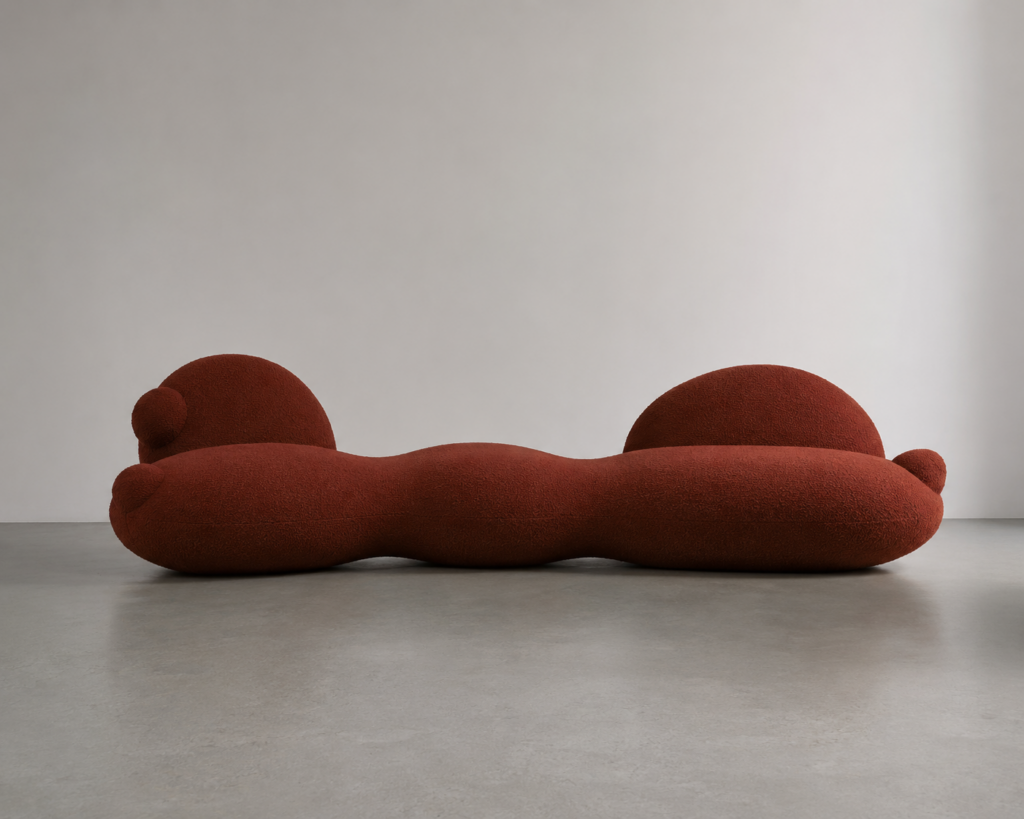
Lebanese wicker weaving is increasingly rare, squeezed by economic instability and globalised production. How do you see your role, are you a guardian of a dying craft, or something else?
I don’t like thinking of craft as something that needs to be preserved inside a museum. Craft survives when it evolves. My responsibility isn’t to freeze tradition, but to give it new relevance. By placing wicker within contemporary collectible design, we’re creating new reasons for younger generations to value these techniques. I hope the atelier becomes a bridge between heritage and the future rather than simply an archive of the past.
You’ve said there is an irreplaceable value in the hand, and that your work asks to be touched, to age, to transform over time. In a world of digital fabrication and fast design, is slowness a political act?
I think slowness is first and foremost a personal decision. It’s the way I choose to live, to observe, and to create. We live in a world that constantly encourages us to move faster, produce more, and consume without pause. For me, choosing slowness is choosing intention.
Digital technologies are extraordinary tools, and we embrace them throughout our process, but they should never replace human sensitivity. The slight imperfections left by the hand are what give an object its humanity. They carry emotion, memory, and the presence of the person who made it.
When a piece takes months to complete, it isn’t because the process is inefficient; it’s because every gesture has meaning. Every weave, every carved edge, every finish is given the time it deserves. That time becomes part of the object itself.
I believe that taking time is a way of assigning value again, to craftsmanship, to materials, to the people behind them, and ultimately to the experience of living with an object. The most meaningful things in life are rarely rushed, and I trust that process.
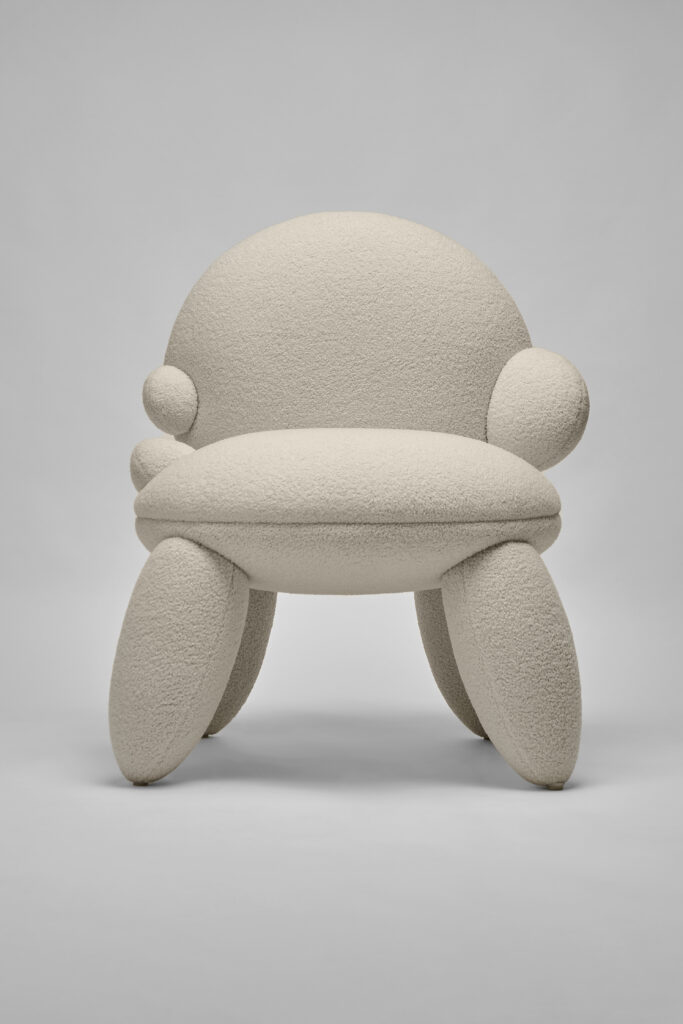
CACTI was born during a period of immense personal and collective crisis, the pandemic in Italy, the Beirut blast, political collapse. How much of your own pain is visible in that collection, and was that intentional?
Looking back, I think more of myself is present in CACTI than I understood at the time. It wasn’t designed as a response to tragedy; it simply became one. The pandemic, the Beirut explosion, and everything that surrounded those years inevitably found their way into the work.
But the collection was never about pain itself. It was about the decision to see beauty despite it.
I’ve always felt blessed to have a way of looking at life that searches for light, even in difficult moments. My mind naturally processes challenges by asking how we move forward rather than remaining trapped in them. There are things in life that are simply beyond our control. We can spend every day grieving them and slowly disappear into that darkness, or we can choose to keep creating, keep loving, and keep living. For me, that choice isn’t about denying pain; it’s about refusing to let it define who we become.
The cactus became the perfect metaphor. It thrives in harsh conditions while protecting something delicate within. And then there’s the Nopal flower, which blooms unexpectedly from the cactus, a symbol that I associate with a mother’s unconditional love. Even in the most unforgiving landscapes, life still finds a way to bloom.
That’s what CACTI is really about. It isn’t a collection born from suffering; it’s a collection born from hope, quiet strength, and the belief that beauty is always there for those willing to see it.
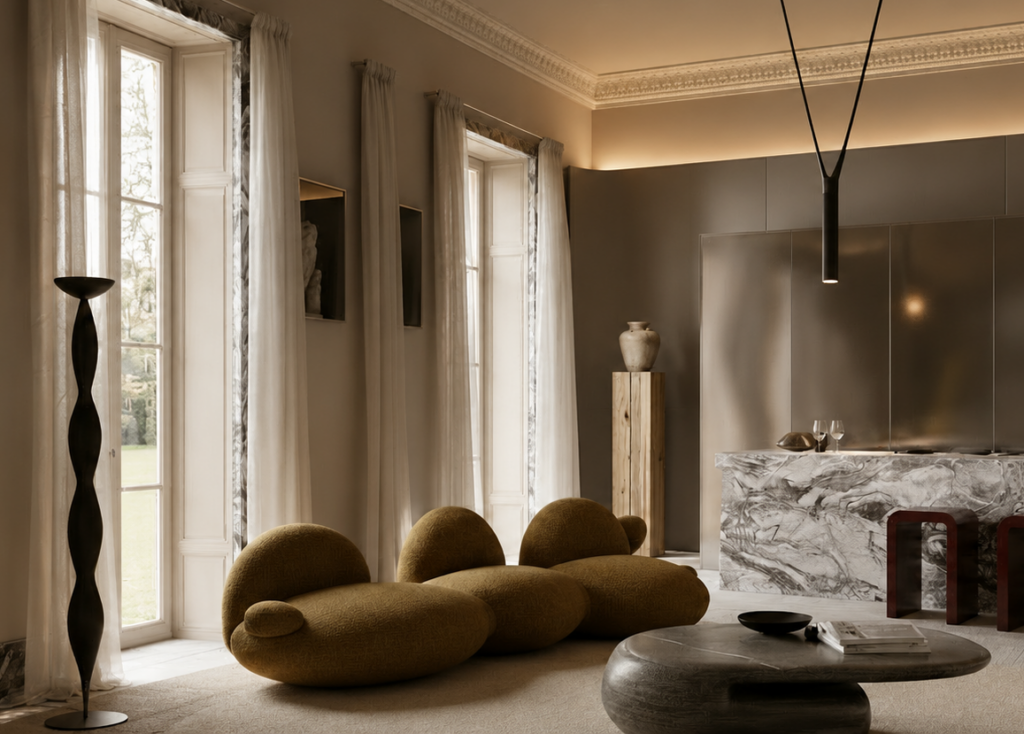
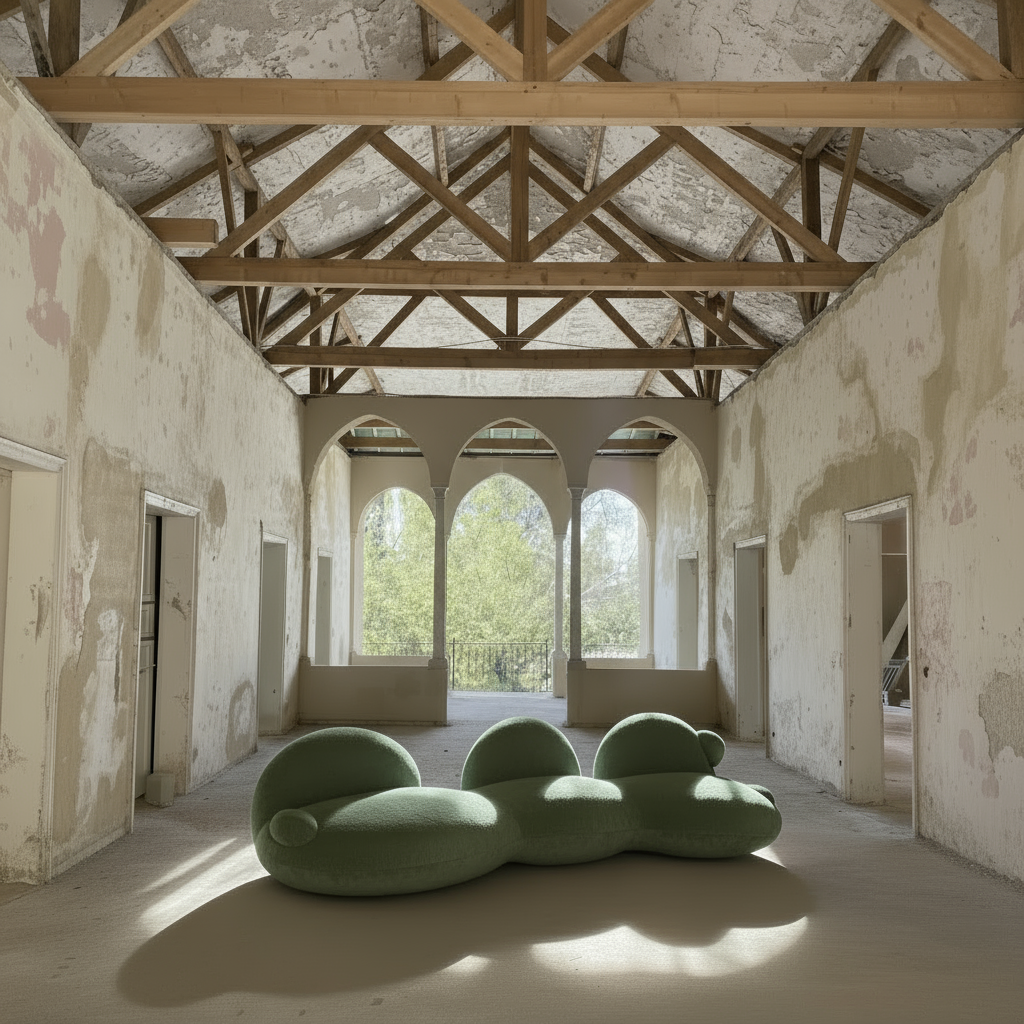
La Volupté moves between furniture, sculpture, and architecture. At what point does a chair stop being a chair?
When function is no longer its only purpose. A chair should still be comfortable, but it can also provoke emotion, tell a story, create a dialogue with a space, even alter how we move around it. For me, furniture is architecture on an intimate scale. It’s something we don’t simply use, we live with it.
Rossana Orlandi’s gallery is one of the most mythologised spaces in contemporary design, designers dream of showing there. What did it feel like to walk in with your own work?
It felt surreal, but also strangely familiar. Milan has been part of my journey for many years, so exhibiting there didn’t feel like arriving somewhere new. It felt like continuing a conversation that began long ago. Rossana has always championed designers with strong identities rather than following trends, so presenting La Volupté there felt like finding the right home for the collection.
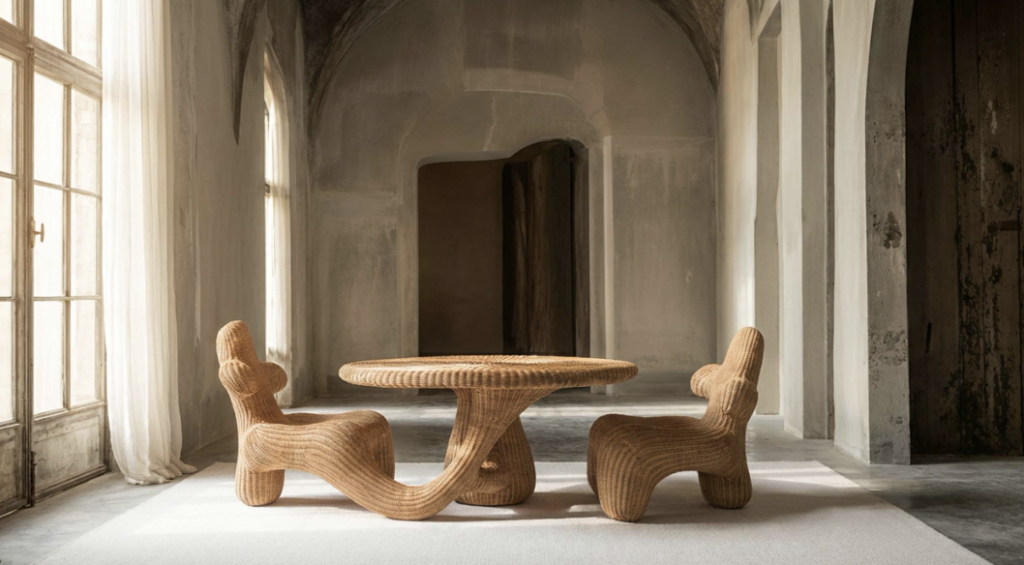
La Volupté was presented at her gallery just weeks after winning the Créateurs Design Awards. Did the recognition change how visitors looked at the pieces, or does the work speak before any label does?
Awards are incredibly meaningful because they give you the confidence to keep pushing forward. They remind you that the countless hours, the doubts, and the perseverance are being recognised and appreciated. In many ways, they reassure you that you’re moving in the right direction. They also open doors and create opportunities that might not have existed otherwise.
But awards don’t sustain attention. Recognition may encourage someone to stop and take a closer look, but the work itself has to hold them there. That’s why the conversations I value most are the ones where people forget about the award entirely and begin engaging with the pieces on an emotional level, touching them, questioning them, discovering their stories, and making them their own. That’s when the design truly begins.
For me, an award is never the destination; it’s an encouragement to continue evolving, taking risks, and striving to create work that resonates long after the recognition has faded.
You’ve said returning to Milan feels less like coming back and more like continuing a conversation. What is that conversation about, and who else is having it?
It’s a conversation about contemporary craftsmanship, but also about perspective. Milan constantly asks what design can become next, while Beirut constantly reminds me why design matters in the first place. Atelier L’inconnu exists somewhere between those two questions.
From the beginning, one of the intentions of the atelier has been to create a stage where people can bring their own interpretations to the work. I never want to dictate a single reading of a piece. What fascinates me most is seeing how different people connect with the same object in completely different ways. Those moments reveal as much about us as they do about the work itself.
I’ve always been interested in seeing the world through other people’s eyes. Every person carries a different story, a different sensitivity, and a different way of interpreting the same experience. Listening to those perspectives is one of the greatest ways to evolve, not only as a designer, but as a person. It reminds you that there is never just one way of seeing the world.
The dialogue isn’t only with designers; it’s with artisans, collectors, galleries, clients, and anyone willing to engage with the work. Every conversation teaches me something new, and each interpretation adds another layer to the story of the piece. In that sense, the atelier doesn’t offer answers; it offers possibilities.
I believe the role of design is to invite curiosity, spark emotion, and leave room for interpretation. The atelier simply creates the stage; the people who encounter the work complete the narrative. Their perspectives continue to shape mine, and that ongoing exchange is what allows both the work and myself to keep evolving.
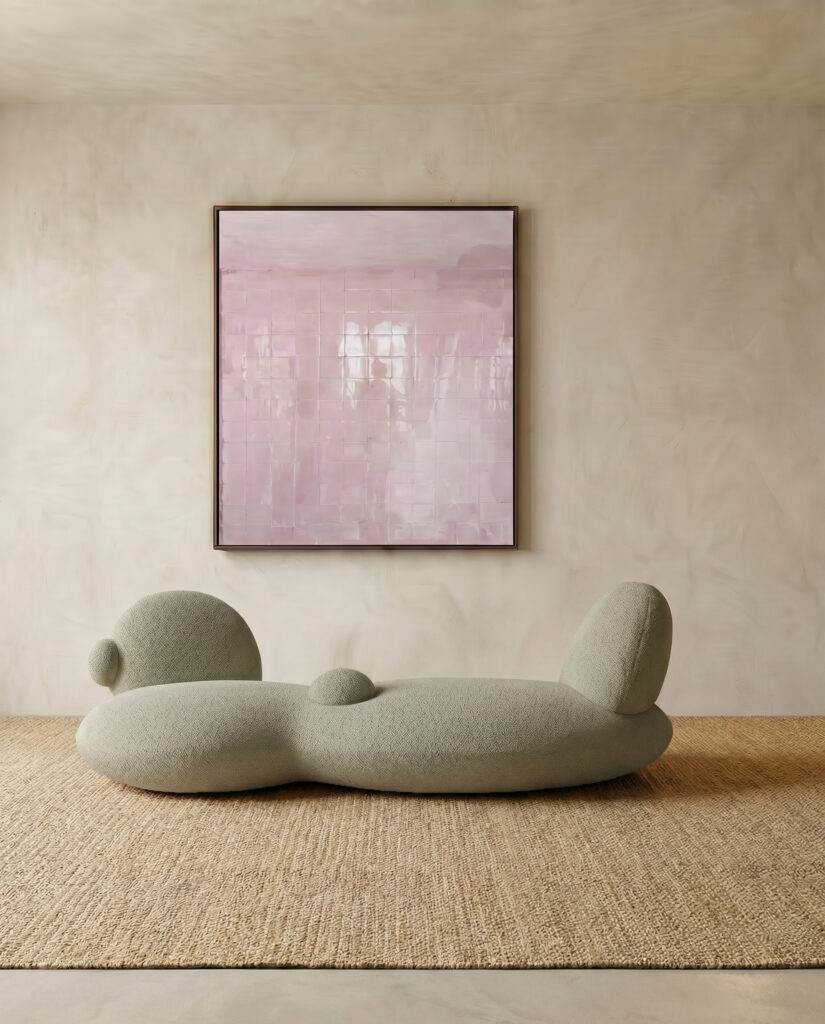
You’ve gone from SaloneSatellite to Rossana Orlandi in just a few years. Has success changed what you dare to design?
Success has certainly made the journey more challenging. With every collection, expectations become higher, and there is an unspoken feeling that you can’t go backwards. People naturally compare your next work to your last, and that can easily become a creative trap.
But I don’t want expectations to become limitations. If anything, they’ve encouraged me to be even more courageous. Every new collection should surprise me first before it surprises anyone else. If I begin designing to satisfy expectations rather than curiosity, then I’ve stopped growing.
For me, success isn’t about repeating what worked before; it’s about having the confidence to explore the unknown again and trusting that each new chapter has something different to say.
Collectible design often ends up in the homes of a very small, wealthy audience. Does that ever sit uncomfortably with the idea of design serving people?
I believe collectible design and accessible design serve different purposes. One isn’t more valuable than the other. Collectible design gives us the freedom to experiment, to push materials, techniques, and narratives further than industrial production often allows. Those explorations eventually influence broader design culture. Innovation usually begins in smaller circles before it reaches larger ones.
When you’re alone in the atelier, before anyone else arrives, what does that silence feel like? Is it creative, or is it heavy?
It’s actually the complete opposite. I don’t associate the atelier with silence at all. The moment I wake up, my mind already feels as if it’s halfway through the day. Even when the music is off, there is never real silence, there are ideas running through my head, sketches taking shape, conversations replaying, problems waiting to be solved, and new possibilities constantly emerging.
I’ve always been a multitasker, and my creativity thrives in that constant movement. Ironically, I’m often quieter when the atelier is full of people than when I’m alone. When others are around, I become more attentive and more sensitive because it’s no longer just my space; it’s a shared one. I listen more, observe more, and make room for everyone else’s ideas and energy.
The only time I truly experience silence is when I deliberately go looking for it. Every now and then, I feel the need to step away from the noise, the pace, and the constant flow of thoughts. That’s usually when I find myself by the sea. The beach has a way of quieting everything, not because my mind stops thinking, but because it finally finds enough space to breathe. Those moments of stillness allow me to reconnect with myself before I return to the rhythm of creating.
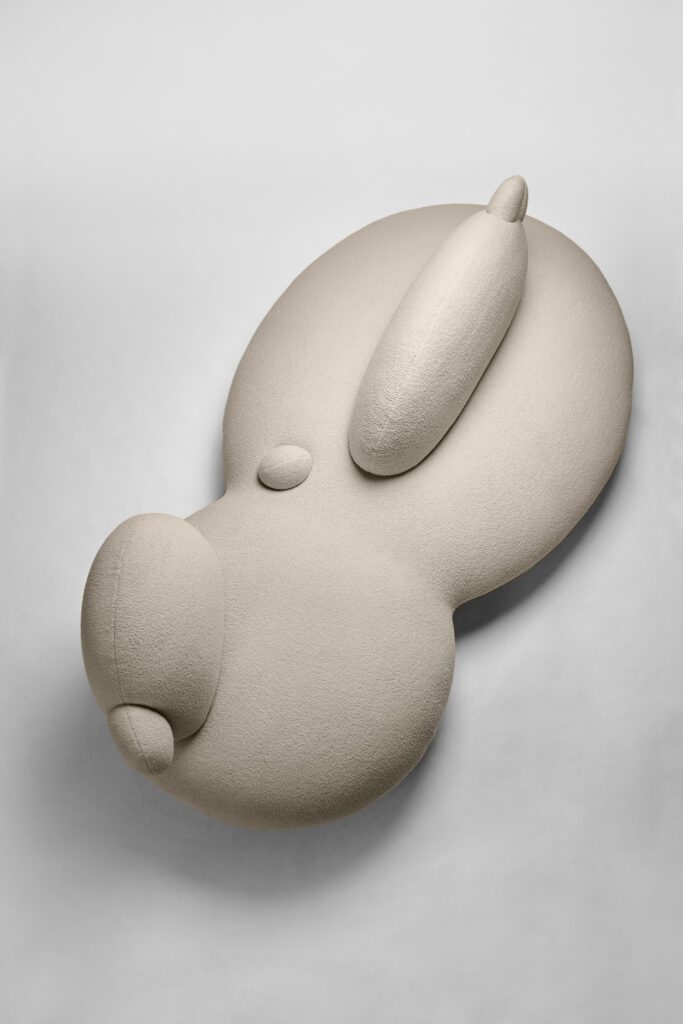
Design is almost always talked about in terms of sight and touch. But every material has a smell, wicker, leather, wood, metal after a hand has held it. Is there a scent that lives in your work, or in your memory of making it?
I’ve never felt that my work carries a single scent because I’ve never wanted it to be defined by one material, one aesthetic, or one idea. If I had to describe it, I’d say my work feels more like a garden.
A garden isn’t made up of one flower or one fragrance. It’s a living landscape where different species coexist, evolve, and bloom in their own time. That’s how I see Atelier L’inconnu. Every collection introduces a different material, a different emotion, a different story, yet they all belong to the same ecosystem.
I’m naturally curious, and I never want to feel limited by a signature that becomes predictable. What connects my work isn’t a specific material or scent, but a way of seeing the world, a commitment to storytelling, craftsmanship, and emotion. I hope that, as the atelier continues to grow, it becomes like a garden that people want to keep returning to, always discovering something unexpected, yet somehow feeling familiar.
If La Volupté were a song, what would it be, and why that one?
It would be “La Mamma.” More than a song, it carries an emotional landscape that has always been close to me. It speaks about unconditional love, origins, departure, and the invisible bond between a parent and a child, ideas that are deeply embedded in La Volupté.
When I presented the collection in We Design Beirut through Womb of a City, the installation imagined the city itself as a mother. The pieces emerged from its womb, connected by woven rattan that became a symbolic umbilical cord. The Long Wait and The Conversation We Never Had were not simply furniture; they represented moments of birth, connection, and becoming.
On the final day of the exhibition, I performed The Cut, a ritual where the umbilical cord was severed. It wasn’t an ending but a beginning. Just as a child must eventually be released from its mother to discover the world, the collection had to leave Beirut and begin its own journey. It was a gesture about love, but also about letting go.
For me, that’s the true meaning of La Volupté. Love is not about possession; it’s about nurturing something until it is ready to exist on its own. Whether it’s a child leaving home, a parent learning to let go, or a piece of design finding its place in someone else’s life, they all become part of the same cycle.
That’s why I would choose “La Mamma.” It reminds us that our deepest roots are often invisible, yet they continue to nourish us wherever life takes us.
If Atelier L’inconnu had to remain “unknown” in one sense, what would you want to stay mysterious, unexplained, or intentionally open to interpretation?
The interpretation. I never want to explain a piece completely. Once an object belongs to someone else, it should become part of their own story rather than remain mine. Mystery creates space for imagination, and imagination allows design to continue evolving long after it leaves the atelier.
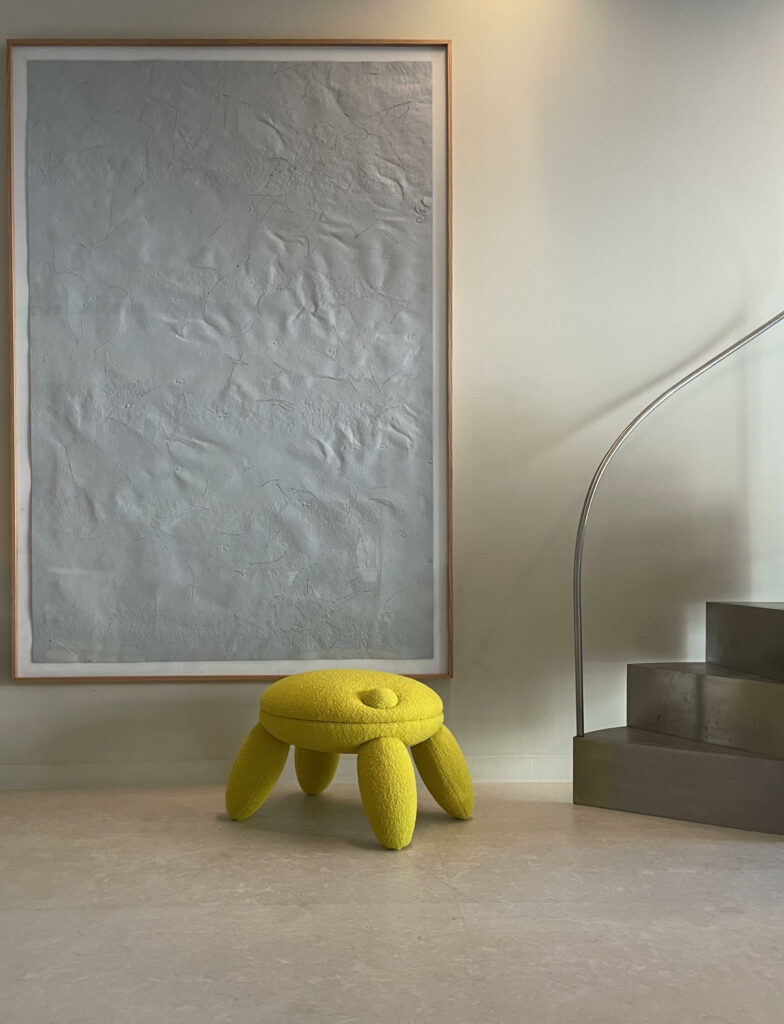
You work across wicker, wood, metal, stone, is there a material you keep coming back to, one that feels most like you? Or are you still searching for it?
Not really. Materials are like languages. Each one allows you to express something different. What interests me isn’t mastering a single material, but discovering unexpected conversations between them. Sometimes wicker needs the precision of metal. Sometimes stone needs the warmth of wood. The dialogue between materials is often where the project truly begins.
Abu Dhabi, what’s next after Milan? Where is Atelier L’inconnu headed, geographically, but also creatively?
Geographically, we’re continuing to build bridges between the Middle East and Europe. Abu Dhabi is an exciting next chapter in that dialogue, and we’re also looking towards the United States as another place where these conversations can continue. But I’ve learned not to define the atelier by destinations alone.
Creatively, I want Atelier L’inconnu to move beyond furniture into immersive environments where architecture, collectible design, craftsmanship, and storytelling become inseparable. I’m interested in creating worlds rather than simply objects, places that people don’t just see, but truly experience.
At the same time, I never want to plan every step too rigidly. Some of the most meaningful opportunities in my journey have come unexpectedly. So while we have ambitions and dreams, I also believe in following where the wind leads us. Sometimes the unknown knows better than we do.
After all, that’s the philosophy of Atelier L’inconnu: to keep exploring with curiosity, embracing the unexpected, and allowing each new chapter to reveal itself when the time is right.