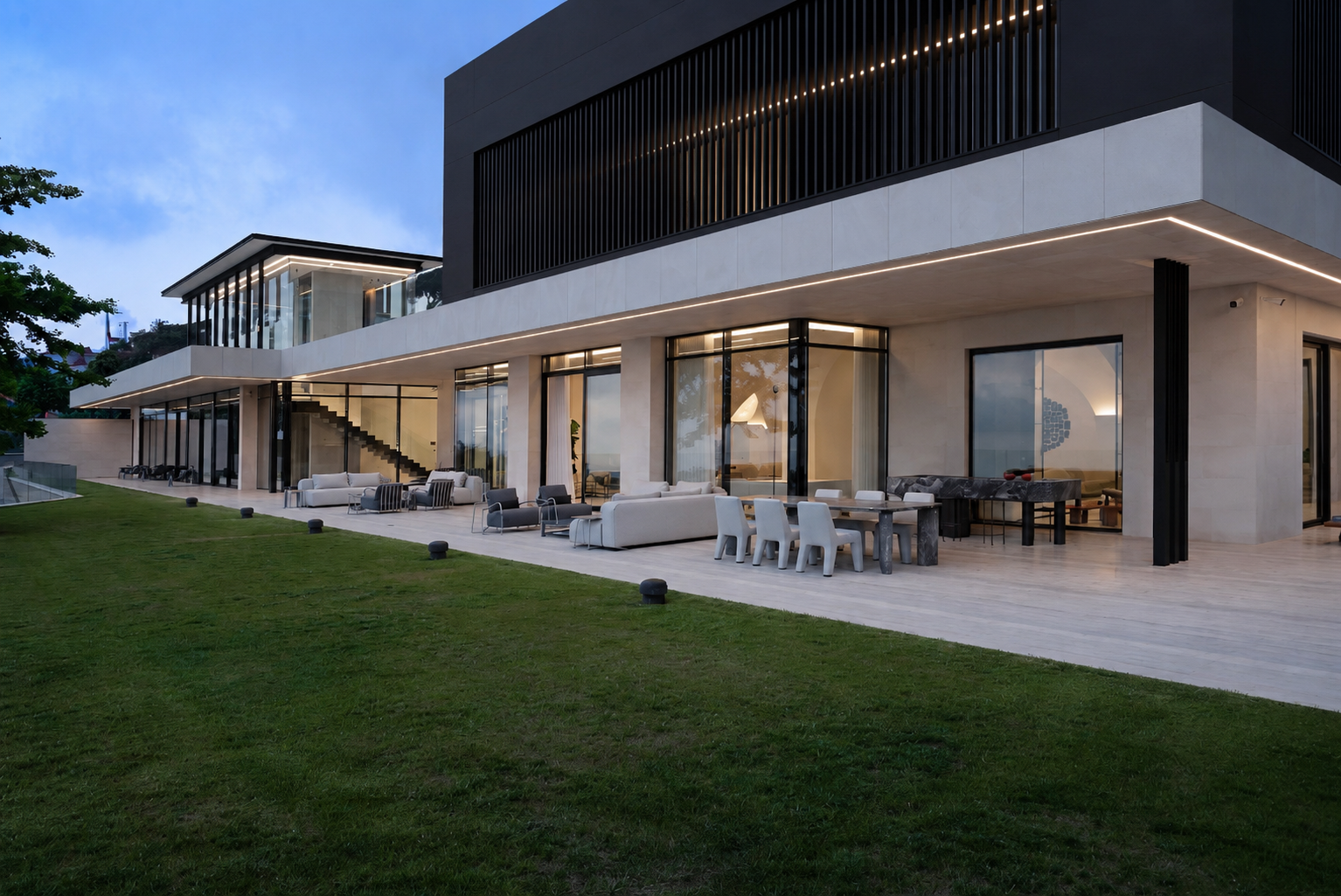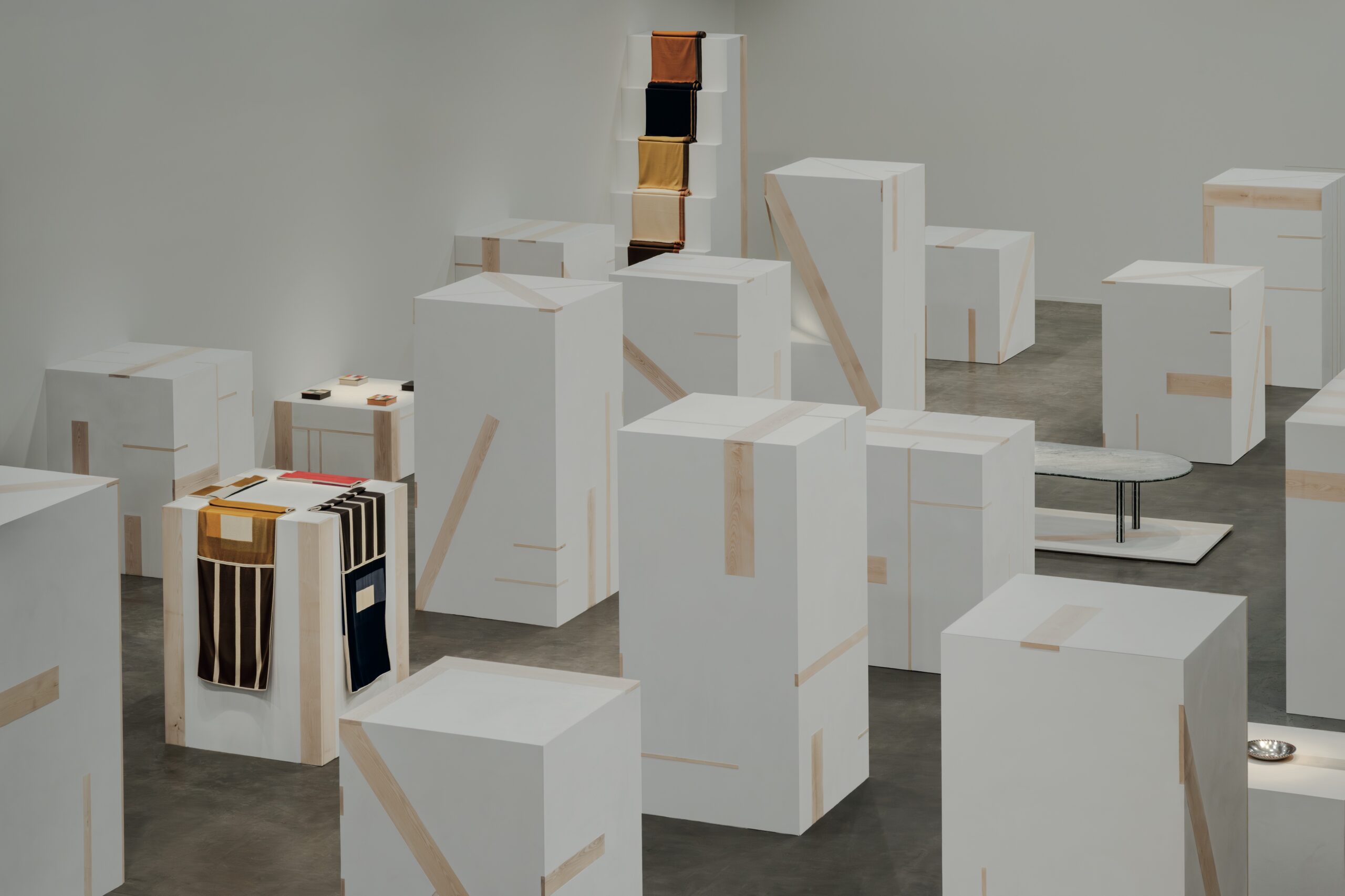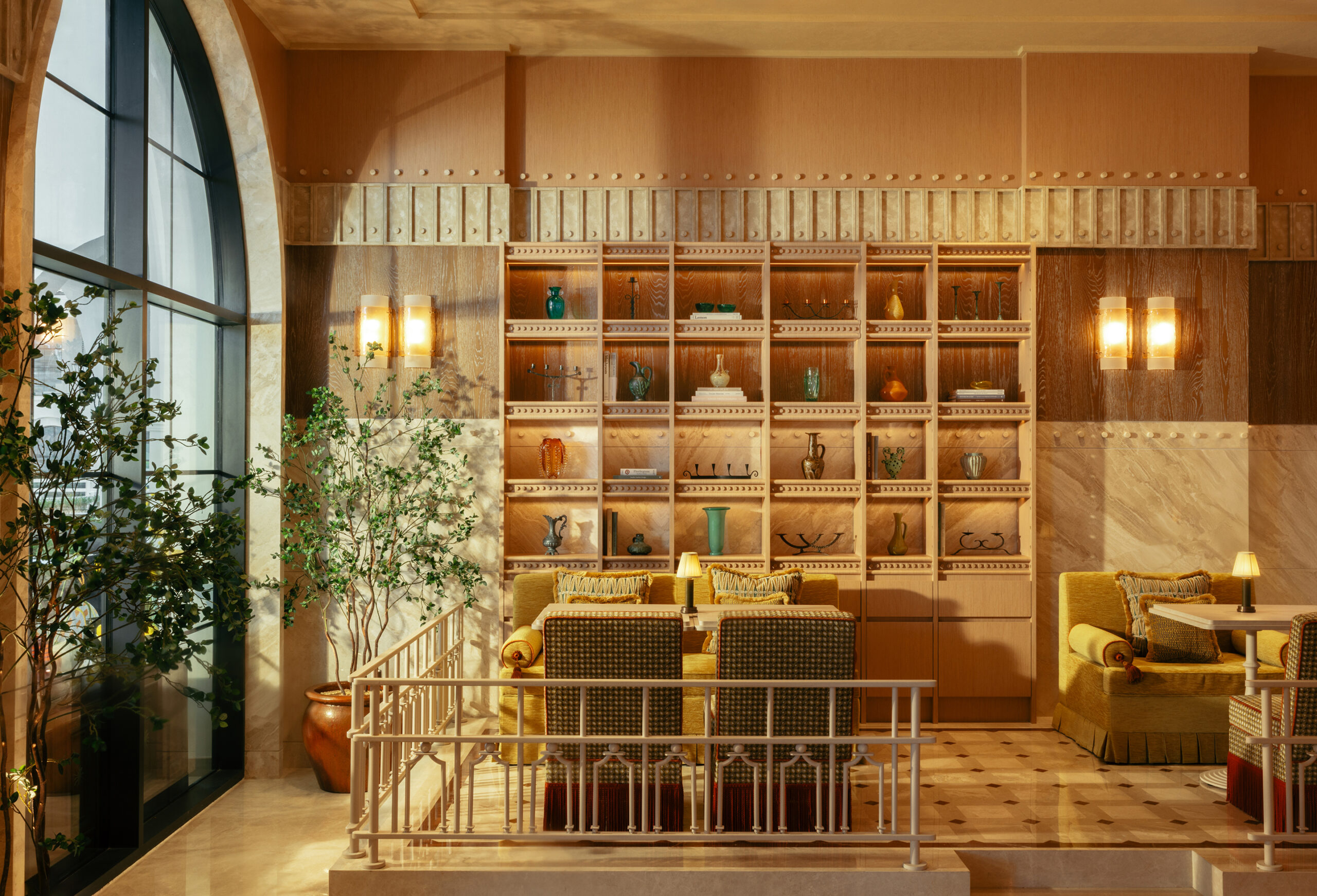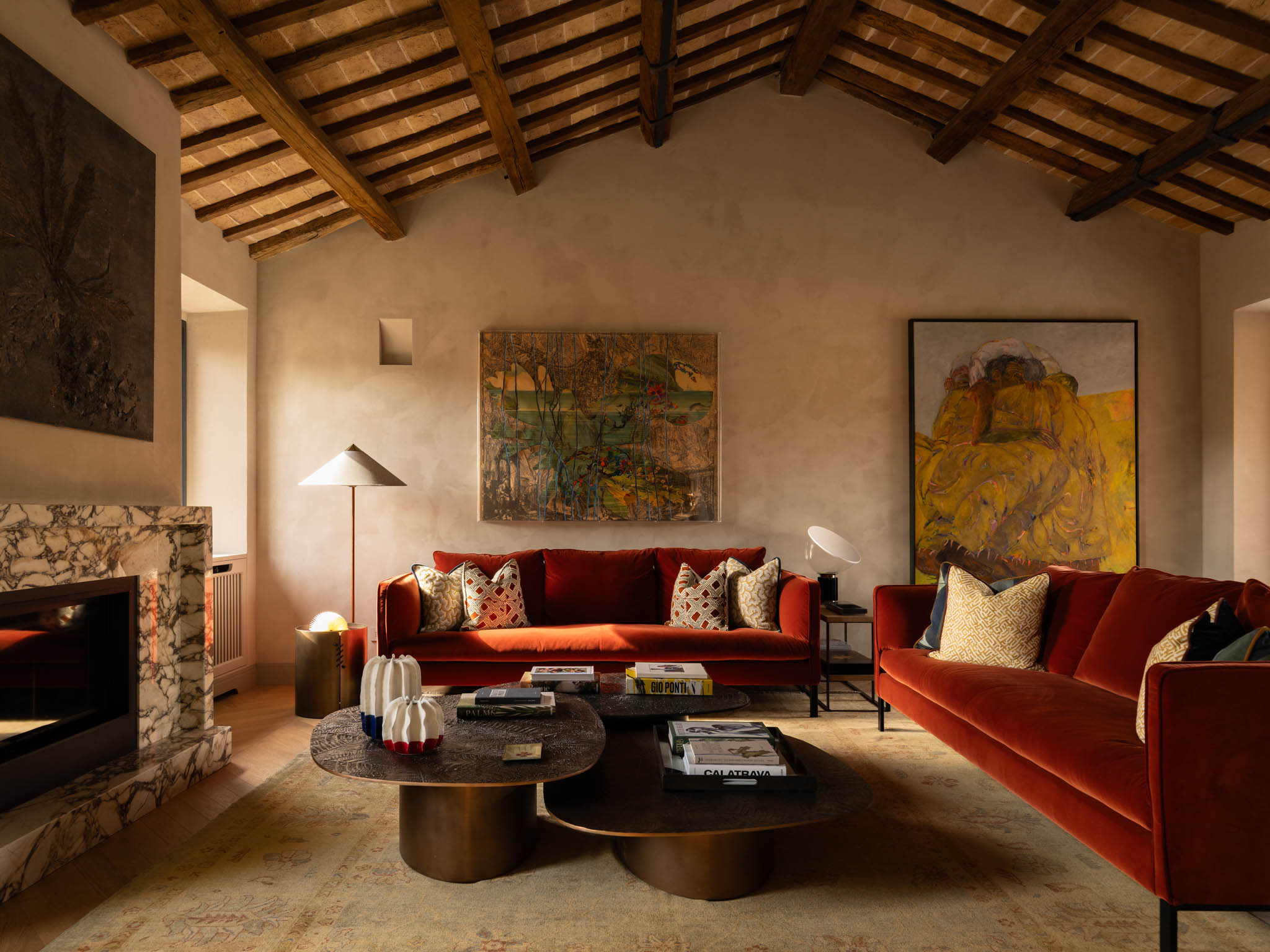
There is a particular alchemy that occurs when architecture stops speaking in monologue and begins, instead, a conversation. At Alys Beach, that fabled enclave along Florida’s Gulf Coast where whitewashed stucco and arched openings evoke both Andalusia and the American South in equal measure, Bureau Interior Design has composed precisely that kind of dialogue. Every room answers to the one before it, and nothing here was left to chance.
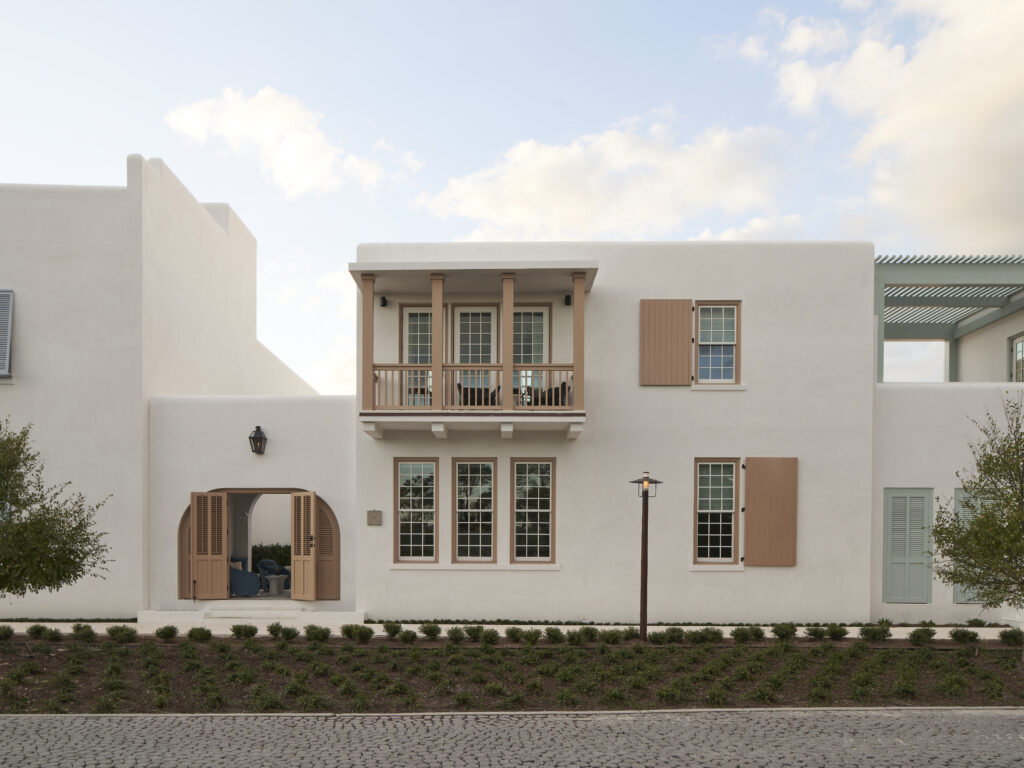
“We are believers the interior architecture must converse with the interior design,” says Matt Donahoe, founder of Bureau Interior Design. “The connectivity should be clear but never obvious.” It is a philosophy that could serve as an epigraph for the entire project, one in which every material decision, every chromatic gesture, every sculptural interruption seems to answer a question posed by the building itself.
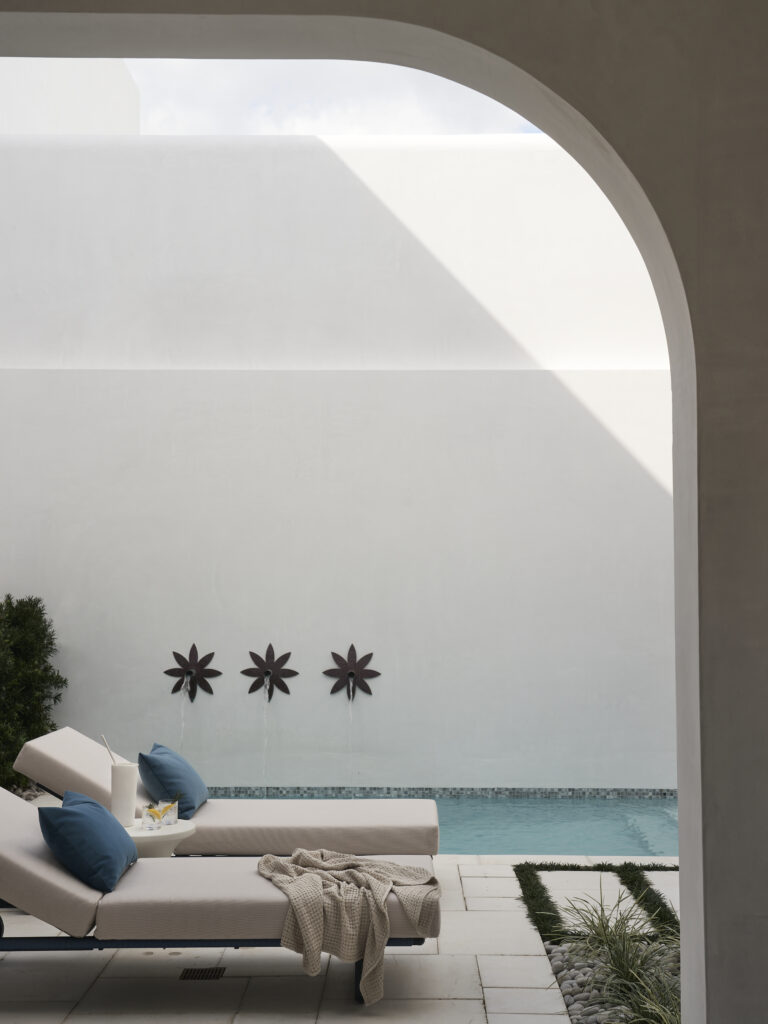
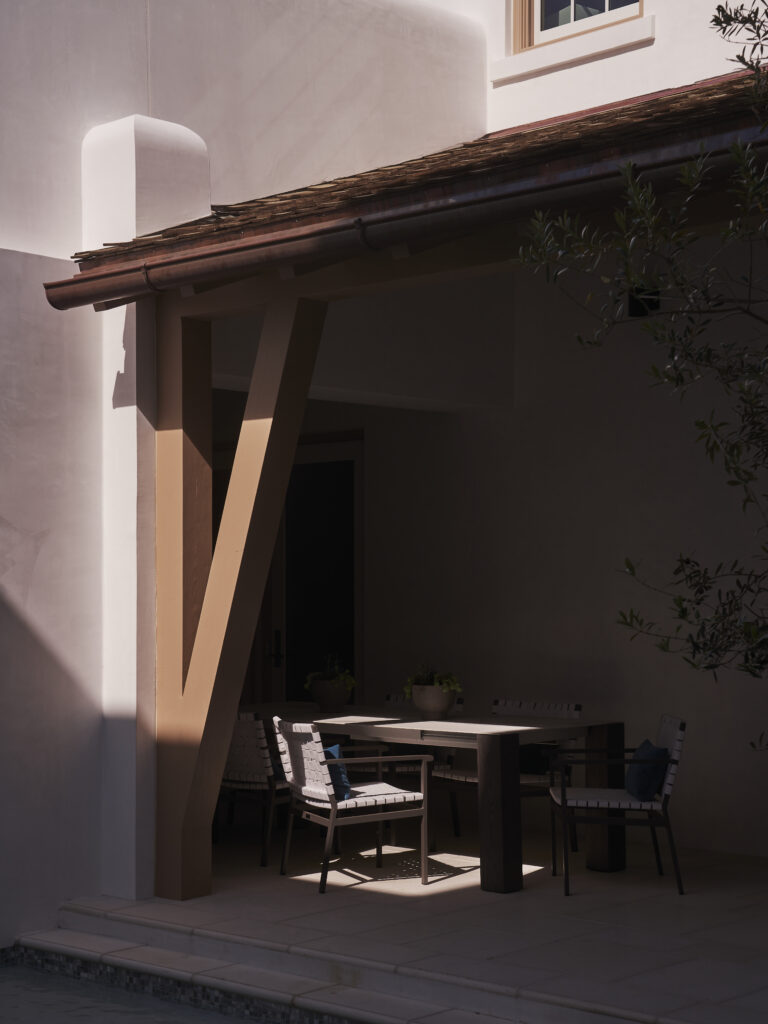
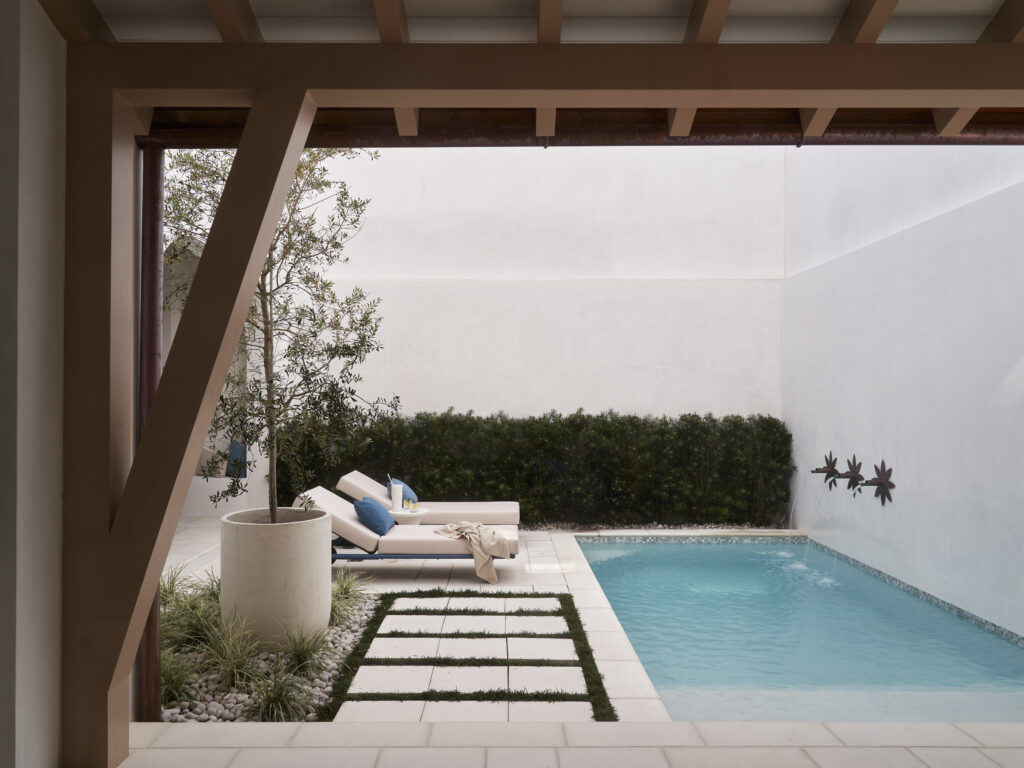
To achieve that fluency between inside and out, Donahoe and his team introduced a deep ochre highlight to the crisp plasterwork, a single pigmented note that threads the exterior’s sun bleached calm into the interior’s more intimate registers. “Subtle shifts in color and texture allow for a home’s indoor and outdoor living,” he notes, and one senses in that sentence the entire ethos of the house: restraint as a form of generosity.
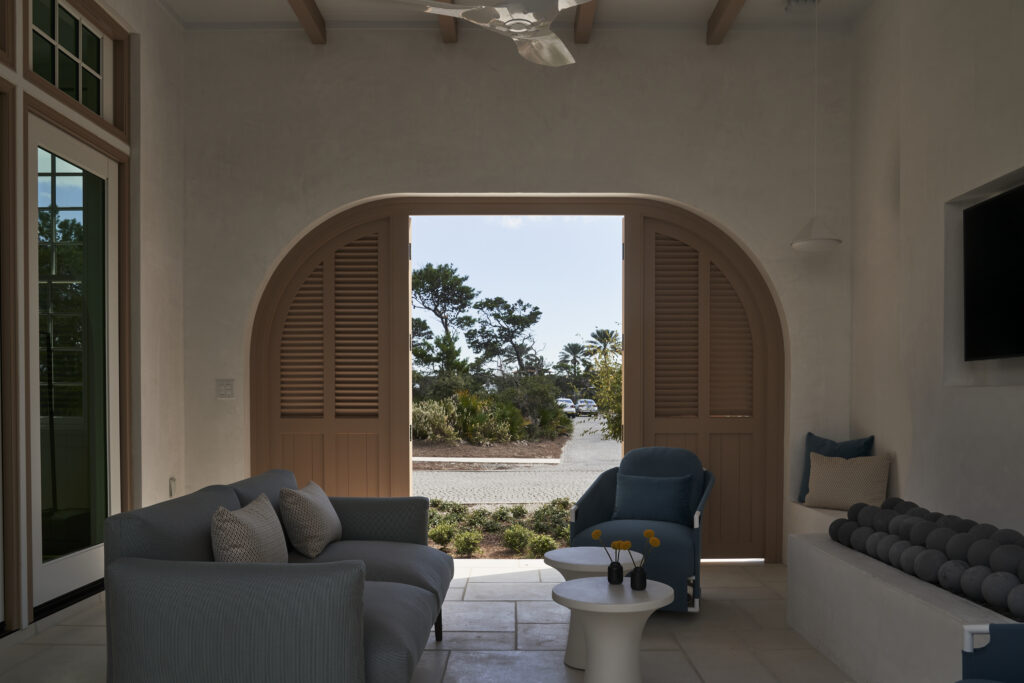
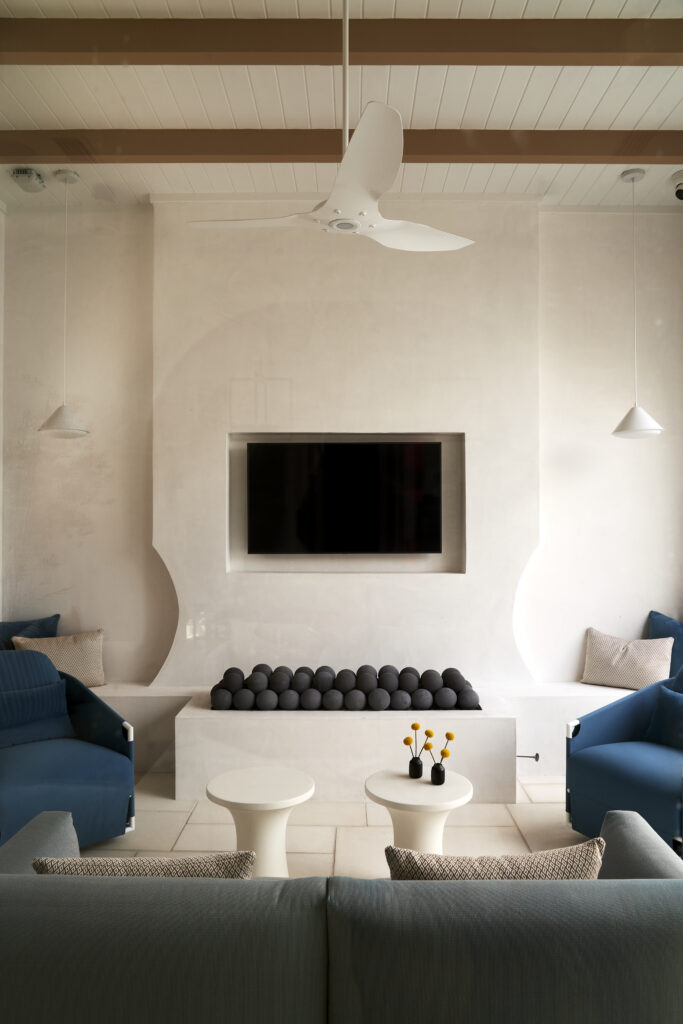
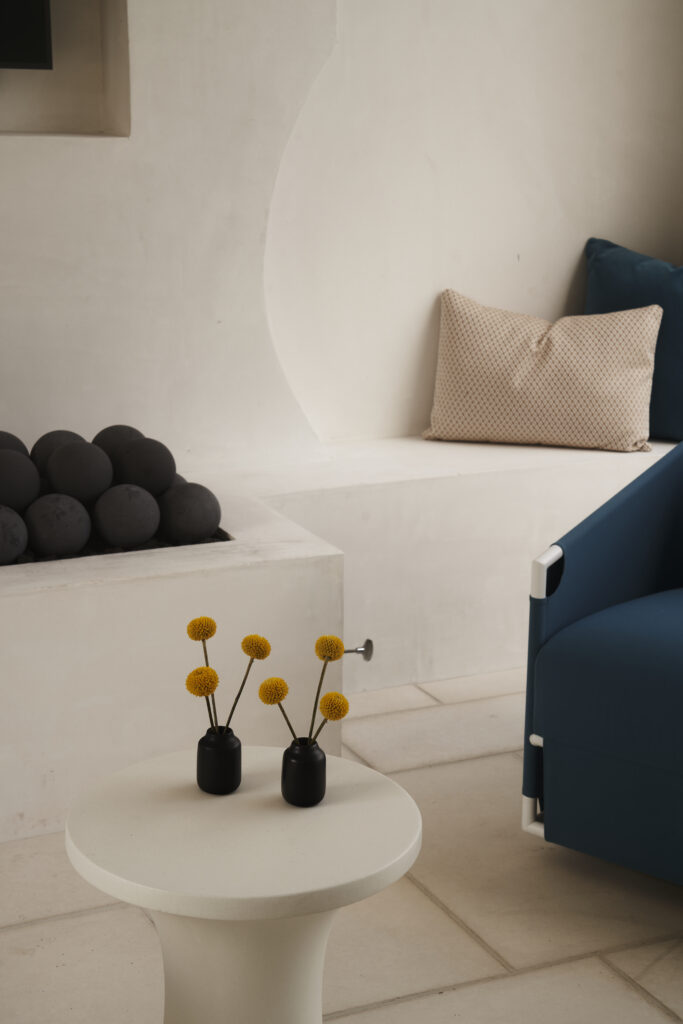
Against Alys Beach’s famously monastic palette of whites, Donahoe chose warmth as his rebellion. Terracotta, camel, and denim blue arrive not as accents but as architecture in their own right, colors with what he calls presence, “natural colors with presence, and inherent to the coast.” The effect is a home that feels sophisticated without ever tipping into severity, casual without surrendering polish. It is a balancing act Donahoe clearly relishes, and one that recurs throughout the residence like a musical motif returning in a different key.
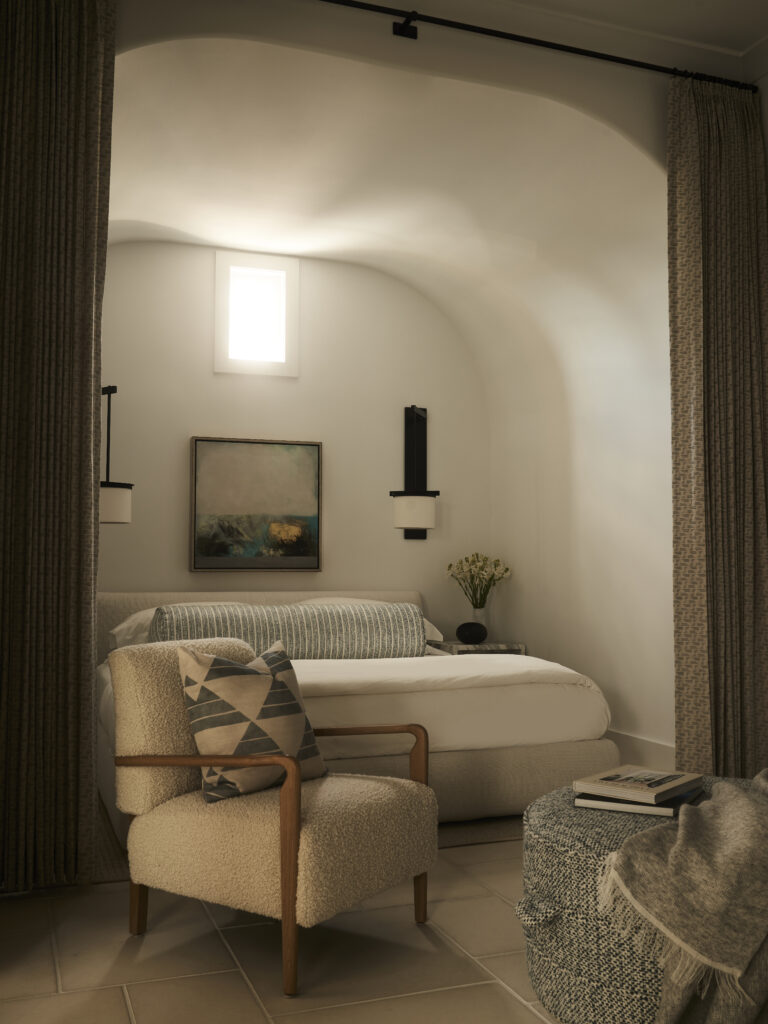
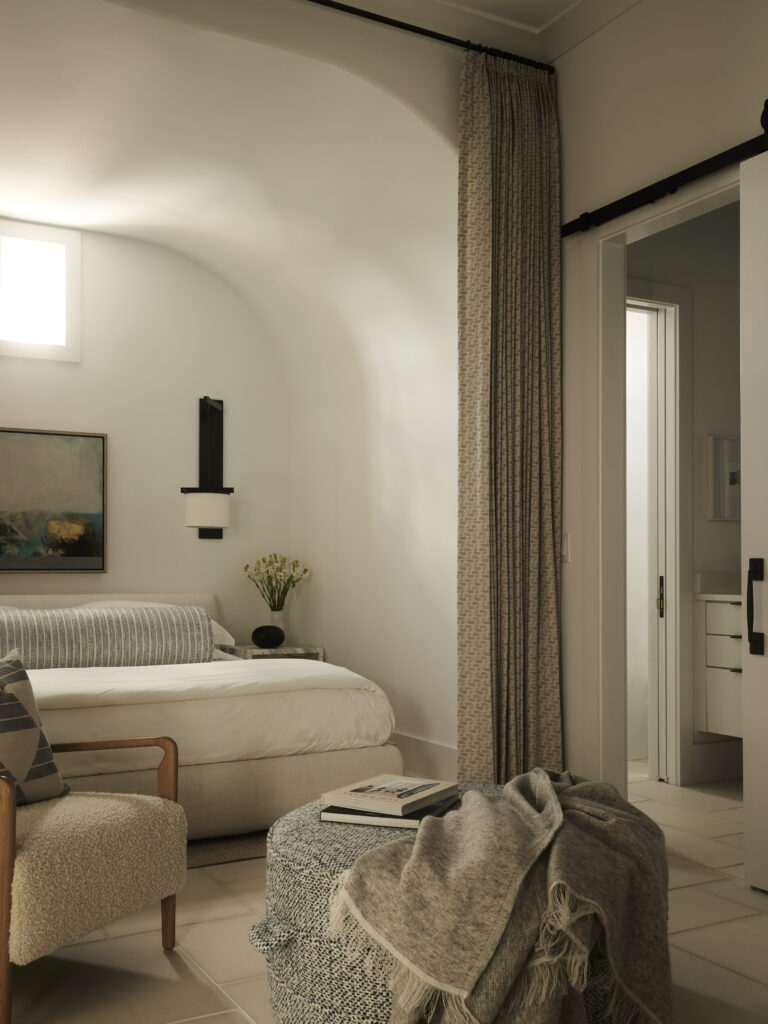
Nowhere is that sense of composed drama more evident than in the barrel vaulted bedroom nook tucked into the back of the main level, a guest room conceived, in Donahoe’s words, to elicit “a feeling of retreat.” Here the curved plasterwork is interrupted by a single novelty window, an architectural aside that floods the room’s farthest recess with light while sharpening the sculptural quality of the walls around it. Self lined linen drapery, rendered in a block print, wraps the room in privacy and a certain playful mystery. It is a space that rewards lingering, the kind of room one photographs from memory rather than from a camera.
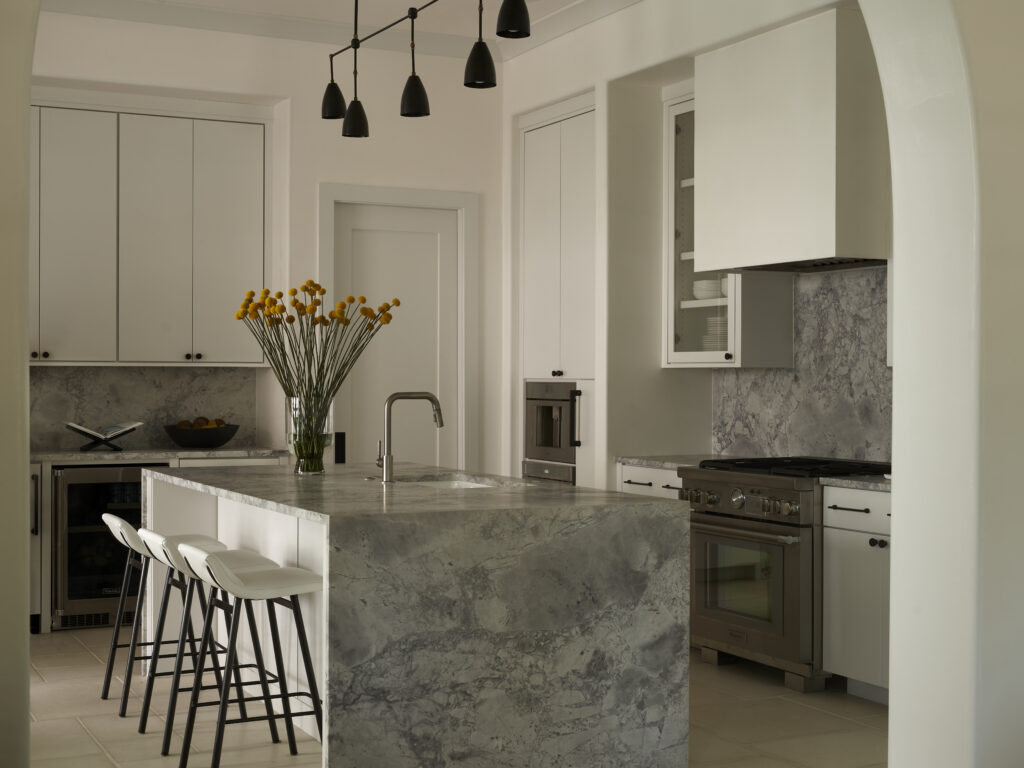
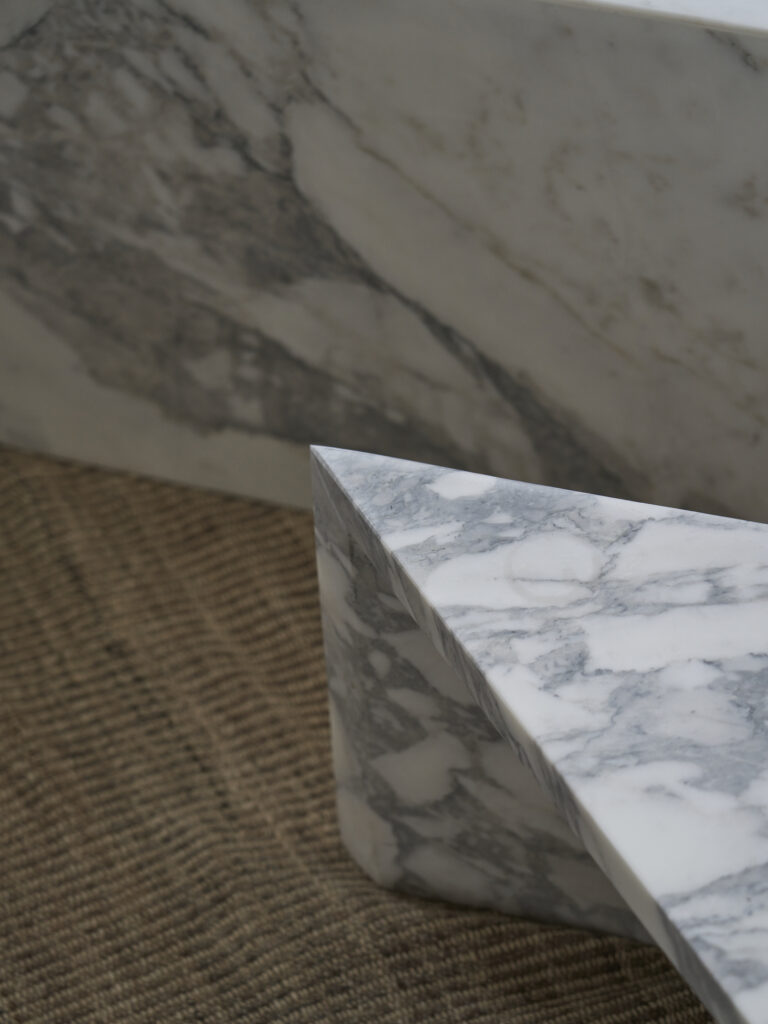
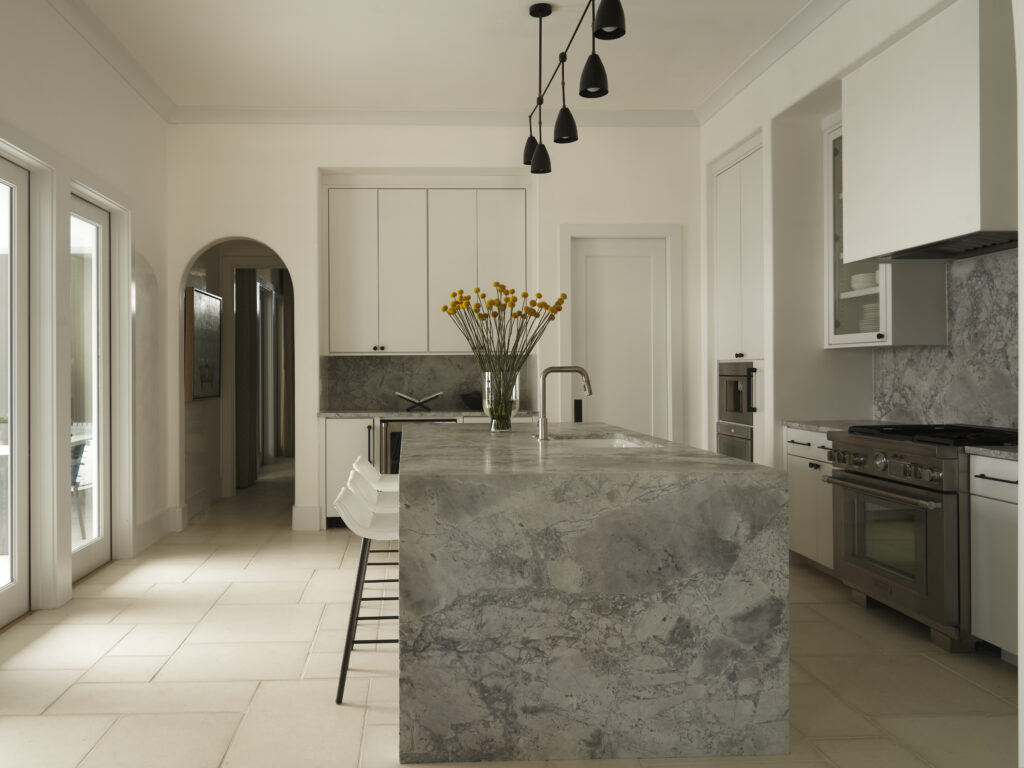
The kitchen, too, resists the expected. Amid a sea of pale marble, millwork, and plaster wrapped ceilings, the island surfaces itself in a stone laced with blue, grey, and ochre veining, a deliberate disruption Donahoe describes as necessary “to serve as a disruptor to the simplistic whites of the perimeter.” It is a small provocation with outsized consequence: the movement in that marble, paired with sculptural furnishings and a singular light fixture, becomes the connective tissue linking adjacent rooms without ever announcing itself. “Everything fell into place as organically as our approach to the design,” he says, and the phrase might well describe his entire working method.
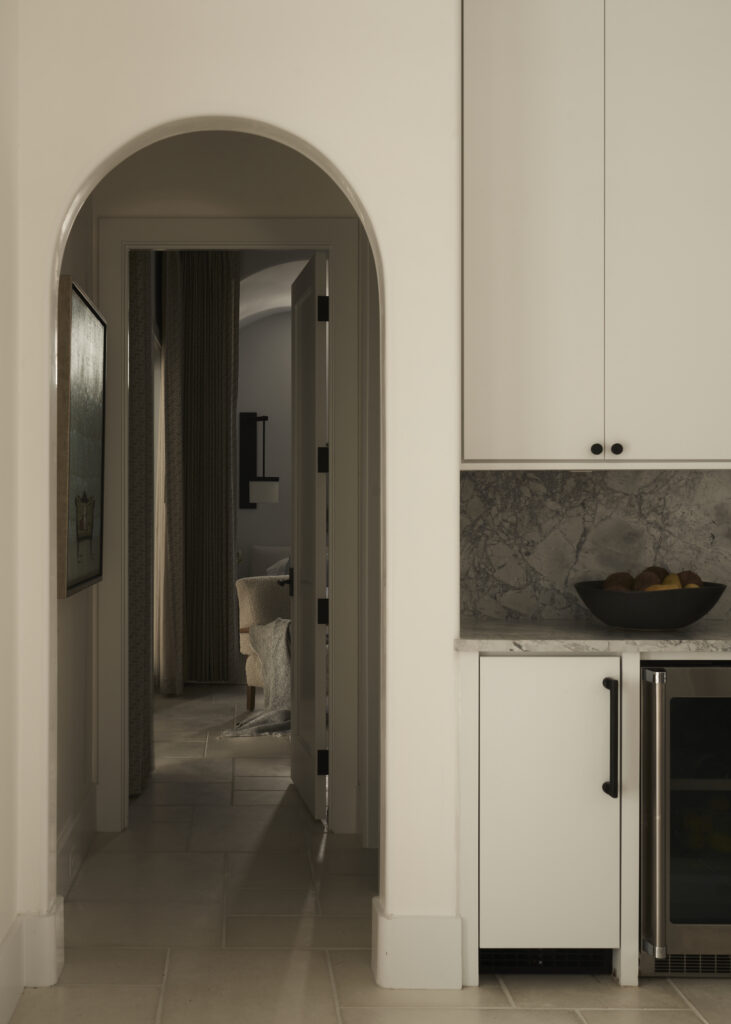
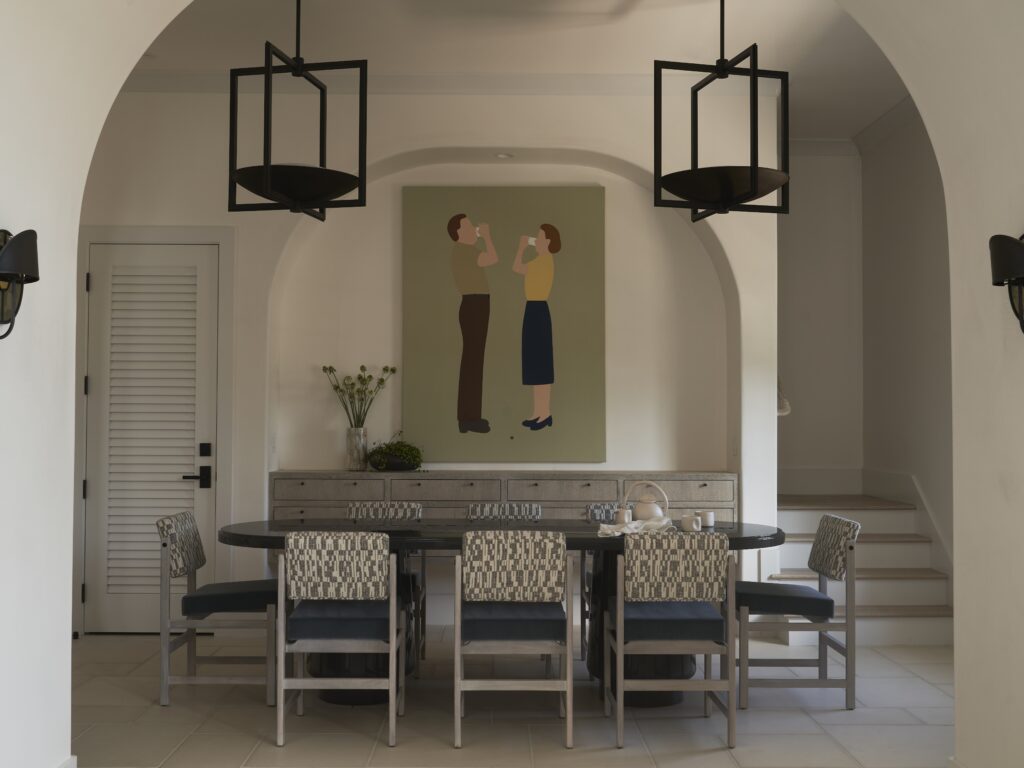
That organic logic extends to the home’s recurring arches and niches, which Donahoe treats not as ornament but as instruments of choreography. “We thought of the arched casings and recessed niches as portals for this beachside home,” he offers, “a signal as you move through the home that the visual feast and experiences therein are beyond each space.”
In a community as romantically inclined as Alys Beach, restraint becomes its own form of sophistication, and Donahoe was careful, in his words, to introduce that romance “without over wielding the treatment.” The arches do not demand attention. They simply promise that something further awaits, and the house delivers on that promise, room after room.
Perhaps the most quietly ambitious architectural gesture is the zaguan, that Spanish colonial invention of a covered passage open to the elements yet sheltered from view, which Donahoe reintroduces here as a lounge suspended between the pool and the home’s interior life. A custom plaster sheathed fireplace with a recessed television anchors the space, transforming what might have been mere circulation into what he calls “a lounge like oasis,” equally suited to a summer downpour or a cool evening off season. All weather drapery, paired with floor to ceiling shutters, completes what can only be described as a luxurious respite, a room built for the specific pleasure of watching weather change.
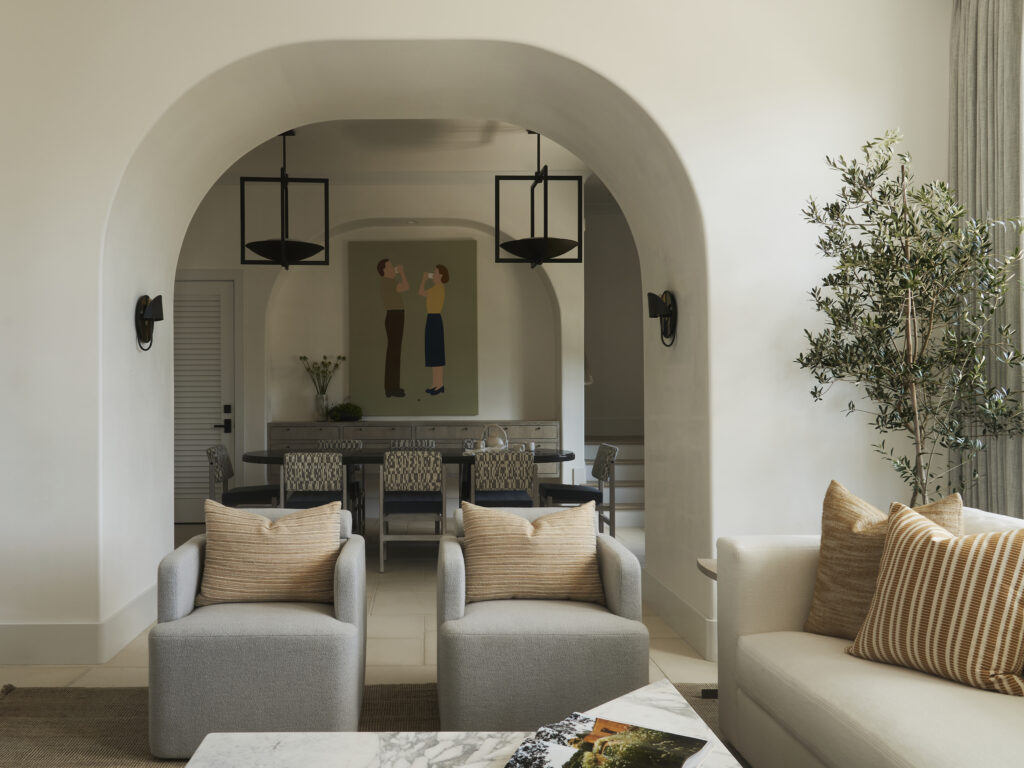
Throughout, Donahoe resists the temptation to let a place as visually codified as Alys Beach dictate every decision. Black stone side tables, graphic artworks, and woven outdoor furniture speak to a curated rather than literal interpretation of coastal living. “Our designs are always imbued by a curated mix of materiality and time periods,” he reflects. “A collected interior feels organically assembled.” It is a philosophy that privileges narrative over uniformity, personalization over perfection, and it gives the home a lived in quality that no amount of styling alone could manufacture.
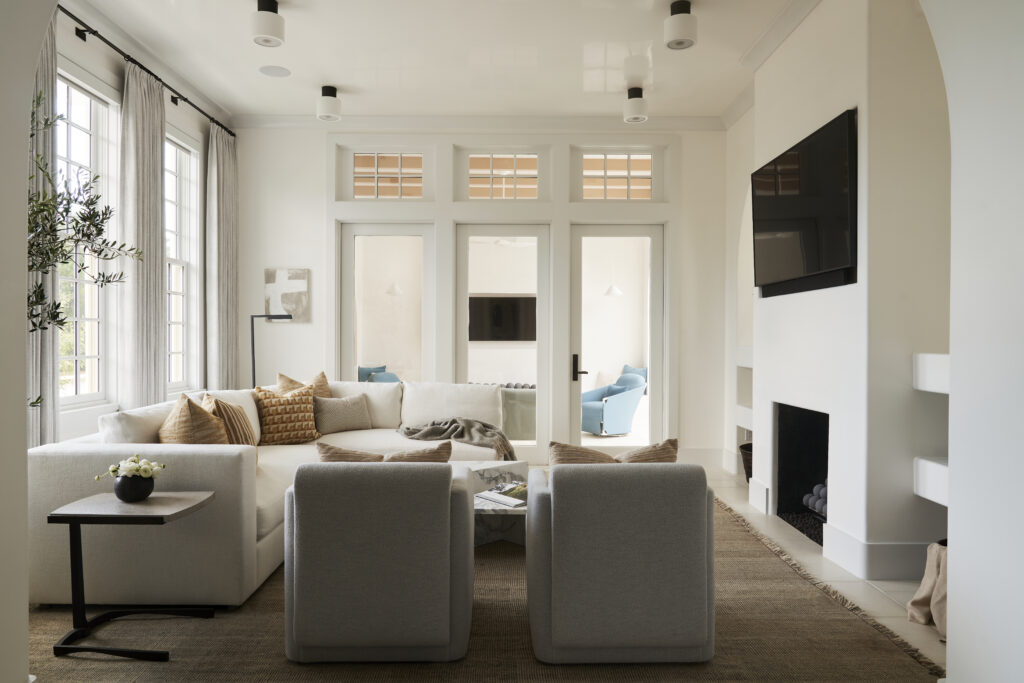
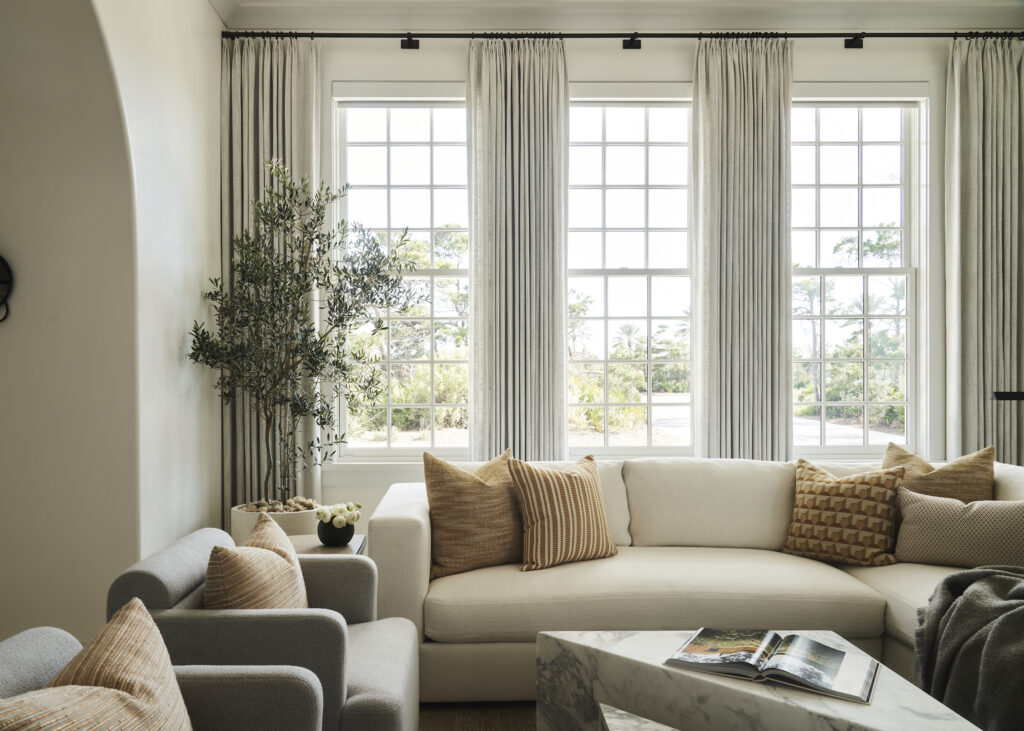
Asked to distill the emotional register of the house into a single phrase, Donahoe does not hesitate. “Seaside sartorial,” he says, a phrase that captures the project’s essential duality: polished yet unfussy, accessible yet aspirational. “There is decadence without the ostentation,” he adds, and indeed the house seems built for a very particular kind of escape, one where indulgence and quietude are permitted to coexist.
Yet ask Donahoe what he is proudest of, and the answer bypasses the obvious set pieces entirely in favor of something more considered still: the primary suite, where the fenestration program was calibrated with near obsessive care to the coastline’s sunrises and sunsets. “We poured over the importance of this space taking in the spectacular coastline sunrises and sunsets from every vantage point,” he explains, noting that even the balcony was enlarged, ever so slightly, to accommodate a pair of lounge chairs offering what he calls “a peaceful perch, day or night.”
It is a fitting final note for a house so thoroughly devoted to the art of looking, and looking well. In the hands of Matt Donahoe and Bureau Interior Design, Alys Beach becomes not merely a backdrop but a collaborator, and the resulting residence stands as proof that the most memorable interiors are not those that dominate their setting, but those that know precisely when to listen.